

China Commercial Refrigeration Equipment Market Research Report: Forecast (2026–2032)
By Product Type (Refrigerators & Freezers, Refrigerated Display Cases, Beverage Refrigeration Equipment, Ice Machines, Blast Chillers & Blast Freezers, Refrigerated Vending Machine ... s, Transportation Refrigeration Equipment, Others), By System Type (Self-contained Systems, Remote Condensing Systems, Centralized / Multiplex Rack Systems), By Refrigerant Type (Hydrofluorocarbons (HFCs), Hydrofluoroolefins (HFOs), Hydrocarbons (HCs), Carbon Dioxide (CO₂), Ammonia (NH₃), Others), By End User (Food Service, Food Retail, Hospitality, Food Processing & Distribution, Healthcare & Pharmaceuticals, Cold Chain & Logistics, Chemicals & Industrial Applications, Others), By Capacity (Below 500 L, 500–1,000 L, 1,000–2,000 L, Above 2,000 L), By Temperature Range (Chilled Refrigeration (0°C to 8°C), Frozen Refrigeration (<0°C), Ultra-low Temperature), and others Read more
- FMCG
- Oct 2025
- Pages 123
- Report Format: PDF, Excel, PPT
China Commercial Refrigeration Equipment Market
Projected 8.04% CAGR from 2026 to 2032
Study Period
2026-2032
Market Size (2026)
USD 3.32 Billion
Market Size (2032)
USD 5.28 Billion
Base Year
2025
Projected CAGR
8.04%
Leading Segments
By Product Classification: Refrigerators & Freezers
China Commercial Refrigeration Equipment Market Key Takeaways
- China commercial refrigeration equipment market reached USD 3.11 billion in 2025, rising to USD 3.32 billion in 2026, and is projected to hit USD 5.28 billion by 2032, at a CAGR of 8.04%.
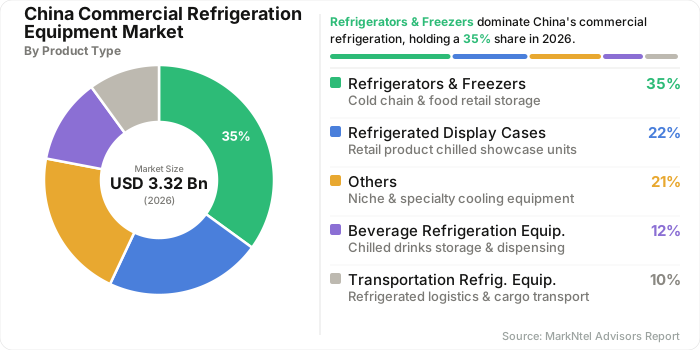
- Refrigerators and freezers dominate product demand, contributing approximately 35% of total market revenue in 2026.
- Food retail emerged as the leading end-user segment in 2026, accounting for nearly a 33% share.
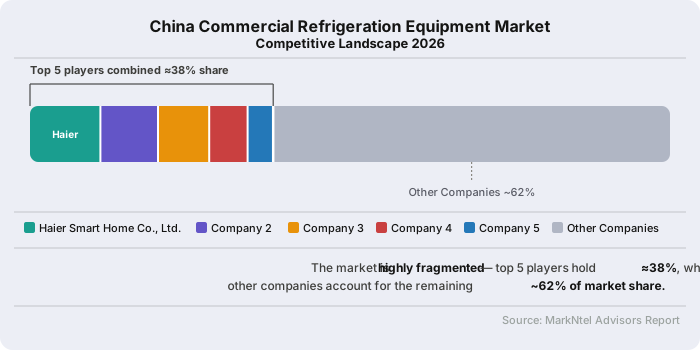
- The industry structure remains moderately fragmented, with the top five players collectively holding around 38% share, reflecting balanced competition between global leaders and regional manufacturers.
China Commercial Refrigeration Equipment Market Size and Outlook
The China commercial refrigeration equipment market is projected to witness steady growth at a CAGR of approximately 8.04% during 2026–2032. This expansion is supported by strong consumption fundamentals and infrastructure development across end-use sectors. Rising demand for perishable goods and processed food is accelerating adoption of commercial cooling solutions, particularly across urban retail and foodservice environments where consistent temperature control is critical.
Consumption-driven growth remains a key pillar, with national catering revenue reaching USD 823.3 billion in 2024, reflecting a 5.3% annual increase. This expanding base of foodservice activity is driving installations of refrigeration systems across restaurants, cafés, and catering units. Increasing reliance on food refrigeration technologies is enabling operators to maintain product quality and comply with evolving food safety standards, while also supporting operational scalability across both urban and rural markets.
Simultaneously, large-scale investments in cold-chain infrastructure are reinforcing long-term market expansion. In 2026, MEDLOG and CMLOG established a joint venture operating multiple cold-storage facilities across major logistics hubs, including an 80,000-ton site in Shanghai. Additionally, regions such as Nanjing are witnessing rapid capacity growth, with over 100 cold-chain enterprises and rising storage targets. These developments are significantly increasing demand for cold storage systems across logistics and distribution networks.
Looking ahead, the convergence of consumption growth, infrastructure investments, and technological integration will continue to shape market dynamics. Reflecting these favorable trends, the China commercial refrigeration equipment market is estimated at USD 3.32 billion in 2026 and is projected to reach USD 5.28 billion by 2032. Expansion of temperature-controlled logistics, combined with increasing penetration of efficient cooling systems, is expected to sustain equipment demand. In summary, the industry is positioned for steady growth, supported by structural demand expansion and ongoing modernization across end-use industries within the China commercial refrigeration equipment industry.
China Commercial Refrigeration Equipment Market Key Indicators
- China’s catering sector expansion remains a primary demand signal, with over 15.568 million active enterprises and 406,000 new registrations recorded in 2025. This sustained growth reflects strong consumer dining momentum and continuous outlet creation, directly accelerating procurement of kitchen cooling infrastructure and storage systems. Notably, rising penetration of food refrigeration solutions supports operational efficiency and compliance across both independent and chain-based foodservice operators.
- A different structural indicator emerges from logistics infrastructure, where China’s refrigerated truck fleet reached approximately 587,900 units in 2025, expanding nearly 19% year-on-year. This rapid fleet scaling strengthens nationwide perishables distribution while increasing reliance on mobile cooling technologies. The expansion significantly reinforces cold chain capabilities, ensuring temperature integrity across long-haul transportation and driving recurring demand for transport refrigeration upgrades and replacements.
- The acceleration of restaurant standardization is another measurable shift, with chainization rates rising from 15% to 23% in 2024. This transformation signals a move toward centralized procurement and uniform kitchen systems, boosting adoption of advanced refrigeration formats. As standardized operations expand, demand for commercial freezer equipment intensifies, particularly for blast freezing and high-capacity storage solutions within integrated kitchen environments.
- Tourism recovery is translating directly into hospitality infrastructure investments, with inbound arrivals surging 60.8% to 132 million in 2024. This rebound is revitalizing hotel dining, catering services, and banquet operations, all of which require extensive cooling installations. Consequently, procurement of beverage cooler units and back-of-house refrigeration systems is increasing, reflecting heightened service capacity requirements across urban hospitality clusters and tourist-centric regions.
- Retail performance data highlights another demand pocket, as convenience-store sales grew 9.1% year-on-year in early 2024, significantly outpacing overall retail growth. This format-driven expansion prioritizes compact, high-efficiency refrigeration suited for dense urban locations. As a result, installations of display cooler systems are accelerating, particularly in neighborhood outlets where product visibility, rapid turnover, and space optimization are critical for profitability.
China Commercial Refrigeration Equipment Market Scope:
| Category | Segments |
|---|---|
| By Product Type | Refrigerators & Freezers, Refrigerated Display Cases, Beverage Refrigeration Equipment, Ice Machines, Blast Chillers & Blast Freezers, Refrigerated Vending Machines, Transportation Refrigeration Equipment, Others |
| By System Type | Self-contained Systems, Remote Condensing Systems, Centralized / Multiplex Rack Systems |
| By Refrigerant Type | Hydrofluorocarbons (HFCs), Hydrofluoroolefins (HFOs), Hydrocarbons (HCs), Carbon Dioxide (CO₂), Ammonia (NH₃), Others |
| By End User | Food Service, Food Retail, Hospitality, Food Processing & Distribution, Healthcare & Pharmaceuticals, Cold Chain & Logistics, Chemicals & Industrial Applications, Others |
| By Capacity | Below 500 L, 500–1,000 L, 1,000–2,000 L, Above 2,000 L |
| By Temperature Range | Chilled Refrigeration (0°C to 8°C), Frozen Refrigeration (<0°C), Ultra-low Temperature |
China Commercial Refrigeration Equipment Market Growth Drivers
Cold-Chain Expansion Accelerating Refrigeration Equipment Demand
China’s expanding cold-chain ecosystem continues to act as a core growth engine for the China commercial refrigeration equipment market, supported by rising perishable consumption and logistics modernization. Cold-chain logistics volume reached 381.4 million tons in 2025, while total storage capacity increased to 267 million cubic meters, marking a 5.53% annual rise. This steady infrastructure scaling significantly strengthens demand for cold storage solutions across regional distribution hubs.
A parallel surge in throughput further reinforces equipment utilization levels, with food cold-chain logistics demand reaching 192 million tonnes in the first half of 2025, reflecting 4.35% growth. Increasing movement of temperature-sensitive goods is intensifying reliance on logistics refrigeration systems, including warehouse cooling and integrated handling technologies. This sustained utilisation is driving both capacity additions and structured replacement cycles for aging refrigeration assets.
Additionally, rapid expansion of temperature-controlled transport networks is enhancing intercity distribution efficiency and last-mile delivery capabilities. Growing adoption of reefer fleets and modern storage nodes is accelerating demand for industrial cooling equipment, particularly in large-scale logistics parks and high-volume food distribution centres supported by national cold-chain investment programmes.
The rapid expansion of cold-chain logistics volumes, rising utilisation of storage infrastructure, and continuous upgrades in distribution networks are reinforcing equipment demand intensity. These structural shifts are not only accelerating procurement cycles but also strengthening replacement demand across aging assets, thereby firmly anchoring long-term growth prospects within the commercial refrigeration equipment industry in the China.
Recent Trends
Integration of Smart, Connected, and IoT-Enabled Refrigeration Systems
Digitalization is emerging as a defining trend in the commercial refrigeration equipment industry in the China, as operators increasingly deploy connected systems to manage complex cold-chain networks. The integration of IoT refrigeration technologies is enabling real-time monitoring of temperature, humidity, and equipment performance, supporting improved compliance with food safety regulations while enhancing operational transparency across storage and distribution environments.
The shift toward intelligent infrastructure is further reinforced by rising demand for predictive maintenance and automation capabilities. Businesses are adopting smart cooling systems that leverage data analytics to optimize energy usage and reduce unexpected equipment failures. This transition is particularly critical in high-volume logistics and foodservice operations, where efficiency gains directly translate into cost savings and improved service reliability.
Technology providers are also accelerating innovation cycles to align with these requirements. In July 2024, Carrier Transicold introduced its CITIMAX D Series refrigeration units in China, emphasizing intelligent controls and advanced monitoring features. The launch highlights growing adoption of remote monitoring refrigeration solutions designed to enhance visibility and streamline asset management across increasingly digitized cold-chain networks.
The integration of digital technologies, increasing regulatory focus on traceability, and the need for operational efficiency are accelerating the transition toward data-driven refrigeration ecosystems. These advancements are not only enhancing system reliability and energy optimization but also redefining performance benchmarks, thereby establishing intelligent cooling infrastructure as a critical growth lever within the China commercial refrigeration equipment industry.
China Commercial Refrigeration Equipment Market Opportunities and Challenges
Regulatory Pressure and Innovation Accelerating Sustainable Cooling Adoption
China’s regulatory transition toward low-emission refrigerants is creating a significant compliance challenge for the China commercial refrigeration equipment market. Under the Kigali Amendment, the country began controlling HFC consumption in 2024 and established a phased reduction roadmap through 2045. These mandates are accelerating the shift toward low-GWP refrigerants, compelling manufacturers and end users to redesign systems, upgrade components, and manage higher capital and transition costs.
Regulatory pressure is particularly acute for legacy systems dependent on high-GWP refrigerants, where businesses face technical and financial barriers in adopting alternative technologies. Compliance with evolving standards is also increasing system complexity, particularly across installation, integration, and maintenance processes. As a result, demand for energy-efficient cooling solutions is rising, especially across large-scale commercial and industrial applications seeking to balance sustainability with cost optimization.
At the same time, this regulatory shift is unlocking strong innovation-led opportunities across the commercial refrigeration equipment industry. At the 2025 China Refrigeration Expo, Copeland introduced solutions using R-454B, R-32, R-290, and CO₂ refrigerants, alongside advanced compressors and digital condensing units, highlighting rapid progress in green refrigeration technologies.
The tightening regulations and accelerating innovation are reshaping competitive dynamics. As compliance intensifies, demand is shifting toward sustainable, high-efficiency systems, positioning environmentally compliant refrigeration technologies as a key investment priority and long-term growth driver within the China commercial refrigeration equipment industry.
Segmentation Insights
Widespread Adoption of Refrigerators & Freezers Across Commercial Applications
Refrigerators and freezers account for nearly 35% of total revenue within the China commercial refrigeration equipment market, making them the dominant product category. Their widespread adoption across foodservice and retail environments reflects their essential role in preserving perishable goods. Growing demand for retail refrigeration solutions continues to reinforce their importance across supermarkets and convenience store formats.
Within this segment, reach-in and walk-in units remain highly utilized due to their operational flexibility and storage efficiency. Increasing expansion of organized foodservice outlets is accelerating deployment of these systems, particularly in high-volume kitchens. The integration of advanced foodservice refrigeration technologies is improving temperature consistency, supporting compliance with stricter food safety and hygiene standards.
Technological advancements are further strengthening segment growth, as manufacturers invest in energy-efficient and environmentally compliant systems. At the 2024 China Light Commercial Refrigeration Industry Annual Conference, GMCC introduced variable-frequency compressors using R290 refrigerant, highlighting innovation in refrigeration compressor China technologies. These developments enhance performance while aligning with evolving environmental regulations and energy optimization requirements.
Overall, the refrigerators and freezers segment continues to maintain market leadership due to its indispensable application scope, continuous technological upgrades, and strong alignment with evolving consumption and regulatory trends across the China commercial refrigeration equipment industry. Based on product classification, the market is divided into the following segments:
- Refrigerators & Freezers
- Reach-in Refrigerators
- Reach-in Freezers
- Walk-in Refrigerators
- Walk-in Freezers
- Chest Freezers
- Undercounter Refrigerators & Freezers
- Refrigerated Display Cases
- Open Display Cases
- Closed Display Cases
- Service Counter Display Cases
- Beverage Refrigeration Equipment
- Bottle Coolers
- Beverage Display Coolers
- Beer Dispensing Equipment
- Drinking Fountains
- Ice Machines
- Blast Chillers & Blast Freezers
- Refrigerated Vending Machines
- Transportation Refrigeration Equipment
- Refrigerated Trucks
- Refrigerated Trailers
- Refrigerated Containers
- Others
Food Retail Emerges as the Dominant End-Use Vertical
The food retail segment accounts for approximately 33% of total revenue, making it the largest contributor within the China commercial refrigeration equipment market. Its dominance is driven by the rapid expansion of organized retail formats and increasing consumer preference for fresh and packaged foods. Rising deployment of supermarket refrigeration systems is supporting large-format stores in maintaining product quality and extending shelf life.
Within this segment, supermarkets, hypermarkets, and convenience stores are key demand centers for refrigeration equipment. China operated 51,594 chain convenience stores in 2024, up from 45,292, reflecting strong retail network expansion . This growth is accelerating adoption of display cooler solutions, particularly for beverages, dairy, and ready-to-eat products requiring high visibility and consistent temperature control.
Additionally, specialty food stores are contributing to segment growth by increasing demand for advanced cooling solutions tailored to niche products such as frozen foods and premium perishables. Retailers are increasingly prioritizing food storage refrigeration technologies that ensure energy efficiency while meeting evolving food safety standards and operational requirements across high-traffic retail environments.
The food retail segment continues to lead end-use demand due to its expanding footprint and increasing equipment intensity across formats. Its strong reliance on refrigeration infrastructure, combined with rising consumer demand for fresh and packaged foods, reinforces its central role in shaping sustained growth across the China commercial refrigeration equipment industry. The market analysis includes the following major end-user categories:
- Food Service
- Restaurants
- Quick-Service Restaurants (QSRs)
- Cafés
- Catering Services
- Food Retail
- Supermarkets & Hypermarkets
- Convenience Stores
- Specialty Food Stores
- Hospitality
- Hotels
- Resorts
- Food Processing & Distribution
- Healthcare & Pharmaceuticals
- Cold Chain & Logistics
- Chemicals & Industrial Applications
- Others
China Commercial Refrigeration Equipment Market Competitive Analysis
The competitive landscape of the China commercial refrigeration equipment market is led by key players including Haier Smart Home Co., Ltd., Carrier Global Corporation, Daikin Industries, Ltd., Dover Corporation, and Aucma Co., Ltd., which together account for an estimated 38% of the total market share. The structure remains moderately fragmented, characterized by the presence of numerous domestic and regional manufacturers alongside established global corporations. Local players benefit from strong distribution networks and cost competitiveness, while international companies leverage technological expertise and premium product offerings.
Prominent Commercial Refrigeration Equipment Companies in China
- Haier Smart Home Co., Ltd.
- Aucma Co., Ltd.
- Fujian Snowman Co., Ltd.
- Zhejiang Xingxing Refrigeration Co., Ltd.
- Qingdao Hiron Commercial Cold Chain Co., Ltd.
- Qingdao Junrun Commercial Cold Chain Co., Ltd.
- Zhejiang Xingyuan Refrigeration Equipment Co., Ltd.
- Carrier Global Corporation
- Daikin Industries, Ltd.
- Dover Corporation
- Others
China Commercial Refrigeration Equipment Industry News and Recent Developments:
April 2026: China Refrigeration Expo 2026 Highlights Industry Focus on Scale, Efficiency, and Innovation
China Refrigeration Expo 2026 was held in Beijing from April 8–10, bringing together more than 1,000 exhibitors and over 100,000 professional visitors from across the global HVAC&R and refrigeration value chain. The event showcased advancements in refrigeration systems, cold-chain technologies, energy-efficient equipment, and sustainable cooling solutions, reinforcing its position as one of the industry's most influential technology and networking platforms.
Impact Analysis: The scale and international participation at the exhibition indicate growing investment momentum across commercial refrigeration, cold-chain logistics, and energy-efficient cooling technologies. The event provides manufacturers with a platform to accelerate product commercialization, establish partnerships, and expand market visibility. It also highlights increasing customer demand for advanced refrigeration solutions that improve operational efficiency and environmental performance.
April 2026: Garrett Motion Unveils Oil-Free Centrifugal Compressor Portfolio at China Refrigeration Expo 2026
Garrett Motion introduced a new portfolio of oil-free centrifugal compressors designed for industrial, commercial, battery energy storage, and data-center cooling applications. The product range covers cooling capacities from 7 to 500 tons and incorporates high-speed turbomachinery, oil-free foil bearings, and advanced control algorithms to improve efficiency and system performance. The launch marks Garrett’s expansion into next-generation cooling technologies beyond its traditional automotive portfolio.
Impact Analysis: The introduction of oil-free compressor technology reflects the industry's increasing emphasis on energy efficiency, reduced maintenance requirements, and lower environmental impact. As data centers and advanced industrial facilities expand across China, demand for high-performance cooling infrastructure is expected to rise substantially. Garrett’s entry into this segment could intensify competition among compressor manufacturers while accelerating innovation in premium refrigeration systems.
April 2025: Bingshan Group Showcases Green and Carbon-Neutral Refrigeration Solutions at CRH 2025
At CRH 2025 in Shanghai, Bingshan Group presented a portfolio of green, smart, and carbon-neutral cooling and heating solutions. Key exhibits included CO₂ transcritical refrigeration systems, R290 compressor technologies, a five-in-one cooling and heating system, and energy-efficient industrial refrigeration equipment. The company also highlighted innovations capable of reducing energy consumption while supporting low-carbon operations across food processing, cold storage, logistics, and industrial applications.
Impact Analysis: Bingshan’s product showcase demonstrates the accelerating shift toward natural refrigerants and low-carbon refrigeration technologies. Growing adoption of CO₂ and R290-based systems is expected to support compliance with tightening environmental regulations while helping end users reduce operating costs. The company’s focus on integrated cooling and heating solutions also reflects increasing demand for energy optimization across industrial facilities and cold-chain infrastructure.
Frequently Asked Questions
- Market Segmentation
- Introduction
- Product Definition
- Research Process
- Assumptions
- Executive Summary
- China Commercial Refrigeration Equipment Market Policies, Regulations, and Product Standards
- China Commercial Refrigeration Equipment Market Value Chain Analysis
- Raw Material Suppliers
- Component Manufacturers
- Equipment Manufacturers (OEMs)
- Distributors & Channel Partners
- End-Users
- Margin Analysis Across Value Chain
- China Commercial Refrigeration Equipment Import & Export Analysis
- China Commercial Refrigeration Equipment Production Trend 2022-2032
- China Commercial Refrigeration Equipment Trend by Product Type
- Refrigerators & Freezers
- Refrigerated Display Cases
- Beverage Refrigeration Equipment
- Ice Machines
- Blast Chillers & Blast Freezers
- Refrigerated Vending Machines
- Transportation Refrigeration Equipment
- Others
- Company Wise Production Plants and Statistics
- Installed Production Capacity
- Actual Production
- Planned Production Target
- China Commercial Refrigeration Equipment Trend by Product Type
- China Commercial Refrigeration Equipment Pricing Analysis 2022-2032
- China Commercial Refrigeration Equipment Pricing Trend 2022-2032
- China Commercial Refrigeration Equipment Pricing Trend by Product Type 2022-2032
-
- Refrigerators & Freezers
- Refrigerated Display Cases
- Beverage Refrigeration Equipment
- Ice Machines
- Blast Chillers & Blast Freezers
- Refrigerated Vending Machines
- Transportation Refrigeration Equipment
- Others
-
- China Commercial Refrigeration Equipment Market Dynamics
- Growth Factors
- Challenges
- China Commercial Refrigeration Equipment Market Hotspot & Opportunities
- China Commercial Refrigeration Equipment Market Outlook, 2022-2032F
- Market Size & Outlook
- By Revenues (USD Million)
- By Quantity Sold (Thousand Units)
- Market Share & Outlook
- By Product Type- Market Size & Forecast 2022-2032, USD Million & Thousand Units
- Refrigerators & Freezers
- Reach-in Refrigerators
- Reach-in Freezers
- Walk-in Refrigerators
- Walk-in Freezers
- Chest Freezers
- Undercounter Refrigerators & Freezers
- Refrigerated Display Cases
- Open Display Cases
- Closed Display Cases
- Service Counter Display Cases
- Beverage Refrigeration Equipment
- Bottle Coolers
- Beverage Display Coolers
- Beer Dispensing Equipment
- Drinking Fountains
- Ice Machines
- Blast Chillers & Blast Freezers
- Refrigerated Vending Machines
- Transportation Refrigeration Equipment
- Refrigerated Trucks
- Refrigerated Trailers
- Refrigerated Containers
- Others
- Refrigerators & Freezers
- By System Type- Market Size & Forecast 2022-2032, USD Million & Thousand Units
- Self-contained Systems
- Remote Condensing Systems
- Centralized / Multiplex Rack Systems
- By Refrigerant Type- Market Size & Forecast 2022-2032, USD Million & Thousand Units
- Hydrofluorocarbons (HFCs)
- Hydrofluoroolefins (HFOs)
- Hydrocarbons (HCs)
- Carbon Dioxide (CO₂)
- Ammonia (NH₃)
- Others
- By End User- Market Size & Forecast 2022-2032, USD Million & Thousand Units
- Food Service
- Restaurants
- Quick-Service Restaurants (QSRs)
- Cafés
- Catering Services
- Food Retail
- Supermarkets & Hypermarkets
- Convenience Stores
- Specialty Food Stores
- Hospitality
- Hotels
- Resorts
- Food Processing & Distribution
- Healthcare & Pharmaceuticals
- Cold Chain & Logistics
- Chemicals & Industrial Applications
- Others
- Food Service
- By Capacity - Market Size & Forecast 2022-2032, USD Million & Thousand Units
- Below 500 L
- 500–1,000 L
- 1,000–2,000 L
- Above 2,000 L
- By Temperature Range - Market Size & Forecast 2022-2032, USD Million & Thousand Units
- Chilled Refrigeration (0°C to 8°C)
- Frozen Refrigeration (<0°C)
- Ultra-low Temperature
- By Region - Market Size & Forecast 2022-2032, USD Million & Thousand Units
- East China
- North China
- South China
- Central China
- Southwest China
- Northwest China
- Northeast China
- By Company
- Competition Characteristics
- Market Share & Analysis
- By Product Type- Market Size & Forecast 2022-2032, USD Million & Thousand Units
- Market Size & Outlook
- China Commercial Refrigerators & Freezers Equipment Market Outlook, 2022-2032
- Market Size & Outlook
- By Revenues (USD Million)
- By Quantity Sold (Thousand Units)
- Market Share & Outlook
- By System Type- Market Size & Forecast 2022-2032, USD Million & Thousand Units
- By Refrigerant Type- Market Size & Forecast 2022-2032, USD Million & Thousand Units
- By End User- Market Size & Forecast 2022-2032, USD Million & Thousand Units
- By Capacity - Market Size & Forecast 2022-2032, USD Million & Thousand Units
- By Temperature Range - Market Size & Forecast 2022-2032, USD Million & Thousand Units
- By Region - Market Size & Forecast 2022-2032, USD Million & Thousand Units
- Market Size & Outlook
- China Commercial Refrigerated Display Cases Equipment Market Outlook, 2022-2032
- Market Size & Outlook
- By Revenues (USD Million)
- By Quantity Sold (Thousand Units)
- Market Share & Outlook
- By System Type- Market Size & Forecast 2022-2032, USD Million & Thousand Units
- By Refrigerant Type- Market Size & Forecast 2022-2032, USD Million & Thousand Units
- By End User- Market Size & Forecast 2022-2032, USD Million & Thousand Units
- By Capacity - Market Size & Forecast 2022-2032, USD Million & Thousand Units
- By Temperature Range - Market Size & Forecast 2022-2032, USD Million & Thousand Units
- By Region - Market Size & Forecast 2022-2032, USD Million & Thousand Units
- Market Size & Outlook
- China Commercial Beverage Refrigeration Equipment Market Outlook, 2022-2032
- Market Size & Outlook
- By Revenues (USD Million)
- By Quantity Sold (Thousand Units)
- Market Share & Outlook
- By System Type- Market Size & Forecast 2022-2032, USD Million & Thousand Units
- By Refrigerant Type- Market Size & Forecast 2022-2032, USD Million & Thousand Units
- By End User- Market Size & Forecast 2022-2032, USD Million & Thousand Units
- By Capacity - Market Size & Forecast 2022-2032, USD Million & Thousand Units
- By Temperature Range - Market Size & Forecast 2022-2032, USD Million & Thousand Units
- By Region - Market Size & Forecast 2022-2032, USD Million & Thousand Units
- Market Size & Outlook
- China Commercial Ice Machines Equipment Market Outlook, 2022-2032
- Market Size & Outlook
- By Revenues (USD Million)
- By Quantity Sold (Thousand Units)
- Market Share & Outlook
- By System Type- Market Size & Forecast 2022-2032, USD Million & Thousand Units
- By Refrigerant Type- Market Size & Forecast 2022-2032, USD Million & Thousand Units
- By End User- Market Size & Forecast 2022-2032, USD Million & Thousand Units
- By Capacity - Market Size & Forecast 2022-2032, USD Million & Thousand Units
- By Temperature Range - Market Size & Forecast 2022-2032, USD Million & Thousand Units
- By Region - Market Size & Forecast 2022-2032, USD Million & Thousand Units
- Market Size & Outlook
- China Commercial Blast Chillers & Blast Freezers Equipment Market Outlook, 2022-2032
- Market Size & Outlook
- By Revenues (USD Million)
- By Quantity Sold (Thousand Units)
- Market Share & Outlook
- By System Type- Market Size & Forecast 2022-2032, USD Million & Thousand Units
- By Refrigerant Type- Market Size & Forecast 2022-2032, USD Million & Thousand Units
- By End User- Market Size & Forecast 2022-2032, USD Million & Thousand Units
- By Capacity - Market Size & Forecast 2022-2032, USD Million & Thousand Units
- By Temperature Range - Market Size & Forecast 2022-2032, USD Million & Thousand Units
- By Region - Market Size & Forecast 2022-2032, USD Million & Thousand Units
- Market Size & Outlook
- China Commercial Refrigerated Vending Machines Equipment Market Outlook, 2022-2032
- Market Size & Outlook
- By Revenues (USD Million)
- By Quantity Sold (Thousand Units)
- Market Share & Outlook
- By System Type- Market Size & Forecast 2022-2032, USD Million & Thousand Units
- By Refrigerant Type- Market Size & Forecast 2022-2032, USD Million & Thousand Units
- By End User- Market Size & Forecast 2022-2032, USD Million & Thousand Units
- By Capacity - Market Size & Forecast 2022-2032, USD Million & Thousand Units
- By Temperature Range - Market Size & Forecast 2022-2032, USD Million & Thousand Units
- By Region - Market Size & Forecast 2022-2032, USD Million & Thousand Units
- Market Size & Outlook
- China Commercial Transportation Refrigeration Equipment Market Outlook, 2022-2032
- Market Size & Outlook
- By Revenues (USD Million)
- By Quantity Sold (Thousand Units)
- Market Share & Outlook
- By System Type- Market Size & Forecast 2022-2032, USD Million & Thousand Units
- By Refrigerant Type- Market Size & Forecast 2022-2032, USD Million & Thousand Units
- By End User- Market Size & Forecast 2022-2032, USD Million & Thousand Units
- By Capacity - Market Size & Forecast 2022-2032, USD Million & Thousand Units
- By Temperature Range - Market Size & Forecast 2022-2032, USD Million & Thousand Units
- By Region - Market Size & Forecast 2022-2032, USD Million & Thousand Units
- Market Size & Outlook
- China Commercial Refrigeration Equipment Market Key Strategic Imperatives for Success & Growth
- Competitive Outlook
- Company Profiles
- Haier Smart Home Co., Ltd.
- Business Description
- Product Portfolio
- Collaborations & Alliances
- Recent Developments
- Financial Details
- Others
- Aucma Co., Ltd.
- Business Description
- Product Portfolio
- Collaborations & Alliances
- Recent Developments
- Financial Details
- Others
- Fujian Snowman Co., Ltd.
- Business Description
- Product Portfolio
- Collaborations & Alliances
- Recent Developments
- Financial Details
- Others
- Zhejiang Xingxing Refrigeration Co., Ltd.
- Business Description
- Product Portfolio
- Collaborations & Alliances
- Recent Developments
- Financial Details
- Others
- Qingdao Hiron Commercial Cold Chain Co., Ltd.
- Business Description
- Product Portfolio
- Collaborations & Alliances
- Recent Developments
- Financial Details
- Others
- Qingdao Junrun Commercial Cold Chain Co., Ltd.
- Business Description
- Product Portfolio
- Collaborations & Alliances
- Recent Developments
- Financial Details
- Others
- Zhejiang Xingyuan Refrigeration Equipment Co., Ltd.
- Business Description
- Product Portfolio
- Collaborations & Alliances
- Recent Developments
- Financial Details
- Others
- Carrier Global Corporation
- Business Description
- Product Portfolio
- Collaborations & Alliances
- Recent Developments
- Financial Details
- Others
- Daikin Industries, Ltd.
- Business Description
- Product Portfolio
- Collaborations & Alliances
- Recent Developments
- Financial Details
- Others
- Dover Corporation
- Business Description
- Product Portfolio
- Collaborations & Alliances
- Recent Developments
- Financial Details
- Others
- Others
- Haier Smart Home Co., Ltd.
- Company Profiles
- Disclaimer
MarkNtel Advisors follows a robust and iterative research methodology designed to ensure maximum accuracy and minimize deviation in market estimates and forecasts. Our approach combines both bottom-up and top-down techniques to effectively segment and quantify various aspects of the market. A consistent feature across all our research reports is data triangulation, which examines the market from three distinct perspectives to validate findings. Key components of our research process include:
1. Scope & Research Design At the outset, MarkNtel Advisors define the research objectives and formulate pertinent questions. This phase involves determining the type of research—qualitative or quantitative—and designing a methodology that outlines data collection methods, target demographics, and analytical tools. They also establish timelines and budgets to ensure the research aligns with client goals.
2. Sample Selection and Data Collection In this stage, the firm identifies the target audience and determines the appropriate sample size to ensure representativeness. They employ various sampling methods, such as random or stratified sampling, based on the research objectives. Data collection is carried out using tools like surveys, interviews, and observations, ensuring the gathered data is reliable and relevant.
3. Data Analysis and Validation Once data is collected, MarkNtel Advisors undertake a rigorous analysis process. This includes cleaning the data to remove inconsistencies, employing statistical software for quantitative analysis, and thematic analysis for qualitative data. Validation steps are taken to ensure the accuracy and reliability of the findings, minimizing biases and errors.

4. Data Forecast and FinalizationThe final phase involves forecasting future market trends based on the analyzed data. MarkNtel Advisors utilize predictive modeling and time series analysis to anticipate market behaviors. The insights are then compiled into comprehensive reports, featuring visual aids like charts and graphs, and include strategic recommendations to inform client decision-making
We offer flexible licensing options to cater to varying organizational needs. Choose the pricing pack that best suits your requirements:
Buy Now Inquire Before Buying
 Request Customization
 Talk to our Consultant







