Asia-Pacific Water and Wastewater Pump Market Research Report: Size, Share, Trends & Forecast (2026-2032)
By Types of Pumps (Centrifugal Pump, Positive Displacement Pump), By End User (Industrial Water and Wastewater, Municipal Water and Wastewater), By Application (Water, Waste Water) ... , and others Read more
- Environment
- Feb 2026
- Pages 165
- Report Format: PDF, Excel, PPT
Asia-Pacific Water and Wastewater Pump Market
Projected 5.7% CAGR from 2026 to 2032
Study Period
2026-2032
Market Size (2026)
USD 6.121 Billion
Market Size (2032)
USD 8.541 Billion
Base Year
2025
Projected CAGR
5.7%
Leading Segments
By Types of Pump: Centrifugal Pump
Asia-Pacific Water and Wastewater Pump Market Report Key Takeaways:
- Asia-Pacific Water and Wastewater Pump Market size was valued at around USD 6.081 Billion in 2025 and is projected to grow from USD 6.121 Billion in 2026 to USD 8.541 Billion by 2032, exhibiting a CAGR of 5.7% during 2026-2032.
- In 2025, Centrifugal pumps lead the Asia-Pacific water and wastewater pump market due to their high efficiency, reliability, and suitability for large-scale applications.
- In 2025, the municipal water & wastewater segment captured 65.85% of the Asia-Pacific water and wastewater pump market. However, the industrial water and wastewater segment is poised to be the fastest-growing end-user category, with a projected 6.01% CAGR during 2026-32.
- Leading companies in the Asia-Pacific water and wastewater pump industry are Shanghai Kaiquan Pump Group, Kirloskar Brothers Limited, Liancheng Group, Flowserve, Sulzer AG, KSB, Xylem, Grundfos, Ebara, Wilo, Pentair PLC, Shakti Pumps, CRI Pumps, and others.
Market Insights & Analysis: Asia-Pacific Water and Wastewater Pump Market (2026-32):
The Asia-Pacific Water and Wastewater Pump Market size was valued at around USD 6.081 Billion in 2025 and is projected to grow from USD 6.121 Billion in 2026 to USD 8.541 Billion by 2032, exhibiting a CAGR of 5.7% during 2026-2032.
The market is witnessing sustained expansion driven by rapid urbanization, industrialization, and increasing regulatory pressure to improve wastewater treatment infrastructure across the Asia-Pacific. Countries such as China, India, Japan, Australia, Indonesia, and Vietnam are strengthening investments in municipal sewage networks, desalination plants, and industrial effluent treatment systems. Rising water stress, coupled with growing wastewater generation from urban clusters and manufacturing hubs, has accelerated the deployment of high-capacity centrifugal and submersible pumps in treatment plants and sewerage systems. For instance:
- In 2025, despite modest improvements in some areas, the Asia-Pacific region continued to face significant water scarcity pressures: South Asia remains one of the most water-stressed subregions globally, with about 74 % of the population exposed to high or extremely high water stress due to demand exceeding sustainable supply, intensifying competition for municipal, agricultural, and industrial water resources.
Government-backed capital expenditure remains a primary growth catalyst. China’s overarching wastewater treatment and recycling infrastructure expansion has been backed by very significant state planning commitments. Under the 13th Five-Year Plan on Urban Sewage Treatment and Water Recycling Facilities, China planned to invest approximately USD 87.5 billion toward water treatment and recycling infrastructure nationwide. In India, flagship programs such as the Jal Jeevan Mission and AMRUT 2.0 collectively involve investments exceeding USD 50 billion for water supply and wastewater infrastructure. Similarly, Australia’s National Water Grid Fund (NWGF) represents a multi-billion-dollar, 10-year federal water infrastructure program aimed at strengthening water security and regional supply systems. Under this framework, USD 56 million was allocated for 23 regional projects through the WISER initiative, USD 98 million was earmarked for First Nations water infrastructure, and over USD 312 million has supported Northern Territory water security projects. While broader than wastewater alone, these investments enhance pumping, storage, recycling, and treatment infrastructure across Australia.
The projected growth is further supported by tightening environmental regulations, industrial discharge norms, and the transition toward energy-efficient pumping systems with IE3/IE4 motors and variable frequency drives (VFDs). Additionally, rising adoption of smart pumping solutions integrated with SCADA and IoT-based monitoring systems enhances operational efficiency and lifecycle cost savings, encouraging utilities to replace aging pump infrastructure. Climate resilience initiatives, flood mitigation projects, and desalination capacity expansions further reinforce long-term demand for wastewater pumps across the region.
Asia-Pacific Water and Wastewater Pump Industry Recent Developments:
- 2025: Sulzer partnered with Siemens LDA to integrate AI-driven BLUE BOX analytics into pump monitoring systems, enhancing predictive maintenance, reducing unplanned downtime, and optimizing service intervals for water and wastewater applications across Asia-Pacific infrastructure projects.
- 2025: KSB introduced the MultiTec Plus high-pressure pump series, optimized for drinking water transport and featuring high-efficiency hydraulics, variable-speed drives, and optional KSB Guard monitoring for smart, energy-saving water pumping in Asia-Pacific municipal networks.
- 2025: Metro Pacific Water Solutions and Hitachi Asia Ltd. signed a strategic partnership to collaborate on water supply and wastewater management projects in the Philippines. The expansion and modernization of treatment facilities and distribution systems are expected to significantly increase demand for high-capacity water transfer pumps, sewage and effluent pumps, booster pumps, and energy-efficient pumping systems.
- 2025: EBARA introduced the new anti-clog DKE wastewater pump, designed to prevent foreign matter from blocking the impeller and deliver high operating efficiency. This follows the model’s initial release in the United States, and now expands availability to China, Southeast Asia, the Middle East, Europe and other regions.
Asia-Pacific Water and Wastewater Pump Market Scope:
| Category | Segments |
|---|---|
| By Types of Pumps | (Centrifugal Pump, Positive Displacement Pump), |
| By End User | (Industrial Water and Wastewater, Municipal Water and Wastewater), |
| By Application | (Water, Waste Water), |
Asia-Pacific Water and Wastewater Pump Market Driver:
Accelerated Capital Investment in Urban & Industrial Wastewater Infrastructure Across Asia-Pacific
Accelerated capital investment in wastewater infrastructure remains the most influential driver of the Asia-Pacific water and wastewater pump market. Rapid urbanization across major economies such as China, India, Indonesia, Vietnam, and the Philippines has placed significant strain on aging sewer networks and under-capacity treatment facilities. As urban population density rises, governments are prioritizing large-scale expansion of sewage pipelines, lift stations, and wastewater treatment plants (WWTPs) to prevent flooding, improve sanitation coverage, and meet stricter environmental discharge standards.
This infrastructure push is not limited to public utilities; industrial players are also strengthening effluent treatment capabilities in response to tightening sustainability mandates. The ongoing flow of project awards and facility commissioning across the region reflects tangible capital deployment rather than policy intent alone. For instance:
- In 2024, SUEZ secured three major water infrastructure projects across Asia, reinforcing the scale and continuity of public-sector wastewater investment programs.
- In 2023, Ecolab commissioned a wastewater treatment facility at Shell’s Jurong Island site, demonstrating parallel growth in industrial wastewater infrastructure across the region.
Such project executions directly influence the pump market, as every new or upgraded wastewater facility requires multiple pumping systems for collection, transfer, sludge handling, and treated water discharge. Additionally, sewer network expansion increases the installation of submersible and lift pumps, while modernization initiatives accelerate replacement demand for high-efficiency units. Consequently, sustained infrastructure capital deployment translates into both higher pump volumes and increased demand for technologically advanced solutions across Asia-Pacific.
Asia-Pacific Water and Wastewater Pump Market Trend:
Rapid Integration of Smart, Energy-Efficient & IoT-Enabled Pumping Systems
A defining trend reshaping the Asia-Pacific water and wastewater pump market is the accelerated integration of smart, energy-efficient, and digitally monitored pumping systems. Electricity accounts for a significant share of operational expenditure in municipal and industrial pumping stations, compelling utilities to prioritize energy optimization and system reliability. As a result, adoption of IE3/IE4 motors, variable frequency drives (VFDs), advanced control panels, and SCADA-integrated monitoring platforms is increasing across both developed and emerging APAC economies.
Municipal authorities in Japan, South Korea, and Australia are increasingly deploying real-time performance monitoring systems to optimize flow rates, reduce non-revenue water losses, and predict mechanical failures. Simultaneously, fast-growing economies such as India are accelerating digital upgrades within irrigation and wastewater pumping networks to reduce downtime and improve asset lifecycle management. For instance:
- In 2024, at India Water Week, the Ministry of Jal Shakti introduced “iPUMPNET,” an AI- and IoT-enabled smart pumping station management platform, aimed at strengthening real-time monitoring, predictive maintenance, and energy efficiency across municipal and irrigation pump networks.
- In 2025, Korea Water Resources Corporation initiated a collaboration with OpenAI to develop AI-powered smart water management systems focused on predictive maintenance and infrastructure optimization, reinforcing national-level digitization of pumping assets.
This shift toward lifecycle cost optimization over upfront capital expenditure is transforming procurement strategies. Utilities now prioritize pumps with remote diagnostics, automated load adjustments, and high hydraulic efficiency. Consequently, digital integration is not merely enhancing operational performance but also accelerating replacement cycles and stimulating demand for technologically advanced pumping systems across Asia-Pacific.
Asia-Pacific Water and Wastewater Pump Market Opportunity:
Institutionalization of Decentralized Wastewater Treatment Across Tier II & Tier III Cities
A substantial growth opportunity in the Asia-Pacific water and wastewater pump market lies in the accelerating institutionalization of decentralized wastewater treatment systems (DEWATS) across Tier II and Tier III cities. While metropolitan regions have largely developed centralized sewer networks, secondary and peri-urban clusters continue to face infrastructure gaps. Governments are increasingly recognizing that decentralized and modular wastewater systems offer faster deployment, lower capital intensity, reduced land requirements, and improved last-mile sanitation coverage compared to large centralized facilities. This transition is being supported by both execution-level implementation and structured financing mechanisms across the region:
- In 2025, multiple small-town sewerage projects under India’s river-cleaning and sanitation programs were operationalized across towns such as Udham Singh Nagar, Moradabad, Maheshtala, and Jangipur, demonstrating active deployment of localized wastewater infrastructure in Tier II and Tier III municipalities.
- In July 2025, WOTA Corp. launched the Water 2040 Fund – Decentralized Water Circulation System Implementation Fund, aimed at supporting municipalities in planning, financing, and executing decentralized water reuse and circulation systems.
These developments indicate a structural shift toward localized wastewater management models. For the pump industry, decentralized facilities require compact, clog-resistant, and high-solids handling pumps for collection, transfer, and reuse applications. Moreover, modular treatment plants and packaged pumping stations increase unit installations per municipality. As regulatory enforcement strengthens and financing access improves, decentralized wastewater infrastructure is expected to generate sustained, geographically diversified pump demand across Asia-Pacific over the coming decade.
Asia-Pacific Water and Wastewater Pump Market Challenge:
High Energy Costs & Operational Inefficiencies in Aging Pump Installations
One of the most critical constraints in the Asia-Pacific water and wastewater pump market is the prevalence of aging, inefficient pumping infrastructure, combined with rising energy costs. Many municipal systems in developing economies continue to operate legacy pumps with low hydraulic efficiency and poor maintenance practices.
Electricity accounts for a substantial share of total operating expenses in wastewater facilities. In energy-intensive pumping applications, such as sewage lift stations and flood control systems, inefficient pumps significantly increase lifecycle costs. Budget-constrained municipalities often delay upgrades due to high upfront capital requirements, despite long-term savings potential.
Additionally, inconsistent power supply in certain South and Southeast Asian regions causes voltage fluctuations that reduce pump lifespan and increase breakdown frequency. Poor preventive maintenance frameworks further aggravate downtime and operational inefficiencies.
This combination of high operational expenditure, limited municipal funding, and delayed modernization slows replacement cycles and restricts adoption of advanced pumping technologies, posing a structural challenge to overall market growth across several Asia-Pacific economies.
Asia-Pacific Water and Wastewater Pump Market (2026-32): Segmentation Analysis
The Asia-Pacific Water and Wastewater Pump Market study of MarkNtel Advisors evaluates & highlights the major trends and influencing factors in each segment. It includes predictions for the period 2026–2032 at the regional level. Based on the analysis, the market has been further classified as:
Based on Types of Pump:
- Centrifugal Pump
- Overhung Pump
- Vertical Inline
- Horizontal End Suction
- Split Case Pump
- Single/Two Stage
- Multistage
- Vertical Pump
- Turbine
- Overhung Pump
- Solid Handling
- Non-Solid Handling
-
- Axial
- Mixed Flow
- Submersible Pump
- Solid Handling
- Non-solid Handling
-
- Positive Displacement Pump
- Diaphragm Pump
- Piston Pump
- Gear Pump
- Lobe Pump
- Progressive Cavity Pump
- Screw Pump
- Vane Pump
- Peristaltic Pump
- Others
In 2025, centrifugal pumps emerged as the leading segment in the Asia-Pacific water and wastewater pump market, accounting for the largest share of industry revenues. Their dominance is primarily attributed to high operational efficiency, simple design, cost-effectiveness, and strong reliability in handling large volumes of water. These pumps are widely deployed across municipal water supply systems, wastewater treatment plants, irrigation networks, and industrial facilities, making them the preferred choice for large-scale and continuous operations. Additionally, ease of maintenance and compatibility with energy-efficient motors and variable frequency drives (VFDs) further strengthen their market position.
Looking ahead, the centrifugal pump segment is expected to maintain its dominance during the forecast period. Ongoing infrastructure development, expansion of sewage treatment capacities, and rising investments in industrial water management are anticipated to sustain demand. Technological advancements focused on energy efficiency and smart monitoring capabilities will further support the segment’s long-term growth trajectory.
Based on End User:
- Municipal water and wastewater
- Industrial water and wastewater
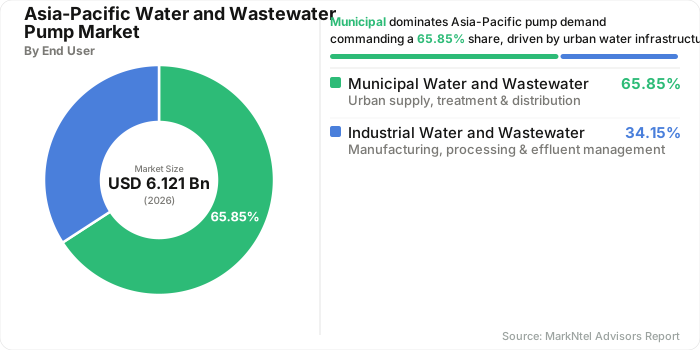
In 2025, the municipal water & wastewater segment emerged as the leading end-user in the Asia-Pacific water and wastewater pump market, capturing approximately 65.85% of the total market share. The segment’s dominance is primarily driven by sustained government investments in urban water supply systems, sewage treatment infrastructure, desalination plants, and flood management projects. Rapid urbanization, rising population density, and increasing regulatory focus on safe water distribution and wastewater treatment have significantly strengthened demand for large-capacity and energy-efficient pumping systems across municipal utilities. Furthermore, ongoing smart city developments and public infrastructure modernization programs continue to reinforce the segment’s strong market position.
Looking ahead, the industrial water & wastewater segment is projected to witness the fastest growth, registering a CAGR of around 6.01% during 2026–2032. This anticipated expansion is supported by increasing industrialization across sectors such as manufacturing, chemicals, power generation, and food & beverage. Additionally, tightening environmental compliance standards, growing adoption of water recycling technologies, and the implementation of zero-liquid discharge (ZLD) practices are expected to accelerate pump demand within industrial facilities across the region.
Asia-Pacific Water and Wastewater Pump Market (2026-32): Regional Projection
Geographically, the Asia-Pacific Water and Wastewater Pump Market expands across:
- Japan
- South Korea
- China
- India
- Australia
- Indonesia
- Rest of Asia Pacific
Within the Asia-Pacific region, China leads the water and wastewater pump market, accounting for the largest share of regional revenues. The country’s dominance is primarily driven by substantial investments in urban water infrastructure, wastewater treatment plants, desalination facilities, and flood control systems. Rapid urbanization, expansion of industrial zones, and increasingly stringent environmental regulations have significantly accelerated demand for high-capacity and energy-efficient pumping systems across municipal and industrial applications. Additionally, ongoing upgrades of aging pipeline networks and rural water supply programs further strengthen pump installations nationwide.
China’s leadership position is further reinforced by strong manufacturing capabilities and continued foreign direct investment in advanced production facilities. For instance:
- 2024: Grundfos unveiled a USD 100 million advanced manufacturing plant in Changshu to support automated production and growing demand for smart, energy-efficient water supply, wastewater, and industrial pumping systems.
Such developments highlight global manufacturers’ confidence in China’s long-term growth potential. Combined with the country’s robust industrial base and policy-driven infrastructure expansion, these factors firmly position China as the leading contributor to the Asia-Pacific water and wastewater pump market.
Gain a Competitive Edge with Our Asia-Pacific Water and Wastewater Pump Market Report
- Asia-Pacific Water and Wastewater Pump Market Report by MarkNtel Advisors provides a detailed & thorough analysis of market size & share, growth rate, competitive landscape, and key players. This comprehensive analysis helps businesses gain a holistic understanding of the market dynamics & make informed decisions.
- This report also highlights current market trends & future projections, allowing businesses to identify emerging opportunities & potential challenges. By understanding market forecasts, companies can align their strategies & stay ahead of the competition.
- Asia-Pacific Water and Wastewater Pump Market Report aids in assessing & mitigating risks associated with entering or operating in the market. By understanding market dynamics, regulatory frameworks, and potential challenges, businesses can develop strategies to minimize risks & optimize their operations.
*Reports Delivery Format - Market research studies from MarkNtel Advisors are offered in PDF, Excel and PowerPoint formats. Within 24 hours of the payment being successfully received, the report will be sent to your email address.
Frequently Asked Questions
- Market Segmentation
- Introduction
- Market Definition
- Research Process
- Assumptions
- Executive Summary
- Asia-Pacific Water and Wastewater Pump Market Trends & Insights
- Asia-Pacific Water and Wastewater Pump Market Regulations & Policies
- Asia-Pacific Water and Wastewater Pump Market Dynamics
- Growth Drivers
- Challenges
- Asia-Pacific Water and Wastewater Pump Market PORTER’s Five Forces Analysis
- Asia-Pacific Water and Wastewater Pump Market Hotspots & Opportunities
- Asia-Pacific Water and Wastewater Pump Market Outlook, 2022-2032
- Market Size & Analysis
- By Revenues (USD Million)
- Market Segmentation & Analysis
- By Types of Pumps
- Centrifugal Pump- Market Size & Forecast 2022-2032, USD Million
- Overhung Pump- Market Size & Forecast 2022-2032, USD Million
- Vertical Inline- Market Size & Forecast 2022-2032, USD Million
- Horizontal End Suction- Market Size & Forecast 2022-2032, USD Million
- Split Case Pump- Market Size & Forecast 2022-2032, USD Million
- Single/Two Stage- Market Size & Forecast 2022-2032, USD Million
- Multistage- Market Size & Forecast 2022-2032, USD Million
- Vertical Pump- Market Size & Forecast 2022-2032, USD Million
- Turbine- Market Size & Forecast 2022-2032, USD Million
- Axial- Market Size & Forecast 2022-2032, USD Million
- Mixed Flow- Market Size & Forecast 2022-2032, USD Million
- Submersible Pump- Market Size & Forecast 2022-2032, USD Million
- Solid Handling- Market Size & Forecast 2022-2032, USD Million
- Non-solid Handling- Market Size & Forecast 2022-2032, USD Million
- Overhung Pump- Market Size & Forecast 2022-2032, USD Million
- Centrifugal Pump- Market Size & Forecast 2022-2032, USD Million
- Positive Displacement Pump- Market Size & Forecast 2022-2032, USD Million
- Diaphragm Pump- Market Size & Forecast 2022-2032, USD Million
- Piston Pump- Market Size & Forecast 2022-2032, USD Million
- Gear Pump- Market Size & Forecast 2022-2032, USD Million
- Lobe Pump- Market Size & Forecast 2022-2032, USD Million
- Progressive Cavity Pump- Market Size & Forecast 2022-2032, USD Million
- Screw Pump- Market Size & Forecast 2022-2032, USD Million
- Vane Pump- Market Size & Forecast 2022-2032, USD Million
- Peristaltic Pump- Market Size & Forecast 2022-2032, USD Million
- Others- Market Size & Forecast 2022-2032, USD Million
- By Types of Pumps
- By End User
- Industrial Water and Wastewater- Market Size in USD Million, 2022-2032
- Centrifugal Pump- Market Size in USD Million, 2022-2032
- Overhung Pump- Market Size in USD Million, 2022-2032
- Vertical Inline- Market Size in USD Million, 2022-2032
- Horizontal End Suction- Market Size in USD Million, 2022-2032
- Split Case Pump- Market Size in USD Million, 2022-2032
- Single/Two Stage- Market Size in USD Million, 2022-2032
- Multistage- Market Size in USD Million, 2022-2032
- Vertical Pump- Market Size in USD Million, 2022-2032
- Turbine- Market Size in USD Million, 2022-2032
- Solid handling- Market Size in USD Million, 2022-2032
- Non-solid handling- Market Size in USD Million, 2022-2032
- Axial- Market Size in USD Million, 2022-2032
- Mixed Flow- Market Size in USD Million, 2022-2032
- Submersible Pump- Market Size in USD Million, 2022-2032
- Solid Handling- Market Size in USD Million, 2022-2032
- Non-solid Handling- Market Size in USD Million, 2022-2032
- Turbine- Market Size in USD Million, 2022-2032
- Overhung Pump- Market Size in USD Million, 2022-2032
- Positive Displacement Pump- Market Size in USD Million, 2022-2032
- Diaphragm Pump- Market Size in USD Million, 2022-2032
- Piston Pump- Market Size in USD Million, 2022-2032
- Gear Pump- Market Size in USD Million, 2022-2032
- Lobe Pump- Market Size in USD Million, 2022-2032
- Progressive Cavity Pump- Market Size in USD Million, 2022-2032
- Screw Pump- Market Size in USD Million, 2022-2032
- Vane Pump- Market Size in USD Million, 2022-2032
- Peristaltic Pump- Market Size in USD Million, 2022-2032
- Centrifugal Pump- Market Size in USD Million, 2022-2032
- Municipal Water and Wastewater- Market Size in USD Million, 2022-2032
- Centrifugal Pump- Market Size in USD Million, 2022-2032
- Overhung Pump- Market Size in USD Million, 2022-2032
- Vertical Inline- Market Size in USD Million, 2022-2032
- Horizontal End Suction- Market Size in USD Million, 2022-2032
- Split Case Pump- Market Size in USD Million, 2022-2032
- Single/Two Stage- Market Size in USD Million, 2022-2032
- Multistage- Market Size in USD Million, 2022-2032
- Vertical Pump- Market Size in USD Million, 2022-2032
- Turbine- Market Size in USD Million, 2022-2032
- Solid handling- Market Size in USD Million, 2022-2032
- Non-solid handling- Market Size in USD Million, 2022-2032
- Axial- Market Size in USD Million, 2022-2032
- Mixed Flow- Market Size in USD Million, 2022-2032
- Submersible Pump- Market Size in USD Million, 2022-2032
- Solid Handling- Market Size in USD Million, 2022-2032
- Non-solid Handling- Market Size in USD Million, 2022-2032
- Turbine- Market Size in USD Million, 2022-2032
- Overhung Pump- Market Size in USD Million, 2022-2032
- Positive Displacement Pump- Market Size in USD Million, 2022-2032
- Diaphragm Pump- Market Size in USD Million, 2022-2032
- Piston Pump- Market Size in USD Million, 2022-2032
- Gear Pump- Market Size in USD Million, 2022-2032
- Lobe Pump- Market Size in USD Million, 2022-2032
- Progressive Cavity Pump- Market Size in USD Million, 2022-2032
- Screw Pump- Market Size in USD Million, 2022-2032
- Vane Pump- Market Size in USD Million, 2022-2032
- Peristaltic Pump- Market Size in USD Million, 2022-2032
- Centrifugal Pump- Market Size in USD Million, 2022-2032
- Industrial Water and Wastewater- Market Size in USD Million, 2022-2032
- By Application
- Water- Market Size & Forecast 2022-2032, USD Million
- Waste Water- Market Size & Forecast 2022-2032, USD Million
- By Region
- Japan
- South Korea
- China
- India
- Australia
- Indonesia
- Rest of Asia-Pacific
- By Company
- Competition Characteristics
- Market Share of Leading Companies
- Market Size & Analysis
- Japan Water and Wastewater Pump Market Outlook, 2022–2032
- Market Size & Outlook
- By Revenue (USD Million)
- Market Segmentation & Outlook
- By Types of Pumps- Market Size & Forecast 2022–2032, USD Million
- By End Users- Market Size & Forecast 2022-2032, USD Million
- Market Size & Outlook
- South Korea Water and Wastewater Pump Market Outlook, 2022–2032
- Market Size & Outlook
- By Revenue (USD Million)
- Market Segmentation & Outlook
- By Types of Pumps- Market Size & Forecast 2022–2032, USD Million
- By End Users- Market Size & Forecast 2022-2032, USD Million
- Market Size & Outlook
- China Water and Wastewater Pump Market Outlook, 2022–2032
- Market Size & Outlook
- By Revenue (USD Million)
- Market Segmentation & Outlook
- By Types of Pumps- Market Size & Forecast 2022–2032, USD Million
- By End Users- Market Size & Forecast 2022-2032, USD Million
- Market Size & Outlook
- India Water and Wastewater Pump Market Outlook, 2022–2032
- Market Size & Outlook
- By Revenue (USD Million)
- Market Segmentation & Outlook
- By Types of Pumps- Market Size & Forecast 2022–2032, USD Million
- By End Users- Market Size & Forecast 2022-2032, USD Million
- Market Size & Outlook
- Australia Water and Wastewater Pump Market Outlook, 2022–2032
- Market Size & Outlook
- By Revenue (USD Million)
- Market Segmentation & Outlook
- By Types of Pumps- Market Size & Forecast 2022–2032, USD Million
- By End Users- Market Size & Forecast 2022-2032, USD Million
- Market Size & Outlook
- Indonesia Water and Wastewater Pump Market Outlook, 2022–2032
- Market Size & Outlook
- By Revenue (USD Million)
- Market Segmentation & Outlook
- By Types of Pumps- Market Size & Forecast 2022–2032, USD Million
- By End Users- Market Size & Forecast 2022-2032, USD Million
- Market Size & Outlook
- Asia-Pacific Water and Wastewater Pump Market Key Strategic Imperatives for Growth & Success
- Competition Outlook
- Company Profiles
- Kirloskar Brothers Limited
- Business Description
- Product Segments
- Strategic Alliances or Partnerships
- Recent Developments
- Financial Details
- Others
- Flowserve
- Business Description
- Product Segments
- Strategic Alliances or Partnerships
- Recent Developments
- Financial Details
- Others
- KSB
- Business Description
- Product Segments
- Strategic Alliances or Partnerships
- Recent Developments
- Financial Details
- Others
- Xylem
- Business Description
- Product Segments
- Strategic Alliances or Partnerships
- Recent Developments
- Financial Details
- Others
- Grundfos
- Business Description
- Product Segments
- Strategic Alliances or Partnerships
- Recent Developments
- Financial Details
- Others
- Wilo
- Business Description
- Product Segments
- Strategic Alliances or Partnerships
- Recent Developments
- Financial Details
- Others
- Shanghai Kaiquan Pump Group
- Business Description
- Product Segments
- Strategic Alliances or Partnerships
- Recent Developments
- Financial Details
- Others
- Sulzer
- Business Description
- Product Segments
- Strategic Alliances or Partnerships
- Recent Developments
- Financial Details
- Others
- Pentair PLC
- Business Description
- Product Segments
- Strategic Alliances or Partnerships
- Recent Developments
- Financial Details
- Others
- Liancheng Group
- Business Description
- Product Segments
- Strategic Alliances or Partnerships
- Recent Developments
- Financial Details
- Others
- Ebara
- Business Description
- Product Segments
- Strategic Alliances or Partnerships
- Recent Developments
- Financial Details
- Others
- Shakti Pumps
- Business Description
- Product Segments
- Strategic Alliances or Partnerships
- Recent Developments
- Financial Details
- Others
- CRI Pumps
- Business Description
- Product Segments
- Strategic Alliances or Partnerships
- Recent Developments
- Financial Details
- Others
- Others
- Kirloskar Brothers Limited
- Company Profiles
- Disclaimer
MarkNtel Advisors follows a robust and iterative research methodology designed to ensure maximum accuracy and minimize deviation in market estimates and forecasts. Our approach combines both bottom-up and top-down techniques to effectively segment and quantify various aspects of the market. A consistent feature across all our research reports is data triangulation, which examines the market from three distinct perspectives to validate findings. Key components of our research process include:
1. Scope & Research Design At the outset, MarkNtel Advisors define the research objectives and formulate pertinent questions. This phase involves determining the type of research—qualitative or quantitative—and designing a methodology that outlines data collection methods, target demographics, and analytical tools. They also establish timelines and budgets to ensure the research aligns with client goals.
2. Sample Selection and Data Collection In this stage, the firm identifies the target audience and determines the appropriate sample size to ensure representativeness. They employ various sampling methods, such as random or stratified sampling, based on the research objectives. Data collection is carried out using tools like surveys, interviews, and observations, ensuring the gathered data is reliable and relevant.
3. Data Analysis and Validation Once data is collected, MarkNtel Advisors undertake a rigorous analysis process. This includes cleaning the data to remove inconsistencies, employing statistical software for quantitative analysis, and thematic analysis for qualitative data. Validation steps are taken to ensure the accuracy and reliability of the findings, minimizing biases and errors.

4. Data Forecast and FinalizationThe final phase involves forecasting future market trends based on the analyzed data. MarkNtel Advisors utilize predictive modeling and time series analysis to anticipate market behaviors. The insights are then compiled into comprehensive reports, featuring visual aids like charts and graphs, and include strategic recommendations to inform client decision-making
We offer flexible licensing options to cater to varying organizational needs. Choose the pricing pack that best suits your requirements:
Buy Now Inquire Before Buying
 Request Customization
 Talk to our Consultant