

By Offering (Solutions, Services), By Deployment Model (Public Cloud, Private Cloud, Hybrid Cloud), By Service Model (Infrastructure as a Service (IaaS), Platform as a Service (PaaS), Software as a Se... ... S), Software as a Service (SaaS)), By Application (Network Operations (Network Monitoring & Management, Traffic Optimization), Cloud & IT Operations (Data Storage, Cloud Infrastructure Management), Business Operations (Billing & Revenue Management, Customer Experience Management), Others), By Network Type (Legacy Networks (2G/3G), 4G / LTE Networks, 5G Networks, Fixed Broadband Networks), By End User (Telecom Operators (Mobile Network Operators (MNOs), Fixed Operators), Enterprises), and others Read more
- ICT & Electronics
- Jun 2026
- 280
- PDF, Excel, PPT
South America Telecom Cloud Market Key Takeaways
- The South America telecom cloud market size was valued at USD 2.29 billion in 2025 and will grow from USD 2.34 billion in 2026 to USD 6.82 billion by 2032.
- The industry is projected to witness steady growth at a CAGR of 19.52% during the forecast period, i.e., 2026-32.
- In 2026, Brazil dominates regional demand, contributing approximately 48% share.
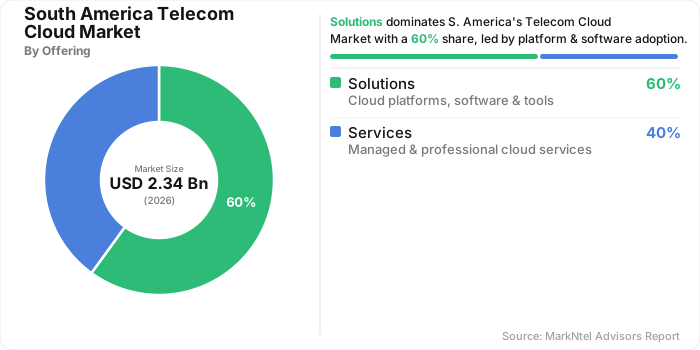
- In terms of offering, solutions lead with nearly 60% share in 2026.
- Telecom operators represent the largest end-user segment, capturing about 72% share in 2026.
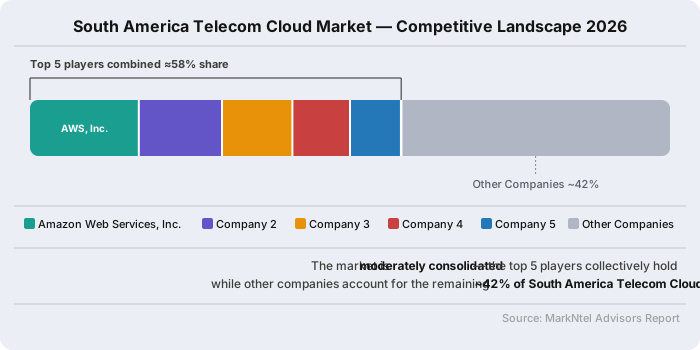
- The competitive landscape remains moderately consolidated, with the top five players collectively holding around 58% share, reflecting a balance between global leaders and regional participants.
South America Telecom Cloud Market Size and Outlook
The South America telecom cloud market was valued at USD 2.29 billion in 2025 and is projected to grow from USD 2.34 billion in 2026 to USD 6.82 billion by 2032, registering a CAGR of 19.52% during 2026–2032. This growth is supported by rapid 5G deployment and increasing reliance on distributed cloud architectures to manage rising data traffic efficiently. As telecom operators transition toward software-defined environments, demand for scalable and flexible infrastructure is strengthening long-term cloud adoption prospects.
Infrastructure expansion and government-backed digital initiatives are reinforcing growth across the South America telecom cloud industry. In 2024, Brazil launched the Brazilian Artificial Intelligence Plan, committing approximately USD 4 billion to AI development and computing infrastructure. This initiative is expected to strengthen the regional compute ecosystem and support advanced service delivery. Additionally, Microsoft launched its Chile Central cloud region in 2025, comprising three data centers to enhance local processing and accelerate telecom digital transformation.
A notable trend is the integration of AI and automation into telecom cloud environments, enabling operators to enhance operational efficiency and network resilience. In March 2026, Nokia expanded its partnership with TIM Brasil to modernize 5G infrastructure across 14 additional Brazilian states, covering nearly 42% of the population. The deployment integrates AI-enabled solutions and network automation platforms, supporting real-time optimization and predictive maintenance across telecom networks.
At the same time, increasing investments in regional cloud infrastructure are creating strong opportunities for market expansion. The establishment of localized cloud regions and data center ecosystems enables telecom operators to meet regulatory requirements while improving service delivery and reducing latency. These developments support enterprise adoption and strengthen digital ecosystems across South America. In conclusion, sustained infrastructure investments, artificial intelligence integration, and evolving enterprise demand will drive scalable telecom cloud adoption.
South America Telecom Cloud Market Key Indicators
- Brazil’s 5G rollout reached 815 municipalities by July 2024, serving around 28 million users through six telecom operators, according to Anatel-linked data . This extensive footprint is supported by cloud-native cores, significantly increasing virtualized network workloads. As deployment density rises, operators are increasingly relying on virtual network functions to manage scalability, enhance operational efficiency, and support dynamic service delivery across the country’s rapidly evolving telecom infrastructure.
- Argentina’s ENACOM launched a 5G spectrum auction offering 300 MHz across three blocks, each priced at USD 350 million, targeting total proceeds of USD 1.05 billion in February 2026 . This initiative is expected to accelerate network rollouts by key operators. As infrastructure expands, telecom providers are increasingly adopting cloud orchestration platforms to manage distributed resources, streamline operations, and support efficient deployment of next-generation telecom services across the Southern Cone.
- Chile’s government advanced a 5G tender allocating 1,600 MHz of spectrum, alongside expected operator investments of approximately USD 3 billion over five years . Coupled with the National Data Center Plan, this initiative is enhancing national digital infrastructure. The expansion is driving adoption of low-latency computing solutions, enabling telecom operators to deliver faster services, improve network responsiveness, and support emerging digital applications across Chile and neighboring South American markets.
- Uruguay’s regulator URSEC awarded 3.5 GHz spectrum licenses to Claro and Movistar for approximately USD 28 million each under long-term agreements, while reserving capacity for Antel. As one of the first countries to deploy commercial 5G, Uruguay demonstrates how early adoption drives continuous demand for advanced telecom infrastructure. Operators are increasingly utilizing digital network transformation strategies to improve flexibility, optimize service delivery, and sustain long-term innovation.
- Mobile internet penetration in Colombia reached 86.2 per 100 inhabitants by the end of 2023, up from 77.7 a year earlier, reflecting strong growth in data consumption. This surge is placing pressure on telecom infrastructure to scale efficiently . To address increasing demand, operators are deploying real-time data processing capabilities, enabling faster insights, improved traffic management, and enhanced network performance across the country’s expanding digital landscape.
South America Telecom Cloud Market Scope
| Category | Segments |
|---|---|
| By Offering | Solutions, Services |
| By Deployment Model | Public Cloud, Private Cloud, Hybrid Cloud |
| By Service Model | Infrastructure as a Service (IaaS), Platform as a Service (PaaS), Software as a Service (SaaS |
| By Application | Network Operations (Network Monitoring & Management, Traffic Optimization), Cloud & IT Operations (Data Storage, Cloud Infrastructure Management), Business Operations (Billing & Revenue Management, Customer Experience Management), Others |
| By Network Type | Legacy Networks (2G/3G), 4G / LTE Networks, 5G Networks, Fixed Broadband Networks |
| By End User | Telecom Operators (Mobile Network Operators (MNOs), Fixed Operators), Enterprises |
South America Telecom Cloud Market Growth Drivers
Rapid Expansion of 5G Infrastructure
The rapid rollout of 5G infrastructure across South America, particularly in Brazil, is significantly strengthening the South America telecom cloud sector. According to Agência Nacional de Telecomunicações (Anatel), 5G services were operational in at least 589 cities by mid-2024, supported by nearly 28 million users and coverage exceeding 45% of the population. These deployment levels that exceeded initial rollout expectations and increasing demand for cloud computing solutions to manage expanding network traffic and digital services.
The regulatory roadmap further reinforces long-term growth in the South America telecom cloud industry. Under Brazil’s 5G spectrum auction commitments, nationwide deployment across all 5,570 municipalities is mandated by 2029, with phased expansion targets extending into smaller cities between 2026 and 2029. The program also includes investments in fiber backhaul, enterprise connectivity, and infrastructure expansion in underserved regions such as the Amazon, driving adoption of edge computing and advanced telecom ecosystems.
As network density and data traffic continue to rise, telecom operators are increasingly transitioning toward cloud-native cores and automated architectures. This shift is essential to support low-latency services and rising digital consumption efficiently. Increasing reliance on network virtualization enables flexible scaling and cost optimization. This sustained 5G expansion and regulatory-backed investments will accelerate telecom cloud adoption, enabling scalable operations and supporting next-generation digital services across South America.
Recent Trends
Integration of AI and Automation in Telecom Cloud
The integration of artificial intelligence and automation is emerging as a defining trend in the South America telecom cloud market as operators aim to improve efficiency and manage increasingly complex cloud-native environments. With telecom networks shifting toward virtualized and software-defined architectures, the need for intelligent systems capable of handling dynamic workloads is rising. This transition is accelerating the adoption of AI-driven analytics and automated network management tools across telecom cloud ecosystems.
A notable development in this space was observed in Brazil in 2025, where Telefónica Vivo implemented self-healing capabilities within its 5G core network. According to Telefónica, the system enables automated detection and correction of network anomalies within its virtualized infrastructure. This reduces manual intervention, enhances operational efficiency, and strengthens network resilience, demonstrating how automation is becoming embedded within telecom cloud operations.
As most modern 5G networks operate on Network Functions Virtualization-based architectures, AI integration is becoming essential for ensuring service continuity and optimizing performance. The growing reliance on autonomous networks and intelligent orchestration is expected to expand further as operators scale cloud-native deployments. This trend is strengthening the South America telecom cloud industry, enabling more agile, efficient, and scalable telecom infrastructure.
South America Telecom Cloud Market Opportunities and Challenges
Data Localization Regulations Driving Sovereign Cloud Demand
Compliance with Brazil’s evolving data protection framework is increasing operational complexity across the South America telecom cloud demand. The Autoridade Nacional de Proteção de Dados (ANPD) introduced Resolution No. 19/2024, mandating approved mechanisms such as Standard Contractual Clauses for international data transfers. Telecom operators handling subscriber and enterprise data must now implement stricter governance frameworks, increasing compliance costs and limiting offshore processing, thereby accelerating the need for data residency and secure in-country infrastructure solutions.
At the same time, these regulatory pressures are unlocking strong growth opportunities within the South America telecom cloud industry by accelerating investments in sovereign cloud infrastructure. In May 2025, Amazon Web Services announced plans to invest over USD 4 billion to launch a new cloud region in Chile by 2026, enabling localized data processing and compliance with regional regulations. Such investments are strengthening digital ecosystems while supporting enterprise and telecom demand for secure, compliant cloud environments.
As regulatory enforcement intensifies, telecom operators are increasingly shifting toward localized cloud deployments and compliant architectures. This transition enables improved governance while reducing exposure to cross-border risks. These tightening data localization requirements are transforming compliance burdens into long-term growth opportunities, driving adoption of sovereign telecom cloud solutions and reinforcing infrastructure investments across South America.
Segmentation Insights
Solutions Segment Anchoring Telecom Cloud Expansion
Solutions account for approximately 60% of total revenue in the South America telecom cloud industry, reflecting strong demand for integrated platforms that support network virtualization, orchestration, and core modernization. Telecom operators are prioritizing software-driven solutions to manage increasing data traffic and enable scalable service delivery. The growing deployment of 5G networks is further accelerating reliance on cloud infrastructure platforms.
The dominance of solutions is also driven by the shift toward advanced digital architectures across regional telecom ecosystems. Operators are increasingly investing in platforms that support automation, analytics, and real-time network optimization. These solutions enable seamless integration of emerging technologies and improve operational efficiency. Additionally, the adoption of service delivery platforms is enhancing customer experience by enabling faster provisioning and improved service quality.
In contrast, the services segment is growing steadily but remains comparatively smaller. While services play a crucial role in supporting deployment and maintenance, their revenue contribution is limited relative to solutions. However, increasing complexity in telecom networks is expected to drive gradual demand for support services. The continued emphasis on scalable platforms and software-driven capabilities will sustain the dominance of solutions within the regional telecom cloud landscape. Based on the offering, the scope has been divided into:
- Solutions
- Services
Telecom Operators Leading End User Demand
Telecom operators account for approximately 72% of total revenue, establishing them as the dominant end-user group in the South America telecom cloud landscape. This leadership is driven by extensive investments in 5G deployment, network modernization, and digital service expansion. Mobile and fixed operators are increasingly adopting cloud-based network management solutions to enhance scalability, improve service delivery, and efficiently manage growing data traffic across rapidly evolving telecom ecosystems.
Within this segment, Mobile Network Operators (MNOs) represent the largest contributors due to their continuous expansion of mobile broadband and 5G infrastructure. Fixed operators are also strengthening their presence by upgrading legacy systems and enhancing broadband capabilities. Both segments are actively integrating virtualized core networks to enable flexible operations and support advanced digital services, ensuring seamless connectivity and improved network performance across urban and rural areas.
The enterprise segment, while smaller, is witnessing steady growth as organizations increasingly adopt telecom cloud solutions to support digital transformation initiatives. Enterprises are leveraging these platforms for enhanced connectivity and operational efficiency. The adoption of enterprise connectivity solutions is rising across various industries. The sustained operator investments and expanding enterprise adoption will continue to shape end-user demand dynamics across the regional telecom cloud landscape. The analysis identifies the following key end-user segments:
- Telecom Operators
- Enterprises
South America Telecom Cloud Market Geographical Outlook
Brazil accounts for approximately 48% of total telecom cloud demand across South America, making it the leading regional market due to its large telecom subscriber base and advanced digital infrastructure. The country’s rapid 5G rollout and increasing enterprise digitalization are accelerating adoption of cloud-based telecom solutions. Operators are increasingly leveraging data center ecosystems to support scalable network operations, improve service delivery, and manage rising data traffic efficiently across urban and semi-urban regions.
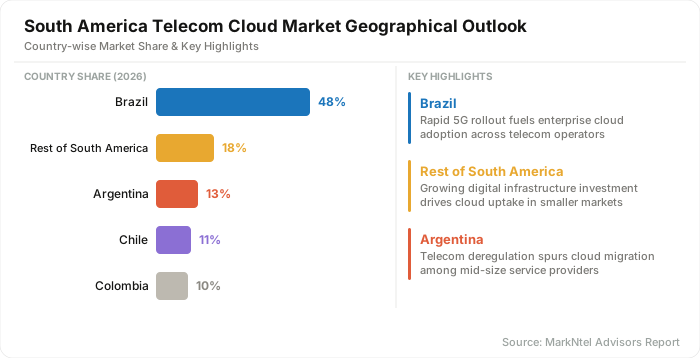
Federal policy is playing a critical role in reinforcing Brazil’s leadership position. On September 17, 2025, the government enacted Provisional Measure No. 1.318/2025, establishing the Special Tax Regime for Data Center Services (ReData) under the National Data Center Policy. The policy suspends federal taxes on imported ICT equipment for eligible projects, creating a favorable investment environment. This regulatory push is accelerating adoption of hyperscale infrastructure, strengthening Brazil’s position as a regional hub for telecom cloud development.
Through this policy framework, Brazil is targeting up to approximately USD 370.7 billion in data center investments over the next decade, highlighting strong long-term growth potential . These large-scale investments are expected to expand computing capacity, enhance connectivity, and support cloud-native telecom deployments. The sustained policy support, infrastructure expansion, and increasing digital demand will continue to drive Brazil’s dominance in the regional telecom cloud landscape.
South America Telecom Cloud Market Competitive Analysis
The South America telecom cloud market is characterized by the strong presence of global hyperscalers and telecom technology providers, with key leaders including Amazon Web Services, Microsoft, Google, Huawei Technologies, and Nokia, which collectively account for an estimated 58% of the market share. The market structure is therefore moderately consolidated, with dominant global firms complemented by regional operators and service providers. The strategic collaborations, continuous infrastructure investments, and technological differentiation, where hyperscalers lead platform innovation while telecom vendors and regional players strengthen localized deployment, integration, and service delivery capabilities.
Leading Companies in the South America Telecom Cloud Industry
- Amazon Web Services, Inc.
- Microsoft Corporation
- Google LLC
- Oracle Corporation
- International Business Machines Corporation
- Huawei Technologies Co., Ltd.
- Telefonaktiebolaget LM Ericsson
- Nokia Corporation
- América Móvil, S.A.B. de C.V.
- Telefónica, S.A.
- Cirion Technologies
- TIVIT Terceirização de Processos, Serviços e Tecnologia S.A.
- Others
South America Telecom Cloud Industry News and Recent Developments
August 2025: Cirion Technologies Expands Buenos Aires Data Center to Support AI and Cloud Growth
Cirion Technologies announced the expansion of its BUE1 data center in Buenos Aires, Argentina. The project will add more than 2 MW of capacity and approximately 160 additional racks to support increasing demand for AI workloads, cloud services, and digital infrastructure. Cirion also confirmed ongoing data center developments in Santiago, Lima, and Rio de Janeiro, reinforcing its regional infrastructure footprint.
Impact Analysis: The expansion strengthens South America's cloud infrastructure ecosystem by increasing regional computing capacity and improving connectivity for telecom operators, hyperscalers, and enterprises. Enhanced colocation and interconnection capabilities support the migration of network functions and enterprise applications to cloud environments. The project also reflects growing demand for AI-ready infrastructure, which requires scalable processing and storage resources.
May 2025: AWS Announces USD 4 Billion Cloud Infrastructure Region in Chile
Amazon Web Services (AWS) announced an investment of more than USD 4 billion to establish the AWS South America (Chile) Region, marking one of the largest technology infrastructure investments in Chile's history. The project includes three availability zones and is expected to become operational by the second half of 2026. The new infrastructure is designed to serve growing cloud demand across Chile and Latin America while supporting secure, reliable, and low-latency cloud services.
Impact Analysis: This investment significantly strengthens South America's digital infrastructure landscape and creates a long-term growth catalyst for the telecom cloud ecosystem. The deployment of three data centers will expand regional computing capacity, improve data processing efficiency, and support enterprise migration toward cloud-native environments. The project also aligns with Chile's National Data Center Plan, reinforcing the country's position as a regional technology hub.
May 2025: Cirion and Megaport Partner to Expand Cloud Connectivity in Brazil
Cirion Technologies partnered with Megaport to expand cloud connectivity capabilities across Cirion’s São Paulo and Rio de Janeiro data centers. The partnership provides enterprises and service providers with direct access to more than 280 cloud on-ramps, over 410 service providers, and multiple internet exchanges worldwide through Megaport’s Network-as-a-Service platform.
Impact Analysis: This development enhances the region’s cloud interconnection ecosystem by enabling faster and more efficient access to global cloud platforms. Improved connectivity infrastructure supports telecom operators seeking to deploy cloud-native services, virtualized network functions, and AI-enabled applications. The partnership also reduces network complexity and improves scalability for enterprises adopting multi-cloud strategies. As demand for low-latency digital services continues to rise, enhanced interconnection capabilities become increasingly important for telecom cloud environments.
- Market Segmentation
- Introduction
- Product Definition
- Research Process
- Assumptions
- Executive Summary
- South America Telecom Cloud Market Policies, Regulations, and Product Standards
- South America Telecom Cloud Market Trends & Developments
- South America Telecom Cloud Market Dynamics
- Growth Factors
- Challenges
- South America Telecom Cloud Market Value Chain Analysis
- Cloud Infrastructure Providers
- Telecom Equipment & Network Vendors
- Telecom Operators
- System Integrators & Platform Providers
- South America Telecom Cloud Market Hotspot & Opportunities
- South America Telecom Cloud Market Outlook, 2022-2032F
- Market Size & Outlook
- By Revenues (USD Million)
- Market Share & Outlook
- By Offering - Market Size & Forecast 2022-2032, USD Million
- Solutions
- Services
- By Deployment Model- Market Size & Forecast 2022-2032, USD Million
- Public Cloud
- Private Cloud
- Hybrid Cloud
- By Service Model- Market Size & Forecast 2022-2032, USD Million
- Infrastructure as a Service (IaaS)
- Platform as a Service (PaaS)
- Software as a Service (SaaS)
- By Application - Market Size & Forecast 2022-2032, USD Million
- Network Operations
- Network Monitoring & Management
- Traffic Optimization
- Cloud & IT Operations
- Data Storage
- Cloud Infrastructure Management
- Business Operations
- Billing & Revenue Management
- Customer Experience Management
- Others
- Network Operations
- By Network Type- Market Size & Forecast 2022-2032, USD Million
- Legacy Networks (2G/3G)
- 4G / LTE Networks
- 5G Networks
- Fixed Broadband Networks
- By End User - Market Size & Forecast 2022-2032, USD Million
- Telecom Operators
- Mobile Network Operators (MNOs)
- Fixed Operators
- Enterprises
- Telecom Operators
- By Country
- Brazil
- Argentina
- Chile
- Colombia
- Peru
- Rest of South America
- By Company
- Competition Characteristics
- Market Segmentation & Outlook
- By Offering - Market Size & Forecast 2022-2032, USD Million
- Market Size & Outlook
- Brazil Telecom Cloud Market Outlook, 2022-2032F
- Market Size & Outlook
- By Revenues (USD Million)
- Market Segmentation & Outlook
- By Offering - Market Size & Forecast 2022-2032, USD Million
- By Deployment Model- Market Size & Forecast 2022-2032, USD Million
- By Service Model- Market Size & Forecast 2022-2032, USD Million
- By Enterprise Type- Market Size & Forecast 2022-2032, USD Million
- By Application - Market Size & Forecast 2022-2032, USD Million
- By Network Type- Market Size & Forecast 2022-2032, USD Million
- By End User - Market Size & Forecast 2022-2032, USD Million
- Market Size & Outlook
- Argentina Telecom Cloud Market Outlook, 2022-2032F
- Market Size & Outlook
- By Revenues (USD Million)
- Market Segmentation & Outlook
- By Offering - Market Size & Forecast 2022-2032, USD Million
- By Deployment Model- Market Size & Forecast 2022-2032, USD Million
- By Service Model- Market Size & Forecast 2022-2032, USD Million
- By Enterprise Type- Market Size & Forecast 2022-2032, USD Million
- By Application - Market Size & Forecast 2022-2032, USD Million
- By Network Type- Market Size & Forecast 2022-2032, USD Million
- By End User - Market Size & Forecast 2022-2032, USD Million
- Market Size & Outlook
- Chile Telecom Cloud Market Outlook, 2022-2032F
- Market Size & Outlook
- By Revenues (USD Million)
- Market Segmentation & Outlook
- By Offering - Market Size & Forecast 2022-2032, USD Million
- By Deployment Model- Market Size & Forecast 2022-2032, USD Million
- By Service Model- Market Size & Forecast 2022-2032, USD Million
- By Enterprise Type- Market Size & Forecast 2022-2032, USD Million
- By Application - Market Size & Forecast 2022-2032, USD Million
- By Network Type- Market Size & Forecast 2022-2032, USD Million
- By End User - Market Size & Forecast 2022-2032, USD Million
- Market Size & Outlook
- Colombia Telecom Cloud Market Outlook, 2022-2032F
- Market Size & Outlook
- By Revenues (USD Million)
- Market Segmentation & Outlook
- By Offering - Market Size & Forecast 2022-2032, USD Million
- By Deployment Model- Market Size & Forecast 2022-2032, USD Million
- By Service Model- Market Size & Forecast 2022-2032, USD Million
- By Enterprise Type- Market Size & Forecast 2022-2032, USD Million
- By Application - Market Size & Forecast 2022-2032, USD Million
- By Network Type- Market Size & Forecast 2022-2032, USD Million
- By End User - Market Size & Forecast 2022-2032, USD Million
- Market Size & Outlook
- Peru Telecom Cloud Market Outlook, 2022-2032F
- Market Size & Outlook
- By Revenues (USD Million)
- Market Segmentation & Outlook
- By Offering - Market Size & Forecast 2022-2032, USD Million
- By Deployment Model- Market Size & Forecast 2022-2032, USD Million
- By Service Model- Market Size & Forecast 2022-2032, USD Million
- By Enterprise Type- Market Size & Forecast 2022-2032, USD Million
- By Application - Market Size & Forecast 2022-2032, USD Million
- By Network Type- Market Size & Forecast 2022-2032, USD Million
- By End User - Market Size & Forecast 2022-2032, USD Million
- Market Size & Outlook
- South America Telecom Cloud Market Key Strategic Imperatives for Success & Growth
- Competitive Outlook
- Company Profiles
- Amazon Web Services, Inc.
- Business Description
- Product Portfolio
- Collaborations & Alliances
- Recent Developments
- Financial Details
- Others
- Microsoft Corporation
- Business Description
- Product Portfolio
- Collaborations & Alliances
- Recent Developments
- Financial Details
- Others
- Google LLC
- Business Description
- Product Portfolio
- Collaborations & Alliances
- Recent Developments
- Financial Details
- Others
- Oracle Corporation
- Business Description
- Product Portfolio
- Collaborations & Alliances
- Recent Developments
- Financial Details
- Others
- International Business Machines Corporation
- Business Description
- Product Portfolio
- Collaborations & Alliances
- Recent Developments
- Financial Details
- Others
- Huawei Technologies Co., Ltd.
- Business Description
- Product Portfolio
- Collaborations & Alliances
- Recent Developments
- Financial Details
- Others
- Telefonaktiebolaget LM Ericsson
- Business Description
- Product Portfolio
- Collaborations & Alliances
- Recent Developments
- Financial Details
- Others
- Nokia Corporation
- Business Description
- Product Portfolio
- Collaborations & Alliances
- Recent Developments
- Financial Details
- Others
- América Móvil, S.A.B. de C.V.
- Business Description
- Product Portfolio
- Collaborations & Alliances
- Recent Developments
- Financial Details
- Others
- Telefónica, S.A.
- Business Description
- Product Portfolio
- Collaborations & Alliances
- Recent Developments
- Financial Details
- Others
- Cirion Technologies
- Business Description
- Product Portfolio
- Collaborations & Alliances
- Recent Developments
- Financial Details
- Others
- TIVIT Terceirização de Processos, Serviços e Tecnologia S.A.
- Business Description
- Product Portfolio
- Collaborations & Alliances
- Recent Developments
- Financial Details
- Others
- Others
- Amazon Web Services, Inc.
- Company Profiles
- Disclaimer

MarkNtel Advisors follows a robust and iterative research methodology designed to ensure maximum accuracy and minimize deviation in market estimates and forecasts. Our approach combines both bottom-up and top-down techniques to effectively segment and quantify various aspects of the market. A consistent feature across all our research reports is data triangulation, which examines the market from three distinct perspectives to validate findings. Key components of our research process include:
1. Scope & Research Design At the outset, MarkNtel Advisors define the research objectives and formulate pertinent questions. This phase involves determining the type of research—qualitative or quantitative—and designing a methodology that outlines data collection methods, target demographics, and analytical tools. They also establish timelines and budgets to ensure the research aligns with client goals.
2. Sample Selection and Data Collection In this stage, the firm identifies the target audience and determines the appropriate sample size to ensure representativeness. They employ various sampling methods, such as random or stratified sampling, based on the research objectives. Data collection is carried out using tools like surveys, interviews, and observations, ensuring the gathered data is reliable and relevant.
3. Data Analysis and Validation Once data is collected, MarkNtel Advisors undertake a rigorous analysis process. This includes cleaning the data to remove inconsistencies, employing statistical software for quantitative analysis, and thematic analysis for qualitative data. Validation steps are taken to ensure the accuracy and reliability of the findings, minimizing biases and errors.

4. Data Forecast and FinalizationThe final phase involves forecasting future market trends based on the analyzed data. MarkNtel Advisors utilize predictive modeling and time series analysis to anticipate market behaviors. The insights are then compiled into comprehensive reports, featuring visual aids like charts and graphs, and include strategic recommendations to inform client decision-making
We offer flexible licensing options to cater to varying organizational needs. Choose the pricing pack that best suits your requirements:
Buy Now Inquire Before Buying
 Request Customization