

Sovereign Cloud Market Research Report: Forecast (2026-2032)
By Sovereignty Type (Data Sovereignty, Operational Sovereignty, Technical Sovereignty), By Deployment Model (Cloud, On-Premises), By Enterprise Size (Large Enterprises, Small & Med ... ium Enterprises (SMEs)), By End-Use Industry (Government & Defense, Banking, Financial Services & Insurance (BFSI), Healthcare & Life Sciences, Telecommunications, Energy & Utilities, Manufacturing, Others), and others Read more
- ICT & Electronics
- Jul 2026
- Pages 340
- Report Format: PDF, Excel, PPT
Sovereign Cloud Market
Projected 24.18% CAGR from 2026 to 2032
Study Period
2026-2032
Market Size (2026)
USD 156 Billion
Market Size (2032)
USD 572 Billion
Largest Region
North America
Projected CAGR
24.18%
Leading Segments
By Sovereignty Type: Data Sovereignty
Sovereign Cloud Market Key Takeaways
- The sovereign cloud market size was valued at USD 129 billion in 2025 and is projected to grow from USD 156 billion in 2026 to USD 572 billion by 2032.
- The industry is projected to reflect sustain growth at a steady CAGR of 24.18% during 2026-2032.
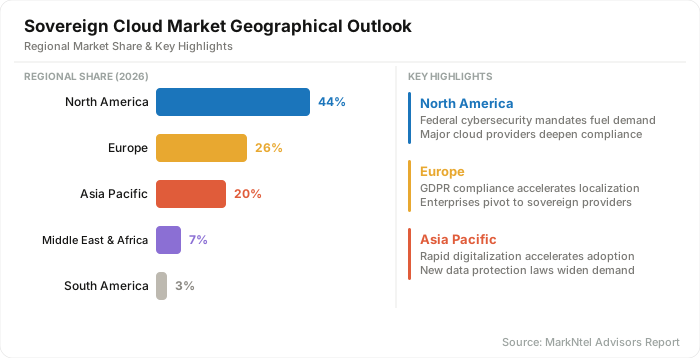
- North America holds the largest share of about 44% in 2026.
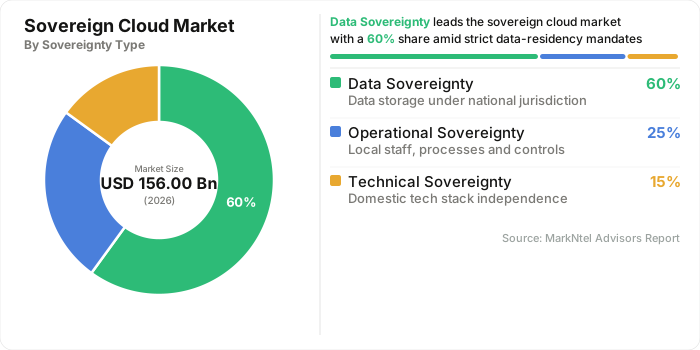
- By sovereignty type, data sovereignty holds a significant share of about 60% in 2026.
- By end user industry, government & defense seized a significant share of about 35% in 2026.
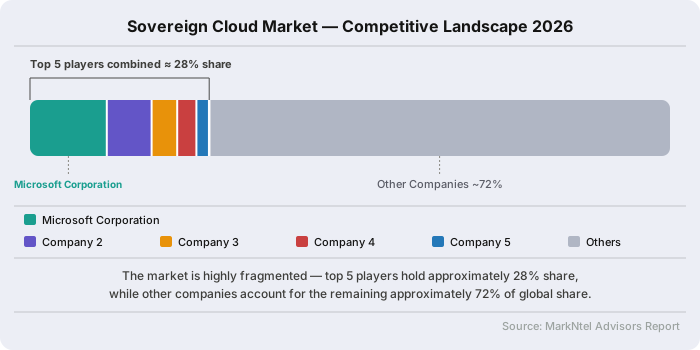
- The industry is highly fragmented. However, the top five players collectively account for nearly 28% share.
Sovereign Cloud Market Size and Outlook
The global sovereign cloud market size was valued at USD 129 billion in 2025 and is projected to grow from USD 156 billion in 2026 to USD 572 billion by 2032. Along with this, the market is estimated to grow at a CAGR of around 24.18% during the forecast period, i.e., 2026-32.
The market is entering a phase of accelerated expansion as governments, defense agencies, financial institutions, healthcare providers, and operators of critical infrastructure prioritize digital sovereignty alongside cybersecurity and regulatory compliance. Unlike conventional cloud services, sovereign cloud environments ensure that sensitive data, infrastructure, operations, and governance remain under national or regional jurisdiction, enabling organizations to comply with increasingly stringent data protection laws while strengthening resilience against geopolitical risks. The growing enforcement of regulations such as the European Union's GDPR, NIS2 Directive, DORA, and the EU Data Act has significantly increased demand for cloud solutions offering localized data storage, operational autonomy, and sovereign governance.
Industry investments further demonstrate the market's long-term potential. In June 2025, Amazon Web Services announced that its AWS European Sovereign Cloud would launch in Brandenburg, Germany, by the end of 2025, supported by a USD 8.91 billion investment. The platform features independent European governance, a dedicated Security Operations Center, and operations managed exclusively by EU residents, reflecting the growing emphasis on regional control over cloud infrastructure.
Competition is also intensifying as technology providers expand sovereign cloud capabilities. In 2025, SAP broadened its sovereign cloud portfolio by introducing on-site deployment options that allow customers to host SAP-managed cloud infrastructure within their own facilities while maintaining regulatory compliance and operational control. Similarly, in 2025, Google Cloud removed data transfer fees for organizations moving workloads within the European Union and the United Kingdom ahead of the EU Data Act, supporting multicloud adoption and reducing vendor lock-in.
Looking ahead, sovereign cloud adoption is expected to accelerate beyond Europe as governments worldwide strengthen digital sovereignty strategies and national cybersecurity frameworks. Growing investments in AI, defense modernization, critical infrastructure protection, and citizen digital services will continue to increase demand for cloud platforms that combine scalability with jurisdictional control, making sovereign cloud a strategic pillar of future public-sector and highly regulated enterprise digital transformation.
Sovereign Cloud Market Key Indicators
- According to Gartner, worldwide spending on sovereign cloud infrastructure is projected to increase from USD 59.3 billion in 2025 to USD 80.4 billion in 2026, representing a 35.6% year-over-year growth. Additionally, 80% of this expenditure is expected to support new digital applications and workloads rather than replacing existing cloud deployments, highlighting the growing preference for sovereign cloud in future digital transformation initiatives. This sustained investment reflects increasing demand for cloud environments that ensure operational control, regulatory compliance, and data protection, particularly across government, defense, financial services, and other highly regulated sectors.
- Expansion of domestic data center infrastructure is essential for supporting sovereign cloud services because local facilities enable data residency, operational control, and lower latency. According to the International Energy Agency (IEA), global electricity consumption by data centers is expected to increase from approximately 415 TWh in 2024 to more than 945 TWh by 2030, primarily driven by AI and cloud computing. This growth reflects substantial investments in domestic cloud infrastructure, enabling countries to strengthen sovereign cloud capabilities while improving digital resilience and supporting national digital sovereignty objectives.
- China’s sovereign cloud IaaS spending is expected to reach USD 47.4 billion in 2026, making it the largest market worldwide. The country’s early investment in domestic cloud ecosystems and local technology providers has reduced reliance on foreign cloud platforms compared with regions such as Europe. This development reflects China’s long-term strategy of strengthening digital self-sufficiency, securing critical data infrastructure, and maintaining greater control over cloud services, cybersecurity, and national digital assets.
Sovereign Cloud Market Scope
| Category | Segments |
|---|---|
| By Sovereignty Type | Data Sovereignty, Operational Sovereignty, Technical Sovereignty |
| By Deployment Model | Cloud, On-Premises |
| By Enterprise Size | Large Enterprises, Small & Medium Enterprises (SMEs |
| By End-Use Industry | Government & Defense, Banking, Financial Services & Insurance (BFSI), Healthcare & Life Sciences, Telecommunications, Energy & Utilities, Manufacturing, Others |
Sovereign Cloud Market Growth Drivers
Increasing Data Localization Regulations Accelerate Sovereign Cloud Adoption
The rapid expansion of data localization and sovereignty regulations is a primary driver of the sovereign cloud market, as governments increasingly require sensitive data to remain under domestic legal jurisdiction. India's Digital Personal Data Protection (DPDP) Act, 2023 established a comprehensive framework for digital personal data governance, while the implementation roadmap requires organizations to align with stricter compliance, security, and cross-border data transfer provisions.
The framework also enables the government to restrict transfers of specified personal data to designated jurisdictions, increasing demand for sovereign cloud infrastructure. Europe is strengthening digital sovereignty through its Data Union Strategy, which prioritizes secure data sharing, simplified compliance, and protection of EU-controlled data. The strategy includes around USD 117 million in ongoing investment to expand common European data spaces supporting AI and critical sectors, reinforcing the need for sovereign cloud environments.
Looking ahead, governments are expected to tighten enforcement of privacy laws, expand sector-specific data residency mandates, and invest further in sovereign digital infrastructure to support AI, defense, healthcare, and public services. India's phased implementation of the DPDP framework through 2027 and the EU's continued investment in data sovereignty initiatives will further accelerate sovereign cloud deployments.
Increasing regulatory obligations are transforming sovereign cloud from a compliance option into a strategic necessity. As countries continue strengthening data sovereignty frameworks, demand for locally governed, compliant, and secure cloud platforms will expand significantly, driving sustained growth in the sovereign cloud market.
Recent Trends
Growing Adoption of Hybrid and Distributed Sovereign Cloud Architectures
The sovereign cloud market is increasingly shifting toward hybrid and distributed cloud architectures, enabling organizations to combine the scalability of public cloud services with the security and jurisdictional control of sovereign cloud environments. This model allows sensitive workloads to remain within national borders while less-regulated applications leverage public cloud infrastructure, improving operational flexibility without compromising regulatory compliance. Reflecting this trend, Oracle expanded its distributed cloud strategy in 2025, offering multiple sovereign deployment models, including public, dedicated, isolated, and air-gapped cloud environments, allowing governments and regulated industries to choose the level of operational and data sovereignty required for critical workloads.
Furthermore, the European Commission's Digital Decade policy promotes interoperable cloud-edge infrastructure, targeting 75% of European enterprises to adopt cloud, AI, or big data technologies and the deployment of 10,000 climate-neutral, highly secure edge nodes by 2030. As of 2023, 45.2% of EU enterprises were already using cloud services, while the number of edge nodes increased from 498 in 2022 to approximately 1,836 in 2024, demonstrating rapid progress toward distributed cloud ecosystems.
The transition toward hybrid and distributed sovereign cloud architectures is redefining enterprise cloud strategies by balancing compliance, resilience, and scalability. As governments and enterprises increasingly adopt distributed sovereign infrastructure, this trend will accelerate innovation and sustain long-term growth in the global sovereign cloud ecosystem.
Sovereign Cloud Market Opportunities and Challenges
High Deployment Costs Create Opportunities for Strategic Infrastructure Investment
High infrastructure and deployment costs remain a significant challenge for the sovereign cloud market, as establishing sovereign cloud environments requires substantial investments in domestic data centers, secure networking infrastructure, advanced cybersecurity systems, cloud management platforms, and regulatory compliance capabilities. Unlike conventional public cloud deployments, sovereign cloud providers must also ensure localized data storage, operational control, and compliance with national security and privacy regulations, increasing capital and operational expenditures. These high upfront costs can delay adoption, particularly among small and medium-sized enterprises and developing economies where financial and technical resources are limited.
However, this challenge is creating substantial opportunities through government funding and public–private partnerships aimed at strengthening national digital sovereignty. In December 2023, the European Commission approved the Important Project of Common European Interest on Next Generation Cloud Infrastructure and Services (IPCEI-CIS), authorizing up to USD 1.30 billion in public funding from seven EU Member States.
The initiative is expected to attract an additional USD 1.52 billion in private investment to develop interoperable cloud and edge computing technologies, supporting Europe's long-term digital sovereignty objectives.
Although high deployment costs initially constrain market growth, they are accelerating long-term public and private investments in sovereign digital infrastructure. These initiatives will improve accessibility, reduce dependence on foreign cloud providers, and significantly drive the expansion of the global sovereign cloud market.
Segmentation Insights
Data Sovereignty Accounts for Approximately 60% of the Global Sovereign Cloud Infrastructure
Data Sovereignty accounts for approximately 60% of the sovereign cloud industry, making it the dominant sovereignty type due to growing regulatory requirements governing data residency, privacy, and jurisdictional control. Organizations across government, banking, healthcare, defense, and critical infrastructure sectors prioritize data sovereignty to ensure sensitive information is stored and processed within national borders and remains subject to domestic laws.
The increasing enforcement of regulations such as the EU General Data Protection Regulation (GDPR), India's Digital Personal Data Protection (DPDP) Act, 2023, and similar data governance frameworks worldwide has significantly accelerated demand for sovereign cloud solutions with localized data storage and processing capabilities. Additionally, the European Commission's Data Union Strategy (2025) aims to strengthen secure data sharing and digital sovereignty across the EU, further promoting investments in trusted cloud infrastructure.
As regulatory scrutiny intensifies and organizations seek greater control over critical digital assets, data sovereignty continues to be the primary requirement driving sovereign cloud adoption, reinforcing its position as the largest and most established segment within the global sovereign cloud platforms. Based on sovereignty type, the scope has been segmented into
- Data Sovereignty
- Operational Sovereignty
- Technical Sovereignty
Government & Defense Represent Approximately 35% of the Global Sovereign Cloud Industry
Government & Defense represent the largest end-user segment in the global sovereign cloud market, accounting for approximately 35% of total demand. The dominance of this segment is driven by the need to protect highly sensitive government, defense, intelligence, and citizen data while ensuring compliance with national security and data sovereignty regulations. Governments worldwide are accelerating the adoption of sovereign cloud platforms to modernize public services, strengthen cybersecurity, and reduce reliance on foreign-controlled cloud infrastructure.
For instance, in 2025, Microsoft introduced its Microsoft Sovereign Cloud portfolio, including National Partner Clouds such as Delos Cloud in Germany and Bleu in France, specifically designed to support public-sector organizations with locally governed cloud environments. Similarly, Amazon Web Services is developing the AWS European Sovereign Cloud to meet the stringent operational and regulatory requirements of European governments and regulated sectors. These initiatives, coupled with rising investments in secure digital infrastructure and national cloud strategies, continue to reinforce Government & Defense as the leading end-user segment in the global sovereign cloud market. Based on end use industry, the scope has been classified into
- Government & Defense
- Banking, Financial Services & Insurance (BFSI)
- Healthcare & Life Sciences
- Telecommunications
- Energy & Utilities
- Manufacturing
- Others
Sovereign Cloud Market Geographical Outlook
North America represents approximately 44% of the global sovereign cloud market, supported by advanced cloud infrastructure, stringent cybersecurity requirements, and growing investments in sovereign digital ecosystems across the United States and Canada. The region's leadership is driven by increasing demand from government agencies, defense organizations, financial institutions, and healthcare providers that require cloud environments with strict control over data residency, operational governance, and regulatory compliance.
A notable example is Amazon Web Services (AWS), which announced new sovereign cloud capabilities in 2025, enabling customers to maintain greater control over encryption, identity management, and data access while meeting national security and compliance requirements. Likewise, Microsoft Cloud for Sovereignty continues to expand across North America, providing governments with policy controls, confidential computing, and locally governed cloud services for sensitive workloads. The rapid adoption of artificial intelligence, critical infrastructure modernization, and zero-trust cybersecurity frameworks is further accelerating sovereign cloud deployment, reinforcing North America's position as the largest regional market.
Sovereign Cloud Market Competitive Analysis
The global sovereign cloud market is highly fragmented, with leading companies such as Microsoft Corporation, Amazon Web Services, Inc., Google LLC, Oracle Corporation, and International Business Machines Corporation collectively accounting for an estimated 28% of the global market share.
Key Players in Global Sovereign Cloud Market
- Microsoft Corporation
- Amazon Web Services, Inc.
- Google LLC
- Oracle Corporation
- International Business Machines Corporation
- SAP SE
- OVH Groupe SA
- Alibaba Cloud (Singapore) Private Limited
- Tencent Cloud Europe B.V.
- VMware LLC
- T-Systems International GmbH
- Atos SE
- Orange Business Services SA
- Thales S.A.
- Aruba S.p.A.
- Others
Sovereign Cloud Industry News and Recent Developments
July 2026: ESDS Launches Swaraj Cloud India's AI Sovereign Cloud Platform
ESDS Software Solution Limited introduced Swaraj Cloud, an AI-enabled sovereign cloud platform fully built and operated within India. Running entirely on ESDS-owned domestic infrastructure, the platform provides enterprise-grade AI, cloud computing, cybersecurity, and developer services while ensuring 100% Indian data residency and governance under Indian jurisdiction.
Impact Analysis: The launch of Swaraj Cloud strengthens India's sovereign cloud ecosystem by providing domestically controlled AI and cloud infrastructure for government agencies, regulated enterprises, and critical sectors. It reduces dependence on foreign cloud platforms while supporting compliance with India's evolving data protection framework. The platform is expected to accelerate sovereign AI adoption, encourage domestic digital infrastructure investments, and enhance India's long-term digital sovereignty capabilities.
July 2026: Kyndryl and Microsoft Expand Sovereignty Services
Kyndryl Holdings, Inc. partnered with Microsoft Corporation to integrate Kyndryl Sovereignty Solutioning with Microsoft Sovereign Cloud. The collaboration provides sovereignty readiness assessments, regulatory compliance support, and architectures for connected and disconnected cloud environments, helping organizations address GDPR, DORA, and NIS2 requirements.
Impact Analysis: The partnership broadens enterprise access to sovereign cloud solutions by combining Microsoft's cloud infrastructure with Kyndryl's consulting and implementation expertise. It enables organizations to simplify compliance with evolving regulations, modernize mission-critical workloads, and accelerate secure cloud migration. The collaboration is expected to drive sovereign cloud adoption across government, financial services, healthcare, and other highly regulated industries worldwide.
-
Amazon Web Services Launches AWS European Sovereign Cloud
Amazon Web Services, Inc. advanced its European Sovereign Cloud initiative by establishing an independently operated cloud region in Brandenburg, Germany. The platform is designed exclusively for European public-sector organizations and regulated industries, providing operational autonomy, EU-only governance, and localized data residency to meet stringent sovereignty requirements
Impact Analysis: AWS's European Sovereign Cloud strengthens the availability of independently governed cloud infrastructure for public-sector organizations and regulated industries across Europe. The initiative expands customer choice by offering localized operations, enhanced regulatory compliance, and operational autonomy while maintaining hyperscale cloud capabilities. It is expected to intensify competition among sovereign cloud providers and accelerate investments in sovereign cloud infrastructure across the European region.
Frequently Asked Questions
- Market Segmentation
- Introduction
- Product Definition
- Research Process
- Assumptions
- Executive Summary
- Sovereign Cloud Market Policies, Regulations, and Product Standards
- Sovereign Cloud Market Trends & Developments
- Sovereign Cloud Market Dynamics
- Growth Factors
- Challenges
- Sovereign Cloud Market Hotspot & Opportunities
- Sovereign Cloud Market Outlook, 2022-2032
- Market Size & Outlook
- By Revenues (USD Million)
- Market Segmentation & Outlook
- By Sovereignty Type- Market Size & Forecast 2022-2032, USD Million
- Data Sovereignty
- Operational Sovereignty
- Technical Sovereignty
- By Deployment Model- Market Size & Forecast 2022-2032, USD Million
- Cloud
- On-Premises
- By Enterprise Size- Market Size & Forecast 2022-2032, USD Million
- Large Enterprises
- Small & Medium Enterprises (SMEs)
- By End-Use Industry- Market Size & Forecast 2022-2032, USD Million
- Government & Defense
- Banking, Financial Services & Insurance (BFSI)
- Healthcare & Life Sciences
- Telecommunications
- Energy & Utilities
- Manufacturing
- Others
- By Region
- North America
- South America
- Europe
- Middle East & Africa
- Asia Pacific
- By Company
- Competition Characteristics
- Market Share & Analysis
- By Sovereignty Type- Market Size & Forecast 2022-2032, USD Million
- Market Size & Outlook
- North America Sovereign Cloud Market Outlook, 2022-2032
- Market Size & Outlook
- By Revenues (USD Million)
- Market Segmentation & Outlook
- By Deployment Model- Market Size & Forecast 2022-2032, USD Million
- By Sovereignty Type- Market Size & Forecast 2022-2032, USD Million
- By Enterprise Size- Market Size & Forecast 2022-2032, USD Million
- By End-Use Industry- Market Size & Forecast 2022-2032, USD Million
- By Country
- The US
- Canada
- Mexico
- The US Sovereign Cloud Market Outlook, 2022-2032
- Market Size & Outlook
- By Revenues (USD Million)
- Market Segmentation & Outlook
- By Deployment Model- Market Size & Forecast 2022-2032, USD Million
- By Sovereignty Type- Market Size & Forecast 2022-2032, USD Million
- By Enterprise Size- Market Size & Forecast 2022-2032, USD Million
- By End-Use Industry- Market Size & Forecast 2022-2032, USD Million
- Market Size & Outlook
- Canada Sovereign Cloud Market Outlook, 2022-2032
- Market Size & Outlook
- By Revenues (USD Million)
- Market Segmentation & Outlook
- By Deployment Model- Market Size & Forecast 2022-2032, USD Million
- By Sovereignty Type- Market Size & Forecast 2022-2032, USD Million
- By Enterprise Size- Market Size & Forecast 2022-2032, USD Million
- By End-Use Industry- Market Size & Forecast 2022-2032, USD Million
- Market Size & Outlook
- Mexico Sovereign Cloud Market Outlook, 2022-2032
- Market Size & Outlook
- By Revenues (USD Million)
- Market Segmentation & Outlook
- By Deployment Model- Market Size & Forecast 2022-2032, USD Million
- By Sovereignty Type- Market Size & Forecast 2022-2032, USD Million
- By Enterprise Size- Market Size & Forecast 2022-2032, USD Million
- By End-Use Industry- Market Size & Forecast 2022-2032, USD Million
- Market Size & Outlook
- Market Size & Outlook
- South America Sovereign Cloud Market Outlook, 2022-2032
- Market Size & Outlook
- By Revenues (USD Million)
- Market Segmentation & Outlook
- By Deployment Model- Market Size & Forecast 2022-2032, USD Million
- By Sovereignty Type- Market Size & Forecast 2022-2032, USD Million
- By Enterprise Size- Market Size & Forecast 2022-2032, USD Million
- By End-Use Industry- Market Size & Forecast 2022-2032, USD Million
- By Country
- Brazil
- Argentina
- Chile
- Colombia
- Rest of South America
- Brazil Sovereign Cloud Market Outlook, 2022-2032
- Market Size & Outlook
- By Revenues (USD Million)
- Market Segmentation & Outlook
- By Deployment Model- Market Size & Forecast 2022-2032, USD Million
- By Sovereignty Type- Market Size & Forecast 2022-2032, USD Million
- By Enterprise Size- Market Size & Forecast 2022-2032, USD Million
- By End-Use Industry- Market Size & Forecast 2022-2032, USD Million
- Market Size & Outlook
- Argentina Sovereign Cloud Market Outlook, 2022-2032
- Market Size & Outlook
- By Revenues (USD Million)
- Market Segmentation & Outlook
- By Deployment Model- Market Size & Forecast 2022-2032, USD Million
- By Sovereignty Type- Market Size & Forecast 2022-2032, USD Million
- By Enterprise Size- Market Size & Forecast 2022-2032, USD Million
- By End-Use Industry- Market Size & Forecast 2022-2032, USD Million
- Market Size & Outlook
- Chile Sovereign Cloud Market Outlook, 2022-2032
- Market Size & Outlook
- By Revenues (USD Million)
- Market Segmentation & Outlook
- By Deployment Model- Market Size & Forecast 2022-2032, USD Million
- By Sovereignty Type- Market Size & Forecast 2022-2032, USD Million
- By Enterprise Size- Market Size & Forecast 2022-2032, USD Million
- By End-Use Industry- Market Size & Forecast 2022-2032, USD Million
- Market Size & Outlook
- Colombia Sovereign Cloud Market Outlook, 2022-2032
- Market Size & Outlook
- By Revenues (USD Million)
- Market Segmentation & Outlook
- By Deployment Model- Market Size & Forecast 2022-2032, USD Million
- By Sovereignty Type- Market Size & Forecast 2022-2032, USD Million
- By Enterprise Size- Market Size & Forecast 2022-2032, USD Million
- By End-Use Industry- Market Size & Forecast 2022-2032, USD Million
- Market Size & Outlook
- Market Size & Outlook
- Europe Sovereign Cloud Market Outlook, 2022-2032
- Market Size & Outlook
- By Revenues (USD Million)
- Market Segmentation & Outlook
- By Deployment Model- Market Size & Forecast 2022-2032, USD Million
- By Sovereignty Type- Market Size & Forecast 2022-2032, USD Million
- By Enterprise Size- Market Size & Forecast 2022-2032, USD Million
- By End-Use Industry- Market Size & Forecast 2022-2032, USD Million
- By Country
- The UK
- Germany
- France
- Italy
- Spain
- Netherlands
- Belgium
- Rest of Europe
- The UK Sovereign Cloud Market Outlook, 2022-2032
- Market Size & Outlook
- By Revenues (USD Million)
- Market Segmentation & Outlook
- By Deployment Model- Market Size & Forecast 2022-2032, USD Million
- By Sovereignty Type- Market Size & Forecast 2022-2032, USD Million
- By Enterprise Size- Market Size & Forecast 2022-2032, USD Million
- By End-Use Industry- Market Size & Forecast 2022-2032, USD Million
- Market Size & Outlook
- Germany Sovereign Cloud Market Outlook, 2022-2032
- Market Size & Outlook
- By Revenues (USD Million)
- Market Segmentation & Outlook
- By Deployment Model- Market Size & Forecast 2022-2032, USD Million
- By Sovereignty Type- Market Size & Forecast 2022-2032, USD Million
- By Enterprise Size- Market Size & Forecast 2022-2032, USD Million
- By End-Use Industry- Market Size & Forecast 2022-2032, USD Million
- Market Size & Outlook
- France Sovereign Cloud Market Outlook, 2022-2032
- Market Size & Outlook
- By Revenues (USD Million)
- Market Segmentation & Outlook
- By Deployment Model- Market Size & Forecast 2022-2032, USD Million
- By Sovereignty Type- Market Size & Forecast 2022-2032, USD Million
- By Enterprise Size- Market Size & Forecast 2022-2032, USD Million
- By End-Use Industry- Market Size & Forecast 2022-2032, USD Million
- Market Size & Outlook
- Italy Sovereign Cloud Market Outlook, 2022-2032
- Market Size & Outlook
- By Revenues (USD Million)
- Market Segmentation & Outlook
- By Deployment Model- Market Size & Forecast 2022-2032, USD Million
- By Sovereignty Type- Market Size & Forecast 2022-2032, USD Million
- By Enterprise Size- Market Size & Forecast 2022-2032, USD Million
- By End-Use Industry- Market Size & Forecast 2022-2032, USD Million
- Market Size & Outlook
- Spain Sovereign Cloud Market Outlook, 2022-2032
- Market Size & Outlook
- By Revenues (USD Million)
- Market Segmentation & Outlook
- By Deployment Model- Market Size & Forecast 2022-2032, USD Million
- By Sovereignty Type- Market Size & Forecast 2022-2032, USD Million
- By Enterprise Size- Market Size & Forecast 2022-2032, USD Million
- By End-Use Industry- Market Size & Forecast 2022-2032, USD Million
- Market Size & Outlook
- Netherlands Sovereign Cloud Market Outlook, 2022-2032
- Market Size & Outlook
- By Revenues (USD Million)
- Market Segmentation & Outlook
- By Deployment Model- Market Size & Forecast 2022-2032, USD Million
- By Sovereignty Type- Market Size & Forecast 2022-2032, USD Million
- By Enterprise Size- Market Size & Forecast 2022-2032, USD Million
- By End-Use Industry- Market Size & Forecast 2022-2032, USD Million
- Market Size & Outlook
- Belgium Sovereign Cloud Market Outlook, 2022-2032
- Market Size & Outlook
- By Revenues (USD Million)
- Market Segmentation & Outlook
- By Deployment Model- Market Size & Forecast 2022-2032, USD Million
- By Sovereignty Type- Market Size & Forecast 2022-2032, USD Million
- By Enterprise Size- Market Size & Forecast 2022-2032, USD Million
- By End-Use Industry- Market Size & Forecast 2022-2032, USD Million
- Market Size & Outlook
- Market Size & Outlook
- Middle East & Africa Sovereign Cloud Market Outlook, 2022-2032
- Market Size & Outlook
- By Revenues (USD Million)
- Market Segmentation & Outlook
- By Deployment Model- Market Size & Forecast 2022-2032, USD Million
- By Sovereignty Type- Market Size & Forecast 2022-2032, USD Million
- By Enterprise Size- Market Size & Forecast 2022-2032, USD Million
- By End-Use Industry- Market Size & Forecast 2022-2032, USD Million
- By Country
- Saudi Arabia
- The UAE
- South Africa
- Egypt
- Qatar
- Kuwait
- Oman
- Rest of Middle East & Africa
- Saudi Arabia Sovereign Cloud Market Outlook, 2022-2032
- Market Size & Outlook
- By Revenues (USD Million)
- Market Segmentation & Outlook
- By Deployment Model- Market Size & Forecast 2022-2032, USD Million
- By Sovereignty Type- Market Size & Forecast 2022-2032, USD Million
- By Enterprise Size- Market Size & Forecast 2022-2032, USD Million
- By End-Use Industry- Market Size & Forecast 2022-2032, USD Million
- Market Size & Outlook
- The UAE Sovereign Cloud Market Outlook, 2022-2032
- Market Size & Outlook
- By Revenues (USD Million)
- Market Segmentation & Outlook
- By Deployment Model- Market Size & Forecast 2022-2032, USD Million
- By Sovereignty Type- Market Size & Forecast 2022-2032, USD Million
- By Enterprise Size- Market Size & Forecast 2022-2032, USD Million
- By End-Use Industry- Market Size & Forecast 2022-2032, USD Million
- Market Size & Outlook
- South Africa Sovereign Cloud Market Outlook, 2022-2032
- Market Size & Outlook
- By Revenues (USD Million)
- Market Segmentation & Outlook
- By Deployment Model- Market Size & Forecast 2022-2032, USD Million
- By Sovereignty Type- Market Size & Forecast 2022-2032, USD Million
- By Enterprise Size- Market Size & Forecast 2022-2032, USD Million
- By End-Use Industry- Market Size & Forecast 2022-2032, USD Million
- Market Size & Outlook
- Egypt Sovereign Cloud Market Outlook, 2022-2032
- Market Size & Outlook
- By Revenues (USD Million)
- Market Segmentation & Outlook
- By Deployment Model- Market Size & Forecast 2022-2032, USD Million
- By Sovereignty Type- Market Size & Forecast 2022-2032, USD Million
- By Enterprise Size- Market Size & Forecast 2022-2032, USD Million
- By End-Use Industry- Market Size & Forecast 2022-2032, USD Million
- Market Size & Outlook
- Qatar Sovereign Cloud Market Outlook, 2022-2032
- Market Size & Outlook
- By Revenues (USD Million)
- Market Segmentation & Outlook
- By Deployment Model- Market Size & Forecast 2022-2032, USD Million
- By Sovereignty Type- Market Size & Forecast 2022-2032, USD Million
- By Enterprise Size- Market Size & Forecast 2022-2032, USD Million
- By End-Use Industry- Market Size & Forecast 2022-2032, USD Million
- Market Size & Outlook
- Kuwait Sovereign Cloud Market Outlook, 2022-2032
- Market Size & Outlook
- By Revenues (USD Million)
- Market Segmentation & Outlook
- By Deployment Model- Market Size & Forecast 2022-2032, USD Million
- By Sovereignty Type- Market Size & Forecast 2022-2032, USD Million
- By Enterprise Size- Market Size & Forecast 2022-2032, USD Million
- By End-Use Industry- Market Size & Forecast 2022-2032, USD Million
- Market Size & Outlook
- Oman Sovereign Cloud Market Outlook, 2022-2032
- Market Size & Outlook
- By Revenues (USD Million)
- Market Segmentation & Outlook
- By Deployment Model- Market Size & Forecast 2022-2032, USD Million
- By Sovereignty Type- Market Size & Forecast 2022-2032, USD Million
- By Enterprise Size- Market Size & Forecast 2022-2032, USD Million
- By End-Use Industry- Market Size & Forecast 2022-2032, USD Million
- Market Size & Outlook
- Market Size & Outlook
- Asia Pacific Sovereign Cloud Market Outlook, 2022-2032
- Market Size & Outlook
- By Revenues (USD Million)
- Market Segmentation & Outlook
- By Deployment Model- Market Size & Forecast 2022-2032, USD Million
- By Sovereignty Type- Market Size & Forecast 2022-2032, USD Million
- By Enterprise Size- Market Size & Forecast 2022-2032, USD Million
- By End-Use Industry- Market Size & Forecast 2022-2032, USD Million
- By Country
- China
- Japan
- India
- South Korea
- Australia
- Indonesia
- Thailand
- Rest of Asia-Pacific
- China Sovereign Cloud Market Outlook, 2022-2032
- Market Size & Outlook
- By Revenues (USD Million)
- Market Segmentation & Outlook
- By Deployment Model- Market Size & Forecast 2022-2032, USD Million
- By Sovereignty Type- Market Size & Forecast 2022-2032, USD Million
- By Enterprise Size- Market Size & Forecast 2022-2032, USD Million
- By End-Use Industry- Market Size & Forecast 2022-2032, USD Million
- Market Size & Outlook
- Japan Sovereign Cloud Market Outlook, 2022-2032
- Market Size & Outlook
- By Revenues (USD Million)
- Market Segmentation & Outlook
- By Deployment Model- Market Size & Forecast 2022-2032, USD Million
- By Sovereignty Type- Market Size & Forecast 2022-2032, USD Million
- By Enterprise Size- Market Size & Forecast 2022-2032, USD Million
- By End-Use Industry- Market Size & Forecast 2022-2032, USD Million
- Market Size & Outlook
- India Sovereign Cloud Market Outlook, 2022-2032
- Market Size & Outlook
- By Revenues (USD Million)
- Market Segmentation & Outlook
- By Deployment Model- Market Size & Forecast 2022-2032, USD Million
- By Sovereignty Type- Market Size & Forecast 2022-2032, USD Million
- By Enterprise Size- Market Size & Forecast 2022-2032, USD Million
- By End-Use Industry- Market Size & Forecast 2022-2032, USD Million
- Market Size & Outlook
- South Korea Sovereign Cloud Market Outlook, 2022-2032
- Market Size & Outlook
- By Revenues (USD Million)
- Market Segmentation & Outlook
- By Deployment Model- Market Size & Forecast 2022-2032, USD Million
- By Sovereignty Type- Market Size & Forecast 2022-2032, USD Million
- By Enterprise Size- Market Size & Forecast 2022-2032, USD Million
- By End-Use Industry- Market Size & Forecast 2022-2032, USD Million
- Market Size & Outlook
- Australia Sovereign Cloud Market Outlook, 2022-2032
- Market Size & Outlook
- By Revenues (USD Million)
- Market Segmentation & Outlook
- By Deployment Model- Market Size & Forecast 2022-2032, USD Million
- By Sovereignty Type- Market Size & Forecast 2022-2032, USD Million
- By Enterprise Size- Market Size & Forecast 2022-2032, USD Million
- By End-Use Industry- Market Size & Forecast 2022-2032, USD Million
- Market Size & Outlook
- Indonesia Sovereign Cloud Market Outlook, 2022-2032
- Market Size & Outlook
- By Revenues (USD Million)
- Market Segmentation & Outlook
- By Deployment Model- Market Size & Forecast 2022-2032, USD Million
- By Sovereignty Type- Market Size & Forecast 2022-2032, USD Million
- By Enterprise Size- Market Size & Forecast 2022-2032, USD Million
- By End-Use Industry- Market Size & Forecast 2022-2032, USD Million
- Market Size & Outlook
- Thailand Sovereign Cloud Market Outlook, 2022-2032
- Market Size & Outlook
- By Revenues (USD Million)
- Market Segmentation & Outlook
- By Deployment Model- Market Size & Forecast 2022-2032, USD Million
- By Sovereignty Type- Market Size & Forecast 2022-2032, USD Million
- By Enterprise Size- Market Size & Forecast 2022-2032, USD Million
- By End-Use Industry- Market Size & Forecast 2022-2032, USD Million
- Market Size & Outlook
- Market Size & Outlook
- Sovereign Cloud Market Key Strategic Imperatives for Success & Growth
- Competitive Outlook
- Company Profiles
- Microsoft Corporation
- Business Description
- Product Portfolio
- Collaborations & Alliances
- Recent Developments
- Financial Details
- Others
- Amazon Web Services, Inc.
- Business Description
- Product Portfolio
- Collaborations & Alliances
- Recent Developments
- Financial Details
- Others
- Google LLC
- Business Description
- Product Portfolio
- Collaborations & Alliances
- Recent Developments
- Financial Details
- Others
- Oracle Corporation
- Business Description
- Product Portfolio
- Collaborations & Alliances
- Recent Developments
- Financial Details
- Others
- International Business Machines Corporation
- Business Description
- Product Portfolio
- Collaborations & Alliances
- Recent Developments
- Financial Details
- Others
- SAP SE
- Business Description
- Product Portfolio
- Collaborations & Alliances
- Recent Developments
- Financial Details
- Others
- OVH Groupe SA
- Business Description
- Product Portfolio
- Collaborations & Alliances
- Recent Developments
- Financial Details
- Others
- Alibaba Cloud (Singapore) Private Limited
- Business Description
- Product Portfolio
- Collaborations & Alliances
- Recent Developments
- Financial Details
- Others
- Tencent Cloud Europe B.V.
- Business Description
- Product Portfolio
- Collaborations & Alliances
- Recent Developments
- Financial Details
- Others
- VMware LLC
- Business Description
- Product Portfolio
- Collaborations & Alliances
- Recent Developments
- Financial Details
- Others
- T-Systems International GmbH
- Business Description
- Product Portfolio
- Collaborations & Alliances
- Recent Developments
- Financial Details
- Others
- Atos SE
- Business Description
- Product Portfolio
- Collaborations & Alliances
- Recent Developments
- Financial Details
- Others
- Orange Business Services SA
- Business Description
- Product Portfolio
- Collaborations & Alliances
- Recent Developments
- Financial Details
- Others
- Thales S.A.
- Business Description
- Product Portfolio
- Collaborations & Alliances
- Recent Developments
- Financial Details
- Others
- Aruba S.p.A.
- Business Description
- Product Portfolio
- Collaborations & Alliances
- Recent Developments
- Financial Details
- Others
- Microsoft Corporation
- Company Profiles
- Disclaimer
MarkNtel Advisors follows a robust and iterative research methodology designed to ensure maximum accuracy and minimize deviation in market estimates and forecasts. Our approach combines both bottom-up and top-down techniques to effectively segment and quantify various aspects of the market. A consistent feature across all our research reports is data triangulation, which examines the market from three distinct perspectives to validate findings. Key components of our research process include:
1. Scope & Research Design At the outset, MarkNtel Advisors define the research objectives and formulate pertinent questions. This phase involves determining the type of research—qualitative or quantitative—and designing a methodology that outlines data collection methods, target demographics, and analytical tools. They also establish timelines and budgets to ensure the research aligns with client goals.
2. Sample Selection and Data Collection In this stage, the firm identifies the target audience and determines the appropriate sample size to ensure representativeness. They employ various sampling methods, such as random or stratified sampling, based on the research objectives. Data collection is carried out using tools like surveys, interviews, and observations, ensuring the gathered data is reliable and relevant.
3. Data Analysis and Validation Once data is collected, MarkNtel Advisors undertake a rigorous analysis process. This includes cleaning the data to remove inconsistencies, employing statistical software for quantitative analysis, and thematic analysis for qualitative data. Validation steps are taken to ensure the accuracy and reliability of the findings, minimizing biases and errors.

4. Data Forecast and FinalizationThe final phase involves forecasting future market trends based on the analyzed data. MarkNtel Advisors utilize predictive modeling and time series analysis to anticipate market behaviors. The insights are then compiled into comprehensive reports, featuring visual aids like charts and graphs, and include strategic recommendations to inform client decision-making
We offer flexible licensing options to cater to varying organizational needs. Choose the pricing pack that best suits your requirements:
Buy Now Inquire Before Buying
 Request Customization
 Talk to our Consultant







