

By Product Type (Fluorocarbon, Inorganic, Hydrocarbon, Others), By Regulation Compliance (High-GWP refrigerants (legacy systems), Low-GWP refrigerants (transition phase), Ultra-low GWP / climate-frien... ... GWP / climate-friendly refrigerants (next-gen adoption)), By Refrigerant Function (Primary Refrigerants, Secondary Refrigerants, Foam Blowing Agents, Aerosol Propellants), By Application (Commercial, Industrial, Domestic, Others), and others Read more
- Chemicals
- Apr 2026
- 410
- PDF, Excel, PPT
Global Refrigerant Market Key Report Takeaways
- The global refrigerant market was valued at USD 23.6 billion in 2025 and is projected to grow from USD 25.9 billion in 2026 to USD 43.5 billion by 2032, exhibiting a CAGR of 9.03% during the forecast period.
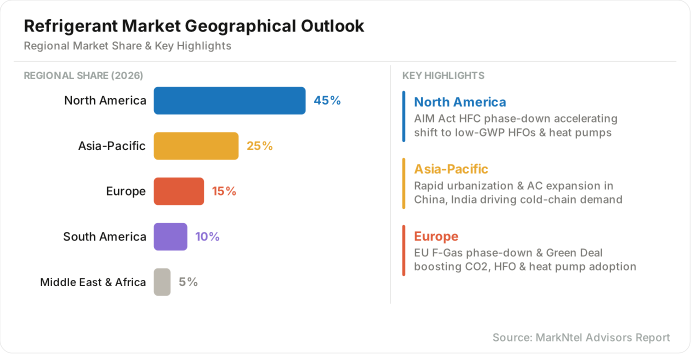
- Asia-Pacific leads with approximately 45% of global demand, driven by HVAC expansion and rising AC penetration across China, India, and Southeast Asia.
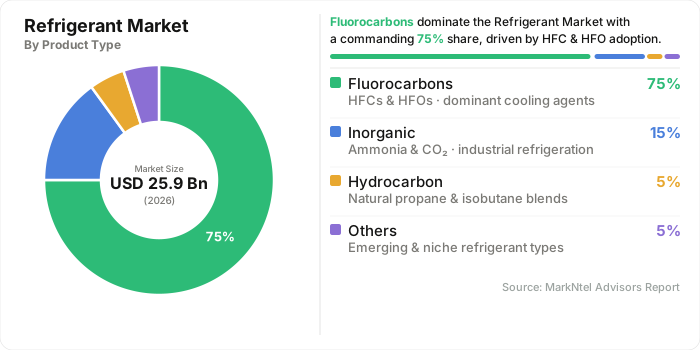
- Fluorocarbons hold approximately 75% of the market by product type in 2026, backed by established supply chains serving commercial and residential cooling applications.
- In 2026, primary refrigerant represents approximately 85% by refrigerant function, serving as the heat-transfer medium across residential, commercial, and industrial vapor-compression systems.
- The market is moderately fragmented, with key players operating across fluorochemical synthesis, refrigerant blending, and global distribution networks.
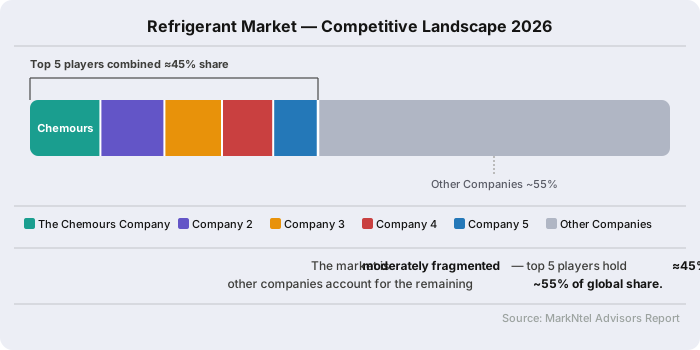
- The top five players collectively account for approximately 45% of the market revenue.
Global Refrigerant Market Size & Outlook
The global refrigerant market was valued at USD 23.6 billion in 2025 and is projected to grow from USD 25.9 billion in 2026 to USD 43.5 billion by 2032. Along with this, the market is estimated to grow at a CAGR of 9.03% during 2026–2032.
The refrigerant industry has evolved through sustained growth in cooling-dependent infrastructure, driven primarily by rising electrification across buildings and transport refrigeration systems. At a macro level, increasing global temperatures and rapid urbanization are intensifying the need for space cooling, as highlighted in recent updates by International Energy Agency (2024). Building on this trend, residential demand strengthened in 2024, supported by rising air-conditioner penetration across emerging economies, particularly in Asia and the Middle East. This surge reflects improving income levels, expanding urban housing, and greater access to electricity. On the commercial side, demand has been reinforced by the recovery of high-footfall sectors. Retail malls, hotels, and hospitality infrastructure have expanded HVAC installations to accommodate rising occupancy levels, aligned with global tourism recovery trends reported by United Nations World Tourism Organization.
Industrial end-use demand in 2024 was primarily driven by the expansion of cold chain infrastructure, closely linked to food security and pharmaceutical logistics requirements. This growth was particularly evident across developing economies, where investments in refrigerated storage and transport systems increased to address supply chain inefficiencies. According to World Bank (2024 logistics and food systems updates), strengthening cold chain capacity remains critical for reducing post-harvest losses and improving food distribution efficiency. Additionally, healthcare systems further reinforced demand through increased reliance on temperature-controlled storage for biologics, vaccines, and other sensitive pharmaceuticals, particularly within national immunization programs. In parallel, industrial manufacturing clusters expanded process cooling requirements, especially in chemicals and food processing industries that depend on precise thermal regulation for operational efficiency. While demand fundamentals remained strong, the regulatory landscape underwent accelerated transformation in 2024 under globally coordinated climate frameworks governing refrigerant usage. Implementation of the Kigali Amendment to the Montreal Protocol, led by United Nations Environment Programme, progressed across multiple economies through quota enforcement cycles, significantly tightening the availability of high-global-warming-potential (HFC) refrigerants.
At a regional level, regulatory enforcement intensified further. The United States Environmental Protection Agency continued phased reductions under the AIM Act, limiting HFC supply and accelerating the transition toward low-GWP alternatives. Similarly, the European Commission advanced updated F-Gas regulations, restricting the use of high-GWP refrigerants in new commercial and industrial equipment installations. In response to these regulatory pressures, industry participants accelerated product innovation and portfolio realignment. Daikin Industries expanded deployment of R-32-based and next-generation refrigerant-compatible HVAC systems across global commercial projects. Honeywell strengthened its position in low-GWP solutions with Solstice® L40X, an energy-efficient hydrofluoroolefin (HFO) refrigerant designed for commercial refrigeration applications. Meanwhile, Carrier Global enhanced integration of energy-efficient systems across large-scale commercial infrastructure, aligning with decarbonization-driven procurement trends.
Collectively, these developments highlight a structurally resilient refrigerant industry, where strong end-use demand and regulatory tightening are driving a parallel transition toward sustainable, low-GWP technologies while maintaining long-term market stability.
Global Refrigerant Market Key Indicators
- The World Health Organization (WHO) estimates approximately 25% of vaccines experience temperature excursions before reaching patients due to cold chain failures; multilateral investment in pharmaceutical-grade cold storage infrastructure across Africa and South Asia is expanding the commercial refrigeration installed base and its associated refrigerant consumption requirements.
- According to the International Energy Agency, energy demand for space cooling is expected to more than triple by 2050, making it one of the fastest-growing energy uses globally. Increasing cooling demand leads to higher deployment of HVAC systems, thereby driving refrigerant consumption across applications.
- According to the International Institute of Refrigeration, over 12% of food production depends on refrigeration globally. Increasing reliance on refrigeration across food sup ply chains is driving demand for cooling systems, thereby increasing refrigerant consumption.
- According to the International Institute of Refrigeration, refrigeration and air conditioning systems account for approximately 20% of global electricity consumption. High dependence on cooling systems reflects widespread usage , thereby supporting continuous demand for refrigerant.
Global Refrigerant Market Scope
| Category | Segments |
|---|---|
| By Product Type | (Fluorocarbon, Inorganic, Hydrocarbon, Others), |
| By Regulation Compliance | (High-GWP refrigerants (legacy systems), Low-GWP refrigerants (transition phase), Ultra-low GWP / climate-friendly refrigerants (next-gen adoption)), |
| By Refrigerant Function | (Primary Refrigerants, Secondary Refrigerants, Foam Blowing Agents, Aerosol Propellants), |
| By Application | (Commercial, Industrial, Domestic, Others), |
Global Refrigerant Market Growth Drivers
Increasing Deployment of Refrigeration Systems in Food Transportation Driving Market Growth
The most significant driver supporting the refrigerant market is the increasing deployment of temperature-controlled refrigeration systems in food transportation networks. According to the Food and Agriculture Organization, a substantial share of perishable food loss in developing economies occurs due to inadequate cold chain infrastructure during transportation and storage, highlighting the critical need for improved refrigerated logistics . This structural inefficiency has led to sustained investments in reefer trucks, refrigerated containers, and cold storage logistics hubs. As global food supply chains become more integrated and cross-border trade in perishables expands, the requirement for reliable refrigeration during transit is increasing steadily.
This driver is measurably impacting demand across geographies, particularly in Asia-Pacific, Africa, and Latin America, where cold chain infrastructure is being built at scale rather than upgraded incrementally. The World Health Organization highlights that pharmaceutical supply chains, especially for vaccines and biologics, increasingly depend on temperature-controlled environments requiring ultra-low and stable cooling systems . This has led to large-scale deployment of medical cold storage facilities and refrigerated transport fleets in emerging economies. Additionally, government-led food security initiatives are accelerating investment in refrigerated warehouses, thereby increasing first-time refrigerant adoption rather than replacement demand alone.
Moreover, cold chain expansion is structurally increasing total market volume because it generates new refrigeration installations across both industrial and institutional sectors. This ensures the sustained installation of refrigeration systems in supermarkets, logistics hubs, and healthcare facilities. As infrastructure builds out across new markets, refrigerant consumption grows in parallel, making cold chain expansion a long-term and volume-expanding structural driver for the refrigerant industry.
Recent Trends
Carbon-Credit Monetization for Natural Refrigerant as an Emerging Climate-Linked Revenue Mechanism
Carbon-credit monetization for natural refrigerants is emerging as a structural trend driven by the integration of refrigeration systems into carbon markets and climate disclosure frameworks.
Refrigerants with high global warming potential, particularly HFCs, are increasingly being targeted under greenhouse gas accounting systems such as the UNFCCC greenhouse gas inventory guidelines and national carbon reporting programs. This has created financial incentives for transitioning toward low-GWP natural refrigerants such as ammonia, CO₂, and hydrocarbons, which generate lower lifecycle emissions. As a result, emission reductions from refrigerant substitution and leakage prevention are being recognized as monetizable carbon abatement opportunities in compliance and voluntary markets.
This trend is reshaping business models across industrial refrigeration, cold chain logistics, and commercial cooling sectors by linking refrigerant choice to carbon revenue streams. Companies are increasingly adopting leak detection systems, refrigerant recovery practices, and natural refrigerant-based equipment to generate verifiable emission reduction credits. For instance, Hudson Technologies, one of the largest refrigerant reclamation and recovery companies in North America, it Operates large-scale refrigerant recovery and purification, resale systems. Actively linked to carbon credit generation from refrigerant destruction and emission reduction programs. Danfoss provides refrigerant leak detection sensors and digital monitoring systems, enabling real-time emissions tracking and preventive maintenance, supporting emissions reduction reporting that can be linked to carbon accounting frameworks .
This is driving convergence between refrigeration engineering, environmental compliance, and financial structuring functions within enterprises. The trend is expected to persist as carbon pricing mechanisms expand across the Asia-Pacific and other emerging regions.
Mandatory Scope 1 emission disclosures under evolving corporate climate regulations are strengthening the financial relevance of refrigerant-related emissions. Technological improvements in monitoring and verification are increasing the credibility of refrigerant-based carbon credits. Together, these factors are embedding natural refrigerant into long-term decarbonization and climate finance strategies.
Opportunities and Challenges
High Refrigerant Leakage in Fragmented Cold Chains Driving Verified Leak Reduction and Carbon Credit Monetization in Natural Refrigeration Systems
The increasing energy intensity of refrigeration systems is emerging as a critical operational challenge due to rising cooling demand in food retail, cold storage, and pharmaceutical logistics.
Conventional HFC-based systems, particularly in older supermarket formats and decentralized cold rooms, often operate with lower energy efficiency and higher lifetime operating costs under warmer ambient conditions. The International Energy Agency highlights that cooling demand is structurally increasing due to urbanization and expanding cold chain penetration, placing additional pressure on electricity consumption and grid reliability. This rising operational burden is particularly acute in emerging economies, where electricity costs and grid instability further constrain efficient refrigeration system performance.
This challenge is driving a strong opportunity for the adoption of natural refrigerant systems that offer higher energy efficiency and improved lifecycle performance. For instance, CO₂ trans critical refrigeration systems deployed by retailers such as Tesco and Ahold Delhaize are being optimized with heat recovery systems that reduce total facility energy consumption. Ammonia-based industrial refrigeration systems used by companies such as Nestlé and Danone provide significantly higher thermodynamic efficiency in large-scale cold storage and food processing environments.
Segmentation Insights
The fluorocarbon Segment Dominates Due to the Extensive Installed Base and Transitional Regulatory Flexibility.
Fluorocarbons continue to dominate the refrigerant market, accounting for approximately 75% share due to their extensive installed base across commercial and industrial cooling systems.
Legacy infrastructure in supermarkets, residential air conditioning, and transport refrigeration remains heavily dependent on hydrofluorocarbons (HFCs) due to compatibility and cost efficiency. Despite regulatory phase-down measures, the U.S. Environmental Protection Agency’s AIM Act (2024–2026 allocation cycle) still permits controlled usage, sustaining demand in servicing existing systems. This creates a strong replacement and refill market, particularly in regions where full system transition to alternatives remains economically unviable.
End-user industries such as food retail, cold storage, and HVAC continue to rely on fluorocarbons due to established supply chains and technician familiarity. Investment flows are still directed toward optimizing HFC-based systems through improved efficiency and lower leakage rather than immediate full-scale replacement. Emerging economies in the Asia-Pacific and Latin America further reinforce demand due to cost-sensitive adoption patterns and slower regulatory enforcement timelines. This combination of infrastructure lock-in and economic considerations sustains fluorocarbon dominance despite environmental pressures.
Additionally, transitional low-GWP fluorocarbon mixtures are being adopted as interim solutions, extending the lifecycle of fluorocarbon-based systems. Manufacturers such as Honeywell are developing next-generation HFO blends to comply with evolving regulations while maintaining performance standards. This hybrid transition pathway allows end users to balance regulatory compliance with operational continuity. As a result, fluorocarbons retain structural dominance, supported by retrofit demand and gradual rather than immediate substitution dynamics. The refrigerant market by product type is further divided into the following sub-categories:
- Fluorocarbon
- Inorganic
- Hydrocarbon
- Others
Primary Refrigerant Segment Leading Due to Core Functional Role and Expanding Cooling Infrastructure Demand
Primary refrigerants dominate the market with an estimated 85% share due to their direct role in heat absorption and transfer within refrigeration and air conditioning systems.
These refrigerants are integral to system operation across applications such as residential cooling, commercial refrigeration, and industrial cold storage. This fundamental functional necessity ensures sustained and non-substitutable demand across all end-use sectors.
Investment in HVAC infrastructure, supermarket refrigeration, and pharmaceutical cold chains continues to prioritize systems using primary refrigerant. Government-backed cooling programs and urban infrastructure development projects are further accelerating the installation of refrigeration systems globally. Despite secondary refrigerant or niche applications, primary refrigerants are embedded at the core of system design, making them indispensable.
This structural dependency reinforces their dominant share across both developed and emerging markets.
Technological advancements are also strengthening this segment through the integration of low-GWP refrigerant into primary system architectures. Manufacturers are redesigning compressors and heat exchangers to support CO₂, ammonia, and advanced fluorocarbon alternatives within primary cycles. For instance, Mitsubishi Heavy Industries is developing high-pressure CO₂ compressors with corrosion-resistant materials and optimized rotor designs, reflecting the engineering complexity required for next-generation primary refrigerant.
End users are prioritizing high-efficiency systems that optimize refrigerant performance while meeting regulatory requirements. This continuous innovation ensures that the primary refrigerant remains central to market growth and long-term industry evolution. By refrigerant function, the market is further divided into the following sub-categories:
- Primary refrigerant
- Secondary refrigerant
- Foam Blowing Agents
- Aerosol Propellants
Global Refrigerant Geographical Outlook
Asia-Pacific leads the global refrigerant industry, accounting for approximately 45% of total market share. This dominance is driven by a unique convergence of high climate exposure, dense population clusters, and rapid urban infrastructure expansion. The International Energy Agency states that nearly half of the global growth in cooling demand through 2030 will originate from Asia, driven by rising temperatures and urban living standards. Megacities across China, India, and Southeast Asia are experiencing sustained increases in residential air conditioning penetration. This creates a geographically concentrated surge in refrigerant demand tied directly to climate-driven cooling requirements and demographic expansion.
A distinct structural advantage of the region lies in its role as the global manufacturing hub for HVAC and refrigeration equipment. Countries such as China and Thailand host large-scale production ecosystems supplying compressors, heat exchangers, and finished cooling systems.
This localized manufacturing reduces system costs and accelerates adoption across domestic and export markets. As a result, refrigerant consumption is embedded not only in end-use demand but also within production and testing cycles.
Policy frameworks in the region are uniquely structured to balance environmental transition with industrial competitiveness. Japan and South Korea are advancing low-GWP refrigerant adoption through efficiency standards and technology incentives. For example, Mitsubishi Heavy Industries has developed large-capacity centrifugal chillers using ultra-low GWP HFO-1234yf refrigerant, supported by redesigned compressors and system architecture, achieving up to 65% reduction in CO₂ emissions while meeting growing demand from data center cooling applications . In contrast, emerging economies such as Indonesia and Vietnam are prioritizing cooling access expansion alongside phased regulatory alignment. This staggered regulatory maturity sustains both legacy refrigerant demand and new-generation system deployment simultaneously.
End-user demand patterns further reinforce dominance through the rapid formalization of food distribution and pharmaceutical logistics systems. Cold chain expansion across India and China is supported by increasing manufacturing localization and refrigerant ecosystem development. For instance, Daikin Industries has established a fluorochemical business unit in India to strengthen refrigerant supply chains, while simultaneously expanding compressor manufacturing and air conditioning capacity to meet rising cooling demand. This integrated ecosystem of climate need, manufacturing scale, and infrastructure expansion ensures Asia Pacific’s sustained leadership in refrigerant consumption.
Global Refrigerant Industry Competitive Landscape
The global refrigerant market is moderately fragmented, with key players operating across fluorochemical synthesis, refrigerant blending, and global distribution networks.
Major companies include The Chemours Company, Honeywell International Inc., Daikin Industries, Arkema, and Dongyue Group. The top five players collectively account for approximately 45% of global refrigerant manufacturers' revenue, reflecting moderate concentration with a mix of multinational leaders and regional manufacturers.
Major Companies Producing Global Refrigerant
- Honeywell International Inc.
- Solstice Advanced Materials Inc.
- The Chemours Company
- Daikin Industries Ltd.
- Arkema S.A.
- Linde plc
- Air Liquide S.A.
- Orbia Advance Corporation S.A.B. de C.V. (Koura / Mexichem)
- Dongyue Group Co. Ltd.
- Sinochem Group
- AGC Group
- SRF Limited
- Gujarat Fluorochemicals Limited
- Others
Global Refrigerant Industry News and Recent Developments
2025: U.S. Refrigerant Standards Alignment Set to Unlock Low-GWP Adoption
The Environmental Investigation Agency has released a study supporting full alignment of U.S. HVAC refrigerant safety standards with global IEC norms. It highlights that current U.S. regulations restrict the use of flammable low-GWP refrigerant compared to international standards. The report emphasizes that harmonization would enable broader adoption of ultra-low GWP refrigerants such as hydrocarbons. It notes that existing global standards already safely permit higher charge limits for such refrigerant in HVAC systems.
Impact Analysis: This development is expected to significantly accelerate the adoption of low-GWP and natural refrigerants in the U.S. market. Regulatory harmonization would remove a major barrier, enabling wider commercialization of hydrocarbons and other flammable refrigerants. It would shift demand away from high-GWP HFCs toward next-generation alternatives, reshaping the refrigerant mix globally. HVAC manufacturers would benefit from standardized product design, reducing costs and improving economies of scale. The change could also increase refrigerant volumes linked to new system installations using compliant technologies. It would strengthen global supply chain integration by aligning the U.S. with international manufacturing practices. Increased adoption of natural refrigerants could intensify competition between HFO-based and hydrocarbon-based solutions. The policy shift would further reinforce sustainability-driven investment across the cooling sector. Over time, it may accelerate the phase-down of legacy refrigerant beyond current regulatory timelines.
2025: Arkema–Honeywell Tie-Up Accelerates Industrialization of Low-GWP Refrigerant
The announcement by Arkema outlines the expansion of its portfolio of low global warming potential refrigerants. The company has entered into a strategic agreement with Honeywell International Inc. to supply advanced HFO-based refrigerant solutions. The initiative focuses on accelerating the availability of next-generation refrigerants in global markets. It highlights the growing importance of environmentally sustainable cooling solutions. The agreement enables Arkema to commercialize refrigerant under its Forane® brand using Honeywell’s technology.
Impact Analysis: This development is expected to strengthen global supply availability of low-GWP refrigerant. Increased production and commercialization of HFO-based solutions will accelerate the transition away from high-GWP HFCs. The partnership enhances supply chain efficiency by combining technology and distribution capabilities. It may contribute to improved cost competitiveness of next-generation refrigerant over time. The move supports OEM adoption by ensuring consistent access to compliant refrigerant solutions. It also reinforces the role of HFO blends as a dominant replacement segment in the market. The collaboration could intensify competition among major refrigerant producers. It signals growing investment in sustainable refrigerant technologies aligned with regulatory mandates. Over time, such supply-side expansions will help meet rising global demand for eco-friendly cooling solutions. Overall, this represents a critical enabler of long-term structural growth in the global refrigerant market.
- Market Segmentation
- Introduction
- Product Definition
- Research Process
- Assumptions
- Executive Summary
- Global Refrigerant Market Policies, Regulations, and Product Standards
- Global Refrigerant Market Trends & Developments
- Global Refrigerant Market Dynamics
- Growth Factors
- Challenges
- Global Refrigerant Market Hotspot & Opportunities
- Global Refrigerant Market Outlook, 2022-2032F
- Market Size & Outlook
- By Revenues (USD Million)
- Market Share & Analysis
- By Product Type- Market Size & Forecast 2022-2032, USD Million
- Fluorocarbon
- Inorganic
- Hydrocarbon
- Others
- By Regulation Compliance- Market Size & Forecast 2022-2032, USD Million
- High-GWP refrigerants (legacy systems)
- Low-GWP refrigerants (transition phase)
- Ultra-low GWP / climate-friendly refrigerants (next-gen adoption)
- By Refrigerant Function- Market Size & Forecast 2022-2032, USD Million
- Primary Refrigerants
- Secondary Refrigerants
- Foam Blowing Agents
- Aerosol Propellants
- By Application- Market Size & Forecast 2022-2032, USD Million
- Commercial
- Industrial
- Domestic
- Others
- By Region
- North America
- Middle East & Africa
- South America
- Europe
- Asia Pacific
- By Company
- Competition Characteristics
- Market Share & Analysis
- By Product Type- Market Size & Forecast 2022-2032, USD Million
- Market Size & Outlook
- North America Refrigerant Market Outlook, 2022-2032F
- Market Size & Outlook
- By Revenues (USD Million)
- Market Share & Analysis
- By Product Type- Market Size & Forecast 2022-2032, USD Million
- By Regulation Compliance- Market Size & Forecast 2022-2032, USD Million
- By Refrigerant Function- Market Size & Forecast 2022-2032, USD Million
- By Application- Market Size & Forecast 2022-2032, USD Million
- By Country
- The US
- Canada
- Mexico
- Rest of North America
- The US Refrigerant Market Outlook, 2022-2032F
- Market Size & Outlook
- By Revenues (USD Million)
- Market Share & Analysis
- By Product Type- Market Size & Forecast 2022-2032, USD Million
- By Regulation Compliance- Market Size & Forecast 2022-2032, USD Million
- By Refrigerant Function- Market Size & Forecast 2022-2032, USD Million
- By Application- Market Size & Forecast 2022-2032, USD Million
- Market Size & Outlook
- Canada Refrigerant Market Outlook, 2022-2032F
- Market Size & Outlook
- By Revenues (USD Million)
- Market Share & Analysis
- By Product Type- Market Size & Forecast 2022-2032, USD Million
- By Regulation Compliance- Market Size & Forecast 2022-2032, USD Million
- By Refrigerant Function- Market Size & Forecast 2022-2032, USD Million
- By Application- Market Size & Forecast 2022-2032, USD Million
- Market Size & Outlook
- Mexico Refrigerant Market Outlook, 2022-2032F
- Market Size & Outlook
- By Revenues (USD Million)
- Market Share & Analysis
- By Product Type- Market Size & Forecast 2022-2032, USD Million
- By Regulation Compliance- Market Size & Forecast 2022-2032, USD Million
- By Refrigerant Function- Market Size & Forecast 2022-2032, USD Million
- By Application- Market Size & Forecast 2022-2032, USD Million
- Market Size & Outlook
- Market Size & Outlook
- Middle East & Africa Refrigerant Market Outlook, 2022-2032F
- Market Size & Outlook
- By Revenues (USD Million)
- Market Share & Analysis
- By Product Type- Market Size & Forecast 2022-2032, USD Million
- By Regulation Compliance- Market Size & Forecast 2022-2032, USD Million
- By Refrigerant Function- Market Size & Forecast 2022-2032, USD Million
- By Application- Market Size & Forecast 2022-2032, USD Million
- By Country
- Brazil
- Argentina
- Chile
- Colombia
- Rest of South America
- Brazil Refrigerant Market Outlook, 2022-2032F
- Market Size & Outlook
- By Revenues (USD Million)
- Market Share & Analysis
- By Product Type- Market Size & Forecast 2022-2032, USD Million
- By Regulation Compliance- Market Size & Forecast 2022-2032, USD Million
- By Refrigerant Function- Market Size & Forecast 2022-2032, USD Million
- By Application- Market Size & Forecast 2022-2032, USD Million
- Market Size & Outlook
- Argentina Refrigerant Market Outlook, 2022-2032F
- Market Size & Outlook
- By Revenues (USD Million)
- Market Share & Analysis
- By Product Type- Market Size & Forecast 2022-2032, USD Million
- By Regulation Compliance- Market Size & Forecast 2022-2032, USD Million
- By Refrigerant Function- Market Size & Forecast 2022-2032, USD Million
- By Application- Market Size & Forecast 2022-2032, USD Million
- Market Size & Outlook
- Chile Refrigerant Market Outlook, 2022-2032F
- Market Size & Outlook
- By Revenues (USD Million)
- Market Share & Analysis
- By Product Type- Market Size & Forecast 2022-2032, USD Million
- By Regulation Compliance- Market Size & Forecast 2022-2032, USD Million
- By Refrigerant Function- Market Size & Forecast 2022-2032, USD Million
- By Application- Market Size & Forecast 2022-2032, USD Million
- Market Size & Outlook
- Colombia Refrigerant Market Outlook, 2022-2032F
- Market Size & Outlook
- By Revenues (USD Million)
- Market Share & Analysis
- By Product Type- Market Size & Forecast 2022-2032, USD Million
- By Regulation Compliance- Market Size & Forecast 2022-2032, USD Million
- By Refrigerant Function- Market Size & Forecast 2022-2032, USD Million
- By Application- Market Size & Forecast 2022-2032, USD Million
- Market Size & Outlook
- Market Size & Outlook
- South America Refrigerant Market Outlook, 2022-2032F
- Market Size & Outlook
- By Revenues (USD Million)
- Market Share & Analysis
- By Product Type- Market Size & Forecast 2022-2032, USD Million
- By Regulation Compliance- Market Size & Forecast 2022-2032, USD Million
- By Refrigerant Function- Market Size & Forecast 2022-2032, USD Million
- By Application- Market Size & Forecast 2022-2032, USD Million
- By Country
- The UK
- Germany
- France
- Italy
- Spain
- Netherlands
- Switzerland
- Sweden
- Belgium
- Poland
- Norway
- Austria
- Denmark
- Rest of Europe
- The UK Refrigerant Market Outlook, 2022-2032F
- Market Size & Outlook
- By Revenues (USD Million)
- Market Share & Analysis
- By Product Type- Market Size & Forecast 2022-2032, USD Million
- By Regulation Compliance- Market Size & Forecast 2022-2032, USD Million
- By Refrigerant Function- Market Size & Forecast 2022-2032, USD Million
- By Application- Market Size & Forecast 2022-2032, USD Million
- Market Size & Outlook
- Germany Refrigerant Market Outlook, 2022-2032F
- Market Size & Outlook
- By Revenues (USD Million)
- Market Share & Analysis
- By Product Type- Market Size & Forecast 2022-2032, USD Million
- By Regulation Compliance- Market Size & Forecast 2022-2032, USD Million
- By Refrigerant Function- Market Size & Forecast 2022-2032, USD Million
- By Application- Market Size & Forecast 2022-2032, USD Million
- Market Size & Outlook
- France Refrigerant Market Outlook, 2022-2032F
- Market Size & Outlook
- By Revenues (USD Million)
- Market Share & Analysis
- By Product Type- Market Size & Forecast 2022-2032, USD Million
- By Regulation Compliance- Market Size & Forecast 2022-2032, USD Million
- By Refrigerant Function- Market Size & Forecast 2022-2032, USD Million
- By Application- Market Size & Forecast 2022-2032, USD Million
- Market Size & Outlook
- Italy Refrigerant Market Outlook, 2022-2032F
- Market Size & Outlook
- By Revenues (USD Million)
- Market Share & Analysis
- By Product Type- Market Size & Forecast 2022-2032, USD Million
- By Regulation Compliance- Market Size & Forecast 2022-2032, USD Million
- By Refrigerant Function- Market Size & Forecast 2022-2032, USD Million
- By Application- Market Size & Forecast 2022-2032, USD Million
- Market Size & Outlook
- Spain Refrigerant Market Outlook, 2022-2032F
- Market Size & Outlook
- By Revenues (USD Million)
- Market Share & Analysis
- By Product Type- Market Size & Forecast 2022-2032, USD Million
- By Regulation Compliance- Market Size & Forecast 2022-2032, USD Million
- By Refrigerant Function- Market Size & Forecast 2022-2032, USD Million
- By Application- Market Size & Forecast 2022-2032, USD Million
- Market Size & Outlook
- Netherlands Refrigerant Market Outlook, 2022-2032F
- Market Size & Outlook
- By Revenues (USD Million)
- Market Share & Analysis
- By Product Type- Market Size & Forecast 2022-2032, USD Million
- By Regulation Compliance- Market Size & Forecast 2022-2032, USD Million
- By Refrigerant Function- Market Size & Forecast 2022-2032, USD Million
- By Application- Market Size & Forecast 2022-2032, USD Million
- Market Size & Outlook
- Switzerland Refrigerant Market Outlook, 2022-2032F
- Market Size & Outlook
- By Revenues (USD Million)
- Market Share & Analysis
- By Product Type- Market Size & Forecast 2022-2032, USD Million
- By Regulation Compliance- Market Size & Forecast 2022-2032, USD Million
- By Refrigerant Function- Market Size & Forecast 2022-2032, USD Million
- By Application- Market Size & Forecast 2022-2032, USD Million
- Market Size & Outlook
- Sweden Refrigerant Market Outlook, 2022-2032F
- Market Size & Outlook
- By Revenues (USD Million)
- Market Share & Analysis
- By Product Type- Market Size & Forecast 2022-2032, USD Million
- By Regulation Compliance- Market Size & Forecast 2022-2032, USD Million
- By Refrigerant Function- Market Size & Forecast 2022-2032, USD Million
- By Application- Market Size & Forecast 2022-2032, USD Million
- Market Size & Outlook
- Belgium Refrigerant Market Outlook, 2022-2032F
- Market Size & Outlook
- By Revenues (USD Million)
- Market Share & Analysis
- By Product Type- Market Size & Forecast 2022-2032, USD Million
- By Regulation Compliance- Market Size & Forecast 2022-2032, USD Million
- By Refrigerant Function- Market Size & Forecast 2022-2032, USD Million
- By Application- Market Size & Forecast 2022-2032, USD Million
- Market Size & Outlook
- Poland Refrigerant Market Outlook, 2022-2032F
- Market Size & Outlook
- By Revenues (USD Million)
- Market Share & Analysis
- By Product Type- Market Size & Forecast 2022-2032, USD Million
- By Regulation Compliance- Market Size & Forecast 2022-2032, USD Million
- By Refrigerant Function- Market Size & Forecast 2022-2032, USD Million
- By Application- Market Size & Forecast 2022-2032, USD Million
- Market Size & Outlook
- Norway Refrigerant Market Outlook, 2022-2032F
- Market Size & Outlook
- By Revenues (USD Million)
- Market Share & Analysis
- By Product Type- Market Size & Forecast 2022-2032, USD Million
- By Regulation Compliance- Market Size & Forecast 2022-2032, USD Million
- By Refrigerant Function- Market Size & Forecast 2022-2032, USD Million
- By Application- Market Size & Forecast 2022-2032, USD Million
- Market Size & Outlook
- Austria Refrigerant Market Outlook, 2022-2032F
- Market Size & Outlook
- By Revenues (USD Million)
- Market Share & Analysis
- By Product Type- Market Size & Forecast 2022-2032, USD Million
- By Regulation Compliance- Market Size & Forecast 2022-2032, USD Million
- By Refrigerant Function- Market Size & Forecast 2022-2032, USD Million
- By Application- Market Size & Forecast 2022-2032, USD Million
- Market Size & Outlook
- Denmark Refrigerant Market Outlook, 2022-2032F
- Market Size & Outlook
- By Revenues (USD Million)
- Market Share & Analysis
- By Product Type- Market Size & Forecast 2022-2032, USD Million
- By Regulation Compliance- Market Size & Forecast 2022-2032, USD Million
- By Refrigerant Function- Market Size & Forecast 2022-2032, USD Million
- By Application- Market Size & Forecast 2022-2032, USD Million
- Market Size & Outlook
- Market Size & Outlook
- Europe Refrigerant Market Outlook, 2022-2032F
- Market Size & Outlook
- By Revenues (USD Million)
- Market Share & Analysis
- By Product Type- Market Size & Forecast 2022-2032, USD Million
- By Regulation Compliance- Market Size & Forecast 2022-2032, USD Million
- By Refrigerant Function- Market Size & Forecast 2022-2032, USD Million
- By Application- Market Size & Forecast 2022-2032, USD Million
- By Country
- Saudi Arabia
- The UAE
- South Africa
- Egypt
- Qatar
- Kuwait
- Oman
- Bahrain
- Morocco
- Rest of Middle East & Africa
- Saudi Arabia Refrigerant Market Outlook, 2022-2032F
- Market Size & Outlook
- By Revenues (USD Million)
- Market Share & Analysis
- By Product Type- Market Size & Forecast 2022-2032, USD Million
- By Regulation Compliance- Market Size & Forecast 2022-2032, USD Million
- By Refrigerant Function- Market Size & Forecast 2022-2032, USD Million
- By Application- Market Size & Forecast 2022-2032, USD Million
- Market Size & Outlook
- The UAE Refrigerant Market Outlook, 2022-2032F
- Market Size & Outlook
- By Revenues (USD Million)
- Market Share & Analysis
- By Product Type- Market Size & Forecast 2022-2032, USD Million
- By Regulation Compliance- Market Size & Forecast 2022-2032, USD Million
- By Refrigerant Function- Market Size & Forecast 2022-2032, USD Million
- By Application- Market Size & Forecast 2022-2032, USD Million
- Market Size & Outlook
- South Africa Refrigerant Market Outlook, 2022-2032F
- Market Size & Outlook
- By Revenues (USD Million)
- Market Share & Analysis
- By Product Type- Market Size & Forecast 2022-2032, USD Million
- By Regulation Compliance- Market Size & Forecast 2022-2032, USD Million
- By Refrigerant Function- Market Size & Forecast 2022-2032, USD Million
- By Application- Market Size & Forecast 2022-2032, USD Million
- Market Size & Outlook
- Egypt Refrigerant Market Outlook, 2022-2032F
- Market Size & Outlook
- By Revenues (USD Million)
- Market Share & Analysis
- By Product Type- Market Size & Forecast 2022-2032, USD Million
- By Regulation Compliance- Market Size & Forecast 2022-2032, USD Million
- By Refrigerant Function- Market Size & Forecast 2022-2032, USD Million
- By Application- Market Size & Forecast 2022-2032, USD Million
- Market Size & Outlook
- Qatar Refrigerant Market Outlook, 2022-2032F
- Market Size & Outlook
- By Revenues (USD Million)
- Market Share & Analysis
- By Product Type- Market Size & Forecast 2022-2032, USD Million
- By Regulation Compliance- Market Size & Forecast 2022-2032, USD Million
- By Refrigerant Function- Market Size & Forecast 2022-2032, USD Million
- By Application- Market Size & Forecast 2022-2032, USD Million
- Market Size & Outlook
- Kuwait Refrigerant Market Outlook, 2022-2032F
- Market Size & Outlook
- By Revenues (USD Million)
- Market Share & Analysis
- By Product Type- Market Size & Forecast 2022-2032, USD Million
- By Regulation Compliance- Market Size & Forecast 2022-2032, USD Million
- By Refrigerant Function- Market Size & Forecast 2022-2032, USD Million
- By Application- Market Size & Forecast 2022-2032, USD Million
- Market Size & Outlook
- Oman Refrigerant Market Outlook, 2022-2032F
- Market Size & Outlook
- By Revenues (USD Million)
- Market Share & Analysis
- By Product Type- Market Size & Forecast 2022-2032, USD Million
- By Regulation Compliance- Market Size & Forecast 2022-2032, USD Million
- By Refrigerant Function- Market Size & Forecast 2022-2032, USD Million
- By Application- Market Size & Forecast 2022-2032, USD Million
- Market Size & Outlook
- Bahrain Refrigerant Market Outlook, 2022-2032F
- Market Size & Outlook
- By Revenues (USD Million)
- Market Share & Analysis
- By Product Type- Market Size & Forecast 2022-2032, USD Million
- By Regulation Compliance- Market Size & Forecast 2022-2032, USD Million
- By Refrigerant Function- Market Size & Forecast 2022-2032, USD Million
- By Application- Market Size & Forecast 2022-2032, USD Million
- Market Size & Outlook
- Morocco Refrigerant Market Outlook, 2022-2032F
- Market Size & Outlook
- By Revenues (USD Million)
- Market Share & Analysis
- By Product Type- Market Size & Forecast 2022-2032, USD Million
- By Regulation Compliance- Market Size & Forecast 2022-2032, USD Million
- By Refrigerant Function- Market Size & Forecast 2022-2032, USD Million
- By Application- Market Size & Forecast 2022-2032, USD Million
- Market Size & Outlook
- Market Size & Outlook
- Asia Pacific Refrigerant Market Outlook, 2022-2032F
- Market Size & Outlook
- By Revenues (USD Million)
- Market Share & Analysis
- By Product Type- Market Size & Forecast 2022-2032, USD Million
- By Regulation Compliance- Market Size & Forecast 2022-2032, USD Million
- By Refrigerant Function- Market Size & Forecast 2022-2032, USD Million
- By Application- Market Size & Forecast 2022-2032, USD Million
- By Country
- China
- Japan
- India
- South Korea
- Australia
- Indonesia
- Thailand
- Malaysia
- Singapore
- Vietnam
- Philippines
- Rest of Asia-Pacific
- China Refrigerant Market Outlook, 2022-2032F
- Market Size & Outlook
- By Revenues (USD Million)
- Market Share & Analysis
- By Product Type- Market Size & Forecast 2022-2032, USD Million
- By Regulation Compliance- Market Size & Forecast 2022-2032, USD Million
- By Refrigerant Function- Market Size & Forecast 2022-2032, USD Million
- By Application- Market Size & Forecast 2022-2032, USD Million
- Market Size & Outlook
- Japan Refrigerant Market Outlook, 2022-2032F
- Market Size & Outlook
- By Revenues (USD Million)
- Market Share & Analysis
- By Product Type- Market Size & Forecast 2022-2032, USD Million
- By Regulation Compliance- Market Size & Forecast 2022-2032, USD Million
- By Refrigerant Function- Market Size & Forecast 2022-2032, USD Million
- By Application- Market Size & Forecast 2022-2032, USD Million
- Market Size & Outlook
- India Refrigerant Market Outlook, 2022-2032F
- Market Size & Outlook
- By Revenues (USD Million)
- Market Share & Analysis
- By Product Type- Market Size & Forecast 2022-2032, USD Million
- By Regulation Compliance- Market Size & Forecast 2022-2032, USD Million
- By Refrigerant Function- Market Size & Forecast 2022-2032, USD Million
- By Application- Market Size & Forecast 2022-2032, USD Million
- Market Size & Outlook
- South Korea Refrigerant Market Outlook, 2022-2032F
- Market Size & Outlook
- By Revenues (USD Million)
- Market Share & Analysis
- By Product Type- Market Size & Forecast 2022-2032, USD Million
- By Regulation Compliance- Market Size & Forecast 2022-2032, USD Million
- By Refrigerant Function- Market Size & Forecast 2022-2032, USD Million
- By Application- Market Size & Forecast 2022-2032, USD Million
- Market Size & Outlook
- Australia Refrigerant Market Outlook, 2022-2032F
- Market Size & Outlook
- By Revenues (USD Million)
- Market Share & Analysis
- By Product Type- Market Size & Forecast 2022-2032, USD Million
- By Regulation Compliance- Market Size & Forecast 2022-2032, USD Million
- By Refrigerant Function- Market Size & Forecast 2022-2032, USD Million
- By Application- Market Size & Forecast 2022-2032, USD Million
- Market Size & Outlook
- Indonesia Refrigerant Market Outlook, 2022-2032F
- Market Size & Outlook
- By Revenues (USD Million)
- Market Share & Analysis
- By Product Type- Market Size & Forecast 2022-2032, USD Million
- By Regulation Compliance- Market Size & Forecast 2022-2032, USD Million
- By Refrigerant Function- Market Size & Forecast 2022-2032, USD Million
- By Application- Market Size & Forecast 2022-2032, USD Million
- Market Size & Outlook
- Thailand Refrigerant Market Outlook, 2022-2032F
- Market Size & Outlook
- By Revenues (USD Million)
- Market Share & Analysis
- By Product Type- Market Size & Forecast 2022-2032, USD Million
- By Regulation Compliance- Market Size & Forecast 2022-2032, USD Million
- By Refrigerant Function- Market Size & Forecast 2022-2032, USD Million
- By Application- Market Size & Forecast 2022-2032, USD Million
- Market Size & Outlook
- Malaysia Refrigerant Market Outlook, 2022-2032F
- Market Size & Outlook
- By Revenues (USD Million)
- Market Share & Analysis
- By Product Type- Market Size & Forecast 2022-2032, USD Million
- By Regulation Compliance- Market Size & Forecast 2022-2032, USD Million
- By Refrigerant Function- Market Size & Forecast 2022-2032, USD Million
- By Application- Market Size & Forecast 2022-2032, USD Million
- Market Size & Outlook
- Singapore Refrigerant Market Outlook, 2022-2032F
- Market Size & Outlook
- By Revenues (USD Million)
- Market Share & Analysis
- By Product Type- Market Size & Forecast 2022-2032, USD Million
- By Regulation Compliance- Market Size & Forecast 2022-2032, USD Million
- By Refrigerant Function- Market Size & Forecast 2022-2032, USD Million
- By Application- Market Size & Forecast 2022-2032, USD Million
- Market Size & Outlook
- Vietnam Refrigerant Market Outlook, 2022-2032F
- Market Size & Outlook
- By Revenues (USD Million)
- Market Share & Analysis
- By Product Type- Market Size & Forecast 2022-2032, USD Million
- By Regulation Compliance- Market Size & Forecast 2022-2032, USD Million
- By Refrigerant Function- Market Size & Forecast 2022-2032, USD Million
- By Application- Market Size & Forecast 2022-2032, USD Million
- Market Size & Outlook
- Philippines Refrigerant Market Outlook, 2022-2032F
- Market Size & Outlook
- By Revenues (USD Million)
- Market Share & Analysis
- By Product Type- Market Size & Forecast 2022-2032, USD Million
- By Regulation Compliance- Market Size & Forecast 2022-2032, USD Million
- By Refrigerant Function- Market Size & Forecast 2022-2032, USD Million
- By Application- Market Size & Forecast 2022-2032, USD Million
- Market Size & Outlook
- Market Size & Outlook
- Global Refrigerant Market Key Strategic Imperatives for Success & Growth
- Competitive Outlook
- Company Profiles
- Solstice Advanced Materials Inc.
- Business Description
- Product Portfolio
- Collaborations & Alliances
- Recent Developments
- Financial Details
- Others
- Daikin Industries Ltd.
- Business Description
- Product Portfolio
- Collaborations & Alliances
- Recent Developments
- Financial Details
- Others
- The Chemours Company
- Business Description
- Product Portfolio
- Collaborations & Alliances
- Recent Developments
- Financial Details
- Others
- Arkema S.A.
- Business Description
- Product Portfolio
- Collaborations & Alliances
- Recent Developments
- Financial Details
- Others
- Linde plc
- Business Description
- Product Portfolio
- Collaborations & Alliances
- Recent Developments
- Financial Details
- Others
- Air Liquide
- Business Description
- Product Portfolio
- Collaborations & Alliances
- Recent Developments
- Financial Details
- Others
- Dongyue Group
- Business Description
- Product Portfolio
- Collaborations & Alliances
- Recent Developments
- Financial Details
- Others
- Orbia Advance Corporation S.A.B. de CV
- Business Description
- Product Portfolio
- Collaborations & Alliances
- Recent Developments
- Financial Details
- Others
- Sinochem Group
- Business Description
- Product Portfolio
- Collaborations & Alliances
- Recent Developments
- Financial Details
- Others
- AGC Group
- Business Description
- Product Portfolio
- Collaborations & Alliances
- Recent Developments
- Financial Details
- Others
- SRF Limited
- Business Description
- Product Portfolio
- Collaborations & Alliances
- Recent Developments
- Financial Details
- Others
- Gujarat Fluorochemicals Limited
- Business Description
- Product Portfolio
- Collaborations & Alliances
- Recent Developments
- Financial Details
- Others
- Honeywell International Inc.
- Business Description
- Product Portfolio
- Collaborations & Alliances
- Recent Developments
- Financial Details
- Others
- The Chemours Company
- Business Description
- Product Portfolio
- Collaborations & Alliances
- Recent Developments
- Financial Details
- Others
- Arkema S.A.
- Business Description
- Product Portfolio
- Collaborations & Alliances
- Recent Developments
- Financial Details
- Others
- Daikin Industries Ltd.
- Business Description
- Product Portfolio
- Collaborations & Alliances
- Recent Developments
- Financial Details
- Others
- Linde plc
- Business Description
- Product Portfolio
- Collaborations & Alliances
- Recent Developments
- Financial Details
- Others
- Air Liquide S.A.
- Business Description
- Product Portfolio
- Collaborations & Alliances
- Recent Developments
- Financial Details
- Others
- Orbia Advance Corporation S.A.B. de C.V. (Koura / Mexichem)
- Business Description
- Product Portfolio
- Collaborations & Alliances
- Recent Developments
- Financial Details
- Others
- Solstice Advanced Materials Inc.
- Company Profiles
- Disclaimer

MarkNtel Advisors follows a robust and iterative research methodology designed to ensure maximum accuracy and minimize deviation in market estimates and forecasts. Our approach combines both bottom-up and top-down techniques to effectively segment and quantify various aspects of the market. A consistent feature across all our research reports is data triangulation, which examines the market from three distinct perspectives to validate findings. Key components of our research process include:
1. Scope & Research Design At the outset, MarkNtel Advisors define the research objectives and formulate pertinent questions. This phase involves determining the type of research—qualitative or quantitative—and designing a methodology that outlines data collection methods, target demographics, and analytical tools. They also establish timelines and budgets to ensure the research aligns with client goals.
2. Sample Selection and Data Collection In this stage, the firm identifies the target audience and determines the appropriate sample size to ensure representativeness. They employ various sampling methods, such as random or stratified sampling, based on the research objectives. Data collection is carried out using tools like surveys, interviews, and observations, ensuring the gathered data is reliable and relevant.
3. Data Analysis and Validation Once data is collected, MarkNtel Advisors undertake a rigorous analysis process. This includes cleaning the data to remove inconsistencies, employing statistical software for quantitative analysis, and thematic analysis for qualitative data. Validation steps are taken to ensure the accuracy and reliability of the findings, minimizing biases and errors.

4. Data Forecast and FinalizationThe final phase involves forecasting future market trends based on the analyzed data. MarkNtel Advisors utilize predictive modeling and time series analysis to anticipate market behaviors. The insights are then compiled into comprehensive reports, featuring visual aids like charts and graphs, and include strategic recommendations to inform client decision-making
We offer flexible licensing options to cater to varying organizational needs. Choose the pricing pack that best suits your requirements:
Buy Now Inquire Before Buying
 Request Customization