

GCC Surface Cleaner Market Research Report: Trends & Forecast (2026-2032)
By Product Category (Multi-Surface Cleaners, Floor Cleaners, Glass & Window Cleaners, Kitchen Surface Cleaners, Bathroom & Toilet Surface Cleaners, Disinfectant Surface Cleaners, D ... egreasers, Furniture & Specialty Surface Cleaners, Metal Surface Cleaners, Surface Cleaners), By Chemistry Type (Chlorine-Based, Quaternary Ammonium Compound (Quat)-Based, Alcohol-Based, Hydrogen Peroxide-Based, Solvent-Based, Bio-Based, Enzyme-Based, pH-Neutral Formulations), By Form (Liquid, Spray, Wipes, Foam, Powder & Granules, Concentrates, Tablets & Pods), By Packaging Type (Bottles, Trigger Sprays, Refill Packs, Bulk Drums & Containers, Sachets, Canisters), By Distribution Channel (Supermarkets & Hypermarkets, Convenience Stores, Specialty Stores, Wholesale & Cash-and-Carry, Direct/B2B Sales, E-commerce), By End User (Residential, Commercial, Healthcare Facilities, Industrial & Manufacturing Facilities, Food Service & Food Processing, Transportation & Logistics Facilities), and others Read more
- Chemicals
- Jun 2026
- Pages 225
- Report Format: PDF, Excel, PPT
GCC Surface Cleaner Market
Projected 5.03% CAGR from 2026 to 2032
Study Period
2026-2032
Market Size (2026)
USD 601.13 Million
Market Size (2032)
USD 806.87 Million
Base Year
2025
Projected CAGR
5.03%
Leading Segments
By Product Category: Multi-Surface Cleaners
GCC Surface Cleaner Market Key Takeaways
- The GCC surface cleaner market size was valued at USD 572.28 million in 2025, reaching USD 601.13 million in 2026 and USD 806.87 million by 2032, growing at a CAGR of 5.03% (2026–2032).
- The UAE leads regional demand, capturing approximately 35% market share in 2026.
- Multi-surface cleaners remain the dominant product category in 2026, accounting for nearly a 29% share.
- Commercial end-use applications contribute the largest share at around 37% in 2026.
- The industry structure remains moderately fragmented, with the top five players collectively holding close to 50% share, reflecting balanced competition between global and regional companies.
GCC Surface Cleaner Market Size and Outlook
The GCC surface cleaner market is projected to reflect a CAGR of 5.03% during forecast period, i.e., 2026-32. This steady expansion is driven by increasing infection risks and the growing need for stringent hygiene standards across healthcare systems. Rising focus on disease prevention is accelerating adoption of infection control solutions, particularly in high-contact clinical environments requiring continuous disinfection.
A key structural growth driver is Saudi Arabia’s healthcare transformation under Vision 2030, which includes the privatization of 290 hospitals and 2,300 healthcare institutions . The expansion of medical infrastructure is creating sustained demand for disinfectants and antimicrobial formulations, reinforcing the importance of institutional cleaning products across newly developed facilities. Standardized hygiene protocols and compliance with global infection prevention frameworks are further strengthening long-term consumption patterns.
Simultaneously, the tourism and hospitality sector continues to act as a major demand catalyst. GCC tourism revenues reached USD 120.2 billion in 2024, supported by more than 11,000 hotel establishments across the region. Similarly, Oman alone recorded an 18% increase in hotel revenues during early 2025, with tourist arrivals reaching 1.14 million. These developments are significantly boosting demand for commercial cleaning GCC solutions across high-occupancy hospitality environments requiring frequent sanitation cycles.
On the consumer side, product innovation is reshaping market dynamics, with brands introducing fragrance-led formulations positioned around lifestyle and wellness benefits. UAE retail launches, such as Loyal’s Lavender & Jasmine variants, highlight the shift toward experience-driven cleaning solutions. In conclusion, the GCC surface cleaner industry, valued at USD 601.13 million in 2026, is expected to maintain stable growth and reach USD 806.87 million by 2032, supported by healthcare expansion, tourism recovery, and evolving consumer preferences.
GCC Surface Cleaner Market Key Indicators
- Qatar’s tourism sector continues to scale rapidly, welcoming 5.1 million visitors in 2025, with accommodation revenues reaching approximately USD 2.28 billion. Large-scale events such as FIFA Arab Cup Qatar 2025™ significantly boosted demand, while hotel occupancy averaged 71.3% and room nights rose by 8.6%. This upward trajectory is directly strengthening demand for hospitality cleaning in the GCC, particularly across high-traffic lodging environments.
- Saudi Arabia recorded nearly 116 million domestic and international tourists in 2024, generating approximately USD 75.73 billion in tourism spending . The expansion of entertainment hubs, airports, and dining establishments is accelerating hygiene compliance requirements nationwide. Consequently, the surge in visitor volumes is driving consistent consumption of tourism cleaning demand, ensuring elevated sanitation standards across public-facing infrastructure and premium service environments.
- Urban population growth remains a long-term structural driver, with projections indicating an increase of 600 million people by 2030 and over 5.6 billion urban residents by 2050 . Rising urban density intensifies pressure on residential and commercial sanitation systems, thereby amplifying the need for advanced cleaning solutions. This macro trend continues to reinforce urbanization demand, particularly in high-density metropolitan developments.
- Saudi Arabia’s Health Sector Transformation Program allocated approximately USD 57.04 billion in 2024 to expand hospitals, ambulatory care, and clinical services . This large-scale infrastructure rollout is generating sustained procurement of hospital-grade cleaning agents to meet strict infection prevention protocols. As a result, demand for healthcare disinfectant is increasing steadily, supported by the growing number of advanced medical facilities across the Kingdom.
GCC Surface Cleaner Market Scope
| Category | Segments |
|---|---|
| By Product Category | Multi-Surface Cleaners, Floor Cleaners, Glass & Window Cleaners, Kitchen Surface Cleaners, Bathroom & Toilet Surface Cleaners, Disinfectant Surface Cleaners, Degreasers, Furniture & Specialty Surface Cleaners, Metal Surface Cleaners, Surface Cleaners |
| By Chemistry Type | Chlorine-Based, Quaternary Ammonium Compound (Quat)-Based, Alcohol-Based, Hydrogen Peroxide-Based, Solvent-Based, Bio-Based, Enzyme-Based, pH-Neutral Formulations |
| By Form | Liquid, Spray, Wipes, Foam, Powder & Granules, Concentrates, Tablets & Pods |
| By Packaging Type | Bottles, Trigger Sprays, Refill Packs, Bulk Drums & Containers, Sachets, Canisters |
| By Distribution Channel | Supermarkets & Hypermarkets, Convenience Stores, Specialty Stores, Wholesale & Cash-and-Carry, Direct/B2B Sales, E-commerce |
| By End User | Residential, Commercial, Healthcare Facilities, Industrial & Manufacturing Facilities, Food Service & Food Processing, Transportation & Logistics Facilities |
GCC Surface Cleaner Market Growth Drivers
Rising Healthcare Infection Risks Driving Cleaning Demand
The GCC surface cleaner industry is experiencing strong growth momentum due to increasing infection risks across healthcare facilities. Healthcare-associated infections remain a persistent concern, with infectious waste accounting for nearly 15–25% of total healthcare waste in regional hospitals. This growing burden is compelling institutions to adopt advanced sanitation protocols, significantly boosting demand for healthcare disinfectant across hospitals and clinical environments.
Simultaneously, the re-emergence of infectious diseases continues to reinforce hygiene vigilance. The World Health Organization reported multiple MERS-CoV cases in 2025, including hospital-linked transmission clusters in Saudi Arabia. Such developments have intensified focus on infection prevention measures, including rigorous environmental cleaning and surface disinfection, thereby strengthening the need for sanitation products in high-risk healthcare settings.
Beyond healthcare, rising hygiene awareness across commercial and residential spaces is further accelerating product adoption. Increased emphasis on cleanliness in offices, retail spaces, and public infrastructure is driving consistent consumption of surface disinfectant in the GCC, particularly in high-contact environments requiring frequent sanitation cycles. The convergence of healthcare risks, regulatory hygiene protocols, and public awareness is establishing a strong and sustained growth foundation for the GCC surface cleaner industry.
Recent Trends
Shift Toward Sensory-Enhanced and Experience-Driven Cleaning Products
The surface cleaner demand across the region is increasingly shifting toward sensory-enhanced cleaning solutions as consumers prioritize freshness, odor control, and premium homecare experiences alongside hygiene performance. Recent product launches across regional retail chains demonstrate how fragrance-centric positioning is becoming a major competitive differentiator. Manufacturers are actively introducing citrus-inspired variants to align with evolving household preferences linked to hospitality-oriented lifestyles and elevated cleaning expectations.
A notable example is Asperox’s launch of its “Sunshine Orange & Lemon Blossom” surface cleaner across Lulu Hypermarket UAE stores in 2025. The product emphasized fragrance longevity, grease-removal efficiency, and odor elimination rather than basic sanitation alone . This reflects the rising popularity of multi-purpose cleaners that combine functionality with sensory appeal, particularly among urban consumers seeking enhanced in-home experiences and premium cleaning outcomes.
The trend is also reinforcing demand for liquid cleaning solutions with differentiated formulations, aesthetic packaging, and longer-lasting freshness attributes. Retailers are increasingly allocating shelf space toward premium variants as purchasing behavior shifts from price-focused buying to value-oriented selection driven by convenience and fragrance performance. Collectively, the growing influence of fragrance innovation, premiumization, and consumer lifestyle alignment is steadily transforming product development strategies within the GCC surface cleaner industry.
GCC Surface Cleaner Market Opportunities and Challenges
Regulatory Compliance Expanding Sustainable Product Innovation
The surface cleaner demand is encountering increasing regulatory pressure as regional authorities strengthen standards related to chemical safety, biodegradability, and packaging compliance. In 2025, the Gulf Standardization Organization enhanced guidelines covering disinfectants and surface cleaners, while UAE regulators expanded green product approval systems requiring environmental documentation and safer formulations. These evolving standards are increasing certification timelines and operational costs associated with chemical regulations in the GCC.
Simultaneously, restrictions on non-compliant plastics and hazardous substances across Saudi Arabia and the UAE between 2025 and 2026 are intensifying compliance risks for manufacturers using conventional chemical compositions. Companies failing to meet sustainability and traceability requirements face potential barriers, including delayed product approvals, reduced retail penetration, and exclusion from institutional procurement channels. Such developments are significantly amplifying eco-compliance issues across the regional cleaning products landscape.
However, tightening environmental regulations are also generating innovation-driven opportunities. Sacheerome’s expansion of its UAE-based R&D hub in 2025 highlights rising investment in localized formulation capabilities focused on sustainable and sensory-enhanced cleaning products . This transition is supporting the development of green cleaners tailored to regional preferences while reducing import dependency and accelerating compliance adaptation. This regulatory transformation is simultaneously creating short-term operational challenges and long-term competitive opportunities across the GCC surface cleaner industry.
Segmentation Insights
Convenience and Efficiency Boost Multi-Surface Cleaner Adoption
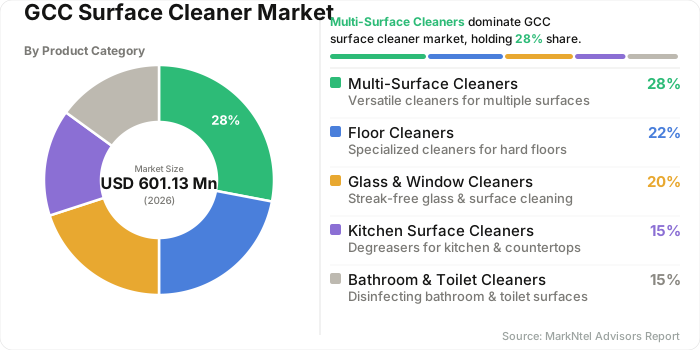
Multi-surface cleaners hold a leading position, accounting for approximately 28% of total revenue. Their dominance is primarily driven by increasing consumer preference for convenience-oriented products that simplify cleaning routines. These solutions eliminate the need for multiple specialized cleaners, making them highly attractive for both residential and commercial users seeking time efficiency and cost optimization across diverse applications.
The widespread adoption is further supported by their versatility across surfaces such as glass, countertops, and appliances. Growing demand for multi-surface cleaners is particularly evident in urban households and commercial facilities where quick and effective cleaning is essential. Additionally, the rising focus on hygiene standards is reinforcing the use of residential cleaning solutions that offer both disinfection and ease of application within compact living spaces.
Other segments continue to hold significant shares but remain more application-specific. Products like degreasers and metal cleaners cater to niche industrial or specialized uses, limiting their broader adoption. However, the increasing diversification of cleaning needs is gradually supporting balanced growth across all product categories. The strong alignment of multi-surface cleaners with convenience, versatility, and efficiency is expected to dominate within the GCC Surface Cleaner Industry over the forecast period. By product category, the market is classified into:
- Multi-Surface Cleaners
- Floor Cleaners
- Glass & Window Cleaners
- Kitchen Surface Cleaners
- Bathroom & Toilet Surface Cleaners
- Disinfectant Surface Cleaners
- Degreasers
- Furniture & Specialty Surface Cleaners
- Metal Surface Cleaners
- Electronic Surface Cleaners
Commercial Sector Leads End-Use Demand
The commercial segment dominates the GCC surface cleaner landscape, accounting for approximately 37% of total revenue, driven by extensive cleaning requirements across hospitality, retail, and corporate infrastructure. High footfall environments necessitate frequent sanitation cycles, increasing the consumption of cleaning agents. This sustained demand is further reinforced by regulatory hygiene standards and operational cleanliness benchmarks across public-facing facilities.
A key contributor to this dominance is the rapid expansion of the service economy, particularly in tourism, retail, and office spaces. The need for consistent upkeep in malls, hotels, and business centers is accelerating adoption of commercial cleaning solutions. Additionally, increasing outsourcing of facility management services is strengthening demand for janitorial supplies, ensuring standardized and large-scale cleaning operations across commercial establishments.
Other segments continue to witness steady growth due to rising hygiene awareness and infection control requirements. Industrial and food processing sectors also contribute to demand; however, their usage remains more specialized and compliance-driven. Collectively, the scale, frequency, and regulatory-driven nature of cleaning activities in commercial environments firmly position this segment as the leading revenue contributor within the GCC surface cleaner industry. The report outlines the following major end-user groups:
- Residential
- Commercial
- Healthcare Facilities
- Industrial & Manufacturing Facilities
- Food Service & Food Processing
- Transportation & Logistics Facilities
GCC Surface Cleaner Market Geographical Outlook
The UAE holds a leading position in the GCC surface cleaner market, accounting for approximately 35% of total regional demand. This dominance is primarily attributed to its advanced urban infrastructure, strong tourism sector, and high concentration of commercial establishments. Continuous investments in hospitality, retail, and mixed-use developments are driving sustained demand for cleaning solutions across high-traffic environments.
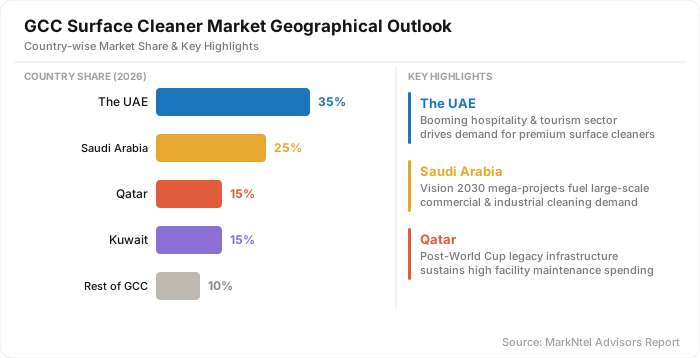
Dubai remains the central growth engine, recording 19.59 million international overnight visitors in 2025, marking its third consecutive record-breaking year. The city’s hospitality sector achieved an average hotel occupancy rate of 80.7%, generating approximately 44.85 million occupied room nights annually. This scale of activity significantly increases the need for hospitality cleaning, particularly in luxury hotels and premium accommodation facilities.
Additionally, Dubai’s extensive hotel infrastructure, with 154,264 rooms, represents the highest concentration of daily cleaning requirements in the region. High-frequency cleaning cycles in guest rooms, common areas, and service zones further amplify product consumption. The UAE’s tourism-driven economy, infrastructure scale, and premium hospitality standards firmly position it as the leading contributor to regional demand within the GCC surface cleaner industry.
GCC Surface Cleaner Market Competitive Analysis
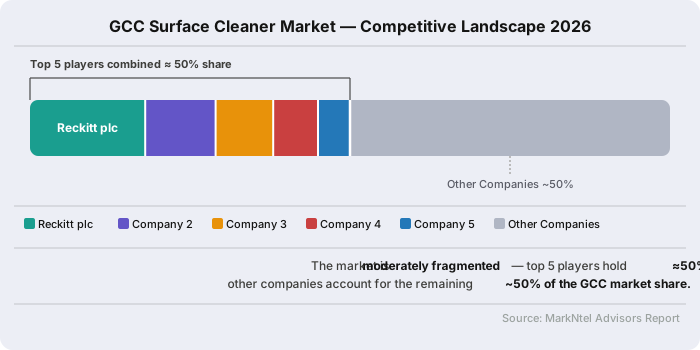
The GCC surface cleaner sector is led by key multinational and regional players, including Reckitt plc, Ecolab Inc., The Procter & Gamble Company, Unilever PLC, and Diversey Holdings, Ltd., which collectively account for approximately 50% of the total market share. The market remains moderately fragmented, with strong competition from regional manufacturers such as Saudi Industrial Detergents Company and The National Detergent Company SAOG. While global brands dominate premium and institutional segments, local players compete aggressively on pricing and distribution.
Key Players of Surface Cleaner Products in GCC
- Reckitt plc
- Ecolab Inc.
- The Procter & Gamble Company
- Unilever PLC
- Diversey Holdings, Ltd.
- 3M Company
- The National Detergent Company SAOG
- Saudi Industrial Detergents Company
- Fine Hygienic Holding
- Henkel AG & Co. KGaA
- Others
GCC Surface Cleaner Industry News and Recent Developments
March 2026: P&G Introduces Advanced Fragrance Profiles and High-Efficiency Cleaning Formulas
The Procter & Gamble Company announced major upgrades across its Mr. Clean and Gain product lines, introducing enhanced fragrance systems, concentrated formulas, and improved cleaning efficiency. The launch included new fragrance variants such as Ocean, Hawaii Aloha, and Watermelon, alongside upgraded enzyme technologies and advanced perfume microcapsules designed to improve scent longevity and cleaning performance.
Impact Analysis: The development highlights the growing importance of sensory-driven cleaning products within premium household care categories. GCC consumers increasingly prefer cleaners offering fragrance longevity, convenience, and multifunctional performance rather than basic sanitation alone. P&G’s focus on concentrated formulations and enhanced scent delivery aligns closely with evolving regional purchasing behavior, particularly in urban households and hospitality-oriented markets.
February 2025: BioTek Solutions Launches Green-Certified Cleaning Products
BioTek Solutions introduced a new range of Green Seal-certified cleaning products in the UAE, including floor sanitizers, toilet cleaners, and glass cleaner concentrates. The portfolio was designed to support environmentally responsible sanitation practices while complying with regional sustainability standards. The company highlighted biodegradable formulations and reduced environmental impact as core product differentiators.
Impact Analysis: The launch reflects accelerating demand for eco-friendly sanitation chemicals across GCC hospitality, healthcare, and facility management sectors. As regional governments tighten regulations on chemical safety and sustainable packaging, certified green cleaning solutions are gaining stronger institutional acceptance. BioTek’s localized manufacturing and Dubai Municipality approvals strengthen its competitive positioning in compliance-sensitive applications.
Frequently Asked Questions
- Market Segmentation
- Introduction
- Product Definition
- Research Process
- Assumptions
- Executive Summary
- GCC Surface Cleaner Market Policies, Regulations, and Product Standards
- GCC Surface Cleaner Production Trend 2022-2032
- GCC Surface Cleaner Trend by Type of Product Category
- Multi-Surface Cleaners
- Floor Cleaners
- Glass & Window Cleaners
- Kitchen Surface Cleaners
- Bathroom & Toilet Surface Cleaners
- Disinfectant Surface Cleaners
- Degreasers
- Furniture & Specialty Surface Cleaners
- Metal Surface Cleaners
- Electronic Surface Cleaners
- Company-Wise Production Plants and Statistics
- Installed Production Capacity
- Actual Production
- Planned Production Target
- GCC Surface Cleaner Trend by Type of Product Category
- GCC Surface Cleaner Pricing Analysis 2022-2032
- GCC Surface Cleaner Pricing Trend 2022-2032
- GCC Surface Cleaner Pricing Trend by Product Category 2022-2032
- Multi-Surface Cleaners
- Floor Cleaners
- Glass & Window Cleaners
- Kitchen Surface Cleaners
- Bathroom & Toilet Surface Cleaners
- Disinfectant Surface Cleaners
- Degreasers
- Furniture & Specialty Surface Cleaners
- Metal Surface Cleaners
- Electronic Surface Cleaners
- GCC Surface Cleaner Market Dynamics
- Growth Factors
- Challenges
- GCC Surface Cleaner Market Hotspot & Opportunities
- GCC Surface Cleaner Market Outlook, 2022-2032F
- Market Size & Outlook
- By Revenues (USD Million)
- By Quantity Sold (Tons)
- Market Share & Analysis
- By Product Category- Market Size & Forecast 2022-2032, USD Million
- Multi-Surface Cleaners
- Floor Cleaners
- Glass & Window Cleaners
- Kitchen Surface Cleaners
- Bathroom & Toilet Surface Cleaners
- Disinfectant Surface Cleaners
- Degreasers
- Furniture & Specialty Surface Cleaners
- Metal Surface Cleaners
- Electronic Surface Cleaners
- By Chemistry Type- Market Size & Forecast 2022-2032, USD Million
- Chlorine-Based
- Quaternary Ammonium Compound (Quat)-Based
- Alcohol-Based
- Hydrogen Peroxide-Based
- Solvent-Based
- Bio-Based
- Enzyme-Based
- pH-Neutral Formulations
- By Form- Market Size & Forecast 2022-2032, USD Million
- Liquid
- Spray
- Wipes
- Foam
- Powder & Granules
- Concentrates
- Tablets & Pods
- By Packaging Type- Market Size & Forecast 2022-2032, USD Million
- Bottles
- Trigger Sprays
- Refill Packs
- Bulk Drums & Containers
- Sachets
- Canisters
- By Distribution Channel- Market Size & Forecast 2022-2032, USD Million
- Supermarkets & Hypermarkets
- Convenience Stores
- Specialty Stores
- Wholesale & Cash-and-Carry
- Direct/B2B Sales
- E-commerce
- By End User- Market Size & Forecast 2022-2032, USD Million
- Residential
- Commercial
- Healthcare Facilities
- Industrial & Manufacturing Facilities
- Food Service & Food Processing
- Transportation & Logistics Facilities
- By Country
- The UAE
- Saudi Arabia
- Qatar
- Kuwait
- Oman
- Bahrain
- Rest of GCC
- By Company
- Competition Characteristics
- Market Share & Analysis
- By Product Category- Market Size & Forecast 2022-2032, USD Million
- Market Size & Outlook
- The UAE Surface Cleaner Market Outlook, 2022-2032F
- Market Size & Outlook
- By Revenues (USD Million)
- By Quantity Sold (Tons)
- Market Share & Analysis
- By Product Category- Market Size & Forecast 2022-2032, USD Million
- By Chemistry Type- Market Size & Forecast 2022-2032, USD Million
- By Form- Market Size & Forecast 2022-2032, USD Million
- By Packaging Type- Market Size & Forecast 2022-2032, USD Million
- By Distribution Channel- Market Size & Forecast 2022-2032, USD Million
- By End User- Market Size & Forecast 2022-2032, USD Million
- Market Size & Outlook
- Saudi Arabia Surface Cleaner Market Outlook, 2022-2032F
- Market Size & Outlook
- By Revenues (USD Million)
- By Quantity Sold (Tons)
- Market Share & Analysis
- By Product Category- Market Size & Forecast 2022-2032, USD Million
- By Chemistry Type- Market Size & Forecast 2022-2032, USD Million
- By Form- Market Size & Forecast 2022-2032, USD Million
- By Packaging Type- Market Size & Forecast 2022-2032, USD Million
- By Distribution Channel- Market Size & Forecast 2022-2032, USD Million
- By End User- Market Size & Forecast 2022-2032, USD Million
- Market Size & Outlook
- Qatar Surface Cleaner Market Outlook, 2022-2032F
- Market Size & Outlook
- By Revenues (USD Million)
- By Quantity Sold (Tons)
- Market Share & Analysis
- By Product Category- Market Size & Forecast 2022-2032, USD Million
- By Chemistry Type- Market Size & Forecast 2022-2032, USD Million
- By Form- Market Size & Forecast 2022-2032, USD Million
- By Packaging Type- Market Size & Forecast 2022-2032, USD Million
- By Distribution Channel- Market Size & Forecast 2022-2032, USD Million
- By End User- Market Size & Forecast 2022-2032, USD Million
- Market Size & Outlook
- Kuwait Surface Cleaner Market Outlook, 2022-2032F
- Market Size & Outlook
- By Revenues (USD Million)
- By Quantity Sold (Tons)
- Market Share & Analysis
- By Product Category- Market Size & Forecast 2022-2032, USD Million
- By Chemistry Type- Market Size & Forecast 2022-2032, USD Million
- By Form- Market Size & Forecast 2022-2032, USD Million
- By Packaging Type- Market Size & Forecast 2022-2032, USD Million
- By Distribution Channel- Market Size & Forecast 2022-2032, USD Million
- By End User- Market Size & Forecast 2022-2032, USD Million
- Market Size & Outlook
- Oman Surface Cleaner Market Outlook, 2022-2032F
- Market Size & Outlook
- By Revenues (USD Million)
- By Quantity Sold (Tons)
- Market Share & Analysis
- By Product Category- Market Size & Forecast 2022-2032, USD Million
- By Chemistry Type- Market Size & Forecast 2022-2032, USD Million
- By Form- Market Size & Forecast 2022-2032, USD Million
- By Packaging Type- Market Size & Forecast 2022-2032, USD Million
- By Distribution Channel- Market Size & Forecast 2022-2032, USD Million
- By End User- Market Size & Forecast 2022-2032, USD Million
- Market Size & Outlook
- Bahrain Surface Cleaner Market Outlook, 2022-2032F
- Market Size & Outlook
- By Revenues (USD Million)
- By Quantity Sold (Tons)
- Market Share & Analysis
- By Product Category- Market Size & Forecast 2022-2032, USD Million
- By Chemistry Type- Market Size & Forecast 2022-2032, USD Million
- By Form- Market Size & Forecast 2022-2032, USD Million
- By Packaging Type- Market Size & Forecast 2022-2032, USD Million
- By Distribution Channel- Market Size & Forecast 2022-2032, USD Million
- By End User- Market Size & Forecast 2022-2032, USD Million
- Market Size & Outlook
- GCC Surface Cleaner Market Key Strategic Imperatives for Success & Growth
- Competitive Outlook
- Company Profiles
- Reckitt plc
- Business Description
- Product Portfolio
- Collaborations & Alliances
- Recent Developments
- Financial Details
- Others
- Ecolab Inc.
- Business Description
- Product Portfolio
- Collaborations & Alliances
- Recent Developments
- Financial Details
- Others
- The Procter & Gamble Company
- Business Description
- Product Portfolio
- Collaborations & Alliances
- Recent Developments
- Financial Details
- Others
- Unilever PLC
- Business Description
- Product Portfolio
- Collaborations & Alliances
- Recent Developments
- Financial Details
- Others
- Diversey Holdings, Ltd.
- Business Description
- Product Portfolio
- Collaborations & Alliances
- Recent Developments
- Financial Details
- Others
- 3M Company
- Business Description
- Product Portfolio
- Collaborations & Alliances
- Recent Developments
- Financial Details
- Others
- The National Detergent Company SAOG
- Business Description
- Product Portfolio
- Collaborations & Alliances
- Recent Developments
- Financial Details
- Others
- Saudi Industrial Detergents Company
- Business Description
- Product Portfolio
- Collaborations & Alliances
- Recent Developments
- Financial Details
- Others
- Fine Hygienic Holding
- Business Description
- Product Portfolio
- Collaborations & Alliances
- Recent Developments
- Financial Details
- Others
- Henkel AG & Co. KGaA
- Business Description
- Product Portfolio
- Collaborations & Alliances
- Recent Developments
- Financial Details
- Others
- Others
- Reckitt plc
- Company Profiles
- Disclaimer
MarkNtel Advisors follows a robust and iterative research methodology designed to ensure maximum accuracy and minimize deviation in market estimates and forecasts. Our approach combines both bottom-up and top-down techniques to effectively segment and quantify various aspects of the market. A consistent feature across all our research reports is data triangulation, which examines the market from three distinct perspectives to validate findings. Key components of our research process include:
1. Scope & Research Design At the outset, MarkNtel Advisors define the research objectives and formulate pertinent questions. This phase involves determining the type of research—qualitative or quantitative—and designing a methodology that outlines data collection methods, target demographics, and analytical tools. They also establish timelines and budgets to ensure the research aligns with client goals.
2. Sample Selection and Data Collection In this stage, the firm identifies the target audience and determines the appropriate sample size to ensure representativeness. They employ various sampling methods, such as random or stratified sampling, based on the research objectives. Data collection is carried out using tools like surveys, interviews, and observations, ensuring the gathered data is reliable and relevant.
3. Data Analysis and Validation Once data is collected, MarkNtel Advisors undertake a rigorous analysis process. This includes cleaning the data to remove inconsistencies, employing statistical software for quantitative analysis, and thematic analysis for qualitative data. Validation steps are taken to ensure the accuracy and reliability of the findings, minimizing biases and errors.

4. Data Forecast and FinalizationThe final phase involves forecasting future market trends based on the analyzed data. MarkNtel Advisors utilize predictive modeling and time series analysis to anticipate market behaviors. The insights are then compiled into comprehensive reports, featuring visual aids like charts and graphs, and include strategic recommendations to inform client decision-making
We offer flexible licensing options to cater to varying organizational needs. Choose the pricing pack that best suits your requirements:
Buy Now Inquire Before Buying
 Request Customization
 Talk to our Consultant







