

Polyethylene Furanoate (PEF) Market Research Report: Forecast (2026-2032)
By Application (Bottles and Containers, Films and Sheets, Fibers and Yarns, Molded Components, Other Applications), By End-Use (Packaging, Textiles, Electrical and Electronics, Aut ... omotive and Transportation, Building and Construction, Other End Uses), and others Read more
- Chemicals
- Aug 2026
- Pages 340
- Report Format: PDF, Excel, PPT
Polyethylene Furanoate (PEF) Market
Projected 10.91% CAGR from 2026 to 2032
Study Period
2026-2032
Market Size (2026)
USD 41.8 Million
Market Size (2032)
USD 77.8 Million
Largest Region
Europe
Projected CAGR
10.91%
Leading Segments
By Application: Bottles and Containers
Polyethylene Furanoate (PEF) Market Key Takeaways
- The market reached USD 39.4 million in 2025 and USD 41.8 million in 2026. It is expected to reach USD 77.8 million by 2032, representing a 10.91% CAGR during 2026–2032.
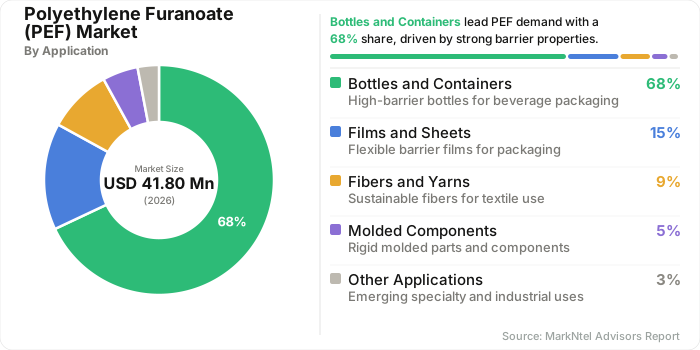
- Bottles and containers represent the leading application, accounting for an estimated 68% market share in 2026.
- Packaging leads by end-use, accounting for an estimated 76% market share in 2026.
- Europe is the leading regional market, with an estimated 47% market share in 2026.
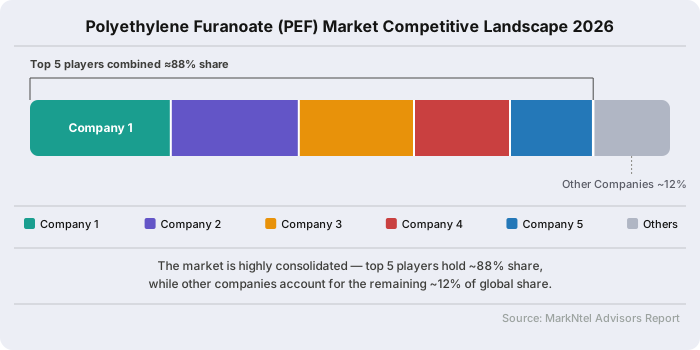
- The market is highly concentrated, with the top five companies collectively accounting for an estimated 88% market share.
Polyethylene Furanoate (PEF) Market Size and Outlook
The Global Polyethylene Furanoate Market was valued at USD 39.4 million in 2025 and USD 41.8 million in 2026. It is expected to reach USD 77.8 million by 2032, registering approximately 10.91% CAGR during 2026–2032.
Demand expansion is increasingly driven by manufacturers seeking renewable materials that also deliver measurable product-performance improvements. PEF combines plant-based sourcing with strong gas barriers, mechanical strength, lightweighting advantages, and compatibility with polyester-processing infrastructure. These attributes support buyer interest where product protection and decarbonization targets influence packaging and material procurement. Growth is also advancing through conditional purchasing commitments that establish demand before larger production facilities begin operating.
In June 2025, Hoogesteger signed an agreement covering future PEF bottles for fresh juices distributed through Albert Heijn. The arrangement connects material supply with an established producer and a major supermarket distribution channel. Such commitments give suppliers demand visibility while enabling converters and brands to prepare specifications before material availability. In June 2026, Avantium, Gepack, and Frubaça began validating small PEF bottles for functional beverage shots. The partners are evaluating bottle manufacturing, filling, product protection, and performance across the complete production chain. This coordinated process converts material interest into application evidence supporting procurement decisions and repeat commercial orders. Similar value-chain programs are widening engagement across consumer products, textiles, electronics, and other performance-sensitive applications.
Through 2032, demand is expected to strengthen as commercial supply becomes dependable and validated applications enter procurement cycles. Greater production scale is expected to improve availability, lower unit costs, and support adoption beyond early premium uses. Commercial momentum will increasingly depend on suppliers translating technical advantages into documented operational and financial value. Converter assistance, regulatory documentation, and consistent material quality are expected to accelerate customer qualification and retention. Broader customer participation will also reduce dependence on individual projects and create more balanced revenue streams. Companies establishing reliable supply and deep application partnerships are expected to capture the strongest long-term growth.
Polyethylene Furanoate (PEF) Market Key Indicators
- Avantium’s May 2026 lifecycle assessment reported up to 88% lower emissions for 500-milliliter PEF bottles. The assessment compared releaf bottles against conventional PET under representative European production, recycling, and disposal conditions. This measured reduction strengthens supplier positioning during sustainability-led procurement and supports measurable packaging-decarbonization claims.
- Textile Exchange recorded approximately 78 million tons of global polyester-fiber production during its 2024 reporting year. Polyester represented 59% of all fibers, while fossil feedstocks supplied 88% of total polyester output. This incumbent scale establishes substantial long-term substitution opportunities after suppliers achieve fiber-grade consistency, availability, and converter qualification.
- Japan fully implemented its Positive List for food-contact plastics in June 2025, including FDCA as an approved monomer. This inclusion establishes PEF eligibility for food-contact applications under Japan’s component-based regulatory framework. Suppliers gain a defined market-entry pathway, while configuration-specific compliance determines procurement approval for individual packaging designs.
- PEF delivers tenfold oxygen-barrier and eightfold carbon-dioxide-barrier performance compared with conventional PET. Targeted bottle designs support package-weight reductions reaching approximately 20% through higher material strength. These properties improve shelf-life and material efficiency, giving suppliers defensible value propositions for premium sensitive-product packaging.
Polyethylene Furanoate (PEF) Market Production, Capacity and Commercialization Analysis
Successful Flagship Ramp-Up and Licensed Production Expansion Determine Commercial PEF Growth
PEF commercialization remains supply-led because recurring demand requires dependable industrial-scale material availability. Avantium’s Delfzijl flagship facility is designed to produce 5,000 tons of FDCA annually for downstream polymerization. Construction-related titanium-weld defects delayed commissioning and shifted expected commercial product sales into 2026’s second half. Avantium completed the repair program during April 2026 while oxidation and purification commissioning activities continued. Produced FDCA requires polymerization through Selenis before contracted customers receive qualified PEF grades. Stable continuous operation would establish supply reliability, generate operating evidence, and strengthen subsequent licensing negotiations. These outcomes directly improve customer delivery confidence and reduce procurement risks during initial commercial adoption.
The flagship facility establishes commercialization readiness, while broader adoption requires substantially larger licensed production assets. In September 2025, Avantium, Tereos, and LVMH announced a European consortium for industrial-scale releaf production. The proposed facility uses Avantium’s YXY technology while connecting regional feedstocks with identified downstream demand. This integrated structure distributes investment exposure and gives future licensees clearer production, supply, and customer-development pathways. Successful execution would create regional supply networks, accelerate customer qualification, and reduce dependence on one production asset. Companies securing early feedstock, conversion, and customer partnerships are expected to gain advantages during commercial scale-up.
Polyethylene Furanoate (PEF) Market Scope
| Category | Segments |
|---|---|
| By Application | Bottles and Containers, Films and Sheets, Fibers and Yarns, Molded Components, Other Applications |
| By End-Use | Packaging, Textiles, Electrical and Electronics, Automotive and Transportation, Building and Construction, Other End Uses |
Polyethylene Furanoate (PEF) Market Growth Drivers
High Performance and Lower-Carbon Requirements Strengthen Material Adoption
PEF demand is expanding where packaging buyers require stronger product protection alongside measurable lifecycle-emission reductions. Gas-sensitive beverages, foods, cosmetics, and healthcare products need barriers preserving quality throughout extended distribution. Conventional PET requires additional layers or heavier structures when individual products demand stronger oxygen protection. PEF addresses these requirements through monolayer formats or thin functional barriers incorporated within established PET structures. Higher mechanical strength also supports lightweighting, reducing material consumption while maintaining package integrity and operational performance. These combined advantages create purchase incentives extending beyond renewable sourcing across premium and sensitive-product categories. Suppliers therefore gain stronger pricing justification when performance savings accompany documented carbon reductions.
In January 2026, Packamama reserved future PEF volumes for developing lower-carbon wine packaging solutions. Its recycled-PET flat bottles already reduce emissions by more than half compared with traditional glass bottles. PEF adds stronger barrier protection for preserving wine quality while retaining lightweight-format advantages. Successful validation would extend demand across beverages requiring greater protection than conventional lightweight packaging provides. This mechanism directly expands supplier revenues by converting technical performance into commercially defensible packaging value. Companies addressing carbon, protection, and material-efficiency requirements together are expected to secure stronger customer commitments through 2032.
Recent Trends
Multi-Partner Value-Chain Qualification Replaces Isolated Material Trials
PEF commercialization is moving from isolated resin testing toward coordinated qualification across complete downstream value chains. Material producers now collaborate with converters, manufacturers, and brands before products enter commercial procurement. This structure evaluates processing behavior, component performance, product design, and consumer-facing functionality within one program. Coordinated trials identify technical failures earlier and allocate qualification responsibilities across specialized production partners. Validated processes shorten subsequent customer evaluations when specifications transfer across comparable products and manufacturing systems. This approach lowers repeated testing expenditure and gives suppliers earlier visibility into commercially viable applications.
The textile sector demonstrates this transition because polymer conversion, knitting, garment development, and branding require different capabilities. In July 2026, Avantium partnered with Casa da Malha and Lacatoni on PEF-based textile prototypes. Casa da Malha converted PEF yarns into knitted fabrics, while Lacatoni contributed sportswear-design expertise. The collaboration produced a prototype sports shirt presented at Milano Unica for industry and customer evaluation. This outcome gives prospective buyers tangible evidence covering material conversion, garment construction, appearance, and end-use suitability. Similar programs are expected to accelerate qualification across packaging, interiors, films, and molded industrial products. Suppliers building coordinated partner networks gain faster customer access and stronger protection against specification-based competition.
Polyethylene Furanoate (PEF) Market Opportunities and Challenges
Application-Specific Qualification Constrains Adoption but Creates High Integration Opportunities
PEF adoption remains constrained because recyclability, food-contact, processing, and performance approvals apply to specific material configurations. Approval for one resin grade or package design does not automatically validate every related application. Converters separately evaluate layer concentration, sorting behavior, recycled-PET quality, molding conditions, and product-contact requirements. These procedures lengthen development cycles and increase testing expenditure before recurring commercial orders begin. Smaller buyers often delay adoption without dedicated laboratories, experienced converters, or regulatory specialists. This uneven readiness slows revenue conversion even when customers recognize PEF’s sustainability and barrier advantages. Suppliers consequently face longer sales cycles, higher technical-service costs, and greater dependence on qualified development partners.
However, configuration-specific approvals create opportunities for suppliers coordinating materials, packaging, testing, and recycling expertise. In June 2025, RecyClass validated a PET/PEF multilayer bottle containing 10% PEF as recycling-compatible. The recognition followed laboratory testing and applies under the configuration specified within its accompanying approval documentation. EPBP subsequently extended its interim endorsement for PEF bottles and barrier layers through June 2027. These recognitions provide converters with documented recycling pathways and reduce repeated testing across closely related designs. Accumulated evidence accelerates customer approvals while preserving configuration-level requirements for concentration, structure, and processing performance. Suppliers offering integrated qualification support convert regulatory complexity into stronger retention, premium services, and defensible customer relationships.
Segmentation Insights
Bottles and Containers Lead by Application, Accounting for an Estimated 68% Market Share in 2026
Bottles and containers lead because PEF’s strongest commercial advantages directly address rigid-packaging performance requirements. Beverage and food formats require oxygen, carbon-dioxide, moisture, strength, and shelf-life protection throughout extended distribution. PEF provides these functions through monolayer containers or functional barrier layers incorporated within established PET structures. This flexibility gives converters multiple adoption routes without replacing every packaging component or production process immediately. Small bottles receive greater value because higher surface-area ratios increase exposure to gas permeation. Premium beverages and sensitive foods therefore justify PEF pricing through improved protection, shelf-life, and material efficiency.
Commercial activity supports this leadership through converter validation and conditional purchasing commitments for rigid-packaging applications. In October 2024, Plastipak signed a conditional offtake agreement covering beverage and food packaging. The converter had previously demonstrated PEF performance across monolayer and multilayer bottle configurations. This experience reduces implementation uncertainty and gives brand customers a qualified route toward commercial adoption. Films and sheets expand as barrier qualification advances, although rigid packaging retains greater commercial maturity. Based on application, the market is segmented into:
- Bottles and Containers
- Films and Sheets
- Fibers and Yarns
- Molded Components
- Other Applications
Packaging Leads by End-Use, Accounting for an Estimated 76% Market Share in 2026
Packaging leads because it concentrates uses where PEF’s barrier, strength, recyclability, and carbon advantages support premium pricing. Food and beverage packaging provides broadest pathway through bottles, containers, films, and multilayer structures. Cosmetics and pharmaceutical packaging add smaller opportunities requiring formulation protection, chemical resistance, and product-contact compliance. These requirements favor technically supported materials over polymers competing primarily through scale and price. Packaging also benefits from established converter networks experienced in evaluating new materials within existing manufacturing systems. That infrastructure reduces customer implementation costs and shortens the path from evaluation toward repeat procurement.
Current partnerships demonstrate commercial interest extending beyond beverages into cosmetics, healthcare, and laboratory applications. In November 2024, Parfums Christian Dior announced planned PEF use within eco-designed primary packaging. The initiative followed three years of collaboration between LVMH Recherche and Avantium on material development. BIOVOX reserved future capacity after evaluating pharmaceutical, medical, and laboratory uses during May 2025. These programs expand supplier access to customers requiring high protection, traceability, and regulatory support. Textiles gain participation through prototype development, while packaging retains leadership through broader qualification and purchasing activity. Based on end-use, the market is segmented into:
- Packaging
- Textiles
- Electrical and Electronics
- Automotive and Transportation
- Building and Construction
- Other End Uses
Polyethylene Furanoate (PEF) Market Geographical Outlook
Europe leads the PEF Market with an estimated 47% share during 2026. The region combines technology ownership, developing commercial supply, toll polymerization, converters, and numerous application-development partners. This integrated structure concentrates attributable market activity more strongly than regions dominated primarily by isolated downstream interest. European packaging rules and corporate decarbonization commitments reinforce qualification of renewable, recyclable, high-performance polyester alternatives. The Netherlands anchors technology development, while Portugal, France, and the United Kingdom broaden conversion and customer participation. In May 2026, Avantium and Heynen Systems developed a PEF-containing prototype cushion for commercial evaluation. This interconnected network gives suppliers faster access to converters, qualification expertise, prospective buyers, and regulatory support. Europe is expected to retain leadership through 2032 as flagship supply and partner-led commercialization expand.
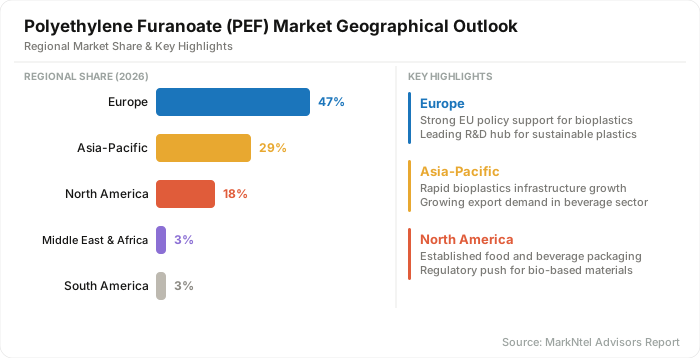
Asia-Pacific is expected to record the fastest growth as regional companies strengthen precursor production, processing knowledge, and market-access conditions. In July 2026, Zhejiang Sugar Energy advanced a 12,000-ton annual HMF facility toward third-quarter commissioning. The project expands regional precursor availability, while PEF revenues emerge once downstream FDCA conversion and polymerization enter operation. Japan’s CPBR approved PEF barrier layers within PET recycling streams at concentrations reaching 10% by weight. The November 2025 evaluation awarded qualifying bottles an A rating following physical, chemical, and processability testing. This approval gives beverage-packaging suppliers a defined recycling pathway and reduces qualification friction within Japan. Asia-Pacific’s faster expansion gradually narrows Europe’s lead while creating localization opportunities for material and conversion partners.
Polyethylene Furanoate (PEF) Market is Highly Concentrated, with the Top Five Companies Holding an estimated 88% Market Share
Key Companies in the Polyethylene Furanoate (PEF) Market
- Avantium N.V.
- Zhejiang Sugar Energy Technology Co., Ltd.
- Toyobo Co., Ltd.
- AVA Biochem
- Origin Materials
- Others
Polyethylene Furanoate (PEF) Industry News and Recent Developments
April 2026 | Toyobo Develops 100% Plant-Based PEF Film
Toyobo developed a biaxially oriented PEF film manufactured entirely from plant-derived materials. The company began providing samples during June 2026 for customer evaluation across targeted industrial applications. The film provides 60% greater rigidity, tenfold oxygen-barrier performance, and double water-vapor resistance compared with conventional PET. Toyobo identifies optics, surface protection, mold release, and electronic components as intended applications. The product remains under development, with commercialization targeted by 2035.
Impact analysis: Sample availability begins customer qualification across technical films, expanding PEF evaluation beyond packaging and textile prototypes. The long commercialization horizon gives suppliers time for performance optimization while delaying material revenue from these applications.
June 2025 | Avantium and Hordijk Sign PEF Capacity Reservation Agreement
Avantium signed a multi-year capacity reservation agreement granting Hordijk preferred access to PEF from future licensed production facilities. Hordijk intends to use reserved material in trays and injection-molded packaging for food, cosmetics, and consumer goods. The reserved volumes originate from future industrial-scale facilities licensed by Avantium.
Impact analysis: Reserved demand improves visibility for prospective licensees without contributing delivered material revenue before commercial production begins. This visibility supports production planning, financing discussions, and customer pipeline development across future licensed facilities.
May 2025 | Avantium Joins the Bottle Collective for Fiber Bottles
Avantium joined the Bottle Collective to integrate PEF liners within bottles produced using Dry Molded Fiber technology. Avantium agreed to provide PEF for injection-molded and blown liners improving barrier performance and mechanical strength. The collaboration includes PA Consulting, PulPac, Logoplaste, Diageo, Opella, and Haleon. Participating partners are developing scalable fiber-bottle configurations for global customers.
Impact analysis: PEF liners establish a pathway into hybrid formats requiring stronger barriers than fiber structures provide independently. Prototype validation expands application reach and creates additional demand channels beyond conventional monomaterial plastic bottles. The partnership also connects Avantium with major brands, improving customer access during commercialization.
Frequently Asked Questions
- Market Segmentation
- Introduction
- Product Definition
- Research Process
- Assumptions
- Executive Summary
- Polyethylene Furanoate (PEF) Market Production, Capacity and Commercialization Analysis
- Polyethylene Furanoate (PEF) Market Policies, Regulations, and Product Standards
- Polyethylene Furanoate (PEF) Market Trends & Developments
- Polyethylene Furanoate (PEF) Market Dynamics
- Growth Factors
- Challenges
- Polyethylene Furanoate (PEF) Market Hotspot & Opportunities
- Polyethylene Furanoate (PEF) Market Outlook, 2022-2032
- Market Size & Outlook
- By Revenues (USD Million)
- By Quantity Sold (Thousand Tons)
- Market Segmentation & Outlook
- By Application- Market Size & Forecast 2022-2032, USD Million & Thousand Tons
- Bottles and Containers
- Films and Sheets
- Fibers and Yarns
- Molded Components
- Other Applications
- By End-Use- Market Size & Forecast 2022-2032, USD Million & Thousand Tons
- Packaging
- Textiles
- Electrical and Electronics
- Automotive and Transportation
- Building and Construction
- Other End Uses
- By Region
- North America
- South America
- Europe
- Middle East and Africa
- Asia-Pacific
- By Company
- Competition Characteristics
- Market Share & Analysis
- By Application- Market Size & Forecast 2022-2032, USD Million & Thousand Tons
- Market Size & Outlook
- North America Polyethylene Furanoate (PEF) Market Outlook, 2022-2032
- Market Size & Outlook
- By Revenues (USD Million)
- By Quantity Sold (Thousand Tons)
- Market Segmentation & Outlook
- By Application- Market Size & Forecast 2022-2032, USD Million & Thousand Tons
- By End-Use- Market Size & Forecast 2022-2032, USD Million & Thousand Tons
- By Country
- United States
- Rest of North America
- United States Polyethylene Furanoate (PEF) Market Outlook, 2022-2032
- Market Size & Outlook
- By Revenues (USD Million)
- By Quantity Sold (Thousand Tons)
- Market Segmentation & Outlook
- By Application- Market Size & Forecast 2022-2032, USD Million & Thousand Tons
- By End-Use- Market Size & Forecast 2022-2032, USD Million & Thousand Tons
- Market Size & Outlook
- Market Size & Outlook
- South America Polyethylene Furanoate (PEF) Market Outlook, 2022-2032
- Market Size & Outlook
- By Revenues (USD Million)
- By Quantity Sold (Thousand Tons)
- Market Segmentation & Outlook
- By Application- Market Size & Forecast 2022-2032, USD Million & Thousand Tons
- By End-Use- Market Size & Forecast 2022-2032, USD Million & Thousand Tons
- Market Size & Outlook
- Europe Polyethylene Furanoate (PEF) Market Outlook, 2022-2032
- Market Size & Outlook
- By Revenues (USD Million)
- By Quantity Sold (Thousand Tons)
- Market Segmentation & Outlook
- By Application- Market Size & Forecast 2022-2032, USD Million & Thousand Tons
- By End-Use- Market Size & Forecast 2022-2032, USD Million & Thousand Tons
- By Country
- Netherlands
- Germany
- France
- United Kingdom
- Portugal
- Rest of Europe
- Netherlands Polyethylene Furanoate (PEF) Market Outlook, 2022-2032
- Market Size & Outlook
- By Revenues (USD Million)
- By Quantity Sold (Thousand Tons)
- Market Segmentation & Outlook
- By Application- Market Size & Forecast 2022-2032, USD Million & Thousand Tons
- By End-Use- Market Size & Forecast 2022-2032, USD Million & Thousand Tons
- Market Size & Outlook
- Germany Polyethylene Furanoate (PEF) Market Outlook, 2022-2032
- Market Size & Outlook
- By Revenues (USD Million)
- By Quantity Sold (Thousand Tons)
- Market Segmentation & Outlook
- By Application- Market Size & Forecast 2022-2032, USD Million & Thousand Tons
- By End-Use- Market Size & Forecast 2022-2032, USD Million & Thousand Tons
- Market Size & Outlook
- France Polyethylene Furanoate (PEF) Market Outlook, 2022-2032
- Market Size & Outlook
- By Revenues (USD Million)
- By Quantity Sold (Thousand Tons)
- Market Segmentation & Outlook
- By Application- Market Size & Forecast 2022-2032, USD Million & Thousand Tons
- By End-Use- Market Size & Forecast 2022-2032, USD Million & Thousand Tons
- Market Size & Outlook
- United Kingdom Polyethylene Furanoate (PEF) Market Outlook, 2022-2032
- Market Size & Outlook
- By Revenues (USD Million)
- By Quantity Sold (Thousand Tons)
- Market Segmentation & Outlook
- By Application- Market Size & Forecast 2022-2032, USD Million & Thousand Tons
- By End-Use- Market Size & Forecast 2022-2032, USD Million & Thousand Tons
- Market Size & Outlook
- Portugal Polyethylene Furanoate (PEF) Market Outlook, 2022-2032
- Market Size & Outlook
- By Revenues (USD Million)
- By Quantity Sold (Thousand Tons)
- Market Segmentation & Outlook
- By Application- Market Size & Forecast 2022-2032, USD Million & Thousand Tons
- By End-Use- Market Size & Forecast 2022-2032, USD Million & Thousand Tons
- Market Size & Outlook
- Market Size & Outlook
- Middle East and Africa Polyethylene Furanoate (PEF) Market Outlook, 2022-2032
- Market Size & Outlook
- By Revenues (USD Million)
- By Quantity Sold (Thousand Tons)
- Market Segmentation & Outlook
- By Application- Market Size & Forecast 2022-2032, USD Million & Thousand Tons
- By End-Use- Market Size & Forecast 2022-2032, USD Million & Thousand Tons
- Market Size & Outlook
- Asia-Pacific Polyethylene Furanoate (PEF) Market Outlook, 2022-2032
- Market Size & Outlook
- By Revenues (USD Million)
- By Quantity Sold (Thousand Tons)
- Market Segmentation & Outlook
- By Application- Market Size & Forecast 2022-2032, USD Million & Thousand Tons
- By End-Use- Market Size & Forecast 2022-2032, USD Million & Thousand Tons
- By Country
- China
- Japan
- India
- South Korea
- Rest of Asia-Pacific
- China Polyethylene Furanoate (PEF) Market Outlook, 2022-2032
- Market Size & Outlook
- By Revenues (USD Million)
- By Quantity Sold (Thousand Tons)
- Market Segmentation & Outlook
- By Application- Market Size & Forecast 2022-2032, USD Million & Thousand Tons
- By End-Use- Market Size & Forecast 2022-2032, USD Million & Thousand Tons
- Market Size & Outlook
- Japan Polyethylene Furanoate (PEF) Market Outlook, 2022-2032
- Market Size & Outlook
- By Revenues (USD Million)
- By Quantity Sold (Thousand Tons)
- Market Segmentation & Outlook
- By Application- Market Size & Forecast 2022-2032, USD Million & Thousand Tons
- By End-Use- Market Size & Forecast 2022-2032, USD Million & Thousand Tons
- Market Size & Outlook
- India Polyethylene Furanoate (PEF) Market Outlook, 2022-2032
- Market Size & Outlook
- By Revenues (USD Million)
- By Quantity Sold (Thousand Tons)
- Market Segmentation & Outlook
- By Application- Market Size & Forecast 2022-2032, USD Million & Thousand Tons
- By End-Use- Market Size & Forecast 2022-2032, USD Million & Thousand Tons
- Market Size & Outlook
- South Korea Polyethylene Furanoate (PEF) Market Outlook, 2022-2032
- Market Size & Outlook
- By Revenues (USD Million)
- By Quantity Sold (Thousand Tons)
- Market Segmentation & Outlook
- By Application- Market Size & Forecast 2022-2032, USD Million & Thousand Tons
- By End-Use- Market Size & Forecast 2022-2032, USD Million & Thousand Tons
- Market Size & Outlook
- Market Size & Outlook
- Polyethylene Furanoate (PEF) Market Key Strategic Imperatives for Success & Growth
- Competitive Outlook
- Company Profiles
- Avantium N.V.
- Business Description
- Product Portfolio
- Collaborations & Alliances
- Recent Developments
- Financial Details
- Others
- Zhejiang Sugar Energy Technology Co., Ltd.
- Business Description
- Product Portfolio
- Collaborations & Alliances
- Recent Developments
- Financial Details
- Others
- Toyobo Co., Ltd.
- Business Description
- Product Portfolio
- Collaborations & Alliances
- Recent Developments
- Financial Details
- Others
- AVA Biochem
- Business Description
- Product Portfolio
- Collaborations & Alliances
- Recent Developments
- Financial Details
- Others
- Origin Materials
- Business Description
- Product Portfolio
- Collaborations & Alliances
- Recent Developments
- Financial Details
- Others
- Others
- Avantium N.V.
- Company Profiles
- Disclaimer
MarkNtel Advisors follows a robust and iterative research methodology designed to ensure maximum accuracy and minimize deviation in market estimates and forecasts. Our approach combines both bottom-up and top-down techniques to effectively segment and quantify various aspects of the market. A consistent feature across all our research reports is data triangulation, which examines the market from three distinct perspectives to validate findings. Key components of our research process include:
1. Scope & Research Design At the outset, MarkNtel Advisors define the research objectives and formulate pertinent questions. This phase involves determining the type of research—qualitative or quantitative—and designing a methodology that outlines data collection methods, target demographics, and analytical tools. They also establish timelines and budgets to ensure the research aligns with client goals.
2. Sample Selection and Data Collection In this stage, the firm identifies the target audience and determines the appropriate sample size to ensure representativeness. They employ various sampling methods, such as random or stratified sampling, based on the research objectives. Data collection is carried out using tools like surveys, interviews, and observations, ensuring the gathered data is reliable and relevant.
3. Data Analysis and Validation Once data is collected, MarkNtel Advisors undertake a rigorous analysis process. This includes cleaning the data to remove inconsistencies, employing statistical software for quantitative analysis, and thematic analysis for qualitative data. Validation steps are taken to ensure the accuracy and reliability of the findings, minimizing biases and errors.

4. Data Forecast and FinalizationThe final phase involves forecasting future market trends based on the analyzed data. MarkNtel Advisors utilize predictive modeling and time series analysis to anticipate market behaviors. The insights are then compiled into comprehensive reports, featuring visual aids like charts and graphs, and include strategic recommendations to inform client decision-making
We offer flexible licensing options to cater to varying organizational needs. Choose the pricing pack that best suits your requirements:
Buy Now Inquire Before Buying
 Request Customization
 Talk to our Consultant







