

By Product (Food and Beverages, Personal and Household Care, Apparel, Footwear, and Accessories, Furniture, Toys, and Hobby, Electronic and Household Appliances, Pharmaceuticals))), By Distribution Ch... ... , By Distribution Channel (Supermarkets/Hypermarkets, Convenience Stores, Department Stores, Specialty Stores, Online), By Ownership (Independent Retailers, Chain Retailers, Franchise Stores), By Price Range (Premium, Mid-range, Economy/Value Retail), By Store Size (Small Stores, Medium Stores, Large Stores), and others Read more
- FMCG
- Apr 2026
- 165
- PDF, Excel, PPT
Philippines Retail Market Key Takeaways
- The Philippines Retail market size was valued at USD 74.56 billion in 2025 and is projected to grow from USD 79.98 billion in 2026 to USD 121.85 billion by 2032, exhibiting a CAGR of 7.27% during 2026-2032.
- By product, the food & beverages segment accounts for approximately 50% of the total market share.
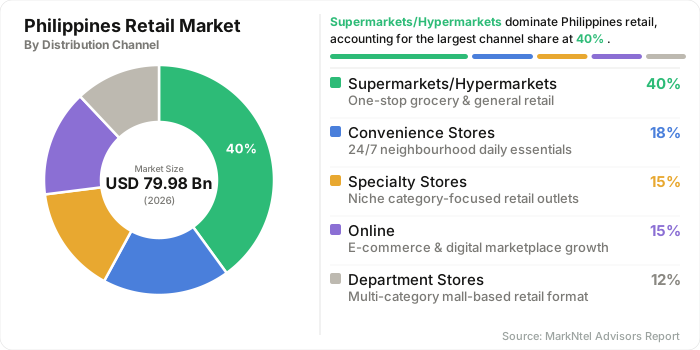
- By distribution channel, supermarkets/hypermarkets dominate with an estimated 40% share in 2026.
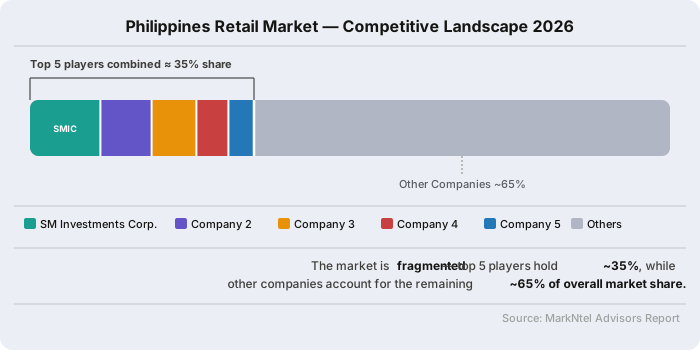
- The retail industry remains moderately fragmented across the Philippines, with the top five players collectively holding around 35% of the overall market share.
Philippines Retail Market Size and Outlook
The Philippines retail market was estimated at USD 74.56 billion in 2025 and is anticipated to grow from USD 79.98 billion in 2026 to USD 121.85 billion by 2032. Along with this, the market is projected to grow at a steady CAGR of around 7.27% over the forecast period (2026–2032).
The retail landscape in Philippines is expected to experience consistent growth, driven by the accelerating adoption of e-commerce and omnichannel strategies, along with the rising prominence of private label and value brands addressing shifting consumer preferences and price-sensitive buying patterns.
A key growth driver is the steady inflow of remittances, with the World Bank reporting that personal remittances reached approximately USD 40 billion in 2024 . These inflows significantly enhance household purchasing power, particularly in rural and semi-urban regions, thereby stimulating demand across diverse retail categories. Regionally, Luzon continues to dominate the retail landscape, driven by its concentration of economic activity and advanced digital infrastructure. As per the Philippine Statistics Authority, the National Capital Region accounted for 41.1% of the services sector in 2024, reflecting the region’s strong base for organized retail and e-commerce expansion.
Meanwhile, the Visayas region is emerging as a high-growth market, with Central Visayas recording 7.3% economic growth and 7.7% growth in household consumption, indicating rising consumer demand and retail penetration. Similarly, Mindanao is gaining traction as a promising retail frontier, supported by improving infrastructure and economic performance, with regions such as Davao (6.3%) and Northern Mindanao (6.0%) demonstrating above-average GDP growth .
The market is also benefiting from strong institutional support for digital transformation. For example, in 2024, the World Bank approved a USD 750 million Digital Transformation Development Policy Loan, aimed at strengthening e-commerce trust infrastructure and enhancing digital payment systems. This initiative is expected to accelerate the development of a robust online retail ecosystem.
Complementing this, the Bangko Sentral ng Pilipinas reported that 62.5% of newly registered MSMEs in 2024 were digitally enabled, operating through online platforms and mobile payment systems . This expanding digital seller base is increasing product availability, enhancing competition, and reducing reliance on a limited number of large retailers. In parallel, shifting consumer preferences are driving the growth of private label and value brands. Increasing price sensitivity has encouraged retailers to expand affordable in-house product lines, enabling them to optimize margins while catering to cost-conscious consumers seeking quality alternatives.
Overall, the Philippines retail industry is transitioning toward a more digitally integrated and regionally diversified ecosystem. Strong remittance inflows, regional economic expansion, and continued investments in digital infrastructure are expected to sustain long-term growth, while evolving retail formats and value-driven offerings will further enhance market competitiveness and consumer reach.
Philippines Retail Market Key Indicators
- According to the Philippine Statistics Authority, the digital economy contributed 8.5% to the national GDP in 2024. This highlights the growing influence of e-commerce and online platforms in driving retail sales, expanding consumer reach, and accelerating the shift toward omnichannel retail formats across the country.
- The increasing adoption of digital payments is a critical indicator for retail transformation. As reported by the Bangko Sentral ng Pilipinas, digital payments accounted for 57.4% of total retail transaction volume in 2025. The growing preference for cashless transactions is reducing payment friction, improving transaction efficiency, and enabling seamless integration between physical stores and e-commerce platforms.
- A key indicator shaping the Philippines retail landscape is the rapid rise in digital consumer participation. The share of Filipinos engaged in online buying and selling increased from 5.5% to 29.8% in 2024, as stated by the Department of Information and Communications Technology and PSA. This sharp increase reflects accelerating e-commerce adoption and supports the expansion of omnichannel retail strategies among both large retailers and MSMEs.
- A key indicator of the Philippines retail market’s growth is the strategic expansion of commercial real estate by Vista Land & Lifescapes. Through its Vista Commercial Assets portfolio, the company is enhancing its presence via integrated malls, lifestyle hubs, and mixed-use developments, improving retail accessibility, driving consumer traffic, and reinforcing the growth of organized retail and omnichannel frameworks across both metropolitan and emerging regional markets.
Philippines Retail Market Scope
| Category | Segments |
|---|---|
| By Product | Food and Beverages, Personal and Household Care, Apparel, Footwear, and Accessories, Furniture, Toys, and Hobby, Electronic and Household Appliances, Pharmaceuticals |
| By Distribution Channel | Supermarkets/Hypermarkets, Convenience Stores, Department Stores, Specialty Stores, Online, Independent Retailers, Chain Retailers, Franchise Stores), |
| By Ownership | Independent Retailers, Chain Retailers, Franchise Stores |
| By Price Range | Premium, Mid-range, Economy/Value Retail |
| By Store Size | Small Stores, Medium Stores, Large Stores), and others |
Philippines Retail Market Growth Drivers
Rise of E-commerce and Omnichannel Retailing
The Philippines retail industry is largely propelled by the rapid expansion of e-commerce and the rising integration of omnichannel retail approaches. With approximately 68.4% of consumers relying on smartphones for online purchases, mobile devices have become the dominant channel for retail transactions.
This driver reflects a strong shift in consumer preferences toward convenience, accessibility, and real-time engagement. In response, retailers are actively investing in mobile-optimized websites, app-based shopping interfaces, and seamless digital payment solutions to enhance user experience and improve conversion rates. Furthermore, businesses are integrating their online and offline operations to ensure a consistent and personalized customer journey across all touchpoints.
Alongside evolving consumer behavior, e-commerce is playing a vital role in employment generation and ecosystem development. According to the Philippine Statistics Authority, e-commerce contributes nearly 77.9% of total employment within the digital economy, supporting a wide network of small merchants, logistics providers, digital service operators, and platform-based sellers. This expanding participation is increasing product availability, fostering innovation, and intensifying competition within the retail sector.
Collectively, the strong penetration of mobile commerce and the substantial employment contribution of e-commerce are accelerating the adoption of omnichannel retail strategies, firmly positioning digital retail as a core driver of sustained growth in the Philippines retail market.
Recent Trends
Private Label and Value Brand Expansion
The Philippines retail industry is undergoing a significant transition toward private label and value-oriented brands, driven by increasing consumer price sensitivity and shifting spending patterns. According to The Philippine Star, private label food and beverage sales in the country are projected to approach USD 900 million, indicating robust and sustained demand for cost-effective alternatives .
This trend is largely influenced by persistent inflationary pressures, which have encouraged households to prioritize affordability and value. In response, retailers are strategically expanding their in-house brand portfolios across essential product categories, including groceries and daily-use items. These offerings typically provide competitive pricing while maintaining acceptable quality standards, making them particularly appealing to budget-conscious consumers.
Moreover, private labels enable retailers to enhance profit margins and reinforce customer loyalty by exercising greater control over sourcing, pricing, and supply chain operations. Continuous improvements in packaging and product consistency are further strengthening consumer confidence and accelerating market penetration.
Going forward, retailers are likely to increase investments in local sourcing, strengthen supplier partnerships, and enhance product development efforts to drive higher private label penetration and support sustained growth beyond 2025.
The growing prominence of private label and value brands is redefining retail dynamics, supporting margin optimization while meeting evolving consumer demand, thereby contributing to sustained market expansion.
Philippines Retail Market Opportunities and Challenges
Supply Chain Disruptions Driving Retail Transformation
Supply chain inefficiencies remain a critical challenge for the Philippines retail demand, largely due to its archipelagic geography and dependence on inter-island logistics. These structural constraints often lead to supply-demand mismatches, particularly for essential commodities.
A notable instance occurred in 2025, when the government intervened to stabilize rice availability by releasing up to 300,000 metric tons of buffer stock, highlighting vulnerabilities in retail distribution and inventory management systems .
At the same time, these disruptions are driving significant transformation across the retail supply chain. Leading logistics providers such as J&T Express and Ninja Van are actively expanding regional fulfillment hubs and last-mile delivery networks to improve service efficiency and reduce delivery timelines. Meanwhile, the government is strengthening digital infrastructure and supply chain resilience through programs supported by multilateral institutions, enabling better coordination and real-time inventory tracking.
Looking ahead, continued investments in port modernization, cold chain logistics, and AI-enabled inventory systems beyond 2025 are expected to address existing inefficiencies. While supply chain disruptions pose short-term operational challenges, they are catalyzing long-term modernization. This twin impact will boost logistics efficiency, improve product availability, and ultimately support sustainable growth in the Philippines retail market.
Segmentation Insights
Food & beverages are widely used in the retail industry
The food & beverages account for nearly 50% share of the overall volume in the Philippines Retail industry, largely due to its essential nature and recurring consumption across all demographic groups.
As a necessity-based category, it experiences stable demand, supported by population expansion, increasing urbanization, and shifting dietary habits. Additionally, rising disposable incomes, partly driven by steady remittance inflows, are boosting expenditure on packaged foods, beverages, and convenience-oriented products.
The segment’s leadership is further strengthened by the continuous growth of organized retail channels, including supermarkets, hypermarkets, and convenience stores, along with the rising adoption of online grocery platforms. Consumers are progressively gravitating toward ready-to-consume meals, processed items, and health-focused offerings, reflecting fast-paced lifestyles and changing preferences in urban centers.
Moreover, well-established supply chains and extensive distribution networks ensure consistent product availability across both metropolitan and rural areas, enhancing market penetration. Retailers are also increasingly introducing private label products within this category, offering affordable alternatives and driving higher sales volumes.
The sustained dominance of the Food and Beverages segment is underpinned by its necessity-driven demand, robust distribution infrastructure, and alignment with evolving consumer trends, positioning it for continued growth in the Philippines retail market. By product, the scope has been bifurcated into:
- Food and Beverages
- Personal and Household Care
- Apparel, Footwear, and Accessories
- Furniture, Toys, and Hobby
- Electronic and Household Appliances
- Pharmaceuticals
- Others
Supermarkets/Hypermarkets lead the distribution channel.
The supermarkets/hypermarkets account for about 40% share, making it the largest revenue contributor among distribution channels, primarily due to their ability to offer a wide assortment of products under one roof.
These formats cater to diverse consumer needs, including food and beverages, household essentials, and personal care items, making them a preferred shopping destination for bulk and routine purchases.
Their dominance is further supported by strong pricing strategies, including discounts, bundled offers, and private label products, which attract price-sensitive consumers. The organized layout, consistent product availability, and quality assurance also enhance consumer trust and encourage repeat purchases. In addition, the expansion of large retail chains across urban and semi-urban areas has significantly improved accessibility, further strengthening their market position.
Supermarkets and hypermarkets are also adapting to changing consumer behavior by integrating digital solutions such as online ordering, home delivery, and click-and-collect services. This omnichannel approach enables them to compete effectively with pure e-commerce platforms while retaining the advantages of physical retail.
The continued dominance of supermarkets and hypermarkets is driven by their comprehensive product offerings, competitive pricing, and evolving omnichannel capabilities, positioning them as a cornerstone of the Philippines retail distribution landscape. The key distribution channel analyzed in the study include:
- Supermarkets/Hypermarkets
- Convenience Stores
- Department Stores
- Specialty Stores
- Online
Philippines Retail Market Competitive Analysis
The Philippines retail sector exhibits a moderately fragmented structure, with numerous domestic and regional participants operating across a wide range of segments, including food and beverages, apparel, electronics, and household products. The top five players are SM Investments Corporation, Robinsons Retail Holdings, Inc., Puregold Price Club, Inc., Metro Retail Stores Group, Inc., and Philippine Seven Corporation, together represent approximately 35% of the overall market share.
Major Companies in the Philippines Retail
- SM Investments Corporation
- Robinsons Retail Holdings, Inc.
- Puregold Price Club, Inc.
- Metro Retail Stores Group, Inc.
- SSI Group, Inc.
- Rustan Commercial Corporation
- Waltermart Supermarket Inc.
- The Landmark Corporation
- Philippine Seven Corporation
- Mercury Drug Corporation
- Watsons Philippines
- Others
Philippines Retail Industry News and Recent Developments:
March 2026: SM Prime Expands Retail Presence with Launch of SM City Zamboanga in Mindanao
SM Prime Holdings launched its 90th mall, SM City Zamboanga, expanding its footprint in Mindanao. The development marks continued investment in regional retail infrastructure, bringing modern shopping, dining, and entertainment options to Zamboanga City while strengthening the company’s nationwide mall network.
Impact Analysis: The opening enhances organized retail penetration in Mindanao, a region with growing consumer demand but relatively lower mall density. It is expected to boost local employment, increase retail spending, and attract national/international brands. Additionally, it strengthens omnichannel retail by enabling physical-digital integration, improving last-mile logistics, and supporting regional economic development beyond Metro Manila.
February 2026: Megaworld Commits Over USD 175 Million Investment in New Township Malls Expansion
As reported by Business Inquirer, Megaworld Corporation announced plans to invest approximately PHP 10 billion (around USD 175–180 million) to develop new township malls across the Philippines. These developments are part of its integrated township strategy, combining retail, residential, and office spaces to enhance consumer accessibility and lifestyle experiences.
Impact Analysis: This investment accelerates the expansion of organized retail infrastructure, particularly in emerging urban and suburban areas. It strengthens the shift toward mixed-use developments, ensuring steady consumer footfall and higher retail spending. Additionally, it supports omnichannel retail integration and attracts premium brands, thereby enhancing the competitiveness and long-term growth potential of the Philippines retail and e-commerce market.
October 2025: SM City La Union Opens to Strengthen Northern Luzon Retail Landscape
SM Prime Holdings inaugurated SM City La Union on October 17, 2025, marking another strategic expansion in Northern Luzon. The mall introduces a mix of retail, dining, and entertainment outlets, catering to both local residents and tourists, while reinforcing SM’s continued investment in provincial retail infrastructure.
Impact Analysis: The development enhances organized retail penetration in Northern Luzon, boosting regional consumption and tourism-driven spending. It supports job creation and attracts national brands to emerging cities. Additionally, the mall strengthens omnichannel retail by acting as a fulfillment and pickup hub, improving supply chain efficiency and expanding modern retail access beyond Metro Manila, contributing to balanced regional economic growth.
- Market Segmentation
- Introduction
- Product Definition
- Research Process
- Assumptions
- Executive Summary
- Philippines Retail Market Policies, Regulations, and Product Standards
- Philippines Retail Market Trends & Developments
- Philippines Retail Market Dynamics
- Growth Factors
- Challenges
- Philippines Retail Market Hotspot & Opportunities
- Philippines Retail Market Outlook, 2022-2032F
- Market Size & Outlook
- By Revenues (USD Million)
- Market Share & Analysis
- By Product- Market Size & Forecast 2022-2032, USD Million
- Food and Beverages
- Fresh Food
- Fruits
- Apples
- Bananas
- Oranges
- Mangoes
- Berries
- Grapes
- Others
- Vegetables
- Potatoes
- Tomatoes
- Onions
- Leafy Greens
- Others
- Meat
- Beef
- Pork
- Lamb
- Poultry
- Chicken
- Turkey
- Seafood
- Fish
- Shellfish
- Others
- Dairy Products
- Milk
- Cheese
- Butter & Margarine
- Yogurt & Probiotic Drinks
- Others
- Fruits
- Packaged Food
- Snacks & Confectionery
- Chips & Savory Snacks
- Chocolates
- Sugar Confectionery (Candies, Gums)
- Others
- Ready-to-Eat / Ready-to-Cook Meals
- Frozen Meals
- Instant Noodles
- Ready Curry / Meal Kits
- Others
- Bakery Products
- Bread
- Cakes & Pastries
- Biscuits & Cookies
- Others
- Snacks & Confectionery
- Beverages
- Non-Alcoholic
- Carbonated Soft Drinks
- Juices
- Bottled Water
- Energy & Sports Drinks
- Tea & Coffee (Packaged/RTD)
- Others
- Alcoholic Beverages
- Beer
- Wine
- Spirits
- Others
- Non-Alcoholic
- Grocery Staples
- Rice
- Wheat
- Pulses
- Oils
- Fresh Food
- Personal and Household Care
- Personal Care
- Skincare
- Moisturizers
- Sunscreens
- Anti-aging Products
- Face Wash & Cleansers
- Others
- Haircare
- Shampoos
- Conditioners
- Hair Oils
- Hair Styling Products
- Others
- Cosmetics & Makeup
- Foundation
- Powder
- Mascara
- Eyeliner
- Lipstick
- Lip Balm
- Others
- Fragrances
- Perfumes
- Deodorants
- Skincare
- Household Care
- Cleaning Products
- Laundry Detergents
- Dishwashing Liquids
- Surface Cleaners
- Disinfectants
- Others
- Paper Products
- Toilet Paper
- Tissues
- Paper Towels
- Others
- Home Care Consumables
- Air Fresheners
- Insect Repellents
- Cleaning Products
- Personal Care
- Apparel, Footwear, and Accessories
- Apparel
- Men’s Wear
- Shirts
- T-shirts
- Trousers
- Ethnic Wear
- Others
- Women’s Wear
- Dresses
- Tops
- Sarees
- Ethnic Wear
- Others
- Kids Wear
- Infant Wear
- School Wear
- Men’s Wear
- Footwear
- Casual Footwear
- Sneakers
- Sandals
- Sports Footwear
- Running Shoes
- Training Shoes
- Formal Footwear
- Leather Shoes
- Office Footwear
- Casual Footwear
- Accessories
- Bags & Luggage
- Backpacks
- Suitcases
- Watches
- Analog
- Smartwatches
- Jewelry & Fashion Accessories
- Gold
- Diamond
- Fashion Jewelry
- Bags & Luggage
- Apparel
- Furniture, Toys, and Hobby
- Furniture
- Home Furniture
- Sofas
- Beds
- Dining Tables
- Others
- Office Furniture
- Chairs
- Workstations
- Home Furniture
- Home Décor
- Lighting
- Lamps
- LED Fixtures
- Decorative Items
- Wall Art
- Vases
- Others
- Lighting
- Toys & Games
- Educational Toys
- Electronic Toys
- Hobby & Leisure
- Sports Goods
- Cricket Bats
- Footballs
- Fitness Equipment
- Others
- DIY & Craft Kits
- Art Supplies
- Hobb Kits
- Others
- Sports Goods
- Furniture
- Electronic and Household Appliances
- Consumer Electronics
- Smartphones & Tablets
- Laptops & Computers
- Audio & Video Devices
- Home Appliances
- Large Appliances
- Refrigerators
- Washing Machines
- ACs
- Others
- Small Appliances
- Microwaves
- Mixers
- Vacuum Cleaners
- Others
- Large Appliances
- Smart Devices
- Wearables
- Smart Home Systems
- Consumer Electronics
- Pharmaceuticals
- OTC Drugs
- Pain Relievers
- Cold & Flu Medicines
- Digestive Aids
- Prescription Medicines
- Chronic Disease Drugs
- Antibiotics
- Health Supplements
- Vitamins
- Protein Supplements
- Herbal Supplements
- Others
- OTC Drugs
- Food and Beverages
- By Distribution Channel- Market Size & Forecast 2022-2032, USD Million
- Supermarkets/Hypermarkets
- Convenience Stores
- Department Stores
- Specialty Stores
- Online
- By Ownership- Market Size & Forecast 2022-2032, USD Million
- Independent Retailers
- Chain Retailers
- Franchise Stores
- By Price Range- Market Size & Forecast 2022-2032, USD Million
- Premium
- Mid-range
- Economy/Value Retail
- By Store Size- Market Size & Forecast 2022-2032, USD Million
- Small Stores
- Medium Stores
- Large Stores
- By Region
- Luzon
- Visayas
- Mindanao
- By Company
- Competition Characteristics
- Market Share & Analysis
- By Product- Market Size & Forecast 2022-2032, USD Million
- Market Size & Outlook
- Philippines Food and Beverages Market Outlook, 2022-2032F
- Market Size & Outlook
- By Revenues (USD Million)
- Market Share & Analysis
- By Distribution Channel- Market Size & Forecast 2022-2032, USD Million
- By Ownership- Market Size & Forecast 2022-2032, USD Million
- By Price Range- Market Size & Forecast 2022-2032, USD Million
- By Store Size- Market Size & Forecast 2022-2032, USD Million
- By Region- Market Size & Forecast 2022-2032, USD Million
- Market Size & Outlook
- Philippines Personal and Household Care Market Outlook, 2022-2032F
- Market Size & Outlook
- By Revenues (USD Million)
- Market Share & Analysis
- By Distribution Channel- Market Size & Forecast 2022-2032, USD Million
- By Ownership- Market Size & Forecast 2022-2032, USD Million
- By Price Range- Market Size & Forecast 2022-2032, USD Million
- By Store Size- Market Size & Forecast 2022-2032, USD Million
- By Region- Market Size & Forecast 2022-2032, USD Million
- Market Size & Outlook
- Philippines Apparel, Footwear, and Accessories Market Outlook, 2022-2032F
- Market Size & Outlook
- By Revenues (USD Million)
- Market Share & Analysis
- By Distribution Channel- Market Size & Forecast 2022-2032, USD Million
- By Ownership- Market Size & Forecast 2022-2032, USD Million
- By Price Range- Market Size & Forecast 2022-2032, USD Million
- By Store Size- Market Size & Forecast 2022-2032, USD Million
- By Region- Market Size & Forecast 2022-2032, USD Million
- Market Size & Outlook
- Philippines Furniture, Toys, and Hobby Market Outlook, 2022-2032F
- Market Size & Outlook
- By Revenues (USD Million)
- Market Share & Analysis
- By Distribution Channel- Market Size & Forecast 2022-2032, USD Million
- By Ownership- Market Size & Forecast 2022-2032, USD Million
- By Price Range- Market Size & Forecast 2022-2032, USD Million
- By Store Size- Market Size & Forecast 2022-2032, USD Million
- By Region- Market Size & Forecast 2022-2032, USD Million
- Market Size & Outlook
- Philippines Electronic and Household Appliances Market Outlook, 2022-2032F
- Market Size & Outlook
- By Revenues (USD Million)
- Market Share & Analysis
- By Distribution Channel- Market Size & Forecast 2022-2032, USD Million
- By Ownership- Market Size & Forecast 2022-2032, USD Million
- By Price Range- Market Size & Forecast 2022-2032, USD Million
- By Store Size- Market Size & Forecast 2022-2032, USD Million
- By Region- Market Size & Forecast 2022-2032, USD Million
- Market Size & Outlook
- Philippines Pharmaceuticals Market Outlook, 2022-2032F
- Market Size & Outlook
- By Revenues (USD Million)
- Market Share & Analysis
- By Distribution Channel- Market Size & Forecast 2022-2032, USD Million
- By Ownership- Market Size & Forecast 2022-2032, USD Million
- By Price Range- Market Size & Forecast 2022-2032, USD Million
- By Store Size- Market Size & Forecast 2022-2032, USD Million
- By Region- Market Size & Forecast 2022-2032, USD Million
- Market Size & Outlook
- Philippines Retail Market Key Strategic Imperatives for Success & Growth
- Competitive Outlook
- Company Profiles
- SM Investments Corporation
- Business Description
- Product Portfolio
- Collaborations & Alliances
- Recent Developments
- Financial Details
- Others
- Robinsons Retail Holdings, Inc.
- Business Description
- Product Portfolio
- Collaborations & Alliances
- Recent Developments
- Financial Details
- Others
- Puregold Price Club, Inc.
- Business Description
- Product Portfolio
- Collaborations & Alliances
- Recent Developments
- Financial Details
- Others
- Metro Retail Stores Group, Inc.
- Business Description
- Product Portfolio
- Collaborations & Alliances
- Recent Developments
- Financial Details
- Others
- SSI Group, Inc.
- Business Description
- Product Portfolio
- Collaborations & Alliances
- Recent Developments
- Financial Details
- Others
- Rustan Commercial Corporation
- Business Description
- Product Portfolio
- Collaborations & Alliances
- Recent Developments
- Financial Details
- Others
- Waltermart Supermarket Inc.
- Business Description
- Product Portfolio
- Collaborations & Alliances
- Recent Developments
- Financial Details
- Others
- The Landmark Corporation
- Business Description
- Product Portfolio
- Collaborations & Alliances
- Recent Developments
- Financial Details
- Others
- Philippine Seven Corporation
- Business Description
- Product Portfolio
- Collaborations & Alliances
- Recent Developments
- Financial Details
- Others
- Mercury Drug Corporation
- Business Description
- Product Portfolio
- Collaborations & Alliances
- Recent Developments
- Financial Details
- Others
- Watsons Philippines
- Business Description
- Product Portfolio
- Collaborations & Alliances
- Recent Developments
- Financial Details
- Others
- Others
- Business Description
- Product Portfolio
- Collaborations & Alliances
- Recent Developments
- Financial Details
- Others
- SM Investments Corporation
- Company Profiles
- Disclaimer

MarkNtel Advisors follows a robust and iterative research methodology designed to ensure maximum accuracy and minimize deviation in market estimates and forecasts. Our approach combines both bottom-up and top-down techniques to effectively segment and quantify various aspects of the market. A consistent feature across all our research reports is data triangulation, which examines the market from three distinct perspectives to validate findings. Key components of our research process include:
1. Scope & Research Design At the outset, MarkNtel Advisors define the research objectives and formulate pertinent questions. This phase involves determining the type of research—qualitative or quantitative—and designing a methodology that outlines data collection methods, target demographics, and analytical tools. They also establish timelines and budgets to ensure the research aligns with client goals.
2. Sample Selection and Data Collection In this stage, the firm identifies the target audience and determines the appropriate sample size to ensure representativeness. They employ various sampling methods, such as random or stratified sampling, based on the research objectives. Data collection is carried out using tools like surveys, interviews, and observations, ensuring the gathered data is reliable and relevant.
3. Data Analysis and Validation Once data is collected, MarkNtel Advisors undertake a rigorous analysis process. This includes cleaning the data to remove inconsistencies, employing statistical software for quantitative analysis, and thematic analysis for qualitative data. Validation steps are taken to ensure the accuracy and reliability of the findings, minimizing biases and errors.

4. Data Forecast and FinalizationThe final phase involves forecasting future market trends based on the analyzed data. MarkNtel Advisors utilize predictive modeling and time series analysis to anticipate market behaviors. The insights are then compiled into comprehensive reports, featuring visual aids like charts and graphs, and include strategic recommendations to inform client decision-making
We offer flexible licensing options to cater to varying organizational needs. Choose the pricing pack that best suits your requirements:
Buy Now Inquire Before Buying
 Request Customization