

By Engine Type (Turbofan Engines, Turboprop Engines, Turboshaft Engines, Piston Engines), By Service Type (Maintenance, Repair, Overhaul), By End User (Commercial Aviation, Military Aviation, Business... ... y Aviation, Business & General Aviation, Cargo Aviation), and others Read more
- Aerospace & Defense
- Jun 2026
- 150
- PDF, Excel, PPT
GCC Aircraft Engine MRO Market Key Takeaways
- The GCC Aircraft Engine MRO Market was valued at approximately USD 3.39 billion in 2025 and is projected to reach USD 3.88 billion in 2026, further expanding to nearly USD 6.29 billion by 2032.
- The industry is projected to witness steady growth, registering a CAGR of around 8.39% during the forecast period.
- Saudi Arabia emerged as the leading country, contributing approximately 36% market share in 2026.
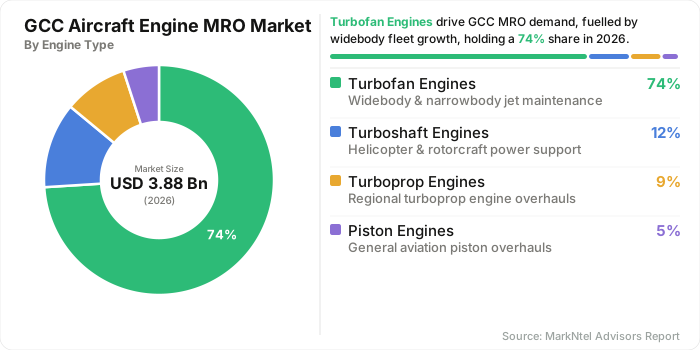
- By Engine Type, Turbofan Engines held around 74% market share in 2026.
- By End User, Commercial Aviation accounted for approximately 64% market share in 2026.
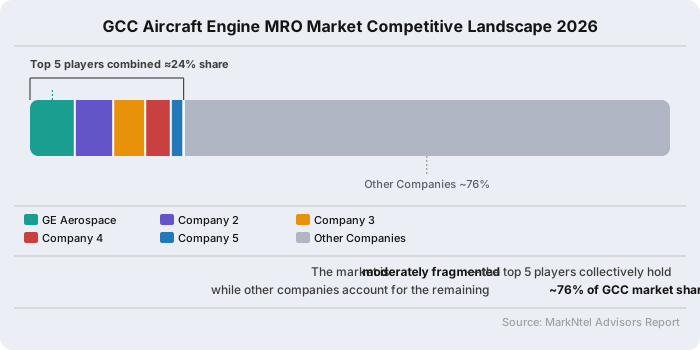
- The industry is moderately fragmented, with the top five leading players accounting for approximately 24% of the total market share.
GCC Aircraft Engine MRO Market Size and Outlook
Market revenue is expected to grow from USD 3.88 billion in 2026 to approximately USD 6.29 billion by 2032, expanding at a CAGR of 8.39%, following a valuation of USD 3.39 billion in 2025.
The rapid expansion of the GCC aviation sector has created a strong foundation for growth in aircraft engine maintenance, repair, and overhaul activities. Increasing passenger traffic, broader airline route networks, and ongoing fleet modernization programs have significantly elevated engine servicing requirements across the region. According to the International Air Transport Association (IATA), Middle Eastern carriers recorded a 6.7% increase in passenger traffic during 2025. As airlines seek to maximize fleet availability and operational efficiency, demand for scheduled inspections, repairs, and engine overhauls continues to strengthen.
Supporting this growth, governments across the GCC are actively investing in aviation infrastructure and long-term sector development. Strategic initiatives such as Saudi Arabia’s Vision 2030 and National Aviation Strategy are aimed at expanding air connectivity, tourism, and logistics capabilities. In 2025, Saudi Arabia reported passenger traffic exceeding 140 million travelers, underscoring the scale of regional aviation expansion . Alongside major airport development projects and fleet acquisition plans, these initiatives are increasing the number of aircraft in operation and creating sustained demand for engine maintenance services.
A significant share of this demand originates from commercial aviation, which remains the region’s largest aircraft operator and maintenance spender. However, military aviation, cargo transportation, and business aviation also play important roles due to their high utilization rates and operational readiness requirements. As newer-generation aircraft enter service, operators are increasingly focusing on advanced maintenance practices and engine lifecycle management solutions that enhance reliability, optimize engine performance, and support cost-efficient fleet operations over longer service periods.
Responding to these evolving requirements, the regional maintenance ecosystem is undergoing continuous modernization through technology adoption and capacity expansion. Service facilities are integrating digital diagnostics, predictive maintenance tools, and advanced monitoring systems to improve turnaround times and maintenance accuracy. At the same time, localization programs aimed at developing domestic aerospace expertise are strengthening regional capabilities and reducing dependence on overseas facilities. These developments are also reinforcing the broader aviation aftermarket support network, positioning the GCC for sustained growth as air travel demand and fleet sizes continue to increase.
GCC Aircraft Engine MRO Market Key Indicators
- Saudi Arabia's National Aviation Strategy aims to increase annual passenger traffic to 330 million passengers and expand connectivity to more than 250 destinations by 2030, supporting fleet expansion and creating sustained demand for aircraft engine maintenance, repair, and overhaul service .
- According to Airbus' Global Market Forecast 2025–2044, the Middle East commercial aircraft fleet is projected to more than double to approximately 3,700 aircraft by 2044. The expanding fleet will increase demand for scheduled engine maintenance, component replacement, and overhaul services, supporting long-term growth in regional MRO activities .
- The Middle East is expected to require approximately 234,000 new aviation personnel by 2044, as estimated in Boeing's 2025 Commercial Market Outlook. The expanding workforce will support rising aircraft utilization, fleet growth, and increasing engine maintenance requirements .
GCC Aircraft Engine MRO Market Scope
| Category | Segments |
|---|---|
| By Engine Type | Turbofan Engines, Turboprop Engines, Turboshaft Engines, Piston Engines |
| By Service Type | Maintenance, Repair, Overhaul |
| By End User | Commercial Aviation, Military Aviation, Business & General Aviation, Cargo Aviation |
GCC Aircraft Engine MRO Market Growth Drivers
Rapid Expansion of Commercial Aircraft Fleets
The expansion of commercial airline fleets across the GCC has become the strongest driver of aircraft engine maintenance demand. Government-led aviation strategies, rising tourism, and improving international connectivity are encouraging airlines to add more aircraft and expand their route networks. As fleet sizes increase, the number of engines requiring aviation engine inspection services, scheduled maintenance, and overhaul also grows, creating sustained demand for engine MRO throughout the aircraft lifecycle.
This growth is further supported by significant aircraft acquisition programs across the region. In 2025, Qatar Airways placed an order for up to 210 Boeing wide-body aircraft, including Boeing 787 Dreamliners and 777X aircraft, representing Boeing's largest-ever wide-body order . Meanwhile, Riyadh Air plans to operate 22 international destinations by March 2027, reflecting Saudi Arabia's efforts to strengthen its aviation sector. These developments are steadily expanding the installed base of aircraft engines requiring long-term maintenance support.
The impact extends beyond new aircraft deliveries by creating recurring maintenance requirements over each engine's operational life. Every aircraft undergoes routine inspections, aircraft engine performance restoration, component replacement, and periodic overhauls based on flight hours and operating cycles. As airlines continue expanding their fleets and introducing advanced aircraft, demand for specialized engine servicing and certified maintenance capabilities is expected to increase steadily across the GCC.
Recent Trends
Rising Adoption of Predictive Engine Health Monitoring and Digital MRO Platforms
The growing digitalization of aircraft maintenance is reshaping how engine servicing is performed across the GCC. Airlines are increasingly replacing traditional time-based maintenance schedules with condition-based servicing by leveraging real-time engine data and engine health monitoring technologies. This shift enables operators to detect potential issues earlier, reduce unscheduled maintenance events, and improve fleet availability, making predictive maintenance an integral part of modern engine MRO operations.
This transition is being reinforced through investments in advanced digital maintenance solutions. In 2025, Emirates signed an agreement with Airbus to deploy the Skywise Fleet Performance+ solution and Core X3 analytics across its Airbus A380 and A350 fleet . The deployment strengthens the airline's use of predictive maintenance platforms, enabling real-time fleet health monitoring, optimized maintenance planning, and improved operational reliability while reducing unexpected aircraft downtime.
As digital technologies become more deeply integrated into maintenance operations, engine servicing is increasingly shifting toward data-driven interventions instead of fixed maintenance intervals. This approach improves maintenance efficiency, optimizes engine reliability, and minimizes unnecessary shop visits. Consequently, regional maintenance providers are strengthening their digital capabilities to deliver more accurate diagnostics and higher operational efficiency, supporting the continued modernization of aircraft engine maintenance across the GCC.
GCC Aircraft Engine MRO Market Opportunities and Challenges
Limited Regional Advanced Engine Repair Capabilities Creating Opportunities for Localized OEM-Certified MRO Facilities
Despite significant investments in aviation infrastructure, the GCC continues to face limited availability of advanced repair capabilities for next-generation aircraft engines. Modern turbofan engines require specialized tooling, certified repair procedures, and highly skilled technicians, prompting many airlines to rely on overseas facilities for major engine overhauls. This dependence increases maintenance turnaround times, logistics costs, and aircraft downtime, highlighting the need to strengthen regional capabilities for aircraft engine repair solutions as commercial and military fleets continue to expand.
This capability gap is creating strong opportunities for the development of localized OEM-certified engine MRO facilities across the GCC. Supporting this transition, Saudi Arabia issued its first industrial licenses for aircraft maintenance and overhaul in 2025 to accelerate domestic aerospace capabilities, attract industrial investment, and promote technology transfer . As regional governments continue encouraging localization, the expansion of advanced infrastructure for aircraft engine overhaul services is expected to improve maintenance efficiency, reduce dependence on foreign facilities, enhance fleet availability, and establish the GCC as a competitive engine MRO hub serving the Middle East, Africa, and South Asia.
Segmentation Insights
High Utilization of Commercial Jet Fleets Positions Turbofan Engines as the Leading Engine Type
Driven by the region's large commercial aircraft fleet, turbofan engines emerged as the leading engine type, capturing approximately 74% of the GCC Aircraft Engine MRO market in 2026. Major Gulf carriers continue to operate extensive fleets of Airbus A320neo, Airbus A350, Boeing 777, Boeing 787, and Boeing 737 MAX aircraft, all powered by advanced turbofan engines. Their high flight utilization generates recurring demand for turbofan engine maintenance, inspections, engine component refurbishment, and complete overhauls, making this segment the largest contributor to regional engine MRO activities.
Beyond the existing fleet base, the segment continues to benefit from ongoing fleet modernization and international network expansion across the GCC. Airlines are increasingly introducing fuel-efficient aircraft equipped with technologically advanced turbofan engines, creating greater demand for specialized maintenance expertise, digital diagnostics, and OEM-approved repair capabilities. These developments are expected to reinforce the segment's leadership while sustaining long-term maintenance demand as commercial aviation activity continues to expand. Based on engine type, the market has been segmented into:
- Turbofan Engines
- Turboprop Engines
- Turboshaft Engines
- Piston Engines
Extensive Commercial Airline Operations Sustain Commercial Aviation as the Largest End-User Segment
Commercial aviation accounted for approximately 64% of the GCC Aircraft Engine MRO market in 2026, supported by the region's position as one of the world's leading international aviation hubs. Airlines across Saudi Arabia, the UAE, Qatar, and other GCC countries operate extensive long-haul, regional, and international networks, resulting in high aircraft utilization and continuous demand for scheduled engine inspections, shop visits, and aviation engine maintenance services. The combination of rising passenger traffic and expanding airline fleets further strengthens maintenance requirements across commercial aviation.
This leadership is expected to continue as GCC governments invest in tourism, airport infrastructure, and international air connectivity to support aviation growth. At the same time, increasing deliveries of next-generation aircraft and rising flight frequencies are generating higher demand for aircraft propulsion maintenance services and more frequent servicing requirements. Together, these factors are expected to sustain the commercial aviation segment's dominance and support long-term growth in regional aircraft engine MRO activities. Based on end user the market is categorized into:
- Commercial Aviation
- Military Aviation
- Business & General Aviation
- Cargo Aviation
GCC Aircraft Engine MRO Market Geographical Outlook
Extensive investments in aviation infrastructure, fleet expansion, and localization under Vision 2030 positioned Saudi Arabia as the largest contributor, accounting for approximately 36% of total revenue in 2026. The Kingdom continues to strengthen its domestic aerospace ecosystem by expanding engine maintenance capabilities, developing a highly skilled workforce, and encouraging local industrial participation. Saudia Technic, one of the region's leading MRO providers, operates dedicated engine overhaul facilities while continuously enhancing its technical expertise, reinforcing the country's ability to support the growing maintenance requirements of commercial and government-operated aircraft fleets.
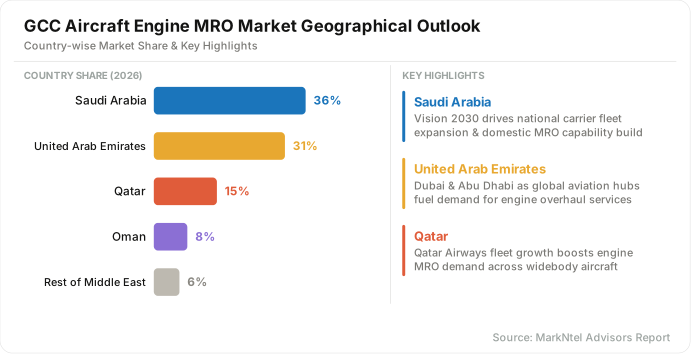
Building on these localization initiatives, Saudi Arabia is further strengthening its aviation ecosystem through large-scale infrastructure investments. King Salman International Airport, targeted to accommodate up to 120 million passengers annually by 2030, will include a private aviation terminal featuring dedicated aircraft maintenance facilities as part of its expansion. These developments are expected to improve maintenance capacity, reduce reliance on overseas service providers, and enhance operational efficiency. Together, expanding MRO capabilities, purpose-built infrastructure, and sustained aviation investments are positioning Saudi Arabia as the GCC's primary hub for aircraft engine maintenance in the years ahead.
GCC Aircraft Engine MRO Market Competitive Analysis
The GCC Aircraft Engine MRO industry exhibits a moderately fragmented competitive landscape, with the top five service providers collectively accounting for approximately 24% of the organized market. Leading companies such as GE Aerospace, Pratt & Whitney, Rolls-Royce plc, Lufthansa Technik AG, and Saudia Technic have strengthened their market presence through OEM-authorized engine maintenance capabilities, strategic airline partnerships, and continuous investments in advanced overhaul facilities and localized MRO infrastructure.
Key Players of Aircraft Engine MRO in GCC
- GE Aerospace
- Pratt & Whitney
- Rolls-Royce plc
- Safran Aircraft Engines SAS
- MTU Aero Engines AG
- Lufthansa Technik AG
- SR Technics Switzerland Ltd.
- StandardAero, Inc.
- Etihad Engineering LLC
- Saudia Aerospace Engineering Industries (SAEI)
- Turkish Technic Anonim Şirketi
- IAE International Aero Engines AG
- Others
GCC Aircraft Engine MRO Industry News and Recent Developments
November 2025: GE Aerospace, Etihad Engineering, and Lufthansa Technik Collaborate on UAE MRO Training Initiative
GE Aerospace, Etihad Engineering, and Lufthansa Technik Middle East signed a strategic collaboration agreement in November 2025 to establish an aviation maintenance training program for UAE nationals. The initiative combines classroom education with practical technical training to strengthen local aerospace expertise, support Emiratization objectives, and develop a highly skilled maintenance workforce.
Impact Analysis: The collaboration addresses the growing demand for qualified aircraft maintenance professionals as regional airline fleets continue to expand. Strengthening the local talent pipeline is expected to enhance engine maintenance capabilities, improve operational efficiency, reduce dependence on overseas expertise, and support the long-term expansion of the GCC aircraft engine MRO industry.
- Market Segmentation
- Introduction
- Product Definition
- Research Process
- Assumptions
- Executive Summary
- GCC Aircraft Engine MRO Market Policies, Regulations, and Product Standards
- GCC Aircraft Engine MRO Market Trends & Developments
- GCC Aircraft Engine MRO Market Dynamics
- Growth Factors
- Challenges
- GCC Aircraft Engine MRO Market Hotspot & Opportunities
- GCC Aircraft Engine MRO Market Outlook, 2022-2032F
- Market Size & Outlook
- By Revenues (USD Million)
- Market Share & Outlook
- By Engine Type- Market Size & Forecast 2022-2032, USD Million
- Turbofan Engines
- Turboprop Engines
- Turboshaft Engines
- Piston Engines
- By Service Type- Market Size & Forecast 2022-2032, USD Million
- Maintenance
- Repair
- Overhaul
- By End User- Market Size & Forecast 2022-2032, USD Million
- Commercial Aviation
- Military Aviation
- Business & General Aviation
- Cargo Aviation
- By Country
- The UAE
- Saudi Arabia
- Qatar
- Kuwait
- Oman
- Bahrain
- By Company
- Competition Characteristics
- Market Segmentation & Outlook
- By Engine Type- Market Size & Forecast 2022-2032, USD Million
- Market Size & Outlook
- The UAE Aircraft Engine MRO Market Outlook, 2022-2032F
- Market Size & Outlook
- By Revenues (USD Million)
- Market Segmentation & Outlook
- By Engine Type- Market Size & Forecast 2022-2032, USD Million
- By Service Type- Market Size & Forecast 2022-2032, USD Million
- By End User- Market Size & Forecast 2022-2032, USD Million
- Market Size & Outlook
- Saudi Arabia Aircraft Engine MRO Market Outlook, 2022-2032F
- Market Size & Outlook
- By Revenues (USD Million)
- Market Segmentation & Outlook
- By Engine Type- Market Size & Forecast 2022-2032, USD Million
- By Service Type- Market Size & Forecast 2022-2032, USD Million
- By End User- Market Size & Forecast 2022-2032, USD Million
- Market Size & Outlook
- Qatar Aircraft Engine MRO Market Outlook, 2022-2032F
- Market Size & Outlook
- By Revenues (USD Million)
- Market Segmentation & Outlook
- By Engine Type- Market Size & Forecast 2022-2032, USD Million
- By Service Type- Market Size & Forecast 2022-2032, USD Million
- By End User- Market Size & Forecast 2022-2032, USD Million
- Market Size & Outlook
- Kuwait Aircraft Engine MRO Market Outlook, 2022-2032F
- Market Size & Outlook
- By Revenues (USD Million)
- Market Segmentation & Outlook
- By Engine Type- Market Size & Forecast 2022-2032, USD Million
- By Service Type- Market Size & Forecast 2022-2032, USD Million
- By End User- Market Size & Forecast 2022-2032, USD Million
- Market Size & Outlook
- Oman Aircraft Engine MRO Market Outlook, 2022-2032F
- Market Size & Outlook
- By Revenues (USD Million)
- Market Segmentation & Outlook
- By Engine Type- Market Size & Forecast 2022-2032, USD Million
- By Service Type- Market Size & Forecast 2022-2032, USD Million
- By End User- Market Size & Forecast 2022-2032, USD Million
- Market Size & Outlook
- Bahrain Aircraft Engine MRO Market Outlook, 2022-2032F
- Market Size & Outlook
- By Revenues (USD Million)
- Market Segmentation & Outlook
- By Engine Type- Market Size & Forecast 2022-2032, USD Million
- By Service Type- Market Size & Forecast 2022-2032, USD Million
- By End User- Market Size & Forecast 2022-2032, USD Million
- Market Size & Outlook
- GCC Aircraft Engine MRO Market Key Strategic Imperatives for Success & Growth
- Competitive Outlook
- Company Profiles
- GE Aerospace
- Business Description
- Product Portfolio
- Collaborations & Alliances
- Recent Developments
- Financial Details
- Others
- Pratt & Whitney
- Business Description
- Product Portfolio
- Collaborations & Alliances
- Recent Developments
- Financial Details
- Others
- Rolls-Royce plc
- Business Description
- Product Portfolio
- Collaborations & Alliances
- Recent Developments
- Financial Details
- Others
- Safran Aircraft Engines SAS
- Business Description
- Product Portfolio
- Collaborations & Alliances
- Recent Developments
- Financial Details
- Others
- MTU Aero Engines AG
- Business Description
- Product Portfolio
- Collaborations & Alliances
- Recent Developments
- Financial Details
- Others
- Lufthansa Technik AG
- Business Description
- Product Portfolio
- Collaborations & Alliances
- Recent Developments
- Financial Details
- Others
- SR Technics Switzerland Ltd.
- Business Description
- Product Portfolio
- Collaborations & Alliances
- Recent Developments
- Financial Details
- Others
- StandardAero, Inc.
- Business Description
- Product Portfolio
- Collaborations & Alliances
- Recent Developments
- Financial Details
- Others
- Etihad Engineering LLC
- Business Description
- Product Portfolio
- Collaborations & Alliances
- Recent Developments
- Financial Details
- Others
- Saudia Aerospace Engineering Industries (SAEI)
- Business Description
- Product Portfolio
- Collaborations & Alliances
- Recent Developments
- Financial Details
- Others
- Turkish Technic Anonim Şirketi
- Business Description
- Product Portfolio
- Collaborations & Alliances
- Recent Developments
- Financial Details
- Others
- IAE International Aero Engines AG
- Business Description
- Product Portfolio
- Collaborations & Alliances
- Recent Developments
- Financial Details
- Others
- GE Aerospace
- Company Profiles
- Disclaimer

MarkNtel Advisors follows a robust and iterative research methodology designed to ensure maximum accuracy and minimize deviation in market estimates and forecasts. Our approach combines both bottom-up and top-down techniques to effectively segment and quantify various aspects of the market. A consistent feature across all our research reports is data triangulation, which examines the market from three distinct perspectives to validate findings. Key components of our research process include:
1. Scope & Research Design At the outset, MarkNtel Advisors define the research objectives and formulate pertinent questions. This phase involves determining the type of research—qualitative or quantitative—and designing a methodology that outlines data collection methods, target demographics, and analytical tools. They also establish timelines and budgets to ensure the research aligns with client goals.
2. Sample Selection and Data Collection In this stage, the firm identifies the target audience and determines the appropriate sample size to ensure representativeness. They employ various sampling methods, such as random or stratified sampling, based on the research objectives. Data collection is carried out using tools like surveys, interviews, and observations, ensuring the gathered data is reliable and relevant.
3. Data Analysis and Validation Once data is collected, MarkNtel Advisors undertake a rigorous analysis process. This includes cleaning the data to remove inconsistencies, employing statistical software for quantitative analysis, and thematic analysis for qualitative data. Validation steps are taken to ensure the accuracy and reliability of the findings, minimizing biases and errors.

4. Data Forecast and FinalizationThe final phase involves forecasting future market trends based on the analyzed data. MarkNtel Advisors utilize predictive modeling and time series analysis to anticipate market behaviors. The insights are then compiled into comprehensive reports, featuring visual aids like charts and graphs, and include strategic recommendations to inform client decision-making
We offer flexible licensing options to cater to varying organizational needs. Choose the pricing pack that best suits your requirements:
Buy Now Inquire Before Buying
 Request Customization