

Lower Tier Air and Missile Defense Sensor (LTAMDS) Radar Market Research Report: Trends & Forecast (2026-2032)
By Component (Antenna Arrays, T/R Modules, Signal Processing Units, Power & Cooling Systems, Communication Systems), By Application (Ballistic Missile Defense, Cruise Missile Defen ... se, Hypersonic Threat Detection, Counter-UAS Operations), By End User (Domestic Armed Forces (Army/Land Forces), Air & Missile Defense Commands, Allied & Partner Nation Militaries), and others Read more
- Aerospace & Defense
- Aug 2026
- Pages 415
- Report Format: PDF, Excel, PPT
Lower Tier Air and Missile Defense Sensor (LTAMDS) Radar Market
Projected 25.20% CAGR from 2026 to 2032
Study Period
2026-2032
Market Size (2026)
USD 2.28 Billion
Market Size (2032)
USD 8.78 Billion
Largest Region
2025
Projected CAGR
25.20%
Leading Segments
By Component: Antenna Arrays
Lower Tier Air and Missile Defense Sensor (LTAMDS) Radar Market Key Takeaways
- The lower tier air and missile defense sensor (LTAMDS) radar market size was valued at around USD 1.09 billion in 2025 and is projected to grow from USD 2.28 billion in 2026 to USD 8.78 billion by 2032.
- The industry is projected to witness steady growth at a CAGR of 25.20 % during 2026-2032.
- North America led the global market with a 55% regional share in 2026.
- Antenna arrays led the component segment with a 35% share in 2026.
- Ballistic missile defense accounted for 41% share of the application segment in 2026.
- The industry is highly consolidated, with the top five players collectively accounting for approximately 60% market share.
Lower Tier Air and Missile Defense Sensor (LTAMDS) Radar Market Size and Outlook
The lower tier air and missile defense sensor radar market was valued at USD 1.09 billion in 2025, is projected to reach USD 2.28 billion in 2026, and is expected to attain USD 8.78 billion by 2032, registering a CAGR of 25.20% during the forecast period (2026–2032).
The market is being driven by the increasing need to replace legacy air and missile defense radars that offer limited sector coverage and reduced effectiveness against evolving multi-directional aerial threats. Traditional Patriot radar systems require orientation toward the anticipated threat axis, creating operational vulnerabilities against coordinated attacks involving drones, cruise missiles, and ballistic missiles approaching simultaneously from multiple azimuths. In response, defense forces are accelerating the deployment of next-generation 360-degree Active Electronically Scanned Array (AESA) radar systems capable of delivering continuous all-around surveillance, enhanced target tracking, and improved engagement capabilities.
The United States is leading this transition through the modernization of its integrated air and missile defense architecture. According to the U.S. Department of the Army, the FY2026 Missile Procurement Budget allocates USD 1.26 billion for the procurement of four Lower Tier Air and Missile Defense Sensor (LTAMDS) units, underscoring the strategic priority placed on replacing legacy Patriot radars. Beyond domestic deployment, the program is gaining international momentum, with Poland becoming the first Foreign Military Sales (FMS) customer for LTAMDS. As additional allied nations seek to strengthen air and missile defense capabilities against increasingly sophisticated aerial threats, LTAMDS is evolving from a U.S. Army modernization initiative into a broader international procurement opportunity, supporting sustained market growth over the forecast period.
Lower Tier Air and Missile Defense Sensor (LTAMDS) Radar Market Key Indicators
- Global military expenditure reached a record USD 2.887 trillion in 2025, marking the eleventh consecutive year of growth. Rising defense budgets are accelerating procurement of advanced air and missile defense systems, strengthening demand for next-generation AESA radar technologies.
- NATO members committed to increasing defense investment to 5% of GDP by 2035 under the 2025 Hague Declaration. Higher defense spending is expanding national air and missile defense modernization programs, creating stronger procurement opportunities for advanced ground-based radar systems.
- Poland allocated approximately USD 55.1 billion to defense in 2026, equivalent to 4.83% of GDP, the highest among NATO members. Rising defense expenditure supports procurement of advanced missile defense capabilities and reinforces the growth of international radar acquisition programs.
- The U.S. FY2027 budget proposes approximately USD 17.5 billion for the Golden Dome for America layered missile defense initiative. Large-scale investments in integrated missile defense architectures are increasing demand for next-generation surveillance and fire-control radar technologies.
- The U.S. Army's FY2027 budget includes USD 132 million for AN/TPY-2 radar procurement following THAAD program realignment. Continued investment across multiple radar modernization programs highlights sustained government spending on advanced air and missile defense sensor capabilities.
Lower Tier Air and Missile Defense Sensor (LTAMDS) Radar Market Scope
| Category | Segments |
|---|---|
| By Component | Antenna Arrays, T/R Modules, Signal Processing Units, Power & Cooling Systems, Communication Systems |
| By Application | Ballistic Missile Defense, Cruise Missile Defense, Hypersonic Threat Detection, Counter-UAS Operations |
| By End User | Domestic Armed Forces (Army/Land Forces), Air & Missile Defense Commands, Allied & Partner Nation Militaries |
Lower Tier Air and Missile Defense Sensor (LTAMDS) Radar Market Growth Drivers
Escalating Multi-Domain Missile and UAS Threats
The increasing use of coordinated ballistic missiles, cruise missiles, hypersonic weapons, and unmanned aerial systems (UAS) is accelerating demand for advanced air and missile defense radars. Modern conflicts increasingly involve simultaneous attacks from multiple directions, exposing the limitations of legacy sector-scanning radar systems and driving the adoption of 360-degree surveillance radar capable of providing continuous situational awareness. As countries strengthen their integrated air and missile defense radar capabilities, investments in next-generation Active Electronically Scanned Array (AESA) technologies are increasing to improve target detection, tracking, and engagement across multiple threat vectors. This trend was evident in July 2025, when Russia launched a record aerial assault comprising 728 drones and 13 missiles against Ukraine, prompting neighboring Poland to scramble fighter aircraft and activate its air defense systems to safeguard national airspace.
The growing frequency of missile threats across multiple regions is further reinforcing radar modernization efforts. In March 2026, the Israel Defense Forces intercepted a ballistic missile launched by the Iran-backed Houthis, highlighting the expanding nature of regional missile threats. As governments continue to witness increasingly complex missile and drone attacks in real combat environments, procurement of advanced radar platforms is accelerating to strengthen early warning, enhance target tracking accuracy, and improve layered air defense capabilities against evolving aerial threats.
Recent Trends
Sector-Wide Shift to GaN-Based AESA Radar Architectures
Radar manufacturers are increasingly transitioning from conventional gallium arsenide (GaAs)-based systems to gallium nitride (GaN)-based AESA radar technology to achieve higher power density, improved thermal efficiency, greater reliability, and enhanced target detection performance. This technology shift is becoming a defining trend across next-generation air and missile defense programs rather than being confined to a single platform. Reflecting this momentum, the U.S. Navy awarded Raytheon a USD 1.8 billion hardware production and sustainment contract for the SPY-6 radar family, while the company has invested more than USD 800 million to modernize its radar manufacturing facilities, positioning it to double SPY-6 radar production by 2028.
The expanding industrial investment in GaN technology is also accelerating the deployment of next-generation military radar systems, including LTAMDS, which leverages GaN-based AESA architecture to deliver improved target detection, continuous surveillance, and superior multi-target tracking capabilities. As defense manufacturers increasingly adopt common semiconductor technologies and scalable production infrastructure, manufacturing efficiencies and supply chain maturity are expected to shorten deployment timelines while supporting long-term modernization of air and missile defense capabilities across global defense forces.
Lower Tier Air and Missile Defense Sensor (LTAMDS) Radar Market Opportunities and Challenges
Single-Source Production Dependence Accelerating Regional Manufacturing Expansion and Co-Production Partnerships
Dependence on a single production facility is emerging as a key challenge for the deployment of ground-based air defense radar systems. LTAMDS is currently manufactured at Raytheon's Andover, Massachusetts facility, with the company serving as the sole prime contractor. The U.S. Army Contracting Command awarded Raytheon a USD 904.6 million production contract in April 2026, reinforcing this single-source production model. As procurement increases in the U.S. and international markets, reliance on one manufacturing site could create production constraints and extend delivery timelines.
This challenge is creating opportunities for manufacturing expansion and international co-production. Raytheon broke ground on a USD 53 million expansion of its Andover facility in October 2025 and plans to increase annual LTAMDS production from 12 to 18 units, while localizing selected component manufacturing, including antenna production in Poland. These investments are improving production capacity and supply chain resilience. As governments increasingly support domestic industrial participation, military radar manufacturers are expanding regional production capabilities and international partnerships to meet rising global demand for advanced radar systems.
Segmentation Insights
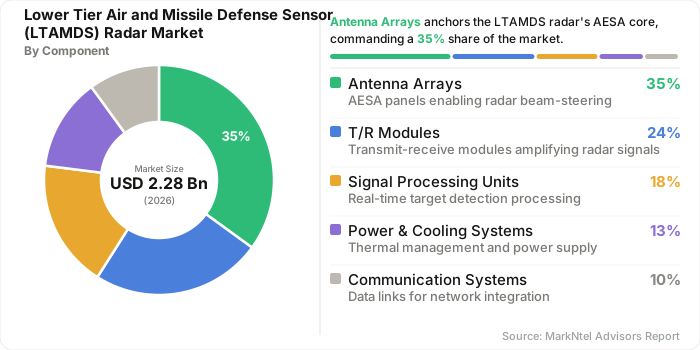
Antenna Arrays Command Component Segmentation with 35% Share Through Concentrated AESA Hardware Value
Antenna arrays account for the largest share of component spending because they integrate the majority of a radar system's technical value, including thousands of gallium nitride (GaN)-based transmit/receive modules responsible for signal transmission, reception, beam steering, and target tracking. As lower-tier air and missile defense radars increasingly adopt multi-panel Active Electronically Scanned Array (AESA) architectures, antenna arrays have become the most sophisticated and cost-intensive subsystem within long-range surveillance radar platforms. This is reflected in LTAMDS, where the LTAMDS Manufacturing line accounts for approximately USD 493 million of the USD 637 million FY2026 procurement request, representing the largest cost element within the program.
This dominance is expected to continue because each antenna array independently generates, steers, and processes thousands of simultaneous radar beams, resulting in substantially higher semiconductor content and manufacturing complexity than supporting subsystems such as power, cooling, communications, or signal processing. As defense agencies continue investing in multi-panel radar architectures to enhance detection range, target tracking accuracy, and 360-degree coverage, antenna arrays are expected to retain the largest share of component spending due to their critical operational role and high manufacturing value. Based on component, the market is segmented into:
- Antenna Arrays
- T/R Modules
- Signal Processing Units
- Power & Cooling Systems
- Communication Systems
Ballistic Missile Defense Commands Application Segmentation with 41% Share Through Direct Interceptor Fire-Control Linkage
Ballistic missile defense represents the largest application segment because ballistic missile defense radar systems require exceptional detection range, tracking accuracy, and fire-control-quality target data to intercept high-speed threats. Compared with cruise missiles and unmanned aerial systems, ballistic missiles travel at significantly higher speeds and require continuous precision tracking, making this the primary mission for next-generation lower-tier air defense radars. This priority is reflected in LTAMDS, which is designed to maximize the capabilities of the PAC-3 Missile Segment Enhancement (MSE) interceptor. The U.S. Army's FY2026 budget requests approximately USD 1.31 billion for the procurement of 233 PAC-3 MSE missiles, highlighting the strategic importance of ballistic missile defense.
The continued expansion of ballistic missile inventories and regional missile defense programs is expected to sustain investment in this application throughout the forecast period. Since radar performance is primarily optimized for ballistic missile defense while simultaneously supporting cruise missile defense, hypersonic threat detection, and counter-UAS operations, this application is expected to maintain its leading position as governments continue prioritizing layered air and missile defense capabilities against increasingly sophisticated long-range threats. Based on application, the market is segmented into:
- Ballistic Missile Defense
- Cruise Missile Defense
- Hypersonic Threat Detection
- Counter-UAS Operations
Lower Tier Air and Missile Defense Sensor (LTAMDS) Radar Market Geographical Outlook
North America accounts for approximately 55% of the global LTAMDS Radar Market, supported by sustained U.S. defense modernization programs, Patriot fleet upgrades, and the region's role as the primary manufacturing base for LTAMDS. This leadership is reinforced by Raytheon's Andover, Massachusetts facility, which serves as the primary production and final integration site for domestic and international radar deliveries. The region's demand is further strengthened by the U.S. Army's plan to expand its Patriot force from 15 to 18 battalions, with each new battalion equipped with LTAMDS and the Integrated Battle Command System (IBCS).
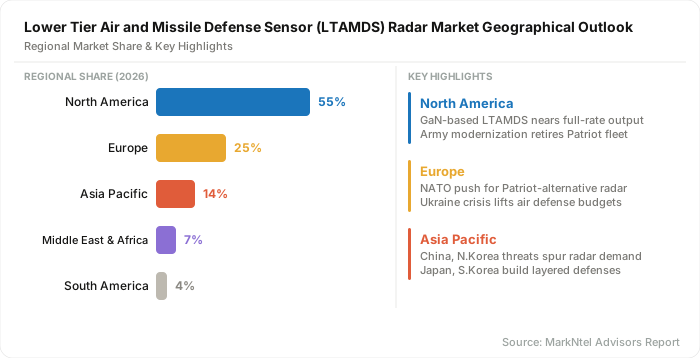
The region's leadership is expected to remain strong as these modernization programs advance toward deployment. The Patriot force expansion is scheduled for completion by fiscal year 2028, ensuring sustained procurement and production demand. At the same time, continued manufacturing expansion at Raytheon's Andover facility is supporting higher output to meet growing domestic and allied requirements. Combined with long-term defense investment and an established industrial base, these factors continue to reinforce North America's position as the leading regional hub for LTAMDS production and deployment.
Lower Tier Air and Missile Defense Sensor (LTAMDS) Radar Market Competitive Analysis
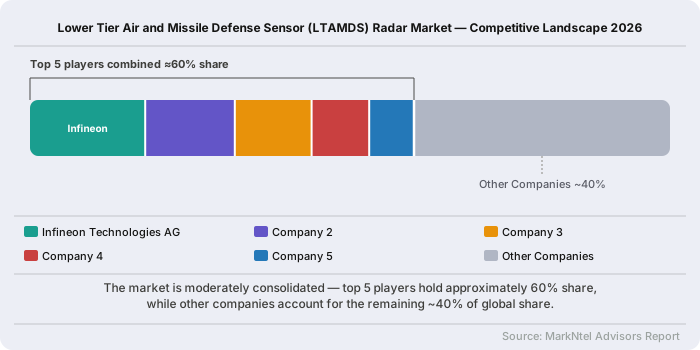
The LTAMDS radar market is highly consolidated, with competition driven by advanced AESA radar technologies, defense modernization programs, and long-term military contracts. RTX Corporation (Raytheon), Northrop Grumman, Thales, L3Harris Technologies, and Elbit Systems collectively account for approximately 60% of the global market revenue.
Key Companies in the Lower Tier Air and Missile Defense Sensor (LTAMDS) Radar Market
- RTX Corporation (Raytheon)
- Thales
- L3Harris Technologies
- Elbit Systems
- Northrop Grumman
- China Electronics Technology Group Corporation (CETC)
- China Aerospace Science and Industry Corporation (CASIC)
- Almaz-Antey
- Others
Lower Tier Air and Missile Defense Sensor (LTAMDS) Radar Industry News and Recent Developments
July 2026: Northrop Grumman's IBCS Successfully Demonstrates LTAMDS Integration During Missile Flight Test
Northrop Grumman announced that the U.S. Army's Integrated Battle Command System (IBCS) successfully completed its 34th consecutive missile flight test, demonstrating seamless integration with the LTAMDS radar during a live-fire event at White Sands Missile Range. The test validated LTAMDS' ability to detect, classify, and support target interception within the Army's integrated air and missile defense network.
Impact Analysis: The successful demonstration strengthens confidence in LTAMDS' operational readiness and integrated fire-control capabilities. It is expected to support accelerated fielding, reduce deployment risk, and reinforce confidence among domestic and international defense customers.
January 2026: Thales Secures Qatar Contract for Ground Master Air Defense Radars
Thales signed a contract with the Qatar Emiri Air Force to supply Ground Master 200 MM/A and Ground Master 400 Alpha radars, along with maintenance and operator training support through 2036, strengthening the country's air surveillance and counter-drone capabilities.
Impact Analysis: The contract highlights growing investment in advanced ground-based air defense radars across the Middle East. It is expected to strengthen regional radar modernization programs, diversify procurement beyond U.S. suppliers, and create new opportunities for international radar manufacturers.
Frequently Asked Questions
- Market Segmentation
- Introduction
- Product Definition
- Research Process
- Assumptions
- Executive Summary
- Introduction to LTAMDS Program & Strategic Rationale
- Evolution from Patriot Legacy Radar to 360° AESA Architecture
- Supply Chain & Vendor Ecosystem Mapping
- Pricing Analysis & Cost Structure per Radar Unit
- Patent & IP Landscape Analysis
- Regulatory Framework & Export Control Landscape
- ITAR controls
- Foreign Military Sales (FMS) process
- NATO STANAG interoperability requirements
- Lower Tier Air and Missile Defense Sensor (LTAMDS) Radar Market R&D Analysis
- AESA (Active Electronically Scanned Array) Technology Overview
- Gallium Nitride (GaN) vs. Gallium Arsenide (GaAs) Component Trends
- 360-Degree Radar Coverage Architecture
- Open Systems Architecture & Modular Design - integration with IBCS, C2BMC
- Software-Defined Radar & AI/ML-Enabled Signal Processing
- Counter-Hypersonic & Counter-UAS Sensing Enhancements
- R&D Investment Trends by Key Player
- Technology Roadmap
- Emerging Innovations
- Lower Tier Air and Missile Defense Sensor (LTAMDS) Radar Market Ongoing & Planned Programs Analysis
- U.S. Army LTAMDS Program Overview & Contract Milestones
- Production Lot Timeline & Delivery Schedules
- Low-Rate Initial Production (LRIP) to Full-Rate Production (FRP) Status
- Testing & Qualification Milestones (developmental/operational test events)
- Integration with IBCS (Integrated Battle Command System)
- Foreign Military Sales (FMS) Pipeline & Country-Specific Programs
- Co-Development & Offset Agreements
- Budget Allocation & Government Funding Analysis (DoD budget line items, NDAA provisions)
- Program Risk Assessment (schedule, cost, technical risk)
- Lower Tier Air and Missile Defense Sensor (LTAMDS) Radar Market Trends & Developments
- Lower Tier Air and Missile Defense Sensor (LTAMDS) Radar Market Dynamics
- Growth Factors
- Challenges
- Lower Tier Air and Missile Defense Sensor (LTAMDS) Radar Market Hotspot & Opportunities
- Lower Tier Air and Missile Defense Sensor (LTAMDS) Radar Market Start-Up Ecosystem
- Lower Tier Air and Missile Defense Sensor (LTAMDS) Radar Market Outlook, 2022-2032
- Market Size & Outlook
- By Revenues (USD Million)
- Market Share & Analysis
- By Component- Market Size & Forecast 2022-2032, USD Million
- Antenna Arrays
- T/R Modules
- Signal Processing Units
- Power & Cooling Systems
- Communication Systems
- By Application- Market Size & Forecast 2022-2032, USD Million
- Ballistic Missile Defense
- Cruise Missile Defense
- Hypersonic Threat Detection
- Counter-UAS Operations
- By End User- Market Size & Forecast 2022-2032, USD Million
- Domestic Armed Forces (Army/Land Forces)
- Air & Missile Defense Commands
- Allied & Partner Nation Militaries
- By Region
- North America
- South America
- Europe
- Middle East and Africa
- Asia Pacific
- By Company
- Competition Characteristics
- Market Share & Analysis
- By Component- Market Size & Forecast 2022-2032, USD Million
- Market Size & Outlook
- North America Lower Tier Air and Missile Defense Sensor (LTAMDS) Radar Market Outlook, 2022-2032
- Market Size & Outlook
- By Revenues (USD Million)
- Market Share & Analysis
- By Component- Market Size & Forecast 2022-2032, USD Million
- By Application- Market Size & Forecast 2022-2032, USD Million
- By End User- Market Size & Forecast 2022-2032, USD Million
- By Country
- The US
- Canada
- The US Lower Tier Air and Missile Defense Sensor (LTAMDS) Radar Market Outlook, 2022-2032
- Market Size & Outlook
- By Revenues (USD Million)
- Market Share & Analysis
- By Component- Market Size & Forecast 2022-2032, USD Million
- By Application- Market Size & Forecast 2022-2032, USD Million
- By End User- Market Size & Forecast 2022-2032, USD Million
- Market Size & Outlook
- Canada Lower Tier Air and Missile Defense Sensor (LTAMDS) Radar Market Outlook, 2022-2032
- Market Size & Outlook
- By Revenues (USD Million)
- Market Share & Analysis
- By Component- Market Size & Forecast 2022-2032, USD Million
- By Application- Market Size & Forecast 2022-2032, USD Million
- By End User- Market Size & Forecast 2022-2032, USD Million
- Market Size & Outlook
- Market Size & Outlook
- South America Lower Tier Air and Missile Defense Sensor (LTAMDS) Radar Market Outlook, 2022-2032
- Market Size & Outlook
- By Revenues (USD Million)
- Market Share & Analysis
- By Component- Market Size & Forecast 2022-2032, USD Million
- By Application- Market Size & Forecast 2022-2032, USD Million
- By End User- Market Size & Forecast 2022-2032, USD Million
- By Country
- Brazil
- Rest of South America
- Brazil Lower Tier Air and Missile Defense Sensor (LTAMDS) Radar Market Outlook, 2022-2032
- Market Size & Outlook
- By Revenues (USD Million)
- Market Share & Analysis
- By Component- Market Size & Forecast 2022-2032, USD Million
- By Application- Market Size & Forecast 2022-2032, USD Million
- By End User- Market Size & Forecast 2022-2032, USD Million
- Market Size & Outlook
- Market Size & Outlook
- Europe Lower Tier Air and Missile Defense Sensor (LTAMDS) Radar Market Outlook, 2022-2032
- Market Size & Outlook
- By Revenues (USD Million)
- Market Share & Analysis
- By Component- Market Size & Forecast 2022-2032, USD Million
- By Application- Market Size & Forecast 2022-2032, USD Million
- By End User- Market Size & Forecast 2022-2032, USD Million
- By Country
- The UK
- Germany
- France
- Italy
- Spain
- Russia
- Poland
- Rest of Europe
- The UK Lower Tier Air and Missile Defense Sensor (LTAMDS) Radar Market Outlook, 2022-2032
- Market Size & Outlook
- By Revenues (USD Million)
- Market Share & Analysis
- By Component- Market Size & Forecast 2022-2032, USD Million
- By Application- Market Size & Forecast 2022-2032, USD Million
- By End User- Market Size & Forecast 2022-2032, USD Million
- Market Size & Outlook
- Germany Lower Tier Air and Missile Defense Sensor (LTAMDS) Radar Market Outlook, 2022-2032
- Market Size & Outlook
- By Revenues (USD Million)
- Market Share & Analysis
- By Component- Market Size & Forecast 2022-2032, USD Million
- By Application- Market Size & Forecast 2022-2032, USD Million
- By End User- Market Size & Forecast 2022-2032, USD Million
- Market Size & Outlook
- France Lower Tier Air and Missile Defense Sensor (LTAMDS) Radar Market Outlook, 2022-2032
- Market Size & Outlook
- By Revenues (USD Million)
- Market Share & Analysis
- By Component- Market Size & Forecast 2022-2032, USD Million
- By Application- Market Size & Forecast 2022-2032, USD Million
- By End User- Market Size & Forecast 2022-2032, USD Million
- Market Size & Outlook
- Italy Lower Tier Air and Missile Defense Sensor (LTAMDS) Radar Market Outlook, 2022-2032
- Market Size & Outlook
- By Revenues (USD Million)
- Market Share & Analysis
- By Component- Market Size & Forecast 2022-2032, USD Million
- By Application- Market Size & Forecast 2022-2032, USD Million
- By End User- Market Size & Forecast 2022-2032, USD Million
- Market Size & Outlook
- Spain Lower Tier Air and Missile Defense Sensor (LTAMDS) Radar Market Outlook, 2022-2032
- Market Size & Outlook
- By Revenues (USD Million)
- Market Share & Analysis
- By Component- Market Size & Forecast 2022-2032, USD Million
- By Application- Market Size & Forecast 2022-2032, USD Million
- By End User- Market Size & Forecast 2022-2032, USD Million
- Market Size & Outlook
- Russia Lower Tier Air and Missile Defense Sensor (LTAMDS) Radar Market Outlook, 2022-2032
- Market Size & Outlook
- By Revenues (USD Million)
- Market Share & Analysis
- By Component- Market Size & Forecast 2022-2032, USD Million
- By Application- Market Size & Forecast 2022-2032, USD Million
- By End User- Market Size & Forecast 2022-2032, USD Million
- Market Size & Outlook
- Poland Lower Tier Air and Missile Defense Sensor (LTAMDS) Radar Market Outlook, 2022-2032
- Market Size & Outlook
- By Revenues (USD Million)
- Market Share & Analysis
- By Component- Market Size & Forecast 2022-2032, USD Million
- By Application- Market Size & Forecast 2022-2032, USD Million
- By End User- Market Size & Forecast 2022-2032, USD Million
- Market Size & Outlook
- Market Size & Outlook
- Middle East and Africa Lower Tier Air and Missile Defense Sensor (LTAMDS) Radar Market Outlook, 2022-2032
- Market Size & Outlook
- By Revenues (USD Million)
- Market Share & Analysis
- By Component- Market Size & Forecast 2022-2032, USD Million
- By Application- Market Size & Forecast 2022-2032, USD Million
- By End User- Market Size & Forecast 2022-2032, USD Million
- By Country
- Saudi Arabia
- The UAE
- Qatar
- Israel
- Turkey
- Rest of MEA
- Saudi Arabia Lower Tier Air and Missile Defense Sensor (LTAMDS) Radar Market Outlook, 2022-2032
- Market Size & Outlook
- By Revenues (USD Million)
- Market Share & Analysis
- By Component- Market Size & Forecast 2022-2032, USD Million
- By Application- Market Size & Forecast 2022-2032, USD Million
- By End User- Market Size & Forecast 2022-2032, USD Million
- Market Size & Outlook
- The UAE Lower Tier Air and Missile Defense Sensor (LTAMDS) Radar Market Outlook, 2022-2032
- Market Size & Outlook
- By Revenues (USD Million)
- Market Share & Analysis
- By Component- Market Size & Forecast 2022-2032, USD Million
- By Application- Market Size & Forecast 2022-2032, USD Million
- By End User- Market Size & Forecast 2022-2032, USD Million
- Market Size & Outlook
- Qatar Lower Tier Air and Missile Defense Sensor (LTAMDS) Radar Market Outlook, 2022-2032
- Market Size & Outlook
- By Revenues (USD Million)
- Market Share & Analysis
- By Component- Market Size & Forecast 2022-2032, USD Million
- By Application- Market Size & Forecast 2022-2032, USD Million
- By End User- Market Size & Forecast 2022-2032, USD Million
- Market Size & Outlook
- Israel Lower Tier Air and Missile Defense Sensor (LTAMDS) Radar Market Outlook, 2022-2032
- Market Size & Outlook
- By Revenues (USD Million)
- Market Share & Analysis
- By Component- Market Size & Forecast 2022-2032, USD Million
- By Application- Market Size & Forecast 2022-2032, USD Million
- By End User- Market Size & Forecast 2022-2032, USD Million
- Market Size & Outlook
- Turkey Lower Tier Air and Missile Defense Sensor (LTAMDS) Radar Market Outlook, 2022-2032
- Market Size & Outlook
- By Revenues (USD Million)
- Market Share & Analysis
- By Component- Market Size & Forecast 2022-2032, USD Million
- By Application- Market Size & Forecast 2022-2032, USD Million
- By End User- Market Size & Forecast 2022-2032, USD Million
- 15.7.2.4.
- Market Size & Outlook
- Market Size & Outlook
- Asia Pacific Lower Tier Air and Missile Defense Sensor (LTAMDS) Radar Market Outlook, 2022-2032
- Market Size & Outlook
- By Revenues (USD Million)
- Market Share & Analysis
- By Component- Market Size & Forecast 2022-2032, USD Million
- By Application- Market Size & Forecast 2022-2032, USD Million
- By End User- Market Size & Forecast 2022-2032, USD Million
- By Country
- China
- Japan
- India
- South Korea
- Taiwan
- Rest of Asia-Pacific
- China Lower Tier Air and Missile Defense Sensor (LTAMDS) Radar Market Outlook, 2022-2032
- Market Size & Outlook
- By Revenues (USD Million)
- Market Share & Analysis
- By Component- Market Size & Forecast 2022-2032, USD Million
- By Application- Market Size & Forecast 2022-2032, USD Million
- By End User- Market Size & Forecast 2022-2032, USD Million
- Market Size & Outlook
- Japan Lower Tier Air and Missile Defense Sensor (LTAMDS) Radar Market Outlook, 2022-2032
- Market Size & Outlook
- By Revenues (USD Million)
- Market Share & Analysis
- By Component- Market Size & Forecast 2022-2032, USD Million
- By Application- Market Size & Forecast 2022-2032, USD Million
- By End User- Market Size & Forecast 2022-2032, USD Million
- Market Size & Outlook
- India Lower Tier Air and Missile Defense Sensor (LTAMDS) Radar Market Outlook, 2022-2032
- Market Size & Outlook
- By Revenues (USD Million)
- Market Share & Analysis
- By Component- Market Size & Forecast 2022-2032, USD Million
- By Application- Market Size & Forecast 2022-2032, USD Million
- By End User- Market Size & Forecast 2022-2032, USD Million
- Market Size & Outlook
- South Korea Lower Tier Air and Missile Defense Sensor (LTAMDS) Radar Market Outlook, 2022-2032
- Market Size & Outlook
- By Revenues (USD Million)
- Market Share & Analysis
- By Component- Market Size & Forecast 2022-2032, USD Million
- By Application- Market Size & Forecast 2022-2032, USD Million
- By End User- Market Size & Forecast 2022-2032, USD Million
- Market Size & Outlook
- Taiwan Lower Tier Air and Missile Defense Sensor (LTAMDS) Radar Market Outlook, 2022-2032
- Market Size & Outlook
- By Revenues (USD Million)
- Market Share & Analysis
- By Component- Market Size & Forecast 2022-2032, USD Million
- By Application- Market Size & Forecast 2022-2032, USD Million
- By End User- Market Size & Forecast 2022-2032, USD Million
- Market Size & Outlook
- Market Size & Outlook
- Lower Tier Air and Missile Defense Sensor (LTAMDS) Radar Market Key Strategic Imperatives for Success & Growth
- Competitive Outlook
- Company Profiles
- RTX Corporation (Raytheon)
- Business Description
- Product Portfolio
- Collaborations & Alliances
- Recent Developments
- Financial Details
- Others
- Thales
- Business Description
- Product Portfolio
- Collaborations & Alliances
- Recent Developments
- Financial Details
- Others
- L3Harris Technologies
- Business Description
- Product Portfolio
- Collaborations & Alliances
- Recent Developments
- Financial Details
- Others
- Elbit Systems
- Business Description
- Product Portfolio
- Collaborations & Alliances
- Recent Developments
- Financial Details
- Others
- Northrup Grumman
- Business Description
- Product Portfolio
- Collaborations & Alliances
- Recent Developments
- Financial Details
- Others
- China Electronics Technology Group Corporation (CETC)
- Business Description
- Product Portfolio
- Collaborations & Alliances
- Recent Developments
- Financial Details
- Others
- China Aerospace Science and Industry Corporation (CASIC)
- Business Description
- Product Portfolio
- Collaborations & Alliances
- Recent Developments
- Financial Details
- Others
- Almaz-Antey
- Business Description
- Product Portfolio
- Collaborations & Alliances
- Recent Developments
- Financial Details
- Others
- RTX Corporation (Raytheon)
- Company Profiles
- Disclaimer
MarkNtel Advisors follows a robust and iterative research methodology designed to ensure maximum accuracy and minimize deviation in market estimates and forecasts. Our approach combines both bottom-up and top-down techniques to effectively segment and quantify various aspects of the market. A consistent feature across all our research reports is data triangulation, which examines the market from three distinct perspectives to validate findings. Key components of our research process include:
1. Scope & Research Design At the outset, MarkNtel Advisors define the research objectives and formulate pertinent questions. This phase involves determining the type of research—qualitative or quantitative—and designing a methodology that outlines data collection methods, target demographics, and analytical tools. They also establish timelines and budgets to ensure the research aligns with client goals.
2. Sample Selection and Data Collection In this stage, the firm identifies the target audience and determines the appropriate sample size to ensure representativeness. They employ various sampling methods, such as random or stratified sampling, based on the research objectives. Data collection is carried out using tools like surveys, interviews, and observations, ensuring the gathered data is reliable and relevant.
3. Data Analysis and Validation Once data is collected, MarkNtel Advisors undertake a rigorous analysis process. This includes cleaning the data to remove inconsistencies, employing statistical software for quantitative analysis, and thematic analysis for qualitative data. Validation steps are taken to ensure the accuracy and reliability of the findings, minimizing biases and errors.

4. Data Forecast and FinalizationThe final phase involves forecasting future market trends based on the analyzed data. MarkNtel Advisors utilize predictive modeling and time series analysis to anticipate market behaviors. The insights are then compiled into comprehensive reports, featuring visual aids like charts and graphs, and include strategic recommendations to inform client decision-making
We offer flexible licensing options to cater to varying organizational needs. Choose the pricing pack that best suits your requirements:
Buy Now Inquire Before Buying
 Request Customization
 Talk to our Consultant







