

By Service (Transportation (Road, Rail, Air, Sea, Multimodal), Warehousing & Storage, Freight Management, Inventory Management, Value-Added Services (Packaging, Labeling, Order Fulfillment, Reverse Lo... ... fillment, Reverse Logistics)), By End-Use Industry (Manufacturing, Retail & E-commerce, Automotive, Food & Beverage, Healthcare & Pharmaceuticals, Consumer Goods (FMCG), Chemicals, Oil & Gas, Electronics & Semiconductors), and others Read more
- Buildings, Construction, Metals & Mining
- Jul 2026
- 340
- PDF, Excel, PPT
Captive Logistics Market Key Takeaways
- Captive Logistics market size was valued at around USD 5.32 billion in 2025 and is projected to grow from USD 5.49 billion in 2026 to USD 7.03 billion by 2032, exhibiting a CAGR of 4.21 % during 2026-2032.
- North America dominated the global market, accounting for approximately 36% market share in 2026.
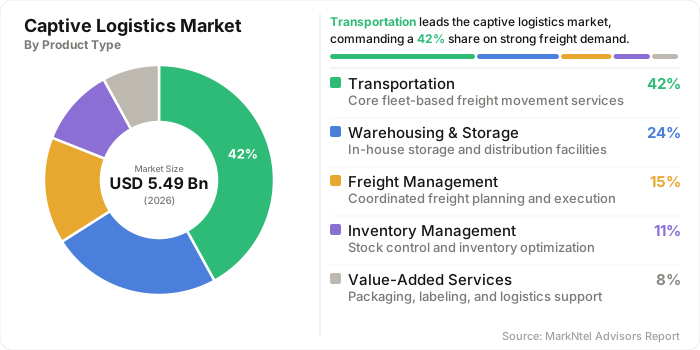
- By Service, Transportation held the largest market share of approximately 42% in 2026.
- By End Use Industry, Manufacturing accounted for nearly 33% of the global market in 2026.
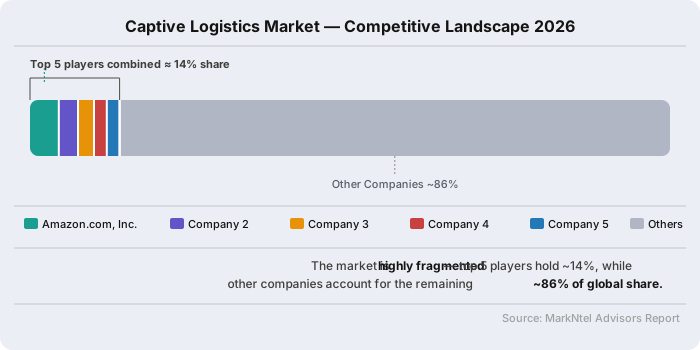
- The industry is moderately consolidated, with numerous international and regional providers competing worldwide. However, the top five players collectively account for approximately 14% market share.
Captive Logistics Market Size and Outlook
Valued at USD 5.32 billion in 2025, the Captive Logistics market is forecast to grow substantially, reaching USD 7.03 billion by 2032 from USD 5.49 billion in 2026. This growth reflects a projected CAGR of approximately 4.21% throughout the 2026–2032 forecast period.
Growing investments in supply chain resilience and operational control have strengthened the adoption of captive logistics across manufacturing, retail, automotive, food processing, and consumer goods industries. Expanding industrial production, increasing global trade, and rising e-commerce activity continue to drive demand for in-house transportation, warehousing, and inventory management systems. According to the World Bank's Logistics Performance Index (LPI), efficient logistics systems, quality transport infrastructure, and supply chain digitalization play a critical role in improving trade competitiveness, shipment reliability, and overall logistics performance.
Building on these industry developments, governments are accelerating logistics infrastructure development and policy reforms to improve supply chain efficiency. In 2025, India continued implementing the National Logistics Policy, PM GatiShakti National Master Plan, Unified Logistics Interface Platform (ULIP), and multimodal logistics parks to lower logistics costs and strengthen connectivity. Similar investments in ports, rail freight corridors, highways, and digital freight infrastructure across major economies are encouraging enterprises to expand captive transportation fleets, warehouse networks, and inventory management capabilities.
These improvements are translating into stronger adoption across major end-use industries. Manufacturing companies remain the largest users of captive logistics due to continuous raw material movement, plant-to-plant transfers, and finished product distribution. Retail and e-commerce businesses are strengthening proprietary fulfillment networks to support faster deliveries, while healthcare and food manufacturers continue investing in temperature-controlled logistics. Increasing adoption of supply chain visibility platforms is further improving inventory accuracy, shipment tracking, and operational transparency across complex logistics networks.
This favorable business environment is expected to support continued market expansion over the coming years. Enterprises are increasingly adopting warehouse automation, artificial intelligence, robotics, autonomous material handling systems, electric commercial fleets, and advanced warehouse management systems to improve operational efficiency. Together with ongoing investments in sustainable logistics infrastructure, fleet electrification, and smart warehousing, these advancements are expected to strengthen supply chain resilience and sustain long-term demand for captive logistics solutions throughout the forecast period.
Captive Logistics Market Key Indicators
- Global merchandise exports reached USD 24.43 trillion in 2024, according to the World Trade Organization (WTO), supporting higher freight movement and encouraging investments in captive transportation, warehousing, and inventory management infrastructure.
- Global seaborne trade grew by 2.2% in 2024, according to UNCTAD, increasing freight movement and encouraging investments in captive transportation, warehousing, and distribution infrastructure across manufacturing and retail supply chains.
- U.S. truck transportation employment reached 1.44 million in February 2026, according to the Bureau of Transportation Statistics, reflecting sustained freight demand and reinforcing investments in captive transportation fleets and in-house logistics operations.
- North American transborder freight increased by 3.2% in March 2026, according to the U.S. Bureau of Transportation Statistics, reinforcing investments in captive cross-border transportation, warehousing, and regional distribution networks as trade activity expands.
Captive Logistics Market Scope
| Category | Segments |
|---|---|
| By Service | Transportation (Road, Rail, Air, Sea, Multimodal), Warehousing & Storage, Freight Management, Inventory Management, Value-Added Services (Packaging, Labeling, Order Fulfillment, Reverse Logistics |
| By End-Use Industry | Manufacturing, Retail & E-commerce, Automotive, Food & Beverage, Healthcare & Pharmaceuticals, Consumer Goods (FMCG), Chemicals, Oil & Gas, Electronics & Semiconductors |
Captive Logistics Market Growth Drivers
Rising Focus on Supply Chain Resilience
Companies across manufacturing, retail, automotive, and consumer goods industries are increasingly prioritizing supply chain resilience following disruptions caused by geopolitical uncertainties, raw material shortages, extreme weather events, and transportation bottlenecks. In response, businesses are strengthening operational control over procurement, warehousing, transportation, and inventory management through enterprise logistics strategies. This approach enables organizations to improve coordination across production facilities and distribution networks while reducing reliance on external logistics providers.
Supporting this transition, governments are promoting domestic manufacturing and regional supply chains. The United States' CHIPS and Science Act and the European Union's Net-Zero Industry Act are accelerating investments in local manufacturing capacity, while the Reshoring Initiative's 2024 Annual Report reported 244,000 U.S. manufacturing jobs announced through reshoring and foreign direct investment. As production expands closer to end markets, demand for dedicated transportation fleets, warehouse facilities, and integrated logistics infrastructure continues to increase.
These developments are also accelerating digital transformation across logistics operations. Enterprises are investing in transportation management systems, warehouse management software, predictive analytics, and real-time inventory visibility to improve operational efficiency and minimize supply chain risks. As organizations continue prioritizing resilient and efficient supply chain operations, captive logistics is expected to remain a strategic investment for enhancing operational control and distribution efficiency.
Recent Trends
Increasing Adoption of Automated Fulfillment Centers and Smart Warehouse Technologies
Growing demand for faster and more efficient logistics operations is accelerating the adoption of automated fulfillment centers and smart warehouse technologies across captive logistics networks. Enterprises are investing in automated storage and retrieval systems (AS/RS), autonomous mobile robots (AMRs), artificial intelligence, machine vision, and automated material handling systems to optimize inventory movement, enhance visibility, and improve order accuracy. These technologies enable businesses to process higher shipment volumes while reducing operating costs while maintaining consistent service levels across distribution networks.
This industry-wide transition is being reinforced by continuous investments from leading companies. During 2025, Amazon expanded the use of artificial intelligence and robotics across its fulfillment network by introducing AI-powered forecasting capabilities and intelligent robotic technologies to optimize inventory management, warehouse productivity, and order fulfillment solutions. Building on this momentum, KION Group announced a strategic investment in ZIKOO Robotics in 2026 to strengthen its AI-driven warehouse automation portfolio, combining intelligent robotics with advanced warehouse software to enhance operational efficiency and warehouse flexibility.
As automation technologies continue to mature, their adoption is expanding across automotive, consumer goods, food & beverage, electronics, and manufacturing industries. Enterprises are increasingly modernizing distribution infrastructure through intelligent automation and digital warehouse technologies, making smart warehouses a core component of captive logistics strategies that enhance operational efficiency, scalability, and supply chain responsiveness.
Captive Logistics Market Opportunities and Challenges
Tightening Decarbonization Regulations Accelerating Investments in Sustainable Captive Fleet Operations
Growing decarbonization regulations across the transportation and logistics sector are increasing compliance requirements for companies operating captive fleets. In 2025, the International Maritime Organization (IMO) approved its Net-Zero Framework, introducing mandatory greenhouse gas emission limits and pricing measures for ocean-going ships above 5,000 gross tonnage. As environmental regulations continue expanding across maritime and road freight transportation, enterprises are increasingly investing in green logistics solutions to meet evolving compliance requirements while reducing environmental impact.
While regulatory obligations are increasing, these developments are also creating new investment opportunities. The IMO framework promotes the adoption of zero- and near-zero-emission fuels, while governments across major economies continue supporting fleet electrification and low-carbon transportation through incentives and sustainability initiatives. As a result, enterprises are strengthening fleet management solutions alongside investments in electric commercial vehicles, alternative marine fuels, and energy-efficient logistics infrastructure to reduce emissions, improve operational efficiency, and enhance the long-term competitiveness of captive logistics operations.
Segmentation Insights
Transportation Segment Maintains Market Leadership Through Continuous Movement of Raw Materials and Finished Goods
Accounting for approximately 42% of the market in 2026, transportation remained the largest service segment due to its central role in supporting procurement, production, warehousing, and distribution activities across captive logistics operations. Companies operating captive logistics systems maintain dedicated transportation fleets or directly manage transportation operations to ensure the efficient movement of raw materials, intermediate products, and finished goods between suppliers, manufacturing plants, warehouses, distribution centers, and retail outlets. Since transportation directly influences delivery reliability, production continuity, and customer satisfaction, enterprises continue investing in freight transportation services, fleet management, route optimization, fuel efficiency, and transportation visibility technologies.
The expansion of regional manufacturing facilities, omnichannel retailing, and cross-border distribution networks is further strengthening transportation demand. Increasing adoption of connected fleet technologies, telematics, electric commercial vehicles, and transportation management systems is enabling businesses to improve delivery performance while reducing operating costs and carbon emissions. These advancements continue to strengthen fleet efficiency, delivery reliability, and operational control, reinforcing transportation as the dominant service segment within captive logistics operations. Based on services, the market is segmented into:
- Transportation
- Warehousing & Storage
- Freight Management
- Inventory Management
- Value-Added Services
Manufacturing Industry Holds the Largest Share Owing to Extensive Internal Supply Chain Operations
Manufacturing accounted for approximately 33% of the market in 2026, driven by the continuous movement of raw materials, components, semi-finished goods, and finished products across integrated production networks. Manufacturers frequently operate dedicated logistics divisions to synchronize procurement, production scheduling, warehousing, and outbound distribution through integrated logistics solutions, while maintaining strict quality standards and minimizing operational disruptions. Captive logistics also enables manufacturers to respond efficiently to changing production requirements, improve inventory accuracy, and strengthen supplier coordination.
Meanwhile, increasing investments in advanced manufacturing facilities, regional production hubs, and industrial automation are expanding logistics requirements across industries such as automotive, electronics, machinery, chemicals, and industrial equipment. As manufacturers continue investing in digital supply chains and resilient production ecosystems, these developments reinforce the strategic role of captive logistics in supporting production efficiency, inventory optimization, and uninterrupted manufacturing operations. Based on end user industry, the market is segmented into:
- Manufacturing
- Retail & E-commerce
- Automotive
- Food & Beverage
- Healthcare & Pharmaceuticals
- Consumer Goods (FMCG)
- Chemicals
- Oil & Gas
- Electronics & Semiconductors
- Others
Captive Logistics Market Geographical Outlook
A well-established industrial ecosystem and mature logistics infrastructure enabled North America to account for approximately 36% of the market in 2026. The region is home to numerous multinational manufacturers, large-scale retailers, and consumer goods companies that operate extensive captive logistics networks to support procurement, production, warehousing, and distribution activities. Continuous investments in warehouse modernization, digital freight management, and supply chain visibility technologies have further strengthened operational efficiency and reinforced the region's market leadership.
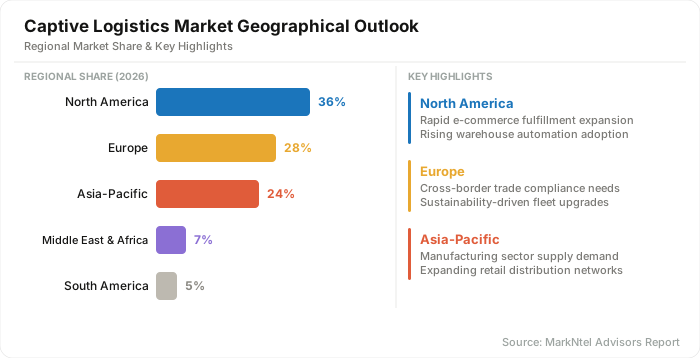
Beyond its industrial strength, rapid technological advancement continues to differentiate the regional logistics landscape. Enterprises are increasingly deploying artificial intelligence, cloud-based transportation management systems, robotics, autonomous material handling equipment, and real-time fleet monitoring solutions to optimize logistics operations. At the same time, sustained investments in domestic manufacturing, regional distribution centers, and resilient supply chain infrastructure are encouraging businesses to expand proprietary logistics capabilities, further strengthening North America's leadership in captive logistics operations.
Captive Logistics Market Competitive Analysis
The Global Captive Logistics industry is moderately consolidated, with competition driven by multinational manufacturers, retailers, consumer goods, automotive, and electronics companies operating extensive in-house logistics networks. Leading enterprises, including Amazon.com, Inc., Walmart Inc., Toyota Motor Corporation, PepsiCo, Inc., and Nestlé S.A., collectively account for approximately 14% of the global market.
Key Companies in the Captive Logistics Market
- Amazon.com, Inc.
- Walmart Inc.
- The Coca-Cola Company
- PepsiCo, Inc.
- Nestlé S.A.
- Unilever PLC
- Procter & Gamble Company
- Toyota Motor Corporation
- Volkswagen AG
- Ford Motor Company
- Samsung Electronics Co., Ltd.
- LG Electronics Inc.
- The Home Depot, Inc.
- Target Corporation
- IKEA Supply AG
- Others
Captive Logistics Industry News and Recent Developments
June 2026: Walmart Invests Over USD 330 Million to Modernize Louisiana Distribution Center
Walmart announced an investment of more than USD 330 million to modernize its Louisiana regional distribution center with advanced robotics and warehouse automation technologies. The project aims to increase shipping capacity, improve inventory handling, and strengthen operational efficiency across its captive logistics network.
Impact Analysis: The investment highlights the growing adoption of warehouse automation within captive logistics operations. It is expected to encourage wider deployment of robotics and intelligent warehouse technologies to improve fulfillment efficiency, inventory management, and overall supply chain performance.
- Market Segmentation
- Introduction
- Product Definition
- Research Process
- Assumptions
- Executive Summary
- Global Captive Logistics Market Policies, Regulations, and Product Standards
- Global Captive Logistics Market Trends & Developments
- Global Captive Logistics Market Dynamics
- Growth Factors
- Challenges
- Global Captive Logistics Market Hotspot & Opportunities
- Global Captive Logistics Market Outlook, 2022-2032F
- Market Size & Outlook
- By Revenues (USD Million)
- Market Segmentation & Outlook
- By Service- Market Size & Forecast 2022-2032, USD Million
- Transportation
- Road
- Rail
- Air
- Sea
- Multimodal
- Warehousing & Storage
- Freight Management
- Inventory Management
- Value-Added Services
- Packaging
- Labeling
- Order Fulfillment
- Reverse Logistics
- Transportation
- By End-Use Industry- Market Size & Forecast 2022-2032, USD Million
- Manufacturing
- Retail & E-commerce
- Automotive
- Food & Beverage
- Healthcare & Pharmaceuticals
- Consumer Goods (FMCG)
- Chemicals
- Oil & Gas
- Electronics & Semiconductors
- Others
- By Region
- North America
- South America
- Europe
- Middle East and Africa
- Asia Pacific
- By Company
- Competition Characteristics
- Market Share & Analysis
- By Service- Market Size & Forecast 2022-2032, USD Million
- Market Size & Outlook
- North America Captive Logistics Market Outlook, 2022-2032F
- Market Size & Outlook
- By Revenues (USD Million)
- Market Segmentation & Outlook
- By Service- Market Size & Forecast 2022-2032, USD Million
- By End-Use Industry- Market Size & Forecast 2022-2032, USD Million
- By Country
- The US
- Canada
- Mexico
- The US Captive Logistics Market Outlook, 2022-2032F
- Market Size & Outlook
- By Revenues (USD Million)
- Market Segmentation & Outlook
- By Service- Market Size & Forecast 2022-2032, USD Million
- By End-Use Industry- Market Size & Forecast 2022-2032, USD Million
- Market Size & Outlook
- Canada Captive Logistics Market Outlook, 2022-2032F
- Market Size & Outlook
- By Revenues (USD Million)
- Market Segmentation & Outlook
- By Service- Market Size & Forecast 2022-2032, USD Million
- By End-Use Industry- Market Size & Forecast 2022-2032, USD Million
- Market Size & Outlook
- Mexico Captive Logistics Market Outlook, 2022-2032F
- Market Size & Outlook
- By Revenues (USD Million)
- Market Segmentation & Outlook
- By Service- Market Size & Forecast 2022-2032, USD Million
- By End-Use Industry- Market Size & Forecast 2022-2032, USD Million
- Market Size & Outlook
- Market Size & Outlook
- South America Captive Logistics Market Outlook, 2022-2032F
- Market Size & Outlook
- By Revenues (USD Million)
- Market Segmentation & Outlook
- By Service- Market Size & Forecast 2022-2032, USD Million
- By End-Use Industry- Market Size & Forecast 2022-2032, USD Million
- By Country
- Brazil
- Argentina
- Chile
- Colombia
- Peru
- Ecuador
- Rest of South America
- Brazil Captive Logistics Market Outlook, 2022-2032F
- Market Size & Outlook
- By Revenues (USD Million)
- Market Segmentation & Outlook
- By Service- Market Size & Forecast 2022-2032, USD Million
- By End-Use Industry- Market Size & Forecast 2022-2032, USD Million
- Market Size & Outlook
- Argentina Captive Logistics Market Outlook, 2022-2032F
- Market Size & Outlook
- By Revenues (USD Million)
- Market Segmentation & Outlook
- By Service- Market Size & Forecast 2022-2032, USD Million
- By End-Use Industry- Market Size & Forecast 2022-2032, USD Million
- Market Size & Outlook
- Chile Captive Logistics Market Outlook, 2022-2032F
- Market Size & Outlook
- By Revenues (USD Million)
- Market Segmentation & Outlook
- By Service- Market Size & Forecast 2022-2032, USD Million
- By End-Use Industry- Market Size & Forecast 2022-2032, USD Million
- Market Size & Outlook
- Colombia Captive Logistics Market Outlook, 2022-2032F
- Market Size & Outlook
- By Revenues (USD Million)
- Market Segmentation & Outlook
- By Service- Market Size & Forecast 2022-2032, USD Million
- By End-Use Industry- Market Size & Forecast 2022-2032, USD Million
- Market Size & Outlook
- Peru Captive Logistics Market Outlook, 2022-2032F
- Market Size & Outlook
- By Revenues (USD Million)
- Market Segmentation & Outlook
- By Service- Market Size & Forecast 2022-2032, USD Million
- By End-Use Industry- Market Size & Forecast 2022-2032, USD Million
- Market Size & Outlook
- Ecuador Captive Logistics Market Outlook, 2022-2032F
- Market Size & Outlook
- By Revenues (USD Million)
- Market Segmentation & Outlook
- By Service- Market Size & Forecast 2022-2032, USD Million
- By End-Use Industry- Market Size & Forecast 2022-2032, USD Million
- Market Size & Outlook
- Market Size & Outlook
- Europe Captive Logistics Market Outlook, 2022-2032F
- Market Size & Outlook
- By Revenues (USD Million)
- Market Segmentation & Outlook
- By Service- Market Size & Forecast 2022-2032, USD Million
- By End-Use Industry- Market Size & Forecast 2022-2032, USD Million
- By Country
- The UK
- Germany
- France
- Italy
- Spain
- Russia
- Nordic
- Benelux
- Rest of Europe
- The UK Captive Logistics Market Outlook, 2022-2032F
- Market Size & Outlook
- By Revenues (USD Million)
- Market Segmentation & Outlook
- By Service- Market Size & Forecast 2022-2032, USD Million
- By End-Use Industry- Market Size & Forecast 2022-2032, USD Million
- Market Size & Outlook
- Germany Captive Logistics Market Outlook, 2022-2032F
- Market Size & Outlook
- By Revenues (USD Million)
- Market Segmentation & Outlook
- By Service- Market Size & Forecast 2022-2032, USD Million
- By End-Use Industry- Market Size & Forecast 2022-2032, USD Million
- Market Size & Outlook
- France Captive Logistics Market Outlook, 2022-2032F
- Market Size & Outlook
- By Revenues (USD Million)
- Market Segmentation & Outlook
- By Service- Market Size & Forecast 2022-2032, USD Million
- By End-Use Industry- Market Size & Forecast 2022-2032, USD Million
- Market Size & Outlook
- Italy Captive Logistics Market Outlook, 2022-2032F
- Market Size & Outlook
- By Revenues (USD Million)
- Market Segmentation & Outlook
- By Service- Market Size & Forecast 2022-2032, USD Million
- By End-Use Industry- Market Size & Forecast 2022-2032, USD Million
- Market Size & Outlook
- Spain Captive Logistics Market Outlook, 2022-2032F
- Market Size & Outlook
- By Revenues (USD Million)
- Market Segmentation & Outlook
- By Service- Market Size & Forecast 2022-2032, USD Million
- By End-Use Industry- Market Size & Forecast 2022-2032, USD Million
- Market Size & Outlook
- Russia Captive Logistics Market Outlook, 2022-2032F
- Market Size & Outlook
- By Revenues (USD Million)
- Market Segmentation & Outlook
- By Service- Market Size & Forecast 2022-2032, USD Million
- By End-Use Industry- Market Size & Forecast 2022-2032, USD Million
- Market Size & Outlook
- Nordic Captive Logistics Market Outlook, 2022-2032F
- Market Size & Outlook
- By Revenues (USD Million)
- Market Segmentation & Outlook
- By Service- Market Size & Forecast 2022-2032, USD Million
- By End-Use Industry- Market Size & Forecast 2022-2032, USD Million
- Market Size & Outlook
- Benelux Captive Logistics Market Outlook, 2022-2032F
- Market Size & Outlook
- By Revenues (USD Million)
- Market Segmentation & Outlook
- By Service- Market Size & Forecast 2022-2032, USD Million
- By End-Use Industry- Market Size & Forecast 2022-2032, USD Million
- Market Size & Outlook
- Market Size & Outlook
- Middle East and Africa Captive Logistics Market Outlook, 2022-2032F
- Market Size & Outlook
- By Revenues (USD Million)
- Market Segmentation & Outlook
- By Service- Market Size & Forecast 2022-2032, USD Million
- By End-Use Industry- Market Size & Forecast 2022-2032, USD Million
- By Country
- Saudi Arabia
- The UAE
- Egypt
- Qatar
- Kuwait
- Oman
- South Africa
- Nigeria
- Saudi Arabia Captive Logistics Market Outlook, 2022-2032F
- Market Size & Outlook
- By Revenues (USD Million)
- Market Segmentation & Outlook
- By Service- Market Size & Forecast 2022-2032, USD Million
- By End-Use Industry- Market Size & Forecast 2022-2032, USD Million
- Market Size & Outlook
- The UAE Captive Logistics Market Outlook, 2022-2032F
- Market Size & Outlook
- By Revenues (USD Million)
- Market Segmentation & Outlook
- By Service- Market Size & Forecast 2022-2032, USD Million
- By End-Use Industry- Market Size & Forecast 2022-2032, USD Million
- Market Size & Outlook
- Egypt Captive Logistics Market Outlook, 2022-2032F
- Market Size & Outlook
- By Revenues (USD Million)
- Market Segmentation & Outlook
- By Service- Market Size & Forecast 2022-2032, USD Million
- By End-Use Industry- Market Size & Forecast 2022-2032, USD Million
- Market Size & Outlook
- Qatar Captive Logistics Market Outlook, 2022-2032F
- Market Size & Outlook
- By Revenues (USD Million)
- Market Segmentation & Outlook
- By Service- Market Size & Forecast 2022-2032, USD Million
- By End-Use Industry- Market Size & Forecast 2022-2032, USD Million
- Market Size & Outlook
- Kuwait Captive Logistics Market Outlook, 2022-2032F
- Market Size & Outlook
- By Revenues (USD Million)
- Market Segmentation & Outlook
- By Service- Market Size & Forecast 2022-2032, USD Million
- By End-Use Industry- Market Size & Forecast 2022-2032, USD Million
- Market Size & Outlook
- Oman Captive Logistics Market Outlook, 2022-2032F
- Market Size & Outlook
- By Revenues (USD Million)
- Market Segmentation & Outlook
- By Service- Market Size & Forecast 2022-2032, USD Million
- By End-Use Industry- Market Size & Forecast 2022-2032, USD Million
- Market Size & Outlook
- South Africa Captive Logistics Market Outlook, 2022-2032F
- Market Size & Outlook
- By Revenues (USD Million)
- Market Segmentation & Outlook
- By Service- Market Size & Forecast 2022-2032, USD Million
- By End-Use Industry- Market Size & Forecast 2022-2032, USD Million
- Market Size & Outlook
- Market Size & Outlook
- Asia Pacific Captive Logistics Market Outlook, 2022-2032F
- Market Size & Outlook
- By Revenues (USD Million)
- Market Segmentation & Outlook
- By Service- Market Size & Forecast 2022-2032, USD Million
- By End-Use Industry- Market Size & Forecast 2022-2032, USD Million
- By Country
- China
- Japan
- India
- South Korea
- Australia & New Zealand
- Indonesia
- Thailand
- Vietnam
- Rest of Asia-Pacific
- China Captive Logistics Market Outlook, 2022-2032F
- Market Size & Outlook
- By Revenues (USD Million)
- Market Segmentation & Outlook
- By Service- Market Size & Forecast 2022-2032, USD Million
- By End-Use Industry- Market Size & Forecast 2022-2032, USD Million
- Market Size & Outlook
- Japan Captive Logistics Market Outlook, 2022-2032F
- Market Size & Outlook
- By Revenues (USD Million)
- Market Segmentation & Outlook
- By Service- Market Size & Forecast 2022-2032, USD Million
- By End-Use Industry- Market Size & Forecast 2022-2032, USD Million
- Market Size & Outlook
- India Captive Logistics Market Outlook, 2022-2032F
- Market Size & Outlook
- By Revenues (USD Million)
- Market Segmentation & Outlook
- By Service- Market Size & Forecast 2022-2032, USD Million
- By End-Use Industry- Market Size & Forecast 2022-2032, USD Million
- Market Size & Outlook
- South Korea Captive Logistics Market Outlook, 2022-2032F
- Market Size & Outlook
- By Revenues (USD Million)
- Market Segmentation & Outlook
- By Service- Market Size & Forecast 2022-2032, USD Million
- By End-Use Industry- Market Size & Forecast 2022-2032, USD Million
- Market Size & Outlook
- Australia & New Zealand Captive Logistics Market Outlook, 2022-2032F
- Market Size & Outlook
- By Revenues (USD Million)
- Market Segmentation & Outlook
- By Service- Market Size & Forecast 2022-2032, USD Million
- By End-Use Industry- Market Size & Forecast 2022-2032, USD Million
- Market Size & Outlook
- Indonesia Captive Logistics Market Outlook, 2022-2032F
- Market Size & Outlook
- By Revenues (USD Million)
- Market Segmentation & Outlook
- By Service- Market Size & Forecast 2022-2032, USD Million
- By End-Use Industry- Market Size & Forecast 2022-2032, USD Million
- Market Size & Outlook
- Thailand Captive Logistics Market Outlook, 2022-2032F
- Market Size & Outlook
- By Revenues (USD Million)
- Market Segmentation & Outlook
- By Service- Market Size & Forecast 2022-2032, USD Million
- By End-Use Industry- Market Size & Forecast 2022-2032, USD Million
- Market Size & Outlook
- Vietnam Captive Logistics Market Outlook, 2022-2032F
- Market Size & Outlook
- By Revenues (USD Million)
- Market Segmentation & Outlook
- By Service- Market Size & Forecast 2022-2032, USD Million
- By End-Use Industry- Market Size & Forecast 2022-2032, USD Million
- Market Size & Outlook
- Market Size & Outlook
- Global Captive Logistics Market Key Strategic Imperatives for Success & Growth
- Competitive Outlook
- Company Profiles
- Amazon.com, Inc.
- Business Description
- Product Portfolio
- Collaborations & Alliances
- Recent Developments
- Financial Details
- Others
- Walmart Inc.
- Business Description
- Product Portfolio
- Collaborations & Alliances
- Recent Developments
- Financial Details
- Others
- The Coca-Cola Company
- Business Description
- Product Portfolio
- Collaborations & Alliances
- Recent Developments
- Financial Details
- Others
- PepsiCo, Inc.
- Business Description
- Product Portfolio
- Collaborations & Alliances
- Recent Developments
- Financial Details
- Others
- Nestlé S.A.
- Business Description
- Product Portfolio
- Collaborations & Alliances
- Recent Developments
- Financial Details
- Others
- Unilever PLC
- Business Description
- Product Portfolio
- Collaborations & Alliances
- Recent Developments
- Financial Details
- Others
- Procter & Gamble Company
- Business Description
- Product Portfolio
- Collaborations & Alliances
- Recent Developments
- Financial Details
- Others
- Toyota Motor Corporation
- Business Description
- Product Portfolio
- Collaborations & Alliances
- Recent Developments
- Financial Details
- Others
- Volkswagen AG
- Business Description
- Product Portfolio
- Collaborations & Alliances
- Recent Developments
- Financial Details
- Others
- Ford Motor Company
- Business Description
- Product Portfolio
- Collaborations & Alliances
- Recent Developments
- Financial Details
- Others
- Samsung Electronics Co., Ltd.
- Business Description
- Product Portfolio
- Collaborations & Alliances
- Recent Developments
- Financial Details
- Others
- LG Electronics Inc.
- Business Description
- Product Portfolio
- Collaborations & Alliances
- Recent Developments
- Financial Details
- Others
- The Home Depot, Inc.
- Business Description
- Product Portfolio
- Collaborations & Alliances
- Recent Developments
- Financial Details
- Others
- Target Corporation
- Business Description
- Product Portfolio
- Collaborations & Alliances
- Recent Developments
- Financial Details
- Others
- IKEA Supply AG
- Business Description
- Product Portfolio
- Collaborations & Alliances
- Recent Developments
- Financial Details
- Others
- Amazon.com, Inc.
- Company Profiles
- Disclaimer

MarkNtel Advisors follows a robust and iterative research methodology designed to ensure maximum accuracy and minimize deviation in market estimates and forecasts. Our approach combines both bottom-up and top-down techniques to effectively segment and quantify various aspects of the market. A consistent feature across all our research reports is data triangulation, which examines the market from three distinct perspectives to validate findings. Key components of our research process include:
1. Scope & Research Design At the outset, MarkNtel Advisors define the research objectives and formulate pertinent questions. This phase involves determining the type of research—qualitative or quantitative—and designing a methodology that outlines data collection methods, target demographics, and analytical tools. They also establish timelines and budgets to ensure the research aligns with client goals.
2. Sample Selection and Data Collection In this stage, the firm identifies the target audience and determines the appropriate sample size to ensure representativeness. They employ various sampling methods, such as random or stratified sampling, based on the research objectives. Data collection is carried out using tools like surveys, interviews, and observations, ensuring the gathered data is reliable and relevant.
3. Data Analysis and Validation Once data is collected, MarkNtel Advisors undertake a rigorous analysis process. This includes cleaning the data to remove inconsistencies, employing statistical software for quantitative analysis, and thematic analysis for qualitative data. Validation steps are taken to ensure the accuracy and reliability of the findings, minimizing biases and errors.

4. Data Forecast and FinalizationThe final phase involves forecasting future market trends based on the analyzed data. MarkNtel Advisors utilize predictive modeling and time series analysis to anticipate market behaviors. The insights are then compiled into comprehensive reports, featuring visual aids like charts and graphs, and include strategic recommendations to inform client decision-making
We offer flexible licensing options to cater to varying organizational needs. Choose the pricing pack that best suits your requirements:
Buy Now Inquire Before Buying
 Request Customization