

By Horsepower (Up to 200 HP, 201–500 HP, 501–1,000 HP, Above 1,000 HP), By Fuel Type (Diesel, Gasoline, Natural Gas, Dual Fuel, Hydrogen & Alternative Fuels), By End User (Power Generation, Oil & Gas,... ... r Generation, Oil & Gas, General Manufacturing, Marine, Agriculture/Off-road Vehicles, Construction, Mining & Metallurgy, Others), and others Read more
- Energy
- May 2026
- 240
- PDF, Excel, PPT
Asia Industrial Engines Market Key Takeaways
- The Asia Industrial Engines market size was valued at USD 20.21 billion in 2025 and is projected to expand from USD 22.56 billion in 2026 to USD 35.25 billion by 2032.
- The industry is anticipated to witness steady growth at a CAGR of 7.72% during the forecast period.
- In 2026, China held nearly 35% market share, supported by strong industrial manufacturing, infrastructure expansion, and power generation activities.
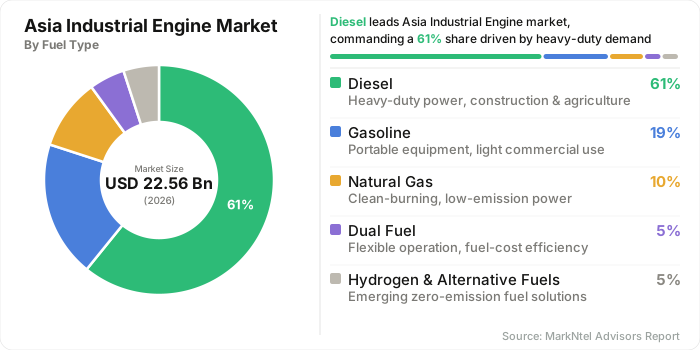
- Diesel engines captured approximately 61% market share in 2026 due to fuel efficiency, durability, and heavy-duty industrial equipment utilization.
- Power generation accounted for nearly 31% market share in 2026, driven by rising electricity demand and backup power deployment across Asia.
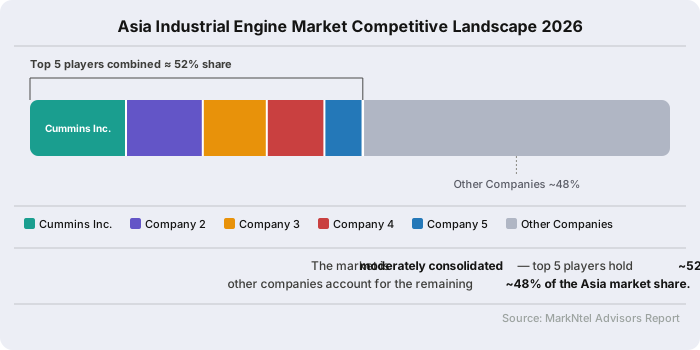
- The industry is moderately consolidated, with the top five leading players accounting for approximately 52% of the total market share.
Asia Industrial Engines Market Size and Outlook
The Asia industrial engines industry is expected grow at a CAGR of 7.72% during 2026-32. Rapid growth in industrial production, infrastructure construction, and heavy equipment deployment across China, India, Japan, and Southeast Asia is creating sustained demand for industrial engines throughout the Asian market. China’s industrial output increased by 5.9% in 2025, while equipment manufacturing output rose by 9.2%, reflecting higher utilization of industrial engines in construction, mining, and manufacturing operations . Alongside this trend, government-backed industrial modernization initiatives and large-scale infrastructure programs are continuing to accelerate machinery deployment across commercial and industrial sectors.
Growing energy requirements across industrial facilities and utility operations are further strengthening the adoption of diesel and natural gas engines for backup power generation and heavy-duty machinery applications. According to the International Energy Agency, Asia continues to account for more than half of global gas demand growth, supported by expanding industrial production across China, India, and emerging Southeast Asian economies . At the same time, rapid urbanization and industrial corridor development are increasing the requirement for reliable distributed power systems across manufacturing facilities, logistics hubs, and commercial infrastructure projects.
Large-scale public investment programs and supportive industrial policies introduced during 2025 and 2026 are also contributing significantly to long-term market expansion across the region. India’s Union Budget 2025–26 allocated nearly USD 128.6 billion toward infrastructure development, including roads, railways, ports, and industrial expansion projects requiring extensive deployment of industrial engines and heavy equipment . Additionally, India’s Production Linked Incentive programs attracted more than USD 23 billion in realized investments by 2025 , strengthening domestic manufacturing ecosystems and increasing machinery procurement across multiple industrial sectors.
Future market growth is expected to remain supported by continuing infrastructure modernization, industrial automation expansion, and rising demand for reliable power generation systems across Asia, driving the market from USD 22.56 billion in 2026 to USD 35.25 billion by 2032. Increasing investments in mining, construction, manufacturing, and logistics activities are likely to sustain industrial engine demand across both developing and advanced Asian economies. In response to evolving environmental standards, leading manufacturers are expanding low-emission and fuel-efficient engine portfolios to align with tightening regulations and broader industrial sustainability objectives across the region.
Asia Industrial Engines Market Key Indicators
- China approved nearly USD 42 billion in infrastructure and industrial development projects for 2026, including transportation and industrial construction initiatives. Large-scale infrastructure projects require extensive deployment of construction equipment, generators, and heavy machinery powered by industrial engines, thereby supporting market growth .
- India approved 12 industrial smart city projects under the National Industrial Corridor Development Programme in 2025 to strengthen manufacturing and logistics infrastructure. Expansion of industrial corridors increases deployment of industrial machinery, construction equipment, and backup power systems, thereby driving demand for industrial engines.
- Saudi Arabia attracted approximately USD 19.8 billion in infrastructure and industrial investments through Belt and Road projects during 2025. Rising investments in industrial facilities, logistics infrastructure, and energy projects increase the utilization of industrial engines across construction and power generation applications .
- Qatar launched a USD 1 billion investment incentive programs in 2025 to accelerate industrial diversification and logistics infrastructure development. Rising industrial and infrastructure investments are increasing deployment of industrial machinery, generators, and heavy equipment powered by industrial engines.
- Southeast Asia recorded nearly USD 540 billion in planned green power investments, reflecting rapid renewable energy infrastructure expansion. Large-scale energy projects require construction equipment, industrial generators, and heavy machinery powered by industrial engines, thereby increasing industrial engine deployment across infrastructure activities .
Asia Industrial Engines Market Scope
| Category | Segments |
|---|---|
| By Horsepower | Up to 200 HP, 201–500 HP, 501–1,000 HP, Above 1,000 HP |
| By Fuel Type | Diesel, Gasoline, Natural Gas, Dual Fuel, Hydrogen & Alternative Fuels |
| By End User | Power Generation, Oil & Gas, General Manufacturing, Marine, Agriculture/Off-road Vehicles, Construction, Mining & Metallurgy, Others |
Asia Industrial Engines Market Growth Drivers
Rapid Infrastructure Development Across Asia
Increasing investments in manufacturing facilities, transportation networks, logistics hubs, and industrial infrastructure projects across Asia are significantly strengthening the deployment of industrial engines throughout construction, industrial, and power generation activities. Governments and private investors across India, Vietnam, and Middle Eastern economies are continuously expanding investments in ports, industrial parks, and export-oriented manufacturing ecosystems to improve industrial productivity and regional supply chain connectivity. Reflecting this trend, in 2026, Vietnam commenced construction of a USD 600 million electronics component manufacturing plant with planned annual production exceeding 84 million units , supporting expansion across the Asia manufacturing industry growth landscape
At the same time, rising investments in logistics and transportation infrastructure are accelerating the utilization of industrial machinery and industrial power systems across the region. DHL announced plans to invest more than USD 571 million across Saudi Arabia and the UAE to strengthen logistics infrastructure and warehousing capacity . Additionally, the UAE committed USD 5 billion toward infrastructure, shipping, energy, and industrial sector investments across India, increasing deployment of construction equipment, industrial generators, compressors, and material handling systems powered by industrial engines. As governments continue prioritizing industrial modernization and regional connectivity initiatives, long-term procurement of industrial machinery and engine-powered equipment is expected to remain strongly supported across Asian economies.
Recent Trends
Rising Integration of Smart Monitoring Technologies
Growing emphasis on operational efficiency and equipment reliability is encouraging industrial operators across Asia to adopt advanced smart monitoring technologies within industrial engine systems. Companies across manufacturing, mining, logistics, and construction sectors are increasingly deploying IoT-enabled sensors, telematics platforms, and AI-driven diagnostic tools to optimize engine performance, lower fuel consumption, and reduce unexpected equipment failures. Rising dependence on continuous industrial operations has accelerated adoption of smart industrial engine monitoring solutions across industrial activities.
The adoption of connected engine technologies is reshaping industrial maintenance and equipment management practices across multiple end-user industries. Advanced monitoring systems enable operators to continuously analyze engine temperature, fuel efficiency, vibration levels, and component performance to identify maintenance requirements before operational disruptions occur. Supporting this transition, Cummins expanded its PrevenTech platform in 2025 with enhanced predictive analytics, connected diagnostics, and remote engine monitoring solutions, highlighting rising deployment of industrial engine predictive maintenance technologies .
Increasing industrial automation and rising investments in smart manufacturing infrastructure across Asia are expected to support long-term adoption of connected engine technologies. Governments across China, Japan, South Korea, and India are also promoting Industry 4.0 initiatives to improve industrial productivity and digital integration across manufacturing and industrial operations.
Asia Industrial Engines Market Opportunities and Challenges
Volatility in Raw Material and Fuel Prices Driving Adoption of Fuel-Efficient and Alternative-Fuel Industrial Engines
Fluctuating raw material and fuel prices are increasing operational cost pressures across construction, mining, manufacturing, logistics, and power generation industries, encouraging industrial operators to prioritize fuel-efficient and alternative-fuel industrial engine technologies. Volatility in diesel prices and rising costs of industrial components are significantly affecting equipment operating expenses and long-term ownership costs. As a result, manufacturers and end users are increasingly focusing on improving fuel efficiency, reducing fuel dependency, and optimizing engine performance to maintain operational profitability across industrial activities.
While rising fuel and raw material costs are creating operational challenges, they are also generating long-term opportunities for manufacturers developing fuel-efficient and alternative-fuel engine technologies. Governments across Asia are increasingly supporting industrial decarbonization, energy efficiency improvements, and cleaner fuel adoption through industrial sustainability initiatives and emission reduction programs.
Reflecting the industry’s evolving focus, Cummins and its technology partners advanced hydrogen internal combustion engine technologies in 2025 capable of delivering more than 99% reduction in tailpipe carbon emissions compared to conventional diesel engines . Growing emphasis on fuel optimization and lower-emission industrial operations is expected to strengthen long-term demand for next-generation industrial engine technologies across Asia.
Segmentation Insights
High Fuel Efficiency, Superior Torque Output, and Extensive Industrial Utilization Support Strong Demand for Diesel Industrial Engines
Approximately 61% market share has established diesel engines as the dominant fuel type segment within the Asia industrial engines industry. The segment’s leadership is primarily supported by high fuel efficiency, superior torque generation, operational durability, and strong suitability for heavy-duty industrial applications across construction, mining, manufacturing, logistics, agriculture, and power generation sectors.
Diesel-powered industrial engines continue to witness strong adoption due to their ability to operate efficiently under high-load and continuous-duty conditions, particularly across developing Asian economies where large-scale infrastructure construction and industrial activities remain heavily dependent on heavy machinery and backup power systems.
Expanding infrastructure projects, mining operations, industrial manufacturing activities, and distributed power generation requirements are further strengthening utilization of diesel industrial engines across Asia. Industrial operators continue prioritizing diesel-powered equipment because of lower fuel consumption per output unit, longer operational lifespan, and widespread fuel availability across remote industrial and construction locations.
According to the International Energy Agency (IEA), diesel remains a major fuel source for heavy-duty industrial and transportation operations across developing economies due to its high energy density and operational reliability. Continuous technological advancements focused on improving fuel efficiency, reducing emissions, and integrating smart engine monitoring systems are also supporting sustained long-term demand for diesel-powered industrial engines across the region. Based on fuel type, the market has been segmented into:
- Diesel
- Gasoline
- Natural Gas
- Dual Fuel
- Hydrogen & Alternative Fuels
Rising Demand for Reliable Backup Power and Expanding Industrial Electricity Consumption Strengthen Leadership of the Power Generation Segment
With nearly 31% share of the overall market, power generation continues to represent the largest end-user segment within the Asia industrial engines industry, supported by rising demand for reliable electricity supply across industrial, commercial, and infrastructure operations. Increasing industrialization, rapid urbanization, and growing deployment of data centers, manufacturing facilities, hospitals, logistics hubs, and commercial infrastructure are significantly strengthening utilization of industrial engines for standby and continuous power generation applications. Developing Asian economies continue to witness strong deployment of industrial generator systems due to rising electricity demand and increasing pressure on existing power infrastructure.
Growing investments in smart manufacturing facilities, transportation infrastructure, industrial corridors, and digital infrastructure are further accelerating demand for industrial engines used in backup and prime power applications across Asia. Industrial operators are increasingly prioritizing reliable power systems to minimize operational disruptions and maintain continuous production activities during grid instability and peak electricity demand periods.
According to the International Energy Agency (IEA), electricity demand across Asia continues to expand rapidly due to rising industrial activity and urbanization. Supporting this transition, Cummins expanded its industrial power solutions portfolio with advanced fuel-efficient and connected generator technologies designed for industrial and commercial power generation applications. Increasing emphasis on operational continuity and energy reliability is therefore expected to sustain long-term demand for industrial engines across power generation activities. Based on end user, the market is categorized into:
- Power Generation
- Oil & Gas
- General Manufacturing
- Marine
- Agriculture/Off-road Vehicles
- Construction
- Mining & Metallurgy
- Others
Asia Industrial Engines Market Geographical Outlook
China dominates the Asia industrial engines market, accounting for approximately 35% of total regional demand, primarily due to its position as the largest manufacturing and industrial economy in Asia. The country continues to witness extensive growth across heavy machinery, construction equipment, mining systems, and industrial manufacturing activities, creating substantial demand for industrial engines used in power generation, material handling systems, construction machinery, and large-scale industrial operations. Supported by a well-established industrial ecosystem and strong domestic manufacturing capabilities, China continues to maintain large-scale deployment of industrial engines across multiple industrial and infrastructure sectors throughout the country.
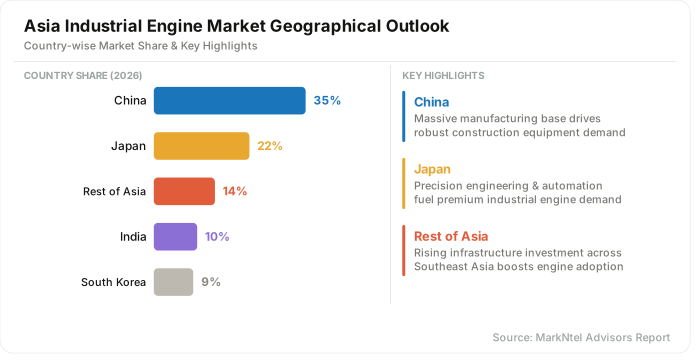
The country’s leadership is further strengthened by continuous industrial modernization and accelerated infrastructure expansion under China’s 15th Five-Year Plan (2026–2030). China’s manufacturing sector has remained the world’s largest for 15 consecutive years, while major industrial, transportation, and infrastructure projects continue advancing across the country, increasing utilization of industrial machinery and engine-powered equipment throughout manufacturing, logistics, construction, and power generation activities .
Simultaneously, rising industrial automation, growing electricity demand, and increasing deployment of backup power systems across industrial facilities continue to support long-term demand for industrial engines, reinforcing China’s leading position within the regional market.
Asia Industrial Engines Market Competitive Analysis
The Asia industrial engines market exhibits a moderately consolidated competitive landscape, with a combination of global industrial engine manufacturers and established Asian equipment companies competing across power generation, construction, mining, marine, and heavy-duty industrial applications. Leading players such as Weichai Power Co., Ltd., Cummins Inc., Caterpillar Inc., Yuchai Machinery, Mitsubishi Heavy Industries Ltd., Kubota Corporation, and Yanmar Holdings Co. collectively account for nearly 52% of the regional market, supported by strong manufacturing capabilities, diversified industrial engine portfolios, extensive dealer networks, and broad presence across major industrial sectors throughout Asia.
Key Players of Industrial Engines in Asia
- Weichai Power Co., Ltd.
- Yuchai (Guangxi Yuchai Machinery)
- Shanghai Diesel Engine Co., Ltd.
- Loncin Industries
- Zongshen Industrial Group
- Yanmar Holdings Co.
- Kubota Corporation
- Mitsubishi Heavy Industries Ltd.
- Kawasaki Heavy Industries
- Honda Motor Co., Ltd.
- Isuzu Motors
- Hyundai Heavy Industries Co., Ltd.
- Doosan Infracore
- Caterpillar Inc.
- Cummins Inc.
- John Deere
- Perkins Engines
- AB Volvo Penta
- MAN Energy Solutions
- DEUTZ AG
- Kohler Co.
- Others
Asia Industrial Engines Industry News and Recent Developments
July 2025: Cummins Launches Hydrogen Turbochargers for Industrial Engine Applications
Cummins introduced industry-first turbochargers specifically designed for hydrogen internal combustion engines targeting heavy-duty and industrial applications. The technology is intended to improve fuel efficiency, engine performance, and emissions reduction capabilities across hydrogen-powered industrial transportation and power generation systems.
Impact Analysis: This development highlights the growing transition toward alternative-fuel and low-emission industrial engine technologies across Asia. The launch is expected to accelerate adoption of hydrogen-powered industrial engines while supporting long-term industrial decarbonization, fuel optimization, and cleaner power generation initiatives across construction, logistics, and industrial sectors.
July 2025: Mitsubishi Heavy Industries Launches Hydrogen-Compatible Gas Cogeneration System
Mitsubishi Heavy Industries launched the “SGP M450” 450kW gas cogeneration system capable of hydrogen co-firing up to 15%, jointly developed with Toho Gas. The system was developed to support industrial facilities seeking flexible fuel utilization, lower emissions, and stable on-site power generation performance.
Impact Analysis: This development reflects rising industry focus on hydrogen-compatible industrial power systems and cleaner energy infrastructure across Asia. The launch is expected to strengthen the adoption of fuel-flexible industrial engines and support growing investments in industrial decarbonization, distributed power generation, and sustainable manufacturing operations across regional industrial sectors.
- Market Segmentation
- Introduction
- Product Definition
- Research Process
- Assumptions
- Executive Summary
- Asia Industrial Engines Market Policies, Regulations, and Product Standards
- Asia Industrial Engines Market Trends & Developments
- Asia Industrial Engines Market Dynamics
- Growth Factors
- Challenges
- Asia Industrial Engines Market Hotspot & Opportunities
- Asia Industrial Engines Market Outlook, 2022-2032F
- Market Size & Outlook
- By Revenues (USD Million)
- Market Share & Analysis
- By Horsepower- Market Size & Forecast 2022-2032, USD Million
- Up to 200 HP
- 201–500 HP
- 501–1,000 HP
- Above 1,000 HP
- By Fuel Type- Market Size & Forecast 2022-2032, USD Million
- Diesel
- Gasoline
- Natural Gas
- Dual Fuel
- Hydrogen & Alternative Fuels
- By End User- Market Size & Forecast 2022-2032, USD Million
- Power Generation
- Oil & Gas
- General Manufacturing
- Marine
- Agriculture/Off-road Vehicles
- Construction
- Mining & Metallurgy
- Others
- By Country
- China
- Japan
- South Korea
- India
- Bangladesh
- Indonesia
- Thailand
- Vietnam
- Malaysia
- Saudi Arabia
- Turkey
- By Company
- Competition Characteristics
- Market Share & Analysis
- By Horsepower- Market Size & Forecast 2022-2032, USD Million
- Market Size & Outlook
- China Industrial Engines Market Outlook, 2022-2032F
- Market Size & Outlook
- By Revenues (USD Million)
- Market Share & Analysis
- By Horsepower- Market Size & Forecast 2022-2032, USD Million
- By Fuel Type- Market Size & Forecast 2022-2032, USD Million
- By End User- Market Size & Forecast 2022-2032, USD Million
- Market Size & Outlook
- Japan Industrial Engines Market Outlook, 2022-2032F
- Market Size & Outlook
- By Revenues (USD Million)
- Market Share & Analysis
- By Horsepower- Market Size & Forecast 2022-2032, USD Million
- By Fuel Type- Market Size & Forecast 2022-2032, USD Million
- By End User- Market Size & Forecast 2022-2032, USD Million
- Market Size & Outlook
- South Korea Industrial Engines Market Outlook, 2022-2032F
- Market Size & Outlook
- By Revenues (USD Million)
- Market Share & Analysis
- By Horsepower- Market Size & Forecast 2022-2032, USD Million
- By Fuel Type- Market Size & Forecast 2022-2032, USD Million
- By End User- Market Size & Forecast 2022-2032, USD Million
- Market Size & Outlook
- India Industrial Engines Market Outlook, 2022-2032F
- Market Size & Outlook
- By Revenues (USD Million)
- Market Share & Analysis
- By Horsepower- Market Size & Forecast 2022-2032, USD Million
- By Fuel Type- Market Size & Forecast 2022-2032, USD Million
- By End User- Market Size & Forecast 2022-2032, USD Million
- Market Size & Outlook
- Bangladesh Industrial Engines Market Outlook, 2022-2032F
- Market Size & Outlook
- By Revenues (USD Million)
- Market Share & Analysis
- By Horsepower- Market Size & Forecast 2022-2032, USD Million
- By Fuel Type- Market Size & Forecast 2022-2032, USD Million
- By End User- Market Size & Forecast 2022-2032, USD Million
- Market Size & Outlook
- Indonesia Industrial Engines Market Outlook, 2022-2032F
- Market Size & Outlook
- By Revenues (USD Million)
- Market Share & Analysis
- By Horsepower- Market Size & Forecast 2022-2032, USD Million
- By Fuel Type- Market Size & Forecast 2022-2032, USD Million
- By End User- Market Size & Forecast 2022-2032, USD Million
- Market Size & Outlook
- Thailand Industrial Engines Market Outlook, 2022-2032F
- Market Size & Outlook
- By Revenues (USD Million)
- Market Share & Analysis
- By Horsepower- Market Size & Forecast 2022-2032, USD Million
- By Fuel Type- Market Size & Forecast 2022-2032, USD Million
- By End User- Market Size & Forecast 2022-2032, USD Million
- Market Size & Outlook
- Vietnam Industrial Engines Market Outlook, 2022-2032F
- Market Size & Outlook
- By Revenues (USD Million)
- Market Share & Analysis
- By Horsepower- Market Size & Forecast 2022-2032, USD Million
- By Fuel Type- Market Size & Forecast 2022-2032, USD Million
- By End User- Market Size & Forecast 2022-2032, USD Million
- Market Size & Outlook
- Malaysia Industrial Engines Market Outlook, 2022-2032F
- Market Size & Outlook
- By Revenues (USD Million)
- Market Share & Analysis
- By Horsepower- Market Size & Forecast 2022-2032, USD Million
- By Fuel Type- Market Size & Forecast 2022-2032, USD Million
- By End User- Market Size & Forecast 2022-2032, USD Million
- Market Size & Outlook
- Saudi Arabia Industrial Engines Market Outlook, 2022-2032F
- Market Size & Outlook
- By Revenues (USD Million)
- Market Share & Analysis
- By Horsepower- Market Size & Forecast 2022-2032, USD Million
- By Fuel Type- Market Size & Forecast 2022-2032, USD Million
- By End User- Market Size & Forecast 2022-2032, USD Million
- Market Size & Outlook
- Turkey Industrial Engines Market Outlook, 2022-2032F
- Market Size & Outlook
- By Revenues (USD Million)
- Market Share & Analysis
- By Horsepower- Market Size & Forecast 2022-2032, USD Million
- By Fuel Type- Market Size & Forecast 2022-2032, USD Million
- By End User- Market Size & Forecast 2022-2032, USD Million
- Market Size & Outlook
- Asia Industrial Engines Market Key Strategic Imperatives for Success & Growth
- Competitive Outlook
- Company Profiles
- Weichai Power Co., Ltd.
- Business Description
- Product Portfolio
- Collaborations & Alliances
- Recent Developments
- Financial Details
- Others
- Yuchai (Guangxi Yuchai Machinery)
- Business Description
- Product Portfolio
- Collaborations & Alliances
- Recent Developments
- Financial Details
- Others
- Shanghai Diesel Engine Co., Ltd.
- Business Description
- Product Portfolio
- Collaborations & Alliances
- Recent Developments
- Financial Details
- Others
- Loncin Industries
- Business Description
- Product Portfolio
- Collaborations & Alliances
- Recent Developments
- Financial Details
- Others
- Zongshen Industrial Group
- Business Description
- Product Portfolio
- Collaborations & Alliances
- Recent Developments
- Financial Details
- Others
- Yanmar Holdings Co.
- Business Description
- Product Portfolio
- Collaborations & Alliances
- Recent Developments
- Financial Details
- Others
- Kubota Corporation
- Business Description
- Product Portfolio
- Collaborations & Alliances
- Recent Developments
- Financial Details
- Others
- Mitsubishi Heavy Industries Ltd.
- Business Description
- Product Portfolio
- Collaborations & Alliances
- Recent Developments
- Financial Details
- Others
- Kawasaki Heavy Industries
- Business Description
- Product Portfolio
- Collaborations & Alliances
- Recent Developments
- Financial Details
- Others
- Honda Motor Co., Ltd.
- Business Description
- Product Portfolio
- Collaborations & Alliances
- Recent Developments
- Financial Details
- Others
- Isuzu Motors
- Business Description
- Product Portfolio
- Collaborations & Alliances
- Recent Developments
- Financial Details
- Others
- Hyundai Heavy Industries Co., Ltd.
- Business Description
- Product Portfolio
- Collaborations & Alliances
- Recent Developments
- Financial Details
- Others
- Doosan Infracore
- Business Description
- Product Portfolio
- Collaborations & Alliances
- Recent Developments
- Financial Details
- Others
- Caterpillar Inc.
- Business Description
- Product Portfolio
- Collaborations & Alliances
- Recent Developments
- Financial Details
- Others
- Cummins Inc.
- Business Description
- Product Portfolio
- Collaborations & Alliances
- Recent Developments
- Financial Details
- Others
- John Deere
- Business Description
- Product Portfolio
- Collaborations & Alliances
- Recent Developments
- Financial Details
- Others
- Perkins Engines
- Business Description
- Product Portfolio
- Collaborations & Alliances
- Recent Developments
- Financial Details
- Others
- AB Volvo Penta
- Business Description
- Product Portfolio
- Collaborations & Alliances
- Recent Developments
- Financial Details
- Others
- MAN Energy Solutions
- Business Description
- Product Portfolio
- Collaborations & Alliances
- Recent Developments
- Financial Details
- Others
- DEUTZ AG
- Business Description
- Product Portfolio
- Collaborations & Alliances
- Recent Developments
- Financial Details
- Others
- Kohler Co.
- Business Description
- Product Portfolio
- Collaborations & Alliances
- Recent Developments
- Financial Details
- Others
- Weichai Power Co., Ltd.
- Company Profiles
- Disclaimer

MarkNtel Advisors follows a robust and iterative research methodology designed to ensure maximum accuracy and minimize deviation in market estimates and forecasts. Our approach combines both bottom-up and top-down techniques to effectively segment and quantify various aspects of the market. A consistent feature across all our research reports is data triangulation, which examines the market from three distinct perspectives to validate findings. Key components of our research process include:
1. Scope & Research Design At the outset, MarkNtel Advisors define the research objectives and formulate pertinent questions. This phase involves determining the type of research—qualitative or quantitative—and designing a methodology that outlines data collection methods, target demographics, and analytical tools. They also establish timelines and budgets to ensure the research aligns with client goals.
2. Sample Selection and Data Collection In this stage, the firm identifies the target audience and determines the appropriate sample size to ensure representativeness. They employ various sampling methods, such as random or stratified sampling, based on the research objectives. Data collection is carried out using tools like surveys, interviews, and observations, ensuring the gathered data is reliable and relevant.
3. Data Analysis and Validation Once data is collected, MarkNtel Advisors undertake a rigorous analysis process. This includes cleaning the data to remove inconsistencies, employing statistical software for quantitative analysis, and thematic analysis for qualitative data. Validation steps are taken to ensure the accuracy and reliability of the findings, minimizing biases and errors.

4. Data Forecast and FinalizationThe final phase involves forecasting future market trends based on the analyzed data. MarkNtel Advisors utilize predictive modeling and time series analysis to anticipate market behaviors. The insights are then compiled into comprehensive reports, featuring visual aids like charts and graphs, and include strategic recommendations to inform client decision-making
We offer flexible licensing options to cater to varying organizational needs. Choose the pricing pack that best suits your requirements:
Buy Now Inquire Before Buying
 Request Customization