

By Service Type (Full Truckload (FTL) Brokerage, Less-Than-Truckload (LTL) Brokerage, Intermodal Brokerage, Expedited Freight Brokerage, Specialized Freight Brokerage, Managed Tran......sportation Services), By Customer Size (Small & Medium Enterprises (SMEs), Large Enterprises), By End-Use Industry (Retail & E-commerce, Manufacturing, Food & Beverage, Automotive, Healthcare & Pharmaceuticals, Consumer Goods, Industrial & Heavy Equipment, Agriculture, Chemicals), By Brokerage Model (Traditional Freight Brokerage, Digital Freight Brokerage) Read more
- Automotive
- Jun 2026
- 165
- PDF, Excel, PPT
U.S. Freight Brokerage Market Key Takeaways
- The U.S. Freight Brokerage market was valued at around USD 20.11 billion in 2025 and is anticipated to expand from USD 22.39 billion in 2026 to USD 29.12 billion by 2032.
- The industry is projected to witness steady growth at a CAGR of 4.48% over the forecast period.
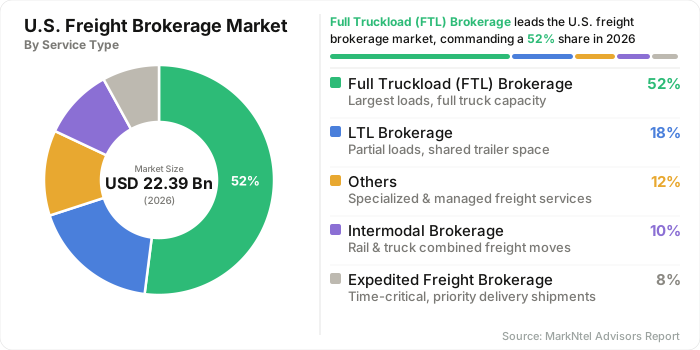
- Full Truckload Brokerage dominated the service type segment with approximately 52% market share in 2026.
- By end user industry, Retail & E-commerce accounted for nearly 25% of total market revenue in 2026.
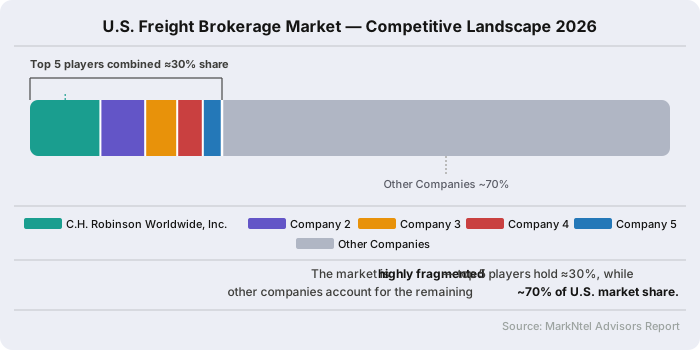
- The industry is highly fragmented, with the top five leading players accounting for approximately 30% of the total market share.
The U.S. Freight Brokerage Market Size and Outlook
At a CAGR of approximately 4.48% over 2026–2032, the U.S. Freight Brokerage market is expected to rise from USD 22.39 billion in 2026 to USD 29.12 billion by 2032, following a valuation of USD 20.11 Billion in 2025.
Rising freight volumes and increasingly interconnected supply chains have created favorable conditions for the growth of the U.S. freight brokerage market. As businesses seek efficient transportation solutions, freight brokers play a key role in connecting shippers with carrier networks and optimizing freight movement. According to the U.S. Bureau of Transportation Statistics, freight flows between the United States, Canada, and Mexico totaled approximately USD 1.6 trillion in 2025, while cross-border freight shipments reached a record value of USD 144.8 billion in March 2025 . These trends continue to strengthen demand for brokerage services across domestic and international trade routes.
As logistics operations become more complex, companies are increasingly relying on outsourced transportation expertise to improve efficiency and control costs. Large enterprises remain the leading users of brokerage services, while retail, e-commerce, manufacturing, and industrial sectors generate substantial freight demand. The growing adoption of managed transportation services is further supporting market expansion by helping shippers centralize carrier management, shipment planning, and freight visibility. This trend is reinforced by the scale of freight activity, with the trucking industry moving an estimated 11.27 billion tons of freight in 2024.
Alongside growing demand, regulatory initiatives are helping create a more transparent and reliable freight transportation environment. The Federal Motor Carrier Safety Administration implemented enhanced Broker and Freight Forwarder Financial Responsibility requirements in January 2026, strengthening financial security standards for brokerage operations . These measures are designed to improve accountability, reduce payment-related risks, and increase confidence among shippers and carriers, encouraging wider adoption of professional brokerage services.
The combination of technology adoption and expanding trade activity is reinforcing the long-term development potential of the freight brokerage industry. Brokers are increasingly deploying digital freight matching, real-time shipment tracking, and AI-enabled pricing tools to improve operational efficiency. Meanwhile, rising near-shoring activity and stronger U.S.-Mexico trade connectivity are generating additional demand for freight coordination services. Together, these developments are expected to support continued market growth and strengthen the role of freight brokers within modern supply chains.
The U.S. Freight Brokerage Market Key Indicators
- According to the U.S. Bureau of Transportation Statistics (BTS), cross-border freight shipments between the United States, Canada, and Mexico reached a record USD 144.8 billion in 2025, representing an 8.4% year-over-year increase. Rising trade volumes across North America continue to increase demand for freight brokerage services, including carrier sourcing, route optimization, and transportation management .
- The U.S. retail e-commerce sales surpassed USD 1.19 trillion in 2024, highlighting the continued expansion of online commerce across the country. Rising e-commerce activity increases shipment frequency, inventory replenishment requirements, and distribution network utilization, thereby strengthening demand for freight brokerage and transportation coordination services .
- The United States maintains more than 4 million miles of public roads, creating one of the world's largest freight transportation networks. Extensive road infrastructure supports truck freight movements and provides a strong operational foundation for brokerage providers serving nationwide shipping requirements.
- The U.S. manufacturing activity continues to generate substantial freight demand, with manufacturers' shipments consistently exceeding USD 600 billion per month during 2025. Manufacturing facilities rely on efficient transportation networks for inbound raw materials and outbound finished goods distribution, creating sustained demand for freight brokerage and Managed Transportation Services across domestic supply chains .
U.S. Freight Brokerage Market Scope
| Category | Segments |
|---|---|
| By Service Type | Full Truckload (FTL) Brokerage, Less-Than-Truckload (LTL) Brokerage, Intermodal Brokerage, Expedited Freight Brokerage, Specialized Freight Brokerage, Managed Transportation Services |
| By Customer Size | Small & Medium Enterprises (SMEs), Large Enterprises |
| By End-Use Industry | Retail & E-commerce, Manufacturing, Food & Beverage, Automotive, Healthcare & Pharmaceuticals, Consumer Goods, Industrial & Heavy Equipment, Agriculture, Chemicals |
| By Brokerage Model | Traditional Freight Brokerage, Digital Freight Brokerage |
The U.S. Freight Brokerage Market Growth Drivers
Growth in Cross-Border Trade Across North America
Rising cross-border commerce within North America is generating sustained demand for freight brokerage services across the United States. Increasing economic integration between the U.S., Mexico, and Canada, combined with ongoing nearshoring investments, has accelerated the movement of goods throughout regional supply chains. U.S.–Mexico goods and services trade reached approximately USD 935.1 billion in 2024 , highlighting the growing scale of cross-border transportation activity. As freight volumes continue to expand, shippers are increasingly relying on brokers to secure carrier capacity and manage transportation requirements across major trade corridors.
This growth in freight activity is also creating greater operational complexity for manufacturers, retailers, and distributors. Cross-border shipments often require coordination across multiple carriers, customs procedures, and regulatory frameworks, making efficient logistics management increasingly important. To address these challenges, businesses are adopting transportation management solutions and brokerage services that improve shipment visibility and streamline carrier coordination. As a result, the increase in freight movements is directly translating into higher brokerage transaction volumes and expanding market demand.
The long-term nature of this trend is reflected in the continued rise of trade between the United States and Mexico. U.S. goods imports from Mexico increased from approximately USD 346 billion in 2018 to USD 506 billion in 2024 , demonstrating the deepening integration of regional supply chains. As freight flows continue to grow across key border regions, demand for freight capacity management and specialized logistics coordination is expected to remain strong, supporting sustained expansion of the U.S. freight brokerage market.
Recent Trends
Growing Adoption of Digital Freight Platforms and Real-Time Visibility Solutions
Digital transformation is increasingly reshaping the U.S. freight brokerage market as shippers seek greater efficiency, transparency, and control over transportation operations. With freight networks becoming more complex and shipment volumes continuing to rise, businesses are turning to technology-driven tools that support real-time tracking, automated carrier matching, and faster freight execution. In response to these evolving requirements, brokerage providers are expanding investments in digital freight matching technology to improve carrier connectivity and streamline freight procurement processes.
As digital adoption gains momentum, transportation stakeholders are placing greater emphasis on data-driven decision-making and operational visibility. This shift is driving demand for integrated logistics platforms and predictive analytics that help improve planning and reduce disruptions. At the same time, the growing use of real-time freight visibility solutions is enabling stronger coordination between shippers, carriers, and brokers, allowing freight movements to be monitored more effectively throughout the transportation journey.
The increasing focus on digital capabilities is also reflected in recent industry developments. In 2024, Schneider enhanced its Schneider FreightPower platform with improved load visibility and broader access to transportation capacity . Similarly, Trimble expanded its digital freight marketplace into North America, increasing access to digital freight matching capabilities . These investments demonstrate how technology is becoming more deeply embedded in brokerage operations and reinforcing the industry's transition toward digitally enabled freight management.
The U.S. Freight Brokerage Market Opportunities and Challenges
Driver Shortages and Capacity Volatility Creating Opportunities for Managed Transportation Solutions
Persistent driver shortages and fluctuations in carrier capacity continue to challenge the U.S. freight transportation sector. The American Trucking Associations identifies driver recruitment and retention among the industry's most significant concerns, affecting freight availability and transportation planning. These challenges often intensify during periods of seasonal demand, weather disruptions, and economic uncertainty, making it more difficult for shippers to secure reliable transportation capacity and maintain efficient supply chain operations.
As a result, businesses are increasingly turning to managed transportation services and transportation procurement services to improve efficiency and reduce operational complexity. These solutions help shippers strengthen carrier networks, improve freight visibility, and optimize transportation planning. Reflecting this shift, Amazon expanded its Amazon Supply Chain Services portfolio in June 2026 by launching a less-than-truckload freight offering for all businesses, combining transportation capacity with shipment visibility and freight management capabilities . Such developments highlight the growing demand for integrated logistics solutions and create attractive opportunities for freight brokers offering value-added transportation services.
Segmentation Insights
Full Truckload (FTL) Brokerage Dominates the U.S. Freight Brokerage Market Owing to Strong Long-Haul Freight Demand
Holding an estimated 52% market share, Full Truckload Brokerage remains the largest service segment in the U.S. freight brokerage market. The segment's leadership is driven by extensive freight movements across manufacturing, retail, consumer goods, and industrial sectors that require dedicated truck capacity for large-volume shipments. FTL transportation offers faster transit times, reduced cargo handling, and greater shipment security, making it the preferred option for businesses transporting high-value, time-sensitive, or bulk freight over long distances.
The dominance of the segment is further reinforced by the scale of truck-based freight transportation across the country. Trucks transported approximately 11.27 billion tons of freight in 2024, according to the American Trucking Associations, demonstrating the significant volume of goods moved through U.S. supply chains . As businesses continue to expand distribution networks and replenish inventories more frequently, the need for dedicated transportation capacity remains strong, supporting sustained demand for FTL brokerage services. Based on service type, the market has been segmented into:
- Full Truckload (FTL) Brokerage
- Less-Than-Truckload (LTL) Brokerage
- Intermodal Brokerage
- Expedited Freight Brokerage
- Specialized Freight Brokerage
- Managed Transportation Services
Retail & E-commerce Leads the Market Due to Expanding Distribution and Inventory Replenishment Requirements
With an estimated 25% market share, Retail & E-commerce represents the largest end-use industry in the U.S. freight brokerage market. The segment's leadership is driven by growing online shopping activity, expanding fulfillment networks, and the continuous movement of goods across distribution channels. To maintain product availability and meet delivery expectations, retailers increasingly rely on brokerage providers supported by carrier management platforms that help coordinate shipments between suppliers, warehouses, fulfillment centers, and stores while ensuring access to reliable transportation capacity.
The scale of retail activity continues to reinforce this demand for freight brokerage services. U.S. retail and food services sales totaled approximately USD 8.5 trillion in 2024, reflecting the substantial volume of goods flowing through the country's logistics infrastructure . As retailers expand omnichannel operations and invest in automated fulfillment facilities, regional distribution centers, and faster delivery capabilities, the need for supply chain visibility solutions continues to grow. These capabilities help improve inventory planning, monitor freight movements, and maintain delivery performance across increasingly complex retail logistics networks. Based on end user industry, the market is categorized into:
- Retail & E-commerce
- Manufacturing
- Food & Beverage
- Automotive
- Healthcare & Pharmaceuticals
- Consumer Goods
- Industrial & Heavy Equipment
- Agriculture
- Chemicals
- Others
- Others
U.S. Freight Brokerage Market Competitive Analysis
Competition within the U.S. freight brokerage market remains highly fragmented, with the presence of large asset-light brokers, technology-enabled freight platforms, third-party logistics providers, and specialized transportation management companies operating across the country. Leading participants, including C.H. Robinson Worldwide, Inc., Total Quality Logistics, LLC, RXO, Inc., Echo Global Logistics, Inc., and Uber Freight LLC, collectively account for approximately 30% of the market.
Key Players of Freight Brokerage in the U.S.
- C.H. Robinson Worldwide, Inc.
- Total Quality Logistics, LLC
- RXO, Inc.
- Echo Global Logistics, Inc.
- Uber Freight LLC
- Mode Global, LLC
- Worldwide Express Operations, LLC
- Nolan Transportation Group, LLC
- BlueGrace Logistics, LLC
- Arrive Logistics, LLC
- Ryder Integrated Logistics, Inc.
- Schneider Logistics, Inc.
- Others
U.S. Freight Brokerage Industry News and Recent Developments
November 2025: Uber Freight Expands Partnership with Better Trucks to Enhance Last-Mile Delivery Services
Uber Freight expanded its partnership with Better Trucks to strengthen last-mile delivery capabilities across North America. The collaboration integrates Better Trucks' delivery network and technology platform with Uber Freight's logistics services, helping improve transportation efficiency and service coverage for retail and e-commerce customers.
Impact Analysis: The partnership highlights growing demand for integrated logistics solutions that combine freight brokerage with last-mile delivery services. Enhanced delivery capabilities improve shipment visibility and operational efficiency while supporting the increasing transportation needs of retail and e-commerce supply chains.
- Market Segmentation
- Introduction
- Product Definition
- Research Process
- Assumptions
- Executive Summary
- The U.S. Freight Brokerage Market Policies, Regulations, and Product Standards
- The U.S. Freight Brokerage Market Trends & Developments
- The U.S. Freight Brokerage Market Dynamics
- Growth Factors
- Challenges
- The U.S. Freight Brokerage Market Hotspot & Opportunities
- The U.S. Freight Brokerage Market Outlook, 2022-2032F
- Market Size & Outlook
- By Revenues (USD Million)
- Market Share & Outlook
- By Service Type- Market Size & Forecast 2022-2032, USD Million
- Full Truckload (FTL) Brokerage
- Less-Than-Truckload (LTL) Brokerage
- Intermodal Brokerage
- Expedited Freight Brokerage
- Specialized Freight Brokerage
- Managed Transportation Services
- By Customer Size- Market Size & Forecast 2022-2032, USD Million
- Small & Medium Enterprises (SMEs)
- Large Enterprises
- By End-Use Industry- Market Size & Forecast 2022-2032, USD Million
- Retail & E-commerce
- Manufacturing
- Food & Beverage
- Automotive
- Healthcare & Pharmaceuticals
- Consumer Goods
- Industrial & Heavy Equipment
- Agriculture
- Chemicals
- Others
- By Brokerage Model- Market Size & Forecast 2022-2032, USD Million
- Traditional Freight Brokerage
- Digital Freight Brokerage
- By Company
- Competition Characteristics
- Market Share & Analysis
- By Service Type- Market Size & Forecast 2022-2032, USD Million
- Market Size & Outlook
- The U.S. Full Truckload (FTL) Brokerage Market Outlook, 2022-2032
- Market Size & Outlook
- By Revenues (USD Million)
- Market Share & Outlook
- By Customer Size- Market Size & Forecast 2022-2032, USD Million
- By End-Use Industry- Market Size & Forecast 2022-2032, USD Million
- By Brokerage Model- Market Size & Forecast 2022-2032, USD Million
- Market Size & Outlook
- The U.S. Less-Than-Truckload (LTL) Brokerage Market Outlook, 2022-2032
- Market Size & Outlook
- By Revenues (USD Million)
- Market Share & Outlook
- By Customer Size- Market Size & Forecast 2022-2032, USD Million
- By End-Use Industry- Market Size & Forecast 2022-2032, USD Million
- By Brokerage Model- Market Size & Forecast 2022-2032, USD Million
- Market Size & Outlook
- The U.S. Intermodal Brokerage Market Outlook, 2022-2032
- Market Size & Outlook
- By Revenues (USD Million)
- Market Share & Outlook
- By Customer Size- Market Size & Forecast 2022-2032, USD Million
- By End-Use Industry- Market Size & Forecast 2022-2032, USD Million
- By Brokerage Model- Market Size & Forecast 2022-2032, USD Million
- Market Size & Outlook
- The U.S. Expedited Freight Brokerage Market Outlook, 2022-2032
- Market Size & Outlook
- By Revenues (USD Million)
- Market Share & Outlook
- By Customer Size- Market Size & Forecast 2022-2032, USD Million
- By End-Use Industry- Market Size & Forecast 2022-2032, USD Million
- By Brokerage Model- Market Size & Forecast 2022-2032, USD Million
- Market Size & Outlook
- The U.S. Specialized Freight Brokerage Market Outlook, 2022-2032
- Market Size & Outlook
- By Revenues (USD Million)
- Market Share & Outlook
- By Customer Size- Market Size & Forecast 2022-2032, USD Million
- By End-Use Industry- Market Size & Forecast 2022-2032, USD Million
- By Brokerage Model- Market Size & Forecast 2022-2032, USD Million
- Market Size & Outlook
- The U.S. Managed Transportation Services Market Outlook, 2022-2032
- Market Size & Outlook
- By Revenues (USD Million)
- Market Share & Outlook
- By Customer Size- Market Size & Forecast 2022-2032, USD Million
- By End-Use Industry- Market Size & Forecast 2022-2032, USD Million
- By Brokerage Model- Market Size & Forecast 2022-2032, USD Million
- Market Size & Outlook
- The U.S. Freight Brokerage Market Key Strategic Imperatives for Success & Growth
- Competitive Outlook
- Company Profiles
- C.H. Robinson Worldwide, Inc.
- Business Description
- Product Portfolio
- Collaborations & Alliances
- Recent Developments
- Financial Details
- Others
- Total Quality Logistics, LLC
- Business Description
- Product Portfolio
- Collaborations & Alliances
- Recent Developments
- Financial Details
- Others
- RXO, Inc.
- Business Description
- Product Portfolio
- Collaborations & Alliances
- Recent Developments
- Financial Details
- Others
- Echo Global Logistics, Inc.
- Business Description
- Product Portfolio
- Collaborations & Alliances
- Recent Developments
- Financial Details
- Others
- Uber Freight LLC
- Business Description
- Product Portfolio
- Collaborations & Alliances
- Recent Developments
- Financial Details
- Others
- Mode Global, LLC
- Business Description
- Product Portfolio
- Collaborations & Alliances
- Recent Developments
- Financial Details
- Others
- Worldwide Express Operations, LLC
- Business Description
- Product Portfolio
- Collaborations & Alliances
- Recent Developments
- Financial Details
- Others
- Nolan Transportation Group, LLC
- Business Description
- Product Portfolio
- Collaborations & Alliances
- Recent Developments
- Financial Details
- Others
- BlueGrace Logistics, LLC
- Business Description
- Product Portfolio
- Collaborations & Alliances
- Recent Developments
- Financial Details
- Others
- Arrive Logistics, LLC
- Business Description
- Product Portfolio
- Collaborations & Alliances
- Recent Developments
- Financial Details
- Others
- Ryder Integrated Logistics, Inc.
- Business Description
- Product Portfolio
- Collaborations & Alliances
- Recent Developments
- Financial Details
- Others
- Schneider Logistics, Inc
- Business Description
- Product Portfolio
- Collaborations & Alliances
- Recent Developments
- Financial Details
- Others
- 16.1.12.7.
- C.H. Robinson Worldwide, Inc.
- Company Profiles
- Disclaimer

MarkNtel Advisors follows a robust and iterative research methodology designed to ensure maximum accuracy and minimize deviation in market estimates and forecasts. Our approach combines both bottom-up and top-down techniques to effectively segment and quantify various aspects of the market. A consistent feature across all our research reports is data triangulation, which examines the market from three distinct perspectives to validate findings. Key components of our research process include:
1. Scope & Research Design At the outset, MarkNtel Advisors define the research objectives and formulate pertinent questions. This phase involves determining the type of research—qualitative or quantitative—and designing a methodology that outlines data collection methods, target demographics, and analytical tools. They also establish timelines and budgets to ensure the research aligns with client goals.
2. Sample Selection and Data Collection In this stage, the firm identifies the target audience and determines the appropriate sample size to ensure representativeness. They employ various sampling methods, such as random or stratified sampling, based on the research objectives. Data collection is carried out using tools like surveys, interviews, and observations, ensuring the gathered data is reliable and relevant.
3. Data Analysis and Validation Once data is collected, MarkNtel Advisors undertake a rigorous analysis process. This includes cleaning the data to remove inconsistencies, employing statistical software for quantitative analysis, and thematic analysis for qualitative data. Validation steps are taken to ensure the accuracy and reliability of the findings, minimizing biases and errors.

4. Data Forecast and FinalizationThe final phase involves forecasting future market trends based on the analyzed data. MarkNtel Advisors utilize predictive modeling and time series analysis to anticipate market behaviors. The insights are then compiled into comprehensive reports, featuring visual aids like charts and graphs, and include strategic recommendations to inform client decision-making
FILL THE FORM TO GET THE FREE SAMPLE PAGES
We offer flexible licensing options to cater to varying organizational needs. Choose the pricing pack that best suits your requirements:
Buy Now Inquire Before Buying
 Talk to our Consultant
 Request Customization