

By Implant Configuration (Unilateral Cochlear Implants, Bilateral Cochlear Implants), By Component (Internal Devices, External Devices, Accessories & Power Systems), By Age Group (......Pediatric (0–17 Years), Adult (18+ Years)), By End User (Hospitals, ENT & Audiology Clinics, Ambulatory Surgical Centers (ASCs), Cochlear Implant Centers & Specialty Institutes) Read more
- Healthcare
- Sep 2026
- 145
- PDF, Excel, PPT
US Cochlear Implants Market Key Takeaways
- The US cochlear implants market was estimated at USD 0.85 billion in 2025 and is projected to reach USD 0.93 billion in 2026 and USD 1.60 billion by 2032, registering a 9.5% CAGR during 2026–2032.
- Internal Devices remain the dominant component segment, accounting for approximately 54% of market revenue in 2026.
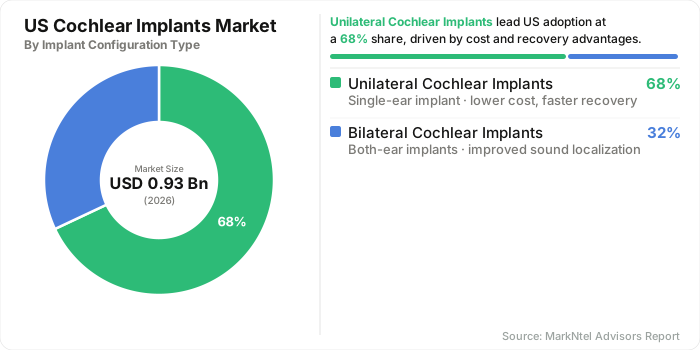
- Unilateral cochlear implants lead by implant configuration, representing an estimated 68% market share in 2026.
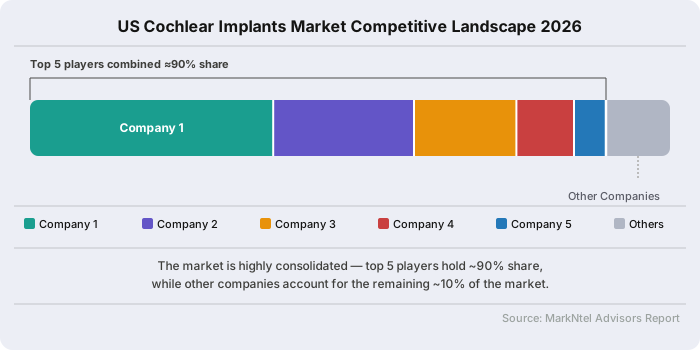
- The industry is highly consolidated, with the top players collectively accounting for 90% of revenue in 2026.
US Cochlear Implants Market Size and Outlook
The US Cochlear Implants Market expanded from USD 850.0 million in 2025 to USD 930.0 million in 2026, and is projected to reach USD 1.60 billion by 2032, registering a CAGR of 9.5%.
Growth is supported by expanding clinical eligibility and reimbursement access, particularly following CMS updates to NCD 50.3 covering eligible beneficiaries with limited benefit from conventional amplification.
The addressable patient pool remains substantial, supporting long-term implantation demand. The National Institute on Deafness and Other Communication Disorders (NIDCD) estimates approximately 37.5 million US adults report some degree of hearing loss, while cochlear implant utilization remains limited among potentially eligible patients. This treatment gap creates opportunities for increased diagnosis, specialist referrals, candidacy evaluations, and conversion from conventional hearing amplification to implantable solutions.
Technology-led replacement demand is strengthening the market beyond primary implantation procedures. Manufacturers are advancing external sound processors with automated hearing environments, wireless connectivity, direct streaming, and increasingly sophisticated digital processing. These developments encourage processor upgrades among existing recipients while improving product functionality for new patients. Consequently, recurring aftermarket revenues from processor replacements, accessories, batteries, and connectivity solutions are expected to complement growth in new cochlear implant system sales.
US Cochlear Implants Market Key Indicators
- As per the U.S. Food and Drug Administration (FDA), the Nucleus 24 Cochlear Implant System is indicated for children 9–24 months with bilateral profound sensorineural deafness who demonstrate limited benefit from appropriately fitted binaural hearing aids. This indication establishes a defined pathway for implantation during early childhood and supports demand for pediatric cochlear implant systems.
- According to FDA records, MED-EL received approval in November 2025 to expand its cochlear implant indication to children aged 7 months to 17 years and 11 months, subject to specified hearing-loss and clinical criteria. The expansion lowers the eligible implantation age and strengthens opportunities for earlier intervention, particularly through specialized pediatric cochlear implant centers.
- By the report of the FDA Post-Approval Studies Database, MED-EL's pediatric expansion study targets approximately 100 children aged 7 months to under 18 years, including infants implanted before 12 months. The study is designed to evaluate long-term safety and effectiveness, reinforcing clinical evidence generation around earlier pediatric implantation and supporting broader adoption of cochlear implant technology.
- According to NIDCD, 2–3 out of every 1,000 children in the US are born with detectable hearing loss in one or both ears, supporting early pediatric hearing intervention demand.
US Cochlear Implant Healthcare Infrastructure: ASC Migration Expanding Surgical Capacity and Lowering Site-of-Care Costs
The US cochlear implant delivery model is increasingly supported by ambulatory surgical centers (ASCs) as providers seek to shift appropriate elective ENT procedures toward lower-cost outpatient settings. CMS's 2026 payment data lists CPT 69930, implant cochlear device, at USD 25,601.57 in the applicable payment schedule, while CMS maintains dedicated ASC payment-rate files for 2025 and 2026. Against this reimbursement framework, the estimated facility-cost differential between ASC and hospital outpatient settings creates an economic incentive for suitable cochlear implantation procedures to migrate toward ambulatory environments.
The infrastructure opportunity is reinforced by the expansion of the eligible patient pool. CMS's NCD 50.3 currently covers cochlear implantation for qualifying patients with bilateral moderate-to-profound sensorineural hearing loss and limited benefit from amplification, defining limited benefit as ≤60% correct in the best-aided listening condition on recorded open-set sentence-recognition testing. This broader coverage framework can increase the number of patients entering the surgical pathway, placing greater importance on outpatient operating capacity and specialized ENT infrastructure.
Consequently, the combination of broader Medicare eligibility, established ASC payment infrastructure, and the potential for lower-cost outpatient delivery creates a distinct capacity-expansion pathway for the US cochlear implants market. The shift can also influence manufacturer and provider strategies through greater emphasis on ASC-based inventory, standardized surgical trays, streamlined implant workflows, and direct relationships with specialized otolaryngology centers.
US Cochlear Implants Market Scope
| Category | Segments |
|---|---|
| By Implant Configuration | Unilateral Cochlear Implants, Bilateral Cochlear Implants |
| By Component | Internal Devices, External Devices, Accessories & Power Systems |
| By Age Group | Pediatric (0–17 Years), Adult (18+ Years |
| By End User | Hospitals, ENT & Audiology Clinics, Ambulatory Surgical Centers (ASCs), Cochlear Implant Centers & Specialty Institutes |
US Cochlear Implants Market Growth Driver
Expanded Medicare Audiologic Candidacy Supporting Adult Cochlear Implant Adoption
The expansion of Medicare audiologic candidacy criteria is increasing the addressable population for adult cochlear implants in the United States. According to a 2024 U.S. candidacy-modeling study, approximately 2.5 million adults meet expanded CMS audiologic criteria, including 2.1 million adults aged 65 years and older. This substantial eligible population highlights significant unmet treatment potential and is expected to support greater patient referrals, candidacy evaluations, and demand for cochlear implant systems and sound processors.
According to Cochlear Limited's FY2026 results, US revenue increased 4%, while Cochlear-supported direct-to-consumer surgical referrals increased 10% during the fiscal year. Growing patient awareness and stronger referral pathways are helping convert eligible candidates into implantation procedures. Consequently, broader Medicare eligibility, increasing cochlear implant candidacy, and improved patient-conversion initiatives are expected to accelerate cochlear implant adoption and sustain demand for implant hardware, processors, and related accessories through 2032.
Recent Trend
Bluetooth LE Audio and Auracast Compatibility Accelerating Connected Sound-Processor Adoption
US cochlear implant recipients are increasingly gaining access to Bluetooth Low Energy (LE) Audio and Auracast-enabled connectivity as compatible hearing technology expands across public venues. According to the Hearing Loss Association of America, Auracast-enabled hearing devices can receive broadcast audio directly in locations such as airports, theaters, and lecture halls. The development is strengthening demand for connected cochlear implant sound processors and next-generation wireless hearing solutions.
Manufacturers are responding by integrating advanced wireless connectivity into their cochlear implant processors. Cochlear's 2026 Osia 3 supports Apple, Android, Bluetooth LE Audio, and Auracast streaming, while the company is also evaluating LE Audio firmware performance for Nucleus 8 and Kanso 3 processors through an FDA-registered clinical study initiated in December 2025. These developments are shifting wireless streaming from a differentiating feature toward an important cochlear implant processor upgrade consideration, supporting recurring aftermarket and accessories revenue.
US Cochlear Implants Market Opportunities and Challenges
High Device and Care Complexity Creating Remote-Care and Upgrade Opportunities
Cochlear implant systems combine surgically implanted components with external sound processors that require programming, configuration, power management, maintenance, and periodic replacement. This creates an ongoing post-implant care burden for recipients and providers, particularly because cochlear implant performance depends on appropriate processor settings and continued technical support. FDA-authorized cochlear implant systems have incorporated remote programming capabilities, while manufacturers continue developing digital tools to simplify follow-up and device management. These requirements can increase the operational complexity of cochlear implant care and place additional demands on specialized audiology services.
The complexity is simultaneously creating opportunities for manufacturers offering remote cochlear implant care, software-assisted fitting, digital hearing support, and upgradeable sound processors. MED-EL’s Remote Care Program and HearCare App enable clinicians to conduct system checks, modify processor configurations, and provide selected support remotely. Its configuration-backup capabilities can also facilitate replacement-processor setup without repeating the entire fitting process. Such technologies can reduce follow-up friction and improve access to specialized care while strengthening the commercial potential of processor upgrades, connectivity features, replacement hardware, and other recurring cochlear implant aftermarket revenue.
Segmentation Insights
Unilateral Cochlear Implants Maintain Revenue Leadership in the US Market
Unilateral cochlear implants are estimated to account for approximately 68% of US cochlear implant market revenue in 2026, maintaining the largest share because single-ear implantation remains the primary configuration for many newly treated patients. Historical US device-registration research published in Otology & Neurotology found that approximately 30% of cochlear implant devices were implanted in bilateral recipients, through simultaneous or sequential procedures, indicating that unilateral implantation represented the majority of device volume. CMS coverage under NCD 50.3 supports eligible patients with bilateral moderate-to-profound sensorineural hearing loss who receive limited benefit from appropriately fitted hearing aids.
The segment also has an expanding growth pathway through single-sided deafness (SSD) and asymmetric hearing loss (AHL). In July 2026, the FDA expanded Advanced Bionics' HiResolution Bionic Ear System indication to individuals aged 5 years and older meeting specified SSD/AHL criteria. Advanced Bionics estimates that 271,000–345,000 US adults live with SSD, while only approximately 2.1% of individuals meeting the expanded candidacy criteria have received cochlear implants. This substantial treatment gap creates additional potential for unilateral implantation and subsequent demand for sound processors, accessories, replacements, and technology upgrades. Based on Implant Configuration, the industry is segmented into:
- Unilateral Cochlear Implants
- Bilateral Cochlear Implants
Internal Cochlear Implant Devices Maintain Revenue Leadership Through Mandatory Surgical Demand
Internal devices are estimated to represent approximately 54% of the US cochlear implants market in 2026, supported by their essential role in every new implantation procedure. Unlike external processors and accessories, the internal receiver and electrode system must be surgically implanted to establish the electrical pathway between the external processor and auditory nerve. FDA's 2025–2026 device records continue to show active US regulatory activity for implantable systems, including manufacturing updates for Nucleus cochlear implants in 2025 and post-approval monitoring of MED-EL implants in 2026, indicating continued clinical and manufacturing activity around the core implanted hardware.
A further factor supporting internal-device demand is the expansion of cochlear implantation into additional patient groups. In July 2026, FDA expanded Advanced Bionics' cochlear implant indication for patients with single-sided or asymmetric hearing loss, while recent FDA approvals and supplements continue to broaden or maintain device applicability across pediatric and adult populations. Because these expanded indications require implantation of the internal receiver and electrode system, growth in eligible patient populations directly translates into incremental demand for implantable cochlear devices, rather than only processor upgrades. Based on Component, the industry is segmented into:
- Internal Devices
- External Devices
- Accessories & Power Systems
US Cochlear Implants Market Competitive Analysis
The US cochlear implants market is highly consolidated, with the top 5 established manufacturers—Cochlear Limited, Advanced Bionics (Sonova), Oticon Medical A/S, Envoy Medical, Inc and MED-EL accounting for approximately 90% of revenue in 2026, based on the current FDA-authorized manufacturer landscape.
Top Companies in the US Cochlear Implants Industry:
- Cochlear Limited (Cochlear Americas)
- Sonova AG (Advanced Bionics, LLC)
- MED-EL Corporation
- Oticon Medical A/S
- Envoy Medical, Inc.
- Zhejiang Nurotron Biotechnology Co., Ltd.
- Medtronic plc
- ZPower, LLC
- Demant A/S
- Sonova Holding AG
US Cochlear Implants Industry News and Recent Developments
July 2026: Advanced Bionics Receives FDA Approval for Expanded Cochlear Implant Indications
Advanced Bionics received U.S. FDA approval in July 2026 to expand the indications for its HiResolution Bionic Ear System to patients with unilateral hearing loss, single-sided deafness, and asymmetric hearing loss. The expanded labeling covers both adult and pediatric patients meeting specified audiologic criteria. Advanced Bionics estimates that approximately 271,000–345,000 US adults live with single-sided deafness, while published utilization estimates indicate only 2.1% of individuals meeting expanded SSD/AHL candidacy criteria currently receive cochlear implants.
Impact Analysis: The expanded indication materially broadens the addressable US cochlear implant candidate pool beyond traditional bilateral severe-to-profound hearing loss. The combination of a large estimated SSD population and low current utilization creates an opportunity for manufacturers to increase adult implantation volumes through physician referrals, patient education and expanded clinical adoption.
December 2025: MED-EL Gains FDA Approval for Cochlear Implants in Children Seven Months and Older
MED-EL announced FDA approval in December 2025 for its cochlear implant system in children seven months and older with bilateral sensorineural hearing loss. The supporting clinical evidence included 123 children, of whom 110 achieved clinical success during the first year. The approval also expanded audiologic and speech indications for children aged 12 months and older.
Impact Analysis: The approval pushes the US pediatric cochlear implant market toward earlier intervention, potentially shortening the period between hearing-loss diagnosis and implantation. Earlier eligibility also strengthens demand for pediatric implant systems and creates opportunities for manufacturers offering child-focused processors, connectivity and long-term upgrade pathways.
July 2025: Cochlear Launches FDA-Approved Nucleus Nexa Smart Cochlear Implant System
Cochlear received FDA approval in July 2025 for the Nucleus Nexa System, introducing an implant with upgradeable firmware and internal memory. Unlike conventional systems where technology upgrades primarily occur through the external sound processor, Nexa enables future functionality to be introduced through both the implant and processor. The system is paired with Nucleus 8 Nexa and Kanso 3 Nexa sound processors.
Impact Analysis: The launch shifts competition toward upgradeable cochlear implant technology, potentially extending the technological lifespan of implanted hardware while creating new upgrade opportunities for existing recipients. It also increases the strategic importance of software, processor compatibility and long-term digital ecosystem development in the US market.
- Market Segmentation
- Introduction
- Product Definition
- Research Process
- Assumptions
- Executive Summary
- US Cochlear Implants Market Policies, Regulations, and Product Standards
- US Cochlear Implants Market Trends & Developments
- US Cochlear Implants Market Dynamics
- Growth Factors
- Challenges
- US Cochlear Implants Market Hotspot & Opportunities
- US Cochlear Implants Market Outlook, 2022-2032F
- Market Size & Outlook
- By Revenues (USD Million)
- Market Segmentation & Outlook
- By Implant Configuration- Market Size & Forecast 2022-2032, USD Million
- Unilateral Cochlear Implants
- Bilateral Cochlear Implants
- By Component- Market Size & Forecast 2022-2032, USD Million
- Internal Devices
- External Devices
- Accessories & Power Systems
- By Age Group- Market Size & Forecast 2022-2032, USD Million
- Pediatric (0–17 Years)
- Adult (18+ Years)
- By End User- Market Size & Forecast 2022-2032, USD Million
- Hospitals
- ENT & Audiology Clinics
- Ambulatory Surgical Centers (ASCs)
- Cochlear Implant Centers & Specialty Institutes
- By Company
- Competition Characteristics
- Market Share & Analysis
- By Implant Configuration- Market Size & Forecast 2022-2032, USD Million
- Market Size & Outlook
- US Unilateral Cochlear Implants Market Outlook, 2022-2032
- Market Size & Outlook
- By Revenues (USD Million)
- Market Segmentation & Outlook
- By Component- Market Size & Forecast 2022-2032, USD Million
- By Age Group- Market Size & Forecast 2022-2032, USD Million
- By End User- Market Size & Forecast 2022-2032, USD Million
- Market Size & Outlook
- US Bilateral Cochlear Implants Market Outlook, 2022-2032
- Market Size & Outlook
- By Revenues (USD Million)
- Market Segmentation & Outlook
- By Component- Market Size & Forecast 2022-2032, USD Million
- By Age Group- Market Size & Forecast 2022-2032, USD Million
- By End User- Market Size & Forecast 2022-2032, USD Million
- Market Size & Outlook
- US Cochlear Implants Market Key Strategic Imperatives for Success & Growth
- Competitive Outlook
- Company Profiles
- Cochlear Limited (Cochlear Americas)
- Business Description
- Product Portfolio
- Collaborations & Alliances
- Recent Developments
- Financial Details
- Others
- Sonova AG (Advanced Bionics, LLC)
- Business Description
- Product Portfolio
- Collaborations & Alliances
- Recent Developments
- Financial Details
- Others
- MED-EL Corporation
- Business Description
- Product Portfolio
- Collaborations & Alliances
- Recent Developments
- Financial Details
- Others
- Oticon Medical A/S
- Business Description
- Product Portfolio
- Collaborations & Alliances
- Recent Developments
- Financial Details
- Others
- Envoy Medical, Inc.
- Business Description
- Product Portfolio
- Collaborations & Alliances
- Recent Developments
- Financial Details
- Others
- Zhejiang Nurotron Biotechnology Co., Ltd.
- Business Description
- Product Portfolio
- Collaborations & Alliances
- Recent Developments
- Financial Details
- Others
- Medtronic plc
- Business Description
- Product Portfolio
- Collaborations & Alliances
- Recent Developments
- Financial Details
- Others
- ZPower, LLC
- Business Description
- Product Portfolio
- Collaborations & Alliances
- Recent Developments
- Financial Details
- Others
- Demant A/S
- Business Description
- Product Portfolio
- Collaborations & Alliances
- Recent Developments
- Financial Details
- Others
- Sonova Holding AG
- Business Description
- Product Portfolio
- Collaborations & Alliances
- Recent Developments
- Financial Details
- Others
- Cochlear Limited (Cochlear Americas)
- Company Profiles
- Disclaimer

MarkNtel Advisors follows a robust and iterative research methodology designed to ensure maximum accuracy and minimize deviation in market estimates and forecasts. Our approach combines both bottom-up and top-down techniques to effectively segment and quantify various aspects of the market. A consistent feature across all our research reports is data triangulation, which examines the market from three distinct perspectives to validate findings. Key components of our research process include:
1. Scope & Research Design At the outset, MarkNtel Advisors define the research objectives and formulate pertinent questions. This phase involves determining the type of research—qualitative or quantitative—and designing a methodology that outlines data collection methods, target demographics, and analytical tools. They also establish timelines and budgets to ensure the research aligns with client goals.
2. Sample Selection and Data Collection In this stage, the firm identifies the target audience and determines the appropriate sample size to ensure representativeness. They employ various sampling methods, such as random or stratified sampling, based on the research objectives. Data collection is carried out using tools like surveys, interviews, and observations, ensuring the gathered data is reliable and relevant.
3. Data Analysis and Validation Once data is collected, MarkNtel Advisors undertake a rigorous analysis process. This includes cleaning the data to remove inconsistencies, employing statistical software for quantitative analysis, and thematic analysis for qualitative data. Validation steps are taken to ensure the accuracy and reliability of the findings, minimizing biases and errors.

4. Data Forecast and FinalizationThe final phase involves forecasting future market trends based on the analyzed data. MarkNtel Advisors utilize predictive modeling and time series analysis to anticipate market behaviors. The insights are then compiled into comprehensive reports, featuring visual aids like charts and graphs, and include strategic recommendations to inform client decision-making
FILL THE FORM TO GET THE FREE SAMPLE PAGES
We offer flexible licensing options to cater to varying organizational needs. Choose the pricing pack that best suits your requirements:
Buy Now Inquire Before Buying
 Talk to our Consultant
 Request Customization