

By Test Type (Genetic Testing, Clinical Chemistry (Routine Chemistry Testing, Therapeutic Drug Monitoring Testing, Endocrinology Chemistry Testing, Specialized Chemistry Testing, O......ther Clinical Chemistry Testing), Medical Microbiology Testing (Infectious Disease Testing, Transplant Diagnostic Testing, Other Microbiology Testing), Hematology Testing, Immunology Testing, Cytology Testing, Drug of Abuse Testing, Other Esoteric Tests), By Service Provider (Hospital-Based Laboratories, Stand-Alone Laboratories, Clinic-Based Laboratories), By Application (Cancer & Oncology Disorders, Diabetes & Metabolic Disorders, Cardiovascular Diseases, Infectious Diseases, Autoimmune Diseases, Neurological Disorders, Women's Health & Reproductive Health Disorders, Kidney & Urinary Tract Disorders, Gastrointestinal & Liver Disorders, Others), and others Read more
- Healthcare
- Jun 2026
- 135
- PDF, Excel, PPT
United States Clinical Laboratory Services Market Report Key Takeaways
- The US clinical laboratory services market is valued at USD 9.89 billion in 2025, rising to USD 10.39 billion in 2026, and is projected to reach USD 13.99 billion by 2032, expanding at a CAGR of 5.08% during 2026-32.
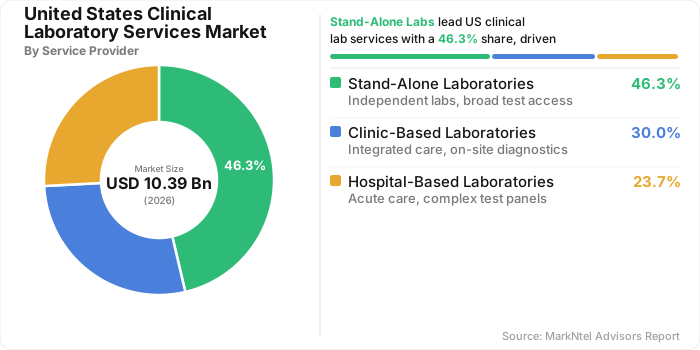
- Stand-alone laboratories lead the service provider segment with a 46.3% market share, supported by extensive testing capabilities, nationwide accessibility, operational efficiency, and growing outsourcing of diagnostic services.
- Genetic testing dominates the test type segment with a 24.8% share, driven by increasing adoption of precision medicine, hereditary disease screening, oncology diagnostics, and advancements in molecular testing technologies.
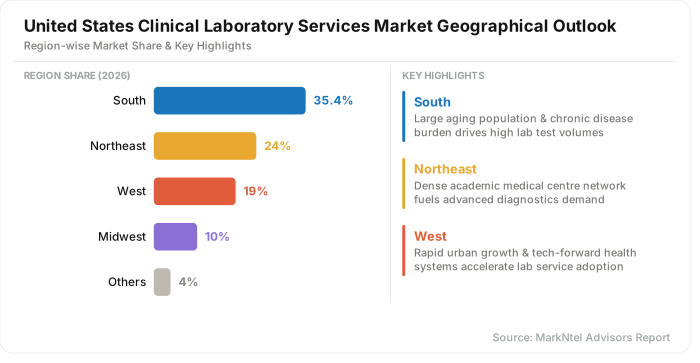
- The South region accounts for the largest market share at 35.4%, supported by a large patient population, expanding healthcare infrastructure, increasing disease burden, and strong diagnostic testing demand.
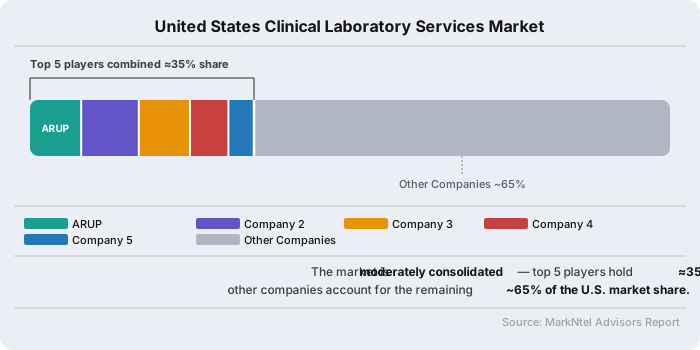
- The market is moderately consolidated, with the top five participants collectively accounting for approximately 35% of total market revenue, reflecting a competitive landscape alongside numerous regional and hospital-based laboratory.
United States Clinical Laboratory Services Market Size and Outlook
The US clinical laboratory services market is projected to witness sustained growth at a 5.08% CAGR, supported by rising diagnostic testing volumes and growing demand for preventive healthcare services.
This expansion is anchored by a chronic disease burden that directly and continuously generates demand for diagnostic testing, the Centers for Disease Control and Prevention (CDC) reported in 2025 that approximately 194 million American adults representing the majority of the adult population carry one or more chronic conditions, with prevalence rising 7.0 percentage points among young adults alone between 2013 and 2023, confirming that laboratory test demand is structurally embedded across all age cohorts, not confined to older populations.
Hospital-based laboratories, independent reference laboratories, and physician office laboratories together constitute the principal end-user base of the US clinical laboratory services market, with each segment serving a distinct testing function: hospital laboratories perform the highest total test volume and serve inpatient and outpatient needs.
Medicare, the primary federal payer for clinical diagnostic laboratory tests, served 67.6 million beneficiaries with total expenditures of just over USD 1.1 trillion in 2024, as reported in the 2025 Medicare Trustees Report. Medicare enrollment grew 2.9% in 2024 and Medicare spending is projected to accelerate to an average of 8.4% annually over 2026–2027 as remaining baby boom cohorts enroll, expanding the volume of covered beneficiaries who generate recurring demand for blood chemistry panels, molecular diagnostic assays, and pathology testing across hospital-based and independent laboratories.
On the regulatory front, the US District Court for the Eastern District of Texas vacated the FDA's rule on laboratory-developed tests (LDTs) on March 31, 2025, preserving the existing Clinical Laboratory Improvement Amendments (CLIA) framework as the sole governing standard for these assays. The FDA formally rescinded the rule on September 19, 2025, removing a compliance barrier that had threatened to slow the development of proprietary oncology and genomic testing panels within clinical laboratory operations.
This regulatory clarity supports continued investment in high-complexity diagnostic testing services, reinforcing the market's forward growth trajectory across both institutional and outpatient laboratory settings, with the market estimated at USD 10.39 billion in 2026 and projected to reach USD 13.99 billion by 2032.
United States Clinical Laboratory Services Market Key Indicators
- According to the U.S. Census Bureau (Vintage 2024 Population Estimates, June 2025), the U.S. population aged 65 and older reached 61.2 million in 2024 18.0% of the total population up 13% in 2020. Adults in this age cohort are the highest-utilization demographic for laboratory services, requiring chronic disease monitoring, polypharmacy management, and preventive screenings at far greater per-capita frequency than younger adults, placing sustained upward pressure on test volume across clinical laboratory settings.
- According to the Centers for Disease Control and Prevention (National Vital Statistics System Mortality Data, 2024), heart disease caused 683,491 deaths in the United States at a rate of 201.0 deaths per 100,000 population, remaining the country's leading cause of death. Active cardiovascular disease management requires repeated laboratory monitoring including lipid panels, cardiac biomarkers, coagulation profiles, and metabolic function testing, generating sustained, recurring test volumes within hospital-based and independent clinical laboratories.
- According to CDC influenza surveillance data, the 2024–2025 influenza season produced an estimated 56 million symptomatic illnesses and 770,000 hospitalizations in the United States. Respiratory illness surges of this magnitude drive acute-phase laboratory testing including rapid antigen detection , PCR confirmation, and respiratory pathogen panels, accelerating test volumes at hospital and outpatient laboratory settings during the winter season.
United States Clinical Laboratory Services Market Scope
| Category | Segments |
|---|---|
| By Test Type | Genetic Testing, Clinical Chemistry (Routine Chemistry Testing, Therapeutic Drug Monitoring Testing, Endocrinology Chemistry Testing, Specialized Chemistry Testing, Other Clinical Chemistry Testing), Medical Microbiology Testing (Infectious Disease Testing, Transplant Diagnostic Testing, Other Microbiology Testing), Hematology Testing, Immunology Testing, Cytology Testing, Drug of Abuse Testing, Other Esoteric Tests |
| By Service Provider | Hospital-Based Laboratories, Stand-Alone Laboratories, Clinic-Based Laboratories |
| By Application | Cancer & Oncology Disorders, Diabetes & Metabolic Disorders, Cardiovascular Diseases, Infectious Diseases, Autoimmune Diseases, Neurological Disorders, Women's Health & Reproductive Health Disorders, Kidney & Urinary Tract Disorders, Gastrointestinal & Liver Disorders, Others |
United States Clinical Laboratory Services Industry Growth Drivers
Rising Chronic Disease Burden Driving Laboratory Testing Demand
The accelerating prevalence of chronic diseases is the strongest structural driver expanding the United States clinical laboratory services market. CDC data published during 2025 and 2026 show three in four American adults live with at least one chronic condition, while related healthcare spending reached nearly USD4.9 trillion annually. These illnesses require recurring blood chemistry, pathology, genetic, and infectious disease testing.
Demand has intensified because chronic disease management increasingly depends on routine screening and precision diagnostics. The HHS Office of Inspector General reported Medicare Part B laboratory spending reached USD8.4 billion during 2024, rising five percent annually, while genetic tests represented 43 percent of total laboratory expenditures. Oncology sequencing, diabetes monitoring and cardiovascular panels are therefore generating testing volumes among patients.
Market expansion is being reinforced by supportive reimbursement policies and broader preventive care adoption. CMS confirmed during 2026 that payment reductions under the Clinical Laboratory Fee Schedule were delayed until 2027, protecting laboratory revenues and encouraging additional testing capacity investments. Because chronic disease monitoring requires repeated diagnostics throughout treatment cycles, laboratories experience recurring specimen growth increasing testing volumes substantially nationwide.
Recent Trends
Genomics and Esoteric Testing Transforming Laboratory Service Demand
The United States clinical laboratory services market is rapidly shifting from routine chemistry panels toward genomics, molecular diagnostics, and oncology-focused esoteric testing. Rising cancer prevalence, precision medicine adoption, and targeted drug therapies are increasing demand for next-generation sequencing and biomarker analysis across hospitals and specialty laboratories nationwide. The U.S. Food and Drug Administration expanded regulatory oversight discussions for laboratory-developed tests during 2025, reflecting the growing clinical importance of complex molecular diagnostics.
This transition is structurally reshaping laboratory operating models, investment priorities, and testing workflows across the healthcare value chain. Major diagnostic providers including Quest Diagnostics increased molecular and genetic testing investments during 2026 as diagnostic requisition volumes rose significantly across oncology and hereditary disease categories. Reuters reported that expanding advanced diagnostic volumes supported strong revenue growth for specialized laboratory testing services during 2026.
The trend is expected to persist because precision medicine increasingly requires companion diagnostics and genomic evidence before treatment selection. Federal regulatory activity surrounding laboratory-developed tests, combined with continued genomic research funding and oncology innovation, is reinforcing long-term demand for high-complexity testing services throughout the United States healthcare system.
United States Clinical Laboratory Services Industry Opportunities and Challenges
PAMA-Driven Medicare Reimbursement Compression Accelerating Precision Testing Adoption
The United States clinical laboratory services market is facing sustained reimbursement pressure under the Protecting Access to Medicare Act (PAMA), which restructured Medicare payments through the Clinical Laboratory Fee Schedule. Under this framework, the Centers for Medicare and Medicaid Services determines reimbursement rates using weighted median private payer pricing data, significantly reducing payments for routine diagnostic tests including complete blood counts, glucose screening, and metabolic panels. According to College of American Pathologists, these reductions disproportionately affected independent and regional laboratories with limited payer diversification and weaker negotiating leverage.
This same pressure accelerates a commercial pivot toward Advanced Diagnostic Laboratory Tests (ADLTs) and proprietary genomic assays, which are governed by a separate ADLT pricing framework exempt from standard CLFS phase-in reductions. For instance, Abbott Laboratories' USD 21 billion acquisition of Exact Sciences in November 2025 adding Cologuard and Oncotype DX to its portfolio exemplifies the market's directional shift: high-complexity oncology and molecular panels priced outside the standard fee schedule and reimbursed at higher rates command greater margin resilience.
Also, The NCI's USD 7.35 billion appropriation in fiscal year 2026 further validates federally subsidised precision oncology testing as a durable, high-value demand segment. Laboratories that invest in ADLT-category precision oncology and pharmacogenomics capabilities before 2027 are best positioned to offset CLFS compression with test mix enrichment.
Segmentation Analysis
Genetic Testing Segment Strengthening Leadership Through Innovation and Precision Diagnostics Investments
Genetic testing continues leading the United States clinical laboratory services market with a share of 24.8 % driving healthcare providers are increasingly adopting precision diagnostics, oncology biomarker analysis, and hereditary disease screening across routine clinical care. Rising demand for personalized treatment selection and companion diagnostics is significantly increasing molecular testing volumes within hospital-based and stand-alone laboratories nationwide. The National Cancer Institute continues expanding precision oncology programs, accelerating the integration of genomic sequencing and targeted cancer diagnostics into mainstream healthcare delivery.
Major participants in the US clinical diagnostics market are rapidly increasing investments in genetic testing infrastructure, oncology portfolios, and digital laboratory integration capabilities. Labcorp expanded its cell and gene therapy laboratory capacity in Wisconsin during 2025 to support advanced genomic and molecular testing demand . Additionally, companies like Natera in 2024 launched their integrated polygenic breast cancer risk assessment with MyOme expanding their hereditary cancer risk prediction and preventive genomic screening in US clinical labs.
Consequently, continuous advancements in precision medicine, expanding oncology-focused genomic testing, and rising investments in molecular diagnostic infrastructure are reinforcing the long-term dominance of genetic testing within the clinical laboratory services market in US. Increasing integration of hereditary screening, companion diagnostics, and personalized treatment pathways across healthcare systems is expected to further strengthen testing volumes, clinical adoption, and revenue generation for advanced genetic and molecular laboratory services nationwide. By testing type the market is further segmented into following sub-categories:
- Genetic Testing
- Clinical Chemistry
- Medical Microbiology Testing
- Hematology Testing
- Immunology Testing
- Cytology Testing
- Drug of Abuse Testing
- Other Esoteric Tests
Stand-Alone Laboratories Leading the US Clinical Laboratory Services Market Through Innovation and Testing Scale
Stand-alone laboratories dominate the United States clinical laboratory services market with a share of 46.3% because they operate large independent diagnostic networks with centralized automation, nationwide sample collection systems, and advanced molecular testing capabilities. Rising demand for chronic disease diagnostics, precision medicine, and preventive screening is significantly increasing testing volumes across independent laboratory providers. Their ability to process high specimen volumes at lower operational costs while maintaining faster turnaround times continues strengthening their leadership position across the United States healthcare system.
Industry participants are reinforcing segment dominance through continuous innovation and expansion of specialized diagnostic capabilities. For instance, NeoGenomics Laboratories launched its PanTracer tissue and liquid biopsy assays during 2026 to improve precision oncology profiling and biomarker detection for cancer treatment planning . Additionally, ARUP Laboratories expanded advanced infectious disease and genomic testing capabilities during 2026 through enhanced molecular pathology services supporting hospital and physician networks nationwide .
These innovations are increasing adoption of high-value esoteric testing while strengthening operational efficiency and nationwide diagnostic accessibility. Consequently, continued investments in molecular diagnostics, oncology testing, and laboratory automation are reinforcing the long-term dominance of stand-alone laboratories within the United States clinical laboratory services market. By service provider the market is further segmented into following sub- categories:
- Hospital-Based Laboratories
- Stand-Alone Laboratories
- Clinic-Based Laboratories
United States Clinical Laboratory Services Market Geographical Analysis
The south region accounts for nearly 35.4% of the United States clinical laboratory services market, maintaining the largest regional share because of its exceptionally dense concentration of academic medical centers, reference laboratories, and precision diagnostics infrastructure. According to Definitive Healthcare’s HospitalView database, the Northeast hosts nearly one-third of all academic medical centers operating nationwide, creating strong demand for high-complexity diagnostic testing, molecular pathology, and translational research services.
New York alone reported a high number of laboratories registered under the state’s Clinical Laboratory Evaluation Program as of the March 2024 CMS CLIA database update, representing the highest laboratory concentration among CLIA-exempt states .
The region also benefits from continuous laboratory expansion and advanced clinical research activity supporting testing volume growth. New York City recorded 202 new CLIA-certified laboratory establishments during 2024, the highest among all United States metropolitan areas, strengthening regional diagnostic capacity and specialized testing accessibility. Additionally, New York, Massachusetts, and Pennsylvania collectively contain 16 of the Northeast’s 20 largest academic medical institutions by resident and intern count, reinforcing sustained demand for complex clinical laboratory services and precision medicine integration.
Regulatory developments are further strengthening the Northeast’s leadership position within the US clinical laboratory services market. In May 2025, a federal court vacated the U.S. Food and Drug Administration rule that would have classified laboratory-devel oped tests as medical devices, preserving innovation flexibility for academic laboratories and precision diagnostics developers concentrated across the Northeast region.
United States Clinical Laboratory Services Market Competitive Landscape
The US clinical laboratory services market is moderately consolidated, with a small group of large national laboratory networks and reference laboratory providers accounting for a substantial portion of industry revenue. The market is led by major participants, including Quest Diagnostics, Labcorp, Mayo Clinic Laboratories, ARUP Laboratories, and NeoGenomics Laboratories, with a combined share of 35%.
Major Clinical Laboratory Services Companies in the United States
- Quest Diagnostics
- Labcorp (Laboratory Corporation of America)
- ARUP Laboratories
- BioReference Laboratories
- Natera
- IDEXX Laboratories
- Mayo Clinic Laboratories
- NeoGenomics Laboratories
- OPKO Health, Inc.
- Siemens Medical Solutions USA, Inc.
United States Clinical Laboratory Services Market News and Recent Developments
2024: Quest Diagnostics Acquires PathAI Diagnostics to Deploy AI-Driven Digital Pathology at National Scale
Quest Diagnostics completed the acquisition of select assets of PathAI Diagnostics on June 11, 2024, converting PathAI Diagnostics' digitized laboratory in Memphis, Tennessee into Quest's national AI and digital research, development, and solutions center rebranded as AmeriPath to support its specialty pathology businesses across the United States. Under separate simultaneous agreements, Quest licensed PathAI's AISight™ digital pathology image management system and AI algorithm portfolio across its pathology laboratory network and customer sites nationally, and became the preferred laboratory services provider for PathAI's biopharmaceutical clinical trial clients. PathAI retained independence as a separate company focused on AI algorithm development for pharmaceutical clients.
Impact Analysis: The transaction repositions Quest's anatomic pathology infrastructure from slide-based manual review toward a digitized, algorithm-assisted diagnostic model at national scale, directly increasing throughput capacity and diagnostic consistency across cancer and dermatopathology cases processed through its AmeriPath and Dermpath Diagnostics networks. For the broader US clinical laboratory services market, the acquisition establishes a commercially deployed precedent for AI-augmented pathology at scale raising the competitive threshold for independent pathology providers and accelerating the timeline within which AI-assisted diagnostics moves from pilot programmes to standard-of-care clinical workflows.
2025: Abbott Laboratories Acquires Exact Sciences in a USD 21 Billion Deal to Strengthen Oncology Diagnostic Capabilities
Abbott Laboratories agreed in November 2025 to acquire Exact Sciences Corporation in an all-cash-and-stock transaction valued at approximately USD 21 billion, with Exact Sciences shareholders receiving USD 105 per share. Exact Sciences, headquartered in Madison, Wisconsin, operates a portfolio anchored by Cologuard the first and only stool DNA test for colorectal cancer alongside Oncotype DX breast recurrence assays and the Oncotype MAP pan-cancer panel. The acquisition consolidates a genomic testing company that generated USD 2.50 billion in revenue in 2023, with laboratory operations spanning molecular diagnostics facilities in Madison and additional subsidiary laboratories including Paradigm Diagnostics and Prevention Genetics. The transaction was expected to close in Q2 2026, integrating Exact Sciences' six subsidiaries directly into Abbott's diagnostics division.
Impact Analysis: The deal significantly reinforces Abbott's position as an integrated diagnostics provider with combined hospital-based and outpatient molecular oncology capabilities. For the US clinical laboratory services market, the consolidation concentrates a substantial share of colorectal cancer screening and precision oncology testing under a single operator, raising barriers to entry for independent oncology diagnostics providers and creating a fully scaled competitor across the physician office, hospital outreach, and reference laboratory channels simultaneously.
2025: Quest Diagnostics Acquires Spectra Laboratories from Fresenius Medical Care, Entering Renal Dialysis Testing
Quest Diagnostics completed the acquisition of select clinical testing assets of Spectra Laboratories the wholly owned renal-specific laboratory testing subsidiary of Fresenius Medical Care — on August 5, 2025, under a definitive agreement announced February 24, 2025. The acquisition positions Quest to provide dialysis-related clinical testing services to independent dialysis clinics previously served exclusively by Spectra Laboratories. Under a separate simultaneous laboratory services agreement, Quest began providing comprehensive dialysis-related laboratory and water testing services to Fresenius Medical Care's owned and affiliated dialysis centres in the United States facilities that collectively serve approximately 200,000 patients annually. Quest also committed to completing acquisition of select dialysis-related water testing assets by end of 2025.
Impact Analysis: The transaction extends Quest's addressable market within the US clinical laboratory services sector into end-stage kidney disease (ESKD) testing a high-volume, recurring demand segment driven by over 560,000 Americans on dialysis and introduces water testing as a new service capability alongside clinical chemistry. By assuming testing volume from Fresenius Medical Care's 200,000-patient annual dialysis network, Quest gains a large, captive institutional customer relationship with predictable, contract-based order flow that strengthens revenue visibility and competitive positioning against independent renal specialty laboratories.
December 2025: Labcorp Completes USD 194 Million Acquisition of Community Health Systems Outreach Laboratory Assets Across 13 States
Labcorp completed the acquisition of ambulatory outreach laboratory assets from Community Health Systems (CHS) on December 2, 2025, for approximately USD 194 million cash — finalising a definitive agreement announced July 22, 2025, in which the original stated transaction price was USD 195 million. The acquired assets include patient service centres and in-office phlebotomy locations spanning 13 states across CHS-affiliated health systems. CHS retained full operation of its inpatient and emergency department laboratories, continuing to provide hospital-based testing including imaging and pre-admission services independently. Labcorp separately announced during 2025 that it would sign a strategic collaboration agreement with New Jersey-based Inspira Health to manage operations of hospital laboratories and serve as the primary laboratory for Inspira's physician network.
Impact analysis: Labcorp's purchase of outreach lab locations from Community Health Systems across 13 states means one large national company now controls testing services that were previously spread across many smaller, local laboratories. This consolidation leaves less room for smaller independent labs to compete, as Labcorp's scale allows it to offer lower prices and a wider range of tests. At the same time, patients in smaller towns and non-urban areas gain access to Labcorp's advanced specialty testing that was not previously available locally. The deal also shortens the distance patient samples need to travel before being tested, which speeds up results. Overall, the US clinical laboratory services market is gradually shifting toward a model dominated by a few large national players rather than a broad network of regional operators.
- Market Segmentation
- Introduction
- Product Definition
- Research Process
- Assumptions
- Executive Summary
- US Clinical Laboratory Services Market Policies, Regulations, and Product Standards
- US Clinical Laboratory Services Market Trends & Developments
- US Clinical Laboratory Services Market Dynamics
- Growth Factors
- Challenges
- US Clinical Laboratory Services Market Hotspot & Opportunities
- US Clinical Laboratory Services Market Outlook, 2022-2032F
- Market Size & Outlook
- By Revenues (USD Million)
- Market Share & Outlook
- By Test Type- Market Size & Forecast 2022-2032, USD Million
- Genetic Testing
- Clinical Chemistry
- Routine Chemistry Testing
- Therapeutic Drug Monitoring Testing
- Endocrinology Chemistry Testing
- Specialized Chemistry Testing
- Other Clinical Chemistry Testing
- Medical Microbiology Testing
- Infectious Disease Testing
- Transplant Diagnostic Testing
- Other Microbiology Testing
- Hematology Testing
- Immunology Testing
- Cytology Testing
- Drug of Abuse Testing
- Other Esoteric Tests
- By Service Provider- Market Size & Forecast 2022-2032, USD Million
- Hospital-Based Laboratories
- Stand-Alone Laboratories
- Clinic-Based Laboratories
- By Application- Market Size & Forecast 2022-2032, USD Million
- Cancer & Oncology Disorders
- Diabetes & Metabolic Disorders
- Cardiovascular Diseases
- Infectious Diseases
- Autoimmune Diseases
- Neurological Disorders
- Women's Health & Reproductive Health Disorders
- Kidney & Urinary Tract Disorders
- Gastrointestinal & Liver Disorders
- Others
- By region- Market Size & Forecast 2022-2032, USD Million
- South
- West
- Midwest
- Northeast
- Others
- By Company
- Competition Characteristics
- Market Share & Analysis
- By Test Type- Market Size & Forecast 2022-2032, USD Million
- Market Size & Outlook
- US Hospital-Based Laboratories Market Outlook, 2022-2032
- Market Size & Outlook
- By Revenues (USD Million)
- Market Share & Outlook
- By Service Provider- Market Size & Forecast 2022-2032, USD Million
- By Application- Market Size & Forecast 2022-2032, USD Million
- By region- Market Size & Forecast 2022-2032, USD Million
- Market Size & Outlook
- US Stand-Alone Laboratories Market Outlook, 2022-2032
- Market Size & Outlook
- By Revenues (USD Million)
- Market Share & Outlook
- By Service Provider- Market Size & Forecast 2022-2032, USD Million
- By Application- Market Size & Forecast 2022-2032, USD Million
- By region- Market Size & Forecast 2022-2032, USD Million
- Market Size & Outlook
- US Clinic-Based Laboratories Market Outlook, 2022-2032
- Market Size & Outlook
- By Revenues (USD Million)
- Market Share & Outlook
- By Service Provider- Market Size & Forecast 2022-2032, USD Million
- By Application- Market Size & Forecast 2022-2032, USD Million
- By region- Market Size & Forecast 2022-2032, USD Million
- Market Size & Outlook
- US Clinical Laboratory Services Market Key Strategic Imperatives for Success & Growth
- Competitive Outlook
- Company Profiles
- Quest Diagnostics
- Business Description
- Product Portfolio
- Collaborations & Alliances
- Recent Developments
- Financial Details
- Others
- Labcorp (Laboratory Corporation of America)
- Business Description
- Product Portfolio
- Collaborations & Alliances
- Recent Developments
- Financial Details
- Others
- ARUP Laboratories
- Business Description
- Product Portfolio
- Collaborations & Alliances
- Recent Developments
- Financial Details
- Others
- BioReference Laboratories
- Business Description
- Product Portfolio
- Collaborations & Alliances
- Recent Developments
- Financial Details
- Others
- Natera
- Business Description
- Product Portfolio
- Collaborations & Alliances
- Recent Developments
- Financial Details
- Others
- IDEXX Laboratories
- Business Description
- Product Portfolio
- Collaborations & Alliances
- Recent Developments
- Financial Details
- Others
- Mayo Clinic Laboratories
- Business Description
- Product Portfolio
- Collaborations & Alliances
- Recent Developments
- Financial Details
- Others
- NeoGenomics Laboratories
- Business Description
- Product Portfolio
- Collaborations & Alliances
- Recent Developments
- Financial Details
- Others
- OPKO Health, Inc.
- Business Description
- Product Portfolio
- Collaborations & Alliances
- Recent Developments
- Financial Details
- Others
- Siemens Medical Solutions USA, Inc.
- Business Description
- Product Portfolio
- Collaborations & Alliances
- Recent Developments
- Financial Details
- Others
- Quest Diagnostics
- Company Profiles
- Disclaimer

MarkNtel Advisors follows a robust and iterative research methodology designed to ensure maximum accuracy and minimize deviation in market estimates and forecasts. Our approach combines both bottom-up and top-down techniques to effectively segment and quantify various aspects of the market. A consistent feature across all our research reports is data triangulation, which examines the market from three distinct perspectives to validate findings. Key components of our research process include:
1. Scope & Research Design At the outset, MarkNtel Advisors define the research objectives and formulate pertinent questions. This phase involves determining the type of research—qualitative or quantitative—and designing a methodology that outlines data collection methods, target demographics, and analytical tools. They also establish timelines and budgets to ensure the research aligns with client goals.
2. Sample Selection and Data Collection In this stage, the firm identifies the target audience and determines the appropriate sample size to ensure representativeness. They employ various sampling methods, such as random or stratified sampling, based on the research objectives. Data collection is carried out using tools like surveys, interviews, and observations, ensuring the gathered data is reliable and relevant.
3. Data Analysis and Validation Once data is collected, MarkNtel Advisors undertake a rigorous analysis process. This includes cleaning the data to remove inconsistencies, employing statistical software for quantitative analysis, and thematic analysis for qualitative data. Validation steps are taken to ensure the accuracy and reliability of the findings, minimizing biases and errors.

4. Data Forecast and FinalizationThe final phase involves forecasting future market trends based on the analyzed data. MarkNtel Advisors utilize predictive modeling and time series analysis to anticipate market behaviors. The insights are then compiled into comprehensive reports, featuring visual aids like charts and graphs, and include strategic recommendations to inform client decision-making
FILL THE FORM TO GET THE FREE SAMPLE PAGES
We offer flexible licensing options to cater to varying organizational needs. Choose the pricing pack that best suits your requirements:
Buy Now Inquire Before Buying
 Talk to our Consultant
 Request Customization