

By Removal Method (Robotic Arm Capture, Net & Harpoon Systems, Laser-Based Removal, Electrodynamic Tethers, Drag Sail Systems, Other Removal Technologies), By Debris Type (Defunct......Satellites, Rocket Bodies, Fragmentation Debris, Mission-Related Debris), By Orbit Type (Low Earth Orbit (LEO), Medium Earth Orbit (MEO), Geostationary Orbit (GEO), Other Orbits), By Service Type (Active Debris Removal Services, Debris Tracking & Monitoring, End-of-Life Deorbiting Services, On-Orbit Servicing & Disposal), By End User (Government & Space Agencies, Commercial Satellite Operators, Defense & Military Organizations, Research Institutions), By Application (Collision Prevention, Orbital Sustainability, Space Mission Protection, Satellite Life Extension Support), By Size of Debris (Less than 1 cm, 1 cm to 10 cm, 10 cm to 50 cm, 50 cm to 100 cm, Above 100 cm), and others Read more
- Aerospace & Defense
- May 2026
- 370
- PDF, Excel, PPT
Global Space Active Debris Removal Market Key Takeaways
- The Global Space Active Debris Removal Market was valued at around USD 0.22 billion in 2025 and is forecast to expand steadily, reaching approximately USD 0.28 billion in 2026 and further advancing to nearly USD 1.205 billion by 2032, reflecting a CAGR of about 27.5%.
- North America accounts for the largest share of approximately 42.62% in 2026, supported by strong government funding, advanced space surveillance infrastructure, and the presence of major commercial space companies.
- By Removal Method, Robotic Arm Capture dominates the market with an estimated share of nearly 34% in 2026 owing to its precision handling capabilities for large inactive satellites and rocket bodies.
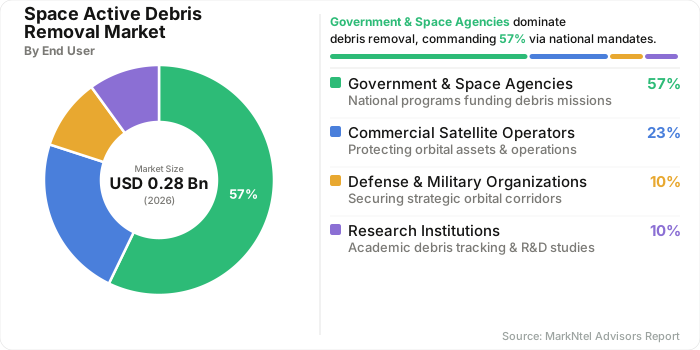
- By End Use, Government & Space Agencies hold the leading share of around 57% due to increasing investments in orbital sustainability, national security, and satellite traffic management programs.
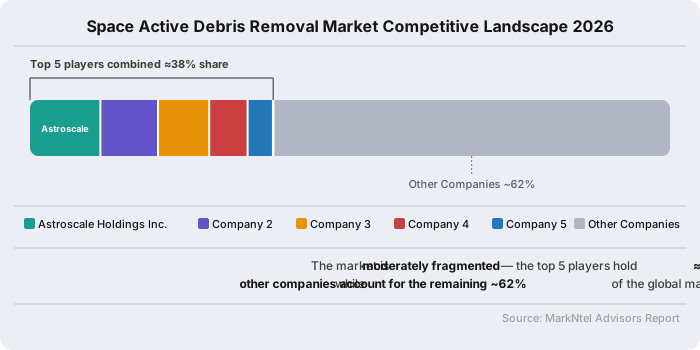
- The industry is moderately fragmented, with numerous global and regional players. However, leading companies collectively account for around 38% of the market.
Global Space Active Debris Removal Market Size and Outlook
The Global Space Active Debris Removal Market is projected to register a strong CAGR of around 27.5% during 2026–2032, driven by the rapid expansion of satellite constellations in low Earth orbit (LEO), increasing orbital congestion, and rising concerns regarding collision risks and long-term space sustainability.
Rising commercial launches for communication, Earth observation, navigation, and defense applications have increased the accumulation of inactive satellites, fragmented debris, and defunct rocket bodies in orbit. As a result, government agencies, defense organizations, and commercial satellite operators are strengthening investments in debris mitigation and orbital safety technologies to support the long-term sustainability of critical space infrastructure. Additionally, the European Space Agency continues strengthening space debris mitigation frameworks and orbital sustainability initiatives to support safer satellite operations and encourage long-term development of active debris removal technologies globally .
Growing reliance on satellite-based communication, navigation, climate monitoring, and defense surveillance systems is further supporting investment across the active debris removal ecosystem. Institutional and commercial operators are increasingly prioritizing space traffic management, collision avoidance systems, and orbital monitoring frameworks to improve operational safety across satellite networks. Supporting this transition, JAXA continued collaborative debris removal initiatives with commercial companies such as Astroscale during 2025 to advance debris inspection, capture, and orbital servicing technologies for future removal missions . These developments are improving technological readiness while supporting deployment of next-generation active debris removal systems across international space programs.
Regulatory initiatives and national space sustainability programs are also contributing significantly to market expansion through rising investments in orbital monitoring infrastructure and autonomous servicing spacecraft. In 2025, the U.S. Space Force continued expanding space situational awareness capabilities and orbital traffic coordination initiatives to strengthen debris tracking, object monitoring, and operational safety across increasingly congested satellite networks .
Similarly, the ClearSpace-1 mission supported by the European Space Agency continues advancing robotic debris capture technologies designed to safely remove defunct payload structures from orbit. Consequently, government institutions and commercial operators are increasingly adopting AI-enabled navigation systems, autonomous docking technologies, and robotic servicing spacecraft to improve orbital safety and reduce long-term debris accumulation.
Long-term growth of the Global Space Active Debris Removal Market is projected to remain strong, with the market expected to grow from USD 0.28 billion in 2026 to nearly USD 1.205 billion by 2032. Expansion is being supported by increasing commercial space operations, defense modernization initiatives, and the rapid deployment of satellite communication infrastructure worldwide. According to the European Space Agency (ESA), more than 36,500 debris objects larger than 10 cm are currently tracked in orbit, while millions of smaller fragments continue circulating across low Earth orbit (LEO) environments.
Rising concerns regarding orbital congestion and collision risks are accelerating investment in debris mitigation capabilities. In addition, the growing integration of artificial intelligence, machine vision, autonomous robotics, and in-orbit servicing technologies is expected to strengthen adoption of advanced active debris removal solutions across commercial, defense, and institutional space applications globally.
Global Space Active Debris Removal Market Key Indicators
- Nearly 11,000 active payloads are currently being tracked in orbit, reflecting the rapid expansion of commercial and government space activities worldwide, as highlighted in the European Space Agency’s Space Environment Report 2025. The increasing concentration of satellites in low Earth orbit is significantly intensifying orbital traffic management requirements and strengthening long-term demand for active debris removal technologies.
- Global orbital launch activity surpassed 259 launches during 2024, reflecting sustained growth in commercial launch services and satellite deployment programs worldwide. The rising frequency of launches continues to increase the probability of fragmentation events and orbital debris accumulation, thereby supporting demand for debris monitoring, orbital safety, and active debris removal infrastructure.
- The U.S. Federal Communications Commission (FCC) approved deployment of more than 4,000 low Earth orbit broadband satellites for Logos Space Services in 2025, highlighting the accelerating expansion of mega-constellation programs globally. The increasing scale of satellite deployments is intensifying orbital congestion and strengthening long-term demand for debris monitoring, collision avoidance, and active debris removal technologies.
- The International Telecommunication Union (ITU) continues strengthening coordination frameworks for satellite spectrum allocation and orbital resource management amid rising congestion across orbital environments. Growing international focus on space sustainability and responsible satellite operations is accelerating investments in debris tracking, orbital monitoring, and active debris mitigation technologies globally.
- According to NASA’s Orbital Debris Program Office, orbital debris objects can travel at speeds exceeding 28,000 km/h, making even small fragments capable of causing catastrophic spacecraft damage. Such operational risks are encouraging satellite operators and defense agencies to prioritize investments in active debris removal and collision avoidance technologies.
- Global government space spending reached approximately USD 132 billion in 2024, reflecting rising investments in national security satellites, Earth observation systems, and deep-space exploration missions worldwide. The growing economic and strategic importance of space infrastructure is strengthening demand for sustainable orbital operations, debris monitoring, and active debris mitigation systems across commercial and government space programs.
Global Space Active Debris Removal Market Scope
| Category | Segments |
|---|---|
| By Removal Method | Robotic Arm Capture, Net & Harpoon Systems, Laser-Based Removal, Electrodynamic Tethers, Drag Sail Systems, Other Removal Technologies |
| By Debris Type | Defunct Satellites, Rocket Bodies, Fragmentation Debris, Mission-Related Debris |
| By Orbit Type | Low Earth Orbit (LEO), Medium Earth Orbit (MEO), Geostationary Orbit (GEO), Other Orbits |
| By Service Type | Active Debris Removal Services, Debris Tracking & Monitoring, End-of-Life Deorbiting Services, On-Orbit Servicing & Disposal |
| By End User | Government & Space Agencies, Commercial Satellite Operators, Defense & Military Organizations, Research Institutions |
| By Application | Collision Prevention, Orbital Sustainability, Space Mission Protection, Satellite Life Extension Support |
| By Size of Debris | Less than 1 cm, 1 cm to 10 cm, 10 cm to 50 cm, 50 cm to 100 cm, Above 100 cm |
Global Space Active Debris Removal Market Growth Drivers
Rising Expansion of Satellite Constellations and Orbital Congestion
The continuous expansion of satellite mega-constellations across low Earth orbit is substantially increasing orbital congestion, creating strong demand for space debris mitigation systems worldwide. Satellite operators are deploying large volumes of communication, Earth observation, navigation, and IoT satellites to support expanding global connectivity and real-time data transmission requirements. As the number of active and inactive satellites continues to rise across orbital environments, the probability of in-orbit collisions and fragmentation events is increasing considerably. This growing congestion is encouraging governments and commercial operators to strengthen investments in active debris removal technologies, orbital servicing platforms, and debris mitigation systems to improve orbital sustainability and protect critical space infrastructure.
Growing commercial space activities are further accelerating demand for orbital debris mitigation solutions globally. The Organisation for Economic Co-operation and Development (OECD) highlights that the global space economy is projected to surpass USD 1 trillion by 2040, supported by rising satellite deployments, launch activities, and expanding downstream space-based services . Increasing dependence on satellite infrastructure for communication, navigation, Earth observation, and defense applications is encouraging stronger investments in debris monitoring systems, autonomous servicing spacecraft, and end-of-life satellite disposal technologies across both government and private space programs.
At the same time, regulatory authorities are implementing stricter orbital sustainability measures to reduce long-term debris generation. In 2024, the U.S. Federal Communications Commission enforced updated orbital debris mitigation regulations requiring low Earth orbit satellite operators to deorbit spacecraft within five years after mission completion, replacing the earlier 25-year guideline. These evolving regulatory frameworks are strengthening demand for active debris removal technologies, autonomous deorbiting systems, and advanced in-orbit servicing technologies across the global space industry.
Recent Trends
Increasing Adoption of Autonomous Robotic and AI-Enabled Debris Removal Systems
Advanced autonomous robotics and AI-enabled navigation technologies are increasingly transforming debris removal operations across orbital environments. Active debris removal missions involve highly complex rendezvous, docking, and capture procedures with non-cooperative debris objects traveling at extremely high orbital velocities. To improve operational precision and mission safety, companies and government agencies are integrating artificial intelligence, machine vision, robotic manipulators, and automated guidance systems into next-generation debris capture spacecraft. These technologies are helping operators improve mission efficiency while reducing dependence on continuous ground-based intervention.
Rising satellite deployments and increasing orbital traffic complexity are further strengthening demand for intelligent debris monitoring and automated servicing capabilities. The World Economic Forum estimates that more than 50,000 satellites could be deployed in orbit by 2030 due to expanding commercial communication and connectivity programs worldwide. As orbital environments become increasingly congested, satellite operators and space agencies are prioritizing AI-based collision avoidance systems, autonomous debris tracking platforms, and advanced orbital debris tracking and monitoring technologies to improve operational safety and support efficient space traffic management.
Meanwhile, continuous innovation in autonomous spacecraft servicing and robotic mission capabilities is accelerating technological advancement across the active debris removal ecosystem. In 2026, Katalyst Space Technologies completed environmental testing of its LINK robotic servicing spacecraft for NASA’s Swift Boost mission, designed to autonomously rendezvous with and reposition the Neil Gehrels Swift Observatory in orbit . Such developments are strengthening adoption of robotic servicing platforms, autonomous docking systems, and AI-enabled robotic debris capture technologies across the commercial space industry.
Global Space Active Debris Removal Market Opportunities and Challenges
High Mission Development and Operational Costs Accelerating Demand for Shared Orbital Servicing Platforms and Reusable Spacecraft Technologies
High mission development expenses and complex operational requirements are emerging as major challenges for the large-scale deployment of active debris removal technologies. Active debris removal missions require advanced autonomous navigation systems, robotic capture mechanisms, precision docking capabilities, and high-reliability spacecraft platforms capable of operating in harsh orbital environments. In addition, the cost of launch services, spacecraft testing, mission validation, and long-duration orbital operations continues to place financial pressure on commercial operators and government agencies.
According to the European Space Agency, active debris removal missions involve highly complex rendezvous and capture procedures due to the unpredictable movement and rotation of non-cooperative debris objects in orbit. Such technical and operational complexities are increasing mission costs and slowing broader commercialization of active debris removal services across the global space industry.
Simultaneously, rising cost pressures are encouraging the development of reusable spacecraft technologies and shared orbital servicing platforms to improve mission affordability and operational efficiency. Space companies are increasingly focusing on modular servicing spacecraft, reusable mission architectures, and multi-purpose orbital vehicles capable of performing inspection, refueling, repair, and debris removal operations within a single mission framework.
In line with this shift, ESA’s reusable Space Rider spacecraft program and Lux Aeterna’s reusable satellite development initiatives are advancing more cost-efficient and scalable orbital servicing operations . In addition, growing investments in robotic in-orbit platforms and AI-based orbital navigation systems are helping operators improve mission efficiency while reducing long-term operational costs. As the industry continues prioritizing scalable and economically sustainable debris mitigation solutions, demand for reusable servicing spacecraft, shared orbital operations platforms, and advanced robotic capture and deorbiting systems is expected to increase significantly across the space debris removal market.
Segmentation Insights
Robotic Arm Capture Holds a Leading Position Supported by Its Precision in Complex Orbital Debris Removal Operations
Accounting for approximately 34% of the global space active debris removal market, Robotic Arm Capture remains the dominant segment within the removal method category. This dominance is primarily driven by its capability to precisely capture and stabilize large non-cooperative debris objects such as inactive satellites, rocket bodies, and defunct payload structures. Compared to alternative removal methods including drag sails, electrodynamic tethers, and net-based systems, robotic arm technologies provide superior maneuverability and controlled deorbiting capabilities, making them highly suitable for complex debris removal missions in congested orbital environments.
Increasing investments in robotic in-orbit servicing and autonomous spacecraft technologies are further strengthening adoption of robotic arm capture systems. These technologies are increasingly being developed for satellite servicing, repair, refueling, and debris removal applications. Reflecting the growing focus on advanced space robotics, Rocket Lab announced the acquisition of Motiv Space Systems during 2026 to strengthen its robotic spacecraft and precision mission capabilities for orbital operations. In addition, robotic arm systems offer improved mission reliability and operational flexibility for long-duration orbital missions requiring highly accurate docking and manipulation capabilities. Based on removal method, the market is segmented into:
- Robotic Arm Capture
- Net & Harpoon Systems
- Laser-Based Removal
- Electrodynamic Tethers
- Drag Sail Systems
- Other Removal Technologies
Government & Space Agencies Dominate the End User Segment Supported by Rising Investments in Orbital Sustainability
Representing approximately 57% share of the overall market, Government & Space Agencies hold the leading position within the Global Space Active Debris Removal Market. The dominance of this segment is primarily attributed to rising investments in orbital sustainability programs, national security infrastructure, satellite protection initiatives, and space situational awareness capabilities. Compared to commercial operators and research institutions, government agencies and defense organizations allocate substantially larger budgets toward debris mitigation missions aimed at protecting strategic communication, navigation, surveillance, and defense satellites operating in increasingly congested orbital environments.
Growing institutional collaboration with private space companies is further strengthening the segment’s leadership across the market. National space agencies are increasingly supporting research partnerships, technology demonstration missions, and commercial innovation programs focused on orbital safety and debris mitigation technologies. In line with this trend, Sidus Space secured participation in a NASA-supported SBIR radar initiative during 2025 focused on tracking centimeter-scale orbital debris through advanced space-based monitoring systems . Additionally, the rising strategic importance of satellite-based military communication, missile warning systems, and Earth observation infrastructure is accelerating demand for advanced orbital debris mitigation capabilities across defense and institutional applications. As governments continue prioritizing long-term orbital safety and sustainable space operations, demand from government and space agency end users is expected to remain strong globally. Based on end user, the market is segmented into:
- Government & Space Agencies
- Commercial Satellite Operators
- Defense & Military Organizations
- Research Institutions
Global Space Active Debris Removal Market Geographical Outlook
Strong government capabilities and a highly developed commercial space ecosystem continue supporting North America’s leading position in the Global Space Active Debris Removal Market. The region accounts for approximately 42.62% share of the overall market, driven by advanced satellite infrastructure, rising orbital sustainability investments, and extensive deployment of space-based communication and defense systems. The United States hosts a large concentration of satellite operators, launch service providers, aerospace defense contractors, and space surveillance companies actively involved in debris monitoring, in-orbit servicing, and autonomous spacecraft development activities. These technological capabilities continue driving demand for advanced active debris removal solutions across the region.
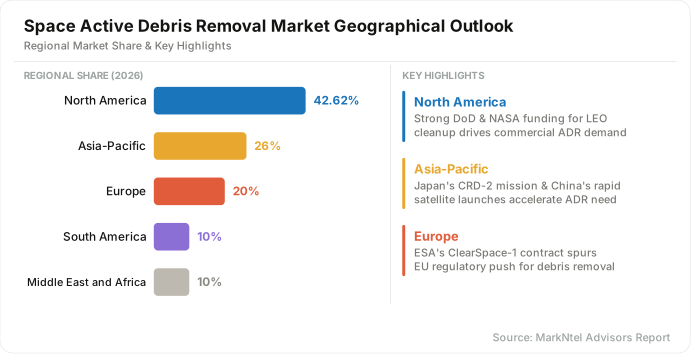
Growing investments in space security and orbital traffic management programs are further reinforcing regional market expansion. Federal agencies across the United States continue expanding investments in space situational awareness and orbital debris tracking infrastructure to improve monitoring of rapidly growing satellite activities and strengthen long-term orbital safety capabilities. The increasing deployment of commercial and military satellite systems across low Earth orbit is also accelerating demand for advanced debris mitigation and orbital safety technologies throughout North America.
At the same time, expanding private-sector participation in orbital servicing and debris mitigation missions continues supporting long-term market growth across the region. Several U.S.-based companies are actively developing robotic servicing spacecraft, autonomous docking systems, and debris tracking platforms aimed at improving orbital sustainability and operational safety. In addition, NASA and defense agencies continue collaborating with commercial operators to strengthen orbital safety standards and reduce long-term debris accumulation risks. These developments are expected to further reinforce North America’s leadership position within the Global Space Active Debris Removal Market over the forecast period.
Global Space Active Debris Removal Market Competitive Analysis
Companies such as Astroscale, Northrop Grumman, Airbus, and Lockheed Martin collectively account for nearly 38% of the overall market share, indicating a moderately fragmented competitive environment. Their market position is supported by extensive aerospace engineering expertise, long-term government partnerships, advanced robotic servicing technologies, and active involvement in orbital safety and space sustainability initiatives.
Major Space Active Debris Removal Companies Worldwide
- Astroscale
- ClearSpace
- Northrop Grumman
- Airbus
- Lockheed Martin
- D-Orbit
- LeoLabs
- Rogue Space Systems
- Altius Space Machines
- Electro Optic Systems
- Voyager Technologies
- Kall Morris Incorporated
- Orbit Guardians
- TransAstra
- Surrey Satellite Technology
- Others
Global Space Active Debris Removal Industry News and Recent Developments
March 2025: Airbus Defence and Space Places Large-Scale Commercial Order for Astroscale UK Docking Plates
Airbus Defence and Space placed a commercial order for more than 100 second-generation docking plates from Astroscale UK for integration across multiple satellite manufacturing programs. The docking plates are designed to support in-orbit servicing and end-of-life satellite removal through robotic arm grappling and magnetic docking mechanisms. The systems are compatible with Astroscale’s ELSA-M commercial satellite removal servicer scheduled for launch in fiscal year 2026.
Impact Analysis: This development highlights growing commercial adoption of standardized in-orbit servicing infrastructure across the satellite industry. The large-scale deployment of docking interfaces is expected to accelerate commercialization of satellite servicing and active debris removal operations while strengthening long-term orbital sustainability initiatives globally.
March 2025: Portal Space Systems and Paladin Space Collaborate on “Debris Removal as a Service” Platform
Portal Space Systems and Australian startup Paladin Space announced collaboration on a commercial “Debris Removal as a Service” platform targeted for deployment by 2027. The system combines maneuverable spacecraft with debris capture payloads designed to identify and remove small tumbling debris objects in low Earth orbit, supporting future scalable orbital cleanup operations.
Impact Analysis: This development reflects the growing commercialization of subscription-based orbital debris mitigation services. The partnership is expected to accelerate deployment of scalable debris removal platforms, strengthen autonomous orbital servicing capabilities, and support long-term demand for commercial space sustainability solutions.
- Market Segmentation
- Introduction
- Product Definition
- Research Process
- Assumptions
- Executive Summary
- Global Space Active Debris Removal Market Policies, Regulations, and Product Standards
- Global Space Active Debris Removal Market Trends & Developments
- Global Space Active Debris Removal Technological Innovation Landscape, 2026-32
- Global Space Active Debris Removal Patents & Intellectual Property Rights Analysis, 2026
- Global Space Active Debris Removal Business Cases, 2026
- Global Space Active Debris Removal Market Dynamics
- Growth Factors
- Challenges
- Global Space Active Debris Removal Market Hotspot & Opportunities
- Global Space Active Debris Removal Market Outlook, 2022-2032F
- Market Size & Outlook
- By Revenues (USD Million)
- Market Share & Analysis
- By Removal Method
- Robotic Arm Capture
- Net & Harpoon Systems
- Laser-Based Removal
- Electrodynamic Tethers
- Drag Sail Systems
- Other Removal Technologies
- By Debris Type
- Defunct Satellites
- Rocket Bodies
- Fragmentation Debris
- Mission-Related Debris
- By Orbit Type
- Low Earth Orbit (LEO)
- Medium Earth Orbit (MEO)
- Geostationary Orbit (GEO)
- Other Orbits
- By Service Type
- Active Debris Removal Services
- Debris Tracking & Monitoring
- End-of-Life Deorbiting Services
- On-Orbit Servicing & Disposal
- By End User
- Government & Space Agencies
- Commercial Satellite Operators
- Defense & Military Organizations
- Research Institutions
- By Application
- Collision Prevention
- Orbital Sustainability
- Space Mission Protection
- Satellite Life Extension Support
- By Size of Debris
- Less than 1 cm
- 1 cm to 10 cm
- 10 cm to 50 cm
- 50 cm to 100 cm
- Above 100 cm
- By Region
- North America
- South America
- Europe
- Middle East and Africa
- Asia Pacific
- By Company
- Competition Characteristics
- Market Share & Analysis
- By Removal Method
- Market Size & Outlook
- North America Space Active Debris Removal Market Outlook, 2022-2032F
- Market Size & Outlook
- By Revenues (USD Million)
- Market Share & Analysis
- By Removal Method
- By Debris Type
- By Orbit Type
- By Service Type
- By End User
- By Application
- By Size of Debris
- By Country
- The US
- Canada
- Mexico
- The US Space Active Debris Removal Market Outlook, 2022-2032F
- Market Size & Outlook
- By Revenues (USD Million)
- Market Share & Analysis
- By Removal Method
- By Debris Type
- By Orbit Type
- By Service Type
- By End User
- By Application
- By Size of Debris
- Market Size & Outlook
- Canada Space Active Debris Removal Market Outlook, 2022-2032F
- Market Size & Outlook
- By Revenues (USD Million)
- Market Share & Analysis
- By Removal Method
- By Debris Type
- By Orbit Type
- By Service Type
- By End User
- By Application
- By Size of Debris
- Market Size & Outlook
- Mexico Space Active Debris Removal Market Outlook, 2022-2032F
- Market Size & Outlook
- By Revenues (USD Million)
- Market Share & Analysis
- By Removal Method
- By Debris Type
- By Orbit Type
- By Service Type
- By End User
- By Application
- By Size of Debris
- Market Size & Outlook
- Market Size & Outlook
- South America Space Active Debris Removal Market Outlook, 2022-2032F
- Market Size & Outlook
- By Revenues (USD Million)
- Market Share & Analysis
- By Removal Method
- By Debris Type
- By Orbit Type
- By Service Type
- By End User
- By Application
- By Size of Debris
- By Country
- Brazil
- Argentina
- Chile
- Colombia
- Rest of South America
- Brazil Space Active Debris Removal Market Outlook, 2022-2032F
- Market Size & Outlook
- By Revenues (USD Million)
- Market Share & Analysis
- By Removal Method
- By Debris Type
- By Orbit Type
- By Service Type
- By End User
- By Application
- By Size of Debris
- Market Size & Outlook
- Argentina Space Active Debris Removal Market Outlook, 2022-2032F
- Market Size & Outlook
- By Revenues (USD Million)
- Market Share & Analysis
- By Removal Method
- By Debris Type
- By Orbit Type
- By Service Type
- By End User
- By Application
- By Size of Debris
- Market Size & Outlook
- Chile Space Active Debris Removal Market Outlook, 2022-2032F
- Market Size & Outlook
- By Revenues (USD Million)
- Market Share & Analysis
- By Removal Method
- By Debris Type
- By Orbit Type
- By Service Type
- By End User
- By Application
- By Size of Debris
- Market Size & Outlook
- Colombia Space Active Debris Removal Market Outlook, 2022-2032F
- Market Size & Outlook
- By Revenues (USD Million)
- Market Share & Analysis
- By Removal Method
- By Debris Type
- By Orbit Type
- By Service Type
- By End User
- By Application
- By Size of Debris
- Market Size & Outlook
- Market Size & Outlook
- Europe Space Active Debris Removal Market Outlook, 2022-2032F
- Market Size & Outlook
- By Revenues (USD Million)
- Market Share & Analysis
- By Removal Method
- By Debris Type
- By Orbit Type
- By Service Type
- By End User
- By Application
- By Size of Debris
- By Country
- The UK
- Germany
- France
- Italy
- Spain
- Netherlands
- Switzerland
- Sweden
- Belgium
- Poland
- Rest of Europe
- The UK Space Active Debris Removal Market Outlook, 2022-2032F
- Market Size & Outlook
- By Revenues (USD Million)
- Market Share & Analysis
- By Removal Method
- By Debris Type
- By Orbit Type
- By Service Type
- By End User
- By Application
- By Size of Debris
- Market Size & Outlook
- Germany Space Active Debris Removal Market Outlook, 2022-2032F
- Market Size & Outlook
- By Revenues (USD Million)
- Market Share & Analysis
- By Removal Method
- By Debris Type
- By Orbit Type
- By Service Type
- By End User
- By Application
- By Size of Debris
- Market Size & Outlook
- France Space Active Debris Removal Market Outlook, 2022-2032F
- Market Size & Outlook
- By Revenues (USD Million)
- Market Share & Analysis
- By Removal Method
- By Debris Type
- By Orbit Type
- By Service Type
- By End User
- By Application
- By Size of Debris
- Market Size & Outlook
- Italy Space Active Debris Removal Market Outlook, 2022-2032F
- Market Size & Outlook
- By Revenues (USD Million)
- Market Share & Analysis
- By Removal Method
- By Debris Type
- By Orbit Type
- By Service Type
- By End User
- By Application
- By Size of Debris
- Market Size & Outlook
- Spain Space Active Debris Removal Market Outlook, 2022-2032F
- Market Size & Outlook
- By Revenues (USD Million)
- Market Share & Analysis
- By Removal Method
- By Debris Type
- By Orbit Type
- By Service Type
- By End User
- By Application
- By Size of Debris
- Market Size & Outlook
- Netherlands Space Active Debris Removal Market Outlook, 2022-2032F
- Market Size & Outlook
- By Revenues (USD Million)
- Market Share & Analysis
- By Removal Method
- By Debris Type
- By Orbit Type
- By Service Type
- By End User
- By Application
- By Size of Debris
- Market Size & Outlook
- Switzerland Space Active Debris Removal Market Outlook, 2022-2032F
- Market Size & Outlook
- By Revenues (USD Million)
- Market Share & Analysis
- By Removal Method
- By Debris Type
- By Orbit Type
- By Service Type
- By End User
- By Application
- By Size of Debris
- Market Size & Outlook
- Sweden Space Active Debris Removal Market Outlook, 2022-2032F
- Market Size & Outlook
- By Revenues (USD Million)
- Market Share & Analysis
- By Removal Method
- By Debris Type
- By Orbit Type
- By Service Type
- By End User
- By Application
- By Size of Debris
- Market Size & Outlook
- Belgium Space Active Debris Removal Market Outlook, 2022-2032F
- Market Size & Outlook
- By Revenues (USD Million)
- Market Share & Analysis
- By Removal Method
- By Debris Type
- By Orbit Type
- By Service Type
- By End User
- By Application
- By Size of Debris
- Market Size & Outlook
- Poland Space Active Debris Removal Market Outlook, 2022-2032F
- Market Size & Outlook
- By Revenues (USD Million)
- Market Share & Analysis
- By Removal Method
- By Debris Type
- By Orbit Type
- By Service Type
- By End User
- By Application
- By Size of Debris
- Market Size & Outlook
- Market Size & Outlook
- Middle East and Africa Space Active Debris Removal Market Outlook, 2022-2032F
- Market Size & Outlook
- By Revenues (USD Million)
- Market Share & Analysis
- By Removal Method
- By Debris Type
- By Orbit Type
- By Service Type
- By End User
- By Application
- By Size of Debris
- By Country
- Saudi Arabia
- The UAE
- South Africa
- Egypt
- Qatar
- Kuwait
- Oman
- Rest of Middle East & Africa
- Saudi Arabia Space Active Debris Removal Market Outlook, 2022-2032F
- Market Size & Outlook
- By Revenues (USD Million)
- Market Share & Analysis
- By Removal Method
- By Debris Type
- By Orbit Type
- By Service Type
- By End User
- By Application
- By Size of Debris
- Market Size & Outlook
- The UAE Space Active Debris Removal Market Outlook, 2022-2032F
- Market Size & Outlook
- By Revenues (USD Million)
- Market Share & Analysis
- By Removal Method
- By Debris Type
- By Orbit Type
- By Service Type
- By End User
- By Application
- By Size of Debris
- Market Size & Outlook
- South Africa Space Active Debris Removal Market Outlook, 2022-2032F
- Market Size & Outlook
- By Revenues (USD Million)
- Market Share & Analysis
- By Removal Method
- By Debris Type
- By Orbit Type
- By Service Type
- By End User
- By Application
- By Size of Debris
- Market Size & Outlook
- Egypt Space Active Debris Removal Market Outlook, 2022-2032F
- Market Size & Outlook
- By Revenues (USD Million)
- Market Share & Analysis
- By Removal Method
- By Debris Type
- By Orbit Type
- By Service Type
- By End User
- By Application
- By Size of Debris
- Market Size & Outlook
- Qatar Space Active Debris Removal Market Outlook, 2022-2032F
- Market Size & Outlook
- By Revenues (USD Million)
- Market Share & Analysis
- By Removal Method
- By Debris Type
- By Orbit Type
- By Service Type
- By End User
- By Application
- By Size of Debris
- Market Size & Outlook
- Kuwait Space Active Debris Removal Market Outlook, 2022-2032F
- Market Size & Outlook
- By Revenues (USD Million)
- Market Share & Analysis
- By Removal Method
- By Debris Type
- By Orbit Type
- By Service Type
- By End User
- By Application
- By Size of Debris
- Market Size & Outlook
- Oman Space Active Debris Removal Market Outlook, 2022-2032F
- Market Size & Outlook
- By Revenues (USD Million)
- Market Share & Analysis
- By Removal Method
- By Debris Type
- By Orbit Type
- By Service Type
- By End User
- By Application
- By Size of Debris
- Market Size & Outlook
- Market Size & Outlook
- Asia Pacific Space Active Debris Removal Market Outlook, 2022-2032F
- Market Size & Outlook
- By Revenues (USD Million)
- Market Share & Analysis
- By Removal Method
- By Debris Type
- By Orbit Type
- By Service Type
- By End User
- By Application
- By Size of Debris
- By Country
- China
- Japan
- India
- South Korea
- Australia
- Indonesia
- Thailand
- Malaysia
- Singapore
- Vietnam
- Rest of Asia-Pacific
- China Space Active Debris Removal Market Outlook, 2022-2032F
- Market Size & Outlook
- By Revenues (USD Million)
- Market Share & Analysis
- By Removal Method
- By Debris Type
- By Orbit Type
- By Service Type
- By End User
- By Application
- By Size of Debris
- Market Size & Outlook
- Japan Space Active Debris Removal Market Outlook, 2022-2032F
- Market Size & Outlook
- By Revenues (USD Million)
- Market Share & Analysis
- By Removal Method
- By Debris Type
- By Orbit Type
- By Service Type
- By End User
- By Application
- By Size of Debris
- Market Size & Outlook
- India Space Active Debris Removal Market Outlook, 2022-2032F
- Market Size & Outlook
- By Revenues (USD Million)
- Market Share & Analysis
- By Removal Method
- By Debris Type
- By Orbit Type
- By Service Type
- By End User
- By Application
- By Size of Debris
- Market Size & Outlook
- South Korea Space Active Debris Removal Market Outlook, 2022-2032F
- Market Size & Outlook
- By Revenues (USD Million)
- Market Share & Analysis
- By Removal Method
- By Debris Type
- By Orbit Type
- By Service Type
- By End User
- By Application
- By Size of Debris
- Market Size & Outlook
- Australia Space Active Debris Removal Market Outlook, 2022-2032F
- Market Size & Outlook
- By Revenues (USD Million)
- Market Share & Analysis
- By Removal Method
- By Debris Type
- By Orbit Type
- By Service Type
- By End User
- By Application
- By Size of Debris
- Market Size & Outlook
- Indonesia Space Active Debris Removal Market Outlook, 2022-2032F
- Market Size & Outlook
- By Revenues (USD Million)
- Market Share & Analysis
- By Removal Method
- By Debris Type
- By Orbit Type
- By Service Type
- By End User
- By Application
- By Size of Debris
- Market Size & Outlook
- Thailand Space Active Debris Removal Market Outlook, 2022-2032F
- Market Size & Outlook
- By Revenues (USD Million)
- Market Share & Analysis
- By Removal Method
- By Debris Type
- By Orbit Type
- By Service Type
- By End User
- By Application
- By Size of Debris
- Market Size & Outlook
- Malaysia Space Active Debris Removal Market Outlook, 2022-2032F
- Market Size & Outlook
- By Revenues (USD Million)
- Market Share & Analysis
- By Removal Method
- By Debris Type
- By Orbit Type
- By Service Type
- By End User
- By Application
- By Size of Debris
- Market Size & Outlook
- Singapore Space Active Debris Removal Market Outlook, 2022-2032F
- Market Size & Outlook
- By Revenues (USD Million)
- Market Share & Analysis
- By Removal Method
- By Debris Type
- By Orbit Type
- By Service Type
- By End User
- By Application
- By Size of Debris
- Market Size & Outlook
- Vietnam Space Active Debris Removal Market Outlook, 2022-2032F
- Market Size & Outlook
- By Revenues (USD Million)
- Market Share & Analysis
- By Removal Method
- By Debris Type
- By Orbit Type
- By Service Type
- By End User
- By Application
- By Size of Debris
- Market Size & Outlook
- Market Size & Outlook
- Global Space Active Debris Removal Market Key Strategic Imperatives for Success & Growth
- Competitive Outlook
- Company Profiles
- Astroscale
- Business Description
- Product Portfolio
- Collaborations & Alliances
- Recent Developments
- Financial Details
- Others
- ClearSpace
- Business Description
- Product Portfolio
- Collaborations & Alliances
- Recent Developments
- Financial Details
- Others
- Northrop Grumman
- Business Description
- Product Portfolio
- Collaborations & Alliances
- Recent Developments
- Financial Details
- Others
- Airbus
- Business Description
- Product Portfolio
- Collaborations & Alliances
- Recent Developments
- Financial Details
- Others
- Lockheed Martin
- Business Description
- Product Portfolio
- Collaborations & Alliances
- Recent Developments
- Financial Details
- Others
- D-Orbit
- Business Description
- Product Portfolio
- Collaborations & Alliances
- Recent Developments
- Financial Details
- Others
- LeoLabs
- Business Description
- Product Portfolio
- Collaborations & Alliances
- Recent Developments
- Financial Details
- Others
- Rogue Space Systems
- Business Description
- Product Portfolio
- Collaborations & Alliances
- Recent Developments
- Financial Details
- Others
- Altius Space Machines
- Business Description
- Product Portfolio
- Collaborations & Alliances
- Recent Developments
- Financial Details
- Others
- Electro Optic Systems
- Business Description
- Product Portfolio
- Collaborations & Alliances
- Recent Developments
- Financial Details
- Others
- Voyager Technologies
- Business Description
- Product Portfolio
- Collaborations & Alliances
- Recent Developments
- Financial Details
- Others
- Kall Morris Incorporated
- Business Description
- Product Portfolio
- Collaborations & Alliances
- Recent Developments
- Financial Details
- Others
- Orbit Guardians
- Business Description
- Product Portfolio
- Collaborations & Alliances
- Recent Developments
- Financial Details
- Others
- TransAstra
- Business Description
- Product Portfolio
- Collaborations & Alliances
- Recent Developments
- Financial Details
- Others
- Surrey Satellite Technology
- Business Description
- Product Portfolio
- Collaborations & Alliances
- Recent Developments
- Financial Details
- Others
- Astroscale
- Company Profiles
- Disclaimer

MarkNtel Advisors follows a robust and iterative research methodology designed to ensure maximum accuracy and minimize deviation in market estimates and forecasts. Our approach combines both bottom-up and top-down techniques to effectively segment and quantify various aspects of the market. A consistent feature across all our research reports is data triangulation, which examines the market from three distinct perspectives to validate findings. Key components of our research process include:
1. Scope & Research Design At the outset, MarkNtel Advisors define the research objectives and formulate pertinent questions. This phase involves determining the type of research—qualitative or quantitative—and designing a methodology that outlines data collection methods, target demographics, and analytical tools. They also establish timelines and budgets to ensure the research aligns with client goals.
2. Sample Selection and Data Collection In this stage, the firm identifies the target audience and determines the appropriate sample size to ensure representativeness. They employ various sampling methods, such as random or stratified sampling, based on the research objectives. Data collection is carried out using tools like surveys, interviews, and observations, ensuring the gathered data is reliable and relevant.
3. Data Analysis and Validation Once data is collected, MarkNtel Advisors undertake a rigorous analysis process. This includes cleaning the data to remove inconsistencies, employing statistical software for quantitative analysis, and thematic analysis for qualitative data. Validation steps are taken to ensure the accuracy and reliability of the findings, minimizing biases and errors.

4. Data Forecast and FinalizationThe final phase involves forecasting future market trends based on the analyzed data. MarkNtel Advisors utilize predictive modeling and time series analysis to anticipate market behaviors. The insights are then compiled into comprehensive reports, featuring visual aids like charts and graphs, and include strategic recommendations to inform client decision-making
FILL THE FORM TO GET THE FREE SAMPLE PAGES
We offer flexible licensing options to cater to varying organizational needs. Choose the pricing pack that best suits your requirements:
Buy Now Inquire Before Buying
 Talk to our Consultant
 Request Customization