

Europe Airport E-Gate Infrastructure Market Research Report: Growth Drivers & Forecast (2026-2032)
By Component (Hardware (e-Gates, Passport & document readers, Biometric scanners, Cameras & surveillance systems, Kiosks & sensors), Software (Identity verification software, Facia ... l recognition software, Border management platforms, AI & analytics solutions), Services (Installation & integration, Maintenance & support, Consulting services, Managed services)), By Technology (Facial Recognition, Fingerprint Recognition, Iris Recognition, RFID & e-Passport Verification, Multi-Modal Biometrics), By Gate Type (One-Step e-Gates, Two-Step e-Gates, Self-Service Kiosks with Automated Gates), By Application (Immigration & Border Control, Departure Verification, Arrival Processing, Automated Boarding, Security Screening & Passenger Verification), By Deployment Mode (On-Premises, Cloud-Based, Hybrid), By End User (Airport Authorities, Government & Border Control Agencies, Airlines, Airport Security Operators), and others Read more
- Aerospace & Defense
- May 2026
- Pages 230
- Report Format: PDF, Excel, PPT
Europe Airport E-Gate Infrastructure Market
Projected 16.1% CAGR from 2026 to 2032
Study Period
2026-2032
Market Size (2026)
USD 0.708 Billion
Market Size (2032)
USD 1.73 Billion
Base Year
2025
Projected CAGR
16.1%
Leading Segments
By End User: Residential
Europe Airport E-Gate Infrastructure Market Key Takeaways
- The Europe Airport E-Gate Infrastructure Market was valued at approximately USD 0.61 billion in 2025 and is projected to grow from USD 0.708 billion in 2026 to USD 1.73 billion by 2032, registering a CAGR of 16.1% during 2026–2032.
- The United Kingdom accounted for the largest market share of approximately 18.6% in 2026, supported by ongoing airport modernization programs and increasing implementation of biometric border control initiatives.
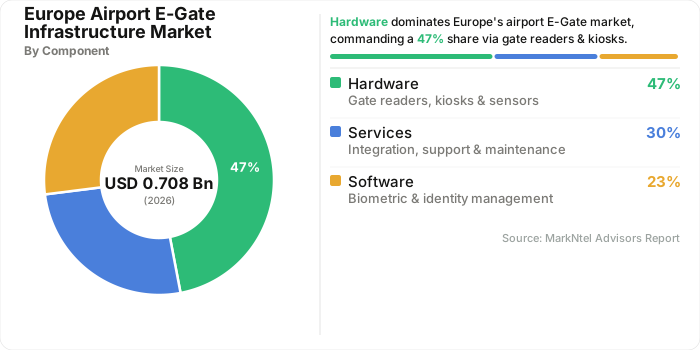
- By component, the hardware segment held nearly 47% of the market share, driven by the growing deployment of biometric E-Gates, scanners, and facial recognition systems across airports.
- By application, the Immigration & Border Control segment dominated the market with an estimated share of nearly 60% in 2026, owing to the rising adoption of automated border control and biometric verification technologies across European airports.
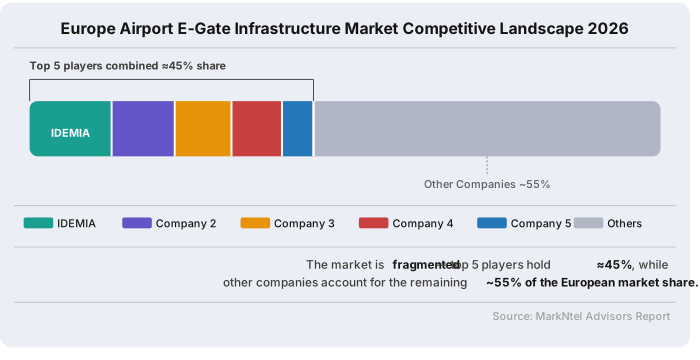
- The market exhibits a fragmented competitive landscape, with the top five players collectively accounting for approximately 45% of the total market share, reflecting the balanced presence of established global companies alongside regional market participants.
Europe Airport E-Gate Infrastructure Market Size and Outlook
The Europe Airport E-Gate Infrastructure Market is projected to register a CAGR of 16.1% during 2026–2032, driven by increasing international passenger traffic, ongoing airport modernization initiatives, and the growing adoption of biometric authentication and automated border control technologies across regional airports. Market growth is further supported by rising investments in smart airport infrastructure, enhanced focus on passenger processing efficiency, and strengthening government efforts toward secure and contactless border management systems.
Airport E-Gate infrastructure, including automated border control gates, biometric enrolment kiosks, document authentication systems, and identity verification software, is becoming increasingly important for improving passenger processing efficiency across immigration checkpoints and airport security areas. According to Airports Council International Europe (ACI EUROPE), passenger traffic across European airports reached nearly 2.6 billion passengers in 2025, adding around 100 million additional travelers compared with 2024. This continued rise in passenger volumes is placing greater operational pressure on immigration infrastructure, thereby accelerating the deployment of automated passenger processing systems across major European airports.
In addition to increasing passenger volumes, regulatory developments related to biometric border management are playing a crucial role in supporting market expansion. A major development in this regard is the European Union’s Entry/Exit System (EES), which digitally registers non-EU nationals entering Schengen member states through biometric verification technologies such as fingerprint and facial image capture . The implementation of the EES is encouraging airports and border authorities across Europe to invest in biometric enrolment kiosks, automated border control gates, and integrated border management software, supporting long-term demand for advanced E-Gate infrastructure solutions.
The United Kingdom is also contributing significantly to regional market expansion through increasing investments in next-generation border automation technologies. The UK government is expanding facial recognition-enabled border infrastructure across major airports, including Heathrow, Gatwick, and Manchester, to modernise the country’s E-Gate network and improve passenger processing efficiency . In parallel, implementation of the UK Electronic Travel Authorization (ETA) programme is increasing integration requirements between passenger data systems and automated immigration infrastructure, further supporting adoption of biometric verification and border automation technologies.
Continued investments in biometric border management, automated immigration systems, and contactless passenger processing solutions are expected to support the long-term growth of the industry, which is projected to grow from USD 0.708 billion in 2026 to USD 1.73 billion by 2032.
Industry participants are increasingly focusing on integrated digital identity ecosystems that connect airline systems, airport operations, and immigration infrastructure within a seamless passenger journey framework. This trend is reflected in the 2024 acquisition of Vision-Box by Amadeus IT Group for approximately USD 350 million, aimed at strengthening biometric hardware, automated border control systems, and airport identity management capabilities across airport s. These developments highlight growing investments in biometric verification technologies, digital border infrastructure, and automated passenger processing solutions, supporting the sustained expansion of the Europe airport E-Gate infrastructure industry.
Europe Airport E-Gate Infrastructure Market Key Indicators
- According to the Council of the European Union, the Schengen Area enables free movement for more than 450 million EU citizens while handling hundreds of millions of non-EU traveler entries annually. The full implementation of the Entry/Exit System (EES) in 2026 is accelerating the deployment of biometric border management technologies, automated border control gates, and integrated airport immigration infrastructure across Europe, thereby supporting the growth of the E-Gate infrastructure for airports.
- In 2025, nearly 180 countries had adopted ICAO-compliant biometric e-passports, reflecting widespread implementation of machine-readable digital travel documents worldwide. Increasing use of biometric passports is expanding traveler eligibility for self-service immigration clearance, thereby driving demand for airport E-Gates, digital identity verification systems, and automated border processing infrastructure across European airports.
- France and Spain together welcomed more than 170 million international tourists in 2023, making them two of the world’s largest tourism destinations. High concentration of international arrivals at major Schengen airports is increasing demand for airport E-Gates, biometric verification systems, and automated border processing infrastructure to efficiently manage rising cross-border passenger volumes.
Europe Airport E-Gate Infrastructure Market Scope
| Category | Segments |
|---|---|
| By Component | Hardware (e-Gates, Passport & document readers, Biometric scanners, Cameras & surveillance systems, Kiosks & sensors), Software (Identity verification software, Facial recognition software, Border management platforms, AI & analytics solutions), Services (Installation & integration, Maintenance & support, Consulting services, Managed services |
| By Technology | Facial Recognition, Fingerprint Recognition, Iris Recognition, RFID & e-Passport Verification, Multi-Modal Biometrics |
| By Gate Type | One-Step e-Gates, Two-Step e-Gates, Self-Service Kiosks with Automated Gates |
| By Application | Immigration & Border Control, Departure Verification, Arrival Processing, Automated Boarding, Security Screening & Passenger Verification |
| By Deployment Mode | On-Premises, Cloud-Based, Hybrid |
| By End User | Airport Authorities, Government & Border Control Agencies, Airlines, Airport Security Operators |
Europe Airport E-Gate Infrastructure Market Growth Drivers
Rising International Passenger Traffic Accelerating Border Automation
Rapid growth in international air travel across Europe is significantly increasing pressure on airport immigration infrastructure, thereby accelerating deployment of automated E-Gate systems across major regional hubs. According to the International Air Transport Association (IATA), European carriers recorded full-year traffic growth of 6.0% in 2025 compared with 2024 , representing the strongest regional performance among major global airline sectors. The continued rise in cross-border passenger movement, particularly on international routes, is making conventional manual border processing increasingly inefficient during peak arrival periods. This challenge is becoming more evident at airports handling large volumes of non-EU travelers requiring biometric verification under evolving Schengen border regulations. Consequently, airport operators are increasingly investing in automated border control gates and biometric passenger processing technologies to improve throughput efficiency, reduce queue congestion, and minimise dependency on large-scale staffing expansion.
The operational impact of rising passenger volumes is particularly visible across Europe’s busiest aviation hubs, where growing international traffic continues to intensify processing pressure at immigration checkpoints. In 2025, Frankfurt Airport handled approximately 63.2 million passengers , while Istanbul Airport processed nearly 84 million passengers, maintaining their positions among Europe’s largest international transit hubs . Passenger volumes at airports of this scale are creating substantial demand for high-capacity automated immigration systems capable of managing large traveler flows efficiently during peak operating windows without requiring extensive terminal expansion or additional border staffing.
As airports continue prioritising operational efficiency and seamless passenger movement, E-Gate deployment is increasingly being viewed as a more scalable and cost-effective alternative to expanding immigration halls through conventional infrastructure investments. This is encouraging stronger procurement activity for modular biometric border systems, integrated identity verification platforms, and advanced automated passenger processing technologies across the region. Growing investments in airport automation and digital border infrastructure are therefore expected to continue supporting long-term demand for advanced E-Gate solutions across Europe.
Recent Trends
Growing Deployment of Multi-Modal Biometric E-Gates
The Europe airport E-Gate infrastructure market is witnessing growing adoption of multi-modal biometric systems designed to replace traditional single-channel passenger authentication methods. Evolving border security requirements and implementation of the European Union’s Entry/Exit System (EES) across 29 European countries are accelerating deployment of next-generation platforms capable of integrating facial recognition, fingerprint capture, AI-based liveness detection, and real-time verification within a single automated gate system. Consequently, airports across major European countries are increasingly upgrading legacy infrastructure with advanced biometric systems capable of supporting higher security and interoperability requirements.
Growing deployment of biometric identity verification across European airports is further accelerating this trend. The rollout of the EU Entry/Exit System (EES) across Schengen member states is increasing adoption of facial recognition, fingerprint authentication, and AI-enabled passenger verification technologies to support high-throughput border processing and interoperable digital identity management. As airport operators continue prioritising seamless and contactless passenger movement, procurement specifications are increasingly favouring E-Gate systems capable of processing multiple biometric inputs while integrating with centralized border security databases in real time.
At the same time, emerging digital identity and multimodal biometric platforms are reinforcing the shift toward intelligent border processing systems across Europe. The TENSOR platform integrates facial recognition, fingerprint, voice, gait, and behavioral biometrics within a unified AI-powered identification framework , while deverium introduced its EU-funded alongID cross-border digital identity orchestration engine designed for interoperable biometric verification and reusable digital credential management. These developments highlight the growing transition toward advanced AI-powered multi-modal biometric architectures across European airport E-Gate infrastructure.
Europe Airport E-Gate Infrastructure Market Opportunities and Challenges
Interoperability Issues Across Airport Border Systems Accelerating Development of Unified Digital Identity and Integrated Border Management Platforms
Differences in airport border management infrastructure, biometric verification standards, and national immigration databases are emerging as a major operational challenge across the Europe airport E-Gate infrastructure market. Airports and border authorities often operate fragmented systems developed by multiple technology vendors, creating interoperability limitations during cross-border passenger verification and real-time data exchange. The challenge is becoming increasingly significant with expansion of the European Union’s Entry/Exit System (EES) across 29 European countries, which requires seamless integration between airport E-Gates, biometric authentication systems, airline databases, and centralized border management platforms. Consequently, airports modernising legacy border infrastructure are facing growing integration complexity, operational inefficiencies, and system compatibility challenges.
As interoperability challenges continue to rise, airport operators and border authorities are increasingly investing in unified digital identity frameworks and integrated border processing platforms. Technology providers are focusing on interoperable biometric verification systems, centralized identity orchestration platforms, and cloud-enabled digital border management platforms capable of supporting secure real-time data exchange across airports and national border agencies. A key development in this area includes the 2025 launch of the European Union’s shared biometric matching service (sBMS), developed to enable interoperability between major EU border management systems through centralized facial recognition and fingerprint verification infrastructur e. In parallel, the successful deployment of the sBMS platform by IDEMIA Public Security and Sopra Steria for eu-LISA further highlights increasing investments in interoperable biometric infrastructure and digital identity management systems across Europe. These developments are accelerating demand for scalable and integrated border automation solutions capable of supporting seamless cross-border passenger verification across European airports.
Segmentation Insights
Hardware Holds a Leading Position Supported by Rising Deployment of Physical Border Automation Infrastructure
Representing nearly 47% of the Europe airport E-Gate infrastructure market, the hardware segment dominates the market. This leadership is primarily driven by large-scale deployment of automated border control gates and physical border automation equipment across airports, including biometric enrolment kiosks, facial recognition cameras, fingerprint scanners, document readers, and passport authentication devices. Compared to software and service components, hardware infrastructure represents the foundational requirement for establishing automated passenger processing environments at airport immigration checkpoints. Increasing implementation of the European Union’s Entry/Exit System (EES) across 29 European countries is further accelerating demand for biometric capture devices and advanced airport border control hardware capable of supporting high-throughput passenger verification.
The dominance of the hardware segment is further supported by ongoing airport expansion and modernisation projects across Europe. Airports are increasingly investing in passenger processing hardware and airport biometric infrastructure to improve immigration throughput, reduce queue congestion, and strengthen border security operations. For instance, Poland’s upcoming mega-airport project is being developed as one of Europe’s largest transport hubs with planned capacity to handle nearly 40 million passengers annually . Airport infrastructure projects of this scale are expected to accelerate the deployment of biometric verification systems, passenger processing hardware, and advanced E-Gate infrastructure across major European aviation hubs. As a result, the growing importance of physical biometric infrastructure in enabling automated border processing continues to reinforce the dominant position of the hardware segment across the European airport E-Gate infrastructure industry. Based on component, the market is segmented into:
- Hardware
- Software
- Services
Immigration & Border Control Emerges as the Leading Application Segment Owing to Rising Cross-Border Passenger Traffic Across Europe
Accounting for nearly 60% of the market share, Immigration & Border Control represents the leading application segment in the Europe Airport E-Gate Infrastructure Market. This dominance is primarily driven by the increasing need for secure, fast, and contactless passenger processing across international airports. Growing cross-border travel volumes and rising passenger congestion at immigration checkpoints are encouraging airport authorities to deploy advanced E-Gate systems that improve operational efficiency and reduce manual verification procedures. Compared to other airport applications, immigration and border control operations require sophisticated biometric authentication, facial recognition, and e-passport verification technologies, making this segment the largest adopter of E-Gate infrastructure solutions.
Stringent border security regulations, along with the rising adoption of automated immigration control programs, continue to reinforce the segment’s leading market position. European governments and airport operators are increasingly investing in smart border management systems to strengthen security monitoring, accelerate passenger clearance, and enhance overall traveler experience. In addition, the expansion of international tourism, business travel, and intra-European mobility is generating strong demand for automated border processing technologies capable of handling high passenger traffic efficiently. The integration of AI-enabled identity verification, real-time data connectivity, and contactless screening capabilities further supports widespread deployment of immigration-focused E-Gate systems, thereby sustaining the segment’s dominance across Europe’s airport infrastructure landscape. Based on application, the market is segmented into:
- Immigration & Border Control
- Departure Verification
- Arrival Processing
- Automated Boarding
- Security Screening & Passenger Verification
Europe Airport E-Gate Infrastructure Market Geographical Outlook
The United Kingdom dominates the Europe Airport E-Gate Infrastructure Market with a market share of nearly 18.6%, primarily supported by its advanced border automation ecosystem and high international passenger traffic across major airports. The country operates some of Europe’s busiest aviation hubs, including Heathrow Airport, which handled approximately 83.9 million passengers in 2024, reflecting a 5.9% increase over the 2023. The exceptionally high passenger throughput has significantly increased demand for automated immigration processing systems capable of reducing waiting times and improving border management efficiency. As a result, U.K. airports have witnessed large-scale deployment of biometric E-Gates, facial recognition technologies, and automated passenger verification systems compared to many other European countries.

The country’s leadership position is further strengthened by stringent border security policies and continuous implementation of next-generation digital border initiatives. The introduction of the U.K. Electronic Travel Authorization (ETA) scheme for visa-exempt travelers has added a pre-travel digital screening layer that increasingly interfaces with airport E-Gate infrastructure and automated border control systems across entry points. This integration is accelerating investments in smart immigration technologies capable of supporting real-time passenger verification and seamless border clearance operations. In addition, growing international tourism, strong business travel activity, and rising preference for contactless airport processing solutions continue to drive adoption of automated border management infrastructure throughout the country. The presence of technologically advanced airports, strong aviation connectivity, and ongoing modernization investments collectively reinforce the U.K.’s dominant position in Europe’s airport E-Gate infrastructure industry.
Europe Airport E-Gate Infrastructure Market Competitive Analysis
The competitive landscape of the Airport E-Gate Infrastructure industry across Europe is fragmented, led by a few major global providers specializing in biometric identity verification and automated border management technologies. Key players such as IDEMIA, Thales Group, SITA, Amadeus IT Group, and Veridos collectively account for around 45% of the regional market share. Their strong market presence is supported by extensive expertise in automated border control systems, biometric passenger processing infrastructure, and integrated airport security solutions.
Leading Airport E-Gate Companies in Europe
- IDEMIA
- Thales Group
- SITA
- Amadeus IT Group
- Veridos
- Materna IPS
- HID Global
- Collins Aerospace
- Embross
- Veridas
- Others
Europe Airport E-Gate Infrastructure Industry News and Recent Developments
April 2026: Amadeus to Acquire IDEMIA Public Security to Strengthen Biometric Border Technologies
Amadeus announced the acquisition of IDEMIA Public Security (IPS), aiming to expand its capabilities in biometric identity verification, airport passenger processing, and automated border management solutions. The acquisition enhances Amadeus’ presence in airport and border security technologies by integrating advanced facial recognition, digital identity, and automated border control systems into its travel technology portfolio.
Impact Analysis: This development reflects the increasing integration of biometric technologies within Europe’s airport E-Gate infrastructure ecosystem. The growing emphasis on seamless passenger journeys, contactless verification, and automated immigration processing is accelerating investments in next-generation E-Gate systems across major European airports. In addition, consolidation among technology providers is expected to strengthen innovation in digital identity management and smart border infrastructure, supporting long-term market expansion.
April 2026: Poland Launches EU Biometric Entry/Exit System Across Border Crossings
Poland implemented the European Union’s biometric Entry/Exit System (EES) across all border crossings, including airports, as part of the region’s broader border digitalization initiative. The system introduces biometric verification processes such as facial recognition and fingerprint authentication to automate traveler registration and immigration clearance procedures.
Impact Analysis: The implementation of the EU biometric Entry/Exit System highlights the accelerating deployment of automated border control infrastructure across Europe. Rising regulatory focus on secure and efficient cross-border passenger management is driving demand for biometric E-Gates, self-service kiosks, and integrated immigration control systems at airports. As additional European countries advance EES adoption, investments in airport modernization and smart border technologies are expected to increase significantly.
Frequently Asked Questions
- Market Segmentation
- Introduction
- Product Definition
- Research Process
- Assumptions
- Executive Summary
- Europe Airport e-Gate Infrastructure Market Policies, Regulations, and Product Standards
- Europe Airport e-Gate Infrastructure Production Trend & Pricing 2022-2032
- Europe Airport e-Gate Infrastructure Market Dynamics
- Growth Factors
- Challenges
- Europe Airport e-Gate Infrastructure Market Hotspot & Opportunities
- Europe Airport e-Gate Infrastructure Market Outlook, 2022-2032F
- Market Size & Outlook
- By Revenues (USD Million)
- Market Share & Analysis
- By Component- Market Size & Forecast 2022-2032, USD Million
- Hardware
- e-Gates
- Passport & document readers
- Biometric scanners
- Cameras & surveillance systems
- Kiosks & sensors
- Software
- Identity verification software
- Facial recognition software
- Border management platforms
- AI & analytics solutions
- Services
- Installation & integration
- Maintenance & support
- Consulting services
- Managed services
- Hardware
- By Technology- Market Size & Forecast 2022-2032, USD Million
- Facial Recognition
- Fingerprint Recognition
- Iris Recognition
- RFID & e-Passport Verification
- Multi-Modal Biometrics
- By Gate Type- Market Size & Forecast 2022-2032, USD Million
- One-Step e-Gates
- Two-Step e-Gates
- Self-Service Kiosks with Automated Gates
- By Application- Market Size & Forecast 2022-2032, USD Million
- Immigration & Border Control
- Departure Verification
- Arrival Processing
- Automated Boarding
- Security Screening & Passenger Verification
- By Deployment Mode- Market Size & Forecast 2022-2032, USD Million
- On-Premises
- Cloud-Based
- Hybrid
- By End User- Market Size & Forecast 2022-2032, USD Million
- Airport Authorities
- Government & Border Control Agencies
- Airlines
- Airport Security Operators
- By Country
- Germany
- The UK
- Italy
- France
- Spain
- Benelux
- Sweden
- Rest of Europe
- By Company
- Competition Characteristics
- Market Share & Analysis
- By Component- Market Size & Forecast 2022-2032, USD Million
- Market Size & Outlook
- Germany Airport e-Gate Infrastructure Market Outlook, 2022-2032F
- Market Size & Outlook
- By Revenues (USD Million)
- Market Share & Analysis
- By Component- Market Size & Forecast 2022-2032, USD Million
- By Technology- Market Size & Forecast 2022-2032, USD Million
- By Gate Type- Market Size & Forecast 2022-2032, USD Million
- By Application- Market Size & Forecast 2022-2032, USD Million
- By Deployment Mode- Market Size & Forecast 2022-2032, USD Million
- By End User- Market Size & Forecast 2022-2032, USD Million
- Market Size & Outlook
- The UK Airport e-Gate Infrastructure Market Outlook, 2022-2032F
- Market Size & Outlook
- By Revenues (USD Million)
- Market Share & Analysis
- By Component- Market Size & Forecast 2022-2032, USD Million
- By Technology- Market Size & Forecast 2022-2032, USD Million
- By Gate Type- Market Size & Forecast 2022-2032, USD Million
- By Application- Market Size & Forecast 2022-2032, USD Million
- By Deployment Mode- Market Size & Forecast 2022-2032, USD Million
- By End User- Market Size & Forecast 2022-2032, USD Million
- Market Size & Outlook
- Italy Airport e-Gate Infrastructure Market Outlook, 2022-2032F
- Market Size & Outlook
- By Revenues (USD Million)
- Market Share & Analysis
- By Component- Market Size & Forecast 2022-2032, USD Million
- By Technology- Market Size & Forecast 2022-2032, USD Million
- By Gate Type- Market Size & Forecast 2022-2032, USD Million
- By Application- Market Size & Forecast 2022-2032, USD Million
- By Deployment Mode- Market Size & Forecast 2022-2032, USD Million
- By End User- Market Size & Forecast 2022-2032, USD Million
- Market Size & Outlook
- France Airport e-Gate Infrastructure Market Outlook, 2022-2032F
- Market Size & Outlook
- By Revenues (USD Million)
- Market Share & Analysis
- By Component- Market Size & Forecast 2022-2032, USD Million
- By Technology- Market Size & Forecast 2022-2032, USD Million
- By Gate Type- Market Size & Forecast 2022-2032, USD Million
- By Application- Market Size & Forecast 2022-2032, USD Million
- By Deployment Mode- Market Size & Forecast 2022-2032, USD Million
- By End User- Market Size & Forecast 2022-2032, USD Million
- Market Size & Outlook
- Spain Airport e-Gate Infrastructure Market Outlook, 2022-2032F
- Market Size & Outlook
- By Revenues (USD Million)
- Market Share & Analysis
- By Component- Market Size & Forecast 2022-2032, USD Million
- By Technology- Market Size & Forecast 2022-2032, USD Million
- By Gate Type- Market Size & Forecast 2022-2032, USD Million
- By Application- Market Size & Forecast 2022-2032, USD Million
- By Deployment Mode- Market Size & Forecast 2022-2032, USD Million
- By End User- Market Size & Forecast 2022-2032, USD Million
- Market Size & Outlook
- Benelux Airport e-Gate Infrastructure Market Outlook, 2022-2032F
- Market Size & Outlook
- By Revenues (USD Million)
- Market Share & Analysis
- By Component- Market Size & Forecast 2022-2032, USD Million
- By Technology- Market Size & Forecast 2022-2032, USD Million
- By Gate Type- Market Size & Forecast 2022-2032, USD Million
- By Application- Market Size & Forecast 2022-2032, USD Million
- By Deployment Mode- Market Size & Forecast 2022-2032, USD Million
- By End User- Market Size & Forecast 2022-2032, USD Million
- Market Size & Outlook
- Sweden Airport e-Gate Infrastructure Market Outlook, 2022-2032F
- Market Size & Outlook
- By Revenues (USD Million)
- Market Share & Analysis
- By Component- Market Size & Forecast 2022-2032, USD Million
- By Technology- Market Size & Forecast 2022-2032, USD Million
- By Gate Type- Market Size & Forecast 2022-2032, USD Million
- By Application- Market Size & Forecast 2022-2032, USD Million
- By Deployment Mode- Market Size & Forecast 2022-2032, USD Million
- By End User- Market Size & Forecast 2022-2032, USD Million
- Market Size & Outlook
- Europe Airport e-Gate Infrastructure Market Key Strategic Imperatives for Success & Growth
- Competitive Outlook
- Company Profiles
- IDEMIA
- Business Description
- Product Portfolio
- Collaborations & Alliances
- Recent Developments
- Financial Details
- Others
- Thales Group
- Business Description
- Product Portfolio
- Collaborations & Alliances
- Recent Developments
- Financial Details
- Others
- SITA
- Business Description
- Product Portfolio
- Collaborations & Alliances
- Recent Developments
- Financial Details
- Others
- Amadeus IT Group
- Business Description
- Product Portfolio
- Collaborations & Alliances
- Recent Developments
- Financial Details
- Others
- Veridos
- Business Description
- Product Portfolio
- Collaborations & Alliances
- Recent Developments
- Financial Details
- Others
- Materna IPS
- Business Description
- Product Portfolio
- Collaborations & Alliances
- Recent Developments
- Financial Details
- Others
- HID Global
- Business Description
- Product Portfolio
- Collaborations & Alliances
- Recent Developments
- Financial Details
- Others
- Collins Aerospace
- Business Description
- Product Portfolio
- Collaborations & Alliances
- Recent Developments
- Financial Details
- Others
- Embross
- Business Description
- Product Portfolio
- Collaborations & Alliances
- Recent Developments
- Financial Details
- Others
- Veridas
- Business Description
- Product Portfolio
- Collaborations & Alliances
- Recent Developments
- Financial Details
- Others
- Others
- IDEMIA
- Company Profiles
- Disclaimer
MarkNtel Advisors follows a robust and iterative research methodology designed to ensure maximum accuracy and minimize deviation in market estimates and forecasts. Our approach combines both bottom-up and top-down techniques to effectively segment and quantify various aspects of the market. A consistent feature across all our research reports is data triangulation, which examines the market from three distinct perspectives to validate findings. Key components of our research process include:
1. Scope & Research Design At the outset, MarkNtel Advisors define the research objectives and formulate pertinent questions. This phase involves determining the type of research—qualitative or quantitative—and designing a methodology that outlines data collection methods, target demographics, and analytical tools. They also establish timelines and budgets to ensure the research aligns with client goals.
2. Sample Selection and Data Collection In this stage, the firm identifies the target audience and determines the appropriate sample size to ensure representativeness. They employ various sampling methods, such as random or stratified sampling, based on the research objectives. Data collection is carried out using tools like surveys, interviews, and observations, ensuring the gathered data is reliable and relevant.
3. Data Analysis and Validation Once data is collected, MarkNtel Advisors undertake a rigorous analysis process. This includes cleaning the data to remove inconsistencies, employing statistical software for quantitative analysis, and thematic analysis for qualitative data. Validation steps are taken to ensure the accuracy and reliability of the findings, minimizing biases and errors.

4. Data Forecast and FinalizationThe final phase involves forecasting future market trends based on the analyzed data. MarkNtel Advisors utilize predictive modeling and time series analysis to anticipate market behaviors. The insights are then compiled into comprehensive reports, featuring visual aids like charts and graphs, and include strategic recommendations to inform client decision-making
We offer flexible licensing options to cater to varying organizational needs. Choose the pricing pack that best suits your requirements:
Buy Now Inquire Before Buying
 Request Customization
 Talk to our Consultant







