

By Product Type (Instruments (Tissue Processors, Microtomes, Cryostats, Embedding Systems, Slide Stainers, Coverslippers, Digital Pathology Scanners, Others), Consumables & Reagent......s (Stains & Dyes, Antibodies, Fixatives, Paraffin Wax, Slides & Cassettes, Detection Kits, Others), Software & Services), By Technology (By Workflow Technology (Manual Histopathology, Semi-Automated Histopathology, Automated Histopathology, Digital Pathology), By Diagnostic Modality (Histopathology, Immunohistochemistry (IHC), In Situ Hybridization (ISH), Molecular Pathology)), By Application (Oncologic Pathology, Gastrointestinal Pathology, Dermatopathology, Gynecologic Pathology, Neuropathology, Hematopathology, Infectious Disease Pathology, Research Applications, Others), By End-User (Hospitals, Independent Diagnostic Laboratories, Academic & Research Institutes, Pharmaceutical & Biotechnology Companies, Contract Research Organizations (CROs)), and others Read more
- Healthcare
- Aug 2026
- 145
- PDF, Excel, PPT
Philippines Histopathology Market Key Takeaways
- The Philippines histopathology market was valued at USD 52 million in 2025 and is projected to grow from USD 56 million in 2026 to USD 86 million by 2032.
- The industry is projected to witness steady growth at a CAGR of 9.84% during 2026–2032.
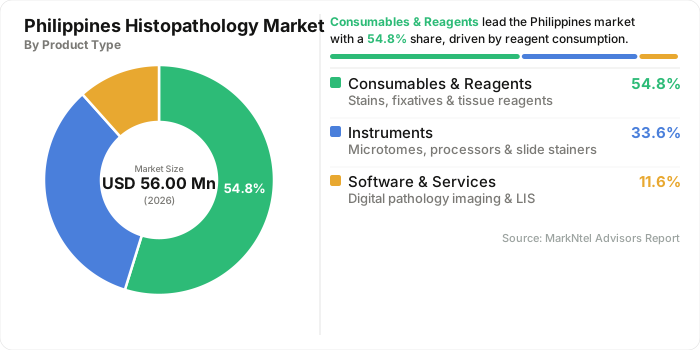
- By product type, consumables & reagents dominate the market, accounting for approximately 54.8% of the total market share in 2026.
- By Application, oncologic pathology holds the largest market share at approximately 41.7% in 2026.
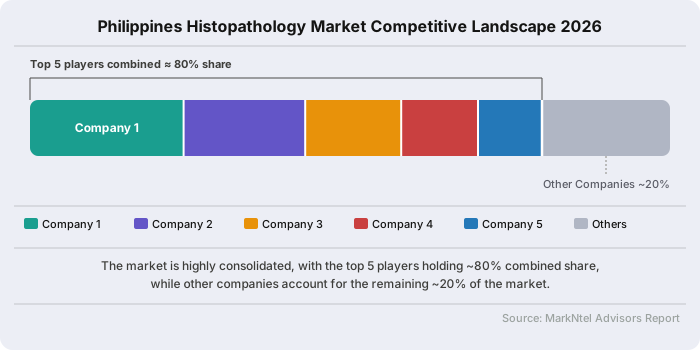
- The market is highly consolidated, with the top five companies collectively accounting for approximately 80% of the total market share in 2026.
Philippines Histopathology Market Size & Outlook
The histopathology industry in the Philippines was valued at USD 52 million in 2025 and is projected to increase from USD 56 million in 2026 to USD 86 million by 2032, registering a CAGR of 9.84% during the forecast period.
Market expansion is primarily supported by the increasing integration of tissue diagnostics into routine clinical practice, particularly for oncology, gastrointestinal, and infectious disease management. As healthcare providers prioritize early and accurate disease diagnosis, histopathology has become an essential component of clinical decision-making, driving sustained demand for advanced pathology services across both public and private healthcare facilities.
The country's expanding healthcare infrastructure is further strengthening the adoption of anatomic pathology services. According to the Department of Health, the Philippines had 2,004 licensed clinical laboratories in 2024, reflecting continued growth in diagnostic capacity nationwide. Simultaneously, the government is implementing the Health Facility Development Plan 2024–2028, which prioritizes modernization of hospitals and laboratory infrastructure to improve access to specialized diagnostic services. These initiatives are enabling hospitals to strengthen pathology capabilities through investments in automated tissue processing systems, immunohistochemistry platforms, and laboratory quality management.
Technology modernization is also reshaping the competitive landscape of the Philippine pathology sector. According to the Food and Drug Administration, the agency launched the 2024 pilot implementation of the FDA eServices Portal for medical device notifications, streamlining regulatory processes for diagnostic technologies and supporting faster commercialization of advanced pathology equipment. The improved regulatory environment is encouraging healthcare providers to adopt digital pathology solutions, laboratory information systems, and AI-enabled image analysis platforms, enhancing diagnostic accuracy while improving laboratory productivity and workflow efficiency.
The market outlook remains favorable as government healthcare investments and private-sector innovation continue to accelerate laboratory modernization. According to the Department of Budget and Management, approximately USD 5.8 billion was allocated to the national health sector under the 2025 General Appropriations Act, supporting hospital upgrades, medical equipment procurement, and expansion of diagnostic services. Coupled with increasing collaborations between hospitals and global diagnostics manufacturers, these investments are expected to strengthen histopathology laboratory infrastructure, expand regional diagnostic access, and support long-term market growth through 2032.
Philippines Histopathology Market Key Indicators
- The Philippine Statistics Authority (PSA) reported that neoplasms remained the second leading cause of death in the Philippines, accounting for 76,971 deaths in 2024. The substantial disease burden continues to increase the utilization of tissue examination, surgical pathology, and laboratory-based diagnostic services, supporting sustained demand for histopathology across the country's healthcare system.
- As per the National Integrated Cancer Control Program (NICCP) is strengthening nationwide cancer diagnosis, while 35 Cancer Assistance Fund access sites currently provide 61 cancer medicines across the country. Expansion of cancer care infrastructure is increasing the requirement for pathology laboratories capable of supporting timely tissue diagnosis and treatment planning.
- By the Department of Health, USD 0.96 million was allocated in 2024 to support the screening of 3 million women for breast and cervical cancer, while three additional Population-Based Cancer Registry (PBCR) sites were established in Metro Cebu, Bacolod, and Davao. The expansion of organized screening programs and cancer registries is expected to increase biopsy referrals and histopathology workload nationwide.
- According to the Philippine Health Insurance Corporation, the enhanced Z Benefit Package expanded breast cancer coverage from USD 1,754 to as much as USD 24,561 per patient in 2024 and now covers Stages 0–IV disease. The broader reimbursement for diagnostics, surgery, and follow-up care is improving patient access to tissue-based cancer diagnosis and pathology services.
Philippines Histopathology Market Scope
| Category | Segments |
|---|---|
| By Product Type | Instruments (Tissue Processors, Microtomes, Cryostats, Embedding Systems, Slide Stainers, Coverslippers, Digital Pathology Scanners, Others), Consumables & Reagents (Stains & Dyes, Antibodies, Fixatives, Paraffin Wax, Slides & Cassettes, Detection Kits, Others), Software & Services |
| By Technology | By Workflow Technology (Manual Histopathology, Semi-Automated Histopathology, Automated Histopathology, Digital Pathology), By Diagnostic Modality, (Histopathology, Immunohistochemistry (IHC), In Situ Hybridization (ISH), Molecular Pathology |
| By Application | Oncologic Pathology, Gastrointestinal Pathology, Dermatopathology, Gynecologic Pathology, Neuropathology, Hematopathology, Infectious Disease Pathology, Research Applications, Others |
| By End-User | Hospitals, Independent Diagnostic Laboratories, Academic & Research Institutes, Pharmaceutical & Biotechnology Companies, Contract Research Organizations (CROs)), and others |
Philippines Histopathology Market Growth Driver
Rising Burden of Non-Communicable Diseases Accelerating Tissue Diagnostics Demand
The growing burden of non-communicable diseases (NCDs) is significantly increasing the need for tissue diagnostics and specialized pathology services across the Philippines. According to the World Health Organization, non-communicable diseases accounted for approximately 72% of all deaths in the Philippines in 2024, with cardiovascular diseases, cancers, diabetes, and chronic respiratory diseases remaining the leading causes of mortality. The increasing clinical complexity of these diseases is driving greater utilization of biopsy-based investigations and surgical pathology services for definitive diagnosis and treatment planning.
The expansion of chronic disease management programs is further strengthening demand for advanced laboratory diagnostics. According to the International Diabetes Federation, approximately 4.8 million adults (20–79 years) in the Philippines were living with diabetes in 2025, while a substantial at-risk population requires continuous monitoring for disease complications. As diabetic nephropathy, liver disorders, and other chronic conditions increasingly require tissue confirmation, healthcare providers are expanding the use of anatomic pathology diagnostics alongside conventional laboratory testing, supporting sustained growth in histopathology services.
Recent Trends
Growing Adoption of Digital Pathology
Public and private healthcare providers are accelerating investments in digital pathology to modernize laboratory operations and improve diagnostic efficiency. According to the Department of Health, the Health Facilities Enhancement Program (HFEP) received approximately USD 485 million under the 2025 National Expenditure Program to strengthen healthcare infrastructure, including hospital diagnostic capacity. The increased capital expenditure is supporting the procurement of automated tissue processors, slide stainers, laboratory information systems (LIS), and other pathology workflow automation technologies across public healthcare facilities.
The private sector is complementing this modernization through continuous expansion of advanced diagnostic networks. According to Hi-Precision Diagnostics, the company operates more than 80 diagnostic and laboratory centers nationwide, utilizing standardized automated laboratory platforms to improve testing efficiency and quality consistency. Concurrent investments by major tertiary hospitals in digital imaging and precision oncology are accelerating the adoption of whole slide imaging and AI-assisted pathology solutions, supporting the transition toward integrated, technology-driven histopathology services across the Philippines.
Philippines Histopathology Market Opportunities and Challenges
Infrastructure Gaps Unlock Automation Potential
The shortage of adequately equipped pathology laboratories remains a major constraint on the expansion of the Philippine histopathology industry. According to the Department of Health, the country had 2,004 licensed clinical laboratories in 2024, but Level III laboratories, the only category authorized to provide comprehensive anatomic pathology services, remain concentrated in highly urbanized regions such as Metro Manila. This uneven distribution limits timely access to biopsy processing and tissue diagnostics in many provincial areas, resulting in specimen referrals to distant tertiary hospitals, longer turnaround times, and increased logistical costs, thereby restricting the scale of pathology laboratory services nationwide.
The government's sustained investment in healthcare infrastructure presents a significant opportunity to expand diagnostic capacity and strengthen regional pathology networks. According to the Department of Budget and Management, approximately USD 485 million was allocated to the Health Facilities Enhancement Program under the 2025 National Expenditure Program to modernize public hospitals and upgrade healthcare infrastructure. This investment is expected to accelerate the establishment of new diagnostic facilities and the modernization of existing laboratories. Capitalizing on this opportunity, Roche Diagnostics and Leica Biosystems continue to expand automated histopathology equipment and digital workflow solutions across emerging healthcare markets, positioning themselves to support the modernization of pathology laboratories as public infrastructure investments increase.
Segmentation Analysis
Consumables & Reagents are the Core of the Histopathology Market
The Consumables & Reagents segment dominated the industry, accounting for 54.8% of the market in 2026, making it the largest product category. Histopathology laboratories require a continuous supply of tissue fixatives, paraffin wax, microtome blades, microscope slides, stains, antibodies, and immunohistochemistry reagents for every specimen processed, creating recurring procurement demand. According to the Food and Drug Administration, all in vitro diagnostic reagents and laboratory consumables are subject to regulatory oversight before commercialization, reinforcing the adoption of standardized histopathology consumables across licensed laboratories.
The segment also benefits from the expansion of pathology testing volumes and increasing laboratory modernization. Unlike capital equipment, consumables must be replenished regularly regardless of laboratory size, making them the primary revenue contributor within tissue diagnostics. Global manufacturers including Roche Diagnostics, Agilent Technologies, and Leica Biosystems continue to expand their portfolios of immunohistochemistry antibodies, staining reagents, and tissue processing consumables, enabling Philippine laboratories to improve diagnostic accuracy while supporting the growing demand for oncology and precision pathology services. Based on product type, the Philippines histopathology industry is segmented into:
- Instruments
- Consumables & Reagents
- Software & Services
Oncology Diagnostics Driving Market Leadership
The Oncologic Pathology segment accounted for an estimated 41.7% of the Philippines Histopathology Market in 2026, making it the leading application area. The dominance is driven by the increasing volume of tissue biopsies required for cancer diagnosis, tumor grading, biomarker assessment, and treatment planning. According to the Philippine Health Insurance Corporation, the expansion of Z Benefit Packages continues to strengthen access to comprehensive cancer management for high-burden malignancies, increasing the utilization of biopsy interpretation, immunohistochemistry (IHC), and molecular tissue analysis in accredited hospitals. This sustained demand reinforces the growth of oncologic pathology across the country's tertiary healthcare network.
The segment is further supported by the growing adoption of precision oncology technologies by diagnostic providers. In February 2024, Aspira Women's Health entered a five-year exclusive distribution agreement with Hi-Precision Diagnostics to commercialize the OvaSuiteSM ovarian cancer diagnostic portfolio in the Philippines, subject to local regulatory approval. The collaboration expands access to advanced oncology diagnostics and complements conventional histopathology by supporting earlier cancer risk assessment and personalized clinical decision-making, further strengthening demand for cancer tissue diagnostics across the Philippine market. By Application type, the Philippines histopathology industry is segmented into:
- Oncologic Pathology
- Gastrointestinal Pathology
- Dermatopathology
- Gynecologic Pathology
- Neuropathology
- Hematopathology
- Infectious Disease Pathology
- Research Applications
Philippines Histopathology Market Competitive Analysis
The Philippines histopathology market is highly consolidated, with multinational manufacturers competing alongside regional distributors and local laboratory solution providers. The top five companies accounted for approximately 80% of the market share in 2026, led by Roche Diagnostics, Leica Biosystems, Agilent Technologies, Thermo Fisher Scientific, and Danaher Corporation. Competition is centered on automated histopathology systems, immunohistochemistry portfolios, digital pathology platforms, distributor partnerships, and after-sales technical support.
Leading Companies in the Philippines Histopathology Industry
- Roche Diagnostics
- Leica Biosystems
- Agilent Technologies (Dako)
- Thermo Fisher Scientific
- Sakura Finetek
- Hamamatsu Photonics
- BioGenex
- Epredia
Philippines Histopathology Industry News and Recent Developments
February 2024: Aspira Women's Health Partners with Hi-Precision Laboratories to Expand Ovarian Cancer Diagnostics in the Philippines
Aspira Women's Health signed a five-year exclusive distribution agreement with Hi-Precision Laboratories to commercialize its OvaSuiteSM portfolio in the Philippines, subject to regulatory approval. The partnership grants Hi-Precision exclusive rights to market and distribute Aspira's ovarian cancer diagnostic solutions nationwide, strengthening access to advanced gynecologic diagnostics and precision oncology testing.
Impact Analysis: The collaboration is expected to enhance the availability of advanced cancer diagnostics through one of the Philippines' largest laboratory networks, supporting earlier ovarian cancer detection and expanding the adoption of specialized histopathology and companion diagnostic services. The agreement also reinforces the country's transition toward precision medicine by increasing access to innovative tissue-based diagnostic solutions.
June 2024: Indica Labs Appoints MRL Cybertec to Expand Digital Pathology Solutions in the Philippines
Indica Labs appointed MRL Cybertec Corporation as its authorized distributor for the Philippines, expanding local access to its HALO AP® digital pathology platform for clinical and research laboratories. The partnership enables Philippine pathology laboratories to deploy AI-enabled image analysis and digital slide management technologies, supporting workflow modernization and precision diagnostics.
Impact Analysis: The distribution partnership is expected to accelerate the adoption of digital pathology across the Philippines by improving access to AI-powered pathology software through an established local supplier. The development supports laboratory automation, enhances diagnostic efficiency, and strengthens the country's capability to manage increasing oncology and histopathology testing volumes.
- Market Segmentation
- Introduction
- Product Definition
- Research Process
- Assumptions
- Executive Summary
- Philippines Histopathology Market Policies, Regulations, and Product Standards
- Philippines Histopathology Market Trends & Developments
- Philippines Histopathology Market Dynamics
- Growth Factors
- Challenges
- Philippines Histopathology Market Hotspot & Opportunities
- Philippines Histopathology Market Outlook, 2022-2032F
- Market Size & Analysis
- By Revenues (USD Million)
- Market Share & Analysis
- By Product Type- Market Size & Forecast 2022-2032, USD Million
- Instruments
- Tissue Processors
- Microtomes
- Cryostats
- Embedding Systems
- Slide Stainers
- Coverslippers
- Digital Pathology Scanners
- Others
- Consumables & Reagents
- Stains & Dyes
- Antibodies
- Fixatives
- Paraffin Wax
- Slides & Cassettes
- Detection Kits
- Others
- Software & Services
- Instruments
- By Technology- Market Size & Forecast 2022-2032, USD Million
- By Workflow Technology
- Manual Histopathology
- Semi-Automated Histopathology
- Automated Histopathology
- Digital Pathology
- By Diagnostic Modality
- Histopathology
- Immunohistochemistry (IHC)
- In Situ Hybridization (ISH)
- Molecular Pathology
- By Workflow Technology
- By Application- Market Size & Forecast 2022-2032, USD Million
- Oncologic Pathology
- Gastrointestinal Pathology
- Dermatopathology
- Gynecologic Pathology
- Neuropathology
- Hematopathology
- Infectious Disease Pathology
- Research Applications
- Others
- By End-User- Market Size & Forecast 2022-2032, USD Million
- Hospitals
- Independent Diagnostic Laboratories
- Academic & Research Institutes
- Pharmaceutical & Biotechnology Companies
- Contract Research Organizations (CROs)
- By Region
- Luzon
- Visayas
- Mindanao
- By Company
- Competition Characteristics
- Market Share & Analysis
- By Product Type- Market Size & Forecast 2022-2032, USD Million
- Market Size & Analysis
- Philippines Histopathology Instrument Market Outlook, 2022-2032F
- Market Size & Analysis
- By Revenues (USD Million)
- Market Share & Analysis
- By Product Type- Market Size & Forecast 2022-2032, USD Million
- By Technology- Market Size & Forecast 2022-2032, USD Million
- By Application- Market Size & Forecast 2022-2032, USD Million
- By End-User- Market Size & Forecast 2022-2032, USD Million
- Market Size & Analysis
- Philippines Histopathology Consumables & Reagents Market Outlook, 2022-2032F
- Market Size & Analysis
- By Revenues (USD Million)
- Market Share & Analysis
- By Product Type- Market Size & Forecast 2022-2032, USD Million
- By Technology- Market Size & Forecast 2022-2032, USD Million
- By Application- Market Size & Forecast 2022-2032, USD Million
- By End-User- Market Size & Forecast 2022-2032, USD Million
- Market Size & Analysis
- Philippines Histopathology Software & Services Market Outlook, 2022-2032F
- Market Size & Analysis
- By Revenues (USD Million)
- Market Share & Analysis
- By Technology- Market Size & Forecast 2022-2032, USD Million
- By Application- Market Size & Forecast 2022-2032, USD Million
- By End-User- Market Size & Forecast 2022-2032, USD Million
- Market Size & Analysis
- Philippines Histopathology Market Key Strategic Imperatives for Success & Growth
- Competitive Outlook
- Company Profiles
- Roche Diagnostics
- Business Description
- Product Portfolio
- Collaborations & Alliances
- Recent Developments
- Financial Details
- Others
- Leica Biosystems
- Business Description
- Product Portfolio
- Collaborations & Alliances
- Recent Developments
- Financial Details
- Others
- Agilent Technologies (Dako)
- Business Description
- Product Portfolio
- Collaborations & Alliances
- Recent Developments
- Financial Details
- Others
- Thermo Fisher Scientific
- Business Description
- Product Portfolio
- Collaborations & Alliances
- Recent Developments
- Financial Details
- Others
- Sakura Finetek
- Business Description
- Product Portfolio
- Collaborations & Alliances
- Recent Developments
- Financial Details
- Others
- Hamamatsu Photonics
- Business Description
- Product Portfolio
- Collaborations & Alliances
- Recent Developments
- Financial Details
- Others
- BioGenex
- Business Description
- Product Portfolio
- Collaborations & Alliances
- Recent Developments
- Financial Details
- Others
- Epredia
- Business Description
- Product Portfolio
- Collaborations & Alliances
- Recent Developments
- Financial Details
- Others
- Others
- Roche Diagnostics
- Company Profiles
- Disclaimer

MarkNtel Advisors follows a robust and iterative research methodology designed to ensure maximum accuracy and minimize deviation in market estimates and forecasts. Our approach combines both bottom-up and top-down techniques to effectively segment and quantify various aspects of the market. A consistent feature across all our research reports is data triangulation, which examines the market from three distinct perspectives to validate findings. Key components of our research process include:
1. Scope & Research Design At the outset, MarkNtel Advisors define the research objectives and formulate pertinent questions. This phase involves determining the type of research—qualitative or quantitative—and designing a methodology that outlines data collection methods, target demographics, and analytical tools. They also establish timelines and budgets to ensure the research aligns with client goals.
2. Sample Selection and Data Collection In this stage, the firm identifies the target audience and determines the appropriate sample size to ensure representativeness. They employ various sampling methods, such as random or stratified sampling, based on the research objectives. Data collection is carried out using tools like surveys, interviews, and observations, ensuring the gathered data is reliable and relevant.
3. Data Analysis and Validation Once data is collected, MarkNtel Advisors undertake a rigorous analysis process. This includes cleaning the data to remove inconsistencies, employing statistical software for quantitative analysis, and thematic analysis for qualitative data. Validation steps are taken to ensure the accuracy and reliability of the findings, minimizing biases and errors.

4. Data Forecast and FinalizationThe final phase involves forecasting future market trends based on the analyzed data. MarkNtel Advisors utilize predictive modeling and time series analysis to anticipate market behaviors. The insights are then compiled into comprehensive reports, featuring visual aids like charts and graphs, and include strategic recommendations to inform client decision-making
FILL THE FORM TO GET THE FREE SAMPLE PAGES
We offer flexible licensing options to cater to varying organizational needs. Choose the pricing pack that best suits your requirements:
Buy Now Inquire Before Buying
 Talk to our Consultant
 Request Customization