

By Component (Graphene-Based Optical Modulators, Graphene-Based Photodetectors, Graphene-Based Optical Switches, Others), By Integration Platform (Graphene-on-Silicon, Graphene-on-......Silicon Nitride, Graphene–Silicon/III-V Hybrid, Graphene–Plasmonic Hybrid, Others), By Application (Optical Interconnects, Optical Communication & Networking, Optical Computing, Optical Sensing, Microwave/Radio-Frequency Photonics, Others), By End Use (Data Centers & Cloud Service Providers, Telecommunications Operators, HPC & AI Computing Facilities, Defense & Aerospace, Healthcare & Biomedical, Industrial & Manufacturing, Consumer Electronics, Research & Academic Institutions, Others), and others Read more
- ICT & Electronics
- Aug 2026
- 435
- PDF, Excel, PPT
Graphene-Based Silicon Photonics Market Key Takeaways
- The graphene-based silicon photonics market size was valued at USD 218 million in 2025 and is projected to grow from USD 289 million in 2026 to USD 837 million by 2032.
- The industry is projected to reflect sustained growth at a steady CAGR of 19.39 % during 2026-2032.
- North America holds the largest share of about 44% in 2026.
- By component, graphene-based optical modulators hold a significant share of about 45% in 2026.
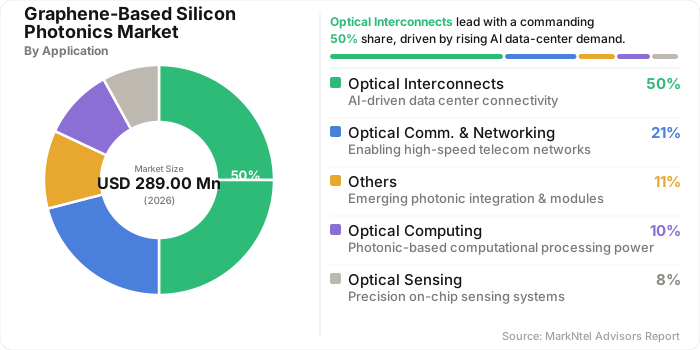
- By application, optical interconnects seized a significant share of about 50% in 2026.
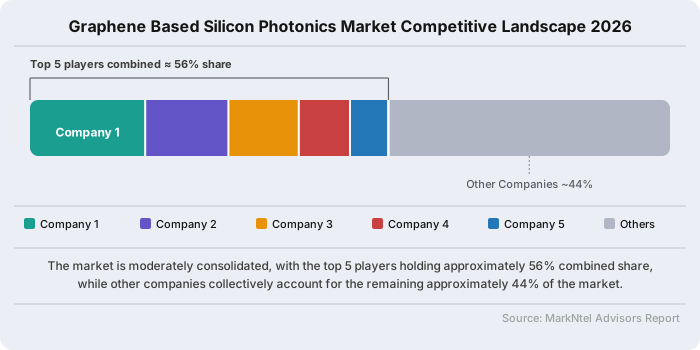
- The industry is moderately consolidated. However, the top five players collectively account for nearly 56% share.
Graphene-Based Silicon Photonics Market Size and Outlook
The graphene-based silicon photonics market size was valued at USD 218 million in 2025 and is projected to grow from USD 289 million in 2026 to USD 837 million by 2032. Along with this, the market is estimated to grow at a CAGR of around 19.39 % during the forecast period, i.e., 2026-32.
The market is gaining momentum as AI, cloud computing, and hyperscale data centers increase demand for high-speed, energy-efficient optical interconnects. Policy support is also strengthening the ecosystem: the EU’s proposed Chips Act 2.0 specifically includes photonic integrated circuits and graphene/2D-material technologies in pilot-line and industrialization initiatives. Future opportunities include 800G/1.6T optical transceivers, co-packaged optics, integrated graphene modulators and photodetectors, and wafer-scale manufacturing. As fabrication, integration, and commercialization barriers decline, the technology is positioned for broader adoption across AI infrastructure, telecommunications, and high-performance computing, supporting a strong long-term growth outlook.
Graphene-Based Silicon Photonics Market Key Indicators
- Increasing network bandwidth requirements are pushing optical interconnects toward 100, 200, and eventually 400 Gbps per lane. TrendForce identifies this progression as a major reason conventional copper connections are becoming increasingly constrained by signal loss, compensation requirements, and power consumption. Graphene-based electro-optic devices can address these requirements because research has demonstrated 67 GHz bandwidth and 80 Gb/s modulation on silicon.
- Continuous improvements in graphene electro-optic modulators are increasing their commercial potential. A 2026 OFC demonstration achieved a 67 GHz electro-optical 3-dB bandwidth, with 80 Gb/s C-band and 40 Gb/s O-band NRZ operation. Earlier research demonstrated 10 Gb/s graphene-silicon phase modulation at 5 GHz bandwidth. Such improvements in speed and bandwidth strengthen graphene's suitability for high-capacity datacenter, telecom, and optical-computing applications.
- Graphene's broadband optical absorption enables photodetectors to operate across substantially wider spectral ranges than many conventional semiconductor approaches. Recent research demonstrated graphene-silicon heterojunction photodetectors with responsivity above 1 A/W, specific detectivity of approximately 3 × 10¹² Jones, and noise-equivalent power of 20 × 10⁻¹⁴ W/Hz¹/². These performance improvements support graphene-based photodetector adoption in optical communications, sensing, and high-speed integrated photonics.
- Cloud computing, 5G networking, and AI workloads are collectively increasing requirements for high-speed optical connectivity. Silicon-photonics transceivers are moving toward 400G and 800G+ configurations as data-center traffic rises. Graphene can complement these platforms through broadband electro-absorption and electro-refraction modulation, while its carrier mobility can exceed 100,000 cm²/V·s in high-quality samples. This combination supports compact, high-speed optical communications infrastructure.
Graphene-Based Silicon Photonics Market Scope
| Category | Segments |
|---|---|
| By Component | Graphene-Based Optical Modulators, Graphene-Based Photodetectors, Graphene-Based Optical Switches, Others |
| By Integration Platform | Graphene-on-Silicon, Graphene-on-Silicon Nitride, Graphene–Silicon/III-V Hybrid, Graphene–Plasmonic Hybrid, Others |
| By Application | Optical Interconnects, Optical Communication & Networking, Optical Computing, Optical Sensing, Microwave/Radio-Frequency Photonics, Others |
| By End Use | Data Centers & Cloud Service Providers, Telecommunications Operators, HPC & AI Computing Facilities, Defense & Aerospace, Healthcare & Biomedical, Industrial & Manufacturing, Consumer Electronics, Research & Academic Institutions, Others |
Graphene Based Silicon Photonics Market Growth Drivers
Rapid Expansion of AI and Hyperscale Data Centers Accelerates Demand for Graphene-Enhanced Optical Interconnects
The rapid expansion of AI and hyperscale data centers is a major growth driver for graphene-based silicon photonics because AI workloads require extremely high-bandwidth, low-latency and energy-efficient data movement between GPUs, switches and memory. The IEA estimates that global data-center electricity consumption will rise from 415 TWh in 2024 to around 945 TWh by 2030, with AI-optimized accelerated servers growing at approximately 30% annually.
The increasing scale of AI clusters is also intensifying demand for optical connectivity. NVIDIA notes that AI factories are expanding to hundreds of thousands and eventually millions of interconnected GPUs, making high-speed networking fundamental to large-scale AI infrastructure. Its 2026 networking platforms incorporate co-packaged optics, demonstrating the industry's shift toward optical interconnects.
This expansion directly benefits graphene-based silicon photonics because graphene can provide high-speed modulation, broadband optical response and low-power photodetection while being integrated with silicon photonic platforms. The transition from 800G toward 1.6T optical connectivity further strengthens the opportunity; Marvell expanded its 1.6T optical DSP portfolio in 2026 specifically for next-generation AI data-center connectivity.
Therefore, the rapid build-out of AI and hyperscale data centers is accelerating demand for higher-bandwidth, lower-power and more compact optical components, creating favorable conditions for graphene-enhanced silicon photonics in modulators, photodetectors, optical transceivers and co-packaged optical systems.
Recent Trends
Emergence of Graphene Based Light Sources for Fully Integrated Photonic Systems
The emergence of graphene-based light sources is becoming an important technology trend in the graphene-based silicon photonics industry, expanding graphene's role beyond its established applications in optical modulation and photodetection. Historically, graphene photonics research has focused mainly on modulators and detectors, while an integrated graphene light source remained a major missing element for achieving fully integrated photonic circuits. Recent research is addressing this limitation by developing electrically driven graphene emitters directly on silicon photonic platforms.
A significant instance was reported in June 2026, when researchers demonstrated an electrically driven graphene hot-electron light emitter monolithically integrated with silicon photonics. The device used a suspended graphene/hexagonal-boron-nitride heterostructure and coupled broadband thermal emission into a silicon waveguide with 24.7% coupling efficiency at the 1,550-nm telecom wavelength. It generated optical pulses at modulation speeds of up to 0.7 GHz.
Most importantly, researchers co-integrated the graphene emitter with a germanium photodetector on the same chip using back-end-of-line-compatible processing, creating a fully monolithic optical transceiver with 100-MHz bandwidth. This demonstrates the potential to integrate light generation, detection, and modulation within a single graphene/silicon photonic platform.
This trend could ultimately enable denser photonic circuits, fewer discrete components, shorter optical paths, and highly integrated optical transceivers, supporting the long-term commercialization of graphene-based silicon photonics.
Graphene Based Silicon Photonics Market Opportunities and Challenges
Wafer-Scale Integration Challenges Creating Opportunities for Scalable Graphene Photonics
A key challenge for the graphene-based silicon photonics market is achieving uniform, reliable, and cost-effective wafer-scale integration of graphene with silicon photonic platforms. Most graphene photonic devices require graphene to be transferred from its growth substrate onto silicon photonic wafers. This transfer can introduce wrinkles, cracks, particles, polymer contamination, and non-uniform coverage, increasing optical losses and causing device-to-device performance variations. Research has identified integration into optimized foundry processes and achieving consistent wafer-scale fabrication as major barriers to commercialization.
The difficulty of achieving uniform, reliable, and cost-effective wafer-scale graphene integration is creating a significant opportunity for advanced graphene growth, transfer, encapsulation, and semiconductor compatible fabrication technologies. The commercial opportunity lies in moving graphene-based silicon photonics from individually fabricated laboratory devices toward high-yield, repeatable mass production for optical transceivers, AI data-center interconnects, co-packaged optics, and high-performance computing. Research has specifically identified scalable growth, transfer, and fabrication protocols as necessary to achieve reliable wafer-scale graphene photonic devices.
A strong instance is the development of a wafer-scale graphene integration process in which researchers produced CVD single-layer graphene matrices containing up to approximately 12,000 individual graphene crystals and achieved around 80% coverage of the device area on wafers up to 150 mm. The process delivered room-temperature mobility of approximately 5,000 cm²/V·s and enabled graphene electro-absorption modulators operating at up to 20 Gbps. Importantly, the researchers incorporated hexagonal boron nitride (hBN) encapsulation to protect graphene during subsequent processing and reported that the overall process was compatible with full automation.
The challenge of achieving uniform and scalable graphene integration remains a key barrier to commercialization, but it is simultaneously creating opportunities for advanced wafer-scale fabrication technologies. Progress in CVD graphene, hBN encapsulation, automated processing, and CMOS-compatible integration demonstrates that these limitations can be addressed. As manufacturing reliability improves, graphene-based silicon photonics can increasingly support high-speed optical transceivers, AI data centers, co-packaged optics, and high-performance computing, accelerating market growth.
Segmentation Insights
Graphene-Based Optical Modulators Lead with Approximately 45% Share
Graphene-based optical modulators account for approximately 45% of the global graphene-based silicon photonics market, supported by their importance in converting electrical signals into modulated optical signals for high-speed communication. Graphene offers ultrafast carrier dynamics, broadband optical response, compact dimensions, and low energy requirements, making it suitable for next-generation optical interconnects. Demonstrated devices have achieved 67-GHz bandwidth and 80-Gbit/s data transmission, with an active area of only 22 μm² and dynamic energy consumption of approximately 58 fJ/bit.
These characteristics are particularly relevant to AI and hyperscale data centers, where increasing bandwidth requirements are intensifying demand for energy-efficient optical connectivity. In addition, graphene can be integrated with silicon waveguides and resonators, supporting compact photonic integrated circuits. Recent research has also demonstrated graphene modulators operating above 70 GHz, reinforcing their potential for high-speed optical systems. Consequently, increasing adoption of 800G, 1.6T and future higher-speed optical interconnects is expected to sustain the segment's leading position. Based on component, the scope has been segmented into
- Graphene-Based Optical Modulators
- Graphene-Based Photodetectors
- Graphene-Based Optical Switches
- Others
Optical Interconnects Lead with Approximately 50% Share, Driven by High-Speed and Energy-Efficient Data Transmission
Optical Interconnects represent the largest application segment in the global graphene-based silicon photonics market, accounting for approximately 50% of total market demand. The segment leads because graphene-integrated silicon photonics is particularly suited to high-speed, low-power data transmission between chips, servers, switches, and computing systems. Graphene provides broadband optical absorption, ultrafast carrier dynamics, and electrically tunable optical properties, enabling high-performance modulators and photodetectors. Research has demonstrated graphene photodetection beyond 500 GHz, while graphene-based modulators have achieved data rates of 50 Gbit/s and higher.
The rapid expansion of AI and data-intensive computing is further increasing demand for compact, energy-efficient optical interconnects. A 2026 demonstration of a graphene-integrated silicon-photonic transmitter achieved more than 100 Gbps across 20°C–60°C, highlighting its suitability for next-generation computing infrastructure. Consequently, growing bandwidth requirements in data centers and high-performance computing are expected to sustain optical interconnects as the leading application. By application, the scope has been classified into:
- Optical Interconnects
- Optical Communication & Networking
- Optical Computing
- Optical Sensing
- Microwave/Radio-Frequency Photonics
- Others
Graphene-Based Silicon Photonics Industry Geographical Outlook
North America Leads with Approximately 44% Share, Supported by AI Infrastructure and Silicon Photonics Investments
North America accounts for approximately 44% of global graphene-based silicon photonics demand, supported by its concentration of hyperscale data centers, advanced semiconductor manufacturing, and strong investment in optical technologies. The region’s primary data-center markets recorded 9,432 MW of supply in 2025, up 36% year over year, while net absorption reached 2,497.6 MW, reflecting strong hyperscaler and AI demand.
The U.S. is also strengthening its domestic silicon-photonics ecosystem: in July 2026, the Department of Commerce announced an expected USD 300 million CHIPS R&D award to Global Foundries for next-generation silicon photonics, optical materials, wafer technologies, and CPO/NPO. In addition, NVIDIA committed USD 2 billion to Coherent to expand U.S.-based advanced optics manufacturing and R&D for AI infrastructure. These investments, combined with strong AI infrastructure expansion, support North America's leading position.
Graphene-Based Silicon Photonics Market Competitive Analysis
The graphene-based silicon photonics market is moderately consolidated, with leading companies such as Black Semiconductor GmbH, 2D Photonics S.p.A., Intel Corporation, GlobalFoundries Inc., and Cisco Systems, Inc. collectively accounting for an estimated 56% of the global market share.
Key Players in Graphene Based Silicon Photonics Market
- Black Semiconductor GmbH
- 2D Photonics S.p.A.
- Intel Corporation
- GlobalFoundries Inc.
- Cisco Systems, Inc.
- Tower Semiconductor Ltd.
- X-FAB Silicon Foundries SE
- Paragraf Limited
- Graphenea S.A.
- Graphensic AB
- LIGENTEC SA
- SilTerra Malaysia Sdn. Bhd.
- SMART Photonics B.V.
- Advanced Graphene Products S.A.
- Levidian Nanosystems Limited
- Others
Graphene-Based Silicon Photonics Industry News and Recent Developments
March 2026: Black Semiconductor Begins Construction of FabONE for 300 mm Graphene Photonics Manufacturing
In March 2026, Black Semiconductor began construction of its FabONE facility in Aachen, Germany, which is being developed as a 300 mm manufacturing facility for integrated graphene photonics. The company plans to install capital equipment during the second half of 2026 and begin pilot production in 2027. The project follows Black Semiconductor's 2025 acquisition of Applied Nanolayers, which added a semi-automated 200 mm graphene production platform capable of producing 10,000 wafers annually, with a planned transition toward automated 300 mm production.
Impact Analysis: FabONE strengthens the manufacturing infrastructure for graphene-based photonics and addresses a key commercialization challenge: scalable wafer-level integration. The planned 300 mm production architecture could improve manufacturing scalability and support the integration of graphene photonic functions directly with electronic chips. The development is particularly relevant to AI and high-performance computing, where chip-to-chip bandwidth and energy efficiency are becoming critical constraints.
- Market Segmentation
- Introduction
- Product Definition
- Research Process
- Assumptions
- Executive Summary
- Graphene-Based Silicon Photonics Market Policies, Regulations, and Product Standards
- Graphene-Based Silicon Photonics Supply Chain Analysis
- Graphene-Based Silicon Photonics Market Production Trend 2022-2032
- Graphene-Based Silicon Photonics Market Production Trend By Component
- Graphene-Based Optical Modulators
- Graphene-Based Photodetectors
- Graphene-Based Optical Switches
- Others
- Company Wise Production Plants and Statistics
- Installed Production Capacity
- Actual Production
- Planned Production Target
- Graphene-Based Silicon Photonics Market Production Trend By Component
- Graphene-Based Silicon Photonics Market Pricing Analysis 2022-2032
- Graphene-Based Silicon Photonics Market Pricing Trend (USD) 2022-2032
- Graphene-Based Silicon Photonics Market Pricing Trend (USD) By Regions 2022-2032
- North America
- South America
- Europe
- Middle East & Africa
- Asia Pacific
- Graphene-Based Silicon Photonics Market Pricing Trend (USD) By Component 2022-2032
- Graphene-Based Optical Modulators
- Graphene-Based Photodetectors
- Graphene-Based Optical Switches
- Others
- Graphene-Based Silicon Photonics Market Trends & Developments
- Graphene-Based Silicon Photonics Market Dynamics
- Growth Factors
- Challenges
- Graphene-Based Silicon Photonics Market Hotspot & Opportunities
- Graphene-Based Silicon Photonics Market Outlook, 2022-2032
- Market Size & Outlook
- By Revenues (USD Million)
- Market Segmentation & Outlook
- By Component- Market Size & Forecast 2022-2032, USD Million
- Graphene-Based Optical Modulators
- Graphene-Based Photodetectors
- Graphene-Based Optical Switches
- Others
- By Integration Platform- Market Size & Forecast 2022-2032, USD Million
- Graphene-on-Silicon
- Graphene-on-Silicon Nitride
- Graphene–Silicon/III-V Hybrid
- Graphene–Plasmonic Hybrid
- Others
- By Application- Market Size & Forecast 2022-2032, USD Million
- Optical Interconnects
- Optical Communication & Networking
- Optical Computing
- Optical Sensing
- Microwave/Radio-Frequency Photonics
- Others
- By End Use- Market Size & Forecast 2022-2032, USD Million
- Data Centers & Cloud Service Providers
- Telecommunications Operators
- HPC & AI Computing Facilities
- Defense & Aerospace
- Healthcare & Biomedical
- Industrial & Manufacturing
- Consumer Electronics
- Research & Academic Institutions
- Others
- By Region
- North America
- South America
- Europe
- Middle East & Africa
- Asia Pacific
- By Company
- Competition Characteristics
- Market Share & Analysis
- By Component- Market Size & Forecast 2022-2032, USD Million
- Market Size & Outlook
- North America Graphene-Based Silicon Photonics Market Outlook, 2022-2032
- Market Size & Outlook
- By Revenues (USD Million)
- Market Segmentation & Outlook
- By Component- Market Size & Forecast 2022-2032, USD Million
- By Integration Platform- Market Size & Forecast 2022-2032, USD Million
- By Application- Market Size & Forecast 2022-2032, USD Million
- By End Use- Market Size & Forecast 2022-2032, USD Million
- By Country
- The US
- Canada
- Mexico
- The US Graphene-Based Silicon Photonics Market Outlook, 2022-2032
- Market Size & Outlook
- By Revenues (USD Million)
- Market Segmentation & Outlook
- By Component- Market Size & Forecast 2022-2032, USD Million
- By Integration Platform- Market Size & Forecast 2022-2032, USD Million
- By Application- Market Size & Forecast 2022-2032, USD Million
- By End Use- Market Size & Forecast 2022-2032, USD Million
- Market Size & Outlook
- Canada Graphene-Based Silicon Photonics Market Outlook, 2022-2032
- Market Size & Outlook
- By Revenues (USD Million)
- Market Segmentation & Outlook
- By Component- Market Size & Forecast 2022-2032, USD Million
- By Integration Platform- Market Size & Forecast 2022-2032, USD Million
- By Application- Market Size & Forecast 2022-2032, USD Million
- By End Use- Market Size & Forecast 2022-2032, USD Million
- Market Size & Outlook
- Mexico Graphene-Based Silicon Photonics Market Outlook, 2022-2032
- Market Size & Outlook
- By Revenues (USD Million)
- Market Segmentation & Outlook
- By Component- Market Size & Forecast 2022-2032, USD Million
- By Integration Platform- Market Size & Forecast 2022-2032, USD Million
- By Application- Market Size & Forecast 2022-2032, USD Million
- By End Use- Market Size & Forecast 2022-2032, USD Million
- Market Size & Outlook
- Market Size & Outlook
- South America Graphene-Based Silicon Photonics Market Outlook, 2022-2032
- Market Size & Outlook
- By Revenues (USD Million)
- Market Segmentation & Outlook
- By Component- Market Size & Forecast 2022-2032, USD Million
- By Integration Platform- Market Size & Forecast 2022-2032, USD Million
- By Application- Market Size & Forecast 2022-2032, USD Million
- By End Use- Market Size & Forecast 2022-2032, USD Million
- By Country
- Brazil
- Argentina
- Chile
- Colombia
- Rest of South America
- Brazil Graphene-Based Silicon Photonics Market Outlook, 2022-2032
- Market Size & Outlook
- By Revenues (USD Million)
- Market Segmentation & Outlook
- By Component- Market Size & Forecast 2022-2032, USD Million
- By Integration Platform- Market Size & Forecast 2022-2032, USD Million
- By Application- Market Size & Forecast 2022-2032, USD Million
- By End Use- Market Size & Forecast 2022-2032, USD Million
- Market Size & Outlook
- Argentina Graphene-Based Silicon Photonics Market Outlook, 2022-2032
- Market Size & Outlook
- By Revenues (USD Million)
- Market Segmentation & Outlook
- By Component- Market Size & Forecast 2022-2032, USD Million
- By Integration Platform- Market Size & Forecast 2022-2032, USD Million
- By Application- Market Size & Forecast 2022-2032, USD Million
- By End Use- Market Size & Forecast 2022-2032, USD Million
- Market Size & Outlook
- Chile Graphene-Based Silicon Photonics Market Outlook, 2022-2032
- Market Size & Outlook
- By Revenues (USD Million)
- Market Segmentation & Outlook
- By Component- Market Size & Forecast 2022-2032, USD Million
- By Integration Platform- Market Size & Forecast 2022-2032, USD Million
- By Application- Market Size & Forecast 2022-2032, USD Million
- By End Use- Market Size & Forecast 2022-2032, USD Million
- Market Size & Outlook
- Colombia Graphene-Based Silicon Photonics Market Outlook, 2022-2032
- Market Size & Outlook
- By Revenues (USD Million)
- Market Segmentation & Outlook
- By Component- Market Size & Forecast 2022-2032, USD Million
- By Integration Platform- Market Size & Forecast 2022-2032, USD Million
- By Application- Market Size & Forecast 2022-2032, USD Million
- By End Use- Market Size & Forecast 2022-2032, USD Million
- Market Size & Outlook
- Market Size & Outlook
- Europe Graphene-Based Silicon Photonics Market Outlook, 2022-2032
- Market Size & Outlook
- By Revenues (USD Million)
- Market Segmentation & Outlook
- By Component- Market Size & Forecast 2022-2032, USD Million
- By Integration Platform- Market Size & Forecast 2022-2032, USD Million
- By Application- Market Size & Forecast 2022-2032, USD Million
- By End Use- Market Size & Forecast 2022-2032, USD Million
- By Country
- The UK
- Germany
- France
- Italy
- Spain
- Netherlands
- Rest of Europe
- The UK Graphene-Based Silicon Photonics Market Outlook, 2022-2032
- Market Size & Outlook
- By Revenues (USD Million)
- Market Segmentation & Outlook
- By Component- Market Size & Forecast 2022-2032, USD Million
- By Integration Platform- Market Size & Forecast 2022-2032, USD Million
- By Application- Market Size & Forecast 2022-2032, USD Million
- By End Use- Market Size & Forecast 2022-2032, USD Million
- Market Size & Outlook
- Germany Graphene-Based Silicon Photonics Market Outlook, 2022-2032
- Market Size & Outlook
- By Revenues (USD Million)
- Market Segmentation & Outlook
- By Component- Market Size & Forecast 2022-2032, USD Million
- By Integration Platform- Market Size & Forecast 2022-2032, USD Million
- By Application- Market Size & Forecast 2022-2032, USD Million
- By End Use- Market Size & Forecast 2022-2032, USD Million
- Market Size & Outlook
- France Graphene-Based Silicon Photonics Market Outlook, 2022-2032
- Market Size & Outlook
- By Revenues (USD Million)
- Market Segmentation & Outlook
- By Component- Market Size & Forecast 2022-2032, USD Million
- By Integration Platform- Market Size & Forecast 2022-2032, USD Million
- By Application- Market Size & Forecast 2022-2032, USD Million
- By End Use- Market Size & Forecast 2022-2032, USD Million
- Market Size & Outlook
- Italy Graphene-Based Silicon Photonics Market Outlook, 2022-2032
- Market Size & Outlook
- By Revenues (USD Million)
- Market Segmentation & Outlook
- By Component- Market Size & Forecast 2022-2032, USD Million
- By Integration Platform- Market Size & Forecast 2022-2032, USD Million
- By Application- Market Size & Forecast 2022-2032, USD Million
- By End Use- Market Size & Forecast 2022-2032, USD Million
- Market Size & Outlook
- Spain Graphene-Based Silicon Photonics Market Outlook, 2022-2032
- Market Size & Outlook
- By Revenues (USD Million)
- Market Segmentation & Outlook
- By Component- Market Size & Forecast 2022-2032, USD Million
- By Integration Platform- Market Size & Forecast 2022-2032, USD Million
- By Application- Market Size & Forecast 2022-2032, USD Million
- By End Use- Market Size & Forecast 2022-2032, USD Million
- Market Size & Outlook
- Netherlands Graphene-Based Silicon Photonics Market Outlook, 2022-2032
- Market Size & Outlook
- By Revenues (USD Million)
- Market Segmentation & Outlook
- By Component- Market Size & Forecast 2022-2032, USD Million
- By Integration Platform- Market Size & Forecast 2022-2032, USD Million
- By Application- Market Size & Forecast 2022-2032, USD Million
- By End Use- Market Size & Forecast 2022-2032, USD Million
- Market Size & Outlook
- Market Size & Outlook
- Middle East & Africa Graphene-Based Silicon Photonics Market Outlook, 2022-2032
- Market Size & Outlook
- By Revenues (USD Million)
- Market Segmentation & Outlook
- By Component- Market Size & Forecast 2022-2032, USD Million
- By Integration Platform- Market Size & Forecast 2022-2032, USD Million
- By Application- Market Size & Forecast 2022-2032, USD Million
- By End Use- Market Size & Forecast 2022-2032, USD Million
- By Country
- Saudi Arabia
- The UAE
- South Africa
- Egypt
- Qatar
- Kuwait
- Rest of Middle East & Africa
- Saudi Arabia Graphene-Based Silicon Photonics Market Outlook, 2022-2032
- Market Size & Outlook
- By Revenues (USD Million)
- Market Segmentation & Outlook
- By Component- Market Size & Forecast 2022-2032, USD Million
- By Integration Platform- Market Size & Forecast 2022-2032, USD Million
- By Application- Market Size & Forecast 2022-2032, USD Million
- By End Use- Market Size & Forecast 2022-2032, USD Million
- Market Size & Outlook
- The UAE Graphene-Based Silicon Photonics Market Outlook, 2022-2032
- Market Size & Outlook
- By Revenues (USD Million)
- Market Segmentation & Outlook
- By Component- Market Size & Forecast 2022-2032, USD Million
- By Integration Platform- Market Size & Forecast 2022-2032, USD Million
- By Application- Market Size & Forecast 2022-2032, USD Million
- By End Use- Market Size & Forecast 2022-2032, USD Million
- Market Size & Outlook
- South Africa Graphene-Based Silicon Photonics Market Outlook, 2022-2032
- Market Size & Outlook
- By Revenues (USD Million)
- Market Segmentation & Outlook
- By Component- Market Size & Forecast 2022-2032, USD Million
- By Integration Platform- Market Size & Forecast 2022-2032, USD Million
- By Application- Market Size & Forecast 2022-2032, USD Million
- By End Use- Market Size & Forecast 2022-2032, USD Million
- Market Size & Outlook
- Egypt Graphene-Based Silicon Photonics Market Outlook, 2022-2032
- Market Size & Outlook
- By Revenues (USD Million)
- Market Segmentation & Outlook
- By Component- Market Size & Forecast 2022-2032, USD Million
- By Integration Platform- Market Size & Forecast 2022-2032, USD Million
- By Application- Market Size & Forecast 2022-2032, USD Million
- By End Use- Market Size & Forecast 2022-2032, USD Million
- Market Size & Outlook
- Qatar Graphene-Based Silicon Photonics Market Outlook, 2022-2032
- Market Size & Outlook
- By Revenues (USD Million)
- Market Segmentation & Outlook
- By Component- Market Size & Forecast 2022-2032, USD Million
- By Integration Platform- Market Size & Forecast 2022-2032, USD Million
- By Application- Market Size & Forecast 2022-2032, USD Million
- By End Use- Market Size & Forecast 2022-2032, USD Million
- Market Size & Outlook
- Kuwait Graphene-Based Silicon Photonics Market Outlook, 2022-2032
- Market Size & Outlook
- By Revenues (USD Million)
- Market Segmentation & Outlook
- By Component- Market Size & Forecast 2022-2032, USD Million
- By Integration Platform- Market Size & Forecast 2022-2032, USD Million
- By Application- Market Size & Forecast 2022-2032, USD Million
- By End Use- Market Size & Forecast 2022-2032, USD Million
- Market Size & Outlook
- Market Size & Outlook
- Asia Pacific Graphene-Based Silicon Photonics Market Outlook, 2022-2032
- Market Size & Outlook
- By Revenues (USD Million)
- Market Segmentation & Outlook
- By Component- Market Size & Forecast 2022-2032, USD Million
- By Integration Platform- Market Size & Forecast 2022-2032, USD Million
- By Application- Market Size & Forecast 2022-2032, USD Million
- By End Use- Market Size & Forecast 2022-2032, USD Million
- By Country
- China
- Japan
- India
- South Korea
- Australia
- Indonesia
- Thailand
- Rest of Asia-Pacific
- China Graphene-Based Silicon Photonics Market Outlook, 2022-2032
- Market Size & Outlook
- By Revenues (USD Million)
- Market Segmentation & Outlook
- By Component- Market Size & Forecast 2022-2032, USD Million
- By Integration Platform- Market Size & Forecast 2022-2032, USD Million
- By Application- Market Size & Forecast 2022-2032, USD Million
- By End Use- Market Size & Forecast 2022-2032, USD Million
- Market Size & Outlook
- Japan Graphene-Based Silicon Photonics Market Outlook, 2022-2032
- Market Size & Outlook
- By Revenues (USD Million)
- Market Segmentation & Outlook
- By Component- Market Size & Forecast 2022-2032, USD Million
- By Integration Platform- Market Size & Forecast 2022-2032, USD Million
- By Application- Market Size & Forecast 2022-2032, USD Million
- By End Use- Market Size & Forecast 2022-2032, USD Million
- Market Size & Outlook
- India Graphene-Based Silicon Photonics Market Outlook, 2022-2032
- Market Size & Outlook
- By Revenues (USD Million)
- Market Segmentation & Outlook
- By Component- Market Size & Forecast 2022-2032, USD Million
- By Integration Platform- Market Size & Forecast 2022-2032, USD Million
- By Application- Market Size & Forecast 2022-2032, USD Million
- By End Use- Market Size & Forecast 2022-2032, USD Million
- Market Size & Outlook
- South Korea Graphene-Based Silicon Photonics Market Outlook, 2022-2032
- Market Size & Outlook
- By Revenues (USD Million)
- Market Segmentation & Outlook
- By Component- Market Size & Forecast 2022-2032, USD Million
- By Integration Platform- Market Size & Forecast 2022-2032, USD Million
- By Application- Market Size & Forecast 2022-2032, USD Million
- By End Use- Market Size & Forecast 2022-2032, USD Million
- Market Size & Outlook
- Australia Graphene-Based Silicon Photonics Market Outlook, 2022-2032
- Market Size & Outlook
- By Revenues (USD Million)
- Market Segmentation & Outlook
- By Component- Market Size & Forecast 2022-2032, USD Million
- By Integration Platform- Market Size & Forecast 2022-2032, USD Million
- By Application- Market Size & Forecast 2022-2032, USD Million
- By End Use- Market Size & Forecast 2022-2032, USD Million
- Market Size & Outlook
- Indonesia Graphene-Based Silicon Photonics Market Outlook, 2022-2032
- Market Size & Outlook
- By Revenues (USD Million)
- Market Segmentation & Outlook
- By Component- Market Size & Forecast 2022-2032, USD Million
- By Integration Platform- Market Size & Forecast 2022-2032, USD Million
- By Application- Market Size & Forecast 2022-2032, USD Million
- By End Use- Market Size & Forecast 2022-2032, USD Million
- Market Size & Outlook
- Thailand Graphene-Based Silicon Photonics Market Outlook, 2022-2032
- Market Size & Outlook
- By Revenues (USD Million)
- Market Segmentation & Outlook
- By Component- Market Size & Forecast 2022-2032, USD Million
- By Integration Platform- Market Size & Forecast 2022-2032, USD Million
- By Application- Market Size & Forecast 2022-2032, USD Million
- By End Use- Market Size & Forecast 2022-2032, USD Million
- Market Size & Outlook
- Market Size & Outlook
- Graphene-Based Silicon Photonics Market Key Strategic Imperatives for Success & Growth
- Competitive Outlook
- Company Profiles
- Black Semiconductor GmbH
- Business Description
- Product Portfolio
- Collaborations & Alliances
- Recent Developments
- Financial Details
- Others
- 2D Photonics S.p.A.
- Business Description
- Product Portfolio
- Collaborations & Alliances
- Recent Developments
- Financial Details
- Others
- Intel Corporation
- Business Description
- Product Portfolio
- Collaborations & Alliances
- Recent Developments
- Financial Details
- Others
- GlobalFoundries Inc.
- Business Description
- Product Portfolio
- Collaborations & Alliances
- Recent Developments
- Financial Details
- Others
- Cisco Systems, Inc.
- Business Description
- Product Portfolio
- Collaborations & Alliances
- Recent Developments
- Financial Details
- Others
- Tower Semiconductor Ltd.
- Business Description
- Product Portfolio
- Collaborations & Alliances
- Recent Developments
- Financial Details
- Others
- X-FAB Silicon Foundries SE
- Business Description
- Product Portfolio
- Collaborations & Alliances
- Recent Developments
- Financial Details
- Others
- Paragraf Limited
- Business Description
- Product Portfolio
- Collaborations & Alliances
- Recent Developments
- Financial Details
- Others
- Graphenea S.A.
- Business Description
- Product Portfolio
- Collaborations & Alliances
- Recent Developments
- Financial Details
- Others
- Graphensic AB
- Business Description
- Product Portfolio
- Collaborations & Alliances
- Recent Developments
- Financial Details
- Others
- LIGENTEC SA
- Business Description
- Product Portfolio
- Collaborations & Alliances
- Recent Developments
- Financial Details
- Others
- SilTerra Malaysia Sdn. Bhd.
- Business Description
- Product Portfolio
- Collaborations & Alliances
- Recent Developments
- Financial Details
- Others
- SMART Photonics B.V.
- Business Description
- Product Portfolio
- Collaborations & Alliances
- Recent Developments
- Financial Details
- Others
- Advanced Graphene Products S.A.
- Business Description
- Product Portfolio
- Collaborations & Alliances
- Recent Developments
- Financial Details
- Others
- Levidian Nanosystems Limited
- Business Description
- Product Portfolio
- Collaborations & Alliances
- Recent Developments
- Financial Details
- Others
- Black Semiconductor GmbH
- Company Profiles
- Disclaimer

MarkNtel Advisors follows a robust and iterative research methodology designed to ensure maximum accuracy and minimize deviation in market estimates and forecasts. Our approach combines both bottom-up and top-down techniques to effectively segment and quantify various aspects of the market. A consistent feature across all our research reports is data triangulation, which examines the market from three distinct perspectives to validate findings. Key components of our research process include:
1. Scope & Research Design At the outset, MarkNtel Advisors define the research objectives and formulate pertinent questions. This phase involves determining the type of research—qualitative or quantitative—and designing a methodology that outlines data collection methods, target demographics, and analytical tools. They also establish timelines and budgets to ensure the research aligns with client goals.
2. Sample Selection and Data Collection In this stage, the firm identifies the target audience and determines the appropriate sample size to ensure representativeness. They employ various sampling methods, such as random or stratified sampling, based on the research objectives. Data collection is carried out using tools like surveys, interviews, and observations, ensuring the gathered data is reliable and relevant.
3. Data Analysis and Validation Once data is collected, MarkNtel Advisors undertake a rigorous analysis process. This includes cleaning the data to remove inconsistencies, employing statistical software for quantitative analysis, and thematic analysis for qualitative data. Validation steps are taken to ensure the accuracy and reliability of the findings, minimizing biases and errors.

4. Data Forecast and FinalizationThe final phase involves forecasting future market trends based on the analyzed data. MarkNtel Advisors utilize predictive modeling and time series analysis to anticipate market behaviors. The insights are then compiled into comprehensive reports, featuring visual aids like charts and graphs, and include strategic recommendations to inform client decision-making
FILL THE FORM TO GET THE FREE SAMPLE PAGES
We offer flexible licensing options to cater to varying organizational needs. Choose the pricing pack that best suits your requirements:
Buy Now Inquire Before Buying
 Talk to our Consultant
 Request Customization