

By Type (Window AC (Up to 1 Ton, 1.1 to 2 Ton, Above 2 Ton), Split AC (Up to 1 Ton, to1.5 Ton, 1.6 to 2 Ton), Floor Standing AC (Up to 2 Ton, Above 2 Ton), Cassette AC, Packaged AC......, Ducted Split AC, Centralized AC (FCU/AHU, Chillers, VRF)), By End User (Residential, Commercial Buildings, Retail, Healthcare, Hospitality, Government & Transportation, Oil & Gas, Industrial Facilities, Other Developing Industries (Hydrofarms, etc.)), By Sales Channel (Direct Sales, Online, Authorized Distributors), and others Read more
- Environment
- Apr 2026
- 205
- PDF, Excel, PPT
GCC HVAC Maintenance Services Market Key Takeaways
- The GCC HVAC maintenance services market was valued at USD 10.95 billion in 2025 and is projected to grow from USD 12.04 billion in 2026 to USD 18.98 billion by 2032, exhibiting a CAGR of 7.88% during 2026–2032.
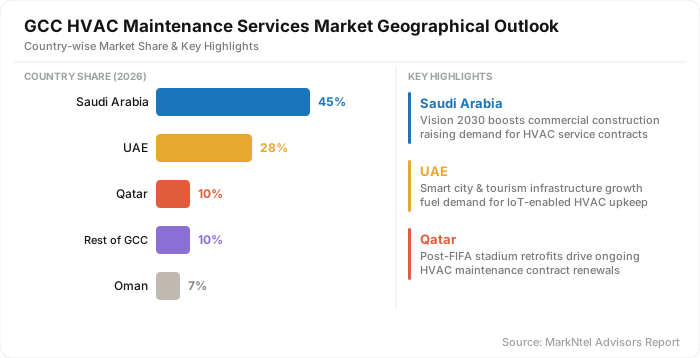
- Saudi Arabia accounts for approximately 45% of the total market share in 2026, driven by its large commissioned building stock, the accelerating pace of infrastructure development under Saudi Vision 2030, and mandatory energy efficiency compliance requirements.
- Split AC systems represent the largest equipment-type segment in 2026, accounting for approximately 45% of the market share, driven by their extensive installation base across GCC residential towers and light commercial properties.
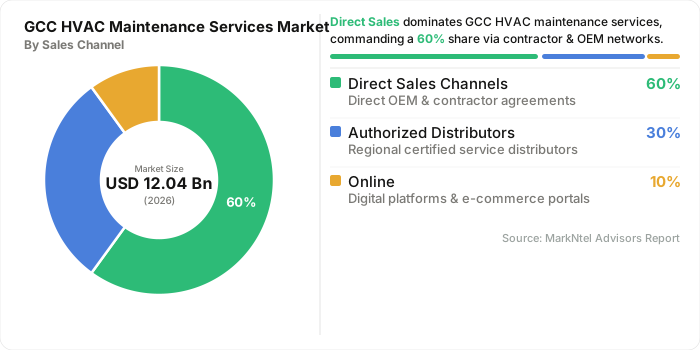
- In 2026, direct sales channels account for approximately 60% share by sales channel, reflecting the preference of commercial and institutional clients for long-term annual maintenance contracts (AMCs) negotiated directly with certified service providers.
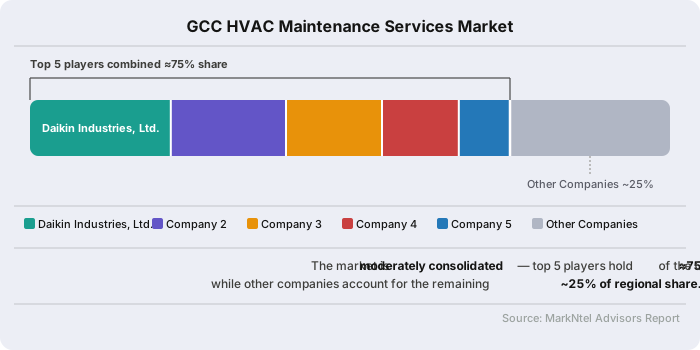
- The market in GCC is moderately consolidated, with the top five players collectively accounting for 75% of the combined regional market share.
GCC HVAC Maintenance Services Market Size & Outlook
The GCC HVAC maintenance services industry was valued at USD 10.95 billion in 2025 and is projected to expand from USD 12.04 billion in 2026 to USD 18.98 billion by 2032. Along with this, the market is estimated to grow at a CAGR of 7.88% during 2026–2032.
The market encompasses preventive maintenance, corrective repair, annual maintenance contracts (AMCs), and performance-optimization services for heating, ventilation, and air conditioning systems installed across residential towers, commercial complexes, hospitality assets, healthcare facilities, data centers, and industrial plants in Saudi Arabia, the UAE, Qatar, Kuwait, Oman, and Bahrain.
Additionally, the industry growth is fundamentally driven by large-scale infrastructure and real estate development across the region. Under Saudi Vision 2030, Saudi Arabia has committed over USD 1–1.3 trillion toward real estate and infrastructure development through 2030, positioning the Kingdom’s construction pipeline as a primary structural demand driver for HVAC systems and associated maintenance services. Mega-developments such as NEOM and the Red Sea Tourism Project collectively encompass tens of millions of square meters of climate-controlled built space, with each asset requiring commissioning-phase checks and multi-year AMCs upon project handover.
Regulatory frameworks further reinforce recurring demand for HVAC maintenance services. The Saudi Energy Efficiency Program (SEEP), administered by the Saudi Energy Efficiency Center (SEEC) under the Ministry of Energy, mandates minimum energy performance standards for commercial cooling equipment and requires periodic certified maintenance records for compliance, directly linking building operators with licensed service providers. Similarly, Dubai Municipality's Green Building Regulations and Specifications require building owners to maintain HVAC systems in line with prescribed performance thresholds, effectively converting regulatory compliance into a recurring service demand cycle.
In parallel, the UAE’s expanding commercial real estate pipeline, comprising over 8 million square meters of gross leasable area under active development in Dubai as of 2024, continues to add HVAC-equipped assets to the serviceable installed base annually, further strengthening long-term maintenance demand across the region.
Industry participants are actively expanding their service capabilities to capture this growing opportunity. For instance, Carrier Corporation expanded its GCC field service network in 2024 by opening additional service centers in Saudi Arabia, targeting post-warranty maintenance of commercial chillers and packaged systems deployed in Vision 2030 projects. Johnson Controls secured multi-year integrated facilities managemen t contracts in the UAE, incorporating HVAC maintenance within broader building performance agreements across healthcare and hospitality portfolios. Additionally, Daikin Industries Ltd. strengthened its authorized service network in Saudi Arabia to address the rising demand for variable refrigerant flow (VRF) system servicing in large-scale commercial developments.
GCC HVAC Maintenance Services Market Key Indicators
- As per the International Energy Agency, space cooling can account for over 70% of peak residential electricity demand on extremely hot days in the Middle East , while contributing nearly half of total peak electricity demand at the regional level. This high concentration of cooling load means that even marginal degradation in HVAC system efficiency can materially increase peak load pressure, reinforcing the need for consistent maintenance and performance optimization of HVAC systems across GCC building stock.
- According to the World Bank, urbanization levels across GCC countries, with Kuwait and Qatar above 98%, are concentrating population and infrastructure into dense metropolitan clusters. This aggregation of HVAC assets enables high-frequency service cycles and optimized maintenance routing for HVAC service providers .
GCC HVAC Maintenance Services Market Scope
| Category | Segments |
|---|---|
| By Type | (Window AC (Up to 1 Ton, 1.1 to 2 Ton, Above 2 Ton), Split AC (Up to 1 Ton, to1.5 Ton, 1.6 to 2 Ton), Floor Standing AC (Up to 2 Ton, Above 2 Ton), Cassette AC, Packaged AC, Ducted Split AC, Centralized AC (FCU/AHU, Chillers, VRF)), |
| By End User | (Residential, Commercial Buildings, Retail, Healthcare, Hospitality, Government & Transportation, Oil & Gas, Industrial Facilities, Other Developing Industries (Hydrofarms, etc.)), |
| By Sales Channel | (Direct Sales, Online, Authorized Distributors), |
GCC HVAC Maintenance Services Industry Growth Drivers
Rising Energy Efficiency Regulations and Lifecycle Optimization Driving Recurring HVAC Maintenance Demand
The primary structural driver of HVAC maintenance services market in GCC is the tightening of energy efficiency regulations across buildings, where cooling systems dominate electricity consumption. The regulatory focus has intensified through national frameworks such as those in the United Arab Emirates , where governments are mandating higher efficiency standards for building systems. As HVAC systems represent the largest controllable energy load, maintaining their efficiency has become a compliance requirement rather than an operational choice.
The impact of these regulations is directly visible in building-level energy management mandates and enforcement mechanisms. According to the UAE Ministry of Energy and Infrastructure, buildings account for approximately 70% of total electricity consumption, with HVAC systems forming the largest share. Policies such as the UAE Demand Side Management Strategy 2030 and Saudi energy efficiency programs require periodic system audits, efficiency benchmarking, and corrective maintenance. This has led to measurable growth in demand across commercial offices, hospitality, and residential complexes, where operators must ensure continuous compliance through scheduled servicing and system optimization.
This driver materially expands market volume by converting HVAC maintenance into a recurring and non-deferrable service requirement across the installed base. Despite being discretionary upgrades, regulatory compliance necessitates ongoing inspection, filter replacement, calibration, and performance tuning throughout the system lifecycle. As a result, every operational HVAC unit generates repeated service demand over time, increasing contract penetration and service frequency. This structural shift toward lifecycle-based maintenance ensures sustained market expansion in both value and volume across the GCC region.
Recent Trends
AI-Integrated IoT Platforms Enabling HVAC Shift to Autonomous, Outcome-Driven Operations
The HVAC industry is undergoing a major structural shift as IoT-enabled systems are increasingly integrated with artificial intelligence (AI), enabling buildings to transition from monitored assets to self-optimizing, autonomous environments. This evolution goes beyond predictive maintenance, as HVAC systems are now capable of making real-time operational decisions based on continuous data inputs such as occupancy, weather conditions, and equipment performance.
In 2025–2026, the adoption of IoT devices in buildings has accelerated significantly, while AI capabilities have matured from pilot deployments to mainstream operational tools, allowing facility managers to move from reactive and scheduled maintenance models toward fully automated, outcome-driven service frameworks.
A key aspect of this transformation is the emergence of AI-driven predictive and autonomous control systems, where HVAC operations are dynamically adjusted without manual intervention. These systems analyse large volumes of sensor data and optimize performance in real time, improving energy efficiency and reducing operational costs.
At the facility management level, 2026 marks a tipping point where AI-powered predictive maintenance and IoT-integrated platforms are becoming standard, with organizations reporting up to 30–45% reductions in maintenance costs and unplanned downtime. For instance, Samsung’s solution allows building operators to manage HVAC performance across distributed assets through a single interface, improving decision-making speed and lowering operational complexity through reduced manual involvement. This demonstrates a clear transition from fixed service schedules to condition-based, intelligence-driven maintenance models.
Opportunities and Challenges
Supply Chain Volatility and High Replacement Part Costs Creating Opportunity for Predictive Inventory and Localized Procurement
HVAC maintenance services in GCC are currently facing a critical challenge due to volatility in the supply chain and high costs of replacement parts. HVAC systems rely on imported parts such as compressors, control boards, and sensors, exposing service providers in Saudi Arabia and the United Arab Emirates to price fluctuations, shipping delays, and inventory uncertainty.
Because many critical spare parts are manufactured outside the region, breakdown repairs often depend on international procurement cycles, resulting in extended lead times and higher exposure to freight-driven cost escalation. This challenge is clearly visible in GCC commercial operations, where urgent HVAC failures frequently require expedited air-freight sourcing to restore cooling in time-sensitive environments such as malls, hospitals, and hospitality assets. Such emergency procurement significantly increases maintenance costs compared to planned replacement cycles, while price volatility in spare parts further destabilizes annual maintenance contract margins for service providers.
Additionally, dependency on a limited number of regional distributors creates inventory bottlenecks, where localized shortages directly translate into delayed service restoration across multiple facilities. These constraints highlight the operational inefficiency of reactive procurement models in high-temperature, high-uptime-demand markets.
As a result, HVAC service providers are increasingly shifting toward predictive inventory management and localized procurement strategies enabled by IoT-based monitoring and AI-driven failure forecasting. By anticipating component degradation in advance, firms can pre-position spare parts within regional warehouses and reduce reliance on emergency procurement channels. This transition is already visible in advanced smart infrastructure projects such as NEOM a nd Red Sea Global, where integrated facility management systems align asset performance data with procurement planning. Over time, this model is improving cost stability, reducing downtime risk, and reshaping HVAC maintenance from reactive servicing into a data-driven supply chain–integrated operating system.
Segmentation Insights
Split AC Systems Command the Largest Equipment-Type Share in GCC HVAC Maintenance
Split AC systems maintain clear dominance in the GCC HVAC maintenance services market, accounting for approximately 45% of total serviced equipment volume. This leadership is structurally driven by their extensive installed base across high-density residential apartments, villas, and small commercial units, where decentralized cooling remains the default design choice. Unlike centralized chillers or VRF systems, Split AC units require minimal upfront infrastructure investment, making them the preferred option for both developers and end-users in cost-sensitive and mid-income housing segments across Saudi Arabia, the UAE, and other GCC markets.
Demand sustainability is reinforced by extreme climatic conditions, which necessitate frequent servicing cycles including filter cleaning, coil maintenance, refrigerant checks, and electrical inspections. These requirements typically generate 2-4 maintenance visits per unit annually, ensuring consistent AMC penetration and recurring service revenue. Additionally, government-led housing initiatives such as Saudi Arabia’s Sakani programme and continued urban residential expansion in Dubai and Riyadh further expand the installed base, reinforcing long-term maintenance demand visibility.
From an investment and ecosystem standpoint, a strong OEM presence from LG Electronics strengthens aftermarket service control through authorized AMC networks. These structure d service ecosystems enhance brand lock-in during post-warranty periods, limiting fragmentation and ensuring sustained dominance of Split AC in both volume and service continuity across the GCC HVAC maintenance landscape. Based on type, the market is segmented into following sub-segments:
- Window AC
- Split AC
- Floor Standing AC
- Cassette AC
- Packaged AC
- Ducted Split AC
- Centralized AC
Direct Sales Channel Dominates GCC HVAC Maintenance Services Revenue
Direct sales dominate the GCC HVAC maintenance market, accounting for approximately 60% of total service transactions, driven by the high reliance on long-term maintenance contracts (AMCs) and OEM-linked service agreements. Large-scale residential developers, commercial real estate owners, and facility management companies prefer direct procurement of HVAC maintenance services to ensure standardized service quality, compliance with building performance requirements, and predictable lifecycle cost management across assets.
This dominance is strongly supported by regulatory and operational requirements in the GCC, where HVAC uptime is critical due to extreme temperature conditions. Building owners increasingly prefer structured direct contracts with OEM-authorized or large integrated service providers to reduce operational risk, ensure rapid response times, and maintain compliance with energy efficiency and sustainability frameworks such as Saudi Arabia’s SEEP and the UAE’s Estidama and Al Sa ‘fat rating systems . These frameworks indirectly encourage formalized, traceable service procurement rather than fragmented vendor sourcing.
From an investment flow perspective, large HVAC service providers and OEMs continue to expand direct service capabilities through in-house technician networks and digital maintenance platforms. This vertical integration enables higher retention rates in AMC renewals, improved control of spare parts, and stronger service margins. As a result, direct sales remain the most efficient and scalable channel for managing the GCC’s rapidly expanding installed HVAC base across residential, commercial, and institutional segments. Based on sales channel, the market is further bifurcated into the following sub-segments:
- Direct Sales
- Online
- Authorized Distributors
GCC HVAC Maintenance Services Market Geographical Outlook
Saudi Arabia emerges as the most dominant regional market in the GCC landscape due to its large-scale infrastructure expansion and sustained economic diversification under Vision 2030.
Major urban centers like Riyadh are experiencing rapid infrastructure upgrades, including metro systems and commercial real estate expansion. According to Vision 2030 progress reports (2023–2025), non-oil GDP growth and construction investment remain structurally prioritized, reinforcing long-term demand concentration in building-related systems, including HVAC. This sustained capex cycle makes Saudi Arabia structurally larger and more demand -intensive than neighboring GCC markets.
From a regulatory and policy standpoint, Saudi Arabia’s dominance is reinforced by stringent national energy efficiency frameworks and sustainability mandates. In parallel, the Saudi Green Initiative promotes carbon reduction targets and accelerated adoption of high-efficiency technologies in urban developments. These frameworks directly increase the adoption of advanced HVAC systems, smart cooling solutions, and performance-driven service contracts across commercial and residential segments.
Demand concentration is particularly strong due to extreme climatic conditions and high urbanization rates in cities such as Jeddah and Riyadh, where cooling requirements remain year-round.
Population growth and rising tourism inflows linked to giga-projects further intensify cooling loads in hotels, malls, airports, and mixed-use developments. SEEC develops and implements energy efficiency standards for buildings and cooling systems through the Saudi Building Code framework (SBC 601–602), which mandates HVAC efficiency, building envelope performance, and energy conservation requirements that have been progressively updated in recent SBC editions (including 2023–2025 revisions and the 2024 code update cycle).
Also, government procurement preferences increasingly favor OEM-certified maintenance and long-term service agreements in large infrastructure projects. As a result, Saudi Arabia exhibits higher aftermarket service penetration and lifecycle contract adoption, consolidating its leadership in the regional HVAC maintenance services market.
GCC HVAC Maintenance Services Industry Competitive Landscape
The GCC HVAC maintenance services market is moderately consolidated, with Carrier, Johnson Controls, Daikin, Trane Technologies, and Siemens companies operating across the six-member region. The top five players collectively account for 75% of the combined regional market share, with competitive differentiation driven primarily by OEM service authorization, certified technician network density, and integration of connected-asset monitoring capabilities.
Major Companies in the GCC HVAC Maintenance Services Industry
- LG Electronics
- S.K.M. Air Conditioning
- Carrier Corporation
- Gree Electric Appliances
- Samsung Electronics
- Daikin Industries
- Mitsubishi Electric
- Trane Inc.
- Johnson Controls Inc.
- Zamil Air Conditioners Holding Co. Ltd.
- Libra Group UAE
- RGS HVAC Services
- Delight International Facilities Management
- Bin Dasmal Group
- Dolphin HVAC Services
- Voltas Limited
GCC HVAC Maintenance Services Industry News and Recent Developments
2025: Tabreed and Johnson Controls Enter Long-Term Agreement for District Cooling and Lifecycle HVAC Services in the GCC
Tabreed and Johnson Controls entered into a long-term strategic agreement in September 2025 focused on advancing district cooling technologies and integrated HVAC lifecycle solutions across the GCC region. The partnership covers high-efficiency chiller systems, energy optimization technologies, and digital building management solutions designed to improve cooling performance in large-scale urban infrastructure. The agreement also emphasizes lifecycle services, including maintenance, system upgrades, and performance optimization, enabled through Johnson Controls’ Open Blue digital platform. The collaboration is aligned with the growing demand for sustainable cooling infrastructure in GCC mega-projects and urban developments.
Impact Analysis: The Tabreed–Johnson Controls agreement demonstrates a structural shift in the GCC HVAC sector toward integrated district cooling ecosystems supported by long-term maintenance and performance optimization contracts. The partnership reinforces the growing importance of lifecycle service models, where HVAC providers are responsible not only for installation but also for continuous efficiency improvement and operational reliability. This reduces the role of traditional reactive maintenance approaches and increases demand for digitally enabled service providers with advanced monitoring capabilities. Competitors lacking integrated O&M and analytics platforms will face reduced competitiveness in large-scale GCC infrastructure projects as performance-based contracting becomes standard practice.
2025: Johnson Controls Arabia Targets Saudi Mega Projects and Expands Integrated HVAC Lifecycle Services Across the GCC
Johnson Controls Arabia announced its strategic focus on Saudi Arabia’s mega-project pipeline under Vision 2030, reinforcing its role in delivering integrated HVAC systems, smart building solutions, and decarbonization services across large-scale infrastructure developments. The company’s operations in Saudi Arabia include manufacturing, engineering, and service delivery capabilities supporting commercial, healthcare, and urban development projects. Its portfolio spans energy-efficient HVAC systems, building automation technologies, and long-term operational support services aligned with giga-project requirements. The strategy is designed to strengthen its position in both domestic Saudi projects and regional export markets across the GCC.
Impact Analysis: The expansion of Johnson Controls Arabia’s operations in Saudi Arabia demonstrates a broader transformation of the GCC HVAC sector toward integrated lifecycle service ecosystems linked to Vision 2030 infrastructure development. The increasing integration of manufacturing, installation, maintenance, and digital optimization capabilities strengthens OEM control over the full HVAC value chain. This shift reduces reliance on fragmented maintenance providers and accelerates adoption of long-term service agreements tied to energy efficiency and operational performance. Competitors lacking localized manufacturing capacity and advanced building analytics platforms will face reduced competitiveness in securing mega-project and institutional HVAC contracts across the GCC.
- Market Segmentation
- Introduction
- Product Definition
- Research Process
- Assumptions
- Executive Summary
- GCC HVAC Maintenance Services Market Policies, Regulations, and Product Standards
- GCC HVAC Maintenance Services Market Trends & Developments
- GCC HVAC Maintenance Services Market Dynamics
- Growth Factors
- Challenges
- GCC HVAC Maintenance Services Market Hotspot & Opportunities
- GCC HVAC Maintenance Services Market Outlook, 2022-2032F
- Market Size & Outlook
- By Revenues (USD Million)
- Market Share & Analysis
- By Type- Market Size & Forecast 2022-2032, USD Million
- Window AC
- Up to 1 Ton
- 1.1 to 2 Ton
- Above 2 Ton
- Split AC
- Up to 1 Ton
- to1.5 Ton
- 1.6 to 2 Ton
- Floor Standing AC
- Up to 2 Ton
- Above 2 Ton
- Cassette AC
- Packaged AC
- Ducted Split AC
- Centralized AC
- FCU/AHU
- Chillers
- VRF
- Window AC
- By End User- Market Size & Forecast 2022-2032, USD Million
- Residential
- Commercial Buildings
- Retail
- Healthcare
- Hospitality
- Government & Transportation
- Oil & Gas
- Industrial Facilities
- Other Developing Industries (Hydrofarms, etc.)
- By Sales Channel- Market Size & Forecast 2022-2032, USD Million
- Direct Sales
- Online
- Authorized Distributors
- By Country
- UAE
- Saudi Arabia
- Oman
- Qatar
- Bahrain
- Kuwait
- By Company
- Competition Characteristics
- Market Share & Analysis
- By Type- Market Size & Forecast 2022-2032, USD Million
- Market Size & Outlook
- UAE HVAC Maintenance Services Market Outlook, 2022-2032F
- Market Size & Outlook
- By Revenues (USD Million)
- Market Share & Analysis
- By Type- Market Size & Forecast 2022-2032, USD Million
- By End User- Market Size & Forecast 2022-2032, USD Million
- By Sales Channel- Market Size & Forecast 2022-2032, USD Million
- Market Size & Outlook
- Saudi Arabia HVAC Maintenance Services Market Outlook, 2022-2032F
- Market Size & Outlook
- By Revenues (USD Million)
- Market Share & Analysis
- By Type- Market Size & Forecast 2022-2032, USD Million
- By End User- Market Size & Forecast 2022-2032, USD Million
- By Sales Channel- Market Size & Forecast 2022-2032, USD Million
- Market Size & Outlook
- Oman HVAC Maintenance Services Market Outlook, 2022-2032F
- Market Size & Outlook
- By Revenues (USD Million)
- Market Share & Analysis
- By Type- Market Size & Forecast 2022-2032, USD Million
- By End User- Market Size & Forecast 2022-2032, USD Million
- By Sales Channel- Market Size & Forecast 2022-2032, USD Million
- Market Size & Outlook
- Qatar HVAC Maintenance Services Market Outlook, 2022-2032F
- Market Size & Outlook
- By Revenues (USD Million)
- Market Share & Analysis
- By Type- Market Size & Forecast 2022-2032, USD Million
- By End User- Market Size & Forecast 2022-2032, USD Million
- By Sales Channel- Market Size & Forecast 2022-2032, USD Million
- Market Size & Outlook
- Bahrain HVAC Maintenance Services Market Outlook, 2022-2032F
- Market Size & Outlook
- By Revenues (USD Million)
- Market Share & Analysis
- By Type- Market Size & Forecast 2022-2032, USD Million
- By End User- Market Size & Forecast 2022-2032, USD Million
- By Sales Channel- Market Size & Forecast 2022-2032, USD Million
- Market Size & Outlook
- GCC HVAC Maintenance Services Market Key Strategic Imperatives for Success & Growth
- Competitive Outlook
- Company Profiles
- S.K.M. Air Conditioning
- Business Description
- Product Portfolio
- Collaborations & Alliances
- Recent Developments
- Financial Details
- Others
- Carrier Corporation
- Business Description
- Product Portfolio
- Collaborations & Alliances
- Recent Developments
- Financial Details
- Others
- Gree Electric Appliances
- Business Description
- Product Portfolio
- Collaborations & Alliances
- Recent Developments
- Financial Details
- Others
- Daikin Industries
- Business Description
- Product Portfolio
- Collaborations & Alliances
- Recent Developments
- Financial Details
- Others
- Mitsubishi Electric
- Business Description
- Product Portfolio
- Collaborations & Alliances
- Recent Developments
- Financial Details
- Others
- Trane Inc.
- Business Description
- Product Portfolio
- Collaborations & Alliances
- Recent Developments
- Financial Details
- Others
- Johnson Controls Inc.
- Business Description
- Product Portfolio
- Collaborations & Alliances
- Recent Developments
- Financial Details
- Others
- Zamil Air Conditioners Holding Co. Ltd.
- Business Description
- Product Portfolio
- Collaborations & Alliances
- Recent Developments
- Financial Details
- Others
- Libra Group UAE
- Business Description
- Product Portfolio
- Collaborations & Alliances
- Recent Developments
- Financial Details
- Others
- SNOW HVA
- Business Description
- Product Portfolio
- Collaborations & Alliances
- Recent Developments
- Financial Details
- Others
- Albatha Engineering Group
- Business Description
- Product Portfolio
- Collaborations & Alliances
- Recent Developments
- Financial Details
- Others
- Anan Air Conditioning
- Business Description
- Product Portfolio
- Collaborations & Alliances
- Recent Developments
- Financial Details
- Others
- RGS HVAC Servicess
- Business Description
- Product Portfolio
- Collaborations & Alliances
- Recent Developments
- Financial Details
- Others
- Delight International Facilities Management
- Business Description
- Product Portfolio
- Collaborations & Alliances
- Recent Developments
- Financial Details
- Others
- Bin Dasmal Group
- Business Description
- Product Portfolio
- Collaborations & Alliances
- Recent Developments
- Financial Details
- Others
- Dolphin HVAC Servicess
- Business Description
- Product Portfolio
- Collaborations & Alliances
- Recent Developments
- Financial Details
- Others
- Voltas
- Business Description
- Product Portfolio
- Collaborations & Alliances
- Recent Developments
- Financial Details
- Others
- S.K.M. Air Conditioning
- Company Profiles
- Disclaimer

MarkNtel Advisors follows a robust and iterative research methodology designed to ensure maximum accuracy and minimize deviation in market estimates and forecasts. Our approach combines both bottom-up and top-down techniques to effectively segment and quantify various aspects of the market. A consistent feature across all our research reports is data triangulation, which examines the market from three distinct perspectives to validate findings. Key components of our research process include:
1. Scope & Research Design At the outset, MarkNtel Advisors define the research objectives and formulate pertinent questions. This phase involves determining the type of research—qualitative or quantitative—and designing a methodology that outlines data collection methods, target demographics, and analytical tools. They also establish timelines and budgets to ensure the research aligns with client goals.
2. Sample Selection and Data Collection In this stage, the firm identifies the target audience and determines the appropriate sample size to ensure representativeness. They employ various sampling methods, such as random or stratified sampling, based on the research objectives. Data collection is carried out using tools like surveys, interviews, and observations, ensuring the gathered data is reliable and relevant.
3. Data Analysis and Validation Once data is collected, MarkNtel Advisors undertake a rigorous analysis process. This includes cleaning the data to remove inconsistencies, employing statistical software for quantitative analysis, and thematic analysis for qualitative data. Validation steps are taken to ensure the accuracy and reliability of the findings, minimizing biases and errors.

4. Data Forecast and FinalizationThe final phase involves forecasting future market trends based on the analyzed data. MarkNtel Advisors utilize predictive modeling and time series analysis to anticipate market behaviors. The insights are then compiled into comprehensive reports, featuring visual aids like charts and graphs, and include strategic recommendations to inform client decision-making
FILL THE FORM TO GET THE FREE SAMPLE PAGES
We offer flexible licensing options to cater to varying organizational needs. Choose the pricing pack that best suits your requirements:
Buy Now Inquire Before Buying
 Talk to our Consultant
 Request Customization