

By Product Type (Skin Care, Hair Care, Color Cosmetics, Fragrances & Perfumes, Oral Care, Bath & Shower Products, Mens Grooming Products, Others), By Distribution Channel (Supermarkets & Hypermarkets,... ... kets & Hypermarkets, Convenience Stores, Pharmacies & Drug Stores, Specialty Beauty Stores, E-commerce Platforms, Traditional Retail Stores), By Gender (Men, Women, Unisex), By Price Category (Mass, Mid-Range, Premium), By End User (Adults, Teenagers, Children), and others Read more
- FMCG
- Jun 2026
- 120
- PDF, Excel, PPT
Nigeria Beauty & Personal Care Market Key Takeaways
- Nigeria Beauty & Personal Care Market was estimated at USD 1.17 billion in 2025, reaching USD 1.22 billion in 2026 and USD 2.08 billion by 2032.
- The industry is projected to witness steady growth at a CAGR of 9.30% during forecast period.
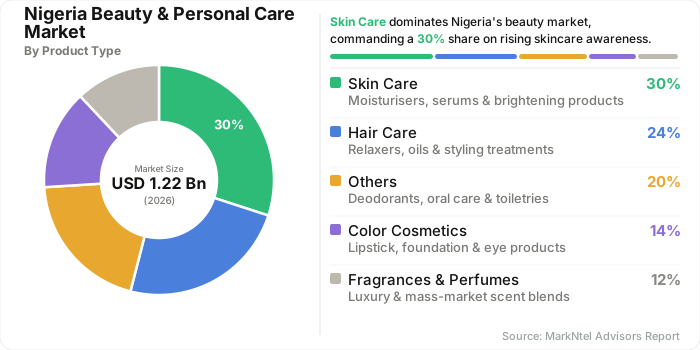
- Skin care accounts for approximately 30% of the share among all product types in 2026.
- In 2026, the women consumers segment dominates with around 47% of the total share.
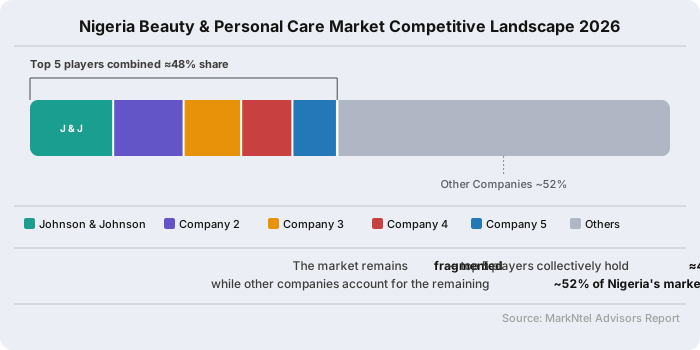
- Industry remains moderately fragmented, with the top five players collectively contributing nearly 48% share, reflecting balanced competition between multinational and local brands.
Nigeria Beauty & Personal Care Market Size and Outlook
The Nigeria beauty & personal care market size was valued at USD 1.17 billion in 2025 and is projected to reach USD 2.08 billion by 2032, expanding at a CAGR of 9.30% during 2026–2032. This steady growth trajectory reflects the essential nature of beauty & personal care consumption, supported by recurring demand for hygiene and grooming products. Categories such as soaps, lotions, and deodorants continue to drive volume stability, particularly as body care products remain integral to daily routines across diverse income segments.
Demographic expansion continues to underpin long-term growth, with Nigeria’s population expected to reach approximately 242.4 million by 2026 . This rapid increase significantly enlarges the consumer base while introducing millions of first-time users into grooming cycles. In parallel, the rising concentration of the urban areas, where 55.8% of the population resides, is improving access to modern retail infrastructure, branded products, and evolving consumption patterns influenced by lifestyle changes and increasing exposure to organized distribution channels.
Public health awareness is also playing a meaningful role in shaping consumption. UNICEF data indicating only 17% handwashing compliance has prompted stronger hygiene campaigns, reinforcing the importance of basic Beauty & Personal Care practices. This is contributing to consistent demand for soaps and related essentials, while gradually expanding consumer engagement with broader cosmetic products categories as awareness of personal hygiene and grooming standards improves across both urban and semi-urban populations.
Simultaneously, evolving dynamics highlight the interaction between premiumization and affordability. A gradual shift toward dermatological skincare reflects increasing interest in efficacy-driven products, while affordability constraints are encouraging innovation in packaging and pricing strategies. Sachet-based offerings and cost-effective formulations are enabling broader access without compromising perceived value. Collectively, these factors indicate a balanced growth pathway, where structural demand drivers, evolving consumer awareness, and adaptive product strategies that support sustained expansion of the Nigeria beauty & personal care industry.
Nigeria Beauty & Personal Care Market Key Indicators
- According to the World Health Organization, approximately 77% of Nigerian women regularly use skin-lightening products, among the highest globally. This entrenched behavior sustains strong demand for tone-enhancing creams and lotions while prompting regulatory scrutiny over harmful ingredients. As compliance enforcement increases, manufacturers are reformulating offerings, creating a transition toward safer alternatives and strengthening the relevance of natural skincare within regulated product portfolios.
- Data from the Nigerian Communications Commission shows 112.67 million internet subscriptions and 179.64 million active lines by December 2025, alongside 51.97% broadband penetration. This widespread connectivity is transforming product discovery and purchase behavior, enabling brands to leverage social platforms and direct-to-consumer models. The shift significantly accelerates beauty e-commerce, particularly among digitally engaged youth segments seeking convenience and product variety.
- The National Bureau of Statistics reported consumer spending of approximately USD 7.6 billion in Q4 2024, reflecting sustained expenditure despite inflationary pressures. Essential goods continue to command a stable share of household budgets, with frequently used items maintaining steady turnover. This consumption resilience reinforces the importance of hygiene products, ensuring consistent demand for everyday Beauty & Personal Care categories despite broader economic constraints.
- According to the World Bank, about 80.71% of Nigerian women aged 15 and above were economically active in 2024 , significantly exceeding the global average. Greater workforce participation enhances purchasing power and reinforces spending on grooming and appearance-related products. This dynamic strengthens demand across multiple categories, particularly influencing the expansion of women beauty segments focused on skincare, fragrances, and daily-use Beauty & Personal Care essentials.
Nigeria Beauty & Personal Care Market Scope
| Category | Segments |
|---|---|
| By Product Type | Skin Care, Hair Care, Color Cosmetics, Fragrances & Perfumes, Oral Care, Bath & Shower Products, Mens Grooming Products, Others |
| By Distribution Channel | Supermarkets & Hypermarkets, Convenience Stores, Pharmacies & Drug Stores, Specialty Beauty Stores, E-commerce Platforms, Traditional Retail Stores |
| By Gender | Men, Women, Unisex, |
| By Price Category | Mass, Mid-Range, Premium |
| By End User | Adults, Teenagers, Children |
Nigeria Beauty & Personal Care Market Growth Drivers
Rising Youth Population Accelerating Grooming Adoption
Nigeria’s exceptionally young demographic profile is a foundational growth engine for the Nigeria Beauty & Personal Care sector, shaping long-term consumption patterns across grooming and hygiene categories. With a median age of approximately 18.3 years in 2026, the country possesses one of the youngest populations globally, significantly expanding the base of first-time users. This youthful cohort increasingly adopts daily grooming routines early, reinforcing sustained demand for Beauty & Personal Care products.
As adolescents transition into adulthood, exposure to modern lifestyles accelerates adoption of deodorants, fragrances, and skincare products. The growing youth consumer base drives higher engagement with grooming and brand experimentation. Over time, these early habits evolve into sustained purchasing cycles, reinforcing repeat demand across essential Beauty & Personal Care categories.
Furthermore, increasing urban migration and digital exposure are reshaping preferences among younger populations, amplifying awareness of hygiene standards and global beauty trends. This behavioral evolution supports expanding demand for everyday essentials such as body wash, lotions, and haircare products, contributing to the steady expansion of hygiene demand across both urban and semi-urban regions.
Nigeria’s youthful population structure not only drives immediate consumption growth but also builds a long-term pipeline of habitual users across multiple categories. As these early adoption translates into sustained purchasing cycles. This demographic momentum, reinforced by evolving grooming preferences, firmly positions youth-driven demand as a central force underpinning expansion in Nigeria.
Recent Trends
Rising Demand for Dermatological Skincare Solutions
The Nigeria Beauty & Personal Care Market is gradually evolving toward science-backed and clinically positioned skincare solutions, supported by increasing awareness of ingredient safety and product efficacy. The introduction of dermatologist-recommended brands such as Eucerin reflects how global manufacturers are prioritizing targeted treatments, indicating a strategic shift toward performance-driven formulations rather than purely cosmetic offerings.
Beiersdorf’s introduction of Eucerin in Nigeria, featuring dermatological formulations targeting hyperpigmentation, acne, and sun protection, indicates increasing manufacturer focus on clinically driven skincare solutions. The launch highlights how global players are positioning science-backed products for melanin-rich skin, reflecting emerging demand patterns in Beauty & Personal Care products.
At the same time, evolving consumer exposure to global standards through digital platforms is influencing product awareness and trial. The expansion of digital beauty ecosystems is enabling consumers to access information on ingredients, routines, and dermatological benefits, gradually shifting preferences toward more informed purchasing decisions and supporting demand for specialized skincare offerings in Nigeria beauty & personal care industry.
These developments suggest a measured transition rather than an immediate transformation. As brands continue aligning portfolios with cosmetic products tailored for efficacy and safety, the market is expected to steadily incorporate clinically positioned solutions, reinforcing long-term value growth within the Nigeria beauty & personal care industry without overstating the pace of consumer adoption.
Nigeria Beauty & Personal Care Market Opportunities and Challenges
Price Sensitivity Driving Sachet- based Product Innovation
Rising inflation and constrained disposable income are intensifying price sensitivity across the Nigeria Beauty & Personal Care landscape, significantly influencing purchasing behavior. A 2025 consumer report indicates that nearly 6 out of 10 Nigerian shoppers switched brands due to rising prices, highlighting the growing importance of value-based decision-making. This shift underscores increasing price sensitivity, where consumers prioritize affordability over brand loyalty.
As economic pressures persist, consumers are actively seeking cost-effective alternatives, often trading down to lower-priced products or smaller pack sizes. This environment is reinforcing the importance of low cost skincare. Manufacturers face the dual challenge of maintaining product quality while aligning with affordability expectations, limiting pricing flexibility and compressing margins across Nigeria.
However, these constraints are simultaneously unlocking innovation-driven opportunities. In 2025, Orange Group introduced its Devon and Dynasty skincare ranges in sachet formats, demonstrating how brands are adapting to local purchasing behavior. The use of smaller, affordable packaging enables wider accessibility while preserving perceived product quality, highlighting the strategic importance of sachet products in expanding market reach .
The affordability pressures are not only reshaping consumer behavior but also driving structural innovation across product design and pricing strategies. As companies continue aligning offerings with value-conscious demand, the ability to deliver accessible yet aspirational products will remain central to sustaining growth within the Nigeria beauty & personal care industry.
Segmentation Insights
Skin Care Leading Through Daily Usage Demand
Skin care accounts for approximately 30% of total revenue in the Nigeria Beauty & Personal Care Market, making it the leading product segment. Its dominance is primarily driven by high-frequency usage patterns across cleansers, moisturizers, and sun care products, which are integrated into daily routines. The segment benefits from strong relevance to climatic conditions, supporting consistent demand across urban and semi-urban consumers within the skincare industry.
The category’s strength is further reinforced by expanding product diversification and increasing consumer awareness of skin health. Products such as facial serums, sunscreens, and sheet masks are gaining traction, particularly among younger consumers seeking targeted solutions. The rise of beauty products reflects a shift toward specialized and preventive skincare, supported by growing exposure to global trends and dermatological solutions.
Meanwhile, other segments such as hair care and color cosmetics continue to expand, but their usage remains relatively less frequent compared to skincare essentials. The growing influence of natural skincare trends is also shaping purchasing decisions, encouraging demand for ingredient-focused products. Overall, skin care’s dominance is sustained by its essential nature, broad applicability, and evolving product innovation. The scope classification by product type comprises:
- Skin Care
- Hair Care
- Color Cosmetics
- Fragrances & Perfumes
- Oral Care
- Bath & Shower Products
- Men's Grooming Products
- Others
Women Segment Leading Through High Engagement
The women segment accounts for approximately 47% of total revenue, making it the leading contributor within the Nigeria beauty & personal care industry. This dominance is primarily supported by a large and active consumer base, as women represented about 49.43% of Nigeria’s population in 2024. Higher engagement with grooming and skincare routines continues to drive demand across multiple product categories.
Women consumers typically exhibit stronger purchasing frequency and product diversification compared to men. The growing influence of beauty products is evident as female consumers increasingly adopt both essential and specialized products. This behavior supports consistent revenue generation, as repeat purchases and product layering contribute to higher overall spending patterns within the segment.
In contrast, the men and unisex segments are gradually expanding, driven by rising grooming awareness and product accessibility. While still smaller in comparison, these segments are benefiting from evolving preferences and increased availability of tailored offerings. The emergence of the grooming sector reflects a broader shift toward inclusive product positioning, though women remain the primary demand drivers.
Overall, the women segment’s dominance is underpinned by demographic strength, higher engagement levels, and diversified consumption patterns, ensuring its continued leadership within the Nigeria beauty & personal care industry over the forecast period. The market is segmented by end users into the following categories:
- Men
- Women
- Unisex
Nigeria Beauty & Personal Care Market Competitive Analysis
The Nigeria Beauty & Personal Care Market is led by key multinational and regional players, including Unilever Nigeria Plc, PZ Cussons Nigeria Plc, Johnson & Johnson, Kimberly-Clark Corp, and Hayat Kimya Nigeria Ltd, which together account for an estimated 48% of total market share. The market structure is best characterized as moderately fragmented, reflecting the presence of both established global brands and competitive domestic manufacturers. While multinational companies maintain strong positioning in branded and higher-value segments through product innovation and brand equity, local players leverage pricing strategies and extensive distribution networks to sustain competitiveness, resulting in a balanced and competitive industry landscape.
Key Players in Nigeria Beauty & Personal Care Market
- Johnson & Johnson
- Kimberly-Clark Corp
- Hayat Kimya Nigeria Ltd
- PZ Cussons Nigeria Plc
- Unilever Nigeria Plc
- Wemy Industries Ltd
- UNZA Holdings Bhd (Wipro Unza)
- Bordar Group
- Zandas Global Resources Ltd
- Thompson & Grace Pharmaceuticals Ltd
- Others
Nigeria Beauty & Personal Care Industry News and Recent Developments:
January 2026: Sesderma Expands African Footprint with Nigeria Launch
Spanish dermatological skincare company Sesderma expanded into Nigeria, introducing products targeting pigmentation management, skin hydration, anti-aging, and overall skin health. The company’s entry forms part of its broader African growth strategy and increases the availability of clinically oriented skincare products tailored to local consumer needs.
Impact Analysis: Sesderma’s market entry underscores growing international confidence in Nigeria’s evolving skincare landscape. The expansion enhances competition within premium and dermatological skincare categories while broadening consumer access to specialized formulations. Increased participation from global brands is expected to encourage higher product standards, greater consumer awareness, and further investment in efficacy-driven skincare solutions.
March 2025: Urban Skin Rx Enters Nigerian Skincare Market
Urban Skin Rx expanded into Nigeria with a portfolio focused on hyperpigmentation management, uneven skin tone correction, and skincare solutions formulated for melanin-rich skin. The brand’s entry broadens the availability of targeted skincare products and reflects increasing international interest in Nigeria’s evolving beauty and Beauty & Personal Care landscape.
Impact Analysis: The expansion strengthens the availability of specialized skincare products and supports the gradual premiumization of the market. By focusing on common skin concerns among African consumers, Urban Skin Rx enhances product diversity and raises competitive standards within the skincare category. The move also signals growing recognition of Nigeria as a strategically important destination for international beauty brands seeking access to a large and increasingly skincare-conscious consumer base.
- Market Segmentation
- Introduction
- Product Definition
- Research Process
- Assumptions
- Executive Summary
- Nigeria Beauty & Personal Care Market Pricing Analysis
- Nigeria Beauty & Personal Care Production Trend 2022-2032
- Nigeria Beauty & Personal Care Trend by Type of Product Type
- Skin Care
- Hair Care
- Color Cosmetics
- Fragrances & Perfumes
- Oral Care
- Bath & Shower Products
- Men's Grooming Products
- Others
- Company Wise Production Plants and Statistics
- Installed Production Capacity
- Actual Production
- Planned Production Target
- Nigeria Beauty & Personal Care Trend by Type of Product Type
- Nigeria Beauty & Personal Care Pricing Analysis 2022-2032
- Nigeria Beauty & Personal Care Pricing Trend 2022-2032
- Nigeria Beauty & Personal Care Pricing Trend by Product Category 2022-2032
- Skin Care
- Hair Care
- Color Cosmetics
- Fragrances & Perfumes
- Oral Care
- Bath & Shower Products
- Men's Grooming Products
- Others
- Nigeria Beauty & Personal Care Market Dynamics
- Growth Drivers
- Challenges
- Nigeria Beauty & Personal Care Market Hotspots & Opportunities
- Nigeria Beauty & Personal Care Market Regulations & Policies
- Nigeria Beauty & Personal Care Market Supply Chain Analysis
- Nigeria Beauty & Personal Care Market Outlook, 2022-2032F
- Market Size & Analysis
- Revenues (USD Million)
- Market Share & Analysis
- By Product Type- Market Size & Forecast 2022-2032, USD Million
- Skin Care
- Facial Cleansers
- Moisturizers & Face Creams
- Facial Serums
- Sunscreen & Sun Care
- Sheet Face Masks
- Others (Scrubs, Toners, etc.)
- Hair Care
- Shampoo
- Conditioner
- Hair Oils
- Hair Serums
- Hair Masks & Peels
- Others
- Color Cosmetics
- Face Color Cosmetics
- Foundation
- Concealer
- Blush
- Bronzer
- Powder
- Highlighter
- Lip Color Cosmetics
- Lipstick
- Lip Liner
- Lip Gloss
- Lip Tint
- Eye Color Cosmetics
- Eye Shadow
- Eye Liner
- Mascara
- False Eyelashes
- Nail Color Cosmetics
- Face Color Cosmetics
- Fragrances & Perfumes
- Oral Care
- Premium Teeth Whitening
- Breath Fresheners
- Polishing Tools
- Bath & Shower Products
- Men's Grooming Products
- Others
- Skin Care
- By Distribution Channel- Market Size & Forecast 2022-2032, USD Million
- Supermarkets & Hypermarkets
- Convenience Stores
- Pharmacies & Drug Stores
- Specialty Beauty Stores
- E-commerce Platforms
- Traditional Retail Stores
- By Gender- Market Size & Forecast 2022-2032, USD Million
- Men
- Women
- Unisex
- By Price Category- Market Size & Forecast 2022-2032, USD Million
- Mass
- Mid-Range
- Premium
- By End User- Market Size & Forecast 2022-2032, USD Million
- Adults
- Teenagers
- Children
- By Region
- North
- East
- West
- South
- By Company
- Revenue, By Company
- Revenue, By Brand
- By Product Type- Market Size & Forecast 2022-2032, USD Million
- Market Size & Analysis
- Nigeria Skin Care Market Outlook, 2022-2032F
- Market Size & Analysis
- Revenues (USD Million)
- Market Share & Analysis
- By Distribution Channel- Market Size & Forecast 2022-2032, USD Million
- By Gender- Market Size & Forecast 2022-2032, USD Million
- By Price Category- Market Size & Forecast 2022-2032, USD Million
- By End User- Market Size & Forecast 2022-2032, USD Million
- Market Size & Analysis
- Nigeria Hair Care Market Outlook, 2022-2032F
- Market Size & Analysis
- Revenues (USD Million)
- Market Share & Analysis
- By Distribution Channel- Market Size & Forecast 2022-2032, USD Million
- By Gender- Market Size & Forecast 2022-2032, USD Million
- By Price Category- Market Size & Forecast 2022-2032, USD Million
- By End User- Market Size & Forecast 2022-2032, USD Million
- Market Size & Analysis
- Nigeria Color Cosmetics Market Outlook, 2022-2032F
- Market Size & Analysis
- Revenues (USD Million)
- Market Share & Analysis
- By Distribution Channel- Market Size & Forecast 2022-2032, USD Million
- By Gender- Market Size & Forecast 2022-2032, USD Million
- By Price Category- Market Size & Forecast 2022-2032, USD Million
- By End User- Market Size & Forecast 2022-2032, USD Million
- Market Size & Analysis
- Nigeria Fragrances & Perfumes Market Outlook, 2022-2032F
- Market Size & Analysis
- Revenues (USD Million)
- Market Share & Analysis
- By Distribution Channel- Market Size & Forecast 2022-2032, USD Million
- By Gender- Market Size & Forecast 2022-2032, USD Million
- By Price Category- Market Size & Forecast 2022-2032, USD Million
- By End User- Market Size & Forecast 2022-2032, USD Million
- Market Size & Analysis
- Nigeria Oral Care Market Outlook, 2022-2032F
- Market Size & Analysis
- Revenues (USD Million)
- Market Share & Analysis
- By Distribution Channel- Market Size & Forecast 2022-2032, USD Million
- By Gender- Market Size & Forecast 2022-2032, USD Million
- By Price Category- Market Size & Forecast 2022-2032, USD Million
- By End User- Market Size & Forecast 2022-2032, USD Million
- Market Size & Analysis
- Nigeria Bath & Shower Products Market Outlook, 2022-2032F
- Market Size & Analysis
- Revenues (USD Million)
- Market Share & Analysis
- By Distribution Channel- Market Size & Forecast 2022-2032, USD Million
- By Gender- Market Size & Forecast 2022-2032, USD Million
- By Price Category- Market Size & Forecast 2022-2032, USD Million
- By End User- Market Size & Forecast 2022-2032, USD Million
- Market Size & Analysis
- Nigeria Men's Grooming Products Market Outlook, 2022-2032F
- Market Size & Analysis
- Revenues (USD Million)
- Market Share & Analysis
- By Distribution Channel- (USD Million)
- By Gender- (USD Million)
- By Price Category- (USD Million)
- By End User- (USD Million)
- Market Size & Analysis
- Nigeria Beauty & Personal Care Market Key Strategic Imperatives for Success & Growth
- Competition Outlook
- Company Profiles
- Johnson & Johnson
- Business Description
- Product Portfolio
- Strategic Alliances or Partnerships
- Recent Developments
- Financial Details
- Others
- Kimberly-Clark Corp
- Business Description
- Product Portfolio
- Strategic Alliances or Partnerships
- Recent Developments
- Financial Details
- Others
- Hayat Kimya Nigeria Ltd
- Business Description
- Product Portfolio
- Strategic Alliances or Partnerships
- Recent Developments
- Financial Details
- Others
- PZ Cussons Nigeria Plc
- Business Description
- Product Portfolio
- Strategic Alliances or Partnerships
- Recent Developments
- Financial Details
- Others
- Unilever Nigeria Plc
- Business Description
- Product Portfolio
- Strategic Alliances or Partnerships
- Recent Developments
- Financial Details
- Others
- Wemy Industries Ltd
- Business Description
- Product Portfolio
- Strategic Alliances or Partnerships
- Recent Developments
- Financial Details
- Others
- UNZA Holdings Bhd (Wipro Unza)
- Business Description
- Product Portfolio
- Strategic Alliances or Partnerships
- Recent Developments
- Financial Details
- Others
- Bordar Group
- Business Description
- Product Portfolio
- Strategic Alliances or Partnerships
- Recent Developments
- Financial Details
- Others
- Zandas Global Resources Ltd
- Business Description
- Product Portfolio
- Strategic Alliances or Partnerships
- Recent Developments
- Financial Details
- Others
- Thompson & Grace Pharmaceuticals Ltd
- Business Description
- Product Portfolio
- Strategic Alliances or Partnerships
- Recent Developments
- Financial Details
- Others
- Others
- Johnson & Johnson
- Company Profiles
- Disclaimer

MarkNtel Advisors follows a robust and iterative research methodology designed to ensure maximum accuracy and minimize deviation in market estimates and forecasts. Our approach combines both bottom-up and top-down techniques to effectively segment and quantify various aspects of the market. A consistent feature across all our research reports is data triangulation, which examines the market from three distinct perspectives to validate findings. Key components of our research process include:
1. Scope & Research Design At the outset, MarkNtel Advisors define the research objectives and formulate pertinent questions. This phase involves determining the type of research—qualitative or quantitative—and designing a methodology that outlines data collection methods, target demographics, and analytical tools. They also establish timelines and budgets to ensure the research aligns with client goals.
2. Sample Selection and Data Collection In this stage, the firm identifies the target audience and determines the appropriate sample size to ensure representativeness. They employ various sampling methods, such as random or stratified sampling, based on the research objectives. Data collection is carried out using tools like surveys, interviews, and observations, ensuring the gathered data is reliable and relevant.
3. Data Analysis and Validation Once data is collected, MarkNtel Advisors undertake a rigorous analysis process. This includes cleaning the data to remove inconsistencies, employing statistical software for quantitative analysis, and thematic analysis for qualitative data. Validation steps are taken to ensure the accuracy and reliability of the findings, minimizing biases and errors.

4. Data Forecast and FinalizationThe final phase involves forecasting future market trends based on the analyzed data. MarkNtel Advisors utilize predictive modeling and time series analysis to anticipate market behaviors. The insights are then compiled into comprehensive reports, featuring visual aids like charts and graphs, and include strategic recommendations to inform client decision-making
We’d love to understand what matters most to you.