

India Lab-Grown Jewelry Market Research Report: Size, Share, Trends & Forecast (2026-2032)
By Product Type (Rings, Earrings, Necklaces & Pendants, Bracelets & Bangles, Others (Nose Pins, Anklets, Brooches, Sets)), By Stone Type (Lab-Grown Diamond Jewelry, Lab-Grown Color ... ed Gemstone Jewelry (Sapphire, Emerald, Ruby, others)), By Production Technology (HPHT (High Pressure High Temperature), CVD (Chemical Vapor Deposition), Others), By Application (Bridal & Wedding, Fashion & Daily Wear, Gifting (Anniversary, Festive, Corporate)), By Distribution Channel (Online (E-commerce platforms, Brand D2C websites), Offline (Jewelry Retail Chains, Independent/Specialty Stores, Department & Multi-brand Outlets)), By End-User (Women, Men, Unisex/Kids) Read more
- FMCG
- Sep 2026
- Pages 160
- Report Format: PDF, Excel, PPT
India Lab-Grown Jewelry Market
Projected 15% CAGR from 2026 to 2032
Study Period
2026-2032
Market Size (2026)
USD 0.45 Billion
Market Size (2032)
USD 1.04 Billion
Base Year
2025
Projected CAGR
15%
Leading Segments
By Stone Type: Lab Grown Diamond Jewelry
India Lab-Grown Jewelry Market Key Takeaways
- The India lab-grown jewelry market is valued at USD 0.395 billion in 2025 and is projected to grow from USD 0.45 billion in 2026 to USD 1.04 billion by 2032.
- The industry is projected to witness steady growth at a 15% CAGR during 2026–2032.
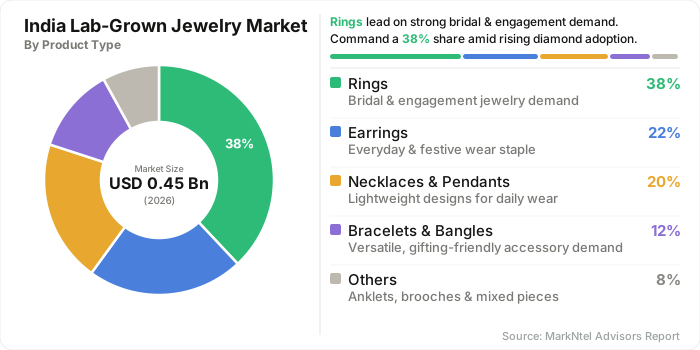
- Rings remain the dominant product type, accounting for a 38% share of market revenue in 2026.
- Lab-grown diamond jewelry dominates by stone type, representing an estimated 97% share in 2026.
- Gujarat (Surat) leads the market, representing around 45% of the total market share in 2026
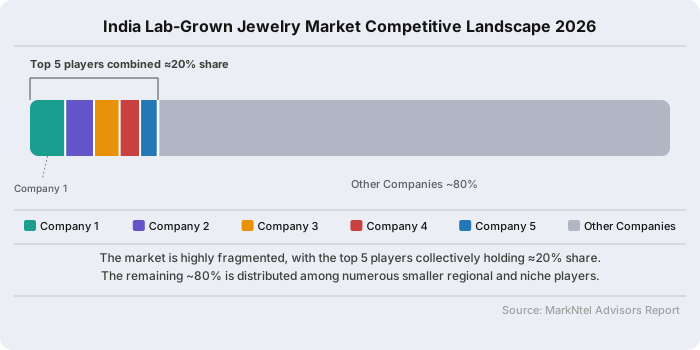
- The industry is highly fragmented, with the top five companies estimated to collectively account for approximately 20% of 2026 market revenue.
India Lab-Grown Jewelry Market Size and Outlook
The India lab-grown jewelry market reaches USD 0.395 billion in 2025, USD 0.45 billion in 2026, and is projected to reach USD 1.04 billion by 2032, representing a 15% CAGR during 2026–2032.
The market covers finished jewelry incorporating laboratory-grown diamonds and laboratory-grown colored gemstones across India's domestic retail ecosystem. The demand for lab-grown jewelry is supported by India's strengthening laboratory-grown diamond technology base and favorable policy environment. The Union Budget 2025–26 extends duty-free import treatment for laboratory-grown diamond seeds, improving access to critical production inputs, lowering upstream cost pressures, and strengthening the competitiveness of domestic manufacturers across the country's growing synthesis and jewelry value chain.
The downstream opportunity is reinforced by rising conversion of laboratory-grown diamonds into finished jewelry and expanding organized retail participation. GJEPC reports USD 1.425 billion in gold jewelry studded with laboratory-grown diamonds during FY2025–26, up 31.30% year on year, while Titan launches BeYon in December 2025 as a dedicated laboratory-grown diamond jewelry brand, strengthening mainstream consumer access through physical and digital retail channels.
India Lab-Grown Jewelry Market Key Indicators
- By the Ministry of Commerce & Industry, a five-year USD 28.58 million R&D project at IIT Madras focuses on advancing CVD and HPHT technologies, strengthening India's indigenous laboratory-grown diamond technology base and supporting greater production efficiency and supply-chain resilience.
- According to Directorate General of Commercial Intelligence and Statistics (DGCI&S) trade data, raw diamond seed imports for CVD processing expanded by 22% in 2025, indicating increased availability of upstream inputs for domestic laboratory-grown diamond synthesis and supporting capacity expansion across India's production ecosystem.
- As per GJEPC's Q2 FY2025–26 Trade Report, polished lab-grown diamond exports reached USD 327.99 million during July–September 2025, increasing 3.24% year on year, while September alone recorded a 10.62% year-on-year decline to USD 107.64 million, indicating continued volatility in the loose-stone export channel.
India Lab-Grown Jewelry Manufacturing Capacity & Production Landscape
India's laboratory-grown diamond manufacturing base has expanded rapidly, creating a substantial upstream supply pool for domestic jewelry production. As per the International Gemological Institute(IGI) India's 2026 investor presentation reports that Indian LGD production increases from approximately 6–6.5 million carats in 2022 to an estimated 13–14 million carats in 2026, representing roughly fourfold growth over the preceding three to four years. The presentation also indicates that Indian manufacturers operate approximately 13,000–14,000 CVD reactors in 2026, demonstrating significant industrial-scale synthesis capacity.
Capacity utilization provides an additional measure of the industry's operating depth. IGI estimates global LGD capacity utilization at approximately 65–70%, while noting that large Indian growers continue expanding capacity based on demand expectations. At the company level, Kira expands its CVD reactor base from 2,600 to 4,000 units in 2025, increasing its polished production capability to more than 250,000 carats per month. The expansion indicates that India's manufacturing ecosystem continues to add capacity even as producers increasingly focus on larger stones, fancy shapes and higher-value applications.
India's expanding manufacturing ecosystem strengthens the availability, product variety, and reliability of laboratory-grown jewelry while enabling brands to respond faster to evolving consumer preferences. Greater domestic integration across production, processing, design, and retail can support premiumization, improve supply-chain efficiency, and create opportunities for organized jewelers to introduce differentiated collections and capture more value from finished jewelry.
India Lab-Grown Jewelry Market Scope
| Category | Segments |
|---|---|
| By Product Type | Rings, Earrings, Necklaces & Pendants, Bracelets & Bangles, Others (Nose Pins, Anklets, Brooches, Sets |
| By Stone Type | Lab-Grown Diamond Jewelry, Lab-Grown Colored Gemstone Jewelry (Sapphire, Emerald, Ruby, others |
| By Production Technology | HPHT (High Pressure High Temperature), CVD (Chemical Vapor Deposition), Others |
| By Application | Bridal & Wedding, Fashion & Daily Wear, Gifting (Anniversary, Festive, Corporate |
| By Distribution Channel | Online (E-commerce platforms, Brand D2C websites), Offline (Jewelry Retail Chains, Independent/Specialty Stores, Department & Multi-brand Outlets |
| By End-User | Women, Men, Unisex/Kids |
India Lab-Grown Jewelry Market Growth Driver
Record Gold Prices Accelerate the Shift Toward Affordable Laboratory-Grown Jewelry
India's sustained gold-price escalation is strengthening the affordability proposition of laboratory-grown diamond jewelry, particularly for mass-market and younger consumers. According to the World Gold Council, Indian domestic gold prices rose 81% year on year in Q1 2026, while gold jewelry demand volume fell 19% to 66 tonnes as elevated prices constrain affordability. The resulting price-value gap makes laboratory-grown diamond jewelry increasingly attractive for consumers seeking diamond aesthetics without the higher material cost associated with natural diamonds.
The affordability pressure continues across the broader jewelry market, creating a favorable environment for alternative stone formats and lower-cost finished products. As per the World Gold Council, India's gold jewelry demand declines 15% year on year to 75 tonnes in Q2 2026, while the nearly 60% year-on-year increase in domestic gold prices accelerates consumer movement toward lighter-weight, lower-carat and studded jewelry. This structural shift supports laboratory-grown jewelry demand by allowing retailers to offer larger-looking and design-intensive pieces at comparatively accessible price points, strengthening adoption across everyday, fashion, and occasion-led purchases.
Recent Trend
Premiumization and Demi-Fine Positioning Expand Laboratory-Grown Jewelry Adoption
India's laboratory-grown jewelry market is shifting toward premium and demi-fine positioning, as consumers increasingly seek luxury aesthetics, contemporary designs and affordability in a single product. Laboratory-grown diamonds enable jewellers to offer larger, design-intensive pieces at comparatively accessible prices, supporting demand across everyday wear, gifting and occasion-led purchases. This positioning increasingly places laboratory-grown jewelry between conventional fashion jewelry and higher-priced natural-diamond products, strengthening its appeal among value-conscious consumers seeking branded and contemporary designs.
A strong indication of this premiumization trend is the expansion of organized demi-fine jewelry brands. In August 2025, Palmonas secures USD 6.3 million in Series A funding led by Vertex Ventures Southeast Asia and India, supporting store expansion, international growth, and development of its 9-karat gold and waterproof jewelry portfolio. Although Palmonas operates across the broader demi-fine category, its investment and retail expansion signal growing demand for accessible-premium jewelry formats, creating favorable conditions for laboratory-grown jewelry brands to expand design-led, higher-value offerings.
India Lab-Grown Jewelry Market Opportunities and Challenges
Consumer Verification Requirements Create Opportunity for Certified Laboratory-Grown Jewelry
Consumer differentiation between laboratory-grown and natural diamonds remains a key market challenge as laboratory-grown jewelry expands across organized retail. BIS's IS 19469:2025 establishes specific terminology and disclosure requirements for laboratory-grown diamonds, covering their distinction from natural, treated, composite and imitation diamonds. This strengthens the compliance burden for jewelers while making transparent origin disclosure increasingly important at the point of purchase.
This compliance requirement creates an opportunity for certification-led premiumization and traceable finished jewelry. IGI provides dedicated laboratory-grown diamond jewelry reports that identify mounted gemstones, precious-metal content, and purity stamps while documenting applicable 4Cs characteristics, enabling consumers to verify product specifications without dismantling finished pieces. In August 2025, IGI launches its proprietary Light Performance analysis at IIJS Premiere, adding science-based optical assessment of brightness, scintillation, and contrast beyond conventional 4Cs grading. The technology enables retailers and jewelry brands to differentiate products with measurable optical-performance information, strengthening the value proposition of certified laboratory-grown jewelry.
Segmentation Insights
Rings Capture the Value Core of India’s Lab-Grown Jewelry Market
Rings lead India lab-grown jewelry product demand and are estimated to account for 38% of India’s lab-grown jewelry industry revenue in 2026, supported by their concentration in high-value engagement, bridal, and solitaire purchases. The category also benefits from broader product economics: retailers can allocate larger laboratory-grown center stones to rings while maintaining accessible ticket sizes, increasing revenue per transaction. Current retail assortments reinforce this positioning; Aukera prominently separates Bridal Rings and Rings from earrings, bracelets, necklaces, bangles and pendants, while its featured ring products include solitaire formats in 18K gold.
Rings retain the lead because three revenue factors converge in the category: higher stone value, stronger occasion-led purchasing and greater scope for customization. Engagement and wedding purchases support larger centre stones and premium settings, while the affordability of LGDs allows consumers to move toward larger carat sizes without proportionately increasing expenditure. The future revenue position is further supported by the emergence of stackable and everyday LGD rings, which expands ring purchases beyond one-time bridal occasions; Goenka Jewellers identifies stackable rings as an increasingly established daily-jewelry practice in 2026. This combination of high-ticket bridal demand and repeatable fashion-led purchases provides a stronger basis for rings to maintain category leadership through the forecast period. Based on product type, the industry is segmented into:
- Rings
- Earrings
- Necklaces & Pendants
- Bracelets & Bangles
- Others (Nose Pins, Anklets, Brooches, Sets)
Lab-Grown Diamonds Anchor India’s Emerging Jewelry Value Chain
The lab-grown diamond jewelry dominates India’s lab-grown jewelry industry and is estimated to account for approximately 97% of India’s lab-grown jewelry revenue in 2026, reflecting the much deeper commercial ecosystem for diamonds. GJEPC identifies India as the world's second-largest producer of laboratory-grown diamonds, with thousands of MPCVD machines concentrated in Surat, demonstrating substantial domestic production infrastructure. This established manufacturing base, combined with specialized cutting, polishing and grading capabilities, gives diamond jewelry a significantly broader supply foundation than laboratory-grown coloured gemstones.
Diamond jewelry maintains its dominance because production scale, standardized grading and established retail acceptance reinforce one another across the value chain. GJEPC notes that Indian LGD manufacturers supply diamonds across multiple sizes, shapes and qualities, while IGI certification is already integrated into commercial jewelry supply. Future dominance is supported by continued investment in advanced diamond-growth capabilities and India's established diamond-processing expertise, whereas no comparable large-scale Indian ecosystem for laboratory-grown colored gemstone jewelry is evident. Based on stone type, the industry is segmented into:
- Lab Grown Diamond Jewelry
- Lab Grown Colored Gemstone Jewelry (Sapphire, Emerald, Ruby, others)
India Lab-Grown Jewelry Market Geographical Outlook
Gujarat, led by Surat, is estimated to account for approximately 45% of India’s lab-grown jewelry market in 2026, supported by its exceptional concentration of diamond-growing, cutting, polishing, and jewelry-manufacturing capabilities. Surat is also the core national production cluster for laboratory-grown diamonds, while the Gujarat government reports that the state contributes 46% of India’s total jewelry manufacturing and related-articles output, reinforcing its downstream advantage.
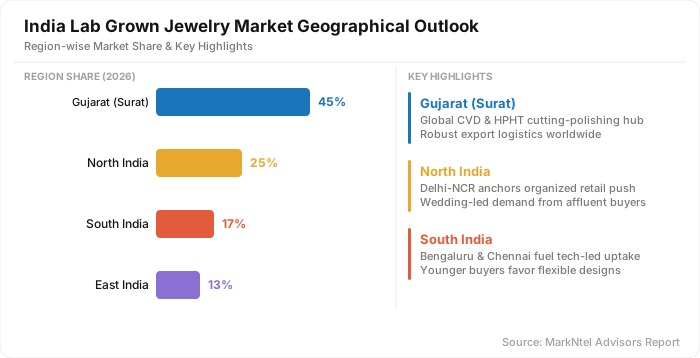
Surat represents the principal manufacturing and supply-chain center, with GJEPC identifying the city as a key hub for both natural and laboratory-grown diamonds and conducting dedicated cluster-development initiatives covering LGD manufacturers and jewelry producers. The ecosystem includes more than 4,000 diamond manufacturing companies and over 500,000 workers engaged in cutting and polishing, creating substantial access to skilled labour, processing infrastructure and established supplier networks.
The region’s dominance extends beyond stone production into finished lab-grown diamond jewelry, with manufacturers increasingly integrating design, prototyping, production and B2B distribution within Surat. Recent corporate disclosures show Surat-based manufacturing facilities supplying jewelry retailers across 18 states and 2 Union Territories, while D2C expansion is adding direct consumer access. This vertical integration strengthens Gujarat’s cost, turnaround-time, and product-customization advantages and supports its leading position in India’s lab-grown jewelry market.
India Lab-Grown Jewelry Market Competitive Analysis
The India lab-grown jewelry industry is highly fragmented, with the top five companies estimated to account for 20% of 2026 market revenue. The competitive structure comprises specialized laboratory-grown diamond jewelry brands. Limelight Lab Grown Diamonds Limited, Indiejewel Fashions Private Limited, Fiona Jewels LLP, Solitario Lab Grown Limited, and Titan Company Limited represent the leading participants by market presence and revenue contribution.
Top Companies in the India Lab Grown Jewelry Industry:
- Limelight Lab Grown Diamonds Limited
- Indiejewel Fashions Private Limited
- Aaryak Jewelry Private Limited
- Riyaana Creations Private Limited
- Fiona Jewels LLP
- Solitario Lab Grown Limited
- Greenlab Jewels Private Limited
- Titan Company Limited
- Senco Gold Limited
- Lifegem Diamonds Limited
India Lab-Grown Jewelry Industry News and Recent Developments
December 2025: Titan Launches BeYon as Dedicated Laboratory-Grown Diamond Jewelry Brand
Titan launched BeYon – from the House of Titan with an exclusive Mumbai store on December 29, 2025. The brand introduced a curated laboratory-grown diamond jewelry portfolio and targeted consumers seeking contemporary, accessible jewelry. Titan also planned additional stores in Mumbai and Delhi, subsequently extending BeYon through an online channel.
Impact Analysis: The move brings laboratory-grown diamond jewelry into a major Indian organized-retail ecosystem with established consumer trust. The combination of physical stores and digital access strengthens category visibility and accelerates mainstream adoption.
February 2026: BIS Introduces IS 19469:2025 for Diamond Consumer Confidence and Disclosure
BIS published IS 19469:2025, establishing terminology, disclosure and advertising requirements covering natural diamonds, laboratory-grown diamonds, treated diamonds, composite stones and imitations. The standard requires laboratory-grown diamonds to be clearly identified and prevents ambiguous terminology that could mislead consumers.
Impact Analysis: The standard strengthens transparency at the point of jewelry purchase and reduces the information asymmetry surrounding laboratory-grown stones. Clearer disclosure supports legitimate laboratory-grown jewelry brands while improving consumer confidence in the category.
Frequently Asked Questions
- Market Segmentation
- Introduction
- Product Definition
- Research Process
- Assumptions
- Executive Summary
- India Lab-Grown Jewelry Market Production Trend 2022-2032
- India Lab-Grown Jewelry Market Production Trend by Type of Product
- Rings
- Earrings
- Necklaces & Pendants
- Bracelets & Bangles
- Others (Nose Pins, Anklets, Brooches, Sets)
- Company-Wise Production Plants and Statistics
- Installed Production Capacity
- Actual Production
- Planned Production Target
- India Lab-Grown Jewelry Market Production Trend by Type of Product
- India Lab-Grown Jewelry Market Pricing Analysis 2022-2032
- India Lab-Grown Jewelry Market Pricing Trend (USD) 2022-2032
- India Lab-Grown Jewelry Market Pricing Trend (USD) By Product type 2022-2032
- Rings
- Earrings
- Necklaces & Pendants
- Bracelets & Bangles
- Others (Nose Pins, Anklets, Brooches, Sets)
- India Lab-Grown Jewelry Market Policies, Regulations, and Product Standards
- India Lab-Grown Jewelry Market Trends & Developments
- India Lab-Grown Jewelry Market Dynamics
- Growth Factors
- Challenges
- India Lab-Grown Jewelry Market Hotspot & Opportunities
- India Lab-Grown Jewelry Market Outlook, 2022-2032F
- Market Size & Outlook
- By Revenues (USD Million)
- Market Share & Analysis
- By Product Type- Market Size & Forecast 2022-2032, USD Million
- Rings
- Earrings
- Necklaces & Pendants
- Bracelets & Bangles
- Others (Nose Pins, Anklets, Brooches, Sets)
- By Stone Type- Market Size & Forecast 2022-2032, USD Million
- Lab-Grown Diamond Jewelry
- Lab-Grown Colored Gemstone Jewelry (Sapphire, Emerald, Ruby, others)
- By Production Technology- Market Size & Forecast 2022-2032, USD Million
- HPHT (High Pressure High Temperature)
- CVD (Chemical Vapor Deposition)
- Others
- By Application- Market Size & Forecast 2022-2032, USD Million
- Bridal & Wedding
- Fashion & Daily Wear
- Gifting (Anniversary, Festive, Corporate)
- By Distribution Channel- Market Size & Forecast 2022-2032, USD Million
- Online (E-commerce platforms, Brand D2C websites)
- Offline (Jewelry Retail Chains, Independent/Specialty Stores, Department & Multi-brand Outlets)
- By End-User- Market Size & Forecast 2022-2032, USD Million
- Women
- Men
- Unisex/Kids
- By Company
- Competition Characteristics
- Market Share & Analysis
- By Product Type- Market Size & Forecast 2022-2032, USD Million
- Market Size & Outlook
- India Rings Market Outlook, 2022-2032
- Market Size & Outlook
- By Revenues (USD Million)
- Market Segmentation & Analysis
- By Stone Type- Market Size & Forecast 2022-2032, USD Million
- By Production Technology- Market Size & Forecast 2022-2032, USD Million
- By Application- Market Size & Forecast 2022-2032, USD Million
- By Distribution Channel- Market Size & Forecast 2022-2032, USD Million
- By End-User- Market Size & Forecast 2022-2032, USD Million
- Market Size & Outlook
- India Earrings Market Outlook, 2022-2032
- Market Size & Outlook
- By Revenues (USD Million)
- Market Segmentation & Analysis
- By Stone Type- Market Size & Forecast 2022-2032, USD Million
- By Production Technology- Market Size & Forecast 2022-2032, USD Million
- By Application- Market Size & Forecast 2022-2032, USD Million
- By Distribution Channel- Market Size & Forecast 2022-2032, USD Million
- By End-User- Market Size & Forecast 2022-2032, USD Million
- Market Size & Outlook
- India Necklaces & Pendants Market Outlook, 2022-2032
- Market Size & Outlook
- By Revenues (USD Million)
- Market Segmentation & Analysis
- By Stone Type- Market Size & Forecast 2022-2032, USD Million
- By Production Technology- Market Size & Forecast 2022-2032, USD Million
- By Application- Market Size & Forecast 2022-2032, USD Million
- By Distribution Channel- Market Size & Forecast 2022-2032, USD Million
- By End-User- Market Size & Forecast 2022-2032, USD Million
- Market Size & Outlook
- India Bracelets & Bangles Market Outlook, 2022-2032
- Market Size & Outlook
- By Revenues (USD Million)
- Market Segmentation & Analysis
- By Stone Type- Market Size & Forecast 2022-2032, USD Million
- By Production Technology- Market Size & Forecast 2022-2032, USD Million
- By Application- Market Size & Forecast 2022-2032, USD Million
- By Distribution Channel- Market Size & Forecast 2022-2032, USD Million
- By End-User- Market Size & Forecast 2022-2032, USD Million
- Market Size & Outlook
- India Lab-Grown Jewelry Market Key Strategic Imperatives for Success & Growth
- Competitive Outlook
- Company Profiles
- Limelight Lab-Grown Diamonds Limited
- Business Description
- Product Portfolio
- Collaborations & Alliances
- Recent Developments
- Financial Details
- Others
- Indiejewel Fashions Private Limited
- Business Description
- Product Portfolio
- Collaborations & Alliances
- Recent Developments
- Financial Details
- Others
- Aaryak Jewelry Private Limited
- Business Description
- Product Portfolio
- Collaborations & Alliances
- Recent Developments
- Financial Details
- Others
- Riyaana Creations Private Limited
- Business Description
- Product Portfolio
- Collaborations & Alliances
- Recent Developments
- Financial Details
- Others
- Fiona Jewels LLP
- Business Description
- Product Portfolio
- Collaborations & Alliances
- Recent Developments
- Financial Details
- Others
- Solitario Lab-Grown Limited
- Business Description
- Product Portfolio
- Collaborations & Alliances
- Recent Developments
- Financial Details
- Others
- Greenlab Jewels Private Limited
- Business Description
- Product Portfolio
- Collaborations & Alliances
- Recent Developments
- Financial Details
- Others
- Titan Company Limited
- Business Description
- Product Portfolio
- Collaborations & Alliances
- Recent Developments
- Financial Details
- Others
- Senco Gold Limited
- Business Description
- Product Portfolio
- Collaborations & Alliances
- Recent Developments
- Financial Details
- Others
- Lifegem Diamonds Limited
- Business Description
- Product Portfolio
- Collaborations & Alliances
- Recent Developments
- Financial Details
- Others
- Limelight Lab-Grown Diamonds Limited
- Company Profiles
- Disclaimer
MarkNtel Advisors follows a robust and iterative research methodology designed to ensure maximum accuracy and minimize deviation in market estimates and forecasts. Our approach combines both bottom-up and top-down techniques to effectively segment and quantify various aspects of the market. A consistent feature across all our research reports is data triangulation, which examines the market from three distinct perspectives to validate findings. Key components of our research process include:
1. Scope & Research Design At the outset, MarkNtel Advisors define the research objectives and formulate pertinent questions. This phase involves determining the type of research—qualitative or quantitative—and designing a methodology that outlines data collection methods, target demographics, and analytical tools. They also establish timelines and budgets to ensure the research aligns with client goals.
2. Sample Selection and Data Collection In this stage, the firm identifies the target audience and determines the appropriate sample size to ensure representativeness. They employ various sampling methods, such as random or stratified sampling, based on the research objectives. Data collection is carried out using tools like surveys, interviews, and observations, ensuring the gathered data is reliable and relevant.
3. Data Analysis and Validation Once data is collected, MarkNtel Advisors undertake a rigorous analysis process. This includes cleaning the data to remove inconsistencies, employing statistical software for quantitative analysis, and thematic analysis for qualitative data. Validation steps are taken to ensure the accuracy and reliability of the findings, minimizing biases and errors.

4. Data Forecast and FinalizationThe final phase involves forecasting future market trends based on the analyzed data. MarkNtel Advisors utilize predictive modeling and time series analysis to anticipate market behaviors. The insights are then compiled into comprehensive reports, featuring visual aids like charts and graphs, and include strategic recommendations to inform client decision-making
We offer flexible licensing options to cater to varying organizational needs. Choose the pricing pack that best suits your requirements:
Buy Now Inquire Before Buying
 Request Customization
 Talk to our Consultant







