

By Process (PEM Electrolysis, Alkaline Electrolysis, Solid Oxide Electrolysis), By Form (Gas, Liquid Hydrogen), By Purity (Industrial Grade Hydrogen, Fuel Cell Grade Hydrogen, Ultr......a-High Purity Hydrogen), By Application (Refinery, Ammonia Production, Methanol Production, Steel Manufacturing, Transportation, Others), By By Distribution Channel (Pipeline Distribution, Tube Trailer Distribution, Liquid Hydrogen Tankers, On-site Supply / Captive Consumption), and others Read more
- Energy
- Jun 2026
- 340
- PDF, Excel, PPT
Pink Hydrogen Market Key Takeaways
- The global pink hydrogen market was valued at USD 0.091 billion in 2025 and is projected to reach USD 1.2 billion by 2032, expanding at a CAGR of 46.38%.
- PEM electrolysis leads the process segment with approximately 45% share in 2026.
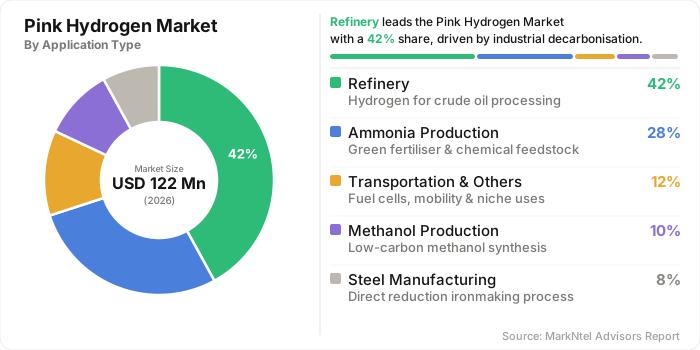
- The refinery hydrogen applications segment holds 30% share in 2026.
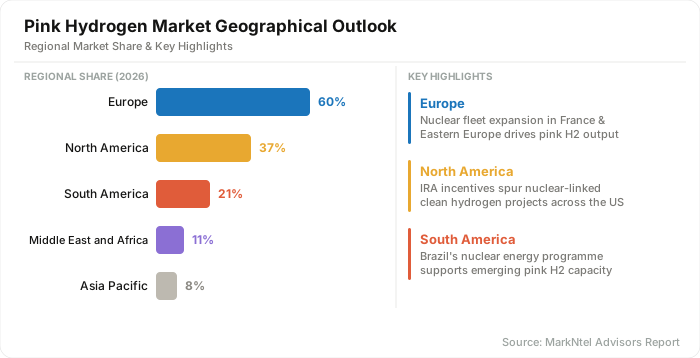
- Europe leads the industry with approximately 60% share.
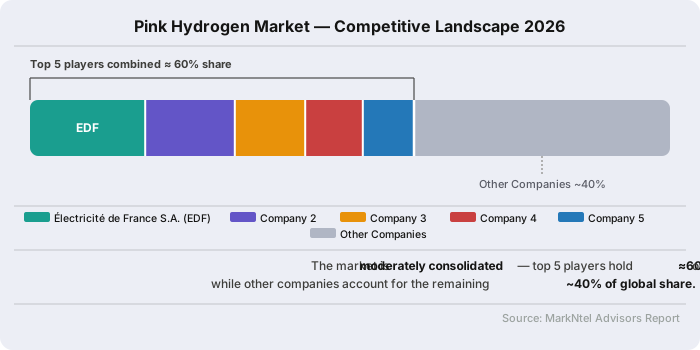
- The market is moderately consolidated, with the top 5 players collectively holding 60% share.
Pink Hydrogen Market Size and Outlook
The global pink hydrogen market, encompassing hydrogen produced through nuclear-powered water electrolysis, was valued at USD 0.091 billion in 2025, from USD 0.122 billion in 2026, and is projected to reach USD 1.2 billion by 2032.
This growth is underpinned by accelerating national decarbonization mandates, rising industrial hydrogen demand across hard-to-abate sectors including steel manufacturing, ammonia synthesis, and petroleum refining, and the structural advantage nuclear-powered electrolysis holds over variable renewable-dependent pathways. Government policy frameworks in leading nuclear economies are directly stimulating nuclear-linked hydrogen production capacity.
In France, the March 2025 update of the National Hydrogen Strategy allocates USD 4.6 billion in fresh support and targets 4.5 GW of electrolysis capacity by 2030, rising to 8 GW by 2035, with nuclear electricity explicitly integrated as the primary low-carbon power source for electrolysis, creating direct procurement pipelines for nuclear hydrogen production equipment and infrastructure.
In the United States, the Department of Energy confirmed nuclear energy as an eligible clean energy source across its USD 7 billion Regional Clean Hydrogen Hubs (H2Hubs) programme, with Constellation Energy's Nine Mile Point Nuclear Plant in New York already operational as the first nuclear-powered clean hydrogen production facility in the country .
Industrial end-users are a primary demand anchor for the nuclear-powered hydrogen economy. Refineries, chemical processors, and steel producers all require consistent, high-purity hydrogen supply and are increasingly prioritizing low-carbon hydrogen sourcing under tightening emissions regulations. According to the IEA, over 50% of total clean hydrogen investment in 2024 and 2025 targets hydrogen use in oil refining and industrial facilities with existing hydrogen demand, directly validating nuclear electrolysis as a baseload-compatible supply solution for these sectors.
For instance, in South Korea, North Gyeong Sang Province announced in October 2024 a 100 MW nuclear hydrogen facility to be integrated with a 1,000 km pipeline network and a hydrogen/ammonia import terminal, signaling growing infrastructure -level commitment to pink hydrogen distribution.
Furthermore, Japan's strategic pivot to nuclear-assisted hydrogen production strengthens long-term demand fundamentals. Japan targets 3 million tonnes of hydrogen use by 2030 and 20 million tonnes by 2050, with the Japan Atomic Energy Agency advancing plans to begin producing hydrogen using heat from its High Temperature Engineering Test Reactor by 2028, the first nuclear-heat-based hydrogen production facility globally.
Collectively, these policy commitments, industrial demand signals, and infrastructure investments position nuclear-powered hydrogen as a structurally durable pillar of the global clean energy transition through 2032.
Pink Hydrogen Market Key Indicators
- The International Atomic Energy Agency (IAEA) confirmed that 417 nuclear power reactors were operational globally at end-2024, delivering a combined capacity of 377 GW(e), with 62 additional reactors totaling 64.4 GW under construction. This expanding baseload nuclear capacity directly widens the feedstock pool available for nuclear-powered water electrolysis, increasing the potential electricity supply for pink hydrogen production at scale without dependence on variable renewable generation.
- The IEA confirmed in its Global Hydrogen Review 2025 that low-emissions hydrogen production grew by 10% in 2024 and is projected to reach 1 Mt in 2025, yet still accounts for less than 1% of global hydrogen production. This acute supply gap between fossil-based hydrogen dominance and clean hydrogen targets across major economies signals a large addressable substitution opportunity for pink hydrogen , particularly in industrial markets where supply reliability is a procurement prerequisite.
- The World Steel Association reported that 1,886 million tonnes (Mt) of crude steel were produced globally in 2024, with every tonne generating an average of 2.18 tonnes of CO₂ equivalent emissions. The steel sector's decarbonization imperative, particularly through hydrogen-based Direct Reduced Iron (DRI-EAF) processes, constitutes a structurally significant demand pull for a consistent, high-volume supply of clean hydrogen, positioning pink hydrogen as a baseload-compatible source for green steel production.
Pink Hydrogen Market Scope
| Category | Segments |
|---|---|
| By Process | PEM Electrolysis, Alkaline Electrolysis, Solid Oxide Electrolysis |
| By Form | Gas, Liquid Hydrogen |
| By Purity | Industrial Grade Hydrogen, Fuel Cell Grade Hydrogen, Ultra-High Purity Hydrogen |
| By Application | Refinery, Ammonia Production, Methanol Production, Steel Manufacturing, Transportation, Others |
| By Distribution Channel | Pipeline Distribution, Tube Trailer Distribution, Liquid Hydrogen Tankers, On-site Supply / Captive Consumption |
Pink Hydrogen Market Growth Drivers
Surging Industrial Decarbonization Mandates Driving Demand for Nuclear-Powered Hydrogen Across Hard-to-Abate Sectors
The single most powerful force driving the expansion of the global pink hydrogen market is the binding pressure on hard-to-abate industries steel, chemicals, cement, and petroleum refining to eliminate fossil-based hydrogen from their production processes. According to the IEA, the G7 produces 17% of the world's steel, 8% of cement, and 28% of primary chemicals, with industrial CO₂ emissions from G7 heavy industry sectors required to decline 27% by 2030 under the Net Zero Emissions by 2050 Scenario a trajectory that mandates a structural shift away from grey hydrogen across the chemical and steel sectors.
This decarbonization imperative extends well beyond the G7. As of October 2025, around 145 countries had announced or are considering net-zero targets, covering close to 77% of global emissions, each requiring low-carbon hydrogen sourcing strategies across their industrial base.
Furthermore, based on projects operational, under construction, or at final investment decision, more than 2 million tonnes per annum (Mtpa) of low-emissions hydrogen is expected to be consumed in refineries and industrial facilities by 2030, a confirmed offtake base that validates near-term commercial scale for pink hydrogen production. As net-zero targets translate from policy commitments into mandatory procurement standards, nuclear-powered hydrogen production positioned at the intersection of supply reliability and carbon-free hydrogen production stands to capture a structurally growing share of industrial hydrogen demand through 2032.
Recent Trends
Rising Integration of Small Modular Reactors (SMRs) with High-Temperature Electrolysis for Distributed Nuclear Hydrogen Production
The integration of Small Modular Reactors (SMRs) with Solid Oxide Electrolysis Cells (SOECs) is emerging as a key trend in the global pink hydrogen market. Unlike conventional nuclear reactors, SMRs can provide both electricity and high-temperature steam directly to electrolysis systems, improving efficiency and lowering hydrogen production costs compared to Proton Exchange Membrane (PEM) and alkaline electrolysis technologies. This approach is gaining attention as industries seek scalable and low-carbon hydrogen solutions.
According to the OECD Nuclear Energy Agency SMR Dashboard (Third Edition), 74 SMR technologies are currently under development worldwide, with hydrogen production identified as a major non-power application. Industry developments in 2025 further highlight this momentum. NuScale Power demonstrated high-temperature steam electrolysis configurations capable of producing more than 200 metric tons of carbon -free hydrogen per day, while the U.S. Department of Energy confirmed progress on Xcel Energy’s SOEC-based hydrogen project at the Prairie Island Nuclear Generating Plant.
As commercial deployment expands, SMR-SOEC integration is expected to improve pink hydrogen economics, strengthen distributed hydrogen infrastructure, and support industrial decarbonization through 2032.
Pink Hydrogen Market Opportunities and Challenges
High Electrolyzer Capital Investment Driving Demand for Nuclear-Powered Clean Hydrogen Policy Incentives
High capital investment requirements for electrolyzer installation remain the primary constraint on pink hydrogen market expansion. The U.S. Department of Energy's December 2024 Pathways to Commercial Liftoff report confirmed that electrolytic hydrogen production costs rose from USD 3–6/kg to USD 5–7/kg in 2024, driven by higher electrolyzer installation costs, financing expenses, and plant design requirements directly compressing project economics for nuclear electrolysis developers. This cost pressure disproportionately affects early-stage nuclear hydrogen production projects where capital recovery timelines are extended.
The same cost challenge, however, is generating a structurally significant policy opportunity. The U.S. Internal Revenue Service finalised the Section 45V Clean Hydrogen Production Tax Credit regulations on 10 January 2025, explicitly creating a pathway for existing nuclear power plants to qualify for credits of up to USD 3.00 per kilogram of qualifying low-carbon hydrogen produced .
This fiscal mechanism directly lowers the levelized cost of nuclear-powered hydrogen, improving offtake economics for industrial buyers in chemicals, refining, and steel manufacturing. As similar clean hydrogen incentive frameworks are adopted across Europe and Asia-Pacific, the policy-driven cost correction is positioned to unlock commercial-scale pink hydrogen investment across multiple geographies through 2032.
Segmentation Insights
Proton Exchange Membrane (PEM) Electrolysis Leads as the Dominant Pink Hydrogen Production Technology
PEM electrolysis accounts for approximately 45% of the pink hydrogen market by process, supported by its ability to respond rapidly to fluctuations in power supply while maintaining high operational efficiency. This flexibility makes it particularly suitable for integration with nuclear power plants, which provide a stable and continuous source of low-carbon electricity for hydrogen production. Compared with alkaline electrolysis, PEM technology produces high-pressure hydrogen with purity levels exceeding 99.99%, reducing the need for extensive downstream purification and making it well suited for fuel cell and ultra-high-purity applications.
The growing deployment of large-scale PEM manufacturing facilities is further strengthening the segment’s position. The joint venture between Siemens Energy and Air Liquide is expanding electrolyzer production capacity through its Berlin gigafactory, which is expected to reach 3 GW of annual manufacturing capacity, supporting future nuclear-powered hydrogen projects worldwide. Additionally, Siemens Energy secured a 100 MW PEM electrolyzer contract for the Hamburg Green Hydrogen Hub in September 2024, highlighting continued industry investment in the technology.
As production capacity expands and costs decline, PEM electrolysis is expected to maintain its leadership in the pink hydrogen market through 2032. By technology, the market is further divided into the following sub-categories:
- PEM Electrolysis
- Alkaline Electrolysis
- Solid Oxide Electrolysis
Refinery Hydrogen Applications Lead as the Dominant End-Use in the Global Pink Hydrogen Market
The refinery segment accounts for approximately 30% of the global pink hydrogen market by application, making it the largest end-use sector for pink hydrogen. Refineries rely heavily on hydrogen for critical processes such as hydrocracking, hydrotreating, and desulfurization, all of which require a continuous and reliable hydrogen supply. Traditionally, this demand has been met through steam methane reforming, but growing decarbonization targets are encouraging refiners to adopt low-carbon hydrogen alternatives, including pink hydrogen produced using nuclear energy.
In March 2026, TotalEnergies and Électricité de France (EDF) signed a 12-year Nuclear Production Allocation Contract under which EDF will allocate a share of its operating nuclear power plant fleet output to cover approximately 60% of the electricity needs estimated at 400 MW of TotalEnergies' refining and chemicals sites in France, effective January 2028. This creates a substantial and well-established demand base for nuclear-powered hydrogen production.
Refineries are particularly well-suited for pink hydrogen adoption because they operate continuously at scale and already possess hydrogen-handling and distribution infrastructure, reducing transition costs. In June 2025, NuScale Power Corporation received approval for its upgraded 77 MWe reactor design, supporting future industrial hydrogen production projects. As carbon-reduction policies and clean-hydrogen incentives expand worldwide, refinery demand is expected to remain a key driver of pink-hydrogen market growth through 2032. By application Segment, the market is divided into the following sub-categories:
- Refinery
- Ammonia Production
- Methanol Production
- Steel Manufacturing
- Transportation
- Others
Pink Hydrogen Industry Geographical Analysis
Europe holds approximately 60% of the global pink hydrogen market, driven by the continent's position as the world's most advanced policy environment for low-carbon hydrogen and its concentrated nuclear energy infrastructure spanning 12 EU countries. In 2024, electricity generation from nuclear power plants across the EU increased by 4.8% compared with 2023 the second consecutive year of growth, expanding the baseload nuclear electricity feedstock directly available for nuclear-powered hydrogen production.
Policy commitments are converting this structural advantage into quantified hydrogen infrastructure investment. In December 2025, the European Commission's Grids Package confirmed USD 277.1 billion in dedicated hydrogen network investment through 2040, alongside streamlined approval for 100 hydrogen and electrolyzer projects across Europe.
Separately, the European Hydrogen Bank's third auction concluded February 2026 awarded over USD 1.15 billion to 9 hydrogen production projects delivering 1.1 GW of electrolyzer capacity across 7 countries.
France leads regional nuclear-powered electrolysis development, with Électricité de France (EDF) advancing pilot projects linking existing reactors directly to hydrogen electrolyzers, supported by the country's updated National Hydrogen Strategy targeting 4.5 GW of electrolysis capacity by 2030. As the EU's Hydrogen and Decarbonised Gas Market package, in force since 2024, matures into binding procurement standards, Europe's integrated nuclear energy and hydrogen economy framework is set to sustain the region's dominant position through 2032.
Pink Hydrogen Industry Competitive Landscape
The global pink hydrogen market exhibits a moderately consolidated structure, characterized by the presence of large nuclear power operators, industrial gas companies, electrolyzer manufacturers, and advanced nuclear technology developers. It is led by the top 5 players Électricité de France (EDF Group), Constellation Energy Corporation, Siemens Energy AG, Air Liquide S.A., and Linde plc. Collectively sharing a combined share of 60%.
Major Pink Hydrogen Companies Worldwide
- Constellation Energy Corporation
- Électricité de France S.A. (EDF Group)
- Exelon Corporation
- OKG Aktiebolag
- Iberdrola, S.A.
- Siemens Energy AG
- Nel ASA
- Plug Power Inc.
- Linde plc
- Air Liquide S.A.
- Air Products and Chemicals, Inc.
- Westinghouse Electric Company LLC
- NuScale Power, LLC
- GE Hitachi Nuclear Energy Americas LLC
- SK Ecoplant Co., Ltd.
Pink Hydrogen Industry News and Recent Developments
2024: Nel ASA Signs USD 5.75 Million Contract with Samsung C&T for South Korea's First Nuclear-Powered Pink Hydrogen Pilot
Nel ASA's subsidiary Nel Hydrogen Electrolyser secured a firm EUR 5 million contract with Samsung C&T Corporation to supply 10 MW of alkaline electrolyzer equipment for South Korea's first nuclear-powered pink hydrogen demonstration plant. Electrodes will be manufactured at Nel's Herøya facility in Norway, the world's first fully automated electrolyzer production line. The plant is designed to convert surplus nuclear electricity into pink hydrogen during off-peak periods, optimising energy utilisation from South Korea's existing nuclear power plants.
Impact Analysis: This contract establishes the first commercially contracted pink hydrogen production model in Asia, directly expanding nuclear-based hydrogen production into South Korea's established nuclear economy. The demonstration validates the alkaline electrolysis-nuclear integration pathway for industrial off-takers, reducing technology risk and creating a replicable commercial model for nuclear hydrogen deployment across Asia-Pacific's growing clean hydrogen market.
2025: Westinghouse, Brookfield, and Cameco Secure USD 80 Billion U.S. Government Partnership for Nuclear Reactor Deployment with Integrated Hydrogen Production
On 28 October 2025, Westinghouse Electric, Brookfield Asset Management, and Cameco entered a binding USD 80 billion term sheet with the U.S. Department of Commerce to deploy Westinghouse AP1000 nuclear reactors across the United States. The U.S. Government will arrange financing and permitting while retaining a 20% participation interest above USD 17.5 billion in distributions. The AP1000 design explicitly includes integrated hydrogen production capability, with 14 units currently under construction globally and five more under contract.
Impact Analysis: The USD 80 billion federal commitment directly expands the nuclear energy capacity feedstock base for pink hydrogen production, lowering project financing barriers and permitting timelines for nuclear-powered electrolysis developers. By anchoring large-scale AP1000 deployment within a government-backed financing structure, the partnership accelerates commercial-scale nuclear hydrogen infrastructure investment, strengthening the hydrogen energy transition outlook across the global pink hydrogen market through 2032.
- Market Segmentation
- Introduction
- Product Definition
- Research Process
- Assumptions
- Executive Summary
- Global Pink Hydrogen Market Policies, Regulations, and Product Standards
- Global Pink Hydrogen Market Trends & Developments
- Global Pink Hydrogen Market Dynamics
- Growth Factors
- Challenges
- Global Pink Hydrogen Market Hotspot & Opportunities
- Global Pink Hydrogen Market Outlook, 2022-2032F
- Market Size & Outlook
- By Revenues (USD Million)
- Market Share & Analysis
- By Process- Market Size & Forecast 2022-2032, USD Million
- PEM Electrolysis
- Alkaline Electrolysis
- Solid Oxide Electrolysis
- By Form - Market Size & Forecast 2022-2032, USD Million
- Gas
- Liquid Hydrogen
- By Purity- Market Size & Forecast 2022-2032, USD Million
- Industrial Grade Hydrogen
- Fuel Cell Grade Hydrogen
- Ultra-High Purity Hydrogen
- By Application- Market Size & Forecast 2022-2032, USD Million
- Refinery
- Ammonia Production
- Methanol Production
- Steel Manufacturing
- Transportation
- Others
- By Distribution Channel- Market Size & Forecast 2022-2032, USD Million
- Pipeline Distribution
- Tube Trailer Distribution
- Liquid Hydrogen Tankers
- On-site Supply / Captive Consumption
- By Region
- North America
- Europe
- Asia Pacific
- South America
- Middle East & Africa
- By Company
- Competition Characteristics
- Market Share & Analysis
- By Process- Market Size & Forecast 2022-2032, USD Million
- Market Size & Outlook
- North America Pink Hydrogen Market Outlook, 2022-2032F
- Market Size & Outlook
- By Revenues (USD Million)
- Market Share & Analysis
- By Process- Market Size & Forecast 2022-2032, USD Million
- By Form - Market Size & Forecast 2022-2032, USD Million
- By Purity- Market Size & Forecast 2022-2032, USD Million
- By Application- Market Size & Forecast 2022-2032, USD Million
- By Country
- The US
- Mexico
- Canada
- The US Pink Hydrogen Market Outlook, 2022-2032F
- Market Size & Outlook
- By Revenues (USD Million)
- Market Share & Analysis
- By Process- Market Size & Forecast 2022-2032, USD Million
- By Form - Market Size & Forecast 2022-2032, USD Million
- By Purity- Market Size & Forecast 2022-2032, USD Million
- By Application- Market Size & Forecast 2022-2032, USD Million
- Market Size & Outlook
- Mexico Pink Hydrogen Market Outlook, 2022-2032F
- Market Size & Outlook
- By Revenues (USD Million)
- Market Share & Analysis
- By Process- Market Size & Forecast 2022-2032, USD Million
- By Form - Market Size & Forecast 2022-2032, USD Million
- By Purity- Market Size & Forecast 2022-2032, USD Million
- By Application- Market Size & Forecast 2022-2032, USD Million
- Market Size & Outlook
- Canada Pink Hydrogen Market Outlook, 2022-2032F
- Market Size & Outlook
- By Revenues (USD Million)
- Market Share & Analysis
- By Process- Market Size & Forecast 2022-2032, USD Million
- By Form - Market Size & Forecast 2022-2032, USD Million
- By Purity- Market Size & Forecast 2022-2032, USD Million
- By Application- Market Size & Forecast 2022-2032, USD Million
- Market Size & Outlook
- Market Size & Outlook
- South America Pink Hydrogen Market Outlook, 2022-2032F
- Market Size & Outlook
- By Revenues (USD Million)
- Market Share & Analysis
- By Process- Market Size & Forecast 2022-2032, USD Million
- By Form - Market Size & Forecast 2022-2032, USD Million
- By Purity- Market Size & Forecast 2022-2032, USD Million
- By Application- Market Size & Forecast 2022-2032, USD Million
- By Distribution Channel- Market Size & Forecast 2022-2032, USD Million
- By Country
- Brazil
- Argentina
- Chile
- Colombia
- Rest of South America
- Brazil Pink Hydrogen Market Outlook, 2022-2032F
- Market Size & Outlook
- By Revenues (USD Million)
- Market Share & Analysis
- By Process- Market Size & Forecast 2022-2032, USD Million
- By Form - Market Size & Forecast 2022-2032, USD Million
- By Purity- Market Size & Forecast 2022-2032, USD Million
- By Application- Market Size & Forecast 2022-2032, USD Million
- By Distribution Channel- Market Size & Forecast 2022-2032, USD Million
- Market Size & Outlook
- Argentina Pink Hydrogen Market Outlook, 2022-2032F
- Market Size & Outlook
- By Revenues (USD Million)
- Market Share & Analysis
- By Process- Market Size & Forecast 2022-2032, USD Million
- By Form - Market Size & Forecast 2022-2032, USD Million
- By Purity- Market Size & Forecast 2022-2032, USD Million
- By Application- Market Size & Forecast 2022-2032, USD Million
- By Distribution Channel- Market Size & Forecast 2022-2032, USD Million
- Market Size & Outlook
- Chile Pink Hydrogen Market Outlook, 2022-2032F
- Market Size & Outlook
- By Revenues (USD Million)
- Market Share & Analysis
- By Process- Market Size & Forecast 2022-2032, USD Million
- By Form - Market Size & Forecast 2022-2032, USD Million
- By Purity- Market Size & Forecast 2022-2032, USD Million
- By Application- Market Size & Forecast 2022-2032, USD Million
- By Distribution Channel- Market Size & Forecast 2022-2032, USD Million
- Market Size & Outlook
- Colombia Pink Hydrogen Market Outlook, 2022-2032F
- Market Size & Outlook
- By Revenues (USD Million)
- Market Share & Analysis
- By Process- Market Size & Forecast 2022-2032, USD Million
- By Form - Market Size & Forecast 2022-2032, USD Million
- By Purity- Market Size & Forecast 2022-2032, USD Million
- By Application- Market Size & Forecast 2022-2032, USD Million
- By Distribution Channel- Market Size & Forecast 2022-2032, USD Million
- Market Size & Outlook
- Market Size & Outlook
- Europe Pink Hydrogen Market Outlook, 2022-2032F
- Market Size & Outlook
- By Revenues (USD Million)
- Market Share & Analysis
- By Process- Market Size & Forecast 2022-2032, USD Million
- By Form - Market Size & Forecast 2022-2032, USD Million
- By Purity- Market Size & Forecast 2022-2032, USD Million
- By Application- Market Size & Forecast 2022-2032, USD Million
- By Country
- Russia
- Germany
- France
- Sweden
- Finland
- Rest of Europe
- Russia Pink Hydrogen Market Outlook, 2022-2032F
- Market Size & Outlook
- By Revenues (USD Million)
- Market Share & Analysis
- By Process- Market Size & Forecast 2022-2032, USD Million
- By Form - Market Size & Forecast 2022-2032, USD Million
- By Purity- Market Size & Forecast 2022-2032, USD Million
- By Application- Market Size & Forecast 2022-2032, USD Million
- Market Size & Outlook
- Germany Pink Hydrogen Market Outlook, 2022-2032F
- Market Size & Outlook
- By Revenues (USD Million)
- Market Share & Analysis
- By Process- Market Size & Forecast 2022-2032, USD Million
- By Form - Market Size & Forecast 2022-2032, USD Million
- By Purity- Market Size & Forecast 2022-2032, USD Million
- By Application- Market Size & Forecast 2022-2032, USD Million
- Market Size & Outlook
- France Pink Hydrogen Market Outlook, 2022-2032F
- Market Size & Outlook
- By Revenues (USD Million)
- Market Share & Analysis
- By Process- Market Size & Forecast 2022-2032, USD Million
- By Form - Market Size & Forecast 2022-2032, USD Million
- By Purity- Market Size & Forecast 2022-2032, USD Million
- By Application- Market Size & Forecast 2022-2032, USD Million
- Market Size & Outlook
- Sweden Pink Hydrogen Market Outlook, 2022-2032F
- Market Size & Outlook
- By Revenues (USD Million)
- Market Share & Analysis
- By Process- Market Size & Forecast 2022-2032, USD Million
- By Form - Market Size & Forecast 2022-2032, USD Million
- By Purity- Market Size & Forecast 2022-2032, USD Million
- By Application- Market Size & Forecast 2022-2032, USD Million
- Market Size & Outlook
- Finland Pink Hydrogen Market Outlook, 2022-2032F
- Market Size & Outlook
- By Revenues (USD Million)
- Market Share & Analysis
- By Process- Market Size & Forecast 2022-2032, USD Million
- By Form - Market Size & Forecast 2022-2032, USD Million
- By Purity- Market Size & Forecast 2022-2032, USD Million
- By Application- Market Size & Forecast 2022-2032, USD Million
- Market Size & Outlook
- Market Size & Outlook
- Middle East and Africa Pink Hydrogen Market Outlook, 2022-2032F
- Market Size & Outlook
- By Revenues (USD Million)
- Market Share & Analysis
- By Process- Market Size & Forecast 2022-2032, USD Million
- By Form - Market Size & Forecast 2022-2032, USD Million
- By Purity- Market Size & Forecast 2022-2032, USD Million
- By Application- Market Size & Forecast 2022-2032, USD Million
- By Distribution Channel- Market Size & Forecast 2022-2032, USD Million
- By Country
- Saudi Arabia
- The UAE
- South Africa
- Egypt
- Qatar
- Kuwait
- Rest of Middle East & Africa
- Saudi Arabia Pink Hydrogen Market Outlook, 2022-2032F
- Market Size & Outlook
- By Revenues (USD Million)
- Market Share & Analysis
- By Process- Market Size & Forecast 2022-2032, USD Million
- By Form - Market Size & Forecast 2022-2032, USD Million
- By Purity- Market Size & Forecast 2022-2032, USD Million
- By Application- Market Size & Forecast 2022-2032, USD Million
- By Distribution Channel- Market Size & Forecast 2022-2032, USD Million
- Market Size & Outlook
- The UAE Pink Hydrogen Market Outlook, 2022-2032F
- Market Size & Outlook
- By Revenues (USD Million)
- Market Share & Analysis
- By Process- Market Size & Forecast 2022-2032, USD Million
- By Form - Market Size & Forecast 2022-2032, USD Million
- By Purity- Market Size & Forecast 2022-2032, USD Million
- By Application- Market Size & Forecast 2022-2032, USD Million
- By Distribution Channel- Market Size & Forecast 2022-2032, USD Million
- Market Size & Outlook
- South Africa Pink Hydrogen Market Outlook, 2022-2032F
- Market Size & Outlook
- By Revenues (USD Million)
- Market Share & Analysis
- By Process- Market Size & Forecast 2022-2032, USD Million
- By Form - Market Size & Forecast 2022-2032, USD Million
- By Purity- Market Size & Forecast 2022-2032, USD Million
- By Application- Market Size & Forecast 2022-2032, USD Million
- By Distribution Channel- Market Size & Forecast 2022-2032, USD Million
- Market Size & Outlook
- Egypt Pink Hydrogen Market Outlook, 2022-2032F
- Market Size & Outlook
- By Revenues (USD Million)
- Market Share & Analysis
- By Process- Market Size & Forecast 2022-2032, USD Million
- By Form - Market Size & Forecast 2022-2032, USD Million
- By Purity- Market Size & Forecast 2022-2032, USD Million
- By Application- Market Size & Forecast 2022-2032, USD Million
- By Distribution Channel- Market Size & Forecast 2022-2032, USD Million
- Market Size & Outlook
- Qatar Pink Hydrogen Market Outlook, 2022-2032F
- Market Size & Outlook
- By Revenues (USD Million)
- Market Share & Analysis
- By Process- Market Size & Forecast 2022-2032, USD Million
- By Form - Market Size & Forecast 2022-2032, USD Million
- By Purity- Market Size & Forecast 2022-2032, USD Million
- By Application- Market Size & Forecast 2022-2032, USD Million
- By Distribution Channel- Market Size & Forecast 2022-2032, USD Million
- Market Size & Outlook
- Market Size & Outlook
- Asia Pacific Pink Hydrogen Market Outlook, 2022-2032F
- Market Size & Outlook
- By Revenues (USD Million)
- Market Share & Analysis
- By Process- Market Size & Forecast 2022-2032, USD Million
- By Form - Market Size & Forecast 2022-2032, USD Million
- By Purity- Market Size & Forecast 2022-2032, USD Million
- By Application- Market Size & Forecast 2022-2032, USD Million
- By Country
- China
- Japan
- South Korea
- Rest of Asia-Pacific
- China Pink Hydrogen Market Outlook, 2022-2032F
- Market Size & Outlook
- By Revenues (USD Million)
- Market Share & Analysis
- By Process- Market Size & Forecast 2022-2032, USD Million
- By Form - Market Size & Forecast 2022-2032, USD Million
- By Purity- Market Size & Forecast 2022-2032, USD Million
- By Application- Market Size & Forecast 2022-2032, USD Million
- Market Size & Outlook
- Japan Pink Hydrogen Market Outlook, 2022-2032F
- Market Size & Outlook
- By Revenues (USD Million)
- Market Share & Analysis
- By Process- Market Size & Forecast 2022-2032, USD Million
- By Form - Market Size & Forecast 2022-2032, USD Million
- By Purity- Market Size & Forecast 2022-2032, USD Million
- By Application- Market Size & Forecast 2022-2032, USD Million
- Market Size & Outlook
- South Korea Pink Hydrogen Market Outlook, 2022-2032F
- Market Size & Outlook
- By Revenues (USD Million)
- Market Share & Analysis
- By Process- Market Size & Forecast 2022-2032, USD Million
- By Form - Market Size & Forecast 2022-2032, USD Million
- By Purity- Market Size & Forecast 2022-2032, USD Million
- By Application- Market Size & Forecast 2022-2032, USD Million
- Market Size & Outlook
- Market Size & Outlook
- Global Pink Hydrogen Market Key Strategic Imperatives for Success & Growth
- Competitive Outlook
- Company Profiles
- Constellation Energy Corporation
- Business Description
- Product Portfolio
- Collaborations & Alliances
- Recent Developments
- Financial Details
- Others
- EDF Group
- Business Description
- Product Portfolio
- Collaborations & Alliances
- Recent Developments
- Financial Details
- Others
- OKG Aktiebolag
- Business Description
- Product Portfolio
- Collaborations & Alliances
- Recent Developments
- Financial Details
- Others
- Siemens Energy AG
- Business Description
- Product Portfolio
- Collaborations & Alliances
- Recent Developments
- Financial Details
- Others
- Nel ASA
- Business Description
- Product Portfolio
- Collaborations & Alliances
- Recent Developments
- Financial Details
- Others
- Linde plc
- Business Description
- Product Portfolio
- Collaborations & Alliances
- Recent Developments
- Financial Details
- Others
- ITM Power
- Business Description
- Product Portfolio
- Collaborations & Alliances
- Recent Developments
- Financial Details
- Others
- Bloom Energy
- Business Description
- Product Portfolio
- Collaborations & Alliances
- Recent Developments
- Financial Details
- Others
- Westinghouse Electric Company LLC
- Business Description
- Product Portfolio
- Collaborations & Alliances
- Recent Developments
- Financial Details
- Others
- Air Liquide
- Business Description
- Product Portfolio
- Collaborations & Alliances
- Recent Developments
- Financial Details
- Others
- GE Hitachi Nuclear Energy Americas LLC
- Business Description
- Product Portfolio
- Collaborations & Alliances
- Recent Developments
- Financial Details
- Others
- NuScale Power
- Business Description
- Product Portfolio
- Collaborations & Alliances
- Recent Developments
- Financial Details
- Others
- SK Ecoplant
- Business Description
- Product Portfolio
- Collaborations & Alliances
- Recent Developments
- Financial Details
- Others
- Constellation Energy Corporation
- Company Profiles
- Disclaimer

MarkNtel Advisors follows a robust and iterative research methodology designed to ensure maximum accuracy and minimize deviation in market estimates and forecasts. Our approach combines both bottom-up and top-down techniques to effectively segment and quantify various aspects of the market. A consistent feature across all our research reports is data triangulation, which examines the market from three distinct perspectives to validate findings. Key components of our research process include:
1. Scope & Research Design At the outset, MarkNtel Advisors define the research objectives and formulate pertinent questions. This phase involves determining the type of research—qualitative or quantitative—and designing a methodology that outlines data collection methods, target demographics, and analytical tools. They also establish timelines and budgets to ensure the research aligns with client goals.
2. Sample Selection and Data Collection In this stage, the firm identifies the target audience and determines the appropriate sample size to ensure representativeness. They employ various sampling methods, such as random or stratified sampling, based on the research objectives. Data collection is carried out using tools like surveys, interviews, and observations, ensuring the gathered data is reliable and relevant.
3. Data Analysis and Validation Once data is collected, MarkNtel Advisors undertake a rigorous analysis process. This includes cleaning the data to remove inconsistencies, employing statistical software for quantitative analysis, and thematic analysis for qualitative data. Validation steps are taken to ensure the accuracy and reliability of the findings, minimizing biases and errors.

4. Data Forecast and FinalizationThe final phase involves forecasting future market trends based on the analyzed data. MarkNtel Advisors utilize predictive modeling and time series analysis to anticipate market behaviors. The insights are then compiled into comprehensive reports, featuring visual aids like charts and graphs, and include strategic recommendations to inform client decision-making
FILL THE FORM TO INQUIRE BEFORE BUYING THIS REPORT
We offer flexible licensing options to cater to varying organizational needs. Choose the pricing pack that best suits your requirements:
Buy Now Talk to our Consultant
 Request Customization