

By Ingredient Category (Protein Ingredients, Carbohydrate Ingredients, Lipid Ingredients, Micronutrient Ingredients, Bioactive & Functional Ingredients, Technical & Process Ingredi......ents, Other Ingredients), By Source (Dairy, Plant, Microbial/Fermentation, Marine, Synthetic/Bioidentical), By Application (Standard Infant Formula (0–6 Months), Follow-on Formula (6–12 Months), Growing-up Formula (12–36 Months), Special Medical Infant Formula, Baby Cereals, Baby Snacks, Purees & Prepared Baby Food, Baby Beverages), By Physical Form (Powder, Liquid), By Sales Channel (Direct Sales, Ingredient Distributors, Online B2B Procurement Platforms), and others Read more
- Food & Beverages
- Aug 2026
- 325
- PDF, Excel, PPT
Infant Food Ingredients Market Key Takeaways
- The infant food ingredients market was valued at USD 42.11 billion in 2025 and is projected to reach USD 44.59 billion in 2026 and USD 59.37 billion by 2032.
- The industry is projected to witness steady growth at a 4.89% CAGR during 2026–2032.
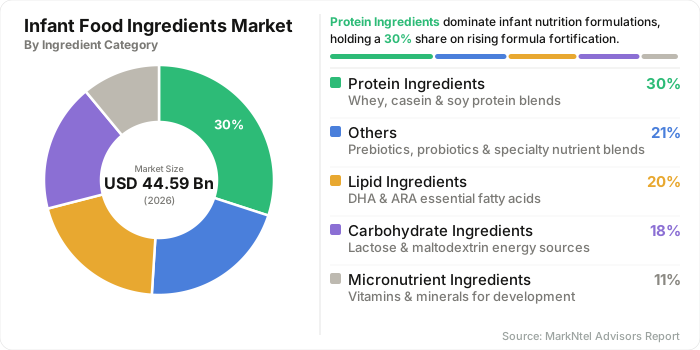
- Protein ingredients represent the leading ingredient category, contributing approximately 30% of the market share.
- Standard infant formula (0–6 months) captured approximately 37% of the application segment in 2026.
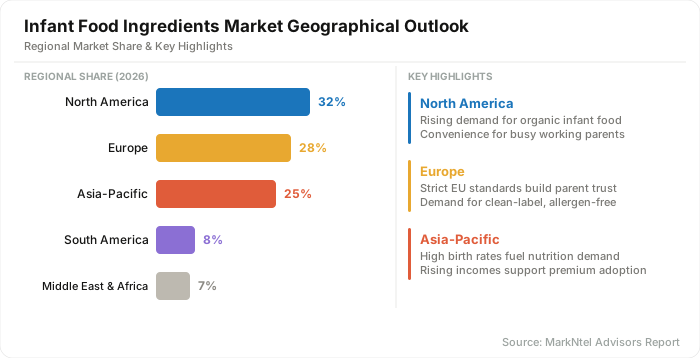
- North America leads regional demand, capturing approximately 32% share.
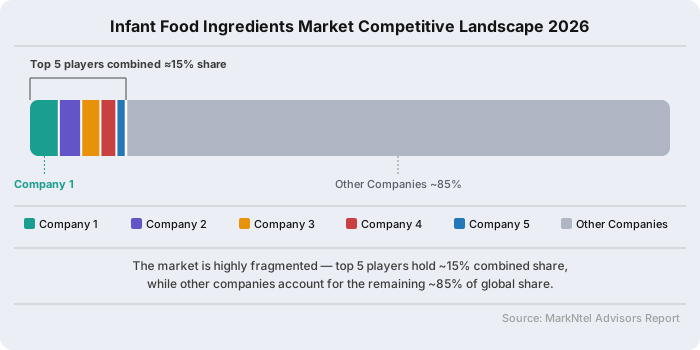
- The industry remains moderately fragmented, with the top five companies collectively holding nearly 15% of the market through strong distribution networks, established brands, and extensive product portfolios.
Infant Food Ingredients Market Size and Outlook
The infant food ingredients market size was valued at USD 42.11 billion in 2025 and is projected to grow from USD 44.59 billion in 2026 to USD 59.37 billion by 2032, registering a CAGR of 4.89% during 2026–2032. Growth is supported by rising preterm births, accelerating demand for specialized infant nutrition, and the growing adoption of organic and whole-milk infant formula, encouraging manufacturers to invest in functional food ingredients and advanced nutritional solutions.
Global demand continues to benefit from evolving infant feeding practices and sustained requirements for scientifically formulated nutrition. According to the World Health Organization and UNICEF, exclusive breastfeeding among infants under six months reached 48% in 2024, increasing by more than 10% over twelve years. Despite this progress, a substantial formula-fed population continues to sustain demand for protein, carbohydrate, lipid, and micronutrient premixes, supporting continuous innovation in early-life nutritional formulations worldwide.
Government initiatives aimed at supporting families are expected to strengthen long-term consumption of infant nutrition products. In China, the State Council introduced a nationwide childcare subsidy of approximately USD 503 per year for every child under three years of age, effective January 1, 2025. Such family-support policies are expected to encourage demand for high-quality infant nutrition while promoting investment in infant formula innovation across one of the world's largest consumer markets.
The infant food ingredients industry is also being shaped by changing global demographic patterns. The United Nations World Fertility 2024 report places the global total fertility rate at 2.2 births per woman in 2024, compared with 2.4 births per woman projected for the same year in earlier estimates. Although birth rates are moderating across many economies, manufacturers are increasingly emphasizing premium formulations, ingredient sophistication, and science-backed nutritional solutions to sustain long-term market growth.
Infant Food Ingredients Market Key Indicators
- Eurostat data show the European Union recorded 3.55 million live births in 2024, with the total fertility rate falling to a historic low of 1.34 children per woman, down from 1.46 just two years earlier. This shrinking birth volume pressures manufacturers toward value-added, science-backed formulations rather than volume growth, favoring premium ingredient categories such as human milk oligosaccharides and specialty lipids over commodity nutrient blends across Western European markets.
- China's National Bureau of Statistics recorded 9.54 million newborns in 2024, a rebound of 520,000 births over 2023 and a birth rate of 6.77 per 1,000 people, the first increase after seven consecutive years of decline. This reversal signals renewed demographic momentum in the world's second-largest formula market, supporting near-term volume recovery for both domestic Chinese ingredient producers and multinational suppliers expanding regulatory approvals across the region.
- The UNICEF Global Breastfeeding Scorecard 2024 documents 23 countries achieving gains exceeding ten percentage points in exclusive breastfeeding over twelve years, including China, Nigeria, Somalia, Timor-Leste, and Uganda, against a global average still below the 2030 target of 70%. Uneven progress across regions means feeding practices remain highly divergent by geography, sustaining formula reliance in markets where breastfeeding-support infrastructure continues to lag national policy targets.
- The Food and Agriculture Organization's Dairy Market Review reports world milk production grew 1.1% in 2024 to approximately 950 million tonnes, with expansion concentrated in India and Pakistan, which together account for nearly a third of global output. This growing raw-material base underpins the availability of whey, casein, and lactose derivatives that remain foundational protein and carbohydrate inputs for infant formula manufacturing operations across every major producing region.
Infant Food Ingredients Market Scope
| Category | Segments |
|---|---|
| By Ingredient Category | Protein Ingredients, Carbohydrate Ingredients, Lipid Ingredients, Micronutrient Ingredients, Bioactive & Functional Ingredients, Technical & Process Ingredients, Other Ingredients |
| By Source | Dairy, Plant, Microbial/Fermentation, Marine, Synthetic/Bioidentical |
| By Application | Standard Infant Formula (0–6 Months), Follow-on Formula (6–12 Months), Growing-up Formula (12–36 Months), Special Medical Infant Formula, Baby Cereals, Baby Snacks, Purees & Prepared Baby Food, Baby Beverages |
| By Physical Form | Powder, Liquid |
| By Sales Channel | Direct Sales, Ingredient Distributors, Online B2B Procurement Platforms |
Infant Food Ingredients Market Growth Drivers
Rising Preterm Births Accelerating Demand for Specialized Infant Nutrition
The rising incidence of preterm births is driving growth in the infant food ingredients market, as premature infants require specialized nutritional support beyond conventional formula. According to the World Health Organization, an estimated 13.4 million babies were born preterm, representing 9.9% of all live births globally, while preterm birth complications remain the leading cause of death among children under five years of age.
The increasing clinical emphasis on neonatal nutrition is encouraging manufacturers to develop advanced formulations containing hydrolyzed proteins and lactoferrin that support digestion, immunity, and healthy growth among premature infants. These scientifically validated ingredients address the complex nutritional needs of low-birthweight babies, prompting healthcare providers and infant formula producers to prioritize specialized formulations over conventional nutritional products in neonatal care.
Growing investments in neonatal intensive care and evidence-based pediatric nutrition continue to expand opportunities for premium ingredient suppliers worldwide. Manufacturers are increasingly focusing on clinically supported formulations tailored for preterm infants, strengthening demand for differentiated nutritional solutions with proven efficacy. This long-term transition toward specialized medical nutrition supports sustained innovation, premium product development, and regulatory compliance across the infant food ingredients industry.
Recent Trends
Rising Adoption of Organic and Whole-Milk Infant Formula
The growing preference for premium infant nutrition is emerging as a key trend in the infant food ingredients market, with parents increasingly choosing products made from organic ingredients and minimally processed dairy sources. According to Bobbie, only 7% of infant formulas sold in the United States are organic, 5% are USDA Organic certified, and just 4% use whole milk, indicating significant room for premium category expansion.
Reflecting this shift, Bobbie launched Organic Whole Milk Infant Formula in April 2025, manufactured in Heath, Ohio, and formulated with naturally occurring Milk Fat Globule Membrane (MFGM) alongside higher DHA levels than its skim-based recipes. The product demonstrates how manufacturers are increasingly adopting whole-milk formulations to deliver nutritional profiles that align with evolving consumer demand for premium, science-backed infant nutrition products.
This transition is creating new opportunities for suppliers of whole-milk dairy ingredients, clean-label ingredients, MFGM concentrates, and certified organic raw materials. As more infant formula manufacturers expand premium product portfolios, demand for differentiated, high-quality nutritional components are expected to strengthen. The trend supports continued innovation across the infant food ingredients industry, encouraging greater investment in value-added formulations and premium ingredient sourcing.
Infant Food Ingredients Market Opportunities and Challenges
Stringent Regulatory Compliance Driving Demand for HMO Commercialization
Stringent regulatory requirements continue to challenge the infant food ingredients industry, as manufacturers must meet evolving safety, nutritional, and quality standards before commercializing new ingredients. China's National Health Commission and State Administration for Market Regulation jointly released GB 25596-2025 on March 27, 2025, introducing a mandatory transition period until March 16, 2027, that requires manufacturers of special medical purpose infant formula to reformulate and re-register products under revised national specifications.
The updated Chinese standard reclassifies choline as a mandatory nutrient, prohibits sucrose as a carbohydrate source, and expands special medical purpose infant formula categories from two to eight, increasing formulation complexity and compliance costs. Consequently, suppliers must accelerate food ingredient manufacturing innovation and strengthen regulatory documentation to maintain market access while ensuring formulations satisfy increasingly stringent nutritional and safety requirements.
Despite these compliance challenges, expanding regulatory approvals for human milk oligosaccharides (HMOs) present a significant growth opportunity. The U.S. Food and Drug Administration has issued multiple GRAS "No Questions" letters for HMOs, while the European Commission has authorized several HMOs as Novel Foods for infant nutrition applications. These approvals encourage manufacturers to develop premium formulations, creating sustained demand for advanced functional ingredients across the infant food ingredients market.
Segmentation Insights
Protein Ingredients Lead Due to Their Essential Role in Supporting Infant Growth and Formula Nutrition
Protein ingredients account for approximately 30% of the ingredient category segment, making them the leading input class in the infant food ingredients industry. Their dominance stems from their indispensable role in supporting healthy growth, tissue development, and metabolic functions during infancy. Compared with carbohydrate, lipid, and micronutrient categories, protein-based formulations remain the primary nutritional foundation of commercially produced infant formula.
The segment continues to benefit from growing demand for high-quality whey protein concentrate and specialized protein formulations designed to closely resemble the nutritional profile of human breast milk. Manufacturers are increasingly investing in scientifically optimized protein systems that improve digestibility, amino acid balance, and nutrient absorption while addressing the evolving nutritional requirements of infants during critical stages of early development.
Continuous advancements in pediatric nutrition research are further strengthening the leadership. Companies are developing innovative dairy-based and specialized protein solutions that comply with stringent nutritional standards while supporting premium product positioning. As parents increasingly seek clinically supported infant nutrition, protein ingredients are expected to maintain their leading share through ongoing formulation improvements and scientific innovation. Based on ingredient category, the scope has been divided into:
- Protein Ingredients
- Carbohydrate Ingredients
- Lipid Ingredients
- Micronutrient Ingredients
- Bioactive & Functional Ingredients
- Technical & Process Ingredients
- Residual Ingredients
- Other Ingredients
Standard Infant Formula (0–6 Months) Dominates Due to High Nutritional Dependence During Early Infancy
Standard Infant Formula (0–6 Months) accounts for approximately 37% of the application segment, making it the largest category within infant nutrition applications. Its leadership is attributed to its role as the primary nutritional substitute for infants who are not breastfed during the most nutritionally sensitive stage of development. This sustained demand supports consistent consumption of scientifically formulated ingredients across global markets.
Manufacturers continue to enhance standard infant formula through Omega-3 DHA enrichment and carefully balanced nutrient compositions that support brain development, visual function, and overall growth. Continuous improvements in formulation science are enabling products to better align with international nutritional recommendations while addressing evolving parental expectations for safe, high-quality infant nutrition during the first six months of life.
The segment is also benefiting from increasing incorporation of Arachidonic acid (ARA) into formula formulations to complement essential fatty acid profiles and promote healthy infant development. Ongoing research, stringent regulatory standards, and continuous product innovation are encouraging manufacturers to strengthen nutritional quality, ensuring standard infant formula remains the preferred application for meeting early-life dietary requirements. The key application areas covered in the study are:
- Standard Infant Formula (0–6 Months)
- Follow-on Formula (6–12 Months)
- Growing-up Formula (12–36 Months)
- Special Medical Infant Formula
- Baby Cereals
- Baby Snacks
- Purees & Prepared Baby Food
- Baby Beverages
Infant Food Ingredients Market Geographical Outlook
North America dominated the infant food ingredients market with an estimated 32% share, primarily due to the strong presence of leading infant nutrition manufacturers, including Abbott Nutrition, Mead Johnson (Reckitt), Perrigo, and Nestlé/Gerber. These companies collectively account for the vast majority of the U.S. infant formula market, creating sustained demand for premium dairy proteins, human milk oligosaccharides (HMOs), lipids, probiotics, vitamins, and other specialty ingredients.
The region's leadership is further reinforced by continuous investments in product innovation and premium infant nutrition formulations. Manufacturers are increasingly introducing formulas enriched with clinically validated functional ingredients, including HMOs, DHA, ARA, probiotics, and prebiotics, to better replicate the nutritional profile of human breast milk. This innovation-driven environment significantly boosts consumption of high-value infant food ingredients across North America.
Moreover, the concentration of globally recognized infant nutrition companies supports an advanced ingredient supply chain, extensive R&D capabilities, and strong collaborations with specialty ingredient suppliers. These factors enable rapid commercialization of next-generation formulations while maintaining stringent quality standards, strengthening North America's position as the leading regional market for infant food ingredients.
Infant Food Ingredients Market Competitive Analysis
The infant food ingredients industry is moderately fragmented, with the top five players DSM-Firmenich AG, Arla Foods Ingredients Group P/S, FrieslandCampina Ingredients B.V., Fonterra Co-operative Group Limited, and Kerry Group plc collectively accounting for approximately 15% of the global market. These companies maintain competitive advantages through extensive research and development, vertically integrated dairy supply chains, global manufacturing networks, and strong regulatory expertise. The remaining market comprises regional dairy ingredient manufacturers, specialty nutrition companies, and biotechnology firms competing through product innovation.
Leading Companies in Infant Food Ingredients Market
- DSM-Firmenich AG
- Arla Foods Ingredients Group P/S
- FrieslandCampina Ingredients B.V.
- Fonterra Co-operative Group Limited
- International Flavors & Fragrances Inc. (IFF)
- Kerry Group plc
- BASF SE
- Glanbia plc
- Archer Daniels Midland Company (ADM)
- AAK AB
- Ingredion Incorporated
- Novonesis A/S
- BENEO GmbH
- Carbery Food Ingredients Limited
- Lactalis Ingredients
- Others
Infant Food Ingredients Industry News and Recent Developments
November 2025: Arla Foods Ingredients Showcased Advanced Milk and Whey Protein Solutions at Fi Europe
Arla Foods Ingredients announced it would showcase innovative milk and whey protein concepts at Fi Europe 2025, highlighting high-protein dairy applications and clinically supported Milk Fat Globule Membrane (MFGM) ingredients. The company emphasized rapid product development through flexible pilot capabilities while demonstrating ingredient solutions for nutrition-focused food and beverage formulations, including applications relevant to infant nutrition and premium dairy products.
Impact Analysis: The development reinforces the industry's shift toward scientifically validated dairy ingredients with enhanced nutritional functionality. Arla's focus on premium milk proteins and MFGM is expected to strengthen innovation across infant nutrition by supporting formulations that more closely resemble the composition of human milk. The company's investment in application development capabilities may also accelerate commercialization timelines, enabling manufacturers to respond more efficiently to evolving consumer demand for premium, protein-rich, and clinically supported nutritional products.
April 2025: dsm-firmenich Received FSSAI Approval in India for GLYCARE® 2'-FL HMO
dsm-firmenich announced that India's Food Safety and Standards Authority of India (FSSAI) approved GLYCARE® 2'-FL, its human milk oligosaccharide (HMO), for use in nutritional products intended for infants up to six months old at a maximum level of 1.2 g/L of reconstituted formula. The approval expands access to advanced HMO ingredients in one of the world's largest infant nutrition markets.
Impact Analysis: The regulatory approval represents a significant milestone for premium infant nutrition in India by enabling manufacturers to formulate products that more closely resemble the composition of human breast milk. It is expected to accelerate adoption of HMOs, encourage product innovation, and intensify competition among ingredient suppliers seeking regulatory approvals across Asia. The decision also strengthens India's position as an important growth market for advanced infant nutrition ingredients supported by evolving regulatory frameworks and scientific innovation
- Market Segmentation
- Introduction
- Product Definition
- Research Process
- Assumptions
- Executive Summary
- Infant Food Ingredients Market Import & Export Analysis
- Infant Food Ingredients Market Supply Chain Analysis
- Infant Food Ingredients Market Policies, Regulations, and Product Standards
- Infant Food Ingredients Production Trend 2022-2032
- Infant Food Ingredients Trend by Type of Ingredient Category
- Protein Ingredients
- Carbohydrate Ingredients
- Lipid Ingredients
- Micronutrient Ingredients
- Bioactive & Functional Ingredients
- Technical & Process Ingredients
- Other Ingredients
- Company-Wise Production Plants and Statistics
- Installed Production Capacity
- Actual Production
- Planned Production Target
- Infant Food Ingredients Trend by Type of Ingredient Category
- Infant Food Ingredients Pricing Analysis 2022-2032
- Infant Food Ingredients Pricing Trend 2022-2032
- Infant Food Ingredients Pricing Trend by Regions 2022-2032
- North America
- South America
- Europe
- Middle East & Africa
- Asia Pacific
- Infant Food Ingredients Pricing Trend by Ingredient Category 2022-2032
- Protein Ingredients
- Carbohydrate Ingredients
- Lipid Ingredients
- Micronutrient Ingredients
- Bioactive & Functional Ingredients
- Technical & Process Ingredients
- Other Ingredients
- Infant Food Ingredients Market Dynamics
- Growth Factors
- Challenges
- Infant Food Ingredients Market Hotspot & Opportunities
- Infant Food Ingredients Market Outlook, 2022-2032
- Market Size & Outlook
- By Revenues (USD Million)
- Market Segmentation & Outlook
- By Ingredient Category- Market Size & Forecast 2022-2032, USD Million
- Protein Ingredients
- Dairy Proteins
- Amino Acids, Peptides & Protein Hydrolysates
- Carbohydrate Ingredients
- Cereal & Grain Derivatives
- Carbohydrates (Non-Cereal, Non-Lactose)
- Lipid Ingredients
- Vegetable Oil Blends
- DHA
- ARA
- Structured Lipids
- MCT Oils
- Other Specialty Lipids
- Micronutrient Ingredients
- Vitamins
- Minerals
- Bioactive & Functional Ingredients
- Human Milk Oligosaccharides (HMOs)
- Prebiotics (excluding HMOs)
- Probiotics
- Nucleotides
- Lactoferrin
- Specialty Bioactives & Enzymes
- Technical & Process Ingredients
- Hydrocolloids, Emulsifiers & Stabilizers
- Flavoring & Masking Ingredients
- Other Ingredients
- Protein Ingredients
- By Source - Market Size & Forecast 2022-2032, USD Million
- Dairy
- Plant
- Microbial/Fermentation
- Marine
- Synthetic/Bioidentical
- By Application - Market Size & Forecast 2022-2032, USD Million
- Standard Infant Formula (0–6 Months)
- Follow-on Formula (6–12 Months)
- Growing-up Formula (12–36 Months)
- Special Medical Infant Formula
- Baby Cereals
- Baby Snacks
- Purees & Prepared Baby Food
- Baby Beverages
- By Physical Form- Market Size & Forecast 2022-2032, USD Million
- Powder
- Liquid
- By Sales Channel - Market Size & Forecast 2022-2032, USD Million
- Direct Sales
- Ingredient Distributors
- Online B2B Procurement Platforms
- By Region
- North America
- South America
- Europe
- The Middle East & Africa
- Asia-Pacific
- By Company
- Competition Characteristics
- Market Share & Analysis
- By Ingredient Category- Market Size & Forecast 2022-2032, USD Million
- Market Size & Outlook
- North America Infant Food Ingredients Market Outlook, 2022-2032
- Market Size & Outlook
- By Revenues (USD Million)
- Market Segmentation & Outlook
- By Ingredient Category- Market Size & Forecast 2022-2032, USD Million
- By Source - Market Size & Forecast 2022-2032, USD Million
- By Application - Market Size & Forecast 2022-2032, USD Million
- By Physical Form- Market Size & Forecast 2022-2032, USD Million
- By Sales Channel - Market Size & Forecast 2022-2032, USD Million
- By Country
- The US
- Canada
- Mexico
- The US Infant Food Ingredients Market Outlook, 2022-2032
- Market Size & Outlook
- By Revenues (USD Million)
- Market Segmentation & Outlook
- By Ingredient Category- Market Size & Forecast 2022-2032, USD Million
- By Source - Market Size & Forecast 2022-2032, USD Million
- By Application - Market Size & Forecast 2022-2032, USD Million
- By Physical Form- Market Size & Forecast 2022-2032, USD Million
- By Sales Channel - Market Size & Forecast 2022-2032, USD Million
- Market Size & Outlook
- Canada Infant Food Ingredients Market Outlook, 2022-2032
- Market Size & Outlook
- By Revenues (USD Million)
- Market Segmentation & Outlook
- By Ingredient Category- Market Size & Forecast 2022-2032, USD Million
- By Source - Market Size & Forecast 2022-2032, USD Million
- By Application - Market Size & Forecast 2022-2032, USD Million
- By Physical Form- Market Size & Forecast 2022-2032, USD Million
- By Sales Channel - Market Size & Forecast 2022-2032, USD Million
- Market Size & Outlook
- Mexico Infant Food Ingredients Market Outlook, 2022-2032
- Market Size & Outlook
- By Revenues (USD Million)
- Market Segmentation & Outlook
- By Ingredient Category- Market Size & Forecast 2022-2032, USD Million
- By Source - Market Size & Forecast 2022-2032, USD Million
- By Application - Market Size & Forecast 2022-2032, USD Million
- By Physical Form- Market Size & Forecast 2022-2032, USD Million
- By Sales Channel - Market Size & Forecast 2022-2032, USD Million
- Market Size & Outlook
- Market Size & Outlook
- South America Infant Food Ingredients Market Outlook, 2022-2032
- Market Size & Outlook
- By Revenues (USD Million)
- Market Segmentation & Outlook
- By Ingredient Category- Market Size & Forecast 2022-2032, USD Million
- By Source - Market Size & Forecast 2022-2032, USD Million
- By Application - Market Size & Forecast 2022-2032, USD Million
- By Physical Form- Market Size & Forecast 2022-2032, USD Million
- By Sales Channel - Market Size & Forecast 2022-2032, USD Million
- By Country
- Brazil
- Argentina
- Rest of South America
- Brazil Infant Food Ingredients Market Outlook, 2022-2032
- Market Size & Outlook
- By Revenues (USD Million)
- Market Segmentation & Outlook
- By Ingredient Category- Market Size & Forecast 2022-2032, USD Million
- By Source - Market Size & Forecast 2022-2032, USD Million
- By Application - Market Size & Forecast 2022-2032, USD Million
- By Physical Form- Market Size & Forecast 2022-2032, USD Million
- By Sales Channel - Market Size & Forecast 2022-2032, USD Million
- Market Size & Outlook
- Argentina Infant Food Ingredients Market Outlook, 2022-2032
- Market Size & Outlook
- By Revenues (USD Million)
- Market Segmentation & Outlook
- By Ingredient Category- Market Size & Forecast 2022-2032, USD Million
- By Source - Market Size & Forecast 2022-2032, USD Million
- By Application - Market Size & Forecast 2022-2032, USD Million
- By Physical Form- Market Size & Forecast 2022-2032, USD Million
- By Sales Channel - Market Size & Forecast 2022-2032, USD Million
- Market Size & Outlook
- Market Size & Outlook
- Europe Infant Food Ingredients Market Outlook, 2022-2032
- Market Size & Outlook
- By Revenues (USD Million)
- Market Segmentation & Outlook
- By Ingredient Category- Market Size & Forecast 2022-2032, USD Million
- By Source - Market Size & Forecast 2022-2032, USD Million
- By Application - Market Size & Forecast 2022-2032, USD Million
- By Physical Form- Market Size & Forecast 2022-2032, USD Million
- By Sales Channel - Market Size & Forecast 2022-2032, USD Million
- By Country
- The UK
- Germany
- France
- Italy
- Spain
- The Benelux
- Rest of Europe
- The UK Infant Food Ingredients Market Outlook, 2022-2032
- Market Size & Outlook
- By Revenues (USD Million)
- Market Segmentation & Outlook
- By Ingredient Category- Market Size & Forecast 2022-2032, USD Million
- By Source - Market Size & Forecast 2022-2032, USD Million
- By Application - Market Size & Forecast 2022-2032, USD Million
- By Physical Form- Market Size & Forecast 2022-2032, USD Million
- By Sales Channel - Market Size & Forecast 2022-2032, USD Million
- Market Size & Outlook
- Germany Infant Food Ingredients Market Outlook, 2022-2032
- Market Size & Outlook
- By Revenues (USD Million)
- Market Segmentation & Outlook
- By Ingredient Category- Market Size & Forecast 2022-2032, USD Million
- By Source - Market Size & Forecast 2022-2032, USD Million
- By Application - Market Size & Forecast 2022-2032, USD Million
- By Physical Form- Market Size & Forecast 2022-2032, USD Million
- By Sales Channel - Market Size & Forecast 2022-2032, USD Million
- Market Size & Outlook
- France Infant Food Ingredients Market Outlook, 2022-2032
- Market Size & Outlook
- By Revenues (USD Million)
- Market Segmentation & Outlook
- By Ingredient Category- Market Size & Forecast 2022-2032, USD Million
- By Source - Market Size & Forecast 2022-2032, USD Million
- By Application - Market Size & Forecast 2022-2032, USD Million
- By Physical Form- Market Size & Forecast 2022-2032, USD Million
- By Sales Channel - Market Size & Forecast 2022-2032, USD Million
- Market Size & Outlook
- Italy Infant Food Ingredients Market Outlook, 2022-2032
- Market Size & Outlook
- By Revenues (USD Million)
- Market Segmentation & Outlook
- By Ingredient Category- Market Size & Forecast 2022-2032, USD Million
- By Source - Market Size & Forecast 2022-2032, USD Million
- By Application - Market Size & Forecast 2022-2032, USD Million
- By Physical Form- Market Size & Forecast 2022-2032, USD Million
- By Sales Channel - Market Size & Forecast 2022-2032, USD Million
- Market Size & Outlook
- Spain Infant Food Ingredients Market Outlook, 2022-2032
- Market Size & Outlook
- By Revenues (USD Million)
- Market Segmentation & Outlook
- By Ingredient Category- Market Size & Forecast 2022-2032, USD Million
- By Source - Market Size & Forecast 2022-2032, USD Million
- By Application - Market Size & Forecast 2022-2032, USD Million
- By Physical Form- Market Size & Forecast 2022-2032, USD Million
- By Sales Channel - Market Size & Forecast 2022-2032, USD Million
- Market Size & Outlook
- The Benelux Infant Food Ingredients Market Outlook, 2022-2032
- Market Size & Outlook
- By Revenues (USD Million)
- Market Segmentation & Outlook
- By Ingredient Category- Market Size & Forecast 2022-2032, USD Million
- By Source - Market Size & Forecast 2022-2032, USD Million
- By Application - Market Size & Forecast 2022-2032, USD Million
- By Physical Form- Market Size & Forecast 2022-2032, USD Million
- By Sales Channel - Market Size & Forecast 2022-2032, USD Million
- Market Size & Outlook
- Market Size & Outlook
- The Middle East & Africa Infant Food Ingredients Market Outlook, 2022-2032
- Market Size & Outlook
- By Revenues (USD Million)
- Market Segmentation & Outlook
- By Ingredient Category- Market Size & Forecast 2022-2032, USD Million
- By Source - Market Size & Forecast 2022-2032, USD Million
- By Application - Market Size & Forecast 2022-2032, USD Million
- By Physical Form- Market Size & Forecast 2022-2032, USD Million
- By Sales Channel - Market Size & Forecast 2022-2032, USD Million
- By Country
- Saudi Arabia
- The UAE
- South Africa
- Egypt
- Rest of Middle East & Africa
- Saudi Arabia Infant Food Ingredients Market Outlook, 2022-2032
- Market Size & Outlook
- By Revenues (USD Million)
- Market Segmentation & Outlook
- By Ingredient Category- Market Size & Forecast 2022-2032, USD Million
- By Source - Market Size & Forecast 2022-2032, USD Million
- By Application - Market Size & Forecast 2022-2032, USD Million
- By Physical Form- Market Size & Forecast 2022-2032, USD Million
- By Sales Channel - Market Size & Forecast 2022-2032, USD Million
- Market Size & Outlook
- The UAE Infant Food Ingredients Market Outlook, 2022-2032
- Market Size & Outlook
- By Revenues (USD Million)
- Market Segmentation & Outlook
- By Ingredient Category- Market Size & Forecast 2022-2032, USD Million
- By Source - Market Size & Forecast 2022-2032, USD Million
- By Application - Market Size & Forecast 2022-2032, USD Million
- By Physical Form- Market Size & Forecast 2022-2032, USD Million
- By Sales Channel - Market Size & Forecast 2022-2032, USD Million
- Market Size & Outlook
- South Africa Infant Food Ingredients Market Outlook, 2022-2032
- Market Size & Outlook
- By Revenues (USD Million)
- Market Segmentation & Outlook
- By Ingredient Category- Market Size & Forecast 2022-2032, USD Million
- By Source - Market Size & Forecast 2022-2032, USD Million
- By Application - Market Size & Forecast 2022-2032, USD Million
- By Physical Form- Market Size & Forecast 2022-2032, USD Million
- By Sales Channel - Market Size & Forecast 2022-2032, USD Million
- Market Size & Outlook
- Egypt Infant Food Ingredients Market Outlook, 2022-2032
- Market Size & Outlook
- By Revenues (USD Million)
- Market Segmentation & Outlook
- By Ingredient Category- Market Size & Forecast 2022-2032, USD Million
- By Source - Market Size & Forecast 2022-2032, USD Million
- By Application - Market Size & Forecast 2022-2032, USD Million
- By Physical Form- Market Size & Forecast 2022-2032, USD Million
- By Sales Channel - Market Size & Forecast 2022-2032, USD Million
- Market Size & Outlook
- Market Size & Outlook
- Asia-Pacific Infant Food Ingredients Market Outlook, 2022-2032
- Market Size & Outlook
- By Revenues (USD Million)
- Market Segmentation & Outlook
- By Ingredient Category- Market Size & Forecast 2022-2032, USD Million
- By Source - Market Size & Forecast 2022-2032, USD Million
- By Application - Market Size & Forecast 2022-2032, USD Million
- By Physical Form- Market Size & Forecast 2022-2032, USD Million
- By Sales Channel - Market Size & Forecast 2022-2032, USD Million
- By Country
- China
- Japan
- India
- South Korea
- Australia
- Rest of Asia-Pacific
- China Infant Food Ingredients Market Outlook, 2022-2032
- Market Size & Outlook
- By Revenues (USD Million)
- Market Segmentation & Outlook
- By Ingredient Category- Market Size & Forecast 2022-2032, USD Million
- By Source - Market Size & Forecast 2022-2032, USD Million
- By Application - Market Size & Forecast 2022-2032, USD Million
- By Physical Form- Market Size & Forecast 2022-2032, USD Million
- By Sales Channel - Market Size & Forecast 2022-2032, USD Million
- Market Size & Outlook
- Japan Infant Food Ingredients Market Outlook, 2022-2032
- Market Size & Outlook
- By Revenues (USD Million)
- Market Segmentation & Outlook
- By Ingredient Category- Market Size & Forecast 2022-2032, USD Million
- By Source - Market Size & Forecast 2022-2032, USD Million
- By Application - Market Size & Forecast 2022-2032, USD Million
- By Physical Form- Market Size & Forecast 2022-2032, USD Million
- By Sales Channel - Market Size & Forecast 2022-2032, USD Million
- Market Size & Outlook
- India Infant Food Ingredients Market Outlook, 2022-2032
- Market Size & Outlook
- By Revenues (USD Million)
- Market Segmentation & Outlook
- By Ingredient Category- Market Size & Forecast 2022-2032, USD Million
- By Source - Market Size & Forecast 2022-2032, USD Million
- By Application - Market Size & Forecast 2022-2032, USD Million
- By Physical Form- Market Size & Forecast 2022-2032, USD Million
- By Sales Channel - Market Size & Forecast 2022-2032, USD Million
- Market Size & Outlook
- South Korea Infant Food Ingredients Market Outlook, 2022-2032
- Market Size & Outlook
- By Revenues (USD Million)
- Market Segmentation & Outlook
- By Ingredient Category- Market Size & Forecast 2022-2032, USD Million
- By Source - Market Size & Forecast 2022-2032, USD Million
- By Application - Market Size & Forecast 2022-2032, USD Million
- By Physical Form- Market Size & Forecast 2022-2032, USD Million
- By Sales Channel - Market Size & Forecast 2022-2032, USD Million
- Market Size & Outlook
- Australia Infant Food Ingredients Market Outlook, 2022-2032
- Market Size & Outlook
- By Revenues (USD Million)
- Market Segmentation & Outlook
- By Ingredient Category- Market Size & Forecast 2022-2032, USD Million
- By Source - Market Size & Forecast 2022-2032, USD Million
- By Application - Market Size & Forecast 2022-2032, USD Million
- By Physical Form- Market Size & Forecast 2022-2032, USD Million
- By Sales Channel - Market Size & Forecast 2022-2032, USD Million
- Market Size & Outlook
- Market Size & Outlook
- Infant Food Ingredients Market Key Strategic Imperatives for Success & Growth
- Competitive Outlook
- Company Profiles
- DSM-Firmenich AG
- Business Description
- Product Portfolio
- Collaborations & Alliances
- Recent Developments
- Financial Details
- Others
- Arla Foods Ingredients Group P/S
- Business Description
- Product Portfolio
- Collaborations & Alliances
- Recent Developments
- Financial Details
- Others
- FrieslandCampina Ingredients B.V.
- Business Description
- Product Portfolio
- Collaborations & Alliances
- Recent Developments
- Financial Details
- Others
- Fonterra Co-operative Group Limited
- Business Description
- Product Portfolio
- Collaborations & Alliances
- Recent Developments
- Financial Details
- Others
- International Flavors & Fragrances Inc. (IFF)
- Business Description
- Product Portfolio
- Collaborations & Alliances
- Recent Developments
- Financial Details
- Others
- Kerry Group plc
- Business Description
- Product Portfolio
- Collaborations & Alliances
- Recent Developments
- Financial Details
- Others
- BASF SE
- Business Description
- Product Portfolio
- Collaborations & Alliances
- Recent Developments
- Financial Details
- Others
- Glanbia plc
- Business Description
- Product Portfolio
- Collaborations & Alliances
- Recent Developments
- Financial Details
- Others
- Glycom A/S
- Business Description
- Product Portfolio
- Collaborations & Alliances
- Recent Developments
- Financial Details
- Others
- AAK AB
- Business Description
- Product Portfolio
- Collaborations & Alliances
- Recent Developments
- Financial Details
- Others
- Ingredion Incorporated
- Business Description
- Product Portfolio
- Collaborations & Alliances
- Recent Developments
- Financial Details
- Others
- Novonesis A/S
- Business Description
- Product Portfolio
- Collaborations & Alliances
- Recent Developments
- Financial Details
- Others
- BENEO GmbH
- Business Description
- Product Portfolio
- Collaborations & Alliances
- Recent Developments
- Financial Details
- Others
- Carbery Food Ingredients Limited
- Business Description
- Product Portfolio
- Collaborations & Alliances
- Recent Developments
- Financial Details
- Others
- Lactalis Ingredients
- Business Description
- Product Portfolio
- Collaborations & Alliances
- Recent Developments
- Financial Details
- Others
- Others
- DSM-Firmenich AG
- Company Profiles
- Disclaimer

MarkNtel Advisors follows a robust and iterative research methodology designed to ensure maximum accuracy and minimize deviation in market estimates and forecasts. Our approach combines both bottom-up and top-down techniques to effectively segment and quantify various aspects of the market. A consistent feature across all our research reports is data triangulation, which examines the market from three distinct perspectives to validate findings. Key components of our research process include:
1. Scope & Research Design At the outset, MarkNtel Advisors define the research objectives and formulate pertinent questions. This phase involves determining the type of research—qualitative or quantitative—and designing a methodology that outlines data collection methods, target demographics, and analytical tools. They also establish timelines and budgets to ensure the research aligns with client goals.
2. Sample Selection and Data Collection In this stage, the firm identifies the target audience and determines the appropriate sample size to ensure representativeness. They employ various sampling methods, such as random or stratified sampling, based on the research objectives. Data collection is carried out using tools like surveys, interviews, and observations, ensuring the gathered data is reliable and relevant.
3. Data Analysis and Validation Once data is collected, MarkNtel Advisors undertake a rigorous analysis process. This includes cleaning the data to remove inconsistencies, employing statistical software for quantitative analysis, and thematic analysis for qualitative data. Validation steps are taken to ensure the accuracy and reliability of the findings, minimizing biases and errors.

4. Data Forecast and FinalizationThe final phase involves forecasting future market trends based on the analyzed data. MarkNtel Advisors utilize predictive modeling and time series analysis to anticipate market behaviors. The insights are then compiled into comprehensive reports, featuring visual aids like charts and graphs, and include strategic recommendations to inform client decision-making
FILL THE FORM TO INQUIRE BEFORE BUYING THIS REPORT
We offer flexible licensing options to cater to varying organizational needs. Choose the pricing pack that best suits your requirements:
Buy Now Talk to our Consultant
 Request Customization