

By Chemical Type (Coagulants, Flocculants, Biocides & Disinfectants, Corrosion Inhibitors, Scale Inhibitors, pH Adjusters & Stabilizers, Defoamers, Chelating Agents, Others), By Ap......plication (Raw Water Treatment, Municipal Wastewater Treatment, Industrial Wastewater Treatment, Cooling Water Treatment, Boiler Water Treatment, Desalination Plants, Others), By End Users (Municipal, Power Generation, Textile Industry, Oil & Gas, Chemicals & Petrochemicals, Mining, Food & Beverage, Pulp & Paper, Pharmaceuticals, Others), and others Read more
- Chemicals
- Jul 2026
- 140
- PDF, Excel, PPT
India Water and Wastewater Treatment Chemicals Market Key Takeaways
- The India water & wastewater treatment chemicals market was valued at USD 2.38 billion in 2025 and is projected to reach USD 2.49 billion in 2026 to USD 3.65 billion by 2032.
- The industry is projected to witness steady growth at a CAGR of 6.6% during 2026–2032.
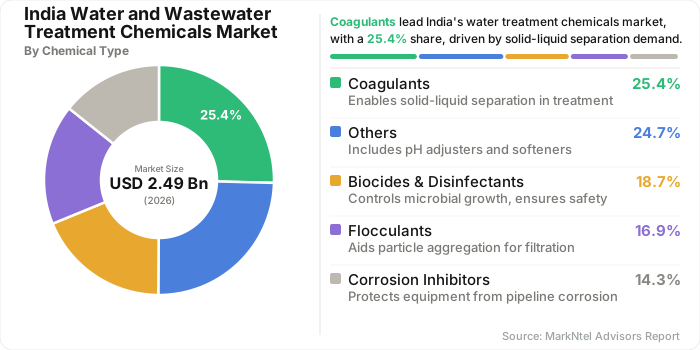
- By chemical type, coagulants dominate the market with an estimated 25.4% share in 2026.
- By end user, municipal utilities lead the market with around 44.8% share in 2026.
- North India holds the largest regional share at approximately 37% in 2026.
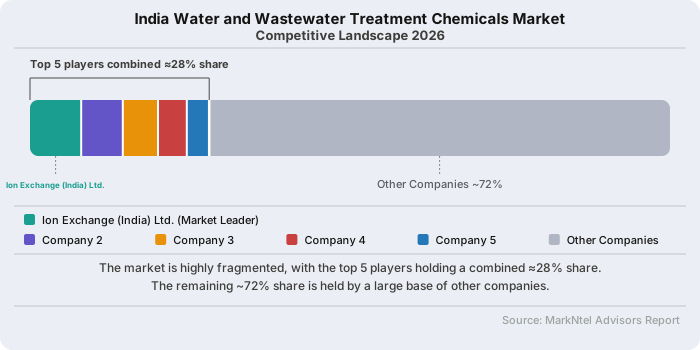
- The market is moderately consolidated, with the top 5 players accounting for nearly 28% market share in 2026.
India Water and Wastewater Treatment Chemicals Market Size & Outlook
The water & wastewater treatment chemicals industry size in India is valued at USD 2.38 billion in 2025 and is projected to reach USD 2.49 billion in 2026 and USD 3.65 billion by 2032, expanding at a CAGR of 6.6%.
Growth is supported by rising industrial water consumption, tightening discharge regulations, and increasing adoption of industrial water treatment chemicals across manufacturing, municipal utilities, and process industries to ensure compliance and operational continuity.
Global regulatory alignment continues to accelerate structural demand for advanced treatment systems. The World Health Organization (WHO) and UN-Habitat under SDG 6.3 are strengthening global monitoring of safely treated domestic and industrial wastewater, encouraging expansion of secondary and tertiary treatment infrastructure. This is driving wider deployment of membrane filtration, biological systems, and high-efficiency municipal water treatment chemicals, particularly in regions facing rapid urbanization and wastewater stress.
At the national level, large-scale infrastructure investments are reinforcing long-term consumption of treatment chemicals. According to the Press Information Bureau (PIB), under AMRUT 2.0, approximately 583 sewerage projects worth USD 7–8 billion have been approved to enhance urban wastewater treatment capacity and expand reuse infrastructure. In parallel, industrial clusters are increasing demand for chemical-intensive processes such as coagulation, disinfection, sludge conditioning, and nutrient removal, strengthening uptake of specialty water treatment chemicals.
Additional growth momentum is being created by industrial expansion and water-intensive manufacturing growth. India’s chemical, pharmaceutical, textile, refinery, and food processing sectors continue to expand capacity, increasing demand for process water treatment, boiler feed water conditioning, and effluent treatment systems. Rising water reuse adoption across industrial parks is also improving chemical consumption intensity per unit of water treated, supporting sustained market expansion.
Policy-driven circular water frameworks are further reshaping long-term demand patterns. Uttar Pradesh’s Safe Reuse of Treated Water Policy (2026) targets 50% wastewater reuse by 2030, with progressive movement toward full reuse across agriculture, industry, and urban supply. This structural transition is accelerating investment in high-performance chemical formulations, digital monitoring systems, and advanced treatment technologies, reinforcing long-term growth of the water treatment chemicals industry.
India Water and Wastewater Treatment Chemicals Market Key Indicators
- According to the Ministry of Housing and Urban Affairs (MoHUA), 8,998 water and sewerage projects with an approved value of approximately USD 22.1 billion are under implementation through AMRUT 2.0 as of late 2024. The large-scale expansion of urban water and wastewater infrastructure continues to drive demand for treatment chemicals, filtration media, and process control solutions.
- The Union Budget 2025–26 allocates approximately USD 8.6 billion to the Department of Drinking Water and Sanitation, with the majority supporting the Jal Jeevan Mission. Continued investment in drinking water infrastructure is accelerating the deployment of disinfection chemicals, coagulants, corrosion inhibitors, and water quality monitoring systems across rural water supply networks.
- According to the 2024 WHO–UN-Water SDG 6.3.1 Progress Report, only 27% of industrial wastewater is safely treated among the countries reporting industrial wastewater data, highlighting the global need for advanced industrial effluent treatment technologies. The widening regulatory focus on wastewater compliance is accelerating demand for coagulants, flocculants, disinfectants, membrane chemicals, and sludge treatment solutions across industrial facilities.
- As per the Ministry of Housing and Urban Affairs (MoHUA), 592 sewerage and septage projects approved under AMRUT 2.0 are creating 6,739 MLD of new and augmented sewage treatment capacity, including 2,093 MLD dedicated to treated water reuse. The programme mandates compliance with CPCB discharge standards, including 5 mg/L Ammoniacal Nitrogen limits for treated effluent under the "Jal Hi AMRIT" initiative, thereby accelerating the adoption of advanced nutrient-removal chemicals, biological treatment processes, and tertiary wastewater treatment technologies across municipal STPs.
India Water and Wastewater Treatment Chemicals Market Scope
| Category | Segments |
|---|---|
| By Chemical Type | Coagulants, Flocculants, Biocides & Disinfectants, Corrosion Inhibitors, Scale Inhibitors, pH Adjusters & Stabilizers, Defoamers, Chelating Agents, Others |
| By Application | Raw Water Treatment, Municipal Wastewater Treatment, Industrial Wastewater Treatment, Cooling Water Treatment, Boiler Water Treatment, Desalination Plants, Others |
| By End Users | Municipal, Power Generation, Textile Industry, Oil & Gas, Chemicals & Petrochemicals, Mining, Food & Beverage, Pulp & Paper, Pharmaceuticals, Others |
India Water and Wastewater Treatment Chemicals Market Growth Drivers
Escalating Water Stress Driving Chemical Treatment Demand
India's growing industrial water treatment requirements are being driven by intensifying structural water scarcity, which is increasing reliance on water reuse and advanced treatment solutions. According to the Ministry of Jal Shakti, India's annual per capita water availability is estimated at 1,449 cubic metres in 2024, remaining below the 1,700 cubic metre water-stress threshold. The tightening freshwater balance is compelling municipalities and water-intensive industries to expand wastewater recycling, thereby increasing consumption of water treatment chemicals for purification, disinfection, and reuse applications.
The growing pressure on conventional water resources is further strengthening demand for specialty treatment chemicals across industrial sectors. The Central Ground Water Board (CGWB) reports that India's total annual groundwater recharge declined to 446.9 billion cubic metres in 2024, reflecting rising extraction pressure despite ongoing conservation measures. As industries increasingly adopt recycled water to ensure operational continuity and regulatory compliance, investments in chemical dosing, corrosion control, membrane protection, and biological treatment solutions continue to accelerate, supporting long-term growth of the India water and wastewater treatment chemicals market.
Recent Trends
Zero Liquid Discharge Adoption Accelerating Specialty Chemical Demand
The adoption of zero liquid discharge (ZLD) systems is emerging as a major trend across the water and wastewater treatment chemicals market as regulatory oversight on industrial wastewater management continues to intensify. In 2025, the Central Pollution Control Board (CPCB) revised its industrial classification framework, covering 419 industrial sectors under the Red, Orange, Green, White, and newly introduced Blue categories to strengthen pollution control and environmental compliance. The tightening regulatory framework is accelerating investments in ZLD systems, increasing demand for specialty water treatment chemicals including antiscalants, corrosion inhibitors, membrane cleaners, and crystallization additives.
The trend is further supported by stricter wastewater management requirements for high-polluting industries such as chemicals, textiles, pharmaceuticals, distilleries, and tanneries, where ZLD and high-water-recovery technologies are increasingly adopted to meet regulatory obligations. The growing deployment of reverse osmosis, multiple-effect evaporators, crystallizers, and automated dosing systems is strengthening the use of industrial water recycling solutions while creating sustained demand for high-performance treatment chemicals that improve membrane efficiency, minimize scaling, and enhance water recovery rates.
India Water and Wastewater Treatment Chemicals Market Opportunities and Challenges
Raw Material Import Dependency Creating Local Innovation Opportunities
India's continued reliance on imported chemical intermediates remains a key challenge for the market, exposing manufacturers to supply chain disruptions and raw material price volatility. According to UN Comtrade 2024 data, India imported organic chemicals worth approximately USD 25.65 billion, while imports of chemical products and preparations (HS 3823/3824) reached USD 1.61 billion. The dependence on imported feedstocks for specialty formulations, including those used in water treatment, increases production costs and procurement risks for domestic manufacturers of specialty water treatment chemicals and industrial treatment solutions.
The growing focus on sustainable chemistry and domestic manufacturing is creating new opportunities for the market as companies invest in next-generation treatment formulations. In May 2024, Kurita Water Industries established Kurita AquaChemie India Private Limited in Chennai to strengthen the local supply of industrial water treatment chemicals and technical services for India's expanding manufacturing sector. Additionally, in July 2024, Kurita partnered with Solugen to develop carbon-negative, bio-based water treatment chemicals that replace conventional phosphorus-based additives, highlighting the industry's shift toward green water treatment chemicals and sustainable industrial water management solutions.
Segmentations Insights
Extensive Water Treatment Applications Supported Coagulant Demand
Coagulants are the leading chemical in the wastewater treatment chemicals, holding a 25.4% share of the industry in 2026, supported by their universal application as the primary treatment chemical across municipal and industrial water systems. Aluminium sulphate (alum), polyaluminium chloride (PAC), and ferric chloride are extensively used during coagulation and clarification to remove suspended solids, colloidal particles, turbidity, phosphorus, and natural organic matter before filtration and disinfection. Their indispensable role in municipal water treatment chemicals ensures consistent consumption across drinking water plants, sewage treatment facilities, and industrial effluent treatment systems.
The segment continues to benefit from expanding municipal and industrial water treatment infrastructure, where coagulation remains the first and most critical treatment stage. Coagulants are extensively used across textile, food processing, pharmaceuticals, chemicals, power generation, and mining industries to reduce suspended solids and chemical oxygen demand (COD). Reflecting strong industry demand, Kemira reported that coagulants account for approximately 60% of its water treatment chemical portfolio, while its Industry & Water business continued to record strong organic growth in 2024, driven by increasing municipal and industrial water treatment demand, while also announcing investments to expand global coagulant production capacity. Based on chemical type, the industry has been segmented into:
- Coagulants
- Flocculants
- Biocides & Disinfectants
- Corrosion Inhibitors
- Scale Inhibitors
- pH Adjusters & Stabilizers
- Defoamers
- Chelating Agents
- Others
Municipal Utilities Anchored Chemical Consumption
Municipal utilities continue to dominate the industry, accounting for a 44.8% share of the industry in 2026, driven by their responsibility for supplying potable water and managing urban wastewater across India's rapidly expanding cities. Water treatment chemicals are extensively consumed in drinking water purification, sewage treatment plants (STPs), and water reuse facilities for coagulation, disinfection, pH control, and sludge conditioning. The growing deployment of municipal water infrastructure and urban wastewater management systems continues to position local utilities as the largest consumers of treatment chemicals.
The segment is further supported by sustained investment in urban sanitation infrastructure. According to the Ministry of Housing and Urban Affairs (MoHUA), Swachh Bharat Mission–Urban 2.0 is being implemented with a total outlay of approximately USD 17.1 billion through FY2025–26 to strengthen scientific wastewater management, faecal sludge treatment, and sanitation services across urban India. Reflecting the sector's scale, Chembond Water Technologies Ltd. continues expanding its portfolio by supplying coagulants, bioremediation products, and digital water municipal water treatment management solutions to utilities, reinforcing the dominant position of municipal end users in the market. The key end users mapped in the study include:
- Municipal
- Power Generation
- Textile Industry
- Oil & Gas
- Chemicals & Petrochemicals
- Mining
- Food & Beverage
- Pulp & Paper
- Pharmaceuticals
- Others
India Water and Wastewater Treatment Chemicals Market Geographical Outlook
North India anchors the India water treatment chemicals leadership, accounting for an estimated 37.0% share of the industry in 2026, supported by its extensive municipal water infrastructure, dense industrial base, and large river conservation programmes. The region hosts major manufacturing clusters across Uttar Pradesh, Haryana, Punjab, Rajasthan, Delhi-NCR, and Uttarakhand, creating sustained demand for industrial water treatment chemicals in chemical processing, pharmaceuticals, food & beverages, textiles, power generation, and refineries. The concentration of large industrial users and urban utilities continues to reinforce the region's leadership in treatment chemical consumption.
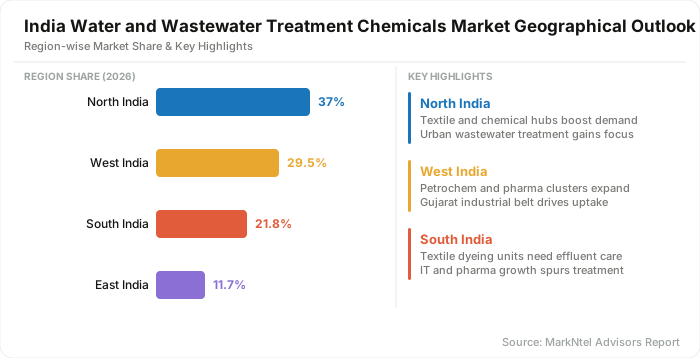
The region's dominance is further strengthened by significant government investment in wastewater infrastructure. In 2025, the National Mission for Clean Ganga (NMCG) approved projects worth approximately USD 91.2 million, including a 60 MLD sewage treatment plant in Varanasi and associated sewerage infrastructure. In addition, the Namami Gange Programme has initiated 492 projects with cumulative investments exceeding USD 4.6 billion, the majority located across Uttar Pradesh, Uttarakhand, Bihar, and other northern Ganga basin states, driving sustained demand for coagulants, disinfectants, antiscalants, and other treatment chemicals.
The market also benefits from the strong presence and continued expansion of leading water treatment companies across the region. Ion Exchange (India) Ltd., Thermax Limited, Kurita AquaChemie India, Chembond Chemicals, and several engineering service providers continue supplying specialty treatment chemicals and technical services to municipal utilities and industrial customers throughout North India. The combination of expanding industrial corridors, large-scale wastewater infrastructure, and continued public investment in river rejuvenation positions North India as the country's largest regional market for municipal water treatment chemicals and sustainable water management solutions.
India Water and Wastewater Treatment Chemicals Market Competitive Analysis
The market is highly fragmented, with the top five companies accounting for 28% of the market share in 2026. Key participants, including Ion Exchange (India) Ltd., Thermax Limited, Ecolab Inc., Kemira Oyj, and Solenis LLC, compete through specialty chemical innovation, localized manufacturing, technical service capabilities, and long-term industrial contracts. Domestic capacity expansion, sustainable product development, and digital water management solutions remain the primary competitive strategies.
Major Water and Wastewater Treatment Chemicals Companies in India
- Ion Exchange (India) Ltd.
- Thermax Limited
- Ecolab Inc.
- Kemira Oyj
- Solenis LLC
- SNF Floerger
- Chembond Chemicals Limited
- Kurita
- VASU
- Others
India Water and Wastewater Treatment Chemicals Industry News and Recent Developments
August 2025: Atul and Buckman Establish Joint Venture for Advanced Water Treatment Solutions
Atul Ltd. and Buckman Laboratories signed an agreement to establish the Atul-Buckman joint venture to manufacture and market advanced water treatment chemicals and digital water management solutions in India and Sri Lanka. The venture combines Buckman's treatment chemistries with Atul's manufacturing and distribution capabilities.
Impact Analysis: The joint venture is expected to accelerate local production of specialty water treatment chemicals, reduce dependence on imported formulations, and expand access to digital monitoring technologies. The initiative strengthens India's specialty chemical ecosystem while supporting sustainable industrial water management and growing demand for high-performance treatment solutions.
July 2024: Kurita and Solugen Collaborate to Develop Bio-Based Water Treatment Chemicals
Kurita Water Industries partnered with Solugen to develop carbon-negative, bio-based water treatment chemicals designed to replace conventional phosphorus-based additives used in industrial water treatment. The collaboration leverages renewable feedstocks and advanced chemistry to improve treatment performance while reducing the environmental footprint of industrial water management.
Impact Analysis: The partnership is expected to accelerate innovation in sustainable water treatment solutions and encourage wider adoption of environmentally friendly treatment chemistries. The development also supports the industry's transition toward green formulations, creating long-term opportunities for low-carbon specialty chemicals and sustainable industrial water treatment practices.
- Market Segmentation
- Introduction
- Product Definition
- Research Process
- Assumptions
- Executive Summary
- India Water & Wastewater Treatment Chemicals Production Trend 2022-2032
- Production Trend by Type (Thousand Tons)
- Coagulants & Flocculants
- Biocides & Disinfectants
- Corrosion Inhibitors
- Scale Inhibitors
- pH Adjusters & Stabilizers
- Defoamers
- Chelating Agents
- Others
- Company Wise Production Plants and Statistics
- Installed Production Capacity
- Actual Production
- Planned Production Target
- Production Trend by Type (Thousand Tons)
- India Water and Wastewater Treatment Chemicals Pricing Analysis 2022-2032
- India Water & Wastewater Treatment Chemicals Market Trends & Developments
- India Water & Wastewater Treatment Chemicals Market Dynamics
- Growth Drivers
- Challenges
- India Water & Wastewater Treatment Chemicals Market Hotspot & Opportunities
- India Water & Wastewater Treatment Chemicals Market Policies & Regulations
- India Water & Wastewater Treatment Chemicals Market Outlook, 2022-2032F
- Market Size & Analysis
- By Revenues (USD Million)
- Quantity Sold (Thousand Tons)
- Market Segmentation & Outlook
- By Chemical Type- Market Size & Forecast 2022-2032, USD Million & Thousand Tons
- Coagulants
- Flocculants
- Biocides & Disinfectants
- Corrosion Inhibitors
- Scale Inhibitors
- pH Adjusters & Stabilizers
- Defoamers
- Chelating Agents
- Others
- By Application- Market Size & Forecast 2022-2032, USD Million & Thousand Tons
- Raw Water Treatment
- Municipal Wastewater Treatment
- Industrial Wastewater Treatment
- Cooling Water Treatment
- Boiler Water Treatment
- Desalination Plants
- Others
- By End Users- Market Size & Forecast 2022-2032, USD Million & Thousand Tons
- Municipal
- Power Generation
- Textile Industry
- Oil & Gas
- Chemicals & Petrochemicals
- Mining
- Food & Beverage
- Pulp & Paper
- Pharmaceuticals
- Others
- By Region
- North
- South
- East
- West
- By Company
- Competition Characteristics
- Revenue Shares & Analysis
- By Chemical Type- Market Size & Forecast 2022-2032, USD Million & Thousand Tons
- Market Size & Analysis
- India Coagulants Market Outlook, 2022-2032F
- Market Size & Analysis
- By Revenues (USD Million)
- Quantity Sold (Thousand Tons)
- Market Segmentation & Outlook
- By Application- Market Size & Forecast 2022-2032, USD Million & Thousand Tons
- By End Users- Market Size & Forecast 2022-2032, USD Million & Thousand Tons
- Market Size & Analysis
- India Flocculants Market Outlook, 2022-2032F
- Market Size & Analysis
- By Revenues (USD Million)
- Quantity Sold (Thousand Tons)
- Market Segmentation & Outlook
- By Application- Market Size & Forecast 2022-2032, USD Million & Thousand Tons
- By End Users- Market Size & Forecast 2022-2032, USD Million & Thousand Tons
- Market Size & Analysis
- India Biocides & Disinfectants Market Outlook, 2022-2032F
- Market Size & Analysis
- By Revenues (USD Million)
- Quantity Sold (Thousand Tons)
- Market Segmentation & Outlook
- By Application- Market Size & Forecast 2022-2032, USD Million & Thousand Tons
- By End Users- Market Size & Forecast 2022-2032, USD Million & Thousand Tons
- Market Size & Analysis
- India Corrosion Inhibitors Market Outlook, 2022-2032F
- Market Size & Analysis
- By Revenues (USD Million)
- Quantity Sold (Thousand Tons)
- Market Segmentation & Outlook
- By Application- Market Size & Forecast 2022-2032, USD Million & Thousand Tons
- By End Users- Market Size & Forecast 2022-2032, USD Million & Thousand Tons
- Market Size & Analysis
- India Scale Inhibitors Market Outlook, 2022-2032F
- Market Size & Analysis
- By Revenues (USD Million)
- Quantity Sold (Thousand Tons)
- Market Segmentation & Outlook
- By Application- Market Size & Forecast 2022-2032, USD Million & Thousand Tons
- By End Users- Market Size & Forecast 2022-2032, USD Million & Thousand Tons
- Market Size & Analysis
- India pH Adjusters & Stabilizers Market Outlook, 2022-2032F
- Market Size & Analysis
- By Revenues (USD Million)
- Quantity Sold (Thousand Tons)
- Market Segmentation & Outlook
- By Application- Market Size & Forecast 2022-2032, USD Million & Thousand Tons
- By End Users- Market Size & Forecast 2022-2032, USD Million & Thousand Tons
- Market Size & Analysis
- India Defoamers Market Outlook, 2022-2032F
- Market Size & Analysis
- By Revenues (USD Million)
- Quantity Sold (Thousand Tons)
- Market Segmentation & Outlook
- By Application- Market Size & Forecast 2022-2032, USD Million & Thousand Tons
- By End Users- Market Size & Forecast 2022-2032, USD Million & Thousand Tons
- Market Size & Analysis
- India Chelating Agents Market Outlook, 2022-2032F
- Market Size & Analysis
- By Revenues (USD Million)
- Quantity Sold (Thousand Tons)
- Market Segmentation & Outlook
- By Application- Market Size & Forecast 2022-2032, USD Million & Thousand Tons
- By End Users- Market Size & Forecast 2022-2032, USD Million & Thousand Tons
- Market Size & Analysis
- India Water & Wastewater Treatment Chemicals Market Key Strategic Imperatives for Success & Growth
- Competition Outlook
- Company Profiles
- Ion Exchange (India) Ltd.
- Business Description
- Product Portfolio
- Strategic Alliances or Partnerships
- Recent Developments
- Financial Details
- Others
- Thermax Limited
- Business Description
- Product Portfolio
- Strategic Alliances or Partnerships
- Recent Developments
- Financial Details
- Others
- Ecolab Inc.
- Business Description
- Product Portfolio
- Strategic Alliances or Partnerships
- Recent Developments
- Financial Details
- Others
- Kemira Oyj
- Business Description
- Product Portfolio
- Strategic Alliances or Partnerships
- Recent Developments
- Financial Details
- Others
- Solenis LLC
- Business Description
- Product Portfolio
- Strategic Alliances or Partnerships
- Recent Developments
- Financial Details
- Others
- SNF Floerger
- Business Description
- Product Portfolio
- Strategic Alliances or Partnerships
- Recent Developments
- Financial Details
- Others
- Chembond Chemicals Limited
- Business Description
- Product Portfolio
- Strategic Alliances or Partnerships
- Recent Developments
- Financial Details
- Others
- Kurita
- Business Description
- Product Portfolio
- Strategic Alliances or Partnerships
- Recent Developments
- Financial Details
- Others
- VASU
- Business Description
- Product Portfolio
- Strategic Alliances or Partnerships
- Recent Developments
- Financial Details
- Others
- Others
- Ion Exchange (India) Ltd.
- Company Profiles
- Disclaimer

MarkNtel Advisors follows a robust and iterative research methodology designed to ensure maximum accuracy and minimize deviation in market estimates and forecasts. Our approach combines both bottom-up and top-down techniques to effectively segment and quantify various aspects of the market. A consistent feature across all our research reports is data triangulation, which examines the market from three distinct perspectives to validate findings. Key components of our research process include:
1. Scope & Research Design At the outset, MarkNtel Advisors define the research objectives and formulate pertinent questions. This phase involves determining the type of research—qualitative or quantitative—and designing a methodology that outlines data collection methods, target demographics, and analytical tools. They also establish timelines and budgets to ensure the research aligns with client goals.
2. Sample Selection and Data Collection In this stage, the firm identifies the target audience and determines the appropriate sample size to ensure representativeness. They employ various sampling methods, such as random or stratified sampling, based on the research objectives. Data collection is carried out using tools like surveys, interviews, and observations, ensuring the gathered data is reliable and relevant.
3. Data Analysis and Validation Once data is collected, MarkNtel Advisors undertake a rigorous analysis process. This includes cleaning the data to remove inconsistencies, employing statistical software for quantitative analysis, and thematic analysis for qualitative data. Validation steps are taken to ensure the accuracy and reliability of the findings, minimizing biases and errors.

4. Data Forecast and FinalizationThe final phase involves forecasting future market trends based on the analyzed data. MarkNtel Advisors utilize predictive modeling and time series analysis to anticipate market behaviors. The insights are then compiled into comprehensive reports, featuring visual aids like charts and graphs, and include strategic recommendations to inform client decision-making
FILL THE FORM TO INQUIRE BEFORE BUYING THIS REPORT
We offer flexible licensing options to cater to varying organizational needs. Choose the pricing pack that best suits your requirements:
Buy Now Talk to our Consultant
 Request Customization