

By Product Type (White refined sugar, Raw sugar, Brown sugar, Liquid sugar, Specialty sugar), By Form (Granulated, Powdered, Syrup), By Source (Cane sugar, Beet sugar, Others), By......Sales Channel (Direct B2B sales, Distributors / wholesalers, Retail, Foodservice / HoReCa, Online / e-commerce), By End User (Food and Beverages (Confectionary, Bakery Products, Dairy Products, Beverages, Others), Pharmaceuticals, Personal Care, Household), By Country (Saudi Arabia, United Arab Emirates, Qatar, Kuwait, Oman, Bahrain) Read more
- Food & Beverages
- Jul 2026
- 240
- PDF, Excel, PPT
GCC Sugar Market Key Takeaways
- The GCC sugar market was valued at USD 1.55 billion in 2025 and is projected to reach USD 1.60 billion in 2026 and USD 1.93 billion by 2032, registering a CAGR of 3.2% during 2026–2032.
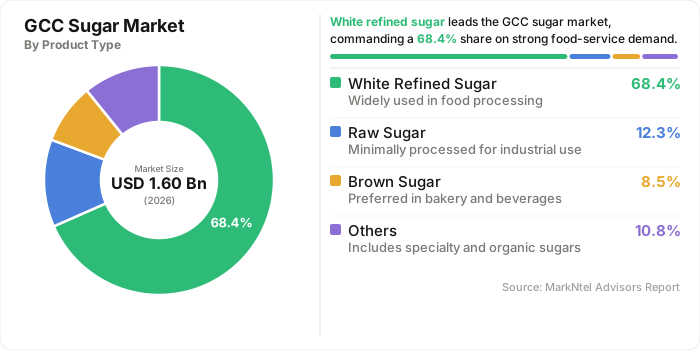
- White refined sugar remains the dominant product segment, accounting for approximately 68.4% share in 2026.
- By source, cane sugar leads the market with an estimated 91.2% share in 2026.
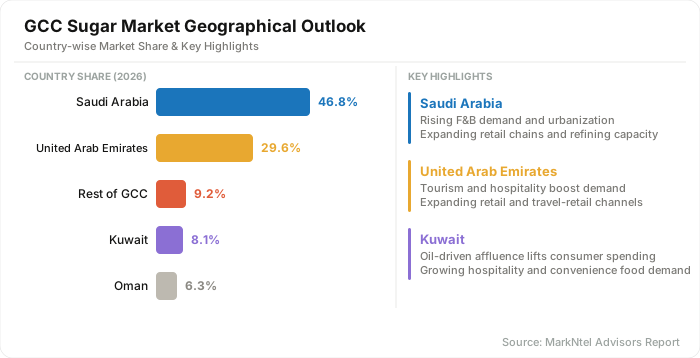
- Saudi Arabia holds the largest country share in the industry, accounting for approximately 46.8% of the total market in 2026.
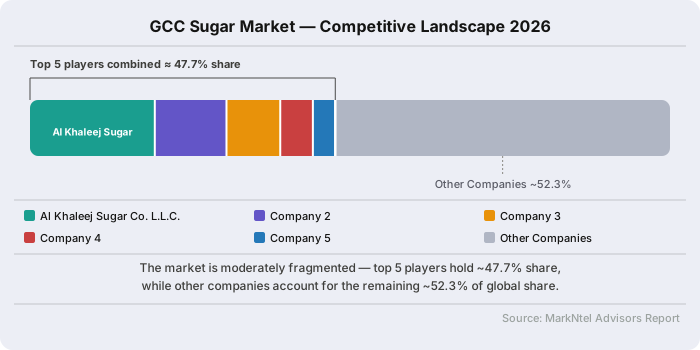
- The market is moderately fragmented, with the top five companies accounting for 47.7% share in 2026.
GCC Sugar Market Size & Outlook
The sugar industry in GCC is projected to grow at a CAGR of approximately 3.2% during 2026–2032, increasing from USD 1.60 billion in 2026 to USD 1.93 billion by 2032.
Growth is primarily supported by the expansion of food processing industries, rising consumption of packaged foods, and sustained demand from bakery, confectionery, dairy, and beverage manufacturers. Despite increasing health awareness, sugar remains an essential raw material across commercial food production, supporting the GCC sugar value chain and the industrial sugar market.
Saudi Arabia is expected to remain the largest contributor to regional market growth owing to its expanding food manufacturing ecosystem. According to the General Authority for Statistics (GASTAT), the Kingdom's food manufacturing activities recorded a Production Index of 108.4 in 2024, reflecting continued industrial expansion. Rising production of processed foods and beverages is increasing industrial procurement of refined sugar, reinforcing the food processing supply chain and long-term demand for refined sugar.
The United Arab Emirates continues to generate higher demand for refined sugar as packaged food and beverage production expands alongside modern retail and e-commerce channels. According to the Dubai Chamber of Digital Economy, the UAE's e-commerce market is projected to reach approximately USD 13.9 billion by 2025, with food and grocery remaining one of the fastest-growing categories. Higher online sales of confectionery, bakery products, dairy desserts, and ready-to-drink beverages are encouraging manufacturers to increase production, thereby supporting industrial procurement of refined sugar across the processed food manufacturing sector and the commercial sugar supply chain.
Oman is strengthening its position as a regional food processing hub, supporting long-term sugar demand through new manufacturing investments. In October 2024, SOHAR Port and Freezone signed an agreement with Dan Foods Industries to establish a USD 7 million food manufacturing facility focused on repackaging essential bulk food commodities, including sugar. Such developments are expected to increase industrial sugar consumption by expanding downstream food processing capacity and regional distribution activities.
GCC Sugar Market Key Indicators
- According to the GCC Statistical Centre, the GCC food sector reached approximately USD 40 billion in 2024, registering 5.1% growth compared with the previous year. The expansion of food processing, beverage production, and packaged food manufacturing across GCC countries is expected to support increasing industrial demand for refined sugar.
- The Saudi General Authority for Statistics (GASTAT) reports that Saudi Arabia's food and beverage manufacturing industry recorded more than 1,400 operating manufacturing establishments in 2024. The expanding domestic production base for confectionery, bakery products, dairy products, and beverages continues to support higher industrial sugar consumption.
- The UAE Ministry of Economy identifies food and beverage manufacturing as one of the country's priority industrial sectors under the Operation 300bn strategy during 2024–2025. Rising investments in food manufacturing capacity are increasing demand for refined sugar, liquid sugar, and specialty sweeteners used in value-added food production.
- Official figures from the Saudi Ministry of Tourism indicate that the Kingdom welcomed approximately 116 million domestic and international tourists in 2024, surpassing its Vision 2030 milestone ahead of schedule. The rapid expansion of hotels, restaurants, cafés, and catering services is driving higher consumption of sugar across beverages, desserts, bakery products, and foodservice applications.
GCC Sugar Market Scope
| Category | Segments |
|---|---|
| By Product Type | White refined sugar, Raw sugar, Brown sugar, Liquid sugar, Specialty sugar |
| By Form | Granulated, Powdered, Syrup |
| By Source | Cane sugar, Beet sugar, Others |
| By Sales Channel | Direct B2B sales, Distributors / wholesalers, Retail, Foodservice / HoReCa, Online / e-commerce |
| By End User | Food and Beverages (Confectionary, Bakery Products, Dairy Products, Beverages, Others), Pharmaceuticals, Personal Care, Household |
GCC Sugar Market Growth Drivers
Rapid Expansion of Local Food & Beverage Manufacturing
Government initiatives to localize food production are accelerating demand for industrial sugar across the GCC. The UAE Ministry of Economy launched the UAE Food Cluster, targeting an increase in the food sector's GDP contribution from USD 8.17 billion to USD 10.9 billion by 2028, alongside expanding advanced food processing and food manufacturing investments. The growing production of bakery products, confectionery, dairy, and beverages is increasing procurement of refined and liquid sugar, reinforcing the food ingredient market and supporting long-term growth of the industrial sweeteners market.
Saudi Arabia is also strengthening its domestic food manufacturing ecosystem under Vision 2030. The National Industrial Development and Logistics Program (NIDLP) Annual Report 2024 highlights a 141% year-on-year increase in licensed food factories and a 164% increase in licensed food warehouses during 2024, alongside continued growth in food and beverage exports. The rapid expansion of food manufacturing capacity is generating sustained demand for bulk sugar used in processed foods and beverages, supporting the GCC sugar industry and enhancing the regional sugar supply chain.
Recent Trends
Rising Demand for Specialty and Clean-Label Sugars
Regulatory measures and changing consumer preferences are accelerating product reformulation across the GCC food and beverage industry. The Saudi Food and Drug Authority (SFDA) continues to enforce mandatory calorie labelling for food establishments, while the GCC Standardization Organization (GSO) requires standardized nutrition declarations on packaged foods marketed across GCC member states. These regulatory developments are encouraging manufacturers to introduce reduced-sugar recipes and diversify into premium sweetening solutions, supporting growth in the reduced-sugar ingredients market and the functional sweeteners industry.
The trend is further reflected in regional product innovation. The Gulfood Manufacturing 2024 exhibition hosted more than 2,500 exhibitors from over 70 countries, showcasing advancements in food ingredients, sugar alternatives, and clean-label formulations for bakery, confectionery, dairy, and beverage applications. The increasing commercialization of specialty sugars, liquid sugars, and blended sweetening solutions is enabling manufacturers to meet evolving consumer preferences while expanding opportunities across the specialty sweetener market, the clean-label food ingredients segment and strengthening GCC sugar industry.
GCC Sugar Market Opportunities and Challenges
Rising Health Concerns and Sugar Reduction Policies Driving Demand for Premium Sugar Products
The increasing prevalence of lifestyle-related diseases and stricter nutrition policies are moderating growth in the GCC sugar market. According to the International Diabetes Federation (IDF) Diabetes Atlas 2025, more than 589 million adults globally are living with diabetes, with the number projected to exceed 850 million by 2050. In addition, the World Health Organization (WHO) estimates that 1.28 billion adults worldwide have hypertension. These health concerns are encouraging product reformulation and reducing demand for high-sugar food products, creating long-term challenges for the refined sugar industry and commercial sugar consumption.
Changing consumer preferences are encouraging sugar manufacturers to expand premium and value-added product portfolios. For instance, Tereos S.A. strengthened its Beghin Say portfolio during 2024 by expanding specialty sugar offerings for bakery, confectionery, and home baking applications, including cane sugar and fine sugar variants. Such innovations enable manufacturers to serve premium retail and foodservice segments while enhancing product differentiation. This trend is expected to strengthen demand for specialty sugar products, premium packaged sugar, and value-added sugar solutions across the GCC market.
Segmentation Insights
Extensive Food Manufacturing Demand Sustains White Refined Sugar Leadership
White Refined Sugar dominates the GCC sugar market, accounting for 68.4% of the industry in 2026, making it the largest product segment due to its extensive use across household consumption and industrial food processing. Its high purity, long shelf life, consistent quality, and cost efficiency make it the preferred sweetening ingredient for bakery, confectionery, dairy, beverage, and processed food manufacturers. The segment also benefits from the GCC's well-established refining infrastructure, enabling large-scale production of refined sugar from imported raw cane sugar to meet both domestic and regional demand, thereby strengthening the white refined sugar market and the industrial sugar supply.
The segment's leadership is further reinforced by the region's significant sugar refining capacity. Al Khaleej Sugar Co. L.L.C., the world's largest standalone sugar refinery, operates a refining capacity of more than 7,000 metric tonnes per day, supplying high-quality refined sugar to the GCC and export markets across the Middle East, Africa, and Asia. Similarly, United Sugar Company, one of Saudi Arabia's leading sugar refiners, continues to expand regional supply to support growing demand from food manufacturers and retail consumers. These large-scale refining operations ensure a stable supply of refined white sugar, supporting continued growth in the GCC refined sugar industry and the commercial sugar market. Based on product type, industry is segmented into:
- White refined sugar
- Raw sugar
- Brown sugar
- Liquid sugar
- Specialty sugar
Strong Dependence on Imported Raw Cane Sugar Strengthens Market Leadership
Cane Sugar dominates the GCC sugar industry, accounting for 91.2% of the industry in 2026, driven by the region's dependence on imported raw cane sugar for domestic refining. Limited freshwater resources and unsuitable climatic conditions restrict commercial sugar beet cultivation across GCC countries, making cane sugar the primary feedstock for regional refineries. This import-based refining model ensures a stable supply for food manufacturers and retail markets, reinforcing the cane sugar market and the raw cane sugar supply chain.
The segment's leadership is further supported by reliable sourcing from global exporters. According to the USDA Foreign Agricultural Service, Brazil is projected to export approximately 38.2 million metric tonnes of sugar during the 2025/26 marketing year, maintaining its position as the world's largest sugar exporter. GCC refiners, including Al Khaleej Sugar Co. L.L.C. and United Sugar Company, continue to rely on Brazilian raw cane sugar to meet regional demand, strengthening the GCC cane sugar industry and the regional sugar refining market. Based on source type the industry is further segmented into:
- Cane sugar
- Beet sugar
- Others
GCC Sugar Market Geographical Outlook
Saudi Arabia Leads the GCC sugar market, accounting for 46.8% of the GCC sugar industry in 2026, making it the region's largest market owing to its extensive food manufacturing base, high per-capita food consumption, and expanding foodservice sector. Strong domestic demand from bakery, confectionery, dairy, and beverage manufacturers continues to support large-scale procurement of refined sugar, reinforcing the Saudi Arabia sugar market and the GCC food ingredients industry.
The country's leadership is further supported by significant investments in food manufacturing and food security. The Saudi Ministry of Investment (MISA) reported that the Kingdom attracted over USD 9.3 billion in food and agriculture investments by 2024, reflecting continued expansion of food processing facilities and value-added manufacturing. Rising industrial production is increasing demand for refined sugar across commercial food applications, strengthening the industrial sugar market and the food processing value chain.
Saudi Arabia also benefits from a well-established domestic refining and distribution network led by United Sugar Company, one of the region's largest sugar refiners, supplying industrial customers and retail markets across the Kingdom. Combined with strategic government initiatives under Vision 2030 to enhance food security and local manufacturing, these capabilities continue to reinforce Saudi Arabia's position as the leading contributor to GCC sugar demand and regional market growth.
GCC Sugar Market Competitive Analysis
The sugar market in GCC is moderately fragmented, with the top five companies collectively holding an estimated 47.7% market share in 2026. Regional leadership is driven by integrated refining capacity, long-term raw sugar procurement contracts, and established industrial distribution networks. Meanwhile, numerous regional traders and importers continue to intensify competition, supporting a diversified GCC sugar value chain and a resilient regional sugar distribution network.
Top Companies in the GCC Sugar Industry
- Al Khaleej Sugar Co. L.L.C.
- United Sugar Company
- Durrah Advanced Development Company
- Al Ghurair Foods LLC
- Wilmar International Limited
- Louis Dreyfus Company B.V.
- ED&F Man Commodities Limited
- Sucden Middle-East DMCC
- Cargill Incorporated
- Tereos S.A.
- Mitr Phol Sugar Corporation Ltd.
- Nordzucker AG
- Südzucker AG
- Czarnikow Group Limited
- Raízen S.A.
GCC Sugar Industry News and Recent Developments
March 2024 | Al Khaleej Sugar Expands Refinery Production Plans Amid Global Sugar Supply Constraints
Al Khaleej Sugar Co. L.L.C. announced plans to increase production at its Dubai refinery in 2024, targeting output of up to 1.5 million metric tonnes of refined sugar. The company highlighted that reduced sugar availability from major producing countries, particularly India due to adverse weather conditions affecting production, created opportunities for GCC refiners to increase supply to global markets.
Impact Analysis: The development strengthens the strategic importance of GCC sugar refining capacity in maintaining regional and international supply stability. Higher refinery utilization by Al Khaleej Sugar is expected to support consistent availability of refined white sugar for food manufacturers, beverage producers, and retail channels while reinforcing the UAE’s position as a major sugar refining and trading hub.
August 2024 | Cargill Expands Sugar Confectionery Ingredient Capabilities with New Blending Facility in Indonesia
Cargill, Incorporated opened its first Southeast Asia blending facility at its Pandaan, East Java site in August 2024 to strengthen its capabilities in starches, sweeteners, and texturizers for sugar confectionery applications. The facility enables the company to develop customized ingredient solutions combining sweeteners, modified starches, pectin, and carrageenan to support confectionery manufacturers seeking new textures and product formats.
Impact Analysis: The investment highlights the growing shift toward value-added sugar applications beyond conventional refined sugar. For the GCC Sugar Market, such developments indicate increasing demand from confectionery, bakery, and processed food manufacturers for specialized sugar-based ingredient solutions. As regional food producers expand premium product portfolios, global suppliers with advanced formulation capabilities may play a larger role in supporting innovation across the GCC food processing sector.
- Market Segmentation
- Introduction
- Product Definition
- Research Process
- Assumptions
- Executive Summary
- GCC Sugar Supply Chain Analysis
- GCC Sugar Import-Export Analysis
- GCC Sugar Market Policies, Regulations, and Product Standards
- GCC Sugar Market Trends & Developments
- GCC Sugar Market Dynamics
- Growth Factors
- Challenges
- GCC Sugar Market Hotspot & Opportunities
- GCC Sugar Market Outlook, 2022-2032
- Market Size & Outlook
- By Revenues (USD Million)
- By Quantity Sold (Thousand Tons)
- Market Segmentation & Outlook
- By Product Type- Market Size & Forecast 2022-2032, USD Million & Thousand Tons
- White refined sugar
- Raw sugar
- Brown sugar
- Liquid sugar
- Specialty sugar
- By Form- Market Size & Forecast 2022-2032, USD Million & Thousand Tons
- Granulated
- Powdered
- Syrup
- By Source- Market Size & Forecast 2022-2032, USD Million & Thousand Tons
- Cane sugar
- Beet sugar
- Others
- By Sales Channel- Market Size & Forecast 2022-2032, USD Million & Thousand Tons
- Direct B2B sales
- Distributors / wholesalers
- Retail
- Foodservice / HoReCa
- Online / e-commerce
- By End User- Market Size & Forecast 2022-2032, USD Million & Thousand Tons
- Food and Beverages
- Confectionary
- Bakery Products
- Dairy Products
- Beverages
- Others
- Pharmaceuticals
- Personal Care
- Household
- Food and Beverages
- By Country
- Saudi Arabia
- United Arab Emirates
- Qatar
- Kuwait
- Oman
- Bahrain
- By Company
- Competition Characteristics
- Market Share & Analysis
- By Product Type- Market Size & Forecast 2022-2032, USD Million & Thousand Tons
- Market Size & Outlook
- Saudi Arabia Sugar Market Outlook, 2022-2032
- Market Size & Outlook
- By Revenues (USD Million)
- By Quantity Sold (Thousand Tons)
- Market Segmentation & Outlook
- By Product Type- Market Size & Forecast 2022-2032, USD Million & Thousand Tons
- By Form- Market Size & Forecast 2022-2032, USD Million & Thousand Tons
- By Source- Market Size & Forecast 2022-2032, USD Million & Thousand Tons
- By Sales Channel- Market Size & Forecast 2022-2032, USD Million & Thousand Tons
- By End Use- Market Size & Forecast 2022-2032, USD Million & Thousand Tons
- Market Size & Outlook
- United Arab Emirates Sugar Market Outlook, 2022-2032
- Market Size & Outlook
- By Revenues (USD Million)
- By Quantity Sold (Thousand Tons)
- Market Segmentation & Outlook
- By Product Type- Market Size & Forecast 2022-2032, USD Million & Thousand Tons
- By Form- Market Size & Forecast 2022-2032, USD Million & Thousand Tons
- By Source- Market Size & Forecast 2022-2032, USD Million & Thousand Tons
- By Sales Channel- Market Size & Forecast 2022-2032, USD Million & Thousand Tons
- By End Use- Market Size & Forecast 2022-2032, USD Million & Thousand Tons
- Market Size & Outlook
- Qatar Sugar Market Outlook, 2022-2032
- Market Size & Outlook
- By Revenues (USD Million)
- By Quantity Sold (Thousand Tons)
- Market Segmentation & Outlook
- By Product Type- Market Size & Forecast 2022-2032, USD Million & Thousand Tons
- By Form- Market Size & Forecast 2022-2032, USD Million & Thousand Tons
- By Source- Market Size & Forecast 2022-2032, USD Million & Thousand Tons
- By Sales Channel- Market Size & Forecast 2022-2032, USD Million & Thousand Tons
- By End Use- Market Size & Forecast 2022-2032, USD Million & Thousand Tons
- Market Size & Outlook
- Kuwait Sugar Market Outlook, 2022-2032
- Market Size & Outlook
- By Revenues (USD Million)
- By Quantity Sold (Thousand Tons)
- Market Segmentation & Outlook
- By Product Type- Market Size & Forecast 2022-2032, USD Million & Thousand Tons
- By Form- Market Size & Forecast 2022-2032, USD Million & Thousand Tons
- By Source- Market Size & Forecast 2022-2032, USD Million & Thousand Tons
- By Sales Channel- Market Size & Forecast 2022-2032, USD Million & Thousand Tons
- By End Use- Market Size & Forecast 2022-2032, USD Million & Thousand Tons
- Market Size & Outlook
- Oman Sugar Market Outlook, 2022-2032
- Market Size & Outlook
- By Revenues (USD Million)
- By Quantity Sold (Thousand Tons)
- Market Segmentation & Outlook
- By Product Type- Market Size & Forecast 2022-2032, USD Million & Thousand Tons
- By Form- Market Size & Forecast 2022-2032, USD Million & Thousand Tons
- By Source- Market Size & Forecast 2022-2032, USD Million & Thousand Tons
- By Sales Channel- Market Size & Forecast 2022-2032, USD Million & Thousand Tons
- By End Use- Market Size & Forecast 2022-2032, USD Million & Thousand Tons
- Market Size & Outlook
- Bahrain Sugar Market Outlook, 2022-2032
- Market Size & Outlook
- By Revenues (USD Million)
- By Quantity Sold (Thousand Tons)
- Market Segmentation & Outlook
- By Product Type- Market Size & Forecast 2022-2032, USD Million & Thousand Tons
- By Form- Market Size & Forecast 2022-2032, USD Million & Thousand Tons
- By Source- Market Size & Forecast 2022-2032, USD Million & Thousand Tons
- By Sales Channel- Market Size & Forecast 2022-2032, USD Million & Thousand Tons
- By End Use- Market Size & Forecast 2022-2032, USD Million & Thousand Tons
- Market Size & Outlook
- GCC Sugar Market Key Strategic Imperatives for Success & Growth
- Competitive Outlook
- Company Profiles
- Al Khaleej Sugar Co. L.L.C.
- Business Description
- Product Portfolio
- Collaborations & Alliances
- Recent Developments
- Financial Details
- Others
- United Sugar Company
- Business Description
- Product Portfolio
- Collaborations & Alliances
- Recent Developments
- Financial Details
- Others
- Durrah Advanced Development Company
- Business Description
- Product Portfolio
- Collaborations & Alliances
- Recent Developments
- Financial Details
- Others
- Al Ghurair Foods LLC
- Business Description
- Product Portfolio
- Collaborations & Alliances
- Recent Developments
- Financial Details
- Others
- Wilmar International Limited
- Business Description
- Product Portfolio
- Collaborations & Alliances
- Recent Developments
- Financial Details
- Others
- Louis Dreyfus Company B.V.
- Business Description
- Product Portfolio
- Collaborations & Alliances
- Recent Developments
- Financial Details
- Others
- ED&F Man Commodities Limited
- Business Description
- Product Portfolio
- Collaborations & Alliances
- Recent Developments
- Financial Details
- Others
- Sucden Middle-East DMCC
- Business Description
- Product Portfolio
- Collaborations & Alliances
- Recent Developments
- Financial Details
- Others
- Cargill Incorporated
- Business Description
- Product Portfolio
- Collaborations & Alliances
- Recent Developments
- Financial Details
- Others
- Tereos S.A.
- Business Description
- Product Portfolio
- Collaborations & Alliances
- Recent Developments
- Financial Details
- Others
- Mitr Phol Sugar Corporation Ltd.
- Business Description
- Product Portfolio
- Collaborations & Alliances
- Recent Developments
- Financial Details
- Others
- Nordzucker AG
- Business Description
- Product Portfolio
- Collaborations & Alliances
- Recent Developments
- Financial Details
- Others
- Südzucker AG
- Business Description
- Product Portfolio
- Collaborations & Alliances
- Recent Developments
- Financial Details
- Others
- Czarnikow Group Limited
- Business Description
- Product Portfolio
- Collaborations & Alliances
- Recent Developments
- Financial Details
- Others
- Al Khaleej Sugar Co. L.L.C.
- Company Profiles
- Disclaimer

MarkNtel Advisors follows a robust and iterative research methodology designed to ensure maximum accuracy and minimize deviation in market estimates and forecasts. Our approach combines both bottom-up and top-down techniques to effectively segment and quantify various aspects of the market. A consistent feature across all our research reports is data triangulation, which examines the market from three distinct perspectives to validate findings. Key components of our research process include:
1. Scope & Research Design At the outset, MarkNtel Advisors define the research objectives and formulate pertinent questions. This phase involves determining the type of research—qualitative or quantitative—and designing a methodology that outlines data collection methods, target demographics, and analytical tools. They also establish timelines and budgets to ensure the research aligns with client goals.
2. Sample Selection and Data Collection In this stage, the firm identifies the target audience and determines the appropriate sample size to ensure representativeness. They employ various sampling methods, such as random or stratified sampling, based on the research objectives. Data collection is carried out using tools like surveys, interviews, and observations, ensuring the gathered data is reliable and relevant.
3. Data Analysis and Validation Once data is collected, MarkNtel Advisors undertake a rigorous analysis process. This includes cleaning the data to remove inconsistencies, employing statistical software for quantitative analysis, and thematic analysis for qualitative data. Validation steps are taken to ensure the accuracy and reliability of the findings, minimizing biases and errors.

4. Data Forecast and FinalizationThe final phase involves forecasting future market trends based on the analyzed data. MarkNtel Advisors utilize predictive modeling and time series analysis to anticipate market behaviors. The insights are then compiled into comprehensive reports, featuring visual aids like charts and graphs, and include strategic recommendations to inform client decision-making
FILL THE FORM TO INQUIRE BEFORE BUYING THIS REPORT
We offer flexible licensing options to cater to varying organizational needs. Choose the pricing pack that best suits your requirements:
Buy Now Talk to our Consultant
 Request Customization