

By Product Type (Functional Food & Beverages (Dairy Products, Non-Dairy Beverages, Infant Formula, Cereals, Other Functional Food & Beverages), Dietary Supplements (Tablets, Capsul......es, Powders, Liquids, Soft Gels, Gel Caps), Feed), By Ingredient (Bacteria (Lactobacillus, Bifidobacterium, Streptococcus thermophilus, Others), Yeast (Saccharomyces boulardii)), By End User (Human (Adults, Children & Infants, Elderly Population, Women’s Health Consumers, Sports & Fitness Consumers), Animal (Poultry, Cattle, Aquaculture, Pets, Swine)), By Distribution Channel (Hypermarkets/Supermarkets, Pharmacies/Drugstores, Specialty Stores, Online, Convenience Stores), By Form (Capsules, Tablets, Powders, Liquids, Soft Gels, Sachets), and others Read more
- Healthcare
- May 2026
- 265
- PDF, Excel, PPT
GCC Probiotics Market Report Key Takeaways
- The GCC probiotics market was valued at USD 1.4 billion in 2025, expected to reach USD 1.54 billion in 2026, and USD 2.7 billion by 2032.
- The industry is projected to witness steady growth at a CAGR of 9.81% during the forecast period.
- Bacteria dominate with 88% share in 2026, mainly Lactobacillus, Bifidobacterium, and Bacillus strains suited for functional foods and stability under regional conditions.
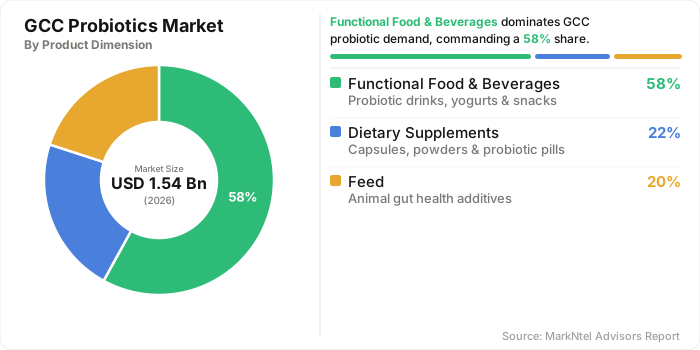
- Functional food & beverages lead with 58% share in 2026, driven by dairy-based probiotics and increasing daily dietary integration across GCC consumer markets.
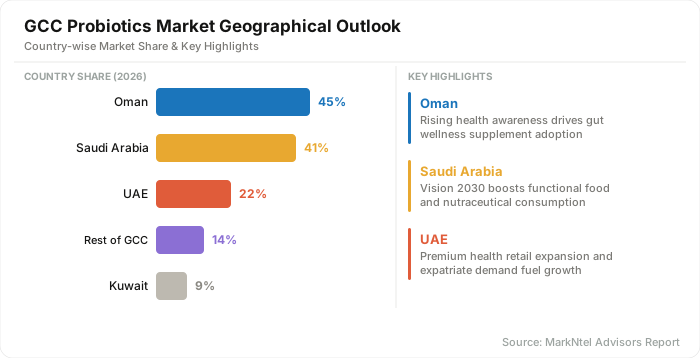
- In 2026, Saudi Arabia leads with 41% share, supported by strong dairy infrastructure, Vision 2030 health initiatives, and an expanding nutraceutical manufacturing ecosystem.
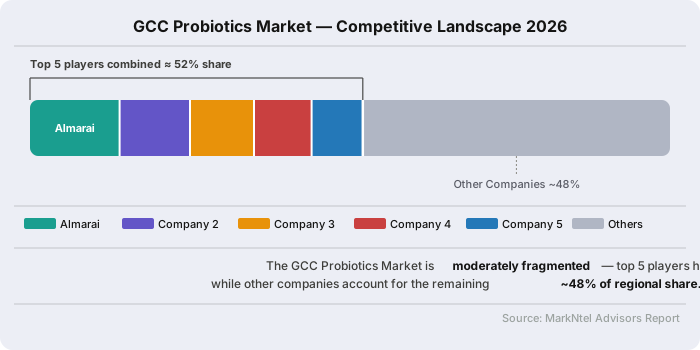
- The market remains moderately fragmented, with the top five players collectively accounting for approximately 52% of the global market share.
GCC Probiotics Market Size and Outlook
The GCC probiotics industry is expected to grow at a CAGR of 9.81% during 2026–2032. The market spans probiotic functional food and beverages, dietary supplements, and animal feed formulations, serving consumers, healthcare professionals, and food manufacturers across Saudi Arabia, the UAE, Kuwait, Qatar, Oman, and Bahrain. GCC consumers are among the most affected by lifestyle-related non-communicable diseases globally, a structural condition that has converted gut health from a wellness preference into a preventive healthcare necessity.
According to the International Diabetes Federation (IDF), by 2045, one in four adults in Saudi Arabia will have developed diabetes, a trajectory already accelerating physician recommendations and consumer adoption of probiotic-enriched products shown to support glycaemic regulation and digestive health.
Saudi Arabia's Vision 2030, launched in 2016, is a primary structural force reshaping health product demand across the GCC. Under the Vision 2030 Health Sector Transformation Programme (HSTP), the Saudi Ministry of Finance allocated USD 69 billion (approximately SAR 260 billion) to health and social development in the 2025 budget, the same figure as 2024, with explicit priorities around preventive care, dietary wellness, and the privatization of 290 hospitals and 2,300 health institutions.
This fiscal commitment has accelerated the development of pharmacy retail networks, digital health platforms, and clinical nutrition services, all of which expand consumer access to and awareness of probiotic products. The Saudi Food and Drug Authority (SFDA) further reinforced the market structure through SFDA.FD 55:2023, a technical standard requiring registration of all food supplements, including probiotics, before market entry, adding credibility to compliant products while raising barriers to entry for non-compliant imports.
According to the World Bank, 85% of Saudi Arabia's population and approximately 99% of Qatar's population resided in urban areas in 2024, concentrating purchasing power in cities where modern pharmacy chains, supermarkets, and e-commerce platforms make probiotic products consistently accessible. Urban dietary patterns high in processed food, low in natural fermented foods, have elevated the prevalence of digestive disorders, creating a broad consumer base motivated by gut health improvement. The UAE, with a large expatriate population and high per-capita health spending, sustains demand for premium probiotic formats, including capsules, functional beverages, and fortified dairy, widening the addressable product range across the region.
Almarai Company, the GCC's largest dairy processor, recorded its highest-ever dairy revenues in 2024 and has committed USD 4.8 billion under a five-year investment strategy that explicitly includes cultured products and value-added dairy lines. Collectively, the convergence of chronic disease prevalence, government health investment, regulatory formalization, and active investment by GCC dairy and healthcare companies is positioning the probiotics market for sustained growth from USD 1.54 billion in 2026 to USD 2.7 billion by 2032.
GCC Probiotics Market Key Indicators
- According to the World Health Organization Regional Office for the Eastern Mediterranean (WHO/EMRO), GCC countries report some of the highest overweight and obesity prevalence rates globally, with Saudi Arabia and Qatar each recording approximately 35% adult obesity prevalence, more than double the global average. Obesity is clinically associated with gut dysbiosis and disrupted intestinal microbiome composition, thereby expanding demand for probiotic interventions supporting digestive and metabolic health across the GCC region.
- According to the GCC Standardization Organization (GSO), Gulf Technical Regulation GSO 2571:2021 formally governs food supplement products across all six GCC member states. The regulation classifies probiotics and prebiotics as regulated food supplement ingredients subject to mandatory compliance requirements covering production, labeling, and distribution. This unified regulatory framework standardizes probiotic product requirements across Saudi Arabia, the UAE, Kuwait, Qatar, Oman, and Bahrain, thereby expanding the addressable market for manufacturers with GSO-compliant certifications.
- According to the United Nations Population Fund (UNFPA), Saudi Arabia maintains a relatively young demographic profile, with children aged 0–14 accounting for 24.44% of the total population and a fertility rate of 2.3 children per woman. This sustained birth rate and large pediatric population are supporting increased demand for probiotic infant formula and pediatric probiotic supplements, among the fastest-growing product categories within the GCC probiotics market.
- According to the WHO Eastern Mediterranean Regional Office (WHO/EMRO), nearly 60% of adults across several Eastern Mediterranean countries were overweight or obese as of 2023, contributing significantly to rising incidences of type 2 diabetes, cardiovascular diseases, and certain cancers throughout the GCC. The increasing non-communicable disease (NCD) burden is accelerating consumer preference for preventive nutrition solutions, with functional foods and probiotic dietary supplements gaining traction for supporting weight management, immune health, and metabolic wellness across the region.
GCC Probiotics Market Scope
| Category | Segments |
|---|---|
| By Product Type | Functional Food & Beverages (Dairy Products, Non-Dairy Beverages, Infant Formula, Cereals, Other Functional Food & Beverages), Dietary Supplements (Tablets, Capsules, Powders, Liquids, Soft Gels, Gel Caps), Feed |
| By Ingredient | Bacteria (Lactobacillus, Bifidobacterium, Streptococcus thermophilus, Others), Yeast (Saccharomyces boulardii |
| By End User | Human (Adults, Children & Infants, Elderly Population, Women’s Health Consumers, Sports & Fitness Consumers), Animal (Poultry, Cattle, Aquaculture, Pets, Swine |
| By Distribution Channel | Hypermarkets/Supermarkets, Pharmacies/Drugstores, Specialty Stores, Online, Convenience Stores |
| By Form | Capsules, Tablets, Powders, Liquids, Soft Gels, Sachets |
GCC Probiotics Market Growth Drivers
Government-Mandated Preventive Healthcare Policies Expanding Consumer Demand for Functional Nutrition in the GCC
Saudi Arabia's Vision 2030 Health Sector Transformation Programme (HSTP) explicitly prioritizes disease prevention and primary care over treatment, restructuring the national health system around early screening, dietary wellness, and community health programs . This structural reorientation is producing measurable results average life expectancy in Saudi Arabia rose from approximately 74 years in 2016 to nearly 79.7 years in 2025, driven directly by preventive care expansion and primary healthcare strengthening, according to the Saudi Ministry of Health
As preventive care becomes the default healthcare model across the GCC, consumers are actively incorporating daily dietary supplements and functional foods, including probiotics, into their health routines, generating sustained volume demand across the regional probiotics industry.
The SFDA further reinforced this consumer shift through mandatory nutrition labelling regulations effective July 1, 2025, requiring all food establishments, restaurants, and online delivery platforms to display comprehensive nutritional information on menus, including calor ic, sodium, and caffeine content.
By mandating nutritional transparency at the point of consumption, the SFDA directly increases consumer awareness of dietary quality, heightening receptiveness to products such as probiotics that carry substantiated functional health positioning. Additionally, the SFDA's Health and Nutrition Claims Committee framework allows manufacturers to apply for approved gut-health and immune-function claims on probiotic products, enabling probiotic brands to communicate clinically validated benefits to an increasingly health-literate GCC consumer base and drive conversion from general wellness interest into active purchase.
Together, these government-driven preventive health mandates create an environment where probiotic products are not merely available to GCC consumers; they are actively endorsed by national health policy frameworks, positioning the GCC probiotics market for compounding demand growth through 2032.
Recent Trends
Rising Demand for Strain-Specific Probiotic Formulations Targeting Metabolic, Immune, and Women's Health Outcomes
A sustained and measurable directional shift is underway in the GCC probiotics market. Consumers are moving away from generic multi-strain blends toward scientifically validated, strain-specific probiotic formulations designed for precise health outcomes. This shift is not a single dated event but a sustained commercial pattern, evidenced by product launches, distribution agreements, and clinical education programmes carried out specifically within the GCC between 2024 and 2025.
A cross-sectional study published in Frontiers in Immunology in October 2024, conducted across 1,306 Saudi adults, found that 84.1% believed probiotics positively affect digestion and gut health, and 72.5% recognized their role in immunity support . Critically, belief in probiotic benefits for targeted outcomes including overweight management, stress, mental health, and heart health was substantially lower, between 28.7% and 42.3%, indicating that awareness is broad but not yet strain-specific. This gap between general belief and targeted knowledge is precisely the commercial inflection point that strain-specific brands are entering and activating in the GCC.
Yakult Middle East, operating across the UAE, Saudi Arabia, Kuwait, Oman, and Bahrain, has built its entire commercial positioning in the GCC around a single clinically documented strain Lactobacillus casei Shirota, with distribution now exceeding retail outlets across the region. This single-strain strategy is generating measurable traction in GCC markets where immunity and digestive health positioning resonates with the chronic disease burden the region faces.
Furthermore, in January 2025, Zinereo Pharma additionally partnered with Experts Pharma Care in Saudi Arabia to conduct specialized clinical training for 20 gynecologists and key opinion leaders on Giniwa, a strain-specific probiotic for women's health covering dysbiosis, recurrent vaginal infections, and fertility outcomes.
These developments indicate that the GCC functional wellness market is undergoing a significant transition from commodity dairy-based cultures toward strain-identified and indication-specific probiotic formulations distributed through pharmacy and clinical channels. At the same time, the evolving regulatory environment is expected to accelerate the shift from generic probiotic products toward clinically substantiated, strain-specific formulations supported by scientific validation and targeted health claims.
GCC Probiotics Market Opportunities and Challenges
Extreme Climate Conditions Constraining Probiotic Viability Leading to the Development of Shelf-Stable and Locally Manufactured Probiotic Formulations
The preservation of live probiotic cultures presents a structurally unique challenge in the GCC that does not apply with the same severity to any other major consumer market globally. Ambient temperatures across Saudi Arabia, the UAE, Kuwait, and Qatar regularly exceed 45°C during summer months, and the GCC's cold chain logistics infrastructure, despite growing investment, continues to face documented gaps in temperature continuity between manufacturing, storage, and last-mile retail delivery.
In December 2025 industry analysis of Saudi pharma logistics confirms that temperature excursions in pharmaceutical-grade cold chain logistics cause an estimated USD 35 billion in losses globally every year, and that Saudi Arabia's cold chain readiness has not yet fully kept pace with the expansion of temperature -sensitive life sciences product volumes entering the market.
The same climate and supply chain constraints that restrict conventional refrigerated probiotic products create a direct commercial opening for manufacturers investing in shelf-stable, spore-forming, and microencapsulated probiotic technologies that can maintain bacterial viability without continuous cold chain dependency.
Saudi Arabia's National Biotechnology Strategy, launched by Crown Prince Mohammed bin Salman, explicitly prioritises biomanufacturing and localisation as one of four core strategic pillars targeting USD 34.6 billion in cumulative non-oil GDP impact by 2040.
This policy framework creates a direct investment incentive for probiotic manufacturers to establish local strain fermentation, lyophilisation, and encapsulation capabilities within Saudi Arabia, reducing import dependency while qualifying for Vision 2030 localisation incentives.
The Saudi industrial transformation programme also delivers Jeddah's integrated food production zone spanning 11 million square metres with 75 operational factories and USD 5.33 billion in investment, demonstrating the government's readiness to co-invest in food-grade manufacturing infrastructure that probiotic producers can enter. Manufacturers that combine shelf-stable probiotic formulations with local production partnerships stand to capture both the distribution efficiency gains and the policy incentives that the GCC's current cold chain gap.
Additionally, in 2025, Abu Dhabi’s Department of Health partnered with global pharma firms (e.g., Abbott) to establish local manufacturing ecosystems for healthcare products and biologics, designed to reduce import dependency and build regional life sciences production capacity. This combination of policy support, industrial expansion, and evolving health-conscious consumption patterns is creating a favorable environment for probiotic manufacturers to scale operations, strengthen regional supply networks, and build a stronger long-term presence within the GCC’s evolving wellness economy.
Segmentation Analysis
Functional Food & Beverages Leads as the Dominant Product Type
Functional food and beverages hold the leading position within the GCC probiotics market by product type, with their share standing at 58%. This segment leads because dairy-based fermented products, such as laban, yogurt, and fermented milk drinks, are embedded in the daily dietary routine of GCC consumers across all age groups and income brackets. Thereby, creating a natural, high-frequency consumption channel for probiotic cultures that no other product format can replicate at equivalent volume or cultural depth.
Industry investment patterns further reinforce segment dominance as major dairy and nutrition companies continue expanding functional beverage portfolios tailored toward immunity, gut health, protein enrichment, and low-sugar formulations. In 2025, Danone launched OIKOS Fusion probiotic cultured dairy drinks with protein and digestive-health positioning, while Yakult introduced zero-sugar Yakult XO using proprietary fermentation technology to improve probiotic survival rates.
The market impact is substantial because probiotic functional foods generate higher consumption frequency, stronger retail shelf turnover, and broader demographic penetration compared with capsules or tablets. Localized dairy manufacturing investments reduce import dependency while improving cold-chain efficiency and product availability across hypermarkets and e-commerce channels. Consumer discussions across UAE retail communities also indicate strong availability and familiarity of probiotic drinks such as GOOT dairy launch , reflecting mainstream adoption rather than niche consumption. By product dimension the market is further segmented into the following categories:
- Functional Food & Beverages
- Dairy Products
- Non-Dairy Beverages
- Infant Formula
- Cereals
- Other Functional Food & Beverages
- Dietary Supplements
- Tablets
- Capsules
- Powders
- Liquids
- Soft Gels
- Gel Caps
- Feed
Bacteria Dominate as the Leading Ingredient Type with Potential Market Share
Bacteria dominate the GCC probiotics market with a share of 88% because bacterial strains, particularly Lactobacillus and Bifidobacterium, are extensively used across functional dairy products, fortified beverages, infant nutrition, and digestive-health supplements. Their dominance is supported by strong clinical validation related to gut health, immunity support, lactose digestion, and microbiome balance, making them highly preferred by both manufacturers and consumers. Regional food and beverage producers favor bacterial cultures because they integrate efficiently into fermented dairy processing systems already well established across GCC countries.
Industry innovation is further reinforcing this dominance through strain-specific commercialization and scientific branding strategies. Yakult Honsha continues expanding products containing Lactobacillus casei Shirota, a strain supported by extensive microbiome and digestive-health research. The company states that more than 38 million Yakult bottles are consumed daily worldwide, highlighting the scalability of bacterial probiotic beverages across global retail markets.
The market impact is substantial because bacterial probiotic ingredients support the GCC’s largest consumption categories, especially fermented dairy drinks and functional beverages. Their broad regulatory acceptance, strong clinical association with digestive wellness, and integration into daily-consumption food products enable higher retail turnover than niche yeast-based formulations. Companies are additionally introducing halal-certified probiotic dairy products, low-sugar formulations, and immunity-focused bacterial beverages to expand consumer reach across supermarkets and e-commerce channels. By ingredient type, the market is further divided into the following sub-categories:
- Bacteria
- Lactobacillus
- Bifidobacterium
- Streptococcus thermophilus
- Others
- Yeast
- Saccharomyces boulardii
GCC Probiotics Market Geographical Analysis
Saudi Arabia dominates the GCC probiotics market with 41% shares, because the country has the region’s largest packaged food and dairy consumption ecosystem, supported by strong regulatory modernization and expanding nutrition-focused manufacturing capacity. The Saudi Food and Drug Authority strengthened food labeling and nutrition transparency frameworks during 2024–2025 through updated nutrition-labeling, nutrient-profiling, and health-claim regulations that directly support functional food commercialization. This regulatory environment is encouraging manufacturers to expand probiotic and functional food portfolios because companies must increasingly align products with healthier nutrition positioning and transparent labeling standards.
Saudi Arabia is also attracting major global food manufacturing investments that directly strengthen functional food and probiotic production capabilities. In September 2024, Nestlé signed an agreement with MODON to build its first Saudi food manufacturing plant with an investment of USD 72 million in Jeddah Third Industrial City. The facility includes automated production and advanced food packaging systems focused initially on infant and nutrition products, which are major probiotic application categories.
The Kingdom’s industrial expansion policy is another major reason behind market dominance. According to Saudi Arabia’s Ministry of Industry and Mineral Resources, the country issued 118 new industrial licenses in February 2024 alone with investments reaching USD 501.33 billion, including major food-production facilities. Saudi Arabia had 11,757 factories operating or under development by early 2024, strengthening domestic food-processing and cold-chain capacity needed for probiotic dairy and functional beverage distribution.
As Saudi Arabia strengthens domestic food security and advanced nutrition manufacturing capabilities, the country is expected to remain the central growth engine of the gut health and probiotics industry in the GCC throughout the forecast period.
GCC Probiotics Market Competitive Landscape
The GCC probiotics industry is characterized by a moderately fragmented competitive structure, where multinational nutrition companies, regional dairy manufacturers, and specialized nutraceutical firms compete across functional dairy, dietary supplements, infant nutrition, and preventive wellness categories. The top five companies including Almarai Company, Yakult Middle East FZCO, Nestlé Health Science, Danone Al Safi, and Saudia Dairy and Foodstuff Company (SADAFCO), collectively account for an estimated 52% of the probiotic market across the GCC.
Major Probiotics Companies in GCC
- Almarai Company
- NADA Dairy
- Al Ain Farms
- Saudia Dairy and Foodstuff Company (SADAFCO)
- Marmum Dairy Farm
- Quest Nutra Pharma
- Julnar Healthcare
- Octopus Healthcare Solutions
- Yalla Nutrition FZ LLC
- Prexpharma
- Yakult Middle East FZCO
- Danone Al Safi
- Nestlé Health Science
- Hanbury FZE
- Novel Bioscience FZCO
GCC Probiotics Market News and Recent Developments
2026: SMART STRAINS Launches Clinically Proven Probiotics in the UAE
SMART STRAINS introduced its clinically validated probiotic product range in the UAE wellness market in 2025. The launch focuses on targeted microbiome support, digestive wellness, and scientifically backed probiotic formulations. The company emphasized strain-specific efficacy and premium supplement positioning aligned with rising preventive healthcare awareness. The launch also reflects increasing demand for advanced gut-health solutions across GCC nutraceutical and pharmacy channels.
Market Impact Analysis: The launch highlights the growing premiumization of the GCC probiotics market, where consumers increasingly prefer clinically supported formulations over generic supplements. It reinforces the UAE’s position as a regional hub for international wellness and nutraceutical product introductions. The development is expected to intensify competition in premium digestive-health categories, particularly within pharmacies and e-commerce wellness platforms. It also signals rising commercial opportunities for specialized microbiome-focused brands targeting health-conscious GCC consumers.
2026: M42 Launches Advanced Microbiome Wellness Program in the UAE
UAE-based M42 launched its advanced Microbiome Wellness Program combining DNA sequencing technology with personalized gut-health consultations. The program provides microbiome testing, AI-driven health insights, and customized dietary recommendations tailored to individual health profiles. The initiative targets digestive wellness, immunity, sports performance, and preventive healthcare management through precision-health technologies. M42 introduced the program through Mubadala Health Dubai and plans further expansion across its healthcare network in the UAE.
Market Impact Analysis: The development highlights the GCC’s transition toward precision nutrition, microbiome diagnostics, and personalized preventive healthcare solutions. It expands the regional probiotics ecosystem beyond conventional supplements into clinically integrated gut-health management platforms. The initiative is expected to strengthen demand for scientifically validated microbiome products, personalized nutrition services, and advanced digestive wellness solutions across the UAE and wider GCC region. It also reinforces the UAE’s position as a leading regional hub for AI-driven healthcare, genomics, and next-generation wellness innovation.
2026: SMART STRAINS Launches Targeted Probiotic Range in the UAE
SMART STRAINS introduced its new generation probiotic supplement range in the UAE in 2026. The product line focuses on strain-specific, clinically backed formulations designed to support digestive health, immunity, and microbiome balance. The launch moves away from traditional “multi-strain generic probiotics” and instead offers targeted solutions for specific health needs and life stages. The products are distributed through UAE retail and pharmacy channels as part of the country’s growing wellness and preventive healthcare segment.
Market Impact Analysis: This launch strengthens the premium probiotic supplement segment in the UAE and wider GCC region. It accelerates demand for clinically validated, science-led microbiome products rather than basic digestive supplements. It also increases competition among global nutraceutical brands operating in GCC pharmacy and retail networks. Overall, it supports the shift toward precision nutrition and evidence-based preventive healthcare in the Middle East wellness market.
- Market Segmentation
- Introduction
- Product Definition
- Research Process
- Assumptions
- Executive Summary
- GCC Probiotics Market Policies, Regulations, and Product Standards
- GCC Probiotics Market Trends & Developments
- GCC Probiotics Market Dynamics
- Growth Factors
- Challenges
- GCC Probiotics Market Hotspot & Opportunities
- GCC Probiotics Market Outlook, 2022-2032F
- Market Size & Outlook
- By Revenues (USD Million)
- Market Share & Analysis
- By Product Type- Market Size & Forecast 2022-2032, USD Million
- Functional Food & Beverages
- Dairy Products
- Non-Dairy Beverages
- Infant Formula
- Cereals
- Other Functional Food & Beverages
- Dietary Supplements
- Tablets
- Capsules
- Powders
- Liquids
- Soft Gels
- Gel Caps
- Feed
- Functional Food & Beverages
- By Ingredient- Market Size & Forecast 2022-2032, USD Million
- Bacteria
- Lactobacillus
- Bifidobacterium
- Streptococcus thermophilus
- Others
- Yeast
- Saccharomyces boulardii
- Bacteria
- By End User- Market Size & Forecast 2022-2032, USD Million
- Human
- Adults
- Children & Infants
- Elderly Population
- Women’s Health Consumers
- Sports & Fitness Consumers
- Animal
- Poultry
- Cattle
- Aquaculture
- Pets
- Swine
- Human
- By Distribution Channel- Market Size & Forecast 2022-2032, USD Million
- Hypermarkets/Supermarkets
- Pharmacies/Drugstores
- Specialty Stores
- Online
- Convenience Stores
- By Form- Market Size & Forecast 2022-2032, USD Million
- Capsules
- Tablets
- Powders
- Liquids
- Soft Gels
- Sachets
- By Country
- Bahrain
- Kuwait
- Oman
- Qatar
- Saudi Arabia
- By Company
- Competition Characteristics
- Market Share & Analysis
- By Product Type- Market Size & Forecast 2022-2032, USD Million
- Market Size & Outlook
- Bahrain Probiotics Market Outlook, 2022-2032F
- Market Size & Outlook
- By Revenues (USD Million)
- Market Share & Analysis
- By Treatment Type- Market Size & Forecast 2022-2032, USD Million
- By Form- Market Size & Forecast 2022-2032, USD Million
- By Route of Administration- Market Size & Forecast 2022-2032, USD Million
- By Stage of Menopause- Market Size & Forecast 2022-2032, USD Million
- By Symptoms- Market Size & Forecast 2022-2032, USD Million
- By Distribution Channel- Market Size & Forecast 2022-2032, USD Million
- Market Size & Outlook
- Kuwait Probiotics Market Outlook, 2022-2032F
- Market Size & Outlook
- By Revenues (USD Million)
- Market Share & Analysis
- By Product Type- Market Size & Forecast 2022-2032, USD Million
- By Ingredients- Market Size & Forecast 2022-2032, USD Million
- By End user- Market Size & Forecast 2022-2032, USD Million
- By Distribution Channel- Market Size & Forecast 2022-2032, USD Million
- By Form- Market Size & Forecast 2022-2032, USD Million
- Market Size & Outlook
- Oman Probiotics Market Outlook, 2022-2032F
- Market Size & Outlook
- By Revenues (USD Million)
- Market Share & Analysis
- By Product Type- Market Size & Forecast 2022-2032, USD Million
- By Ingredients- Market Size & Forecast 2022-2032, USD Million
- By End user- Market Size & Forecast 2022-2032, USD Million
- By Distribution Channel- Market Size & Forecast 2022-2032, USD Million
- By Form- Market Size & Forecast 2022-2032, USD Million
- Market Size & Outlook
- Qatar Probiotics Market Outlook, 2022-2032F
- Market Size & Outlook
- By Revenues (USD Million)
- Market Share & Analysis
- By Product Type- Market Size & Forecast 2022-2032, USD Million
- By Ingredients- Market Size & Forecast 2022-2032, USD Million
- By End user- Market Size & Forecast 2022-2032, USD Million
- By Distribution Channel- Market Size & Forecast 2022-2032, USD Million
- By Form- Market Size & Forecast 2022-2032, USD Million
- Market Size & Outlook
- Saudi Arabia Probiotics Market Outlook, 2022-2032F
- Market Size & Outlook
- By Revenues (USD Million)
- Market Share & Analysis
- By Product Type- Market Size & Forecast 2022-2032, USD Million
- By Ingredients- Market Size & Forecast 2022-2032, USD Million
- By End user- Market Size & Forecast 2022-2032, USD Million
- By Distribution Channel- Market Size & Forecast 2022-2032, USD Million
- By Form- Market Size & Forecast 2022-2032, USD Million
- Market Size & Outlook
- GCC Probiotics Market Key Strategic Imperatives for Success & Growth
- Competitive Outlook
- Company Profiles
- Almarai Company
- Business Description
- Product Portfolio
- Collaborations & Alliances
- Recent Developments
- Financial Details
- Others
- NADA Dairy
- Business Description
- Product Portfolio
- Collaborations & Alliances
- Recent Developments
- Financial Details
- Others
- Al Ain Farms
- Business Description
- Product Portfolio
- Collaborations & Alliances
- Recent Developments
- Financial Details
- Others
- Saudia Dairy and Foodstuff Company (SADAFCO)
- Business Description
- Product Portfolio
- Collaborations & Alliances
- Recent Developments
- Financial Details
- Others
- Marmum Dairy Farm
- Business Description
- Product Portfolio
- Collaborations & Alliances
- Recent Developments
- Financial Details
- Others
- Quest Nutra Pharma
- Business Description
- Product Portfolio
- Collaborations & Alliances
- Recent Developments
- Financial Details
- Others
- Julnar Healthcare
- Business Description
- Product Portfolio
- Collaborations & Alliances
- Recent Developments
- Financial Details
- Others
- Octopus Healthcare Solutions
- Business Description
- Product Portfolio
- Collaborations & Alliances
- Recent Developments
- Financial Details
- Others
- Yalla Nutrition FZ LLC
- Business Description
- Product Portfolio
- Collaborations & Alliances
- Recent Developments
- Financial Details
- Others
- Prexpharma
- Business Description
- Product Portfolio
- Collaborations & Alliances
- Recent Developments
- Financial Details
- Others
- Yakult Middle East FZCO
- Business Description
- Product Portfolio
- Collaborations & Alliances
- Recent Developments
- Financial Details
- Others
- Danone Al Safi
- Business Description
- Product Portfolio
- Collaborations & Alliances
- Recent Developments
- Financial Details
- Others
- Nestlé Health Science
- Business Description
- Product Portfolio
- Collaborations & Alliances
- Recent Developments
- Financial Details
- Others
- Almarai Company
- Company Profiles
- Disclaimer

MarkNtel Advisors follows a robust and iterative research methodology designed to ensure maximum accuracy and minimize deviation in market estimates and forecasts. Our approach combines both bottom-up and top-down techniques to effectively segment and quantify various aspects of the market. A consistent feature across all our research reports is data triangulation, which examines the market from three distinct perspectives to validate findings. Key components of our research process include:
1. Scope & Research Design At the outset, MarkNtel Advisors define the research objectives and formulate pertinent questions. This phase involves determining the type of research—qualitative or quantitative—and designing a methodology that outlines data collection methods, target demographics, and analytical tools. They also establish timelines and budgets to ensure the research aligns with client goals.
2. Sample Selection and Data Collection In this stage, the firm identifies the target audience and determines the appropriate sample size to ensure representativeness. They employ various sampling methods, such as random or stratified sampling, based on the research objectives. Data collection is carried out using tools like surveys, interviews, and observations, ensuring the gathered data is reliable and relevant.
3. Data Analysis and Validation Once data is collected, MarkNtel Advisors undertake a rigorous analysis process. This includes cleaning the data to remove inconsistencies, employing statistical software for quantitative analysis, and thematic analysis for qualitative data. Validation steps are taken to ensure the accuracy and reliability of the findings, minimizing biases and errors.

4. Data Forecast and FinalizationThe final phase involves forecasting future market trends based on the analyzed data. MarkNtel Advisors utilize predictive modeling and time series analysis to anticipate market behaviors. The insights are then compiled into comprehensive reports, featuring visual aids like charts and graphs, and include strategic recommendations to inform client decision-making
FILL THE FORM TO INQUIRE BEFORE BUYING THIS REPORT
We offer flexible licensing options to cater to varying organizational needs. Choose the pricing pack that best suits your requirements:
Buy Now Talk to our Consultant
 Request Customization