

By Product Type (Biopesticides (Bioinsecticides, Biofungicides, Bionematicides, Bioherbicides), Biostimulants (Humic Substances, Seaweed Extracts, Amino Acids, Microbial Amendments......, Minerals & Vitamins, Other Biostimulants), Biofertilizers (Azospirillum, Azotobacter, Mycorrhiza, Phosphate Solubilizing Bacteria, Rhizobium, Other Biofertilizers), Others (Biocontrol Agents, Plant Growth Regulators, Microbial Consortia)), By Source (Microbial (Bacteria, Fungi, Virus), Botanicals (Plant Extracts), Biochemical, Beneficial Insects & Macroorganisms), By Form (Liquid, Dry / Powder / Granules), By Crop Type (Cereals and Grains, Fruits and Vegetables, Oilseeds and Pulses, Turf and Ornamentals, Other crops), By Function (Crop Protection, Crop Nutrition), By Mode of Application (Foliar, Soil, Seed treatment, Others), and others Read more
- Environment
- Aug 2026
- 410
- PDF, Excel, PPT
Agricultural Biologicals Market Key Takeaways
- The global agricultural biologicals market was valued at USD 19.14 billion in 2025 and is projected to reach USD 21.42 billion in 2026 and USD 41.87 billion by 2032.
- The industry is projected to witness steady growth at a CAGR of 11.8% during 2026–2032.
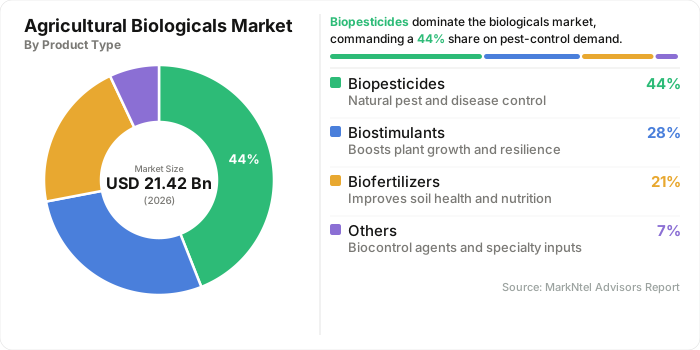
- Biopesticides remain the dominant product-type segment, accounting for approximately 44% of the global market in 2026.
- Cereals and grains lead by crop type, representing an estimated 46% share in 2026.
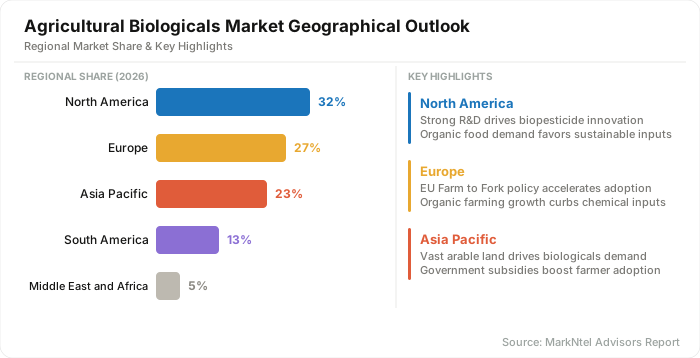
- North America holds the largest regional share, accounting for approximately 32% of the global market in 2026.
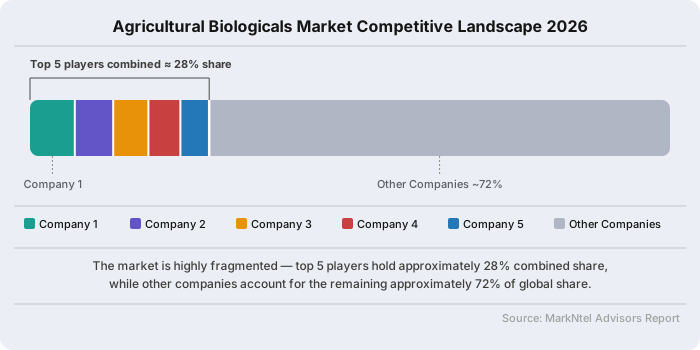
- The market remains moderately fragmented, with the top 5 companies estimated to account for 28% of the market in 2026.
Agricultural Biologicals Market Size & Outlook
The global agricultural biologicals market reaches USD 19.14 billion in 2025 and is projected to increase from USD 21.42 billion in 2026 to USD 41.87 billion by 2032, registering a CAGR of 11.8% during 2026–2032. The market's expansion is supported by the large global crop-production base and increasing integration of biological inputs into commercial crop-management systems.
The scale of commercial agriculture provides a substantial addressable base for biological crop-protection and plant-health products. According to the European Commission, the EU harvested approximately 270.6 million tonnes of cereals in 2024, maintaining one of the world's largest cereal-production systems. USDA data indicate U.S. corn production of approximately 15.8 billion bushels for the 2024/25 marketing year, reinforcing the scale of row-crop production and the addressable demand for biological crop inputs.
The outlook strengthens as biological products increasingly target high-volume crops through seed treatments, microbial crop protection, biostimulants, and soil-health applications. The combination of extensive cereal and oilseed production, regulatory pressure to reduce conventional chemical inputs, and continued development of crop-specific biological formulations supports sustained market expansion through 2032.
Agricultural Biologicals Market Key Indicators
- As per the Brazilian Ministry of Agriculture and Livestock (MAPA), Brazil registered 162 bioinput products in 2025, the highest number recorded in the country. The registrations span biological, microbiological, biochemical, botanical-extract, growth-regulator and semiochemical products, indicating expanding commercialization across core agricultural biological categories.
- According to the European Commission, Regulation (EU) 2019/1009 formally establishes plant biostimulants as Product Function Category 6 (PFC 6), covering nutrient-use efficiency, abiotic-stress tolerance, plant quality traits and nutrient availability. The harmonized framework establishes common efficacy, safety, composition, and labeling requirements, supporting standardized commercialization of plant biostimulants across the EU.
- FAO reports global pesticide use of approximately 3.73 million tonnes of active ingredients in 2023, representing a 14% increase over the previous decade. This substantial crop-protection input base creates a large addressable opportunity for biopesticides and biological crop-protection solutions used alongside or as alternatives to conventional pesticides.
- The European Commission's CAP 2023–2027 framework allocates 25% of EU direct payments to eco-schemes during the programming period, supporting organic farming, agro-ecology, precision farming and other environmentally beneficial practices. This policy-driven transition toward sustainable agriculture strengthens the demand environment for biofertilizers, biostimulants and biocontrol products.
- Data from FiBL and IFOAM – Organics International show approximately 98.9 million hectares of agricultural land under organic management globally in the latest assessment. The expanding organic-production base creates a structural demand floor for biocontrol agents, bio-fertilizers and biostimulants compatible with organic farming systems.
Agricultural Biologicals Market Scope
| Category | Segments |
|---|---|
| By Product Type | Biopesticides (Bioinsecticides, Biofungicides, Bionematicides, Bioherbicides), Biostimulants (Humic Substances, Seaweed Extracts, Amino Acids, Microbial Amendments, Minerals & Vitamins, Other Biostimulants), Biofertilizers (Azospirillum, Azotobacter, Mycorrhiza, Phosphate Solubilizing Bacteria, Rhizobium, Other Biofertilizers), Others (Biocontrol Agents, Plant Growth Regulators, Microbial Consortia |
| By Source | Microbial (Bacteria, Fungi, Virus), Botanicals (Plant Extracts), Biochemical, Beneficial Insects & Macroorganisms |
| By Form | Liquid, Dry / Powder / Granules |
| By Crop Type | Cereals and Grains, Fruits and Vegetables, Oilseeds and Pulses, Turf and Ornamentals, Other crops |
| By Function | Crop Protection, Crop Nutrition |
| By Mode of Application | Foliar, Soil, Seed treatment, Others |
Agricultural Biologicals Market Growth Driver
Organic Food Demand Rewires Farm Input Strategies
The agricultural biologicals market is benefiting from expanding global demand for organic and sustainably produced food, which encourages growers to adopt biological crop-protection and plant-nutrition inputs. FiBL and IFOAM – Organics International report that global retail sales of organic food and drink reach USD 157 billion in 2024, demonstrating strong downstream demand across major consumer markets. This demand encourages producers to integrate biopesticides, biofertilizers and biostimulants into production systems that meet organic and residue-sensitive sourcing requirements.
The international supply chain is also expanding, with combined organic imports into the European Union and United States reaching 5.9 million metric tonnes in 2024, increasing 12.3% year over year. This growth strengthens demand for compliant agricultural production inputs as producers and supply-chain participants respond to expanding organic trade requirements. Consequently, the growing residue-free agriculture ecosystem broadens the addressable customer base for agricultural biologicals beyond certified organic farms and supports wider adoption across conventional farming systems pursuing lower-residue production.
Recent Trend
Biostimulant Seed Coatings Transforming Crop Establishment Strategies
The adoption of biological seed treatments is accelerating as growers increasingly target early root development, nematode protection, crop establishment, and stress resilience directly at the seed stage. FAO's 2025 outlook initially projected global cereal production at a record 2.925 billion tonnes, highlighting the continued need to improve productivity across large-scale crop systems. This production intensity supports demand for seed-applied biologicals that provide protection and biostimulant effects during the critical early stages of plant development.
Commercial innovation is reinforcing this shift through increasingly multifunctional microbial seed-treatment products. In December 2024, UPL received U.S. EPA registration for NIMAXXA™, a triple-strain biological seed treatment containing Bacillus paralicheniformis and Bacillus subtilis strains for corn and soybean, combining season-long nematode protection with root-growth and stress-resilience benefits. In January 2025, UPL received EPA registration for ATROFORCE™, a cotton seed treatment using a patented strain of Trichoderma atroviride to protect plants against nematode pressure while supporting plant growth. These developments demonstrate the movement toward multifunctional biological seed treatments, expanding biologicals from standalone crop-protection applications into integrated crop-establishment solutions.
Agricultural Biologicals Market Opportunities and Challenges
Field Performance Variability Accelerates the Shift Toward Precision Biological Solutions
Field performance variability remains a significant challenge for agricultural biologicals industry because soil conditions differ substantially across agricultural landscapes. The Food and Agriculture Organization (FAO) reports that approximately 33% of the world's land is moderately to highly degraded due to erosion, salinization, compaction, acidification, and chemical pollution. Such heterogeneous soil conditions can influence microbial activity, nutrient availability, moisture retention, and root–microbe interactions, making the performance of biological crop inputs less consistent across fields. This variability increases the importance of product formulations and application strategies tailored to specific soil and crop conditions.
The challenge creates an opportunity for precision biological solutions that improve consistency through targeted microbial strains and multifunctional formulations. In December 2024, UPL launched NIMAXXA™, a triple-strain biological seed treatment for soybean and corn that provides nematode protection while supporting root development and crop resilience. UPL reports consistent performance across varying soil types and weather conditions, directly addressing field variability and strengthening opportunities for precision biological crop protection in large-scale farming.
Segmentation Insights
Biopesticides Drive the Shift Toward Precision Biological Crop Protection
Biopesticides lead global agricultural biologicals product-type demand, accounting for 44% of the global agricultural biologicals industry in 2026, supported by their established role in crop-protection programs and increasing pressure to reduce conventional chemical inputs. The European Commission has set a policy target of reducing the use and risk of chemical pesticides by 50% by 2030, strengthening the transition toward biological crop-protection alternatives. According to the Indian Council of Agricultural Research (ICAR), biopesticides account for approximately 4.2% of India's overall pesticide market, highlighting their established but still expanding role in sustainable crop protection.
The segment's future revenue potential is reinforced by substantial investment in next-generation biological crop-protection technologies. In March 2026, Syngenta announced a USD 130 million investment in its BioSTaR agricultural bioscience research center in the UK, which focuses on biological sciences, molecular and analytical research, AI, and digital innovation to accelerate development of next-generation sustainable agricultural solutions. This investment strengthens the innovation pipeline for precision biopesticides, enabling more targeted pest and disease management and supporting continued expansion of the biopesticides segment. Based on product type, the industry is segmented into:
- Biopesticides
- Biostimulants
- Biofertilizers
- Others
Cereals and Grains Anchor Biologicals Demand Across High-Volume Crop Production
Cereals and Grains lead global agricultural biologicals crop-type demand is estimated to represent approximately 46% of the global agricultural biologicals industry in 2026, making them the largest crop-type segment because biological crop-protection and plant-health products are increasingly deployed across high-volume row-crop production systems. FAO estimates global cereal production at 3.043 billion tonnes in 2025, up 6.1% from 2024, creating a substantial recurring production base for biological fungicides, biopesticides, biofertilizers, and biostimulants. The scale of cereal cultivation and intensive disease, pest, nutrient, and abiotic-stress management requirements supports higher biological-input consumption than more specialized crop categories.
The segment's commercial opportunity is reinforced by continued investment in biological solutions specifically targeting cereals and field crops. In November 2025, Syngenta and Amoéba signed an agreement to develop and commercialize a biological fungicide based on Willaertia magna for wheat and other cereal and field crops, with trials demonstrating activity against fungal diseases and stimulation of plant defense responses. In the United States, USDA NASS reports 95.2 million acres of corn and 83.4 million acres of soybeans planted in 2025, illustrating the enormous scale of biological-input addressability across major field crops. These developments support continued demand for cereal biological crop protection and create opportunities for targeted microbial formulations, seed-applied biologicals, and integrated crop-management products. Based on crop type, the industry is segmented into:
- Cereals and Grains
- Fruits and Vegetables
- Oilseeds and Pulses
- Turf and Ornamentals
- Other crops
Agricultural Biologicals Market Geographical Outlook
North America Leads global agricultural biologicals demand, accounting for 32% of the global agricultural biologicals industry in 2026, supported by its large commercial farming base and established biological-product infrastructure. The U.S. USDA reports 95.3 million acres of corn and 85.4 million acres of soybeans planted in 2026, creating a substantial addressable acreage base for biopesticides, biological seed treatments, biofertilizers, and biostimulants. The scale of U.S. crop production, therefore, provides a strong foundation for biological input consumption.
Government policy further strengthens commercialization. The U.S. EPA maintains dedicated regulatory pathways for biochemical and microbial pesticides, while USDA programs support conservation-oriented farming practices that encourage efficient nutrient and pest management. USDA's 2026 Conservation Stewardship Program (CSP) provides financial and technical assistance to producers implementing conservation improvements, including integrated pest management and nutrient management practices. This policy environment supports adoption of biological inputs as components of broader sustainable crop-production systems.
The regional opportunity is also supported by the continuing scale of U.S. agricultural output. USDA projects 2026/27 U.S. corn production at approximately 17.0 billion bushels and soybean production at about 4.4 billion bushels, maintaining a large recurring crop base for biological crop-protection and plant-health applications. At the same time, EPA's expanding pipeline of microbial, biochemical, and polypeptide products is widening biological applications across cereals, corn, soybeans, cotton, fruits, vegetables, and specialty crops, supporting future precision biological crop protection demand.
Agricultural Biologicals Market Competitive Analysis
The global agricultural biologicals market remains moderately fragmented, with the top five companies estimated to represent 28% of 2026 revenue. The estimate reflects the coexistence of diversified agricultural-input companies, dedicated biological specialists and regional manufacturers. Competitive differentiation centers on microbial discovery, biological active-ingredient development, formulation stability, regulatory expertise, field validation, distribution reach and integration with conventional crop-protection programs.
Top Companies in the Global Agricultural Biologicals Industry:
- BASF SE
- Bayer AG
- Syngenta Crop Protection AG
- Rovensa Next, S.L.
- Novonesis A/S
- Corteva Agriscience
- UPL Limited
- Koppert Biological Systems B.V.
- Yara International ASA
- FMC Corporation
- Valent BioSciences
- Certis Biologicals
- Lallemand Plant Care
- Andermatt Biocontrol
- Biofirst Group
- Verdesian Life Sciences
Agricultural Biologicals Industry News and Recent Developments
June 2025: Bayer and Kimitec Launch Two Next-Generation Biological Products
Bayer and Kimitec unveiled Ambition Complete Gen2 and Ambition Secure Gen2 on 17 June 2025, adding both to Bayer's Crop Performance Enhancer portfolio while regulatory review proceeded. Ambition Complete Gen2 is a gel-based formulation designed to optimize nutrient assimilation and enhance plant stress resilience, while Ambition Secure Gen2 targets calcium-uptake challenges in crop nutrition. Both products were developed at Kimitec's MAAVi Innovation Center, which integrates microbiology, natural chemistry, artificial intelligence and agronomic science.
Impact Analysis: The launch strengthens Bayer's regenerative-agriculture biological portfolio and demonstrates that partnership-sourced R&D can move from strategic agreement to commercial-stage product within roughly two years. It reinforces the competitive premium on proprietary discovery-platform access, a capability advantage now central to sustaining biologicals revenue growth against smaller, single-product specialist suppliers.
2025: Corteva Announces Goltrevo™, Its First Biologicals Insecticide
Corteva's 2025 Annual Report discloses that the company launched nearly 500 new products during the year and received more than 300 crop protection product registrations and seed authorizations, including the announcement of Goltrevo™ bioinsecticide — described by the company as its first biologicals insecticide alongside the next-generation Varpelgo™ active insecticide.
Impact Analysis: Goltrevo's launch marks Corteva's direct entry into biological insecticide commercialization rather than biological R&D partnership alone, positioning the company to compete more directly against Bayer, Syngenta and FMC's established biocontrol lines. It signals that the largest crop-input suppliers now view proprietary biological insecticide launches as core, not peripheral, to their forward product pipeline.
- Market Segmentation
- Introduction
- Product Definition
- Research Process
- Assumptions
- Executive Summary
- Agricultural Biologicals Market Pricing Analysis, By Type of Product, 2022-2032
- Agricultural Biologicals Pricing Trend (USD Million) 2022-2032
- Agricultural Biologicals Market Pricing Trend by Regions 2022-2032
- North America
- South America
- Europe
- Middle East & Africa
- Asia Pacific
- Agricultural Biologicals Pricing Trend (USD Million) By Company Wise
- Agricultural Biologicals Value Chain Analysis
- Agricultural Biologicals Market Policies, Regulations, and Product Standards
- Agricultural Biologicals Market Trends & Developments
- Agricultural Biologicals Market Dynamics
- Growth Factors
- Challenges
- Agricultural Biologicals Market Hotspot & Opportunities
- Agricultural Biologicals Market Outlook, 2022-2032
- Market Size & Outlook
- By Revenues (USD Billion)
- By Quantity Sold (Thousand Tons)
- Market Share & Analysis
- By Product Type- (USD Million & Thousand Tons)
- Biopesticides
- Bioinsecticides
- Biofungicides
- Bionematicides
- Bioherbicides
- Biostimulants
- Humic Substances
- Seaweed Extracts
- Amino Acids
- Microbial Amendments
- Minerals & Vitamins
- Other Biostimulants
- Biofertilizers
- Azospirillum
- Azotobacter
- Mycorrhiza
- Phosphate Solubilizing Bacteria
- Rhizobium
- Other Biofertilizers
- Others (Biocontrol Agents, Plant Growth Regulators, Microbial Consortia)
- Biopesticides
- By Source- (USD Million & Thousand Tons)
- Microbial
- Bacteria
- Fungi
- Virus
- Botanicals (Plant Extracts)
- Biochemical
- Beneficial Insects & Macroorganisms
- Microbial
- By Form- (USD Million & Thousand Tons)
- Liquid
- Dry / Powder / Granules
- By Crop Type- (USD Million & Thousand Tons)
- Cereals and Grains
- Fruits and Vegetables
- Oilseeds and Pulses
- Turf and Ornamentals
- Other crops
- By Function- (USD Million & Thousand Tons)
- Crop Protection
- Crop Nutrition
- By Mode of Application- (USD Million & Thousand Tons)
- Foliar
- Soil
- Seed treatment
- Others
- By Region
- North America
- South America
- Europe
- Middle East and Africa
- Asia Pacific
- By Company
- Competition Characteristics
- Market Segmentation & Analysis
- By Product Type- (USD Million & Thousand Tons)
- Market Size & Outlook
- North America Agricultural Biologicals Market Outlook, 2022-2032
- Market Size & Outlook
- By Revenues (USD Billion)
- By Quantity Sold (Thousand Tons)
- Market Segmentation & Analysis
- By Product Type- (USD Million & Thousand Tons)
- By Source- (USD Million & Thousand Tons)
- By Form- (USD Million & Thousand Tons)
- By Crop Type- (USD Million & Thousand Tons)
- By Function- (USD Million & Thousand Tons)
- By Mode of Application- (USD Million & Thousand Tons)
- By Country
- The US
- Canada
- Mexico
- The US Agricultural Biologicals Market Outlook, 2022-2032
- Market Size & Outlook
- By Revenues (USD Billion)
- By Quantity Sold (Thousand Tons)
- Market Segmentation & Analysis
- By Product Type- (USD Million & Thousand Tons)
- By Source- (USD Million & Thousand Tons)
- By Form- (USD Million & Thousand Tons)
- By Crop Type- (USD Million & Thousand Tons)
- By Mode of Application- (USD Million & Thousand Tons)
- Market Size & Outlook
- Canada Agricultural Biologicals Market Outlook, 2022-2032
- Market Size & Outlook
- By Revenues (USD Billion)
- By Quantity Sold (Thousand Tons)
- Market Segmentation & Analysis
- By Product Type- (USD Million & Thousand Tons)
- By Source- (USD Million & Thousand Tons)
- By Form- (USD Million & Thousand Tons)
- By Crop Type- (USD Million & Thousand Tons)
- By Mode of Application- (USD Million & Thousand Tons)
- Market Size & Outlook
- Mexico Agricultural Biologicals Market Outlook, 2022-2032
- Market Size & Outlook
- By Revenues (USD Billion)
- By Quantity Sold (Thousand Tons)
- Market Segmentation & Analysis
- By Product Type- (USD Million & Thousand Tons)
- By Source- (USD Million & Thousand Tons)
- By Form- (USD Million & Thousand Tons)
- By Crop Type- (USD Million & Thousand Tons)
- By Mode of Application- (USD Million & Thousand Tons)
- Market Size & Outlook
- Market Size & Outlook
- South America Agricultural Biologicals Market Outlook, 2022-2032
- Market Size & Outlook
- By Revenues (USD Billion)
- By Quantity Sold (Thousand Tons)
- Market Segmentation & Analysis
- By Product Type- (USD Million & Thousand Tons)
- By Source- (USD Million & Thousand Tons)
- By Form- (USD Million & Thousand Tons)
- By Crop Type- (USD Million & Thousand Tons)
- By Function- (USD Million & Thousand Tons)
- By Mode of Application- (USD Million & Thousand Tons)
- By Country
- Brazil
- Argentina
- Rest of South America
- Brazil Agricultural Biologicals Market Outlook, 2022-2032
- Market Size & Outlook
- By Revenues (USD Billion)
- By Quantity Sold (Thousand Tons)
- Market Segmentation & Analysis
- By Product Type- (USD Million & Thousand Tons)
- By Source- (USD Million & Thousand Tons)
- By Form- (USD Million & Thousand Tons)
- By Crop Type- (USD Million & Thousand Tons)
- By Mode of Application- (USD Million & Thousand Tons)
- Market Size & Outlook
- Argentina Agricultural Biologicals Market Outlook, 2022-2032
- Market Size & Outlook
- By Revenues (USD Billion)
- By Quantity Sold (Thousand Tons)
- Market Segmentation & Analysis
- By Product Type- (USD Million & Thousand Tons)
- By Source- (USD Million & Thousand Tons)
- By Form- (USD Million & Thousand Tons)
- By Crop Type- (USD Million & Thousand Tons)
- By Mode of Application- (USD Million & Thousand Tons)
- Market Size & Outlook
- Market Size & Outlook
- Europe Agricultural Biologicals Market Outlook, 2022-2032
- Market Size & Outlook
- By Revenues (USD Billion)
- By Quantity Sold (Thousand Tons)
- Market Segmentation & Analysis
- By Product Type- (USD Million & Thousand Tons)
- By Source- (USD Million & Thousand Tons)
- By Form- (USD Million & Thousand Tons)
- By Crop Type- (USD Million & Thousand Tons)
- By Function- (USD Million & Thousand Tons)
- By Mode of Application- (USD Million & Thousand Tons)
- By Country
- The UK
- Germany
- France
- Italy
- Spain
- Netherlands
- Rest of Europe
- The UK Agricultural Biologicals Market Outlook, 2022-2032
- Market Size & Outlook
- By Revenues (USD Billion)
- By Quantity Sold (Thousand Tons)
- Market Segmentation & Analysis
- By Product Type- (USD Million & Thousand Tons)
- By Source- (USD Million & Thousand Tons)
- By Form- (USD Million & Thousand Tons)
- By Crop Type- (USD Million & Thousand Tons)
- By Mode of Application- (USD Million & Thousand Tons)
- Market Size & Outlook
- Germany Agricultural Biologicals Market Outlook, 2022-2032
- Market Size & Outlook
- By Revenues (USD Billion)
- By Quantity Sold (Thousand Tons)
- Market Segmentation & Analysis
- By Product Type- (USD Million & Thousand Tons)
- By Source- (USD Million & Thousand Tons)
- By Form- (USD Million & Thousand Tons)
- By Crop Type- (USD Million & Thousand Tons)
- By Mode of Application- (USD Million & Thousand Tons)
- Market Size & Outlook
- France Agricultural Biologicals Market Outlook, 2022-2032
- Market Size & Outlook
- By Revenues (USD Billion)
- By Quantity Sold (Thousand Tons)
- Market Segmentation & Analysis
- By Product Type- (USD Million & Thousand Tons)
- By Source- (USD Million & Thousand Tons)
- By Form- (USD Million & Thousand Tons)
- By Crop Type- (USD Million & Thousand Tons)
- By Mode of Application- (USD Million & Thousand Tons)
- Market Size & Outlook
- Italy Agricultural Biologicals Market Outlook, 2022-2032
- Market Size & Outlook
- By Revenues (USD Billion)
- By Quantity Sold (Thousand Tons)
- Market Segmentation & Analysis
- By Product Type- (USD Million & Thousand Tons)
- By Source- (USD Million & Thousand Tons)
- By Form- (USD Million & Thousand Tons)
- By Crop Type- (USD Million & Thousand Tons)
- By Mode of Application- (USD Million & Thousand Tons)
- Market Size & Outlook
- Spain Agricultural Biologicals Market Outlook, 2022-2032
- Market Size & Outlook
- By Revenues (USD Billion)
- By Quantity Sold (Thousand Tons)
- Market Segmentation & Analysis
- By Product Type- (USD Million & Thousand Tons)
- By Source- (USD Million & Thousand Tons)
- By Form- (USD Million & Thousand Tons)
- By Crop Type- (USD Million & Thousand Tons)
- By Mode of Application- (USD Million & Thousand Tons)
- Market Size & Outlook
- Netherlands Agricultural Biologicals Market Outlook, 2022-2032
- Market Size & Outlook
- By Revenues (USD Billion)
- By Quantity Sold (Thousand Tons)
- Market Segmentation & Analysis
- By Product Type- (USD Million & Thousand Tons)
- By Source- (USD Million & Thousand Tons)
- By Form- (USD Million & Thousand Tons)
- By Crop Type- (USD Million & Thousand Tons)
- By Mode of Application- (USD Million & Thousand Tons)
- Market Size & Outlook
- Market Size & Outlook
- Middle East and Africa Agricultural Biologicals Market Outlook, 2022-2032
- Market Size & Outlook
- By Revenues (USD Billion)
- By Quantity Sold (Thousand Tons)
- Market Segmentation & Analysis
- By Product Type- (USD Million & Thousand Tons)
- By Source- (USD Million & Thousand Tons)
- By Form- (USD Million & Thousand Tons)
- By Crop Type- (USD Million & Thousand Tons)
- By Function- (USD Million & Thousand Tons)
- By Mode of Application- (USD Million & Thousand Tons)
- By Country
- Saudi Arabia
- The UAE
- South Africa
- Nigeria
- Rest of Middle East & Africa
- Saudi Arabia Agricultural Biologicals Market Outlook, 2022-2032
- Market Size & Outlook
- By Revenues (USD Billion)
- By Quantity Sold (Thousand Tons)
- Market Segmentation & Analysis
- By Product Type- (USD Million & Thousand Tons)
- By Source- (USD Million & Thousand Tons)
- By Form- (USD Million & Thousand Tons)
- By Crop Type- (USD Million & Thousand Tons)
- By Mode of Application- (USD Million & Thousand Tons)
- Market Size & Outlook
- The UAE Agricultural Biologicals Market Outlook, 2022-2032
- Market Size & Outlook
- By Revenues (USD Billion)
- By Quantity Sold (Thousand Tons)
- Market Segmentation & Analysis
- By Product Type- (USD Million & Thousand Tons)
- By Source- (USD Million & Thousand Tons)
- By Form- (USD Million & Thousand Tons)
- By Crop Type- (USD Million & Thousand Tons)
- By Mode of Application- (USD Million & Thousand Tons)
- Market Size & Outlook
- South Africa Agricultural Biologicals Market Outlook, 2022-2032
- Market Size & Outlook
- By Revenues (USD Billion)
- By Quantity Sold (Thousand Tons)
- Market Segmentation & Analysis
- By Product Type- (USD Million & Thousand Tons)
- By Source- (USD Million & Thousand Tons)
- By Form- (USD Million & Thousand Tons)
- By Crop Type- (USD Million & Thousand Tons)
- By Mode of Application- (USD Million & Thousand Tons)
- Market Size & Outlook
- Nigeria Agricultural Biologicals Market Outlook, 2022-2032
- Market Size & Outlook
- By Revenues (USD Billion)
- By Quantity Sold (Thousand Tons)
- Market Segmentation & Analysis
- By Product Type- (USD Million & Thousand Tons)
- By Source- (USD Million & Thousand Tons)
- By Form- (USD Million & Thousand Tons)
- By Crop Type- (USD Million & Thousand Tons)
- By Mode of Application- (USD Million & Thousand Tons)
- Market Size & Outlook
- Market Size & Outlook
- Asia Pacific Agricultural Biologicals Market Outlook, 2022-2032
- Market Size & Outlook
- By Revenues (USD Billion)
- By Quantity Sold (Thousand Tons)
- Market Segmentation & Analysis
- By Product Type- (USD Million & Thousand Tons)
- By Source- (USD Million & Thousand Tons)
- By Form- (USD Million & Thousand Tons)
- By Crop Type- (USD Million & Thousand Tons)
- By Function- (USD Million & Thousand Tons)
- By Mode of Application- (USD Million & Thousand Tons)
- By Country
- China
- Japan
- India
- South Korea
- Australia
- Rest of Asia-Pacific
- China Agricultural Biologicals Market Outlook, 2022-2032
- Market Size & Outlook
- By Revenues (USD Billion)
- By Quantity Sold (Thousand Tons)
- Market Segmentation & Analysis
- By Product Type- (USD Million & Thousand Tons)
- By Source- (USD Million & Thousand Tons)
- By Form- (USD Million & Thousand Tons)
- By Crop Type- (USD Million & Thousand Tons)
- By Mode of Application- (USD Million & Thousand Tons)
- Market Size & Outlook
- Japan Agricultural Biologicals Market Outlook, 2022-2032
- Market Size & Outlook
- By Revenues (USD Billion)
- By Quantity Sold (Thousand Tons)
- Market Segmentation & Analysis
- By Product Type- (USD Million & Thousand Tons)
- By Source- (USD Million & Thousand Tons)
- By Form- (USD Million & Thousand Tons)
- By Crop Type- (USD Million & Thousand Tons)
- By Mode of Application- (USD Million & Thousand Tons)
- Market Size & Outlook
- India Agricultural Biologicals Market Outlook, 2022-2032
- Market Size & Outlook
- By Revenues (USD Billion)
- By Quantity Sold (Thousand Tons)
- Market Segmentation & Analysis
- By Product Type- (USD Million & Thousand Tons)
- By Source- (USD Million & Thousand Tons)
- By Form- (USD Million & Thousand Tons)
- By Crop Type- (USD Million & Thousand Tons)
- By Mode of Application- (USD Million & Thousand Tons)
- Market Size & Outlook
- South Korea Agricultural Biologicals Market Outlook, 2022-2032
- Market Size & Outlook
- By Revenues (USD Billion)
- By Quantity Sold (Thousand Tons)
- Market Segmentation & Analysis
- By Product Type- (USD Million & Thousand Tons)
- By Source- (USD Million & Thousand Tons)
- By Form- (USD Million & Thousand Tons)
- By Crop Type- (USD Million & Thousand Tons)
- By Mode of Application- (USD Million & Thousand Tons)
- Market Size & Outlook
- Australia Agricultural Biologicals Market Outlook, 2022-2032
- Market Size & Outlook
- By Revenues (USD Billion)
- By Quantity Sold (Thousand Tons)
- Market Segmentation & Analysis
- By Product Type- (USD Million & Thousand Tons)
- By Source- (USD Million & Thousand Tons)
- By Form- (USD Million & Thousand Tons)
- By Crop Type- (USD Million & Thousand Tons)
- By Mode of Application- (USD Million & Thousand Tons)
- Market Size & Outlook
- Market Size & Outlook
- Agricultural Biologicals Market Key Strategic Imperatives for Success & Growth
- Competitive Outlook
- Company Profiles
- BASF SE
- Business Description
- Product Portfolio
- Collaborations & Alliances
- Recent Developments
- Financial Details
- Others
- Bayer AG
- Business Description
- Product Portfolio
- Collaborations & Alliances
- Recent Developments
- Financial Details
- Others
- Syngenta Crop Protection AG
- Business Description
- Product Portfolio
- Collaborations & Alliances
- Recent Developments
- Financial Details
- Others
- Rovensa Next, S.L.
- Business Description
- Product Portfolio
- Collaborations & Alliances
- Recent Developments
- Financial Details
- Others
- Novonesis A/S
- Business Description
- Product Portfolio
- Collaborations & Alliances
- Recent Developments
- Financial Details
- Others
- Corteva Agriscience
- Business Description
- Product Portfolio
- Collaborations & Alliances
- Recent Developments
- Financial Details
- Others
- UPL Limited
- Business Description
- Product Portfolio
- Collaborations & Alliances
- Recent Developments
- Financial Details
- Others
- Koppert Biological Systems B.V.
- Business Description
- Product Portfolio
- Collaborations & Alliances
- Recent Developments
- Financial Details
- Others
- Yara International ASA
- Business Description
- Product Portfolio
- Collaborations & Alliances
- Recent Developments
- Financial Details
- Others
- FMC Corporation
- Business Description
- Product Portfolio
- Collaborations & Alliances
- Recent Developments
- Financial Details
- Others
- Valent BioSciences
- Business Description
- Product Portfolio
- Collaborations & Alliances
- Recent Developments
- Financial Details
- Others
- Certis Biologicals
- Business Description
- Product Portfolio
- Collaborations & Alliances
- Recent Developments
- Financial Details
- Others
- Lallemand Plant Care
- Business Description
- Product Portfolio
- Collaborations & Alliances
- Recent Developments
- Financial Details
- Others
- Andermatt Biocontrol
- Business Description
- Product Portfolio
- Collaborations & Alliances
- Recent Developments
- Financial Details
- Others
- Biofirst Group
- Business Description
- Product Portfolio
- Collaborations & Alliances
- Recent Developments
- Financial Details
- Others
- Verdesian Life Sciences
- Business Description
- Product Portfolio
- Collaborations & Alliances
- Recent Developments
- Financial Details
- Others
- BASF SE
- Company Profiles
- Disclaimer

MarkNtel Advisors follows a robust and iterative research methodology designed to ensure maximum accuracy and minimize deviation in market estimates and forecasts. Our approach combines both bottom-up and top-down techniques to effectively segment and quantify various aspects of the market. A consistent feature across all our research reports is data triangulation, which examines the market from three distinct perspectives to validate findings. Key components of our research process include:
1. Scope & Research Design At the outset, MarkNtel Advisors define the research objectives and formulate pertinent questions. This phase involves determining the type of research—qualitative or quantitative—and designing a methodology that outlines data collection methods, target demographics, and analytical tools. They also establish timelines and budgets to ensure the research aligns with client goals.
2. Sample Selection and Data Collection In this stage, the firm identifies the target audience and determines the appropriate sample size to ensure representativeness. They employ various sampling methods, such as random or stratified sampling, based on the research objectives. Data collection is carried out using tools like surveys, interviews, and observations, ensuring the gathered data is reliable and relevant.
3. Data Analysis and Validation Once data is collected, MarkNtel Advisors undertake a rigorous analysis process. This includes cleaning the data to remove inconsistencies, employing statistical software for quantitative analysis, and thematic analysis for qualitative data. Validation steps are taken to ensure the accuracy and reliability of the findings, minimizing biases and errors.

4. Data Forecast and FinalizationThe final phase involves forecasting future market trends based on the analyzed data. MarkNtel Advisors utilize predictive modeling and time series analysis to anticipate market behaviors. The insights are then compiled into comprehensive reports, featuring visual aids like charts and graphs, and include strategic recommendations to inform client decision-making
FILL THE FORM TO INQUIRE BEFORE BUYING THIS REPORT
We offer flexible licensing options to cater to varying organizational needs. Choose the pricing pack that best suits your requirements:
Buy Now Talk to our Consultant
 Request Customization