

Global Workplace Safety Market Research Report: Forecast (2026-2032)
By Component (Hardware (Safety Sensors, RFID Tags & Readers, Wearables), Software (EHS Software, Safety Management Software, Analytics & Reporting Software, Others), Services (Cons ... ulting, Training, Maintenance & Support, Managed Services, Others)), By System (Real-time location monitoring, Environmental Health & Safety, Access Control & Surveillance System, Others), By Application (Incident & Emergency Management, Asset Tracking & Management, PPE Detection, Personnel/Staff Tracking), By Deployment Mode (Cloud, On-premises), By End Use Industry (Construction & Engineering, Chemicals & Materials, Government & Defence, Healthcare, Food & Beverage, Oil & Gas, Mining, Transport & Logistics, Others), and others Read more
- Energy
- Jun 2026
- Pages 340
- Report Format: PDF, Excel, PPT
Global Workplace Safety Market
Projected 5.8% CAGR from 2026 to 2032
Study Period
2026-2032
Market Size (2026)
USD 19.21 Billion
Market Size (2032)
USD 26.98 Billion
Largest Region
North America
Projected CAGR
5.8%
Leading Segments
By Component: Hardware
Workplace Safety Market Key Takeaways
- The Workplace Safety Market was valued at approximately USD 17.87 billion in 2025 and is projected to reach nearly USD 26.98 billion by 2032.
- The industry is projected to witness steady growth at a CAGR of around 5.8% during 2026-2032.
- By component, hardware solutions commanded the dominant segment share, constituting 46% in 2026.
- By end-use industry, the construction and engineering segment retained the highest share in 2026.
- North America holds the leading position in the market, accounting for approximately 35% of global revenues in 2026.
- The workplace safety industry is moderately consolidated, with the top five players collectively accounting for nearly 18% of the global market share.
Workplace Safety Market Size & Outlook
The Workplace Safety Market was valued at USD 17.87 billion in 2025 and is projected to grow from USD 19.21 billion in 2026 to USD 26.98 billion by 2032. The market is estimated to grow at a CAGR of around 5.8% during the forecast period, i.e., 2026-32.
The market is advancing on the back of heightened regulatory mandates, rising occupational injury rates, and the integration of enterprise-grade safety technology across high-risk industrial sectors. Approximately 2.93 million workers die each year from work-related causes, while 395 million sustain non-fatal occupational injuries annually, a scale of harm that continues to compel governments and enterprises to increase investment in safety infrastructure, compliance platforms, and workforce protection systems.
Policy momentum is particularly strong in the Asia-Pacific. Australia enacted the Work Health and Safety Amendment Act 2026 in February 2026, the first legislation globally to explicitly regulate AI and algorithmic tools as workplace hazards. Victoria's psychological health regulations commenced in December 2025, extending duty-of-care obligations to psychosocial risks alongside physical hazards. Across Europe, the EU-OSHA convened a joint OHS policy conference in July 2025 to align occupational safety standards in AI-integrated work environments.
At the multilateral level, the ILO global strategy on occupational safety and health 2024-2030 directs member states to strengthen national OSH systems and address emerging risks from climate change, new technologies, and changing work arrangements, accelerating legislative reform across Asia-Pacific, Africa, and Southern America simultaneously.
Structural demand is further supported by climate-linked occupational risks. An estimated 2.41 billion workers are exposed to excessive heat annually, with improved heat safety measures carrying a potential global savings value of USD 361 billion in prevented injuries, directly expanding addressable demand for environmental monitoring devices, wearables, and climate-adaptive safety solutions. Employers across construction and engineering, oil and gas, chemicals, and healthcare are investing in integrated EHS platforms, real-time location monitoring, and AI-assisted predictive analytics to pre-empt incidents before they occur.
Workplace Safety Market Key Indicators
- The ILO further estimates that around 395 million workers sustain non-fatal occupational injuries every year globally. The substantial volume of workplace incidents has increased demand for personal protective equipment (PPE), workplace hazard monitoring systems, safety training programs, and incident management solutions, thereby supporting the growth of the workplace safety market.
- According to the World Bank's manufacturing statistics, global manufacturing value added reached approximately USD 16.8 trillion in 2024. Expanding manufacturing activity increases worker exposure to machinery, chemicals, and industrial processes, necessitating the deployment of advanced workplace safety systems, machine guarding solutions, and occupational risk management programs.
Workplace Safety Market Scope
| Category | Segments |
|---|---|
| By Component | Hardware (Safety Sensors, RFID Tags & Readers, Wearables), Software (EHS Software, Safety Management Software, Analytics & Reporting Software, Others), Services (Consulting, Training, Maintenance & Support, Managed Services, Others |
| By System | Real-time location monitoring, Environmental Health & Safety, Access Control & Surveillance System, Others |
| By Application | Incident & Emergency Management, Asset Tracking & Management, PPE Detection, Personnel/Staff Tracking |
| By Deployment Mode | Cloud, On-premises |
| By End Use Industry | Construction & Engineering, Chemicals & Materials, Government & Defence, Healthcare, Food & Beverage, Oil & Gas, Mining, Transport & Logistics, Others |
Workplace Safety Market Growth Drivers
Safety Technology Emerging as Core Enterprise Infrastructure
Organizations across high-risk industrial sectors are actively repositioning workplace safety technology from a compliance cost to a core operational investment, driven by the compounding value of incident prevention, workforce productivity, and ESG-linked risk management. Integrated EHS platforms, connected PPE, and AI-assisted monitoring systems are being embedded into enterprise infrastructure as permanent operational assets rather than reactive expenditure, a shift that is structurally expanding the addressable market beyond compliance-led buyers.
Regulatory developments are reinforcing this momentum at scale. Australia's WHS Act penalties are now indexed annually to economic conditions, progressively raising the financial consequence of non-compliance. Canada introduced mandatory automated external defibrillator requirements at applicable construction sites in 2025. India's OSH Code 2020, enforced from November 2025, replaced old boards with a single National Occupational Safety and Health Advisory Board carrying tripartite representation, setting nationally mandatory standards that all states are required to follow.
The EU-OSHA's coordinated policy review in July 2025, conducted with Germany, Japan, and the UK, signals convergence toward stricter baseline standards across member states and partner economies. For multinationals managing obligations across jurisdictions, cloud-based EHS platforms capable of consolidating multi-region reporting, incident documentation, and audit trails are becoming operational necessities rather than discretionary tools. This transition is structural and is expected to sustain procurement growth through 2032.
Recent Trends
Integration of AI and Predictive Analytics into Connected Safety Platforms
Organizations are fundamentally shifting from reactive incident response to predictive risk elimination, embedding AI-driven safety platforms into core industrial operations as a measurable performance and liability management tool. Connected safety ecosystems that combine real-time sensor feeds, worker biometric monitoring, and historical exposure analytics are generating quantifiable reductions in incident rates, downtime costs, and regulatory exposure, making the business case for adoption increasingly straightforward across high-risk verticals.
Honeywell's Safety Suite 2.0, launched in June 2026, demonstrates the commercial maturity this technology has reached. The platform consolidates historical gas detection records, real-time worker exposure readings, compliance forecasting, and fleet management workflows into a unified operational environment purpose-built for refineries, chemical plants, and utilities. The financial stakes are concrete: fire departments in the United States alone incur costs exceeding USD 500 million annually responding to gas leak incidents, costs that proactive detection platforms are designed to eliminate upstream.
Adoption is accelerating beyond North America. Enterprises across Germany, Japan, and China are deploying IoT sensor networks, wearable biometric devices, and predictive analytics platforms to simultaneously monitor environmental hazards and workforce health in real time. As Australia and the EU codify AI and digital work systems directly into occupational safety legislation, investments that previously reflected competitive differentiation are becoming enforceable compliance obligations, converting a discretionary technology category into a structurally mandated one and materially expanding the software and services segments through 2032.
Workplace Safety Market Opportunities & Challenges
Prohibitive Safety Technology Costs Unlocking Scalable Modular Deployment Opportunities
The capital intensity of deploying integrated workplace safety systems remains the most persistent structural barrier to market penetration. Hardware procurement, software licensing, installation, maintenance, and mandatory upgrades collectively impose financial burdens that fall disproportionately on small and medium-sized enterprises. In Indonesia, Vietnam, and Nigeria, the economies with rapidly expanding manufacturing and construction sectors, the upfront cost of enterprise-grade EHS platforms routinely exceeds annual safety budgets for mid-tier operators, leaving large workforce segments inadequately protected.
Subscription-based pricing models compound the challenge for budget-constrained buyers. Enterprise safety software vendors typically structure licensing on per-user or per-site annual contracts, making multi-year total cost of ownership difficult to optimize for smaller organizations. The pace of regulatory change intensifies this further as new mandates require system upgrades, organizations face recurring reinvestment cycles that accumulate materially. Smaller contractors in Latin America and Sub-Saharan Africa, operating under tightening national OSH frameworks, increasingly find compliance costs structurally incompatible with current platform pricing.
The same cost pressure is actively reshaping the vendor landscape toward modular, cloud-delivered, and mobile-first safety solutions. Demand for SaaS-native EHS platforms requiring no on-premises infrastructure is growing fastest among mid-market buyers across Southeast Asia and Africa. Providers such as Cority and Intelex have introduced tiered pricing architectures specifically targeting organizations transitioning from paper-based safety management, reducing deployment barriers while maintaining regulatory compliance functionality.
Hardware-as-a-service models are further lowering entry thresholds, allowing organizations to deploy connected PPE, gas detection systems, and environmental sensors on operational expenditure terms rather than capital expenditure commitments. As industrialization accelerates across emerging economies and national OSH enforcement tightens, vendors offering flexible commercial structures are positioned to convert the market's largest underserved segment into its fastest-growing revenue base through 2032.
Segmentation Insights
Hardware Anchoring Connected Safety Ecosystems as Wearables and Detection Systems Drive Procurement
The hardware segment commands the dominant share of 46% within the workplace safety market by component, anchored by the widespread deployment of wearable devices, safety sensors, gas detection equipment, and environmental monitoring equipment. Physical safety hardware forms the foundational data layer for connected safety ecosystems, generating real-time inputs that underpin incident prevention, compliance documentation, and workforce health tracking across industrial operations.
Wearables represent the fastest-growing hardware category, propelled by demand for biometric monitoring, fatigue detection, fall protection, and location tracking across hazardous worksites. Smart helmets like viAct's Smart Helmet, which is an AIoT wearable integrating precision GPS tracking, fall and motionless worker detection, augmented reality overlays, and hands-free communication, are being adopted at scale by operators in oil and gas, mining, and chemical processing sectors where worker isolation and delayed incident detection carry the highest consequence.
Gas detection systems maintain strong procurement momentum as airborne hazard events in refining and utilities generate compounding human and infrastructure costs that hardware-led early warning systems directly mitigate. The market is bifurcated into the following sub-segments:
- Hardware
- Software
- Services
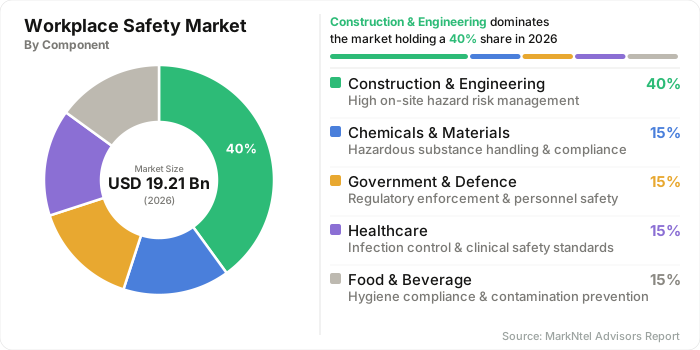
Construction and Engineering Leading Safety Technology Deployment Across High-Risk Project Environments
The construction and engineering segment holds the highest share by end-use industry, a position rooted in the sector's concentration of simultaneous occupational hazard categories — falls from height, heavy equipment proximity, confined space entry, noise-induced hearing loss, and hazardous material exposure, each of which requires a distinct safety technology response, collectively driving the broadest hardware and software procurement profile of any end-use vertical.
Demand in this segment is increasingly shaped by workforce scale and project complexity rather than regulatory compliance alone. Large-scale civil infrastructure, commercial real estate, and energy transition construction projects across South Asia, the Middle East, and continental Europe are deploying personnel tracking systems, AI-assisted PPE compliance verification at access points, and integrated incident management platforms to manage safety across workforces numbering in the thousands.
The formalization of construction safety obligations under India's OSH Code 2020, enforced from November 2025, is expanding the compliant buyer base within one of the world's largest construction workforces, adding structurally new demand volume to an already dominant segment. The market is bifurcated into the following sub-segments:
- Construction & Engineering
- Chemicals & Materials
- Government & Defence
- Healthcare
- Food & Beverage
- Others
Workplace Safety Market Geographical Outlook
North America holds the leading position in the workplace safety market, accounting for approximately 35% of global revenues in 2026. The region's dominance is underpinned by a mature regulatory infrastructure, the concentration of major technology vendors, and a high baseline of enterprise investment in occupational health platforms. Multiple state-level agencies of the USA, enforce layered compliance obligations across private sector, mining, and public sector workplaces, sustaining consistent demand for EHS software, certified PPE, and connected monitoring systems.
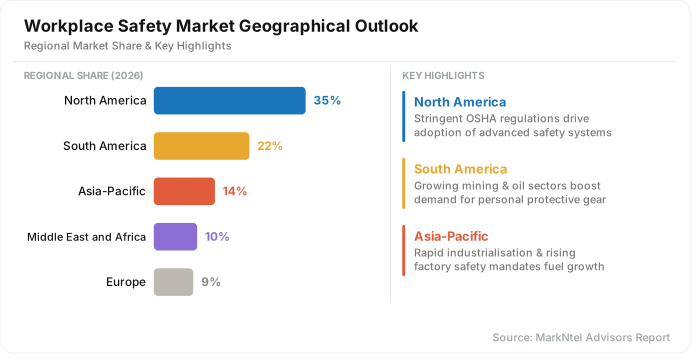
Asia-Pacific is the fastest-growing regional segment, driven by rapid industrialization. Australia's legislative output through 2025 and 2026 has been particularly consequential. In India, the expanding construction and manufacturing base, combined with government initiatives to formalize occupational safety compliance is generating structurally new demand for mid-tier safety solutions. China's ongoing investment in smart factory infrastructure and its mandatory occupational health compliance framework are sustaining procurement growth across hardware and software segments simultaneously.
Workplace Safety Market Competitive Analysis
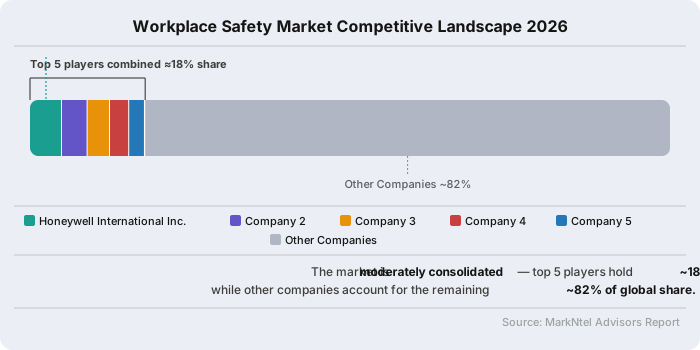
The workplace safety market is moderately consolidated, with established technology conglomerates and industrial safety specialists. The top five companies in the segment being IBM, Honeywell International, 3M, Dragerwerk and Microsoft accounting for 18% of the total market share.
Key Companies in the Workplace Safety Market
- International Business Machines Corporation (IBM)
- Honeywell International Inc.
- 3M Company
- Hexagon AB
- Drägerwerk AG & Co. KGaA
- Microsoft Corporation
- Robert Bosch Power Tools GmbH
- Cority Software Inc.
- Wolters Kluwer N.V.
- Intelex Technologies ULC
- HCL Technologies Limited
- Amazon Web Services Inc.
- Hitachi Solutions, Ltd.
- Vector Solutions LLC
- HSI Workplace Compliance Solutions, Inc.
Workplace Safety Industry News & Recent Developments
March 2026: 3M and Bain Capital Formed Fire & Safety Joint Venture Through Madison Fire & Rescue Acquisition
3M announced a partnership with Bain Capital to acquire Madison Fire & Rescue for USD 1.95 billion and combine it with Scott Safety through a new joint venture focused on respiratory protection, fire suppression, rescue equipment, and emergency response technologies. The new company will serve firefighters, first responders, and industrial workers globally.
Impact Analysis: The transaction strengthens 3M's position within the workplace safety ecosystem by expanding beyond traditional personal protective equipment into integrated fire-rescue and worker protection solutions. The development reflects growing industry demand for comprehensive occupational safety platforms that combine respiratory protection, emergency response, and industrial worker safety technologies.
March 2026: Honeywell Commercialized AI-Powered Control Room Assistant for Industrial Operations
Honeywell launched its AI-powered Experion Operations Assistant following successful deployments across industrial facilities. During pilot programs, the solution predicted alarm incidents 5–10 minutes in advance, helping operators prevent unsafe operating conditions and reduce operational risks.
Impact Analysis: The launch highlights the increasing integration of artificial intelligence into workplace safety management. Predictive safety systems capable of identifying operational anomalies before incidents occur are expected to accelerate adoption of industrial safety software, real-time monitoring platforms, and AI-enabled risk management solutions across oil & gas, chemicals, power generation, and manufacturing industries.
Frequently Asked Questions
- Market Segmentation
- Introduction
- Product Definition
- Research Process
- Assumptions
- Executive Summary
- Global Workplace Safety Market Policies, Regulations, and Product Standards
- Global Workplace Safety Market Start-up Ecosystem
- Entrepreneurial Activity
- Funding Received by Top Companies
- Key Investors Active in the Market
- Series-wise Funding Received
- Seed Funding
- Angel Investing
- Venture Capitalists (VC) Funding
- Others
- Global Workplace Safety Market Trends & Developments
- Global Workplace Safety Market Dynamics
- Growth Factors
- Challenges
- Global Workplace Safety Market Hotspot & Opportunities
- Global Workplace Safety Market Outlook, 2022-2032F
- Market Size & Outlook
- By Revenues (USD Million)
- Market Share & Analysis
- By Component- Market Size & Forecast 2022-2032, USD Million
- Hardware
- Safety Sensors
- RFID Tags & Readers
- Wearables
- Software
- EHS Software
- Safety Management Software
- Analytics & Reporting Software
- Others
- Services
- Consulting
- Training
- Maintenance & Support
- Managed Services
- Others
- Hardware
- By System- Market Size & Forecast 2022-2032, USD Million
- Real-time location monitoring
- Environmental Health & Safety
- Access Control & Surveillance System
- Others
- By Application- Market Size & Forecast 2022-2032, USD Million
- Incident & Emergency Management
- Asset Tracking & Management
- PPE Detection
- Personnel/Staff Tracking
- By Deployment Mode- Market Size & Forecast 2022-2032, USD Million
- Cloud
- On-premises
- By End Use Industry- Market Size & Forecast 2022-2032, USD Million
- Construction & Engineering
- Chemicals & Materials
- Government & Defence
- Healthcare
- Food & Beverage
- Oil & Gas
- Mining
- Transport & Logistics
- Others
- By Region
- North America
- South America
- Europe
- The Middle East & Africa
- Asia-Pacific
- By Company
- Competition Characteristics
- Market Share & Analysis
- By Component- Market Size & Forecast 2022-2032, USD Million
- Market Size & Outlook
- North America Workplace Safety Market Outlook, 2022-2032F
- Market Size & Outlook
- By Revenues (USD Million)
- Market Share & Analysis
- By Component- Market Size & Forecast 2022-2032, USD Million
- By System- Market Size & Forecast 2022-2032, USD Million
- By Application- Market Size & Forecast 2022-2032, USD Million
- By Deployment Mode- Market Size & Forecast 2022-2032, USD Million
- By End Use Industry- Market Size & Forecast 2022-2032, USD Million
- By Country
- The US
- Canada
- Mexico
- The US Workplace Safety Market Outlook, 2022-2032F
- Market Size & Outlook
- By Revenues (USD Million)
- Market Share & Analysis
- By Component- Market Size & Forecast 2022-2032, USD Million
- By System- Market Size & Forecast 2022-2032, USD Million
- By Application- Market Size & Forecast 2022-2032, USD Million
- By Deployment Mode- Market Size & Forecast 2022-2032, USD Million
- By End Use Industry- Market Size & Forecast 2022-2032, USD Million
- Market Size & Outlook
- Canada Workplace Safety Market Outlook, 2022-2032F
- Market Size & Outlook
- By Revenues (USD Million)
- Market Share & Analysis
- By Component- Market Size & Forecast 2022-2032, USD Million
- By System- Market Size & Forecast 2022-2032, USD Million
- By Application- Market Size & Forecast 2022-2032, USD Million
- By Deployment Mode- Market Size & Forecast 2022-2032, USD Million
- By End Use Industry- Market Size & Forecast 2022-2032, USD Million
- Market Size & Outlook
- Mexico Workplace Safety Market Outlook, 2022-2032F
- Market Size & Outlook
- By Revenues (USD Million)
- Market Share & Analysis
- By Component- Market Size & Forecast 2022-2032, USD Million
- By System- Market Size & Forecast 2022-2032, USD Million
- By Application- Market Size & Forecast 2022-2032, USD Million
- By Deployment Mode- Market Size & Forecast 2022-2032, USD Million
- By End Use Industry- Market Size & Forecast 2022-2032, USD Million
- Market Size & Outlook
- Market Size & Outlook
- South America Workplace Safety Market Outlook, 2022-2032F
- Market Size & Outlook
- By Revenues (USD Million)
- Market Share & Analysis
- By Component- Market Size & Forecast 2022-2032, USD Million
- By System- Market Size & Forecast 2022-2032, USD Million
- By Application- Market Size & Forecast 2022-2032, USD Million
- By Deployment Mode- Market Size & Forecast 2022-2032, USD Million
- By End Use Industry- Market Size & Forecast 2022-2032, USD Million
- By Country
- Brazil
- Argentina
- Rest of South America
- Brazil Workplace Safety Market Outlook, 2022-2032F
- Market Size & Outlook
- By Revenues (USD Million)
- Market Share & Analysis
- By Component- Market Size & Forecast 2022-2032, USD Million
- By System- Market Size & Forecast 2022-2032, USD Million
- By Application- Market Size & Forecast 2022-2032, USD Million
- By Deployment Mode- Market Size & Forecast 2022-2032, USD Million
- By End Use Industry- Market Size & Forecast 2022-2032, USD Million
- Market Size & Outlook
- Argentina Workplace Safety Market Outlook, 2022-2032F
- Market Size & Outlook
- By Revenues (USD Million)
- Market Share & Analysis
- By Component- Market Size & Forecast 2022-2032, USD Million
- By System- Market Size & Forecast 2022-2032, USD Million
- By Application- Market Size & Forecast 2022-2032, USD Million
- By Deployment Mode- Market Size & Forecast 2022-2032, USD Million
- By End Use Industry- Market Size & Forecast 2022-2032, USD Million
- Market Size & Outlook
- Market Size & Outlook
- Europe Workplace Safety Market Outlook, 2022-2032F
- Market Size & Outlook
- By Revenues (USD Million)
- Market Share & Analysis
- By Component- Market Size & Forecast 2022-2032, USD Million
- By System- Market Size & Forecast 2022-2032, USD Million
- By Application- Market Size & Forecast 2022-2032, USD Million
- By Deployment Mode- Market Size & Forecast 2022-2032, USD Million
- By End Use Industry- Market Size & Forecast 2022-2032, USD Million
- By Country
- The UK
- Germany
- France
- Italy
- Spain
- Benelux
- Rest of Europe
- The UK Workplace Safety Market Outlook, 2022-2032F
- Market Size & Outlook
- By Revenues (USD Million)
- Market Share & Analysis
- By Component- Market Size & Forecast 2022-2032, USD Million
- By System- Market Size & Forecast 2022-2032, USD Million
- By Application- Market Size & Forecast 2022-2032, USD Million
- By Deployment Mode- Market Size & Forecast 2022-2032, USD Million
- By End Use Industry- Market Size & Forecast 2022-2032, USD Million
- Market Size & Outlook
- Germany Workplace Safety Market Outlook, 2022-2032F
- Market Size & Outlook
- By Revenues (USD Million)
- Market Share & Analysis
- By Component- Market Size & Forecast 2022-2032, USD Million
- By System- Market Size & Forecast 2022-2032, USD Million
- By Application- Market Size & Forecast 2022-2032, USD Million
- By Deployment Mode- Market Size & Forecast 2022-2032, USD Million
- By End Use Industry- Market Size & Forecast 2022-2032, USD Million
- Market Size & Outlook
- France Workplace Safety Market Outlook, 2022-2032F
- Market Size & Outlook
- By Revenues (USD Million)
- Market Share & Analysis
- By Component- Market Size & Forecast 2022-2032, USD Million
- By System- Market Size & Forecast 2022-2032, USD Million
- By Application- Market Size & Forecast 2022-2032, USD Million
- By Deployment Mode- Market Size & Forecast 2022-2032, USD Million
- By End Use Industry- Market Size & Forecast 2022-2032, USD Million
- Market Size & Outlook
- Italy Workplace Safety Market Outlook, 2022-2032F
- Market Size & Outlook
- By Revenues (USD Million)
- Market Share & Analysis
- By Component- Market Size & Forecast 2022-2032, USD Million
- By System- Market Size & Forecast 2022-2032, USD Million
- By Application- Market Size & Forecast 2022-2032, USD Million
- By Deployment Mode- Market Size & Forecast 2022-2032, USD Million
- By End Use Industry- Market Size & Forecast 2022-2032, USD Million
- Market Size & Outlook
- Spain Workplace Safety Market Outlook, 2022-2032F
- Market Size & Outlook
- By Revenues (USD Million)
- Market Share & Analysis
- By Component- Market Size & Forecast 2022-2032, USD Million
- By System- Market Size & Forecast 2022-2032, USD Million
- By Application- Market Size & Forecast 2022-2032, USD Million
- By Deployment Mode- Market Size & Forecast 2022-2032, USD Million
- By End Use Industry- Market Size & Forecast 2022-2032, USD Million
- Market Size & Outlook
- Benelux Workplace Safety Market Outlook, 2022-2032F
- Market Size & Outlook
- By Revenues (USD Million)
- Market Share & Analysis
- By Component- Market Size & Forecast 2022-2032, USD Million
- By System- Market Size & Forecast 2022-2032, USD Million
- By Application- Market Size & Forecast 2022-2032, USD Million
- By Deployment Mode- Market Size & Forecast 2022-2032, USD Million
- By End Use Industry- Market Size & Forecast 2022-2032, USD Million
- Market Size & Outlook
- Market Size & Outlook
- The Middle East & Africa Workplace Safety Market Outlook, 2022-2032F
- Market Size & Outlook
- By Revenues (USD Million)
- Market Share & Analysis
- By Component- Market Size & Forecast 2022-2032, USD Million
- By System- Market Size & Forecast 2022-2032, USD Million
- By Application- Market Size & Forecast 2022-2032, USD Million
- By Deployment Mode- Market Size & Forecast 2022-2032, USD Million
- By End Use Industry- Market Size & Forecast 2022-2032, USD Million
- By Country
- Saudi Arabia
- The UAE
- South Africa
- Qatar
- Egypt
- Rest of Middle East & Africa
- Saudi Arabia Workplace Safety Market Outlook, 2022-2032F
- Market Size & Outlook
- By Revenues (USD Million)
- Market Share & Analysis
- By Component- Market Size & Forecast 2022-2032, USD Million
- By System- Market Size & Forecast 2022-2032, USD Million
- By Application- Market Size & Forecast 2022-2032, USD Million
- By Deployment Mode- Market Size & Forecast 2022-2032, USD Million
- By End Use Industry- Market Size & Forecast 2022-2032, USD Million
- Market Size & Outlook
- The UAE Workplace Safety Market Outlook, 2022-2032F
- Market Size & Outlook
- By Revenues (USD Million)
- Market Share & Analysis
- By Component- Market Size & Forecast 2022-2032, USD Million
- By System- Market Size & Forecast 2022-2032, USD Million
- By Application- Market Size & Forecast 2022-2032, USD Million
- By Deployment Mode- Market Size & Forecast 2022-2032, USD Million
- By End Use Industry- Market Size & Forecast 2022-2032, USD Million
- Market Size & Outlook
- South Africa Workplace Safety Market Outlook, 2022-2032F
- Market Size & Outlook
- By Revenues (USD Million)
- Market Share & Analysis
- By Component- Market Size & Forecast 2022-2032, USD Million
- By System- Market Size & Forecast 2022-2032, USD Million
- By Application- Market Size & Forecast 2022-2032, USD Million
- By Deployment Mode- Market Size & Forecast 2022-2032, USD Million
- By End Use Industry- Market Size & Forecast 2022-2032, USD Million
- Market Size & Outlook
- Qatar Workplace Safety Market Outlook, 2022-2032F
- Market Size & Outlook
- By Revenues (USD Million)
- Market Share & Analysis
- By Component- Market Size & Forecast 2022-2032, USD Million
- By System- Market Size & Forecast 2022-2032, USD Million
- By Application- Market Size & Forecast 2022-2032, USD Million
- By Deployment Mode- Market Size & Forecast 2022-2032, USD Million
- By End Use Industry- Market Size & Forecast 2022-2032, USD Million
- Market Size & Outlook
- Egypt Workplace Safety Market Outlook, 2022-2032F
- Market Size & Outlook
- By Revenues (USD Million)
- Market Share & Analysis
- By Component- Market Size & Forecast 2022-2032, USD Million
- By System- Market Size & Forecast 2022-2032, USD Million
- By Application- Market Size & Forecast 2022-2032, USD Million
- By Deployment Mode- Market Size & Forecast 2022-2032, USD Million
- By End Use Industry- Market Size & Forecast 2022-2032, USD Million
- Market Size & Outlook
- Market Size & Outlook
- Asia-Pacific Workplace Safety Market Outlook, 2022-2032F
- Market Size & Outlook
- By Revenues (USD Million)
- Market Share & Analysis
- By Component- Market Size & Forecast 2022-2032, USD Million
- By System- Market Size & Forecast 2022-2032, USD Million
- By Application- Market Size & Forecast 2022-2032, USD Million
- By Deployment Mode- Market Size & Forecast 2022-2032, USD Million
- By End Use Industry- Market Size & Forecast 2022-2032, USD Million
- By Country
- China
- Japan
- India
- South Korea
- Australia
- Southeast Asia
- Rest of Asia-Pacific
- China Workplace Safety Market Outlook, 2022-2032F
- Market Size & Outlook
- By Revenues (USD Million)
- Market Share & Analysis
- By Component- Market Size & Forecast 2022-2032, USD Million
- By System- Market Size & Forecast 2022-2032, USD Million
- By Application- Market Size & Forecast 2022-2032, USD Million
- By Deployment Mode- Market Size & Forecast 2022-2032, USD Million
- By End Use Industry- Market Size & Forecast 2022-2032, USD Million
- Market Size & Outlook
- Japan Workplace Safety Market Outlook, 2022-2032F
- Market Size & Outlook
- By Revenues (USD Million)
- Market Share & Analysis
- By Component- Market Size & Forecast 2022-2032, USD Million
- By System- Market Size & Forecast 2022-2032, USD Million
- By Application- Market Size & Forecast 2022-2032, USD Million
- By Deployment Mode- Market Size & Forecast 2022-2032, USD Million
- By End Use Industry- Market Size & Forecast 2022-2032, USD Million
- Market Size & Outlook
- India Workplace Safety Market Outlook, 2022-2032F
- Market Size & Outlook
- By Revenues (USD Million)
- Market Share & Analysis
- By Component- Market Size & Forecast 2022-2032, USD Million
- By System- Market Size & Forecast 2022-2032, USD Million
- By Application- Market Size & Forecast 2022-2032, USD Million
- By Deployment Mode- Market Size & Forecast 2022-2032, USD Million
- By End Use Industry- Market Size & Forecast 2022-2032, USD Million
- Market Size & Outlook
- South Korea Workplace Safety Market Outlook, 2022-2032F
- Market Size & Outlook
- By Revenues (USD Million)
- Market Share & Analysis
- By Component- Market Size & Forecast 2022-2032, USD Million
- By System- Market Size & Forecast 2022-2032, USD Million
- By Application- Market Size & Forecast 2022-2032, USD Million
- By Deployment Mode- Market Size & Forecast 2022-2032, USD Million
- By End Use Industry- Market Size & Forecast 2022-2032, USD Million
- Market Size & Outlook
- Australia Workplace Safety Market Outlook, 2022-2032F
- Market Size & Outlook
- By Revenues (USD Million)
- Market Share & Analysis
- By Component- Market Size & Forecast 2022-2032, USD Million
- By System- Market Size & Forecast 2022-2032, USD Million
- By Application- Market Size & Forecast 2022-2032, USD Million
- By Deployment Mode- Market Size & Forecast 2022-2032, USD Million
- By End Use Industry- Market Size & Forecast 2022-2032, USD Million
- Market Size & Outlook
- Southeast Asia Workplace Safety Market Outlook, 2022-2032F
- Market Size & Outlook
- By Revenues (USD Million)
- Market Share & Analysis
- By Component- Market Size & Forecast 2022-2032, USD Million
- By System- Market Size & Forecast 2022-2032, USD Million
- By Application- Market Size & Forecast 2022-2032, USD Million
- By Deployment Mode- Market Size & Forecast 2022-2032, USD Million
- By End Use Industry- Market Size & Forecast 2022-2032, USD Million
- Market Size & Outlook
- Market Size & Outlook
- Global Workplace Safety Market Key Strategic Imperatives for Success & Growth
- Competitive Outlook
- Company Profiles
- IBM
- Business Description
- Product Portfolio
- Collaborations & Alliances
- Recent Developments
- Financial Details
- Others
- Honeywell
- Business Description
- Product Portfolio
- Collaborations & Alliances
- Recent Developments
- Financial Details
- Others
- 3M
- Business Description
- Product Portfolio
- Collaborations & Alliances
- Recent Developments
- Financial Details
- Others
- Hexagon AB
- Business Description
- Product Portfolio
- Collaborations & Alliances
- Recent Developments
- Financial Details
- Others
- Appian
- Business Description
- Product Portfolio
- Collaborations & Alliances
- Recent Developments
- Financial Details
- Others
- Bosch
- Business Description
- Product Portfolio
- Collaborations & Alliances
- Recent Developments
- Financial Details
- Others
- Cority
- Business Description
- Product Portfolio
- Collaborations & Alliances
- Recent Developments
- Financial Details
- Others
- Wolters Kluwer
- Business Description
- Product Portfolio
- Collaborations & Alliances
- Recent Developments
- Financial Details
- Others
- Intelex
- Business Description
- Product Portfolio
- Collaborations & Alliances
- Recent Developments
- Financial Details
- Others
- HCL Technologies
- Business Description
- Product Portfolio
- Collaborations & Alliances
- Recent Developments
- Financial Details
- Others
- Amazon Web Services (AWS)
- Business Description
- Product Portfolio
- Collaborations & Alliances
- Recent Developments
- Financial Details
- Others
- Hitachi Solutions
- Business Description
- Product Portfolio
- Collaborations & Alliances
- Recent Developments
- Financial Details
- Others
- Vector Solutions
- Business Description
- Product Portfolio
- Collaborations & Alliances
- Recent Developments
- Financial Details
- Others
- HSI
- Business Description
- Product Portfolio
- Collaborations & Alliances
- Recent Developments
- Financial Details
- Others
- MSA Safety
- Business Description
- Product Portfolio
- Collaborations & Alliances
- Recent Developments
- Financial Details
- Others
- SafetyCulture
- Business Description
- Product Portfolio
- Collaborations & Alliances
- Recent Developments
- Financial Details
- Others
- Ideagen
- Business Description
- Product Portfolio
- Collaborations & Alliances
- Recent Developments
- Financial Details
- Others
- Benchmark Gensuite
- Business Description
- Product Portfolio
- Collaborations & Alliances
- Recent Developments
- Financial Details
- Others
- Draeger
- Business Description
- Product Portfolio
- Collaborations & Alliances
- Recent Developments
- Financial Details
- Others
- IBM
- Company Profiles
- Disclaimer
MarkNtel Advisors follows a robust and iterative research methodology designed to ensure maximum accuracy and minimize deviation in market estimates and forecasts. Our approach combines both bottom-up and top-down techniques to effectively segment and quantify various aspects of the market. A consistent feature across all our research reports is data triangulation, which examines the market from three distinct perspectives to validate findings. Key components of our research process include:
1. Scope & Research Design At the outset, MarkNtel Advisors define the research objectives and formulate pertinent questions. This phase involves determining the type of research—qualitative or quantitative—and designing a methodology that outlines data collection methods, target demographics, and analytical tools. They also establish timelines and budgets to ensure the research aligns with client goals.
2. Sample Selection and Data Collection In this stage, the firm identifies the target audience and determines the appropriate sample size to ensure representativeness. They employ various sampling methods, such as random or stratified sampling, based on the research objectives. Data collection is carried out using tools like surveys, interviews, and observations, ensuring the gathered data is reliable and relevant.
3. Data Analysis and Validation Once data is collected, MarkNtel Advisors undertake a rigorous analysis process. This includes cleaning the data to remove inconsistencies, employing statistical software for quantitative analysis, and thematic analysis for qualitative data. Validation steps are taken to ensure the accuracy and reliability of the findings, minimizing biases and errors.

4. Data Forecast and FinalizationThe final phase involves forecasting future market trends based on the analyzed data. MarkNtel Advisors utilize predictive modeling and time series analysis to anticipate market behaviors. The insights are then compiled into comprehensive reports, featuring visual aids like charts and graphs, and include strategic recommendations to inform client decision-making
We offer flexible licensing options to cater to varying organizational needs. Choose the pricing pack that best suits your requirements:
Buy Now Inquire Before Buying
 Request Customization
 Talk to our Consultant







