

US Tea Market Research Report: Forecast (2026-2032)
By Product Type (Black Tea, Green Tea, Fruit/Herbal Tea, Others), By Form (Tea Bags, Loose Leaf Tea, Ready-to-Drink (RTD) Tea, Instant Tea), By Distribution Channel (Offline (Super ... markets & Hypermarkets, Convenience Stores, Specialty Stores, Foodservice), Online), and others Read more
- Food & Beverages
- Jul 2026
- Pages 145
- Report Format: PDF, Excel, PPT
US Tea Market
Projected 3.36% CAGR from 2026 to 2032
Study Period
2026-2032
Market Size (2026)
USD 3.56 Billion
Market Size (2032)
USD 4.34 Billion
Base Year
2025
Projected CAGR
3.36%
Leading Segments
By Product Type: Black Tea
US Tea Market Key Takeaways
- US Tea market size was valued at USD 3.41 billion in 2025 and is projected to grow from USD 3.56 billion in 2026 to USD 4.34 billion by 2032.
- The industry is projected to reflect sustain growth at a steady CAGR of 3.36% during 2026-2032.
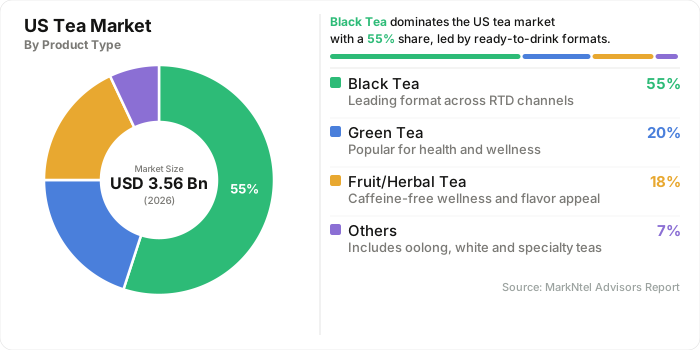
- By product type, black tea holds a significant share of about 55% in 2026.
- By form, ready-to-drink tea seized a significant share of about 50% in 2026.
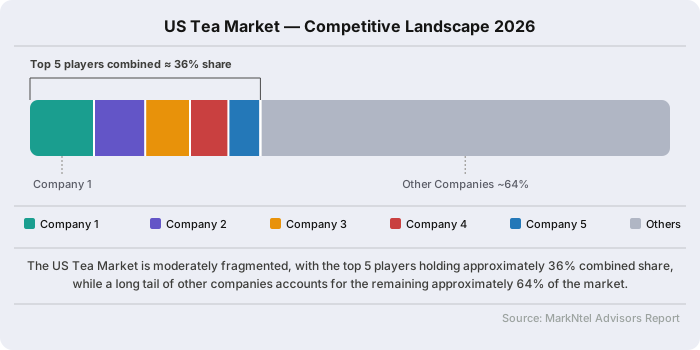
- The industry is moderately fragmented. However, the top five players collectively account for nearly 36% share.
US Tea Market Size and Outlook
The tea market size in the United States was valued at USD 3.41 billion in 2025 and is projected to grow from USD 3.56 billion in 2026 to USD 4.34 billion by 2032. Along with this, the market is estimated to grow at a CAGR of around 3.36% during the forecast period, i.e., 2026-32. The market is witnessing steady growth as consumers increasingly shift toward healthier beverages, convenient consumption formats, and premium drink experiences. Rising awareness of nutrition, preventive healthcare, and sugar reduction is encouraging consumers to replace high-calorie beverages with tea.
According to Prepared Foods, reporting on the U.S. Food and Drug Administration’s (FDA) updated “healthy” nutrient content claim finalized in December 2024, tea is now eligible to carry the “healthy” label under the revised criteria. The FDA’s review also found that adults who consume more tea tend to drink significantly fewer sugar-sweetened beverages, while approximately 20% of U.S. adults consume tea on any given day. This regulatory recognition is strengthening consumer confidence in tea and encouraging manufacturers to invest in clean-label, low-calorie, and wellness-focused tea products.
At the same time, changing lifestyles and demand for convenience are accelerating innovation across the ready-to-drink (RTD) and specialty tea segments. Manufacturers are introducing zero-sugar teas, functional blends, botanical infusions, and premium RTD offerings to meet growing demand for beverages that deliver refreshment alongside health benefits. Product differentiation through natural ingredients, sustainable sourcing, and innovative flavors is becoming an important competitive strategy as brands seek to attract younger and health-conscious consumers.
The expansion of tea-focused retail concepts further highlights the market’s momentum. According to the Houston Chronicle, HTeaO served approximately 24 million cups of tea and nearly 5 million takeaway gallons during 2024, while expanding its footprint to nearly 170 stores across 14 U.S. states by 2025. The company's rapid growth demonstrates increasing consumer demand for freshly brewed iced tea, customizable beverages, and premium tea experiences outside traditional retail channels.
Looking ahead, continued investment in functional ingredients, clean-label formulations, premium RTD teas, and innovative retail concepts is expected to strengthen the U.S. tea market. Supported by favorable regulatory recognition, rising health consciousness, and expanding specialty tea offerings, the market is well-positioned for sustained product innovation, higher consumer adoption, and long-term growth across both retail and foodservice channels.
US Tea Market Key Indicators
- The US remains one of the largest tea-consuming markets globally, supported by strong consumer adoption across households, retail, and foodservice channels. According to the Tea Association of the U.S.A. Tea Fact Sheet 2024, Americans consumed almost 86 billion servings of tea in 2023, equivalent to nearly 4 billion gallons. The high consumption volume highlights tea’s established role as an everyday beverage in the country. Increasing interest in specialty, flavored, and functional tea products is further expanding consumption occasions beyond traditional tea formats.
- Iced tea remains the dominant tea format in the US, with the Tea Association of the U.S.A. reporting that approximately 75–80% of all tea consumed in America is iced. This strong consumer preference has made ready-to-drink (RTD) teas, bottled teas, and freshly brewed iced teas important segments of the U.S. beverage industry. The popularity of iced tea has encouraged manufacturers to expand flavored, low-sugar, functional, and premium RTD tea offerings, reinforcing iced tea as a key driver of product innovation and market growth in the country.
- According to the Tea Association of the U.S.A. Fact Sheet, tea consumption is widespread across generations, with more than four in five Americans drinking tea. The association reports that over 87% of millennials consume tea, making them the most active tea-drinking generation, while Generation Z is increasingly embracing tea, driven by growing interest in wellness, premium beverages, and innovative tea formats. This expanding adoption among younger consumers is strengthening the long-term demand outlook for the U.S. tea market and encouraging manufacturers to introduce functional, ready-to-drink (RTD), and specialty tea products tailored to evolving consumer preferences.
US Tea Market Scope
| Category | Segments |
|---|---|
| By Product Type | Black Tea, Green Tea, Fruit/Herbal Tea, Others |
| By Form | Tea Bags, Loose Leaf Tea, Ready-to-Drink (RTD) Tea, Instant Tea |
| By Distribution Channel | Offline (Supermarkets & Hypermarkets, Convenience Stores, Specialty Stores, Foodservice), Online |
US Tea Market Growth Drivers
Rising Health and Wellness Awareness Driving Demand for Tea in the US
Growing consumer focus on healthier lifestyles, balanced diets, and chronic disease prevention is increasing demand for beverages that support overall wellness, strengthening the United States tea market. As reported by Prepared Foods following the U.S. Food and Drug Administration’s (FDA) updated “healthy” nutrient content claim in December 2024, tea now qualifies to carry the "healthy" label under the revised criteria. The FDA's review also found that adults who consume more tea tend to drink fewer sugar-sweetened beverages, reinforcing tea’s role as a healthier beverage choice. This regulatory recognition is supporting consumer confidence and encouraging manufacturers to expand healthier, wellness-oriented tea offerings.
Tea benefits from this shift because unsweetened tea is naturally low in calories and can serve as an alternative to sugar-containing beverages. According to the U.S. Census Bureau’s National Hot Tea Month report (2024), tea is present in nearly 80% of U.S. households, while more than 159 million Americans consume tea on any given day. The Census Bureau also reported that the US imported approximately USD 508 million worth of tea in 2022, highlighting the scale of domestic tea demand.
Rising health awareness and stronger focus on healthier beverage choices are positioning tea as a preferred alternative to high-sugar drinks in the US. This trend will continue driving innovation, premium product development, and long-term growth in the U.S. tea market.
Recent Trends
Rising Preference for Low-Sugar and Zero-Sugar Tea Beverages in the US
Rising concerns regarding sugar consumption, obesity, and diabetes are accelerating demand for low-sugar, zero-sugar, and clean-label tea products in the US. The growing prevalence of diabetes has increased consumer preference for healthier beverage choices. According to the CDC’s National Diabetes Statistics Report, approximately 40.1 million Americans were living with diagnosed or undiagnosed diabetes in 2023, representing 12.0% of the U.S. population, while 115.2 million U.S. adults had prediabetes.
This growing health burden is encouraging consumers to reduce intake of high-sugar beverages and seek healthier alternatives. Regulatory efforts are also supporting this shift. In December 2024, the U.S. Food and Drug Administration (FDA) updated the “healthy” nutrient content claim criteria, introducing limits on added sugars, sodium, and saturated fats. The FDA reported that 63% of Americans exceed current dietary recommendations for added sugars, increasing demand for products with improved nutritional profiles.
Tea brands are responding through zero-sugar innovation. For instance, The Coca-Cola Company’s Gold Peak Tea portfolio introduced Gold Peak Zero Sugar Sweet Tea and Gold Peak Zero Sugar Raspberry Sweet Tea, offering consumers zero-calorie alternatives to traditional sweetened iced tea. According to Coca-Cola’s product information, Gold Peak Zero Sugar Sweet Tea contains 0 calories, 0 grams of total sugar, and 0 grams of added sugar per 18.5 fl oz serving, while maintaining a real brewed tea profile.
The rising prevalence of diabetes and stronger focus on sugar reduction are positioning low-sugar and clean-label teas as attractive alternatives to traditional sweetened beverages. This trend will drive product reformulation, innovation, and sustained growth in the U.S. tea industry.
US Tea Market Opportunities and Challenges
Intense Competition from Coffee and Functional Drinks Driving Product Innovation
The U.S. tea industry faces strong competition from coffee and rapidly expanding functional beverage categories that are capturing consumer attention through convenience, premium experiences, and targeted benefits such as energy, focus, and performance enhancement. Coffee remains one of the biggest competitive threats due to its deeply established role in American daily routines.
According to the National Coffee Association’s (NCA) Spring 2024 National Coffee Data Trends (NCDT) report, 67% of U.S. adults consumed coffee in the past day, representing the highest level in more than 20 years. Daily coffee consumption has increased by 37% since 2004, rising from 49% of adults in 2004 to 67% in 2024. Additionally, 75% of American adults consumed coffee within the past week, while specialty coffee consumption reached 57% of adults, increasing by 7.5% year over year.
Competition from coffee and functional beverages is encouraging tea manufacturers to innovate and reposition tea as a functional, premium, and lifestyle-oriented beverage. Companies are expanding beyond traditional brewed tea into ready-to-drink (RTD) teas, matcha beverages, sparkling teas, and wellness-focused blends featuring benefits such as relaxation, immunity support, hydration, and sustained energy.
For instance, Starbucks introduced its Iced Lavender Cream Oatmilk Matcha beverage in 2024 across U.S. stores, combining matcha with a café-style premium experience to attract consumers interested in specialty beverages beyond traditional coffee. The launch reflects how tea-based products are increasingly being positioned within the premium café segment rather than only as a conventional hot beverage.
As coffee and functional beverages continue to raise consumer expectations for customization, convenience, and added benefits, this competitive pressure is creating opportunities for tea brands to accelerate product innovation, expand younger consumer adoption, and strengthen tea’s position within the broader U.S. wellness beverage market.
Segmentation Insights
Black Tea Maintains Market Leadership with Nearly 55% Revenue Share in the US
Black tea accounts for nearly 55% of the U.S. tea market revenue, driven by its widespread consumer acceptance, versatility, and strong presence across both retail and foodservice channels. It serves as the primary ingredient in most ready-to-drink (RTD) iced teas, which dominate U.S. tea consumption, and is widely used in flavored, sweetened, and unsweetened tea beverages.
According to the Tea Association of the U.S.A., approximately 86% of all tea consumed in the US is black tea, while around 85% of tea consumed is served iced, reinforcing black tea's leadership in the market. Its familiar taste, compatibility with fruit flavors, lemon, and sweeteners, and availability in tea bags, loose-leaf, and bottled formats continue to attract a broad consumer base.
Additionally, black tea is extensively distributed through supermarkets, convenience stores, cafés, restaurants, and online channels, ensuring high accessibility and repeat purchases. Continued innovation in premium blends, organic varieties, and RTD formulations is expected to sustain black tea's dominant position in the U.S. tea market. Based on product type, the scope has been segmented into
- Black Tea
- Green Tea
- Fruit/Herbal Tea
- Others
Ready-to-Drink Tea Secures Nearly 50% Share of the U.S. Tea Market Through Convenience and Product Innovation
Ready-to-Drink (RTD) tea holds the dominant position in the U.S. tea market, accounting for an estimated 50% of total sales, driven by increasing consumer demand for convenient, on-the-go beverages and healthier alternatives to carbonated soft drinks. RTD tea is widely available in supermarkets, convenience stores, vending machines, cafés, and foodservice outlets, making it highly accessible to consumers. The segment has benefited from growing demand for low-sugar, unsweetened, organic, and functional beverages, with manufacturers introducing products containing antioxidants, botanicals, and natural ingredients.
According to the Tea Association of the U.S.A., approximately 85% of tea consumed in the US is served as iced tea, highlighting the country's strong preference for cold tea beverages, which largely supports the RTD segment. Major companies, including The Coca-Cola Company (Gold Peak), PepsiCo (Pure Leaf), and Arizona Beverages, continue expanding their RTD tea portfolios through new flavors, premium formulations, and zero-sugar variants, reinforcing the segment's market leadership and supporting sustained growth. Based on form, the market is categorized into
- Tea Bags
- Loose Leaf Tea
- Ready-to-Drink (RTD) Tea
- Instant Tea
US Tea Market Competitive Analysis
The United States tea market is moderately fragmented, with the top five manufacturers collectively accounting for an estimated 36% of the organized market share. Key participants include Unilever PLC, The Coca-Cola Company, PepsiCo, Inc., The Hain Celestial Group, Inc., and R.C. Bigelow, Inc. Other notable players include East West Tea Company, LLC, Harney & Sons Fine Teas, Inc., The Republic of Tea, Inc., Traditional Medicinals, Inc., and Numi, Inc.
Major Companies in US Tea Industry
- Unilever PLC
- The Coca-Cola Company
- PepsiCo, Inc.
- The Hain Celestial Group, Inc.
- R.C. Bigelow, Inc.
- East West Tea Company, LLC
- Harney & Sons Fine Teas, Inc.
- Traditional Medicinals, Inc.
- The Republic of Tea, Inc.
- Numi, Inc.
- Adagio Teas, Inc.
- Others
US Tea Industry News and Recent Developments
-
PepsiCo Launches Pure Leaf Mental Focus Functional Iced Tea
PepsiCo expanded its Pure Leaf portfolio with the launch of Pure Leaf Mental Focus, a functional sparkling iced tea designed to support concentration. The product combines real brewed black tea with naturally occurring caffeine and added L-theanine, targeting consumers seeking functional benefits from beverages. The launch reflects growing demand for tea products positioned around focus, productivity, and wellness..
Impact Analysis: The launch strengthens the position of tea within the growing functional beverage category by expanding beyond traditional refreshment into cognitive wellness. By combining brewed tea with L-theanine and caffeine, PepsiCo is targeting consumers seeking focus-enhancing alternatives to conventional energy drinks. This innovation may accelerate premiumization, encourage functional ingredient adoption, and drive further investment in wellness-oriented tea formulations in the U.S. market.
-
Sprite + Tea Launch Expands Tea-Based Beverage Innovation
The Coca-Cola Company introduced Sprite + Tea in the U.S. and Canada in 2025 as a limited-edition beverage combining Sprite’s lemon-lime flavor with tea. The product was inspired by consumer interest in tea-based flavor combinations and demonstrates how beverage companies are experimenting with hybrid formats to attract younger consumers and create new tea consumption occasions.
Impact Analysis: The introduction of Sprite + Tea highlights the growing trend of hybrid beverage formats that combine familiar flavors with tea-based ingredients. The product expands tea consumption occasions by appealing to younger consumers seeking novel and refreshing beverage experiences. This innovation encourages beverage manufacturers to experiment with unconventional tea combinations, supporting category diversification and increasing consumer engagement with tea-based products.
Frequently Asked Questions
- Market Segmentation
- Introduction
- Product Definition
- Research Process
- Assumptions
- Executive Summary
- US Tea Market Policies, Regulations, and Product Standards
- US Tea Market Production Trend 2022-2032
- US Tea Market Production Trend By Type of Product
- Black Tea
- Green Tea
- Fruit/Herbal Tea
- Others
- Company-Wise Production Plants and Statistics
- Installed Production Capacity
- Actual Production
- Planned Production Target
- US Tea Market Production Trend By Type of Product
- US Tea Market Pricing Analysis 2022-2032
- US Tea Market Pricing Trend (USD) 2022-2032
- US Tea Market Pricing Trend (USD) By Regions 2022-2032
- Northeast
- Midwest
- South
- West
- US Tea Market Pricing Trend (USD) By Product Type 2022-2032
- Black Tea
- Green Tea
- Fruit/Herbal Tea
- Others
- US Tea Market Trends & Developments
- US Tea Market Dynamics
- Growth Factors
- Challenges
- US Tea Market Hotspot & Opportunities
- US Tea Market Outlook, 2022-2032F
- Market Size & Outlook
- By Revenues (USD Million)
- Market Segmentation & Outlook
- By Product Type- Market Size & Forecast 2022-2032, USD Million
- Black Tea
- Green Tea
- Fruit/Herbal Tea
- Others
- By Form- Market Size & Forecast 2022-2032, USD Million
- Tea Bags
- Loose Leaf Tea
- Ready-to-Drink (RTD) Tea
- Instant Tea
- By Distribution Channel- Market Size & Forecast 2022-2032, USD Million
- Offline
- Supermarkets & Hypermarkets
- Convenience Stores
- Specialty Stores
- Foodservice
- Online
- Offline
- By Region- Market Size & Forecast 2022-2032, USD Million
- Northeast
- Midwest
- South
- West
- By Company
- Competition Characteristics
- Market Share & Analysis
- By Product Type- Market Size & Forecast 2022-2032, USD Million
- Market Size & Outlook
- US Black Tea Market Outlook, 2022-2032
- Market Size & Outlook
- By Revenues (USD Million)
- Market Segmentation & Outlook
- By Form- Market Size & Forecast 2022-2032, USD Million
- By Distribution Channel- Market Size & Forecast 2022-2032, USD Million
- By Region- Market Size & Forecast 2022-2032, USD Million
- Market Size & Outlook
- US Green Tea Market Outlook, 2022-2032
- Market Size & Outlook
- By Revenues (USD Million)
- Market Segmentation & Outlook
- By Form- Market Size & Forecast 2022-2032, USD Million
- By Distribution Channel- Market Size & Forecast 2022-2032, USD Million
- By Region- Market Size & Forecast 2022-2032, USD Million
- Market Size & Outlook
- US Fruit/Herbal Tea Market Outlook, 2022-2032
- Market Size & Outlook
- By Revenues (USD Million)
- Market Segmentation & Outlook
- By Form- Market Size & Forecast 2022-2032, USD Million
- By Distribution Channel- Market Size & Forecast 2022-2032, USD Million
- By Region- Market Size & Forecast 2022-2032, USD Million
- Market Size & Outlook
- US Tea Market Key Strategic Imperatives for Success & Growth
- Competitive Outlook
- Company Profiles
- Unilever PLC
- Business Description
- Product Portfolio
- Collaborations & Alliances
- Recent Developments
- Financial Details
- Others
- The Coca-Cola Company
- Business Description
- Product Portfolio
- Collaborations & Alliances
- Recent Developments
- Financial Details
- Others
- PepsiCo, Inc.
- Business Description
- Product Portfolio
- Collaborations & Alliances
- Recent Developments
- Financial Details
- Others
- The Hain Celestial Group, Inc.
- Business Description
- Product Portfolio
- Collaborations & Alliances
- Recent Developments
- Financial Details
- Others
- R.C. Bigelow, Inc.
- Business Description
- Product Portfolio
- Collaborations & Alliances
- Recent Developments
- Financial Details
- Others
- East West Tea Company, LLC
- Business Description
- Product Portfolio
- Collaborations & Alliances
- Recent Developments
- Financial Details
- Others
- Harney & Sons Fine Teas, Inc.
- Business Description
- Product Portfolio
- Collaborations & Alliances
- Recent Developments
- Financial Details
- Others
- Traditional Medicinals, Inc.
- Business Description
- Product Portfolio
- Collaborations & Alliances
- Recent Developments
- Financial Details
- Others
- The Republic of Tea, Inc.
- Business Description
- Product Portfolio
- Collaborations & Alliances
- Recent Developments
- Financial Details
- Others
- Numi, Inc.
- Business Description
- Product Portfolio
- Collaborations & Alliances
- Recent Developments
- Financial Details
- Others
- Adagio Teas, Inc.
- Business Description
- Product Portfolio
- Collaborations & Alliances
- Recent Developments
- Financial Details
- Others
- Others
- Unilever PLC
- Company Profiles
- Disclaimer
MarkNtel Advisors follows a robust and iterative research methodology designed to ensure maximum accuracy and minimize deviation in market estimates and forecasts. Our approach combines both bottom-up and top-down techniques to effectively segment and quantify various aspects of the market. A consistent feature across all our research reports is data triangulation, which examines the market from three distinct perspectives to validate findings. Key components of our research process include:
1. Scope & Research Design At the outset, MarkNtel Advisors define the research objectives and formulate pertinent questions. This phase involves determining the type of research—qualitative or quantitative—and designing a methodology that outlines data collection methods, target demographics, and analytical tools. They also establish timelines and budgets to ensure the research aligns with client goals.
2. Sample Selection and Data Collection In this stage, the firm identifies the target audience and determines the appropriate sample size to ensure representativeness. They employ various sampling methods, such as random or stratified sampling, based on the research objectives. Data collection is carried out using tools like surveys, interviews, and observations, ensuring the gathered data is reliable and relevant.
3. Data Analysis and Validation Once data is collected, MarkNtel Advisors undertake a rigorous analysis process. This includes cleaning the data to remove inconsistencies, employing statistical software for quantitative analysis, and thematic analysis for qualitative data. Validation steps are taken to ensure the accuracy and reliability of the findings, minimizing biases and errors.

4. Data Forecast and FinalizationThe final phase involves forecasting future market trends based on the analyzed data. MarkNtel Advisors utilize predictive modeling and time series analysis to anticipate market behaviors. The insights are then compiled into comprehensive reports, featuring visual aids like charts and graphs, and include strategic recommendations to inform client decision-making
We offer flexible licensing options to cater to varying organizational needs. Choose the pricing pack that best suits your requirements:
Buy Now Inquire Before Buying
 Request Customization
 Talk to our Consultant







