

South Africa Tire Market Research Report: Forecast (2026-2032)
By Type of Vehicle (Passenger Car, Light Commercial Vehicle, Medium and Heavy Commercial Vehicles, Off-the-Road (OTR), Two-Wheelers), By Demand Category (OEM, Aftermarket), By Type ... of Tire (Radial, Bias), By Sales Channel (Direct Sales, Exclusive Outlets & Multi-brand Stores, Online), By Season (All-Season, Summer, Winter), By Price Category (Budget, Mid-Range, Premium), By Tire Size (Tire Size 1, Tire Size 2, Tire Size 3, Tire Size 4, Tire Size 5), and others Read more
- Tire
- Aug 2026
- Pages 145
- Report Format: PDF, Excel, PPT
South Africa Tire Market
Projected 3.51% CAGR from 2026 to 2032
Study Period
2026-2032
Market Size (2026)
USD 1.61 Billion
Market Size (2032)
USD 1.98 Billion
Base Year
2025
Projected CAGR
3.51%
Leading Segments
By Type Vehicle: Passenger Car
South Africa Tire Market Key Takeaways
- The South Africa tire market size was valued at USD 1.55 billion in 2025 and is projected to grow from USD 1.61 billion in 2026 to USD 1.98 billion by 2032.
- The industry is projected to sustain growth at a steady CAGR of 3.51% during 2026-2032.
- By type of vehicle, passenger cars hold a significant share of about 71% in 2026.
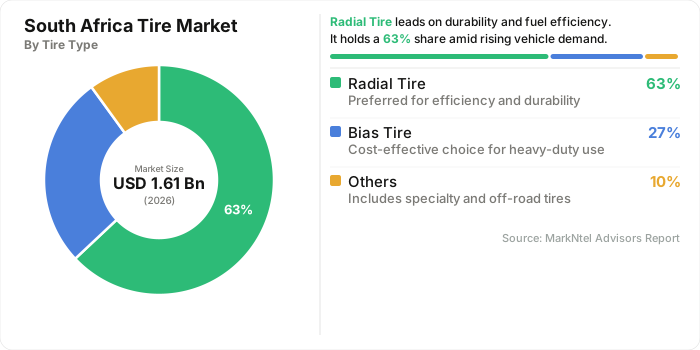
- By type of tire, radial tires seized a significant share of about 63% in 2026.
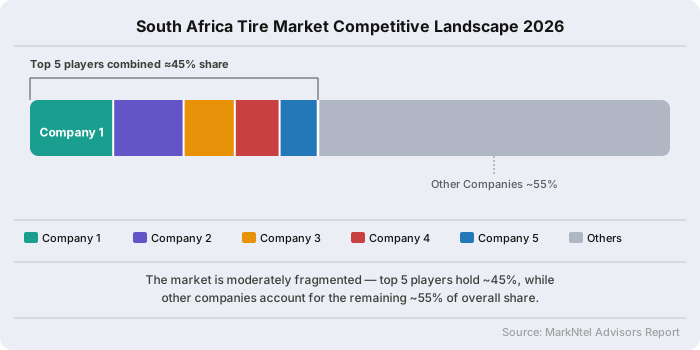
- The industry is moderately fragmented. However, the top five players collectively account for nearly 45% share.
South Africa Tire Market Size and Outlook
South Africa tire market size was valued at USD 1.55 billion in 2025 and is projected to grow from USD 1.61 billion in 2026 to USD 1.98 billion by 2032. Along with this, the market is estimated to grow at a CAGR of around 3.51% during the forecast period, i.e., 2026-32.
South Africa’s tire demand is being supported by the recovery in vehicle sales, with new-vehicle sales increasing 15.7% to 597,338 units in 2025, while passenger-vehicle sales rose 9.9% year-on-year during January–February 2026. At the same time, replacement demand remains a key market contributor, driven by tire wear associated with challenging local road conditions and vehicle usage patterns.
The competitive landscape is also being influenced by government and industry initiatives aimed at strengthening local tire manufacturing, regulatory compliance, and measures against illicit tire imports. Looking ahead, opportunities are emerging for specialized tires designed for SUVs, commercial fleets, and electric vehicles, alongside growing emphasis on localized production and sustainable manufacturing practices. With vehicle demand showing signs of recovery and manufacturers expanding product innovation and local capabilities, South Africa’s tire market is positioned for steady long-term growth.
South Africa Tire Market Key Indicators
- Road transport is a major structural driver of tire consumption in South Africa because approximately 69% of the country's freight moves by road. The government also reports that SANRAL manages more than 31,000 km of national roads carrying about 70% of long-distance freight. High truck utilization, long-distance routes, and heavy payloads accelerate tire wear and replacement cycles, particularly for truck, bus, trailer, and other heavy-commercial tire categories.
- South African vehicle production increased 2.9% to 618,077 units in 2025, from 600,473 units in 2024, according to the latest 2026 Automotive Trade Manual released by Naamsa in May 2026. The country accounted for 50.3% of Africa’s 1.23 million vehicle production in 2025, retaining its position as the continent’s largest producer. In addition, 70.5% of light-vehicle production was exported, supporting sustained OEM tire requirements for both domestic and export-bound vehicles.
- The automotive industry contributed approximately 5.2% of South Africa's GDP in 2025, while vehicle and component manufacturing accounted for 23.8% of domestic manufacturing value addition. The sector also employed approximately 115,000 people across OEMs and component suppliers. Its large economic footprint supports a broad ecosystem of vehicle manufacturing, component supply, dealerships, repair facilities, and aftermarket businesses, providing a structural foundation for sustained tire consumption across OEM and replacement channels.
- South Africa's 2025 market included 30,911 medium- and heavy-commercial vehicle sales, while Gauteng alone represented 38.7% of national MCV/HCV sales. Commercial vehicles typically accumulate substantially higher annual mileage than private passenger cars, particularly in freight, mining, construction, logistics, and distribution operations. Consequently, even moderate commercial-vehicle fleet expansion can generate disproportionate tire demand because frequent utilization accelerates tread wear and shortens replacement intervals.
South Africa’s Tyre Trade Shows a USD 446 Million Import–Export Gap in 2025
South Africa’s trade in tire remained strongly import-oriented in 2025. Based on the provided trade data, imports reached USD 727 million and 11 million units, compared with exports of only USD 281 million and 2.3 million units. This created a USD 446 million trade deficit and indicates substantial dependence on imported tyres.
China was the dominant import source, supplying USD 255 million, equivalent to 35.1% of total import value, while its 6.9 million units represented approximately 62.7% of import volume. India supplied USD 58 million and 634,000 units, while Thailand contributed USD 51 million and 787,000 units. The concentration is consistent with broader trade evidence: World Bank WITS records South African imports of HS 4011 from China at USD 238.8 million and 5.79 million units in 2024.
On the export side, the Netherlands was the largest destination in 2025, receiving USD 32 million and 339,000 units, followed by the Democratic Republic of Congo at USD 30 million and 322,000 units. Zimbabwe and Namibia absorbed USD 21 million and USD 24 million, respectively. This highlights a predominantly regional African export footprint, while European markets provide higher-value outlets. Industry data also shows SADC accounted for 62.25% of South Africa’s broader rubber-product export destinations, reinforcing the regional orientation.
South Africa’s trade structure is further shaped by anti-dumping measures on Chinese tyres, including specific duties on several Chinese manufacturers.
South Africa Tire Market Scope
| Category | Segments |
|---|---|
| By Type of Vehicle | Passenger Car, Light Commercial Vehicle, Medium and Heavy Commercial Vehicles, Off-the-Road (OTR), Two-Wheelers |
| By Demand Category | OEM, Aftermarket |
| By Type of Tire | Radial, Bias |
| By Sales Channel | Direct Sales, Exclusive Outlets & Multi-brand Stores, Online |
| By Season | All-Season, Summer, Winter |
| By Price Category | Budget, Mid-Range, Premium |
| By Tire Size | Tire Size 1, Tire Size 2, Tire Size 3, Tire Size 4, Tire Size 5 |
South Africa Tire Market Growth Drivers
13.36 Million-Vehicle Parc and 13.4% Growth in Used-Vehicle Sales Strengthen Tire Replacement Demand
The replacement opportunity is being reinforced by strong vehicle-market activity during 2025–26. South Africa's motor-trade sales increased 7.6% year on year in Q1 2026, with new-vehicle sales rising 18.7% and used-vehicle sales increasing 9.4%. The increase in used-vehicle transactions is particularly relevant to tires because vehicles moving through the used market remain in service and require ongoing maintenance and replacement components, including tires.
The trend continued into June 2026, when new-vehicle purchases increased 14.0% year on year, while used-vehicle sales rose 13.4%. Overall motor-trade sales increased 6.5% during the month. This indicates continued expansion in both new and existing vehicle activity, increasing the pool of vehicles requiring tires over their operating life.
New vehicle additions also create a future replacement pipeline. In 2025, South Africa sold 422,463 passenger cars, while imports of light vehicles reached 391,287 units, an increase of 28.6% from 304,175 units in 2024. Imported vehicles represented 69.1% of total light-vehicle sales, compared with 62.7% in 2024. This expanding inflow of vehicles adds to the addressable tire base and will progressively generate replacement demand as vehicles accumulate mileage.
The combination of a 13.36-million-vehicle installed base, strong 2025 vehicle sales, 18.7% growth in new-vehicle sales in Q1 2026, and 13.4% growth in used-vehicle sales in June 2026 creates a substantial and recurring replacement market. As the vehicle fleet expands and remains in operation, tire wear generates repeat purchases, making vehicle-parc expansion and replacement demand one of the most reliable structural growth drivers for South Africa's tire market.
Recent Trends
Digital Tire Monitoring and Fleet Management Gain Traction in South Africa
Digitalization is emerging as an important trend in the South Africa tire industry as commercial fleets increasingly seek to reduce tire-related downtime, operating costs and premature replacements. The high utilization of trucks, buses, mining vehicles and logistics fleets makes real-time monitoring of tire pressure, temperature and tread condition increasingly valuable. Digital tire-management systems can help fleet operators identify underinflation and abnormal wear earlier, improving tire life, safety and overall fleet efficiency.
A notable recent example is Continental’s ContiConnect 2.0, which has been expanded as a digital tire-monitoring and fleet-management platform for commercial vehicles. The solution combines sensors, tire-pressure and temperature monitoring, and digital fleet analytics to provide operators with information on tire condition and maintenance requirements. Continental’s digital tire solutions are designed to help fleets detect potential tire problems before failures occur and optimize tire-related operating costs.
The trend is particularly relevant to South Africa because the country's long-distance trucking, mining and logistics operations place heavy demands on tires, while road hazards can accelerate tire wear and damage. Digital monitoring therefore creates an opportunity to shift from reactive tire replacement toward predictive maintenance, enabling fleet operators to optimize tire pressure, extend casing life and reduce unplanned downtime.
As connected tire technologies become more accessible, the South African market is likely to see increasing adoption of smart sensors, TPMS, predictive analytics and integrated fleet-management platforms, supporting higher-value tire products and services.
South Africa Tire Market Opportunities and Challenges
3.12 Million m² Pothole Backlog Creates Opportunity for Durable and Reinforced Tires
Poor road conditions and widespread potholes are a significant challenge for South Africa’s tire industry because they can cause punctures, sidewall damage, and premature tire replacement, increasing operating costs for motorists and commercial fleets. In March 2026, the KwaZulu-Natal government allocated USD 11.8 million to address a pothole backlog covering 3.12 million m² of the provincial road network. The provincial government specifically stated that potholes were causing vehicle punctures and wheel damage, as well as congestion and delays. Similarly, in July 2025, the City of Cape Town reported that heavy winter rainfall was creating potholes that damaged tires and caused accidents.
However, the challenge is creating a clear product-development opportunity. In June 2026, General Tire launched the Grabber Cross A/S in South Africa, offering 32 sizes from 16–22 inches. The tire uses Duragen Technology, including thicker steel belts, reinforced tread and sidewall sections, and a compound designed for high cut- and chip-resistance. General Tire specifically positioned the product for South African crossover and SUV drivers who encounter potholes, gravel roads and light off-road conditions.
The launch demonstrates how poor road infrastructure is driving manufacturers toward stronger, more durable and versatile tire designs rather than simply increasing replacement volumes. Consequently, pothole-related tire damage can support both replacement demand and premiumization, as consumers seek products capable of withstanding South Africa’s challenging road conditions.
Segmentation Insights
Nearly 71% Share Supported by Strong Passenger-Vehicle Demand
Passenger cars are the leading vehicle category in South Africa, supported by their dominant share of new-vehicle sales and a large replacement base. In 2025, South Africa recorded 422,292 passenger-vehicle sales, representing 70.8% of total new-vehicle sales of 596,818 units. Passenger-vehicle sales also increased 20.1% year on year, significantly faster than the 7.8% growth recorded for light commercial vehicles.
The segment's leadership is further supported by strong import activity. According to NAAMSA's 2026 Automotive Trade Manual, passenger-car imports accounted for 82.8% of total passenger-car sales in 2025, with 349, imported vehicles contributing to the expanding passenger-car base. The broad availability of passenger-car models, increasing vehicle ownership and recurring replacement requirements create a substantial addressable tire base. In addition, South Africa had 56 passenger-car brands and 1,995 model derivatives in 2025, giving consumers extensive vehicle choice.
Consequently, the combination of high vehicle volumes, 20.1% sales growth, extensive model availability and recurring replacement demand enables passenger-car tires to maintain the largest position among vehicle-type categories. Based on type of vehicle, the scope has been segmented into
- Passenger Car
- Light Commercial Vehicle
- Medium and Heavy Commercial Vehicles
- Off-the-Road (OTR)
- Two-Wheelers
Radial Tires Lead with a 63% Share, Supported by Broad Vehicle Applications
Radial tires are the dominant tire construction in South Africa because of their widespread application across passenger cars, light trucks and commercial vehicles, combined with advantages in durability, stability, fuel efficiency and tread life. Bridgestone South Africa's technical guidance identifies “R” as radial construction in standard passenger-car and light-truck tire sizing, while its truck range includes radial products such as the R-Trailer 001 and R-Steer KAI 001. The latter is described as a South African first, designed for resistance to irregular wear, durability and retreadability.
The breadth of radial applications is further demonstrated by Bridgestone's South African portfolio, which includes radial products for agricultural and industrial applications. Its VX-TRACTOR radial tire is designed for heavy loads, durability and traction, while the VT-COMBINE provides higher load capacity and a robust casing.
Therefore, radial tires lead primarily because their construction is compatible with a wide range of modern vehicle and commercial applications and offers performance characteristics suited to South African operating conditions. By type of tire, the market is categorized into
- Radial
- Bias
Top Five Companies Hold Around 45% of Industry Revenue in 2026
The South Africa tire market is moderately fragmented, with the top five manufacturers collectively accounting for approximately 45% of the market by value in 2026. Key participants include bridgestone South Africa (Pty) Ltd, Continental Tyre South Africa (Pty) Ltd, Goodyear South Africa (Pty) Ltd, Sumitomo Rubber South Africa (Pty) Ltd, and Michelin Tyre Company South Africa (Pty) Ltd.
Major Companies in South Africa Tire Industry
- Bridgestone South Africa (Pty) Ltd
- Continental Tyre South Africa (Pty) Ltd
- Goodyear South Africa (Pty) Ltd
- Sumitomo Rubber South Africa (Pty) Ltd
- Apollo Tyres Africa (Pty) Ltd
- Michelin Tyre Company South Africa (Pty) Ltd
- Pirelli Tyre (Pty) Ltd
- Yokohama South Africa (Pty) Ltd
- Bandag South Africa (Pty) Ltd
- Stamford Tyres (Africa) (Pty) Ltd
- Others
South Africa Tire Industry News and Recent Developments
June 2026: General Tire Launches Grabber Cross A/S in South Africa
General Tire introduced the Grabber Cross A/S for South African crossover and SUV users. The range covers 32 sizes from 16–22 inches, with thicker steel belts, reinforced tread and sidewalls, and cut- and chip-resistant compound. Some sizes are locally produced. The tire is also EV-compatible, reflecting demand for versatile, durable SUV products
Impact Analysis: The Grabber Cross A/S launch strengthens the SUV and crossover tire segment by offering a product specifically engineered for South African driving conditions. Its 32-size range from 16–22 inches improves vehicle coverage, while reinforced construction and cut- and chip-resistant compounds address road and gravel-related damage. EV compatibility also positions General Tire to capture emerging demand from South Africa’s growing electrified-vehicle segment.
September 2025: Bridgestone Launches Locally Produced Dueler A/T002
Bridgestone South Africa launched the Dueler All-Terrain A/T002 in September 2025 as a locally produced premium tire for South African 4x4 drivers. The tire provides wet and dry grip, off-road traction and 40% higher mileage than its predecessor. The launch highlights growing demand for durable all-terrain tires suited to South African road and off-road conditions.
Impact Analysis: Bridgestone’s locally produced Dueler A/T002 strengthens South Africa’s premium all-terrain tire segment by combining improved off-road capability with higher mileage. The reported 40% mileage improvement over its predecessor can support lower replacement frequency and operating costs for 4x4 users. Local production also strengthens domestic manufacturing and supply capabilities, while the product’s performance characteristics address demand for durable tires across South Africa’s diverse road conditions.
Frequently Asked Questions
- Market Segmentation
- Introduction
- Product Definition
- Research Process
- Assumptions
- Executive Summary
- South Africa Tire Production (Thousand Units) Trend 2022-2032
- South Africa Tire Production (Thousand Units) Trend, By Type of Tire
- Radial
- Bias
- Company-Wise Production Plants and Statistics
- Installed Production Capacity
- Actual Production
- Planned Production Target
- South Africa Tire Production (Thousand Units) Trend, By Type of Tire
- South Africa Tire Pricing Analysis (USD/Thousand Units) 2022-2032
- South Africa Tire Market Pricing Trend (USD/Thousand Units) 2022-2032
- South Africa Tire Market Pricing Trend (USD/Thousand Units) By Regions 2022-2032
- Johannesburg
- Cape Town
- Durban
- Pretoria
- Others
- South Africa Tire Pricing Trend (USD/Thousand Units), By Type of Tire 2022-2032
- Radial
- Bias
- South Africa Tire Market Supply Chain Analysis
- South Africa Tire Market Import Export Landscape
- South Africa Tire Market Policies, Regulations, and Product Standards
- South Africa Tire Market Trends & Developments
- South Africa Tire Market Dynamics
- Growth Factors
- Challenges
- South Africa Tire Market Hotspot & Opportunities
- South Africa Tire Market Outlook, 2022-2032
- Market Size & Outlook
- By Revenues (USD Million)
- By Unit Sold (Thousand Units)
- Market Segmentation & Outlook
- By Type of Vehicle- Market Size & Forecast 2022-2032, USD Million & Thousand Units
- Passenger Car
- Light Commercial Vehicle
- Medium and Heavy Commercial Vehicles
- Off-the-Road (OTR)
- Two-Wheelers
- By Demand Category- Market Size & Forecast 2022-2032, USD Million & Thousand Units
- OEM
- Aftermarket
- By Type of Tire- Market Size & Forecast 2022-2032, USD Million & Thousand Units
- Radial
- Bias
- By Sales Channel- Market Size & Forecast 2022-2032, USD Million & Thousand Units
- Direct Sales
- Exclusive Outlets & Multi-brand Stores
- Online
- By Season- Market Size & Forecast 2022-2032, USD Million & Thousand Units
- All-Season
- Summer
- Winter
- By Price Category- Market Size & Forecast 2022-2032, USD Million & Thousand Units
- Budget
- Mid-Range
- Premium
- By Tire Size- Market Size & Forecast 2022-2032, USD Million & Thousand Units
- Tire Size 1
- Tire Size 2
- Tire Size 3
- Tire Size 4
- Tire Size 5
- By Region
- Johannesburg
- Cape Town
- Durban
- Pretoria
- Others
- By Company
- Competition Characteristics
- Market Share & Analysis
- By Type of Vehicle- Market Size & Forecast 2022-2032, USD Million & Thousand Units
- Market Size & Outlook
- South Africa Passenger Car Tire Market Outlook, 2022-2032
- Market Size & Outlook
- By Revenues (USD Million)
- By Unit Sold (Thousand Units)
- Market Segmentation & Outlook
- By Types of Vehicle- Market Size & Forecast 2022-2032, USD Million & Thousand Units
- Hatchback
- Sedan
- SUV
- By Demand Category- Market Size & Forecast 2022-2032, USD Million & Thousand Units
- By Type of Tire- Market Size & Forecast 2022-2032, USD Million & Thousand Units
- By Sales Channel- Market Size & Forecast 2022-2032, USD Million & Thousand Units
- By Season- Market Size & Forecast 2022-2032, USD Million & Thousand Units
- By Price Category- Market Size & Forecast 2022-2032, USD Million & Thousand Units
- By Tire Size- Market Size & Forecast 2022-2032, USD Million & Thousand Units
- By Region - Market Size & Forecast 2022-2032, USD Million & Thousand Units
- By Types of Vehicle- Market Size & Forecast 2022-2032, USD Million & Thousand Units
- Market Size & Outlook
- South Africa Light Commercial Vehicle Tire Market Outlook, 2022-2032
- Market Size & Outlook
- By Revenues (USD Million)
- By Unit Sold (Thousand Units)
- Market Segmentation & Outlook
- By Types of Vehicle- Market Size & Forecast 2022-2032, USD Million & Thousand Units
- Light Trucks
- Light Buses
- Pick-up Trucks and Vans
- By Demand Category- Market Size & Forecast 2022-2032, USD Million & Thousand Units
- By Type of Tire- Market Size & Forecast 2022-2032, USD Million & Thousand Units
- By Sales Channel- Market Size & Forecast 2022-2032, USD Million & Thousand Units
- By Season- Market Size & Forecast 2022-2032, USD Million & Thousand Units
- By Price Category- Market Size & Forecast 2022-2032, USD Million & Thousand Units
- By Tire Size- Market Size & Forecast 2022-2032, USD Million & Thousand Units
- By Region - Market Size & Forecast 2022-2032, USD Million & Thousand Units
- By Types of Vehicle- Market Size & Forecast 2022-2032, USD Million & Thousand Units
- Market Size & Outlook
- South Africa Medium and Heavy Commercial Vehicles Tire Market Outlook, 2022-2032
- Market Size & Outlook
- By Revenues (USD Million)
- By Unit Sold (Thousand Units)
- Market Segmentation & Outlook
- By Types of Vehicle- Market Size & Forecast 2022-2032, USD Million & Thousand Units
- Buses
- Trucks
- By Demand Category- Market Size & Forecast 2022-2032, USD Million & Thousand Units
- By Type of Tire- Market Size & Forecast 2022-2032, USD Million & Thousand Units
- By Sales Channel- Market Size & Forecast 2022-2032, USD Million & Thousand Units
- By Season- Market Size & Forecast 2022-2032, USD Million & Thousand Units
- By Price Category- Market Size & Forecast 2022-2032, USD Million & Thousand Units
- By Tire Size- Market Size & Forecast 2022-2032, USD Million & Thousand Units
- By Region - Market Size & Forecast 2022-2032, USD Million & Thousand Units
- By Types of Vehicle- Market Size & Forecast 2022-2032, USD Million & Thousand Units
- Market Size & Outlook
- South Africa Off-the-Road (OTR) Tire Market Outlook, 2022-2032
- Market Size & Outlook
- By Revenues (USD Million)
- By Unit Sold (Thousand Units)
- Market Segmentation & Outlook
- By Types of Vehicle- Market Size & Forecast 2022-2032, USD Million & Thousand Units
- Earthmoving Equipment
- Agricultural Vehicles
- Material Handling Vehicles
- By Demand Category- Market Size & Forecast 2022-2032, USD Million & Thousand Units
- By Type of Tire- Market Size & Forecast 2022-2032, USD Million & Thousand Units
- By Sales Channel- Market Size & Forecast 2022-2032, USD Million & Thousand Units
- By Season- Market Size & Forecast 2022-2032, USD Million & Thousand Units
- By Price Category- Market Size & Forecast 2022-2032, USD Million & Thousand Units
- By Tire Size- Market Size & Forecast 2022-2032, USD Million & Thousand Units
- By Region - Market Size & Forecast 2022-2032, USD Million & Thousand Units
- By Types of Vehicle- Market Size & Forecast 2022-2032, USD Million & Thousand Units
- Market Size & Outlook
- South Africa Two-Wheelers Tire Market Outlook, 2022-2032
- Market Size & Outlook
- By Revenues (USD Million)
- By Unit Sold (Thousand Units)
- Market Segmentation & Outlook
- By Types of Vehicle- Market Size & Forecast 2022-2032, USD Million & Thousand Units
- Scooters and Mopeds
- Motorcycles
- By Demand Category- Market Size & Forecast 2022-2032, USD Million & Thousand Units
- By Type of Tire- Market Size & Forecast 2022-2032, USD Million & Thousand Units
- By Sales Channel- Market Size & Forecast 2022-2032, USD Million & Thousand Units
- By Season- Market Size & Forecast 2022-2032, USD Million & Thousand Units
- By Price Category- Market Size & Forecast 2022-2032, USD Million & Thousand Units
- By Tire Size- Market Size & Forecast 2022-2032, USD Million & Thousand Units
- By Region - Market Size & Forecast 2022-2032, USD Million & Thousand Units
- By Types of Vehicle- Market Size & Forecast 2022-2032, USD Million & Thousand Units
- Market Size & Outlook
- South Africa Tire Market Key Strategic Imperatives for Success & Growth
- Competitive Outlook
- Company Profiles
- Bridgestone South Africa (Pty) Ltd
- Business Description
- Product Portfolio
- Collaborations & Alliances
- Recent Developments
- Financial Details
- Others
- Continental Tyre South Africa (Pty) Ltd
- Business Description
- Product Portfolio
- Collaborations & Alliances
- Recent Developments
- Financial Details
- Others
- Goodyear South Africa (Pty) Ltd
- Business Description
- Product Portfolio
- Collaborations & Alliances
- Recent Developments
- Financial Details
- Others
- Sumitomo Rubber South Africa (Pty) Ltd
- Business Description
- Product Portfolio
- Collaborations & Alliances
- Recent Developments
- Financial Details
- Others
- Apollo Tyres Africa (Pty) Ltd
- Business Description
- Product Portfolio
- Collaborations & Alliances
- Recent Developments
- Financial Details
- Others
- Michelin Tyre Company South Africa (Pty) Ltd
- Business Description
- Product Portfolio
- Collaborations & Alliances
- Recent Developments
- Financial Details
- Others
- Pirelli Tyre (Pty) Ltd
- Business Description
- Product Portfolio
- Collaborations & Alliances
- Recent Developments
- Financial Details
- Others
- Yokohama South Africa (Pty) Ltd
- Business Description
- Product Portfolio
- Collaborations & Alliances
- Recent Developments
- Financial Details
- Others
- Bandag South Africa (Pty) Ltd
- Business Description
- Product Portfolio
- Collaborations & Alliances
- Recent Developments
- Financial Details
- Others
- Stamford Tyres (Africa) (Pty) Ltd
- Business Description
- Product Portfolio
- Collaborations & Alliances
- Recent Developments
- Financial Details
- Others
- Others
- Bridgestone South Africa (Pty) Ltd
- Company Profiles
- Disclaimer
MarkNtel Advisors follows a robust and iterative research methodology designed to ensure maximum accuracy and minimize deviation in market estimates and forecasts. Our approach combines both bottom-up and top-down techniques to effectively segment and quantify various aspects of the market. A consistent feature across all our research reports is data triangulation, which examines the market from three distinct perspectives to validate findings. Key components of our research process include:
1. Scope & Research Design At the outset, MarkNtel Advisors define the research objectives and formulate pertinent questions. This phase involves determining the type of research—qualitative or quantitative—and designing a methodology that outlines data collection methods, target demographics, and analytical tools. They also establish timelines and budgets to ensure the research aligns with client goals.
2. Sample Selection and Data Collection In this stage, the firm identifies the target audience and determines the appropriate sample size to ensure representativeness. They employ various sampling methods, such as random or stratified sampling, based on the research objectives. Data collection is carried out using tools like surveys, interviews, and observations, ensuring the gathered data is reliable and relevant.
3. Data Analysis and Validation Once data is collected, MarkNtel Advisors undertake a rigorous analysis process. This includes cleaning the data to remove inconsistencies, employing statistical software for quantitative analysis, and thematic analysis for qualitative data. Validation steps are taken to ensure the accuracy and reliability of the findings, minimizing biases and errors.

4. Data Forecast and FinalizationThe final phase involves forecasting future market trends based on the analyzed data. MarkNtel Advisors utilize predictive modeling and time series analysis to anticipate market behaviors. The insights are then compiled into comprehensive reports, featuring visual aids like charts and graphs, and include strategic recommendations to inform client decision-making
We offer flexible licensing options to cater to varying organizational needs. Choose the pricing pack that best suits your requirements:
Buy Now Inquire Before Buying
 Request Customization
 Talk to our Consultant







