

Saudi Arabia Chocolate Market Research Report: Size, Share, Trends & Forecast (2026-2032)
By Product (Dark Chocolate, Milk Chocolate, White Chocolate), By Form (Tablets and Bars, Molded Blocks, Pralines and Truffles, Other Forms), By Packaging (Plastic Pouches and Bags, ... Paper Pouches and Bags, Metal Tins, Plastic Boxed Assortments, Others), By SKU Size (Upto 50 Gram, 51 to 100 Gram, 100 to 200 Gram, Above 200 Gram), By Ingredient Type (Dairy-Based, Plant-Based, Single Origin), By Distribution Channel (Supermarkets/Hypermarkets, Online Retail Stores, Convenience Stores, Other Channels), By Application (Food products, Beverages, Others),and others Read more
- Food & Beverages
- Apr 2026
- Pages 125
- Report Format: PDF, Excel, PPT
Saudi Arabia Chocolate Market
Projected 5% CAGR from 2026 to 2032
Study Period
2026-2032
Market Size (2026)
USD 1.45 Billion
Market Size (2032)
USD 1.98 Billion
Base Year
2025
Projected CAGR
5%
Leading Segments
By Ingredient Type: Dairy-Based
Saudi Arabia Chocolate Market Report Key Takeaways:
- The Saudi Arabia chocolate size was valued at USD 1.32 billion in 2025 and is projected to grow from USD 1.45 billion in 2026 to USD 1.98 billion by 2032, exhibiting a CAGR of 5% during the forecast period.
- Western is the leading region with a significant share of 38% in 2026.
- By Ingredient type, the Dairy-based segment represented a significant share of about 65.35% in the Saudi Arabia Chocolate Market in 2026.
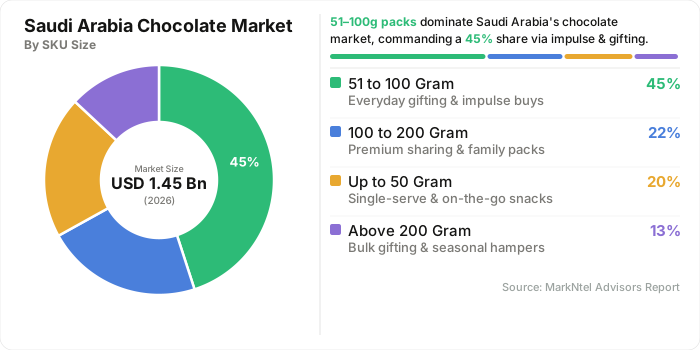
- By SKU size type, the 51-to-100-gram segment seized a significant share of about 45% in the Saudi Arabia chocolate market in 2026.
Market Insights & Analysis: Saudi Arabia Chocolate Market (2026-32):
The Saudi Arabia chocolate size was valued at USD 1.32 billion in 2025 and is projected to grow from USD 1.45 billion in 2026 to USD 1.98 billion by 2032, exhibiting a CAGR of 5% over the forecast period. i.e., 2026-32.
The Saudi Arabia chocolate market has demonstrated steady expansion, supported by structural shifts in consumption and retail ecosystems. Increasing urbanization and a young population profile have contributed to higher demand for packaged confectionery, with chocolate emerging as a preferred everyday indulgence across metropolitan regions. Modern retail penetration, including hypermarkets and convenience formats, has enhanced product accessibility and visibility, strengthening consumption frequency. Additionally, trade linkages with key suppliers such as the UAE and European countries have ensured consistent product availability and variety across price segments.
Macroeconomic transformation initiatives under Saudi Vision 2030 have significantly influenced the food processing and confectionery landscape. The program emphasizes economic diversification, private sector participation, and localization of manufacturing, encouraging investment in domestic food production capabilities. In 2026, the economic structure has shifted significantly under diversification reforms, with non-oil activities contributing approximately 56% of Saudi Arabia’s real GDP in 2025, reflecting a structural transition toward consumption- and services-driven growth. These reforms have improved supply chain resilience and created opportunities for multinational and regional confectionery players to expand localized operations.
Demand across end-user segments continues to diversify, reinforcing market stability. Residential consumption remains dominant, driven by routine snacking behavior and increased household spending on premium food products. Commercial demand from hospitality and tourism sectors is expanding as Saudi Arabia targets large-scale visitor inflows, boosting demand for premium chocolate assortments in hotels, events, and retail gifting. Institutional consumption is also supported by seasonal and cultural occasions, where chocolate plays a role in social exchange, thereby creating cyclical spikes in sales volumes across organized retail channels.
The introduction of a tiered sugar tax system in 2026, targeting high-sugar beverages, reflects broader public health priorities that are influencing food manufacturers to reformulate products and introduce low-sugar or functional alternatives. T his policy environment is encouraging confectionery companies to invest in healthier chocolate variants and sustainable sourcing practices. Combined with ongoing infrastructure expansion and digital retail growth, these factors are expected to sustain long-term market expansion and innovation-led competition.
Saudi Arabia Chocolate Market Scope:
| Category | Segments |
|---|---|
| By Product | (Dark Chocolate, Milk Chocolate, White Chocolate), |
| By Form | (Tablets and Bars, Molded Blocks, Pralines and Truffles, Other Forms), |
| By Packaging | (Plastic Pouches and Bags, Paper Pouches and Bags, Metal Tins, Plastic Boxed Assortments, Others), |
| By SKU Size | (Upto 50 Gram, 51 to 100 Gram, 100 to 200 Gram, Above 200 Gram), |
| By Ingredient Type | (Dairy-Based, Plant-Based, Single Origin), |
| By Distribution Channel | (Supermarkets/Hypermarkets, Online Retail Stores, Convenience Stores, Other Channels), |
| By Application | (Food products, Beverages, Others), |
Saudi Arabia Chocolate Market Driver:
Expansion of Tourism and Hospitality Sector Driving Premium Chocolate Demand
Saudi Arabia’s rapid tourism sector expansion has emerged as the most influential structural driver of chocolate market growth. Under Vision 2030, the government targets 150 million annual visitors by 2030, significantly increasing demand for premium food products across hospitality channels. In 2025, the Kingdom recorded over 122 million tourist visits, reflecting strong momentum in inbound and domestic travel activity. This surge has elevated the consumption of confectionery products, particularly chocolates, as part of hospitality offerings and retail purchases in tourism zones.
The hospitality sector’s expansion is directly translating into measurable chocolate demand across commercial end users. Large-scale projects such as NEOM are driving the development of luxury hotels, resorts, and entertainment venues, all of which require premium confectionery for guest services and events. According to official announcements, Saudi Arabia plans to add over 320,000 hotel rooms by 2030, significantly expanding institutional consumption of chocolates. This growth is not price-driven but volume-driven, as bulk procurement for hospitality, events, and retail outlets increases total market throughput.
This driver materially expands market size by creating sustained, high-frequency consumption beyond household demand. Hotels, airlines, corporate events, and entertainment venues integrate chocolates into daily operations, including gifting, room services, and curated guest experiences. Additionally, duty-free retail and airport sales supported by rising passenger traffic further amplify chocolate sales volumes across key transit hubs. The scale and continuity of tourism-linked demand ensure long-term market expansion, positioning the hospitality ecosystem as a core engine of chocolate consumption growth in Saudi Arabia.
Saudi Arabia Chocolate Market Trend:
Product Reformulation and Functional Chocolate Innovation Reshaping Consumption Patterns
A key emerging trend in the Saudi Arabia chocolate market is the shift toward product reformulation and functional innovation. This trend has accelerated due to rising health awareness and regulatory pressure to reduce sugar consumption across food categories. In 2026, Saudi Arabia implemented a tiered excise tax on sugar-sweetened beverages, signaling broader policy intent to curb sugar intake and influence dietary behavior. This has indirectly pushed confectionery manufacturers to innovate and align products with evolving consumer health preferences.
This trend is driving structural transformation across the chocolate value chain, particularly in product development and portfolio strategies. Companies are introducing no-added-sugar chocolate variants, plant-based dairy-free alternatives, and clean-label products using natural sweeteners and high cocoa content. Industry platforms such as Barry Callebaut partnered with Planet A Foods (ChoViva) to develop non-cocoa chocolate alternatives .
This is driven by cocoa price volatility and supply risks, forcing innovation in ingredients. The trend is expected to persist as it is supported by long-term public health strategies and sustained consumer behaviour shifts. This ensures that product innovation remains a core competitive factor, fundamentally reshaping market dynamics and supporting long-term growth in diversified chocolate segments.
Saudi Arabia Chocolate Market Opportunity:
Expansion of Localized Food Manufacturing Under Vision 2030
A significant market opportunity in the Saudi Arabia chocolate market lies in the rapid expansion of localized food manufacturing supported by government policy. Saudi Arabia imports a significant share of confectionery and sugar products, such as USD 24.87 million imports from India for sugar confectionery. In 2025, the government continued offering incentives through industrial programs such as the National Industrial Development and Logistics Program (NIDLP), which facilitates investment in food processing sectors . This policy environment has created favorable entry conditions by lowering operational barriers and encouraging new manufacturing setups.
This opportunity translates into tangible demand through increasing domestic consumption combined with policy-driven supply chain localization. Saudi Arabia has 1,500+ food manufacturing factories with investments exceeding USD 23 billion . The sector is expanding with rising domestic demand and export growth.
The opportunity is particularly advantageous for new and emerging players due to flexibility in innovation and localization strategies. 88% of food manufacturing companies are SMEs in Saudi Arabia. Unlike established multinational brands with standardized global portfolios, smaller firms can quickly adapt to local taste preferences, introduce niche products such as low-sugar or premium artisanal chocolates, and leverage government-backed industrial zones. Access to financing support, tax incentives, and simplified licensing further enhances market entry feasibility. This combination of policy support and demand-supply gaps positions new entrants to scale efficiently within a rapidly evolving domestic confectionery landscape.
Saudi Arabia Chocolate Market Challenge:
Strong Cultural Preference for Traditional Sweets Limits Chocolate Penetration
A key structural challenge in the Saudi Arabia chocolate market is the strong cultural preference for traditional confectionery products. Sweets such as Dates, Maamoul, and Baklava remain deeply embedded in daily consumption and social customs. These products are widely consumed during religious occasions, family gatherings, and gifting traditions, limiting the substitution potential of chocolate. This cultural attachment has persisted despite modernization, creating a stable demand base for traditional alternatives over packaged chocolate products.
This preference directly impacts chocolate demand across key consumption occasions. During events such as Ramadan and Eid al-Fitr, traditional sweets dominate consumption patterns, with dates and regional desserts being prioritized for both household use and gifting. Saudi Arabia has 35.1 kg per capita annual date consumption . Chocolates, although present, often play a secondary role or are consumed in limited quantities. This reduces seasonal demand spikes for chocolate manufacturers, unlike in Western markets, where confectionery drives festive consumption.
The persistence of this cultural preference restricts market expansion by limiting widespread adoption across all consumer segments. New entrants and international brands face challenges in altering entrenched consumption habits and must invest heavily in localization strategies. This includes incorporating regional flavours, date-based fillings, or culturally aligned packaging formats to gain acceptance. As a result, chocolate market growth is moderated by strong traditional competition, requiring continuous adaptation rather than straightforward demand expansion.
Saudi Arabia Chocolate Market (2026-32) Segmentation Analysis:
The Saudi Arabia Chocolate Market study of MarkNtel Advisors evaluates & highlights the major trends and influencing factors in each segment. It includes predictions for the period 2026–32 at the country level. Based on the analysis, the market has been further classified as;
Based on Ingredient Type:
- Dairy-Based
- Plant-Based
- Single Origin
The dairy-based chocolate segment dominates the Saudi Arabia chocolate market with a market share of 65.35%, primarily due to strong consumer preference for milk chocolate, which aligns with the region’s taste profile, favoring sweeter and creamier products. High per capita dairy consumption and established supply chains for milk ingredients further support large-scale production. Additionally, the widespread availability of dairy-based variants across all price points enhances accessibility, reinforcing consistent demand across mass and premium categories.
From an industry perspective, major brands such as Nestlé and Mars Incorporated heavily invest in dairy-based product portfolios, launching localized flavors and formats tailored to Middle Eastern preferences. Mars Incorporated has focused on core milk chocolate brands like Galaxy and Snickers, tailoring sweetness levels and textures to Middle Eastern preferences. They also emphasize premium milk chocolate gifting formats, especially during festive seasons like Ramadan. Nestlé has expanded its local production facilities in Saudi Arabia, e.g., the Jeddah factory, enabling large-scale production of milk-based chocolates using regionally sourced dairy inputs .
The market impact of this dominance is reflected in higher volume sales and broader retail penetration. Dairy-based chocolates benefit from strong repeat purchase behavior and impulse buying patterns, particularly in supermarkets and convenience stores. This segment also drives innovation in packaging and portion sizes, while attracting continuous investment from multinational and regional players, solidifying its long-term leadership in the Saudi chocolate market.
Based on SKU Size:
- Up to 50 Gram
- 51 to 100 Gram
- 100 to 200 Gram
- Above 200 Gram
The 51–100-gram segment leads the Saudi Arabia chocolate market with a market share of 45%, as it represents the optimal balance between affordability and consumption convenience. This size category aligns closely with standard chocolate bar formats, making it ideal for everyday purchases and impulse consumption. The segment benefits from high visibility at checkout counters and compatibility with promotional pricing strategies, which significantly boost sales volumes across retail channels.
Industry players Mondelez International actively focus on this SKU range by offering flagship products in standard bar sizes, ensuring wide availability and consistent consumer engagement. Investments in retail expansion and merchandising strategies, particularly in hypermarkets and convenience stores, have further strengthened the positioning of this segment. Additionally, bulk procurement and optimized packaging for mid-size SKUs enable cost efficiencies for manufacturers.
The market impact of this segment’s dominance is evident in its contribution to overall volume growth and revenue stability. It supports high inventory turnover for retailers and encourages brand switching through competitive pricing and promotions. As a result, the 51–100-gram category acts as a core revenue driver, influencing production planning, distribution strategies, and marketing investments across the Saudi chocolate industry.
Saudi Arabia Chocolate Market (2026-32) Regional Analysis:
The Western region, particularly cities like Jeddah and Mecca, dominates the Saudi Arabia chocolate market due to its strong economic base and trade-centric infrastructure. Jeddah serves as the Kingdom’s primary commercial hub and hosts the Jeddah Islamic Port, which handles over 59% of Saudi Arabia’s seaborne trade, enabling efficient import of cocoa and finished chocolate products. This logistical advantage reduces supply chain costs and ensures consistent product availability, directly supporting higher market concentration compared to inland regions.
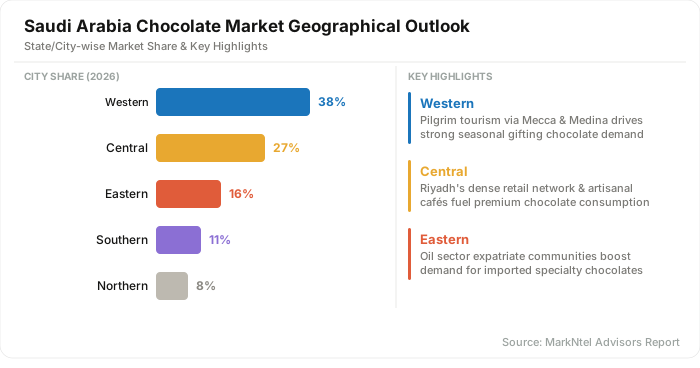
From a policy standpoint, the Western region benefits significantly from development initiatives under Saudi Vision 2030, which prioritizes tourism and retail expansion in Mecca and Medina. The government has invested heavily in hospitality infrastructure to accommodate over Saudi Arabia received over 18.5 million pilgrims, indicating massive demand concentration in the Western region. Additionally, regulatory support for foreign investment and retail sector liberalization has attracted global confectionery brands to establish strong distribution networks in this region.
End-user demand is highly concentrated due to the region’s large transient population and high retail density. Religious tourism drives bulk purchases of chocolates as gifts, while urban consumers in Jeddah exhibit higher disposable incomes and a preference for premium confectionery. The presence of modern retail formats, international brands, and hospitality chains further amplifies consumption frequency. This combination of trade access, policy-driven tourism growth, and concentrated consumer demand firmly establishes the Western region as the leading market for chocolate in Saudi Arabia.
Saudi Arabia Chocolate Market Competitive Analysis:
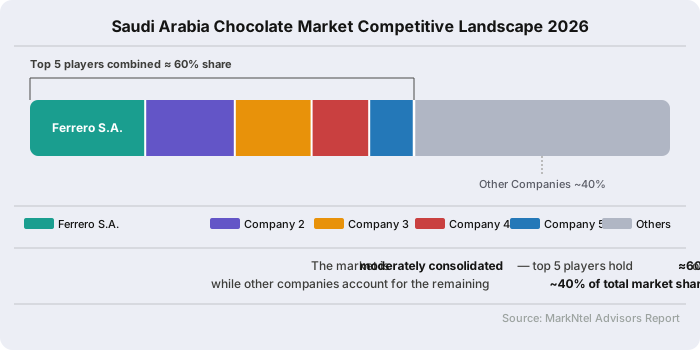
The Saudi Arabia chocolate market is moderately consolidated, with a handful of global and European companies capturing a substantial portion of overall sales. Major players such as Ferrero International SA, Mars Incorporated, Nestlé SA, Mondelēz International Inc., and Patchi LLC collectively hold an estimated. 60% share of the Kingdom’s chocolate market, reflecting concentrated brand influence in both everyday and premium segments.
Major market players:
- Mars Saudi Arabia Ltd
- Ferrero Spa
- Nestlé Saudi Arabia LLC
- Mondelez Eastern Europe
- Al Jazirah Food
- Food Manufacturers Co
- Chocoladefabriken Lindt & Sprüngli AG
- Patchi SAL
- Hershey
Gain a Competitive Edge with Our Saudi Arabia Chocolate Report:
- The Saudi Arabia Chocolate Report by MarkNtel Advisors provides a detailed & thorough analysis of market size & share, growth rate, competitive landscape, and key players. This comprehensive analysis helps businesses gain a holistic understanding of the market dynamics & make informed decisions.
- This report also highlights current market trends & future projections, allowing businesses to identify emerging opportunities & potential challenges. By understanding market forecasts, companies can align their strategies & stay ahead of the competition.
- The Saudi Arabia Chocolate Report aids in assessing & mitigating risks associated with entering or operating in the market. By understanding market dynamics, regulatory frameworks, and potential challenges, businesses can develop strategies to minimize risks & optimize their operations.
*Reports Delivery Format - Market research studies from MarkNtel Advisors are offered in PDF, Excel and PowerPoint formats. Within 24 hours of the payment being successfully received, the report will be sent to your email address.
Frequently Asked Questions
- Market Segmentation
- Introduction
- Product Definition
- Research Process
- Assumptions
- Executive Summary
- Saudi Arabia Chocolate Market Policies, Regulations, and Product Standards
- Saudi Arabia Chocolate Market Trends & Developments
- Saudi Arabia Chocolate Market Dynamics
- Growth Factors
- Challenges
- Saudi Arabia Chocolate Market Hotspot & Opportunities
- Saudi Arabia Chocolate Market Outlook, 2022-2032F
- Market Size & Outlook
- By Revenues (USD Million)
- Market Share & Outlook
- By Product - Market Size & Forecast 2022-2032, USD Million
- Dark Chocolate
- Milk Chocolate
- White Chocolate
- By Form- Market Size & Forecast 2022-2032, USD Million
- Tablets and Bars
- Molded Blocks
- Pralines and Truffles
- Other Forms
- By Packaging- Market Size & Forecast 2022-2032, USD Million
- Plastic Pouches and Bags
- Paper Pouches and Bags
- Metal Tins
- Plastic Boxed Assortments
- Others
- By SKU Size- Market Size & Forecast 2022-2032, USD Million
- Upto 50 Gram
- 51 to 100 Gram
- 100 to 200 Gram
- Above 200 Gram
- By Ingredient Type- Market Size & Forecast 2022-2032, USD Million
- Dairy-Based
- Plant-Based
- Single Origin
- By Distribution Channel- Market Size & Forecast 2022-2032, USD Million
- Supermarkets/Hypermarkets
- Online Retail Stores
- Convenience Stores
- Other Channels
- By Application- Market Size & Forecast 2022-2032, USD Million
- Food products
- Bakery Products
- Sugar Confectionary
- Desserts
- Others
- Beverages
- Others
- Food products
- By Region- Market Size & Forecast 2022-2032, USD Million
- Northern
- Central
- Western
- Eastern
- Southern
- By Company
- Competition Characteristics
- Market Share & Analysis
- By Product - Market Size & Forecast 2022-2032, USD Million
- Market Size & Outlook
- Saudi Arabia Dark Chocolate Market Outlook, 2022-2032
- Market Size & Outlook
- By Revenues (USD Million)
- Market Share & Outlook
- By Form- Market Size & Forecast 2022-2032, USD Million
- By Packaging- Market Size & Forecast 2022-2032, USD Million
- By SKU Size- Market Size & Forecast 2022-2032, USD Million
- By Ingredient Type- Market Size & Forecast 2022-2032, USD Million
- By Distribution Channel- Market Size & Forecast 2022-2032, USD Million
- By Application- Market Size & Forecast 2022-2032, USD Million
- By Region- Market Size & Forecast 2022-2032, USD Million
- Market Size & Outlook
- Saudi Arabia Milk Chocolate Market Outlook, 2022-2032
- Market Size & Outlook
- By Revenues (USD Million)
- Market Share & Outlook
- By Form- Market Size & Forecast 2022-2032, USD Million
- By Packaging- Market Size & Forecast 2022-2032, USD Million
- By SKU Size- Market Size & Forecast 2022-2032, USD Million
- By Ingredient Type- Market Size & Forecast 2022-2032, USD Million
- By Distribution Channel- Market Size & Forecast 2022-2032, USD Million
- By Application- Market Size & Forecast 2022-2032, USD Million
- By Region- Market Size & Forecast 2022-2032, USD Million
- Market Size & Outlook
- Saudi Arabia White Chocolate Market Outlook, 2022-2032
- Market Size & Outlook
- By Revenues (USD Million)
- Market Share & Outlook
- By Form- Market Size & Forecast 2022-2032, USD Million
- By Packaging- Market Size & Forecast 2022-2032, USD Million
- By SKU Size- Market Size & Forecast 2022-2032, USD Million
- By Ingredient Type- Market Size & Forecast 2022-2032, USD Million
- By Distribution Channel- Market Size & Forecast 2022-2032, USD Million
- By Application- Market Size & Forecast 2022-2032, USD Million
- By Region- Market Size & Forecast 2022-2032, USD Million
- Market Size & Outlook
- Saudi Arabia Chocolate Market Key Strategic Imperatives for Success & Growth
- Competitive Outlook
- Company Profiles
- Mars Saudi Arabia Ltd
- Business Description
- Product Portfolio
- Collaborations & Alliances
- Recent Developments
- Financial Details
- Others
- Ferrero SpA
- Business Description
- Product Portfolio
- Collaborations & Alliances
- Recent Developments
- Financial Details
- Others
- Nestlé Saudi Arabia LLC
- Business Description
- Product Portfolio
- Collaborations & Alliances
- Recent Developments
- Financial Details
- Others
- Mondelez Eastern Europe
- Business Description
- Product Portfolio
- Collaborations & Alliances
- Recent Developments
- Financial Details
- Others
- Al Jazirah Food
- Business Description
- Product Portfolio
- Collaborations & Alliances
- Recent Developments
- Financial Details
- Others
- Food Manufacturers Co
- Business Description
- Product Portfolio
- Collaborations & Alliances
- Recent Developments
- Financial Details
- Others
- Chocoladefabriken Lindt & Sprüngli AG
- Business Description
- Product Portfolio
- Collaborations & Alliances
- Recent Developments
- Financial Details
- Others
- Patchi SAL
- Business Description
- Product Portfolio
- Collaborations & Alliances
- Recent Developments
- Financial Details
- Others
- Hershey
- Business Description
- Product Portfolio
- Collaborations & Alliances
- Recent Developments
- Financial Details
- Others
- Others
- Business Description
- Product Portfolio
- Collaborations & Alliances
- Recent Developments
- Financial Details
- Others
- Mars Saudi Arabia Ltd
- Company Profiles
- Disclaimer
MarkNtel Advisors follows a robust and iterative research methodology designed to ensure maximum accuracy and minimize deviation in market estimates and forecasts. Our approach combines both bottom-up and top-down techniques to effectively segment and quantify various aspects of the market. A consistent feature across all our research reports is data triangulation, which examines the market from three distinct perspectives to validate findings. Key components of our research process include:
1. Scope & Research Design At the outset, MarkNtel Advisors define the research objectives and formulate pertinent questions. This phase involves determining the type of research—qualitative or quantitative—and designing a methodology that outlines data collection methods, target demographics, and analytical tools. They also establish timelines and budgets to ensure the research aligns with client goals.
2. Sample Selection and Data Collection In this stage, the firm identifies the target audience and determines the appropriate sample size to ensure representativeness. They employ various sampling methods, such as random or stratified sampling, based on the research objectives. Data collection is carried out using tools like surveys, interviews, and observations, ensuring the gathered data is reliable and relevant.
3. Data Analysis and Validation Once data is collected, MarkNtel Advisors undertake a rigorous analysis process. This includes cleaning the data to remove inconsistencies, employing statistical software for quantitative analysis, and thematic analysis for qualitative data. Validation steps are taken to ensure the accuracy and reliability of the findings, minimizing biases and errors.

4. Data Forecast and FinalizationThe final phase involves forecasting future market trends based on the analyzed data. MarkNtel Advisors utilize predictive modeling and time series analysis to anticipate market behaviors. The insights are then compiled into comprehensive reports, featuring visual aids like charts and graphs, and include strategic recommendations to inform client decision-making
We offer flexible licensing options to cater to varying organizational needs. Choose the pricing pack that best suits your requirements:
Buy Now Inquire Before Buying
 Request Customization
 Talk to our Consultant







