

Saudi Arabia Camel Milk Market Research Report: Trends, Forecast & Opportunities (2026-2032)
By Product Type (Fresh Camel Milk, Processed Camel Milk Products, Others), By Packaging Type (Bottles, Cartons / Tetra Packs, Plastic Containers, Pouches / Sachets, Others), By Dis ... tribution Channel (Supermarkets & Hypermarkets, Convenience Stores, Specialty Stores, Online Retail / E-commerce, Direct Sales), By Application (Food & Beverage Processing, Nutraceuticals / Functional Foods, Cosmetics & Personal Care, Pharmaceuticals, Others), By End User (Households, Foodservice, Institutional Buyers), and others Read more
- Food & Beverages
- Apr 2026
- Pages 135
- Report Format: PDF, Excel, PPT
Saudi Arabia Camel Milk Market
Projected 5.17% CAGR from 2026 to 2032
Study Period
2026-2032
Market Size (2026)
USD 306 Million
Market Size (2032)
USD 402 Million
Base Year
2025
Projected CAGR
5.17%
Leading Segments
By Product Type: Fresh Milk
Saudi Arabia Camel Milk Market Report Key Takeaways:
- The Saudi Arabia Camel Milk market size was valued at USD 292 million in 2025 and is projected to grow from USD 306 million in 2026 to USD 402 million by 2032, exhibiting a CAGR of 5.17% during 2026-32.
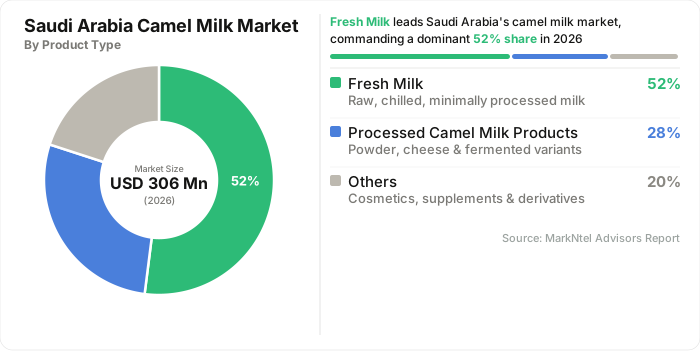
- By product type, the fresh milk segment represented a significant share of about 52% in the Saudi Arabia Camel Milk Market in 2026.
- By end user, the households segment represented a significant share of about 70% in the Saudi Arabia Camel Milk Market in 2026.
Market Insights & Analysis: Saudi Arabia Camel Milk Market (2026-32):
The Saudi Arabia Camel Milk Market size was valued at around USD 292 million in 2025 and is projected to grow from USD 306 million in 2026 to USD 402 million by 2032. Along with this, the market is estimated to grow at a CAGR of around 5.17% during the forecast period, i.e., 2026-32.
The Saudi Arabia Camel Milk Market is projected to expand steadily, driven by increasing health and nutritional awareness, alongside the emergence of branded retail offerings and expanding product diversification, which collectively enhance consumer accessibility, market visibility, and long-term demand potential.
Camel milk contains approximately 3–3.9% protein, primarily composed of casein and whey proteins, which are highly digestible and contribute to improved nutrient absorption, muscle development, and metabolic health. Unlike conventional cow milk, camel milk lacks β-lactoglobulin, a major allergenic protein, making it a suitable alternative for individuals with dairy sensitivities and lactose-related discomfort.
From a nutritional standpoint, camel milk offers a rich profile of essential vitamins and minerals. Scientific studies indicate that it contains 3–5 times more vitamin C than cow’s milk, with concentrations ranging between 35–37 mg per liter, supporting immune function and antioxidant defense.
Additionally, it is a source of key minerals such as calcium, potassium, magnesium, phosphorus, and iron, which collectively enhance bone strength, metabolic activity, and overall physiological health. The higher proportion of β-casein (around 65%), compared to approximately 36% in cow milk, further reduces immunological reactions, strengthening its positioning as a functional dairy alternative.
Another important advantage is its superior stability under harsh conditions. Experimental findings demonstrate that camel milk exhibits greater resistance to protein denaturation at high temperatures (such as 90°C) compared to cow milk, due to its unique protein structure and higher levels of antimicrobial components like lysozyme and lactoferrin. This enhances its shelf stability, allowing it to remain safe for consumption for longer durations, even at ambient temperatures, an important attribute in arid regions like Saudi Arabia.
Camel milk is rich in essential minerals, including calcium (114 mg), potassium (156 mg), magnesium (10.5 mg), sodium (59 mg), phosphorus (51.5 mg), iron (0.29 mg), zinc (0.53 mg), copper (0.44 mg), and manganese (0.05 mg) per 100 grams, supporting bone health, metabolic functions, and immune system performance.
Emerging research also highlights potential therapeutic benefits, including reduced allergic responses and improved antioxidant enzyme activity, particularly in specialized consumer groups . While these findings are still under ongoing investigation, they contribute to the growing perception of camel milk as a functional and medicinal dairy product.
Simultaneously, the market is evolving structurally with the expansion of branded retail offerings and value-added product innovation, including flavored milk, desserts, and nutraceutical formulations. This diversification is improving product accessibility and strengthening consumer engagement across urban retail channels.
Overall, the convergence of strong nutritional attributes, functional health benefits, and expanding commercial innovation is expected to support sustained demand. These factors position camel milk as a premium dairy alternative, driving long-term growth in the Saudi Arabia market.
Saudi Arabia Camel Milk Market Recent Developments:
- 2025: SIG Group announced the launch of NOUG Camel UHT Milk in aseptic carton packaging in partnership with Sawani and United National Dairy Company in Saudi Arabia. The product is packaged in 125 ml SIG MiniBloc cartons, offering long shelf life without refrigeration and convenient on-the-go consumption.
- 2025: Saudi Arabia’s Sawani launches a model milk farm, highlighting a major expansion in camel dairy production. The PIF-backed company inaugurated a high-capacity model farm capable of producing around 500,000 liters of camel milk monthly and housing over 10,000 camels, aiming to enhance supply, quality standards, and support the Kingdom’s growing demand for nutritionally rich dairy products .
Saudi Arabia Camel Milk Market Scope:
| Category | Segments |
|---|---|
| By Product Type | (Fresh Camel Milk, Processed Camel Milk Products, Others), |
| By Packaging Type | (Bottles, Cartons / Tetra Packs, Plastic Containers, Pouches / Sachets, Others), |
| By Distribution Channel | (Supermarkets & Hypermarkets, Convenience Stores, Specialty Stores, Online Retail / E-commerce, Direct Sales), |
| By Application | (Food & Beverage Processing, Nutraceuticals / Functional Foods, Cosmetics & Personal Care, Pharmaceuticals, Others), |
| By End User | (Households, Foodservice, Institutional Buyers), |
Saudi Arabia Camel Milk Market Driver:
Rising Health and Nutritional Awareness
The growing preference for nutritionally enriched and functional food products is a key driver of the Saudi Arabia camel milk market. Camel milk is increasingly recognized for its high micronutrient density and health-enhancing properties, positioning it as a valuable alternative to conventional dairy.
Nutritional research indicates that a 250 ml serving of camel milk provides approximately 10.5% of the recommended daily intake of vitamin C and vitamin B6, along with around 15.5% of vitamin B12, supporting immune health, energy metabolism, and overall physiological function . This strong nutrient profile is encouraging its inclusion in daily diets, particularly among health-conscious consumers.
Beyond its vitamin content, camel milk also demonstrates promising functional properties at the molecular level. Studies suggest that enzymatic hydrolysis of camel casein proteins produces bioactive peptides with molecular weights of approximately 1 kDa, which are associated with enhanced antimicrobial activity. These bioactive compounds contribute to improved gut health and may help in reducing the risk of infections, further strengthening the perception of camel milk as a therapeutic dietary option.
Rising awareness of camel milk’s micronutrient richness and functional health benefits is significantly driving demand. This trend is expected to reinforce its positioning as a premium, health-oriented dairy product, supporting sustained market growth in Saudi Arabia.
Saudi Arabia Camel Milk Market Trend:
Emergence of Branded Camel Milk Retail and Product Diversification
A prominent trend in the Saudi Arabia camel milk market is the transition toward branded retail presence and extensive product diversification, signaling the sector’s shift from traditional distribution to a more organized and consumer-centric model.
The introduction of the NOUG brand by Sawani, including its dedicated retail outlet in Riyadh, reflects a strategic move to commercialize camel milk through structured branding, modern merchandising, and enhanced consumer engagement. The brand features a broad portfolio of camel milk-based products such as yogurt, laban, cheese, butter, gelato, and flavored milk variants, catering to evolving taste preferences and lifestyle needs of the consumers .
This development highlights a broader market evolution toward value-added, premium, and ready-to-consume offerings, driven by rising demand for convenience, nutritional benefits, and product variety.
The establishment of exclusive retail formats not only improves accessibility but also strengthens brand identity and consumer trust through consistent quality and innovative presentation. Additionally, diversified product lines enable camel milk to penetrate multiple consumption occasions, including daily dietary intake, indulgent treats, and specialty beverages.
Overall, the expansion of branded retail channels and product innovation is positioning camel milk as a mainstream, premium dairy category, accelerating market maturity and supporting long-term growth of camel milk in Saudi Arabia.
Saudi Arabia Camel Milk Market Opportunity:
Expansion into Tourism and Experiential Consumption Channels
A key growth opportunity in the Saudi Arabia camel milk market lies in its expansion into tourism, hospitality, and experience-driven consumption channels, supported by the Kingdom’s broader economic diversification strategy.
The strategic collaboration between Aroya Cruises and Sawani to introduce NOUG camel milk products onboard its flagship vessel exemplifies this potential. By offering a range of camel milk-based dairy and dessert products to passengers, the initiative promotes Saudi heritage while enhancing international visibility and acceptance of camel milk.
This development highlights the untapped potential of positioning camel milk within premium and culturally immersive environments, including cruise tourism, luxury hotels, resorts, fine dining establishments, and airline catering services.
As Saudi Arabia continues to expand its tourism sector under Vision 2030, integrating locally sourced and nutritionally rich products into curated experiences can significantly enhance visitor satisfaction and differentiate service offerings.
Moreover, exposure to international travelers creates opportunities for global brand recognition and export expansion, particularly in niche health and wellness markets. Such partnerships also foster innovation in gourmet applications, desserts, and specialty beverages, elevating camel milk’s value proposition. Overall, this opportunity supports diversification beyond retail channels, driving long-term growth and premiumization of the market.
Saudi Arabia Camel Milk Market Challenge:
High Production Costs and Limited Milk Yield
A key challenge in the Saudi Arabia camel milk market is the inherently low milk productivity of camels compared to conventional dairy livestock, which limits the ability to scale production efficiently.
According to the Food and Agriculture Organization, camels in arid environments such as Saudi Arabia typically yield around 2–6 liters of milk per day under traditional conditions. Even with improved feeding practices and controlled farming systems, output generally ranges between 12 and 20 liters per day, which remains significantly lower than that of high-yield dairy cattle . This gap constrains the volume of raw milk available for large-scale processing and commercialization.
In addition, camels have longer reproductive and lactation cycles, which slow herd expansion and supply growth. For example, FAO findings indicate that camels produce approximately 800–3,600 liters per lactation cycle, lasting between 9 and 18 months, while reaching reproductive maturity later than cattle. These biological limitations reduce production efficiency and increase operational costs for dairy operators in the country.
These structural constraints restrict rapid supply expansion, limit economies of scale, and sustain higher product prices, thereby moderating the growth potential of the Saudi Arabia camel milk market.
Saudi Arabia Camel Milk Market (2026-32) Segmentation Analysis:
The Saudi Arabia Camel Milk Market study of MarkNtel Advisors evaluates & highlights the major trends and influencing factors in each segment. It includes predictions for the period 2026–32 at the country level. Based on the analysis, the market has been further classified as;
Based on Product Type:
- Fresh Milk
- Raw camel milk
- Pasteurized camel milk
- Flavored camel milk
- Processed Camel Milk Products
- Camel milk powder
- Camel milk yogurt
- Camel milk cheese
- Camel milk ice cream
- Fermented camel milk beverages
- Others
The fresh milk segment dominates the Saudi Arabia Camel Milk market, accounting for around 52% of the total market value, supported by strong consumer inclination toward natural and minimally processed dairy products.
Fresh variants, including raw, pasteurized, and flavored camel milk, are widely regarded as nutritionally superior, as they retain key proteins, vitamins, and bioactive components. This perception aligns with the rising demand for functional and clean-label food products, thereby strengthening segment adoption.
Cultural and traditional consumption patterns further reinforce this dominance. Camel milk has historically been consumed in its fresh form across Saudi Arabia, creating a deep-rooted preference that continues to influence modern purchasing behavior.
The availability of pasteurized options through organized retail has enhanced product safety and shelf life without significantly altering their nutritional value, while flavored variants are attracting younger consumers and expanding the category’s appeal.
From a production standpoint, fresh milk involves relatively lower processing requirements compared to value-added derivatives such as cheese, powder, or fermented products. This enables producers to ensure a consistent supply and faster market turnaround.
Additionally, improvements in cold chain logistics and retail distribution networks are supporting wider availability across urban centers. Collectively, strong cultural relevance, perceived health benefits, and supply-side efficiency are key factors sustaining the leading position of the fresh camel milk segment in Saudi Arabia.
Based on End User:
- Households
- Foodservice
- Restaurants
- Cafés
- Hotels
- Institutional Buyers
- Hospitals
- Schools
The households segment dominates the Saudi Arabia Camel Milk Market, accounting for about 70% of the total market size, driven by deeply entrenched consumption patterns and growing health consciousness among consumers.
Camel milk has historically been a staple within households, where it is consumed for its nutritional value and traditional significance. This longstanding familiarity continues to support stable and recurring demand across a broad consumer base.
Increasing awareness of the health and functional benefits of camel milk is further strengthening its adoption at the household level. Consumers are progressively incorporating it into daily diets due to its high digestibility, micronutrient richness, and suitability for individuals with sensitivities to conventional dairy.
Moreover, enhanced availability through organized retail channels, including supermarkets and online platforms, has improved accessibility and convenience for household consumers. The introduction of pasteurized and packaged formats has extended shelf life while maintaining product quality, encouraging regular consumption.
Although demand from foodservice and institutional buyers is gradually rising, household consumption remains dominant due to its higher purchase frequency and wider penetration. The convergence of cultural relevance, health-driven demand, and improved retail distribution continues to reinforce the leadership of the household segment in the Saudi Arabia camel milk market.
Saudi Arabia Camel Milk Market Competitive Landscape
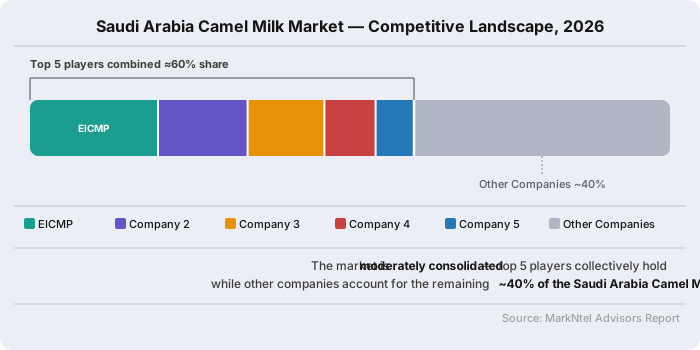
The market is moderately consolidated, with the top five players accounting for approximately 60% of the total market share. Leading companies include Emirates Industry for Camel Milk & Products (EICMP), Al Ain Farms for Livestock Production PJSC, Sawani Company, Al Maha Dairy Products L.L.C., and Al Ain Dairy Farm LLC.
Key Camel Milk Companies in Saudi Arabia
- Emirates Industry for Camel Milk & Products (EICMP)
- Al Ain Farms for Livestock Production PJSC
- Sawani Company
- Al Maha Dairy Products L.L.C.
- Al Ain Dairy Farm LLC
- Others
Gain a Competitive Edge with Our Saudi Arabia Camel Milk Market Report:
- Saudi Arabia Camel Milk Market Report by MarkNtel Advisors provides a detailed & thorough analysis of market size & share, growth rate, competitive landscape, and key players. This comprehensive analysis helps businesses gain a holistic understanding of the market dynamics & make informed decisions.
- This report also highlights current market trends & future projections, allowing businesses to identify emerging opportunities & potential challenges. By understanding market forecasts, companies can align their strategies & stay ahead of the competition.
- Saudi Arabia Camel Milk Market Report aids in assessing & mitigating risks associated with entering or operating in the market. By understanding market dynamics, regulatory frameworks, and potential challenges, businesses can develop strategies to minimize risks & optimize their operations.
*Reports Delivery Format - Market research studies from MarkNtel Advisors are offered in PDF, Excel and PowerPoint formats. Within 24 hours of the payment being successfully received, the report will be sent to your email address.
Frequently Asked Questions
- Market Segmentation
- Introduction
- Product Definition
- Research Process
- Assumptions
- Executive Summary
- Saudi Arabia Camel Milk Market Policies, Regulations, and Product Standards
- Saudi Arabia Camel Milk Market Trends & Developments
- Saudi Arabia Camel Milk Market Dynamics
- Growth Factors
- Challenges
- Saudi Arabia Camel Milk Market Hotspot & Opportunities
- Saudi Arabia Camel Milk Market Outlook, 2022-2032F
- Market Size & Outlook
- By Revenues (USD Million)
- Market Share & Outlook
- By Product Type - Market Size & Forecast 2022-2032, USD Million
- Fresh Camel Milk
- Raw camel milk
- Pasteurized camel milk
- Flavored camel milk
- Processed Camel Milk Products
- Camel milk powder
- Camel milk yogurt
- Camel milk cheese
- Camel milk ice cream
- Fermented camel milk beverages
- Others
- Fresh Camel Milk
- By Packaging Type- Market Size & Forecast 2022-2032, USD Million
- Bottles
- Cartons / Tetra Packs
- Plastic Containers
- Pouches / Sachets
- Others
- By Distribution Channel- Market Size & Forecast 2022-2032, USD Million
- Supermarkets & Hypermarkets
- Convenience Stores
- Specialty Stores
- Online Retail / E-commerce
- Direct Sales
- By Application- Market Size & Forecast 2022-2032, USD Million
- Food & Beverage Processing
- Nutraceuticals / Functional Foods
- Cosmetics & Personal Care
- Pharmaceuticals
- Others
- By End User- Market Size & Forecast 2022-2032, USD Million
- Households
- Foodservice
- Restaurants
- Cafés
- Hotels
- Institutional Buyers
- Hospitals
- Schools
- By Region- Market Size & Forecast 2022-2032, USD Million
- Riyadh
- Jeddah
- Damam
- Mecca & Madinah
- Others
- By Company
- Competition Characteristics
- Market Share & Analysis
- By Product Type - Market Size & Forecast 2022-2032, USD Million
- Market Size & Outlook
- Saudi Arabia Fresh Camel Milk Market Outlook, 2022-2032
- Market Size & Outlook
- By Revenues (USD Million)
- Market Share & Outlook
- By Packaging Type- Market Size & Forecast 2022-2032, USD Million
- By Distribution Channel- Market Size & Forecast 2022-2032, USD Million
- By Application- Market Size & Forecast 2022-2032, USD Million
- By End User- Market Size & Forecast 2022-2032, USD Million
- By Region- Market Size & Forecast 2022-2032, USD Million
- Market Size & Outlook
- Saudi Arabia Processed Camel Milk Products Market Outlook, 2022-2032
- Market Size & Outlook
- By Revenues (USD Million)
- Market Share & Outlook
- By Packaging Type- Market Size & Forecast 2022-2032, USD Million
- By Distribution Channel- Market Size & Forecast 2022-2032, USD Million
- By Application- Market Size & Forecast 2022-2032, USD Million
- By End User- Market Size & Forecast 2022-2032, USD Million
- By Region- Market Size & Forecast 2022-2032, USD Million
- Market Size & Outlook
- Saudi Arabia Camel Milk Market Key Strategic Imperatives for Success & Growth
- Competitive Outlook
- Company Profiles
- Emirates Industry for Camel Milk & Products (EICMP)
- Business Description
- Product Portfolio
- Collaborations & Alliances
- Recent Developments
- Financial Details
- Others
- Al Ain Farms for Livestock Production PJSC
- Business Description
- Product Portfolio
- Collaborations & Alliances
- Recent Developments
- Financial Details
- Others
- Sawani Company
- Business Description
- Product Portfolio
- Collaborations & Alliances
- Recent Developments
- Financial Details
- Others
- Al Maha Dairy Products L.L.C.
- Business Description
- Product Portfolio
- Collaborations & Alliances
- Recent Developments
- Financial Details
- Others
- Al Ain Dairy Farm LLC
- Business Description
- Product Portfolio
- Collaborations & Alliances
- Recent Developments
- Financial Details
- Others
- Others
- Business Description
- Product Portfolio
- Collaborations & Alliances
- Recent Developments
- Financial Details
- Others
- Emirates Industry for Camel Milk & Products (EICMP)
- Company Profiles
- Disclaimer
MarkNtel Advisors follows a robust and iterative research methodology designed to ensure maximum accuracy and minimize deviation in market estimates and forecasts. Our approach combines both bottom-up and top-down techniques to effectively segment and quantify various aspects of the market. A consistent feature across all our research reports is data triangulation, which examines the market from three distinct perspectives to validate findings. Key components of our research process include:
1. Scope & Research Design At the outset, MarkNtel Advisors define the research objectives and formulate pertinent questions. This phase involves determining the type of research—qualitative or quantitative—and designing a methodology that outlines data collection methods, target demographics, and analytical tools. They also establish timelines and budgets to ensure the research aligns with client goals.
2. Sample Selection and Data Collection In this stage, the firm identifies the target audience and determines the appropriate sample size to ensure representativeness. They employ various sampling methods, such as random or stratified sampling, based on the research objectives. Data collection is carried out using tools like surveys, interviews, and observations, ensuring the gathered data is reliable and relevant.
3. Data Analysis and Validation Once data is collected, MarkNtel Advisors undertake a rigorous analysis process. This includes cleaning the data to remove inconsistencies, employing statistical software for quantitative analysis, and thematic analysis for qualitative data. Validation steps are taken to ensure the accuracy and reliability of the findings, minimizing biases and errors.

4. Data Forecast and FinalizationThe final phase involves forecasting future market trends based on the analyzed data. MarkNtel Advisors utilize predictive modeling and time series analysis to anticipate market behaviors. The insights are then compiled into comprehensive reports, featuring visual aids like charts and graphs, and include strategic recommendations to inform client decision-making
We offer flexible licensing options to cater to varying organizational needs. Choose the pricing pack that best suits your requirements:
Buy Now Inquire Before Buying
 Request Customization
 Talk to our Consultant







