

Saudi Arabia Alfalfa Hay Market Research Report: Growth, Driver & Forecast (2026-2032)
By Product Type (Bales, Pellets, Cubes), By Application (Dairy Animal Feed, Horse Feed, Poultry Feed, Sheep & Goat Feed, Others), By End User (Poultry, Cattle, Livestock, Others), ... By Distribution Channel (Direct Farm Sales, Agricultural Cooperatives, Feed Distributors / Wholesalers, Retail Farm Supply Stores, Online Agricultural Marketplaces), and others Read more
- Environment
- Apr 2026
- Pages 125
- Report Format: PDF, Excel, PPT
Saudi Arabia Alfalfa Hay Market
Projected 5.41% CAGR from 2026 to 2032
Study Period
2026-2032
Market Size (2026)
USD 452 Million
Market Size (2032)
USD 620 Million
Base Year
2025
Projected CAGR
5.41%
Leading Segments
By application: Dairy Animal Feed
Saudi Arabia Alfalfa Hay Market Report Key Takeaways
- The Saudi Arabia Alfalfa Hay market size was valued at USD 419 million in 2025 and is projected to grow from USD 452 million in 2026 to USD 620 million by 2032, exhibiting a CAGR of 5.41% during the forecast period.
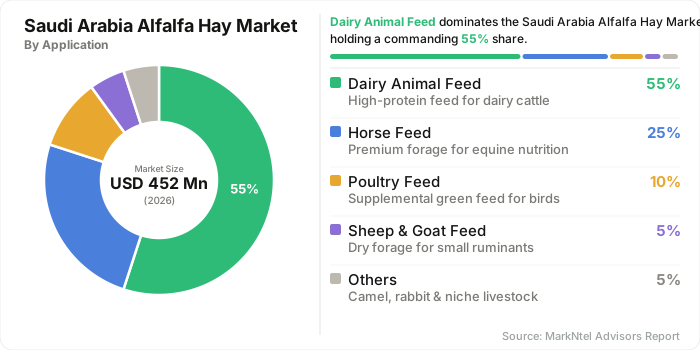
- By application, the dairy animal feed segment represented a significant share of about 55% in the Saudi Arabia Alfalfa Hay Market in 2026.
- By end user, the Cattle segment represented a significant share of about 54% in the Saudi Arabia Alfalfa Hay Market in 2026.
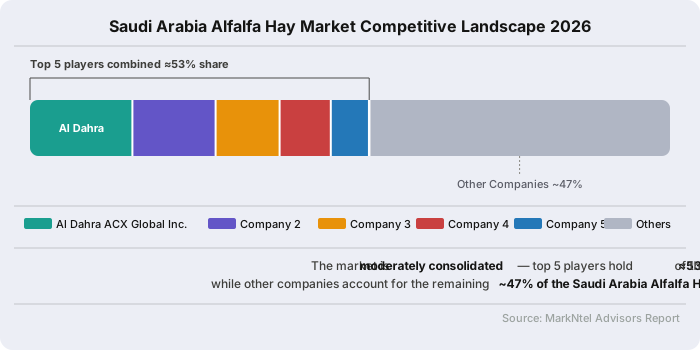
- The industry is moderately consolidated, with around 20 companies operating in the market. However, the top five players collectively account for nearly 53% share.
Saudi Arabia Alfalfa Hay Market Size and Outlook
Saudi Arabia Alfalfa Hay Market size was valued at approximately USD 419 million in 2025 and is projected to grow from USD 452 million in 2026 to USD 620 million by 2032. Along with this, the market is estimated to grow at a CAGR of around 5.41% during the forecast period, i.e., 2026-32.
The industry is experiencing steady growth, primarily supported by the rising demand for high-protein livestock feed from the expanding dairy industry. Alfalfa hay plays a crucial role in dairy nutrition because it provides digestible fiber, protein, and essential minerals required to maintain animal health and sustain high milk yields. As the Kingdom continues to strengthen domestic dairy production to enhance food security and reduce reliance on imports, demand for reliable forage feed sources such as alfalfa hay is increasing across major livestock farming regions.
Saudi Arabia’s dairy sector has expanded considerably in recent years, creating a strong foundation for forage consumption. Recent industry statistics indicate that raw milk production from specialized dairy farms reached approximately 2.7 billion liters nationwide in 2024. The Central Region, particularly Riyadh and Qassim, remains the primary dairy production hub, with Riyadh alone accounting for about 1.6 billion liters of raw milk output, the highest among all provinces. This concentration of large commercial dairy farms generates significant demand for nutrient-rich feed inputs, including alfalfa hay, which forms a core component of dairy cattle diets.
Outside the central dairy belt, the Eastern Province, including Dammam, Al Khobar, and Jubail, also plays an important role in the Kingdom’s dairy supply chain. The region contributes a substantial share of national milk production, producing around 1.1 billion liters of raw milk in 2024, supported by several specialized dairy farming projects. The presence of these large livestock operations strengthens demand for forage feed across eastern Saudi Arabia, reinforcing the role of alfalfa hay in sustaining dairy productivity.
At the same time, technological advancements in livestock management and feed formulation are transforming feeding practices in modern Saudi dairy farms. Large commercial farms are increasingly adopting precision livestock technologies, automated feeding systems, and digital monitoring platforms to optimize feed utilization and improve animal productivity. These technologies allow farmers to monitor animal performance, manage feeding schedules, and maintain balanced nutrient intake through scientifically designed feed rations.
For instance, automated feeding robots developed by GEA Group can automatically weigh, mix, and distribute Total Mixed Ration (TMR) for dairy cattle with minimal human intervention. These systems deliver feed multiple times per day, improving feed intake, supporting higher milk yields, and reducing labor requirements in large-scale livestock operations. The adoption of such automation technologies encourages the use of consistent, high-quality forage inputs like alfalfa hay to ensure accurate feed formulation and stable nutritional content.
Overall, the expansion of Saudi Arabia’s dairy sector combined with the growing integration of advanced livestock technologies is expected to strengthen demand for high-quality forage feed in the coming years. As dairy farms continue to modernize and milk production expands across major agricultural regions, the need for nutrient-rich alfalfa hay will remain fundamental to sustaining livestock productivity.
The alfalfa hay market in Saudi Arabia is positioned for continued growth as rising dairy production, regional livestock expansion, and increasing adoption of precision feeding technologies collectively drive the demand for high-quality forage feed. Alfalfa hay will remain a critical component of the country’s livestock nutrition and dairy productivity strategy in the years ahead.
Saudi Arabia Alfalfa Hay Market Key Indicators
- According to Food Security Statistics 2024 published by the General Authority for Statistics (GASTAT), animal product consumption per capita in Saudi Arabia in 2024 included 70.3 liters of milk, 46.9 kg of poultry meat, 235 table eggs per person annually, and 13.2 kg of red meat. These consumption levels indicate robust domestic demand for livestock products, reinforcing the need for high‑protein feed inputs such as alfalfa hay across dairy, poultry, and meat production sectors .
- Saudi livestock farms, newly installed pellet machines produce 2–3 tons of grass or alfalfa pellets per hour, with diameters of 4–12 mm suitable for cattle and livestock feed. This reflects the growing adoption of processed forage, increasing efficiency in feed distribution, reducing wastage, and supporting rising demand for high-quality alfalfa in commercial operations .
- The International Monetary Fund (IMF) projects Saudi Arabia's GDP to expand at 4.7% in 2025, with the agricultural sector contributing USD 31 billion to the economy in 2024 and attracting a targeted USD 70 billion in cumulative agricultural investments by 2030; rising agricultural capitalization directly expands the institutional feed procurement budgets of dairy and livestock operations that are the primary commercial buyers of alfalfa hay in Saudi Arabia.
Saudi Arabia Alfalfa Hay Market Scope
| Category | Segments |
|---|---|
| By Product Type | (Bales, Pellets, Cubes), |
| By Application | (Dairy Animal Feed, Horse Feed, Poultry Feed, Sheep & Goat Feed, Others), |
| By End User | (Poultry, Cattle, Livestock, Others), |
| By Distribution Channel | (Direct Farm Sales, Agricultural Cooperatives, Feed Distributors / Wholesalers, Retail Farm Supply Stores, Online Agricultural Marketplaces), |
Saudi Arabia Alfalfa Hay Market Growth Drivers
Growing Dairy Industry Feed Demand
A key driver of the KSA alfalfa hay market is the rapid expansion of the dairy industry, which directly increases the need for high‑quality livestock feed. According to the Ministry of Environment, Water and Agriculture, Saudi Arabia achieved self‑sufficiency in dairy production, with output exceeding 2.6 million tons and a self‑sufficiency rate of 129 %, reflecting strong domestic dairy performance and resilience. Dairy herds including more than 500,000 cows have expanded through adoption of advanced breeding and production technologies to meet local consumption demands .
For example, in 2024, Almarai Company, the region’s largest dairy producer, the company announced a five-year investment plan exceeding USD 4.8 billion for 2024–2028 to expand food production capacity and strengthen supply chains in Saudi Arabia. The program focuses on scaling core dairy and livestock-related operations, improving supply chain capabilities, and supporting the Kingdom’s food-security strategy aligned with national development goals .
Such large-scale investments in livestock production inevitably increase feed requirements. Dairy cattle depend on nutrient-rich forage to maintain high milk yields, and alfalfa hay is widely used due to its protein content and digestible fiber. As leading producers expand herd sizes and production capacity, the demand for reliable forage supply increases correspondingly.
Overall, the continued expansion of dairy infrastructure and livestock production in Saudi Arabia will sustain strong feed demand. As major producers scale operations under long-term investment plans, the requirement for protein-rich forage such as alfalfa hay will rise steadily, reinforcing its role as a fundamental driver of market growth.
Recent Trends
Technological Adoption in Feed Formulation
Technological advancements in livestock management and feed formulation are increasingly influencing the alfalfa hay market in KSA. Commercial livestock farms are progressively adopting digital monitoring systems and precision-feeding technologies to enhance feed efficiency, improve animal productivity, and optimize the use of forage inputs. These technologies enable farmers to monitor livestock health, feeding behavior, and production performance while adjusting feed compositions to ensure balanced nutrient intake. As a result, forage ingredients such as alfalfa hay are being utilized more efficiently within scientifically designed feed formulations.
For example, the Smart Flock Saudi initiative, implemented under the Sustainable Rural Agricultural Development Programme in collaboration with the Ministry of Environment, Water and Agriculture and the Food and Agriculture Organization. The platform integrates Internet of Things (IoT) technologies that allow real-time monitoring of livestock health, feeding patterns, and farm productivity . Through centralized digital dashboards, farmers can develop customized feed formulations, evaluate feed conversion ratios, and analyze production indicators such as animal growth rates and feeding costs.
The system also incorporates advanced livestock identification tools, including RFID ear tags and biometric monitoring technologies, enabling continuous tracking of animal performance and feeding efficiency. The technology has already been piloted across six livestock farms in Saudi Arabia, demonstrating the potential of digital platforms to enhance farm productivity and feed management practices.
Overall, the growing integration of precision livestock technologies and digital feed management systems is reshaping livestock operations in Saudi Arabia. As farms adopt data-driven feeding strategies, demand for consistent, high-quality forage inputs such as alfalfa hay is expected to strengthen, reinforcing the role of technological innovation in the market’s development.
Saudi Arabia Alfalfa Hay Market Opportunities and Challenges
Rising Dependence on Imported Processed Forage and the Expansion of Domestic Pellet & Cube Processing
Saudi Arabia’s alfalfa hay market faces a structural challenge due to the Kingdom’s limited domestic forage production and strong dependence on imported alfalfa meal, pellets, and other processed feed products. The government has implemented restrictions on the cultivation of water-intensive crops such as alfalfa to conserve groundwater resources, which has reduced large-scale domestic forage output. As a result, livestock producers rely heavily on imported feed to support dairy and cattle farming operations. According to UN Comtrade trade statistics accessed through the World Bank WITS database, Saudi Arabia imported approximately 35,475 tons of lucerne (alfalfa) meal and pellets in 2023, valued at around USD 13.75 million, highlighting the country’s reliance on external forage supplies.
The reliance on international supply chains has continued to increase as livestock production expands. In 2024, Saudi Arabia imported more than 112,000 tons of lucerne meal and pellets worth nearly USD 25 million, demonstrating rising demand for processed forage products in commercial livestock operations .
However, this challenge is simultaneously creating a strong opportunity for investment in domestic alfalfa processing, pelletizing, and cube manufacturing facilities. Establishing local forage processing plants can convert imported raw hay or locally cultivated alfalfa into standardized pellet and cube formats, improving feed handling, storage efficiency, and supply stability for large dairy farms. In addition, expanding domestic processing infrastructure could reduce transportation costs, enhance value-added agricultural production, and strengthen national food security objectives. As Saudi Arabia continues to modernize its livestock sector and emphasize resilient agricultural supply chains, the development of local pellet and cube processing capabilities may unlock new growth opportunities while reducing the market’s long-term dependence on imported forage products.
Segmentation Insights
Dairy Animal Feed is the Dominant Application Segment
Dairy animal feed dominates the Saudi alfalfa hay market, accounting for around 55% of consumption. The preference for alfalfa in dairy nutrition stems from its high protein content, rich fiber, and digestibility, which improve milk yield and overall herd health. Saudi Arabia’s growing dairy sector, supported by government initiatives to increase local milk production and reduce import dependency, has amplified demand for quality forage like alfalfa. Producers increasingly favor bales and pellets designed specifically for dairy cows to ensure consistent nutrition and minimize wastage. Seasonal shortages in local fodder also make imported and processed alfalfa crucial. Additionally, advancements in storage and pelletizing technology allow for a year-round supply, enhancing its appeal for dairy farmers. Consequently, dairy feed remains the most critical application segment, driven by productivity goals, nutritional efficiency, and the country’s broader agricultural strategy. Based on the application segment, the market is segmented into:
- Dairy Animal Feed
- Horse Feed
- Poultry Feed
- Sheep & Goat Feed
- Others
Cattle is the Leading End-User Segment
Cattle represent the largest end-user segment in the Saudi alfalfa hay market, contributing approximately 54% of demand. Beef and dairy cattle require nutrient-rich forage to maintain health, optimize weight gain, and sustain milk production. Alfalfa, with its high protein and digestible fiber, meets these nutritional requirements effectively, making it the preferred feed choice. Rising domestic beef and dairy consumption, coupled with government programs promoting livestock self-sufficiency, has led to increased investment in cattle farming, directly boosting alfalfa consumption. Many cattle farms source alfalfa through direct farm sales and cooperative networks, ensuring a steady supply. Furthermore, cattle-intensive operations favor bales and pellets for ease of handling and storage, reducing feed loss and labor costs. This combination of nutritional suitability, operational efficiency, and policy support ensures that cattle remain the dominant end-user in the market. Based on End User, the industry is bifurcated into:
- Poultry
- Cattle
- Livestock
- Others
Saudi Arabia Alfalfa Hay Market Geographical Outlook
The Central region of Saudi Arabia, particularly Riyadh and Al Kharj, dominates the KSA alfalfa hay market. This dominance is primarily due to the region’s high concentration of commercial dairy farms, cattle operations, and livestock feed consumption centers. The Central region serves as the core hub of the Kingdom’s dairy and livestock industry, where large-scale farms require continuous supplies of high-protein forage such as alfalfa hay to support milk production and animal nutrition.
The region benefits from well-developed agricultural infrastructure, livestock farming clusters, and strong logistics connectivity, enabling efficient distribution of forage feed to dairy and cattle farms. Additionally, the Central region has historically been one of the key agricultural production zones in Saudi Arabia due to its relatively favorable farming conditions and established irrigation systems compared with other parts of the country.
According to information about Al Kharj, the area is widely recognized as one of Saudi Arabia’s most important agricultural centers and a major contributor to the country’s dairy and livestock production activities .
The concentration of dairy farms, livestock operations, and feed supply networks across Riyadh and nearby agricultural zones continues to generate strong demand for alfalfa hay. As a result, the Central region remains the largest and most influential regional market for alfalfa hay in Saudi Arabia, driven by consistent livestock feed requirements and established agricultural infrastructure.
Saudi Arabia Alfalfa Hay Market Competitive Analysis
The Industry is highly fragmented, with numerous organized and unorganized players operating across municipal, industrial, and recycling segments. The top five companies, Al Dahra ACX, Alfalfa Monegros, Anderson Hay & Grain Co., Inc., Border Valley Trading, LLC, and Bailey Valley collectively account for approximately 53% of the total market size. Al Dahra ACX dominates Saudi imports, Alfalfa Monegros caters to premium dairy operations, and Anderson Hay & Grain maintains a robust North American export network supporting the Kingdom’s feed demand.
Major Alfalfa Hay Companies in Saudi Arabia
- Almarai
- National Agricultural Development Company (NADEC)
- Alfalfa Monegros
- Al Dahra ACX
- Anderson Hay & Grain Co., Inc.
- Border Valley Trading, LLC
- Bailey Valley
- Barenbrug Holding B.V.
- Cubeit Hay
- Al Safi Danone
Saudi Arabia Alfalfa Hay Industry News and Recent Developments
February 2025: Tanmiah Food Company Partners with Chengdu Design and Research Institute to Expand Poultry Infrastructure
Tanmiah Food Company signed a USD 44 million agreement with Chengdu Design and Research Institute to construct 100 modern broiler houses across Saudi Arabia, with completion expected by December 2026 .
Impact Analysis: The expansion of poultry production infrastructure is expected to increase demand for high-quality livestock feed across Saudi Arabia. As poultry farms scale operations, the need for nutrient-rich forage inputs will rise. This development may indirectly support growth in the alfalfa hay market by strengthening feed supply chains and expanding overall livestock production capacity.
January 2025: Hafr Al-Batin Cooperative Association Announces USD 2.4 Billion Integrated Livestock City in Saudi Arabia
Hafr Al-Batin Cooperative Association for Livestock and Marketing unveiled a USD 2.4 billion integrated livestock city in the Eastern Province, designed to process 100 metric tons of feed per hour and supply 30% of Saudi Arabia’s red-meat demand.
Impact Analysis: The establishment of the Hafr Al-Batin integrated livestock city will significantly increase feed demand in Saudi Arabia, as large-scale livestock and dairy operations require continuous feed supply. With on-site feed production and high processing capacity, the project is expected to strengthen demand for forage ingredients such as alfalfa hay, supporting growth in the national feed and livestock value chain.
*Reports Delivery Format - Market research studies from MarkNtel Advisors are offered in PDF, Excel and PowerPoint formats. Within 24 hours of the payment being successfully received, the report will be sent to your email address.
Frequently Asked Questions
- Market Segmentation
- Introduction
- Product Definition
- Research Process
- Assumptions
- Executive Summary
- Saudi Arabia Alfalfa Hay Market Policies, Regulations, and Product Standards
- Saudi Arabia Alfalfa Hay Market Trends & Developments
- Saudi Arabia Alfalfa Hay Market Dynamics
- Growth Factors
- Challenges
- Saudi Arabia Alfalfa Hay Market Hotspot & Opportunities
- Saudi Arabia Alfalfa Hay Market Outlook, 2022-2032F
- Market Size & Outlook
- By Revenues (USD Million)
- Market Share & Outlook
- By Product Type- Market Size & Forecast 2022-2032, USD Million
- Bales
- Pellets
- Cubes
- By Application- Market Size & Forecast 2022-2032, USD Million
- Dairy Animal Feed
- Horse Feed
- Poultry Feed
- Sheep & Goat Feed
- Others
- By End User- Market Size & Forecast 2022-2032, USD Million
- Poultry
- Cattle
- Livestock
- Others
- By Distribution Channel- Market Size & Forecast 2022-2032, USD Million
- Direct Farm Sales
- Agricultural Cooperatives
- Feed Distributors / Wholesalers
- Retail Farm Supply Stores
- Online Agricultural Marketplaces
- By Region- Market Size & Forecast 2022-2032, USD Million
- East
- West
- South
- Central
- By Company
- Competition Characteristics
- Market Share & Analysis
- By Product Type- Market Size & Forecast 2022-2032, USD Million
- Market Size & Outlook
- Saudi Arabia Alfalfa Hay Bales Market Outlook, 2022-2032
- Market Size & Outlook
- By Revenues (USD Million)
- Market Share & Outlook
- By Application- Market Size & Forecast 2022-2032, USD Million
- By End User- Market Size & Forecast 2022-2032, USD Million
- By Distribution Channel- Market Size & Forecast 2022-2032, USD Million
- By Region- Market Size & Forecast 2022-2032, USD Million
- Market Size & Outlook
- Saudi Arabia Alfalfa Hay Pellets Market Outlook, 2022-2032
- Market Size & Outlook
- By Revenues (USD Million)
- Market Share & Outlook
- By Application- Market Size & Forecast 2022-2032, USD Million
- By End User- Market Size & Forecast 2022-2032, USD Million
- By Distribution Channel- Market Size & Forecast 2022-2032, USD Million
- By Region- Market Size & Forecast 2022-2032, USD Million
- Market Size & Outlook
- Saudi Arabia Alfalfa Hay Cubes Market Outlook, 2022-2032
- Market Size & Outlook
- By Revenues (USD Million)
- Market Share & Outlook
- By Application- Market Size & Forecast 2022-2032, USD Million
- By End User- Market Size & Forecast 2022-2032, USD Million
- By Distribution Channel- Market Size & Forecast 2022-2032, USD Million
- By Region- Market Size & Forecast 2022-2032, USD Million
- Market Size & Outlook
- Saudi Arabia Alfalfa Hay Market Key Strategic Imperatives for Success & Growth
- Competitive Outlook
- Company Profiles
- Almarai
- Business Description
- Product Portfolio
- Collaborations & Alliances
- Recent Developments
- Financial Details
- Others
- National Agricultural Development Company (NADEC)
- Business Description
- Product Portfolio
- Collaborations & Alliances
- Recent Developments
- Financial Details
- Others
- Alfalfa Monegros
- Business Description
- Product Portfolio
- Collaborations & Alliances
- Recent Developments
- Financial Details
- Others
- Al Dahra ACX
- Business Description
- Product Portfolio
- Collaborations & Alliances
- Recent Developments
- Financial Details
- Others
- Anderson Hay & Grain Co., Inc.
- Business Description
- Product Portfolio
- Collaborations & Alliances
- Recent Developments
- Financial Details
- Others
- Border Valley Trading, LLC
- Business Description
- Product Portfolio
- Collaborations & Alliances
- Recent Developments
- Financial Details
- Others
- Bailey Valley
- Business Description
- Product Portfolio
- Collaborations & Alliances
- Recent Developments
- Financial Details
- Others
- Barenbrug Holding B.V.
- Business Description
- Product Portfolio
- Collaborations & Alliances
- Recent Developments
- Financial Details
- Others
- Cubeit Hay
- Business Description
- Product Portfolio
- Collaborations & Alliances
- Recent Developments
- Financial Details
- Others
- Al Safi Danone
- Business Description
- Product Portfolio
- Collaborations & Alliances
- Recent Developments
- Financial Details
- Others
- Almarai
- Company Profiles
- Disclaimer
MarkNtel Advisors follows a robust and iterative research methodology designed to ensure maximum accuracy and minimize deviation in market estimates and forecasts. Our approach combines both bottom-up and top-down techniques to effectively segment and quantify various aspects of the market. A consistent feature across all our research reports is data triangulation, which examines the market from three distinct perspectives to validate findings. Key components of our research process include:
1. Scope & Research Design At the outset, MarkNtel Advisors define the research objectives and formulate pertinent questions. This phase involves determining the type of research—qualitative or quantitative—and designing a methodology that outlines data collection methods, target demographics, and analytical tools. They also establish timelines and budgets to ensure the research aligns with client goals.
2. Sample Selection and Data Collection In this stage, the firm identifies the target audience and determines the appropriate sample size to ensure representativeness. They employ various sampling methods, such as random or stratified sampling, based on the research objectives. Data collection is carried out using tools like surveys, interviews, and observations, ensuring the gathered data is reliable and relevant.
3. Data Analysis and Validation Once data is collected, MarkNtel Advisors undertake a rigorous analysis process. This includes cleaning the data to remove inconsistencies, employing statistical software for quantitative analysis, and thematic analysis for qualitative data. Validation steps are taken to ensure the accuracy and reliability of the findings, minimizing biases and errors.

4. Data Forecast and FinalizationThe final phase involves forecasting future market trends based on the analyzed data. MarkNtel Advisors utilize predictive modeling and time series analysis to anticipate market behaviors. The insights are then compiled into comprehensive reports, featuring visual aids like charts and graphs, and include strategic recommendations to inform client decision-making
We offer flexible licensing options to cater to varying organizational needs. Choose the pricing pack that best suits your requirements:
Buy Now Inquire Before Buying
 Request Customization
 Talk to our Consultant







