

Saudi Arabia Quick Commerce Market Research Report: Forecast (2026-2032)
By Product Category (Grocery & Staples, Snacks & Beverages, Fresh Produce & Dairy, Personal Care & OTC Pharma, Electronics & Accessories, Pet Care, Flowers & Gifts, Others), By By ... Delivery Time Promise (Under 10 Minutes, 11–30 Minutes, 31–60 Minutes), By Platform Type (Mobile App-Based Platforms, Web-Based Platforms), By End-User (Urban Population, Suburban & Rural, Corporate & Institutional), and others Read more
- FMCG
- Jul 2026
- Pages 140
- Report Format: PDF, Excel, PPT
Saudi Arabia Quick Commerce Market
Projected 19.66% CAGR from 2026 to 2032
Study Period
2026-2032
Market Size (2026)
USD 350.6 Million
Market Size (2032)
USD 1029 Million
Base Year
2025
Projected CAGR
19.66%
Leading Segments
By Product Category: Grocery & Staples
Saudi Arabia Quick Commerce Market Key Takeaways
- The Saudi Arabia quick commerce market size was valued at around USD 293 million in 2025 and currently is at USD 350.6 million in 2026 and is projected to reach USD 1029 million by 2032.
- The estimated CAGR is around 19.66%, indicating strong growth for the forecasted period i.e. 2026-32.
- By product category, grocery and staples held 56% of the market share in 2026.
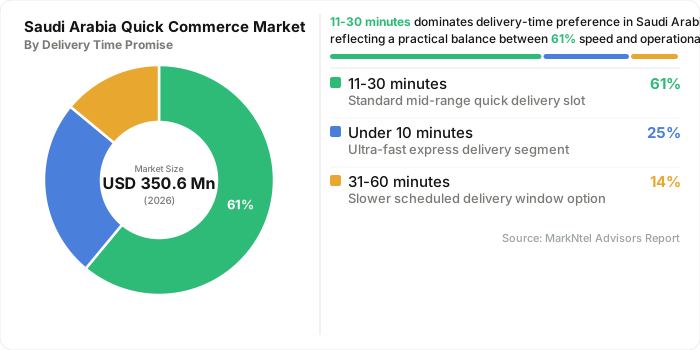
- By delivery time promise, the 11-30 minutes’ segment accounted for 61% of the market size in 2026.
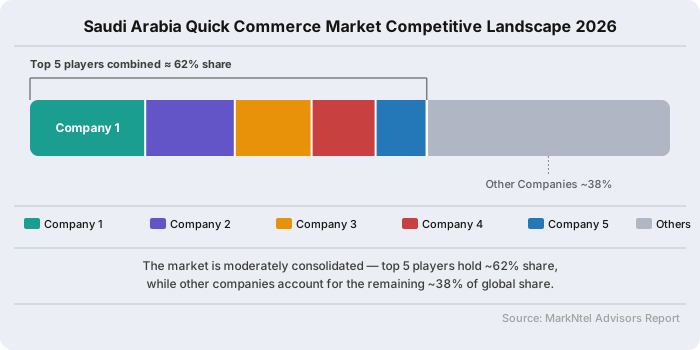
- The market is consolidated with leading quick commerce companies accounting for 62% share in the market as of 2026.
Saudi Arabia Quick Commerce Market Size and Outlook
The quick commerce market size in Saudi Arabia was valued at around USD 293 million in 2025 and is projected to reach USD 1029 million by 2032. Along with this, the market is estimated to grow at a CAGR of around 19.66% during the forecast period, i.e., 2026-32.
The market is transitioning from a food delivery led ecosystem into a broader digital retail channel, supported by rising consumer demand for convenience, rapid urbanization, and sustained investment in e-commerce infrastructure. Consumers increasingly expect groceries, pharmacy products, and daily essentials to be delivered within minutes, encouraging retailers and digital platforms to strengthen their omnichannel capabilities. This transformation is further reinforced by expanding digital payment adoption, evolving shopping behaviour, and the Kingdom's continued progress toward becoming a regional hub for digital commerce and logistics under Vision 2030.
This evolving retail landscape is driving rapid expansion of the competitive ecosystem as quick commerce operators broaden their service offerings and geographic reach. Egypt-based Rabbit entered Saudi Arabia in April 2025, establishing Riyadh as its regional headquarters and rapidly expanding its dark store network, while Meituan's Keeta expanded across the Kingdom during 2025, intensifying competition in app-based retail and delivery services. At the same time, traditional grocery retailers and supermarket chains are strengthening their omnichannel capabilities by integrating physical stores with digital fulfilment models, enabling faster deliveries and expanding consumer access to on-demand grocery shopping.
Government initiatives continue to strengthen the market's long term outlook through investments in digital infrastructure and regulatory modernization. Under Vision 2030, Saudi Arabia remains focused on accelerating the digital economy by promoting foreign investment, retail transformation, and logistics development. Financial infrastructure has also advanced with the rollout of Google Pay and the planned introduction of Alipay+ acceptance, making digital transactions more seamless for online consumers.
Supported by an increasingly digital retail ecosystem, expanding platform competition, and continued government backing, the Saudi Arabia quick commerce market is well positioned for sustained long term growth and wider adoption across the Kingdom.
Saudi Arabia Quick Commerce Market Key Indicators
- In 2025, 33.5% of Saudi establishments sold or displayed goods and services online, reflecting the continued digitalization of retail businesses and creating a broader merchant ecosystem for quick commerce platforms to onboard local sellers.
- Internet usage reached 99% among individuals aged 15–74 in 2025, providing near-universal digital connectivity and strengthening the customer base for app-based services, including quick commerce, digital payments, and online grocery ordering.
- Around 71.0% of individuals in Saudi Arabia made online purchases during 2025, increasing to 80.2% among Saudi nationals, demonstrating strong consumer acceptance of digital shopping channels that support sustained quick commerce demand.
- Venture capital investment in Saudi Arabia's e-commerce and retail sector grew 78% year over year during the first half of 2025, driven by major funding rounds for Ninja and Tabby, reflecting strong investor confidence in the Kingdom's digital commerce ecosystem.
Saudi Arabia Quick Commerce Market Scope
| Category | Segments |
|---|---|
| By Product Category | Grocery & Staples, Snacks & Beverages, Fresh Produce & Dairy, Personal Care & OTC Pharma, Electronics & Accessories, Pet Care, Flowers & Gifts, Others |
| By By Delivery Time Promise | Under 10 Minutes, 11–30 Minutes, 31–60 Minutes |
| By Platform Type | Mobile App-Based Platforms, Web-Based Platforms |
| By End-User | Urban Population, Suburban & Rural, Corporate & Institutional |
Saudi Arabia Quick Commerce Market Growth Drivers
Rapid Expansion of Dark Store Networks Strengthening Ultra-Fast Retail Fulfilment
The rapid expansion of dark store networks is emerging as a key growth driver for the market by enabling platforms to reduce delivery times, improve inventory availability, and efficiently fulfil rising demand for groceries and daily essentials. As consumers increasingly prioritize convenience and instant access to products, operators are investing in localized fulfilment infrastructure that places inventory closer to end users, supporting faster order processing and enhancing the overall customer experience.
This expansion gained further momentum in 2025 as operators accelerated investments in localized fulfilment infrastructure to improve delivery speed and service coverage. Ninja raised US$250 million in July 2025 to expand its logistics and operational capabilities across Saudi Arabia, while the company later confirmed that its network served more than 90% of the Kingdom's population across over 40 cities, reflecting the continued expansion of fulfilment capacity.
At the same time, new entrants such as Rabbit established dark store operations in Riyadh, while grocery retailers increasingly integrated their physical store networks with digital fulfilment models to support faster on demand deliveries. These developments are enabling operators to process orders more efficiently, shorten delivery distances, and meet growing consumer expectations for ultra-fast delivery.
Recent Trends
AI-Powered Personalization and Intelligent Fulfilment
Saudi Arabia's quick commerce industry is increasingly evolving beyond rapid delivery into an AI-enabled hyperlocal retail ecosystem, supported by Vision 2030's digital transformation agenda, widespread cashless payments, and near-universal internet penetration. Rather than focusing solely on faster fulfilment, operators are deploying artificial intelligence to optimize inventory allocation at the neighbourhood level, personalize Arabic-language shopping experiences, forecast demand, and improve customer retention through subscription-based ecosystems.
Delivery Hero accelerated this transition in 2026 through its Everyday App strategy, integrating AI across engineering, advertising, and personalization while reporting that subscription users generated 61% of gross merchandise value in Saudi Arabia, the highest penetration across its global operations. The trend is further reinforced by the growing deployment of advanced AI optimization platforms across retail and logistics operations. In November 2025, NVIDIA introduced its cuOpt optimization platform to help retailers and logistics providers improve real-time route optimization, inventory planning, and fleet scheduling through AI-driven decision making.
These capabilities are particularly valuable for Saudi Arabia's hyperlocal quick commerce ecosystem, where operators must efficiently manage localized inventory, minimize delivery times, and respond rapidly to demand fluctuations during high-volume shopping periods such as Ramadan, Eid, and Hajj. As competition intensifies, the integration of AI-powered optimization platforms with localized fulfilment networks and predictive commerce capabilities is expected to become a defining competitive differentiator for quick commerce operators across the Kingdom.
Saudi Arabia Quick Commerce Market Challenges and Opportunities
Extreme Heat Constraints Accelerating the Shift Toward Intelligent and Autonomous Last Mile Fulfilment
Saudi Arabia's extreme climate and labour protection measures continue to constrain the operational efficiency of rider-dependent quick commerce platforms. The ministry of human resources and social development enforced its annual midday outdoor work ban from 15 June to 15 September 2025, prohibiting outdoor work between 12:00 p.m. and 3:00 p.m. to safeguard workers from extreme summer temperatures. However, human rights watch's 2026 investigation found that app-based delivery riders remained exposed to temperatures frequently exceeding 45°C outside the restricted hours, particularly during the morning and lunchtime periods when delivery demand is typically highest.
This mismatch between peak order windows and safe operating conditions increases rider fatigue, raises health and safety risks, and makes it more difficult for operators to consistently meet ultra-fast delivery commitments while controlling labour and fulfilment costs, particularly for temperature-sensitive grocery and pharmacy orders.
These operational constraints are simultaneously creating opportunities for intelligent and autonomous fulfilment technologies across Saudi Arabia's last mile ecosystem. In January 2025, the general authority of civil aviation approved Matternet's M2 drone delivery platform, marking the Kingdom's first regulatory approval for commercial drone delivery, while the company highlighted Riyadh's growing logistics demand as a key deployment driver. Regulatory progress continued through 2025, with GACA introducing advisory circulars governing beyond visual line of sight (BVLOS) and specific category drone operations, establishing the regulatory foundation for scalable autonomous deliveries.
At the same time, logistics providers are increasingly deploying AI-enabled route optimization, warehouse automation, and intelligent dispatch systems to optimize delivery routes, improve fulfilment efficiency, and reduce rider exposure during periods of extreme heat. Together, these developments are expected to accelerate the adoption of automated last mile fulfilment as operators seek to balance rapid delivery expectations with operational resilience and workforce safety.
Segmentation Insights
Grocery & Staples Maintaining Market Leadership Through High Purchase Frequency and Daily Household Demand
The Grocery & Staples segment held approximately 56% of the Saudi Arabia quick commerce market in 2026, supported by consumers' increasing preference for rapid replenishment of essential household products. Daily necessities such as packaged food, beverages, dairy products, rice, cooking oil, and cleaning supplies generate recurring demand, making them the most frequently ordered product category on quick commerce platforms. The segment has further benefited from rising online grocery adoption, widespread digital payment usage, and expanding dark store networks that enable operators to maintain high inventory availability and fulfil frequent low-value orders efficiently.
The dominance of Grocery & Staples is further reinforced by operators continuously expanding their grocery assortments, strengthening supplier partnerships, and improving inventory visibility to ensure consistent product availability. Growing urban lifestyles, increasing workforce participation, and consumer preference for convenience continue to encourage smaller but more frequent grocery purchases rather than traditional bulk shopping. Based on product category, the market is further bifurcated into:
- Grocery & Staples
- Snacks & Beverages
- Fresh Produce & Dairy
- Personal Care & OTC Pharma
- Electronics & Accessories
- Pet Care
- Flowers & Gifts
- Others
11–30 Minutes Emerging as the Preferred Delivery Window Through an Optimal Balance of Speed and Operational Efficiency
The 11–30 Minutes segment accounted for approximately 61% of the Saudi Arabia quick commerce market in 2026, as it offers an effective balance between rapid fulfilment and operational efficiency. Unlike ultra-fast deliveries that require significantly higher operational costs, this delivery window enables operators to optimize rider utilization, order batching, and route planning while consistently meeting consumer expectations for convenience. It is particularly well suited for grocery, pharmacy, and household essentials, where customers prioritize reliable and timely delivery over immediate fulfilment.
The continued expansion of dark stores, AI-enabled route optimization, and intelligent dispatch systems has further strengthened the viability of the 11–30 minute delivery model across densely populated urban areas. This delivery window allows operators to serve a wider geographic coverage while maintaining healthier unit economics and reducing fulfilment costs compared with sub-10-minute services. Based on delivery time promise, the market is further bifurcated into:
- Under 10 Minutes
- 11–30 Minutes
- 31–60 Minutes
Saudi Arabia Quick Commerce Market Competitive Analysis
The Saudi Arabia Quick Commerce Market is consolidated, with competition led by regional quick commerce platforms, food delivery aggregators, and integrated digital commerce companies. Major participants include Delivery Hero SE (HungerStation), Jahez International Company for Information System Technology, Ana Ninja for Trading LLC (Ninja), Noon E-Commerce Saudi Arabia One Person LLC (Noon Minutes), and Mrsool International Company for Information Technology. The top five players collectively account for approximately 62% of the Saudi Arabia quick commerce market.
Key Companies in the Saudi Arabia Quick Commerce Market
- Delivery Hero SE (HungerStation)
- Jahez International Company for Information System Technology
- Ana Ninja for Trading LLC (Ninja)
- Noon E-Commerce Saudi Arabia One Person LLC (Noon Minutes)
- Mrsool International Company for Information Technology
- Aram Meem LLC (ToYou)
- Keeta Technologies Arabia Company Limited (Keeta)
- Nana Direct Company (Nana Express)
- Talabat Middle East LLC (Talabat)
- Rabbit Mobility Saudi Arabia (Rabbit Express)
Saudi Arabia Quick Commerce Industry News and Recent Developments
2025: Jahez Launches Saudi Arabia's First Commercial Autonomous Food Delivery Service
In July 2025, Jahez partnered with ROSHN Group to launch Saudi Arabia's first commercial autonomous food delivery service at the ROSHN Front Business District in Riyadh. The deployment introduced five autonomous delivery robots equipped with more than 20 sensors and six cameras to perform last-mile deliveries, marking a significant step toward the commercialization of autonomous delivery technologies in the Kingdom.
Impact Analysis: The launch is expected to accelerate the adoption of autonomous last-mile delivery solutions across Saudi Arabia's quick commerce market by demonstrating the commercial viability of robotic fulfilment. The initiative could help operators improve delivery efficiency, reduce reliance on rider-based operations, lower fulfilment costs, and strengthen service reliability in densely populated urban areas.
Frequently Asked Questions
- Market Segmentation
- Introduction
- Product Definition
- Research Process
- Assumptions
- Executive Summary
- Saudi Arabia Quick Commerce Market Policies, Regulations, and Product Standards
- Saudi Arabia Quick Commerce Market Trends & Developments
- Saudi Arabia Quick Commerce Market Dynamics
- Growth Factors
- Challenges
- Saudi Arabia Quick Commerce Market Hotspot & Opportunities
- Saudi Arabia Quick Commerce Market Outlook, 2022-2032F
- Market Size & Outlook
- By Revenues (USD Million)
- Market Segmentation & Outlook
- By Product Category- Market Size & Forecast 2022-2032, USD Million
- Grocery & Staples
- Snacks & Beverages
- Fresh Produce & Dairy
- Personal Care & OTC Pharma
- Electronics & Accessories
- Pet Care
- Flowers & Gifts
- Others
- By Delivery Time Promise- Market Size & Forecast 2022-2032, USD Million
- Under 10 Minutes
- 11–30 Minutes
- 31–60 Minutes
- By Platform Type- Market Size & Forecast 2022-2032, USD Million
- Mobile App-Based Platforms
- Web-Based Platforms
- By End-User- Market Size & Forecast 2022-2032, USD Million
- Urban Population
- Suburban & Rural
- Corporate & Institutional
- By Region- Market Size & Forecast 2022-2032, USD Million
- Western Saudi Arabia
- Northern & Central Saudi Arabia
- Eastern Province
- Southern Saudi Arabia
- Rest of Saudi Arabia
- By Company
- Competition Characteristics
- Market Share & Analysis
- By Product Category- Market Size & Forecast 2022-2032, USD Million
- Market Size & Outlook
- Saudi Arabia Grocery & Staples Market Outlook, 2022-2032
- Market Size & Outlook
- By Revenues (USD Million)
- Market Segmentation & Outlook
- By Product Category- Market Size & Forecast 2022-2032, USD Million
- By Delivery Time Promise- Market Size & Forecast 2022-2032, USD Million
- By End User- Market Size & Forecast 2022-2032, USD Million
- By Platform Type- Market Size & Forecast 2022-2032, USD Million
- By Region- Market Size & Forecast 2022-2032, USD Million
- Market Size & Outlook
- Saudi Arabia Snacks & Beverages Market Outlook, 2022-2032
- Market Size & Outlook
- By Revenues (USD Million)
- By Quantity Sold (Million Units)
- Market Segmentation & Outlook
- By Product Category- Market Size & Forecast 2022-2032, USD Million
- By Delivery Time Promise- Market Size & Forecast 2022-2032, USD Million
- By End User- Market Size & Forecast 2022-2032, USD Million
- By Platform Type- Market Size & Forecast 2022-2032, USD Million
- By Region- Market Size & Forecast 2022-2032, USD Million
- Market Size & Outlook
- Saudi Arabia Fresh Produce & Dairy Market Outlook, 2022-2032
- Market Size & Outlook
- By Revenues (USD Million)
- Market Segmentation & Outlook
- By Product Category- Market Size & Forecast 2022-2032, USD Million
- By Delivery Time Promise- Market Size & Forecast 2022-2032, USD Million
- By End User- Market Size & Forecast 2022-2032, USD Million
- By Platform Type- Market Size & Forecast 2022-2032, USD Million
- By Region- Market Size & Forecast 2022-2032, USD Million
- Market Size & Outlook
- Saudi Arabia Personal Care & OTC Pharma Market Outlook, 2022-2032
- Market Size & Outlook
- By Revenues (USD Million)
- Market Segmentation & Outlook
- By Product Category- Market Size & Forecast 2022-2032, USD Million
- By Delivery Time Promise- Market Size & Forecast 2022-2032, USD Million
- By End User- Market Size & Forecast 2022-2032, USD Million
- By Platform Type- Market Size & Forecast 2022-2032, USD Million
- By Region- Market Size & Forecast 2022-2032, USD Million
- Market Size & Outlook
- Saudi Arabia Electronics & Accessories Market Outlook, 2022-2032
- Market Size & Outlook
- By Revenues (USD Million)
- Market Segmentation & Outlook
- By Product Category- Market Size & Forecast 2022-2032, USD Million
- By Delivery Time Promise- Market Size & Forecast 2022-2032, USD Million
- By End User- Market Size & Forecast 2022-2032, USD Million
- By Platform Type- Market Size & Forecast 2022-2032, USD Million
- By Region- Market Size & Forecast 2022-2032, USD Million
- Market Size & Outlook
- Saudi Arabia Pet Care Market Outlook, 2022-2032
- Market Size & Outlook
- By Revenues (USD Million)
- Market Segmentation & Outlook
- By Product Category- Market Size & Forecast 2022-2032, USD Million
- By End User- Market Size & Forecast 2022-2032, USD Million
- By Platform Type- Market Size & Forecast 2022-2032, USD Million
- By Delivery Time Promise- Market Size & Forecast 2022-2032, USD Million
- By Region- Market Size & Forecast 2022-2032, USD Million
- Market Size & Outlook
- Saudi Arabia Flowers & Gifts Market Outlook, 2022-2032
- Market Size & Outlook
- By Revenues (USD Million)
- Market Segmentation & Outlook
- By Product Category- Market Size & Forecast 2022-2032, USD Million
- By Delivery Time Promise- Market Size & Forecast 2022-2032, USD Million
- By End User- Market Size & Forecast 2022-2032, USD Million
- By Platform Type- Market Size & Forecast 2022-2032, USD Million
- By Region- Market Size & Forecast 2022-2032, USD Million
- Market Size & Outlook
- Saudi Arabia Quick Commerce Market Key Strategic Imperatives for Success & Growth
- Competitive Outlook
- Company Profiles
- Delivery Hero SE (Hungerstation)
- Business Description
- Product Portfolio
- Collaborations & Alliances
- Recent Developments
- Financial Details
- Others
- Jahez International Company for Information System Technology
- Business Description
- Product Portfolio
- Collaborations & Alliances
- Recent Developments
- Financial Details
- Others
- Ana Ninja for Trading LLC (Ninja)
- Business Description
- Product Portfolio
- Collaborations & Alliances
- Recent Developments
- Financial Details
- Others
- Noon E-Commerce Saudi Arabia One Person LLC (Noon Minutes)
- Business Description
- Product Portfolio
- Collaborations & Alliances
- Recent Developments
- Financial Details
- Others
- Mrsool International Company for Information Technology
- Business Description
- Product Portfolio
- Collaborations & Alliances
- Recent Developments
- Financial Details
- Others
- Aram Meem LLC (ToYou)
- Business Description
- Product Portfolio
- Collaborations & Alliances
- Recent Developments
- Financial Details
- Others
- Keeta Technologies Arabia Company Limited (Keeta) (Parent Company: Meituan)
- Business Description
- Product Portfolio
- Collaborations & Alliances
- Recent Developments
- Financial Details
- Others
- Nana Direct Company (Nana Express)
- Business Description
- Product Portfolio
- Collaborations & Alliances
- Recent Developments
- Financial Details
- Others
- Talabat Middle East LLC (Talabat)
- Business Description
- Product Portfolio
- Collaborations & Alliances
- Recent Developments
- Financial Details
- Others
- Rabbit Mobility Saudi Arabia (Rabbit Express)
- Business Description
- Product Portfolio
- Collaborations & Alliances
- Recent Developments
- Financial Details
- Others
- Delivery Hero SE (Hungerstation)
- Company Profiles
- Disclaimer
MarkNtel Advisors follows a robust and iterative research methodology designed to ensure maximum accuracy and minimize deviation in market estimates and forecasts. Our approach combines both bottom-up and top-down techniques to effectively segment and quantify various aspects of the market. A consistent feature across all our research reports is data triangulation, which examines the market from three distinct perspectives to validate findings. Key components of our research process include:
1. Scope & Research Design At the outset, MarkNtel Advisors define the research objectives and formulate pertinent questions. This phase involves determining the type of research—qualitative or quantitative—and designing a methodology that outlines data collection methods, target demographics, and analytical tools. They also establish timelines and budgets to ensure the research aligns with client goals.
2. Sample Selection and Data Collection In this stage, the firm identifies the target audience and determines the appropriate sample size to ensure representativeness. They employ various sampling methods, such as random or stratified sampling, based on the research objectives. Data collection is carried out using tools like surveys, interviews, and observations, ensuring the gathered data is reliable and relevant.
3. Data Analysis and Validation Once data is collected, MarkNtel Advisors undertake a rigorous analysis process. This includes cleaning the data to remove inconsistencies, employing statistical software for quantitative analysis, and thematic analysis for qualitative data. Validation steps are taken to ensure the accuracy and reliability of the findings, minimizing biases and errors.

4. Data Forecast and FinalizationThe final phase involves forecasting future market trends based on the analyzed data. MarkNtel Advisors utilize predictive modeling and time series analysis to anticipate market behaviors. The insights are then compiled into comprehensive reports, featuring visual aids like charts and graphs, and include strategic recommendations to inform client decision-making
We offer flexible licensing options to cater to varying organizational needs. Choose the pricing pack that best suits your requirements:
Buy Now Inquire Before Buying
 Request Customization
 Talk to our Consultant







