

pH Adjuster Market Research Report: Trends, Forecast & Opportunities (2026-2032)
By Product Chemistry (Acids, Bases / Alkalis, Buffering Systems, Mineral-Based Neutralizers), By Form (Liquid, Powder, Granular, Pellets/Tablets), By Function (pH Reduction (Acidif ... ication), pH Increase (Alkalization), pH Stabilization (Buffering)), By Application (Water & Wastewater Treatment, Agriculture, Food & Beverage Processing, Pharmaceuticals & Biotechnology, Personal Care & Cosmetics, Chemical Manufacturing, Textile & Leather, Others), and others Read more
- Chemicals
- Jul 2026
- Pages 340
- Report Format: PDF, Excel, PPT
pH Adjuster Market
Projected 8.69% CAGR from 2026 to 2032
Study Period
2026-2032
Market Size (2026)
USD 3.02 Billion
Market Size (2032)
USD 4.98 Billion
Largest Region
Asia-Pacific
Projected CAGR
8.69%
Leading Segments
By Product Chemistry: Acids
Global pH Adjuster Market Key Takeaways
- The pH adjuster market was valued at USD 2.89 billion in 2025 and is projected to grow from USD 3.02 billion in 2026 to USD 4.98 billion by 2032, registering a CAGR of 8.69%.
- Asia-Pacific leads regional demand, accounting for approximately a 40% share.
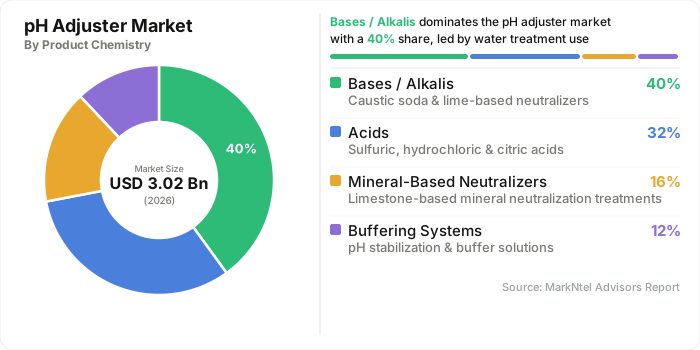
- Bases/alkalis dominate the by-product chemistry with around a 40% share.
- Liquid form represents the largest usage, capturing nearly a 32% share in 2026.
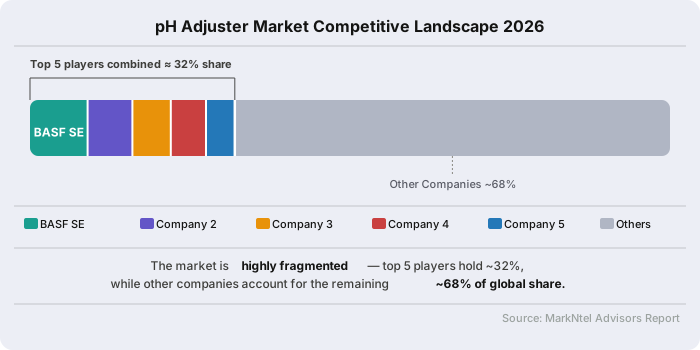
- The industry remains moderately fragmented, with the top five players collectively holding nearly a 32% share, reflecting competitive intensity alongside the presence of numerous regional and niche participants.
Global pH Adjuster Market Size and Outlook
The pH adjuster market size reached USD 2.89 billion in 2025 and is projected to grow from USD 3.02 billion in 2026 to USD 4.98 billion by 2032, expanding at a CAGR of 8.69% during 2026–2032. The growth is driven by rising demand across water treatment chemicals, industrial neutralization solutions, and effluent management systems. Increasing regulatory enforcement and the need for precise pH balancing across industries are supporting long-term volume consumption, particularly in municipal and industrial treatment applications.
Water infrastructure expansion remains the strongest growth driver, supported by large-scale public investments. The U.S. Environmental Protection Agency estimated in 2024 that wastewater and stormwater infrastructure will require USD 630 billion over the next 20 years, reinforcing demand for wastewater treatment chemicals, corrosion control agents, and neutralizing agents. Additionally, the Bipartisan Infrastructure Law allocates over USD 50 billion toward drinking water, wastewater, and stormwater upgrades, translating capital expenditure into sustained chemical consumption cycles.
Emerging economies are further strengthening the market outlook through sanitation and river-cleaning initiatives. The Government of India approved Namami Gange Mission-II with a budgetary outlay of USD 2.72 billion through 2026, accelerating sewage treatment expansion. Such projects increase demand for industrial alkalis, acid-based neutralizers, and water purification chemicals, particularly sodium hydroxide and lime, which are essential for effluent neutralisation across large-scale municipal and industrial wastewater facilities.
The pH adjuster industry is evolving alongside stricter environmental compliance and technological advancements in treatment systems. Growing adoption of advanced dosing systems, real-time monitoring technologies, and sustainable chemical formulations is reshaping demand for specialty treatment chemicals, eco-friendly pH regulators, and process optimization solutions. In conclusion, sustained infrastructure funding, industrial water reuse trends, and regulatory tightening will collectively ensure steady growth momentum across both developed and emerging sectors.
Global pH Adjuster Market Key Indicators
- According to UN-Water and the UN Statistics Division, 56% of global domestic wastewater generated, about 332 billion cubic metres, was safely treated in 2024, leaving a vast untreated volume. Every treatment stage relies on pH correction to optimise coagulation, disinfection, and discharge compliance, making municipal and industrial wastewater treatment the single largest consumption channel for acids and alkalis.
- The U.S. Geological Survey valued 2024 U.S. production of quicklime and hydrated lime at about USD 3.2 billion, totalling roughly 16 million tons, with chemical, industrial, and water-treatment applications. Lime remains the most cost-effective acid neutraliser for municipal water, flue-gas, and effluent treatment, sustaining steady demand for mineral-based pH adjusters worldwide.
- The Food and Agriculture Organization reported in 2024 that salt-affected soils span an estimated 1,381 million hectares, equal to 10.7% of the world's total land area, with 10% of irrigated cropland affected. Correcting saline, sodic, and acidic soils requires acidifiers, gypsum, and agricultural lime, positioning soil pH management as a structural, expanding demand source for mineral-based neutralizers and acids.
- The U.S. Geological Survey estimated that China produced 38 million tons of soda ash in 2025, retaining its position as the world's leading producer of this alkaline regulator. Soda ash (sodium carbonate) neutralises acidic streams across water treatment, glass, and chemical processing, and its scale of output reflects the dominant role of bases and alkalis across pH-correcting chemistries.
- The Food and Agriculture Organization recorded global milk production of 985 million tonnes in 2024, while the global food import bill rose to nearly USD 2.1 trillion in 2024. Dairy, beverage, and processed-food manufacturing depend on acidulants such as citric acid and phosphoric acid, and on alkaline agents for acidity control, anchoring food and beverage processing.
- The World Health Organization valued the global vaccine market at about USD 77 billion, equivalent to roughly 5% of total pharmaceutical revenue. Vaccines, biologics, and drug formulation rely on buffering systems and pH regulators to maintain stability and bioavailability, making pharmaceuticals and biotechnology a premium, regulation-driven outlet for high-purity pH adjusters.
Global pH Adjuster Market Scope
| Category | Segments |
|---|---|
| By Product Chemistry | Acids, Bases / Alkalis, Buffering Systems, Mineral-Based Neutralizers |
| By Form | Liquid, Powder, Granular, Pellets/Tablets |
| By Function | pH Reduction (Acidification), pH Increase (Alkalization), pH Stabilization (Buffering |
| By Application | Water & Wastewater Treatment, Agriculture, Food & Beverage Processing, Pharmaceuticals & Biotechnology, Personal Care & Cosmetics, Chemical Manufacturing, Textile & Leather, Others |
Global pH Adjuster Market Growth Drivers
Stricter Wastewater Treatment Mandates
Stricter wastewater treatment regulations are the foremost growth driver for the pH adjuster demand, because every additional treatment stage requires precise pH correction with acids and alkalis. The European Union adopted the recast Urban Wastewater Treatment Directive (EU) 2024/3019, which entered into force on 1 January 2025 and lowers the treatment threshold to cover all agglomerations above 1,000 population equivalents, reduced from 2,000 under the previous rules.
The directive mandates phased quaternary treatment for micropollutants at large plants, with discharges from plants of 150,000 population equivalents and above required to comply by 31 December 2033 for 20%, 31 December 2039 for 60%, and 31 December 2045 for all such plants; producers of products causing micropollutant pollution must contribute a minimum of 80% of the additional treatment costs through an extended producer responsibility scheme. Each new stage lifts consumption of neutralising agents.
This regulatory expansion converts compliance into structural, recurring chemical demand across thousands of European treatment plants, while similar tightening frameworks continue to advance across North America and Asia. For producers, this translates into durable volume growth, stronger pricing power, and an increasing premium on certified, traceable inputs. Consequently, these dynamics firmly anchor long-term demand visibility and reinforce sustained growth momentum across the pH adjuster industry throughout the forecast period.
Recent Trends
Customization of Industry-Specific Formulations
The pH adjuster sector is increasingly witnessing the development of industry-specific formulations tailored to unique operational requirements across end-use sectors. Rather than relying on generic treatment chemicals, manufacturers are introducing application-focused solutions that improve performance, compliance, and process efficiency. This trend is accelerating demand for specialty additives, formulation optimization technologies, and application-specific chemical solutions capable of addressing distinct challenges across industrial production environments.
A notable example emerged in February 2025 when Arxada launched Polyboost™, a multifunctional additive specifically designed for the paints and coatings industry. The product enhances both pH and viscosity stability while supporting lower preservative usage and compliance with evolving safety requirements. Such innovations highlight growing investments in coating formulation technologies, performance-enhancing additives, and regulatory-compliant chemical systems tailored to specific industrial applications.
As industries pursue higher efficiency and stricter quality standards, the pH adjuster industry is expected to see greater adoption of customized solutions engineered around sector-specific needs. Manufacturers are increasingly focusing on customer-centric innovation, advanced formulation chemistry, and value-added performance solutions to differentiate product portfolios. Consequently, demand for tailored pH management systems is expected to expand across coatings, food processing, pharmaceuticals, and water treatment applications.
Global pH Adjuster Market Opportunities and Challenges
Stricter Hazardous-Chemical Regulation Driving Demand for Bio-Based pH Adjusters
The pH adjuster industry is facing a significant challenge from tightening hazardous-chemical regulations, particularly across developed economies. The European Commission enforced the revised Classification, Labelling and Packaging Regulation (EU) 2024/2865 in December 2024, strengthening obligations around hazard classification, labeling, and safe handling. These evolving frameworks are increasing compliance complexity while elevating costs across chemical safety management, regulatory compliance systems, and industrial chemical handling processes.
Core mineral-based pH adjusters such as sodium hydroxide, hydrochloric acid, and sulfuric acid are classified as highly corrosive, creating operational constraints across storage, transportation, and workplace safety. This raises the total cost of ownership and pressures margins within bulk chemical supply chains. As a result, industries are reassessing procurement strategies, shifting toward low-hazard formulations, sustainable chemical alternatives, and safer industrial neutralization solutions.
Amid these challenges, the industry is witnessing a strong opportunity in the adoption of bio-based acidulants and fermentation-derived pH regulators. Corbion continues to expand its PURAC® portfolio, offering lactic acid solutions widely used for direct acidification and pH control in food and dairy applications. This shift reflects rising demand for renewable feedstock chemicals, green acidification technologies, and eco-friendly pH regulators, positioning bio-based alternatives as a scalable and compliant replacement.
Segmentation Insights
Bases and Alkalis Lead Due to High Neutralization Efficiency and Cost Advantage
The pH adjuster landscape is led by bases and alkalis, accounting for approximately 40% of the demand by product chemistry. This dominance is driven by the low cost, high neutralising capacity, and widespread availability of key compounds such as caustic soda, lime, and soda ash. Their strong performance across industrial neutralization processes, bulk chemical applications, and large-scale treatment systems supports consistent demand across multiple end-use industries.
Bases and alkalis play a critical role in raising pH levels and neutralizing acidic streams across sectors including water treatment, chemical processing, pulp and paper, and metals manufacturing. Their effectiveness in high-volume operations, combined with ease of handling in automated dosing systems, strengthens their adoption. These characteristics make them essential industrial alkali solutions for effluent treatment, process optimization, and corrosion prevention in complex operational environments.
Production scale further reinforces segment leadership, particularly in regions with strong chlor-alkali industries. European chlorine production reached 692,055 tonnes in July 2025, with caustic soda co-produced as a key alkaline regulator. This integrated production ecosystem ensures a stable supply of commodity alkalis, supporting their continued dominance in alkaline chemical supply chains, water treatment chemicals, and industrial pH balancing applications. Based on product chemistry, the scope has been classified into:
- Acids
- Bases / Alkalis
- Buffering Systems
- Mineral-Based Neutralizers
Liquid Form Leads Owing to Ease of Handling and Process Efficiency
The pH adjuster industry is increasingly dominated by liquid formulations, accounting for approximately 55% of total demand. This leadership is driven by superior handling convenience, rapid dispersion, and compatibility with automated dosing systems. Compared to solid alternatives, liquid pH adjusters enable precise control in continuous operations, supporting demand across industrial process optimization, bulk chemical dosing, and large-scale treatment infrastructure.
Liquid pH adjusters are widely adopted across water treatment, food processing, and chemical manufacturing due to their operational efficiency and consistent performance. Their ability to integrate with real-time monitoring systems enhances dosing accuracy and minimizes chemical wastage. These advantages position them as preferred solutions for industries focusing on process automation, smart dosing technologies, and advanced pH control systems across complex operational environments.
The dominance of liquid formulations is further supported by increasing investments in automated and smart treatment infrastructure. Industries are prioritizing solutions that reduce manual handling and improve safety standards when dealing with corrosive substances. As a result, demand for ready-to-use chemical solutions, fluid-based delivery systems, and efficient liquid handling technologies is expected to sustain long-term segment growth. The study evaluates the following form:
- Liquid
- Powder
- Granular
- Pellets/Tablets
Global pH Adjuster Market Geographical Outlook
The pH adjuster market is led by Asia-Pacific, accounting for approximately 40% of the total demand. This dominance is anchored in the region’s position as a major hub for chemical manufacturing, textiles, pulp and paper, and food processing industries. Combined with rapid urbanisation and infrastructure expansion, this drives strong consumption across industrial processing chemicals, manufacturing ecosystems, and large-scale production facilities requiring consistent pH regulation.
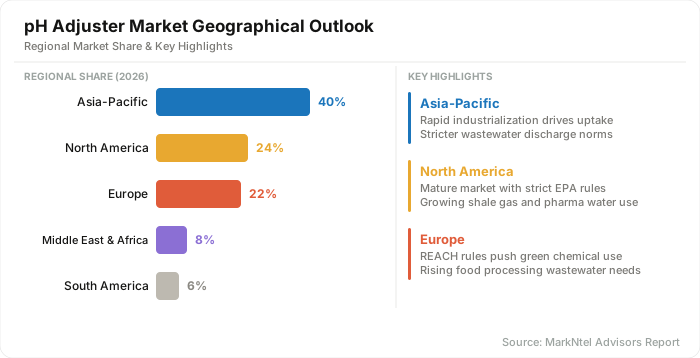
Rapid urbanisation and tightening environmental regulations across Asia-Pacific continue to accelerate demand for pH control solutions. Governments are investing heavily in municipal and industrial treatment systems, increasing the need for acid neutralization and alkalinity control. This supports rising adoption across wastewater treatment expansion, environmental compliance systems, and industrial discharge management, ensuring sustained consumption of acids and alkalis across diverse end-use sectors.
China remains the dominant contributor to regional growth, supported by aggressive wastewater infrastructure targets. The National Development and Reform Commission is targeting sewage treatment rates above 95% in county-level cities by 2025, alongside adding 12 million cubic metres per day in capacity and expanding 45,000 kilometres of sewage networks. With sludge production exceeding 70 million tons in 2024, demand for treatment chemicals remains structurally strong.
pH Adjuster Market Competitive Analysis
The pH adjuster industry is led by major chemical and water treatment companies, including BASF SE, Dow Inc., Ecolab Inc., Kemira Oyj, and Solvay SA. Collectively, these top five players are estimated to hold approximately 32% of the market share. It remains fragmented, with numerous regional and specialized players such as Solenis LLC and Nouryon Chemicals Holding B.V. competing across application niches. The global leaders benefit from scale, integration, and technology capabilities; the presence of diverse regional suppliers and commodity-driven competition maintains a fragmented and competitive market structure.
Prominent Companies in the pH Adjuster Market
- BASF SE
- Dow Inc.
- Solvay SA
- Air Products and Chemicals, Inc.
- Kemira Oyj
- Ecolab Inc.
- Ashland Inc.
- Evonik Industries AG
- Arkema S.A.
- Clariant AG
- Lonza Group AG
- Nouryon Chemicals Holding B.V.
- Solenis LLC
- Buckman Laboratories International, Inc.
- Eastman Chemical Company
- Others
pH Adjuster Market Industry News and Recent Developments
January 2026: DuPont Launches AmberLite™ FPA57 Resin for Organic Acid Purification
DuPont introduced AmberLite™ FPA57, a next-generation weak-base anion exchange resin designed to improve the purification of organic acids such as lactic acid and citric acid. The resin offers higher operating capacity, improved fouling resistance, and longer run lengths than previous generations, helping producers reduce regenerant chemical consumption and wastewater generation while improving process efficiency. The solution targets food, beverage, pharmaceutical, and bio-based chemical applications where purified organic acids are widely used for pH regulation and acidification.
Impact Analysis: The launch strengthens the supply chain supporting bio-based pH regulators, an increasingly important segment within the pH adjuster industry. By improving purification efficiency for lactic and citric acids, AmberLite™ FPA57 can lower production costs and enhance the commercial scalability of fermentation-derived acidulants. The development aligns with growing regulatory and sustainability pressures, encouraging manufacturers to adopt safer, renewable alternatives to conventional mineral acids.
August 2025: Suncombe Expands SUNpH™ Range with Compact pH Neutralisation Systems
Suncombe expanded its SUNpH™ portfolio by launching compact pH neutralisation systems designed for new-build and retrofit laboratories. The systems automatically neutralize acidic and alkaline effluent streams before discharge while offering a smaller footprint for laboratories, healthcare facilities, biotech incubators, and research environments. The launch addresses growing demand for flexible and space-efficient pH control solutions capable of meeting increasingly stringent wastewater discharge requirements.
Impact Analysis: This development highlights the growing importance of specialized pH management technologies beyond large industrial facilities. Increasing laboratory activity, biotechnology investments, and stricter environmental compliance requirements are creating demand for decentralized neutralization systems. The compact SUNpH™ platform broadens adoption among smaller end users who previously lacked access to dedicated pH treatment infrastructure. As wastewater regulations become more stringent globally, demand for automated neutralization systems.
Frequently Asked Questions
- Market Segmentation
- Introduction
- Product Definition
- Research Process
- Assumptions
- Executive Summary
- Global pH Adjuster Market Policies, Regulations, and Product Standards
- Global pH Adjuster Market Value Chain Analysis
- Global pH Adjuster Market Investment Analysis
- Global pH Adjuster Market Startup Ecosystem
- Global pH Adjuster Market Dynamics
- Growth Factors
- Challenges
- Global pH Adjuster Market Import & Export Analysis
- Global pH Adjuster Market Hotspot & Opportunities
- Global pH Adjuster Market Outlook, 2022-2032F
- Market Size & Outlook
- By Revenues (USD Million)
- Market Segmentation & Outlook
- By Product Chemistry - Market Size & Forecast 2022-2032, USD Million
- Acids
- Organic Acids
- Citric Acid
- Acetic Acid
- Lactic Acid
- Malic Acid
- Others
- Inorganic Acids
- Sulfuric Acid
- Hydrochloric Acid
- Phosphoric Acid
- Nitric Acid
- Others
- Organic Acids
- Bases / Alkalis
- Sodium Hydroxide
- Potassium Hydroxide
- Calcium Hydroxide
- Magnesium Hydroxide
- Ammonia & Ammonium Compounds
- Others
- Buffering Systems
- Phosphate Buffers
- Citrate Buffers
- Acetate Buffers
- Carbonate/Bicarbonate Buffers
- Others
- Mineral-Based Neutralizers
- Agricultural Lime (Calcitic Lime)
- Dolomitic Lime
- Gypsum-Based Amendments
- Others
- Acids
- By Form - Market Size & Forecast 2022-2032, USD Million
- Liquid
- Powder
- Granular
- Pellets/Tablets
- By Function- Market Size & Forecast 2022-2032, USD Million
- pH Reduction (Acidification)
- pH Increase (Alkalization)
- pH Stabilization (Buffering)
- By Application - Market Size & Forecast 2022-2032, USD Million
- Water & Wastewater Treatment
- Agriculture
- Food & Beverage Processing
- Pharmaceuticals & Biotechnology
- Personal Care & Cosmetics
- Chemical Manufacturing
- Textile & Leather
- Others
- By Region
- North America
- South America
- Europe
- The Middle East & Africa
- Asia-Pacific
- By Company
- Competition Characteristics
- Market Share & Analysis
- By Product Chemistry - Market Size & Forecast 2022-2032, USD Million
- Market Size & Outlook
- North America pH Adjuster Market Outlook, 2022-2032F
- Market Size & Outlook
- By Revenues (USD Million)
- Market Segmentation & Outlook
- By Product Chemistry - Market Size & Forecast 2022-2032, USD Million
- By Form - Market Size & Forecast 2022-2032, USD Million
- By Function- Market Size & Forecast 2022-2032, USD Million
- By Application - Market Size & Forecast 2022-2032, USD Million
- By Country
- The US
- Canada
- Mexico
- The US pH Adjuster Market Outlook, 2022-2032F
- Market Size & Outlook
- By Revenues (USD Million)
- Market Segmentation & Outlook
- By Product Chemistry - Market Size & Forecast 2022-2032, USD Million
- By Form - Market Size & Forecast 2022-2032, USD Million
- By Function- Market Size & Forecast 2022-2032, USD Million
- By Application - Market Size & Forecast 2022-2032, USD Million
- Market Size & Outlook
- Canada pH Adjuster Market Outlook, 2022-2032F
- Market Size & Outlook
- By Revenues (USD Million)
- Market Segmentation & Outlook
- By Product Chemistry - Market Size & Forecast 2022-2032, USD Million
- By Form - Market Size & Forecast 2022-2032, USD Million
- By Function- Market Size & Forecast 2022-2032, USD Million
- By Application - Market Size & Forecast 2022-2032, USD Million
- Market Size & Outlook
- Mexico pH Adjuster Market Outlook, 2022-2032F
- Market Size & Outlook
- By Revenues (USD Million)
- Market Segmentation & Outlook
- By Product Chemistry - Market Size & Forecast 2022-2032, USD Million
- By Form - Market Size & Forecast 2022-2032, USD Million
- By Function- Market Size & Forecast 2022-2032, USD Million
- By Application - Market Size & Forecast 2022-2032, USD Million
- Market Size & Outlook
- Market Size & Outlook
- South America pH Adjuster Market Outlook, 2022-2032F
- Market Size & Outlook
- By Revenues (USD Million)
- Market Segmentation & Outlook
- By Product Chemistry - Market Size & Forecast 2022-2032, USD Million
- By Form - Market Size & Forecast 2022-2032, USD Million
- By Function- Market Size & Forecast 2022-2032, USD Million
- By Application - Market Size & Forecast 2022-2032, USD Million
- By Country
- Brazil
- Argentina
- Rest of South America
- Brazil pH Adjuster Market Outlook, 2022-2032F
- Market Size & Outlook
- By Revenues (USD Million)
- Market Segmentation & Outlook
- By Product Chemistry - Market Size & Forecast 2022-2032, USD Million
- By Form - Market Size & Forecast 2022-2032, USD Million
- By Function- Market Size & Forecast 2022-2032, USD Million
- By Application - Market Size & Forecast 2022-2032, USD Million
- Market Size & Outlook
- Argentina pH Adjuster Market Outlook, 2022-2032F
- Market Size & Outlook
- By Revenues (USD Million)
- Market Segmentation & Outlook
- By Product Chemistry - Market Size & Forecast 2022-2032, USD Million
- By Form - Market Size & Forecast 2022-2032, USD Million
- By Function- Market Size & Forecast 2022-2032, USD Million
- By Application - Market Size & Forecast 2022-2032, USD Million
- Market Size & Outlook
- Market Size & Outlook
- Europe pH Adjuster Market Outlook, 2022-2032F
- Market Size & Outlook
- By Revenues (USD Million)
- Market Segmentation & Outlook
- By Product Chemistry - Market Size & Forecast 2022-2032, USD Million
- By Form - Market Size & Forecast 2022-2032, USD Million
- By Function- Market Size & Forecast 2022-2032, USD Million
- By Application - Market Size & Forecast 2022-2032, USD Million
- By Country
- The UK
- Germany
- France
- Italy
- Spain
- The Benelux
- Rest of Europe
- The UK pH Adjuster Market Outlook, 2022-2032F
- Market Size & Outlook
- By Revenues (USD Million)
- Market Segmentation & Outlook
- By Product Chemistry - Market Size & Forecast 2022-2032, USD Million
- By Form - Market Size & Forecast 2022-2032, USD Million
- By Function- Market Size & Forecast 2022-2032, USD Million
- By Application - Market Size & Forecast 2022-2032, USD Million
- Market Size & Outlook
- Germany pH Adjuster Market Outlook, 2022-2032F
- Market Size & Outlook
- By Revenues (USD Million)
- Market Segmentation & Outlook
- By Product Chemistry - Market Size & Forecast 2022-2032, USD Million
- By Form - Market Size & Forecast 2022-2032, USD Million
- By Function- Market Size & Forecast 2022-2032, USD Million
- By Application - Market Size & Forecast 2022-2032, USD Million
- Market Size & Outlook
- France pH Adjuster Market Outlook, 2022-2032F
- Market Size & Outlook
- By Revenues (USD Million)
- Market Segmentation & Outlook
- By Product Chemistry - Market Size & Forecast 2022-2032, USD Million
- By Form - Market Size & Forecast 2022-2032, USD Million
- By Function- Market Size & Forecast 2022-2032, USD Million
- By Application - Market Size & Forecast 2022-2032, USD Million
- Market Size & Outlook
- Italy pH Adjuster Market Outlook, 2022-2032F
- Market Size & Outlook
- By Revenues (USD Million)
- Market Segmentation & Outlook
- By Product Chemistry - Market Size & Forecast 2022-2032, USD Million
- By Form - Market Size & Forecast 2022-2032, USD Million
- By Function- Market Size & Forecast 2022-2032, USD Million
- By Application - Market Size & Forecast 2022-2032, USD Million
- Market Size & Outlook
- Spain pH Adjuster Market Outlook, 2022-2032F
- Market Size & Outlook
- By Revenues (USD Million)
- Market Segmentation & Outlook
- By Product Chemistry - Market Size & Forecast 2022-2032, USD Million
- By Form - Market Size & Forecast 2022-2032, USD Million
- By Function- Market Size & Forecast 2022-2032, USD Million
- By Application - Market Size & Forecast 2022-2032, USD Million
- Market Size & Outlook
- The Benelux pH Adjuster Market Outlook, 2022-2032F
- Market Size & Outlook
- By Revenues (USD Million)
- Market Segmentation & Outlook
- By Product Chemistry - Market Size & Forecast 2022-2032, USD Million
- By Form - Market Size & Forecast 2022-2032, USD Million
- By Function- Market Size & Forecast 2022-2032, USD Million
- By Application - Market Size & Forecast 2022-2032, USD Million
- Market Size & Outlook
- Market Size & Outlook
- The Middle East & Africa pH Adjuster Market Outlook, 2022-2032F
- Market Size & Outlook
- By Revenues (USD Million)
- Market Segmentation & Outlook
- By Product Chemistry - Market Size & Forecast 2022-2032, USD Million
- By Form - Market Size & Forecast 2022-2032, USD Million
- By Function- Market Size & Forecast 2022-2032, USD Million
- By Application - Market Size & Forecast 2022-2032, USD Million
- By Country
- Saudi Arabia
- The UAE
- South Africa
- Egypt
- Rest of Middle East & Africa
- Saudi Arabia pH Adjuster Market Outlook, 2022-2032F
- Market Size & Outlook
- By Revenues (USD Million)
- Market Segmentation & Outlook
- By Product Chemistry - Market Size & Forecast 2022-2032, USD Million
- By Form - Market Size & Forecast 2022-2032, USD Million
- By Function- Market Size & Forecast 2022-2032, USD Million
- By Application - Market Size & Forecast 2022-2032, USD Million
- Market Size & Outlook
- The UAE pH Adjuster Market Outlook, 2022-2032F
- Market Size & Outlook
- By Revenues (USD Million)
- Market Segmentation & Outlook
- By Product Chemistry - Market Size & Forecast 2022-2032, USD Million
- By Form - Market Size & Forecast 2022-2032, USD Million
- By Function- Market Size & Forecast 2022-2032, USD Million
- By Application - Market Size & Forecast 2022-2032, USD Million
- Market Size & Outlook
- South Africa pH Adjuster Market Outlook, 2022-2032F
- Market Size & Outlook
- By Revenues (USD Million)
- Market Segmentation & Outlook
- By Product Chemistry - Market Size & Forecast 2022-2032, USD Million
- By Form - Market Size & Forecast 2022-2032, USD Million
- By Function- Market Size & Forecast 2022-2032, USD Million
- By Application - Market Size & Forecast 2022-2032, USD Million
- Market Size & Outlook
- Egypt pH Adjuster Market Outlook, 2022-2032F
- Market Size & Outlook
- By Revenues (USD Million)
- Market Segmentation & Outlook
- By Product Chemistry - Market Size & Forecast 2022-2032, USD Million
- By Form - Market Size & Forecast 2022-2032, USD Million
- By Function- Market Size & Forecast 2022-2032, USD Million
- By Application - Market Size & Forecast 2022-2032, USD Million
- Market Size & Outlook
- Market Size & Outlook
- Asia-Pacific pH Adjuster Market Outlook, 2022-2032F
- Market Size & Outlook
- By Revenues (USD Million)
- Market Segmentation & Outlook
- By Product Chemistry - Market Size & Forecast 2022-2032, USD Million
- By Form - Market Size & Forecast 2022-2032, USD Million
- By Function- Market Size & Forecast 2022-2032, USD Million
- By Application - Market Size & Forecast 2022-2032, USD Million
- By Country
- China
- Japan
- India
- South Korea
- Australia
- Rest of Asia-Pacific
- China pH Adjuster Market Outlook, 2022-2032F
- Market Size & Outlook
- By Revenues (USD Million)
- Market Segmentation & Outlook
- By Product Chemistry - Market Size & Forecast 2022-2032, USD Million
- By Form - Market Size & Forecast 2022-2032, USD Million
- By Function- Market Size & Forecast 2022-2032, USD Million
- By Application - Market Size & Forecast 2022-2032, USD Million
- Market Size & Outlook
- Japan pH Adjuster Market Outlook, 2022-2032F
- Market Size & Outlook
- By Revenues (USD Million)
- Market Segmentation & Outlook
- By Product Chemistry - Market Size & Forecast 2022-2032, USD Million
- By Form - Market Size & Forecast 2022-2032, USD Million
- By Function- Market Size & Forecast 2022-2032, USD Million
- By Application - Market Size & Forecast 2022-2032, USD Million
- Market Size & Outlook
- India pH Adjuster Market Outlook, 2022-2032F
- Market Size & Outlook
- By Revenues (USD Million)
- Market Segmentation & Outlook
- By Product Chemistry - Market Size & Forecast 2022-2032, USD Million
- By Form - Market Size & Forecast 2022-2032, USD Million
- By Function- Market Size & Forecast 2022-2032, USD Million
- By Application - Market Size & Forecast 2022-2032, USD Million
- Market Size & Outlook
- South Korea pH Adjuster Market Outlook, 2022-2032F
- Market Size & Outlook
- By Revenues (USD Million)
- Market Segmentation & Outlook
- By Product Chemistry - Market Size & Forecast 2022-2032, USD Million
- By Form - Market Size & Forecast 2022-2032, USD Million
- By Function- Market Size & Forecast 2022-2032, USD Million
- By Application - Market Size & Forecast 2022-2032, USD Million
- Market Size & Outlook
- Australia pH Adjuster Market Outlook, 2022-2032F
- Market Size & Outlook
- By Revenues (USD Million)
- Market Segmentation & Outlook
- By Product Chemistry - Market Size & Forecast 2022-2032, USD Million
- By Form - Market Size & Forecast 2022-2032, USD Million
- By Function- Market Size & Forecast 2022-2032, USD Million
- By Application - Market Size & Forecast 2022-2032, USD Million
- Market Size & Outlook
- Market Size & Outlook
- Global pH Adjuster Market Key Strategic Imperatives for Success & Growth
- Competitive Outlook
- Company Profiles
- BASF SE
- Business Description
- Product Portfolio
- Collaborations & Alliances
- Recent Developments
- Financial Details
- Others
- Dow Inc.
- Business Description
- Product Portfolio
- Collaborations & Alliances
- Recent Developments
- Financial Details
- Others
- Solvay SA
- Business Description
- Product Portfolio
- Collaborations & Alliances
- Recent Developments
- Financial Details
- Others
- Air Products and Chemicals, Inc.
- Business Description
- Product Portfolio
- Collaborations & Alliances
- Recent Developments
- Financial Details
- Others
- Kemira Oyj
- Business Description
- Product Portfolio
- Collaborations & Alliances
- Recent Developments
- Financial Details
- Others
- Ecolab Inc.
- Business Description
- Product Portfolio
- Collaborations & Alliances
- Recent Developments
- Financial Details
- Others
- Ashland Inc.
- Business Description
- Product Portfolio
- Collaborations & Alliances
- Recent Developments
- Financial Details
- Others
- Evonik Industries AG
- Business Description
- Product Portfolio
- Collaborations & Alliances
- Recent Developments
- Financial Details
- Others
- Arkema S.A.
- Business Description
- Product Portfolio
- Collaborations & Alliances
- Recent Developments
- Financial Details
- Others
- Clariant AG
- Business Description
- Product Portfolio
- Collaborations & Alliances
- Recent Developments
- Financial Details
- Others
- Lonza Group AG
- Business Description
- Product Portfolio
- Collaborations & Alliances
- Recent Developments
- Financial Details
- Others
- Nouryon Chemicals Holding B.V.
- Business Description
- Product Portfolio
- Collaborations & Alliances
- Recent Developments
- Financial Details
- Others
- Solenis LLC
- Business Description
- Product Portfolio
- Collaborations & Alliances
- Recent Developments
- Financial Details
- Others
- Buckman Laboratories International, Inc.
- Business Description
- Product Portfolio
- Collaborations & Alliances
- Recent Developments
- Financial Details
- Others
- Eastman Chemical Company
- Business Description
- Product Portfolio
- Collaborations & Alliances
- Recent Developments
- Financial Details
- Others
- Others
- BASF SE
- Company Profiles
- Disclaimer
MarkNtel Advisors follows a robust and iterative research methodology designed to ensure maximum accuracy and minimize deviation in market estimates and forecasts. Our approach combines both bottom-up and top-down techniques to effectively segment and quantify various aspects of the market. A consistent feature across all our research reports is data triangulation, which examines the market from three distinct perspectives to validate findings. Key components of our research process include:
1. Scope & Research Design At the outset, MarkNtel Advisors define the research objectives and formulate pertinent questions. This phase involves determining the type of research—qualitative or quantitative—and designing a methodology that outlines data collection methods, target demographics, and analytical tools. They also establish timelines and budgets to ensure the research aligns with client goals.
2. Sample Selection and Data Collection In this stage, the firm identifies the target audience and determines the appropriate sample size to ensure representativeness. They employ various sampling methods, such as random or stratified sampling, based on the research objectives. Data collection is carried out using tools like surveys, interviews, and observations, ensuring the gathered data is reliable and relevant.
3. Data Analysis and Validation Once data is collected, MarkNtel Advisors undertake a rigorous analysis process. This includes cleaning the data to remove inconsistencies, employing statistical software for quantitative analysis, and thematic analysis for qualitative data. Validation steps are taken to ensure the accuracy and reliability of the findings, minimizing biases and errors.

4. Data Forecast and FinalizationThe final phase involves forecasting future market trends based on the analyzed data. MarkNtel Advisors utilize predictive modeling and time series analysis to anticipate market behaviors. The insights are then compiled into comprehensive reports, featuring visual aids like charts and graphs, and include strategic recommendations to inform client decision-making
We offer flexible licensing options to cater to varying organizational needs. Choose the pricing pack that best suits your requirements:
Buy Now Inquire Before Buying
 Request Customization
 Talk to our Consultant







