

Japan Luxury Travel Market Research Report: Growth Drivers & Forecast (2026-2032)
By Type Tour (Customized and Private Vacation, Adventure and Safari, Cruise and Ship Expedition, Small Group Journey, Celebration and Special Event, Culinary Travel and Shopping, O ... thers), By Age Group (Millennial, Generation X, Baby Boomers, Silver Generation), By Type of Traveler (Absolute Luxury, Aspiring Luxury, Accessible Luxury, Others), and others Read more
- Environment
- Aug 2026
- Pages 155
- Report Format: PDF, Excel, PPT
Japan Luxury Travel Market
Projected 8.16% CAGR from 2026 to 2032
Study Period
2026-2032
Market Size (2026)
USD 3.11 billion
Market Size (2032)
USD 4.98 Billion
Base Year
2025
Projected CAGR
8.16%
Leading Segments
By Tour Type: Customized and Private Vacation
Japan Luxury Travel Market Key Takeaways
- The Japan luxury travel market was valued at USD 2.98 billion in 2025 and is projected to reach USD 3.11 billion in 2026 and USD 4.98 billion by 2032.
- The market is expected to expand at a CAGR of 8.16% during 2026–2032.
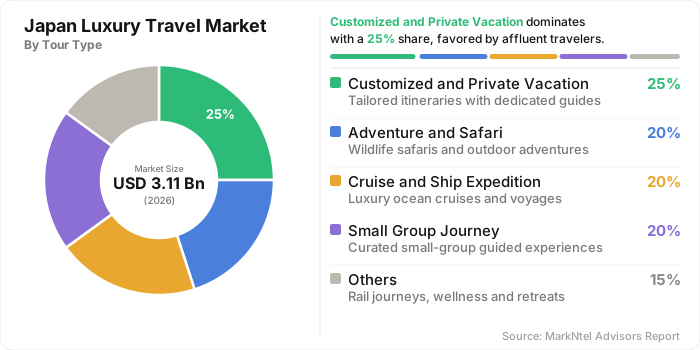
- Customized and private vacation represents the largest segment by tour type, accounting for approximately a 25% share in 2026.
- Absolute luxury is a leading traveler segment, with 19% shares.
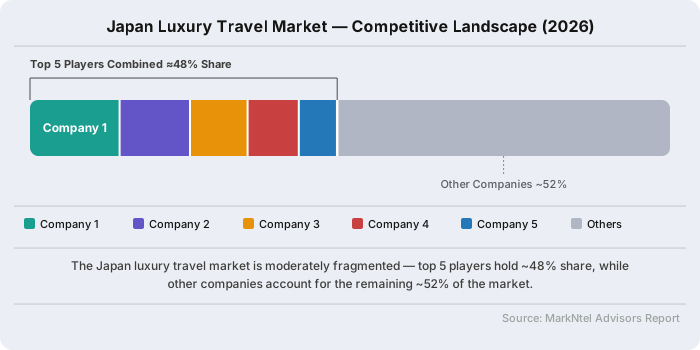
- The industry is moderately consolidated, with the top five players collectively accounting for approximately 48% of the luxury travel segment in 2026.
Japan Luxury Travel Market Size and Outlook
The Japan luxury travel market was valued at USD 2.98 billion in 2025 and is projected to grow from USD 3.11 billion in 2026 to USD 4.98 billion by 2032, registering a CAGR of 8.16% during 2026–2032. Market growth is supported by Japan’s strong luxury hospitality ecosystem, rising demand for high-end ryokans, private cultural experiences, Michelin-starred dining, wellness retreats, and bespoke itineraries. Additionally, increasing interest in destinations beyond Tokyo, Kyoto, and Osaka is also encouraging premium tourism across Hokkaido, Okinawa, Kanazawa, Nagano, and regional onsen destinations. Japan’s emphasis on higher-value tourism, cultural heritage, craftsmanship, seasonal experiences, and regional destination development is further increasing premium tourist spending.
Japan Luxury Travel Market Key Indicators
- Record inbound tourism is expanding the addressable customer base for luxury travel. Japan recorded 42.68 million international visitors in 2025, up 15.8% year-on-year from 36.87 million in 2024, marking the highest level on record. The scale-up in international arrivals increases the pool of affluent and high-spending travelers seeking premium accommodation, private tours, fine dining, wellness, and exclusive cultural experiences, thereby supporting the growth of Japan’s luxury travel market.
- Rapid growth in inbound travel expenditure is strengthening premium tourism demand. International visitors spent a record JPY 9.46 trillion (USD ~60 billion) in Japan in 2025, up 16.4% year-on-year. Accommodation alone accounted for JPY 3.5 trillion, or approximately 36.6% of total inbound spending, while food and beverages generated about JPY 2.1 trillion. The strong concentration of spending in accommodation and experiential categories directly supports luxury hotels, ryokans, high-end dining, and curated travel experiences.
- The high-value tourism segment is creating a measurable premium-demand pipeline. JNTO defines high-value travelers as visitors spending at least JPY 1 million per trip in Japan, excluding international airfare. In 2026, JNTO further intensified this segment through Japan Luxury Showcase 2026, bringing 40 luxury travel agencies from 16 countries to connect with 60 Japanese luxury hotels, ryokans, DMCs, and transport operators. Such targeted B2B development expands distribution channels for luxury itineraries and supports higher-value regional travel.
- Luxury hotel expansion is increasing Japan’s premium accommodation capacity. Japan has added multiple internationally branded luxury properties, including the 252-room Waldorf Astoria Osaka, 217-room Fairmont Tokyo, 200-room JW Marriott Tokyo, and 55-villa Rosewood Miyakojima. Further openings include Capella Kyoto and other luxury properties in 2026. This expansion increases the availability of premium inventory beyond traditional Tokyo-Kyoto routes and enables luxury travel operators to package more differentiated, experience-led itineraries.
- Rising hotel pricing demonstrates strong willingness to pay among visitors. Japan recorded a 17% year-on-year increase in hotel ADR during H1 2025, according to CBRE, as record tourism inflows supported hotel pricing. Rising ADR is particularly relevant to luxury travel because premium hotels and resorts can capture higher room rates while maintaining demand, improving the revenue economics of upscale hospitality investment and luxury travel packages.
- Western and Australian high-spending markets are strengthening Japan’s luxury-travel mix. In 2025, average visitor spending reached approximately JPY 394,000 for German travelers, JPY 390,000 for British travelers, and JPY 390,000 for Australian travelers, substantially above the overall average of JPY 229,000. These markets therefore provide a stronger base for premium accommodation, private experiences, gastronomy, wellness, and longer-duration luxury itineraries.
Japan Luxury Travel Market Scope
| Category | Segments |
|---|---|
| By Type Tour | Customized and Private Vacation, Adventure and Safari, Cruise and Ship Expedition, Small Group Journey, Celebration and Special Event, Culinary Travel and Shopping, Others |
| By Age Group | Millennial, Generation X, Baby Boomers, Silver Generation |
| By Type of Traveler | Absolute Luxury, Aspiring Luxury, Accessible Luxury, Others |
Japan Luxury Travel Market Growth Drivers
Expansion of Scenic Luxury Rail and Premium Transportation Experiences
Scenic luxury rail is becoming a highly market-specific growth driver for the japan luxury travel industry because rail journeys are increasingly being positioned as premium experiences rather than simply transportation between destinations. Japan’s luxury rail portfolio already combines private suites, panoramic observation cars, gourmet dining, local cultural experiences, and curated sightseeing, enabling operators to integrate transportation with accommodation, gastronomy, and regional exploration. JNTO specifically promotes luxury trains such as TRAIN SUITE SHIKI-SHIMA, Twilight Express Mizukaze, and Seven Stars in Kyushu as premium travel experiences.
The trend gained further momentum with the 2026 launch of Nankai Electric Railway’s GRAN TENKU, connecting Osaka’s Namba Station with Gokurakubashi near Koyasan. The service creates a premium access point to one of Japan’s important cultural destinations while complementing private tours, luxury ryokans, and heritage experiences around Koyasan. Its significance lies in converting travel time into part of the luxury itinerary, allowing operators to monetize scenic landscapes, Japanese hospitality, and regional cuisine alongside transportation. This strengthens Japan’s ability to develop multi-component luxury journeys and distribute premium tourism spending beyond major metropolitan destinations.
Recent Trends
Generative AI and AI-Powered Personalization Driving Tourism DX Adoption
Generative AI and AI-powered personalization are emerging as important technology trends in the Japan luxury travel industry, particularly because they can support individualized recommendations, itinerary planning, multilingual assistance, and more efficient tourism operations. In 2025, the Japan Tourism Agency selected 25 Tourism DX demonstration projects, including 14 projects focused specifically on generative AI, meaning approximately 56% of the selected projects involved GenAI. The scale of these government-backed demonstrations indicates that generative AI is moving beyond experimentation toward practical implementation across Japan’s tourism ecosystem.
The 14 generative-AI projects were designed to test practical applications within tourism, including improving visitor convenience, enhancing tourism-business productivity, and supporting destination management. For the Japan luxury travel market this technology is particularly relevant because luxury travelers require highly individualized services rather than standardized itineraries. AI can combine traveler preferences with destination, timing, and available experiences to generate tailored recommendations. Consequently, Japan’s government-backed Tourism DX program provides measurable evidence that GenAI is becoming a priority technology for transforming personalized tourism services.
Japan luxury travel Market Opportunities and Challenges
Hospitality Labor Shortages Leading to Technology-Enabled Premium Service Delivery
Japan’s luxury travel market faces growing pressure from labor shortages in accommodation, particularly as international tourism demand continues to expand. The Japan Tourism Agency’s 2026 Tourism White Paper identifies securing tourism-industry personnel and improving productivity as important structural priorities. This pressure is evident alongside strong accommodation demand, with foreign guest nights reaching 177.87 million in 2025, an increase of 8.2% year over year. For luxury hotels and ryokans, limited staffing can constrain personalized concierge support, housekeeping, guest assistance, and other high-touch services expected by affluent travelers.
This constraint is encouraging technology-enabled premium service delivery across Japan’s accommodation sector. In 2025, the Tourism Agency documented businesses implementing automated check-in machines, cleaning robots, serving robots, and AI concierge systems to reduce labor requirements while maintaining service quality. In 2026, the government introduced dedicated support for labor-saving investment in accommodation businesses facing workforce shortages. For luxury operators, these technologies can redirect employees from repetitive operational tasks toward personalized concierge services, cultural arrangements, wellness experiences, and other high-touch interactions. This can help luxury properties preserve service standards while managing staffing constraints and increasing operational productivity.
Segmentation Insights
Customized and Private Vacation 25% Share of Inbound Tourism Spending
Customized and private vacation is a leading segment of Japan’s luxury travel market, supported by growing emphasis on personalized, high-value experiences across culture, wellness, nature, craftsmanship, and gastronomy. In 2025, JNTO invited 40 overseas luxury travel companies from 16 countries to Japan for the Japan Luxury Showcase. Participants were divided across nine experiential routes, allowing international buyers to evaluate region-specific premium experiences and establish relationships with Japanese suppliers. The initiative directly supports the development and international distribution of customized itineraries rather than standardized sightseeing packages.
The Japan Luxury Showcase 2025 also included a dedicated business-matching event involving 45 Japanese sellers, comprising luxury hotels, ryokans, destination-management companies, and transportation providers including aviation, rail, and chauffeur services. The program exposed overseas luxury travel specialists to Japan’s diverse premium tourism assets while creating commercial connections with domestic suppliers. This structure supports private and tailor-made vacation development by combining accommodation, transportation, cultural activities, wellness, and regional experiences into integrated itineraries. The initiative therefore strengthens Japan’s capability to capture higher-value demand through differentiated, personalized travel products. Based on the tour type, the market is further bifurcated into:
- Customized and Private Vacation
- Adventure and Safari
- Cruise and Ship Expedition
- Small Group Journey
- Celebration and Special Event
- Culinary Travel and Shopping
- Others
High-Value Tourism Focus Supporting Absolute Luxury with Approximately 19% Share of Inbound Tourism Spending
Absolute luxury is a key segment of the Japan luxury travel market, supported by Japan’s policy focus on travelers generating exceptionally high destination spending. The Japan Tourism Agency identifies high-value travelers as international visitors spending USD 6,309 or more per person at the destination, excluding international transportation. In its 2025 policy program, the agency continued developing model destinations specifically to attract these travelers and increase regional consumption. The approach prioritizes premium experiences combining nature, culture, gastronomy, accommodation, and specialized local services, strengthening Japan’s positioning within the international luxury tourism market.
Luxury accommodation expansion is providing additional capacity for Japan’s Absolute Luxury segment. JNTO reported that Rosewood Miyakojima opened on March 1, 2025, introducing the Rosewood brand to Japan through a 55-villa ultra-luxury resort featuring private villas, multiple dining venues, an infinity pool, beach access, and Asaya Spa. The development broadens Japan’s luxury offering beyond major urban centers and combines high-end accommodation with Okinawan culture, marine experiences, wellness, and locally sourced cuisine. Such investments support Japan’s strategy of attracting affluent travelers and encouraging premium spending in regional destinations. Based on the type of travelers, the market is further bifurcated into:
- Absolute Luxury
- Aspiring Luxury
- Accessible Luxury
- Others
Japan Luxury Travel Market Competitive Analysis
The Japan luxury travel market remains moderately consolidated, with JTB Corp., HIS Co., Ltd., InsideJapan Tours, Scott Dunn, and Abercrombie & Kent representing key leading companies. Collectively, these five players are estimated to account for approximately 48 % of the organized luxury travel segment.
Key Companies in the Japan Luxury Travel Market
- JTB Corp.
- HIS Co., Ltd.
- InsideJapan Tours
- Scott Dunn
- Abercrombie & Kent
- Oku Japan
- Walk Japan
- TUI Group
- Butterfield & Robinson
- GeoEx (Geographic Expeditions)
- thers
Japan luxury Travel Market Industry News and Recent Developments
March 2026: JTB Global Marketing & Travel Expands Its Luxury Travel Product Portfolio
JTB Global Marketing & Travel strengthened its luxury travel business by expanding product curation around luxury accommodations and distinctive experiences. The company also established a dedicated BOUTIQUE JTB Sales Department to deepen relationships with luxury travel advisors in Europe and the wider global luxury travel community. The initiative focuses on curated high-end experiences rather than conventional package tourism.
Impact Analysis: The development directly supports Japan's luxury inbound-tourism ecosystem by increasing the availability of professionally curated premium experiences and strengthening distribution through international luxury travel advisors. It also indicates a shift toward specialist luxury travel sales rather than mass-market tour products.
October 2026: JR Central to Launch Supreme Class on the Tokaido-Sanyo Shinkansen
JR Central is introducing Supreme Class from October 1, 2026, adding private one- or two-person cabins to its Shinkansen service. The product includes individualized lighting, climate and seat controls, and dedicated premium onboard services. Regular-season fares are set at approximately USD 404 for a two-person cabin between Tokyo and Shin-Osaka, while a single-person cabin costs, approximately USD 282.
Impact Analysis: The launch creates a new premium mobility product for affluent travelers moving between Japan's principal luxury-tourism gateways. By turning intercity transportation into a private, high-comfort experience, Supreme Class can complement luxury hotels, private tours and bespoke itineraries.
September 2026: IRCTC Introduces New All-Inclusive Japan Tour Package from DelhiI
RCTC introduced a new 10-day all-inclusive Japan tour package departing Delhi on September 6, 2026, with prices starting at approximately USD 3,780 per person based on triple occupancy. The package includes international airfare, accommodation, visa processing, meals and guided sightseeing.
Impact Analysis: Although positioned below the ultra-luxury segment, the product is relevant to Japan's premium international tourism pipeline because it packages accommodation, transportation, meals and guided experiences into a single high-value itinerary. It also expands structured Japan travel access for India's rapidly growing outbound tourism market.
Frequently Asked Questions
- Market Segmentation
- Introduction
- Product Definition
- Research Process
- Assumptions
- Executive Summary
- Japan Luxury Travel Market Policies, Regulations, and Product Standards
- Japan Luxury Travel Market Trends & Developments
- Japan Luxury Travel Market Dynamics
- Growth Factors
- Challenges
- Japan Luxury Travel Market Hotspots & Opportunities
- Japan Luxury Travel Market Outlook, 2022-2032
- Market Size & Outlook
- By Revenues (USD Million)
- Market Segmentation & Outlook
- By Type Tour- Market Size & Forecast 2022-2032, USD Million
- Customized and Private Vacation
- Adventure and Safari
- Cruise and Ship Expedition
- Small Group Journey
- Celebration and Special Event
- Culinary Travel and Shopping
- Others
- By Age Group- Market Size & Forecast 2022-2032, USD Million
- Millennial
- Generation X
- Baby Boomers
- Silver Generation
- By Type of Traveler- Market Size & Forecast 2022-2032, USD Million
- Absolute Luxury
- Aspiring Luxury
- Accessible Luxury
- Others
- By Region- Market Size & Forecast 2022-2032, USD Million
- Hokkaido
- Tohoku
- Kanto
- Chubu
- Others
- By Company
- Competition Characteristics
- Market Share & Analysis
- By Type Tour- Market Size & Forecast 2022-2032, USD Million
- Market Size & Outlook
- Japan Customized and Private Vacation Travel Market Outlook, 2022-2032
- Market Size & Outlook
- By Revenues (USD Million)
- Market Segmentation & Outlook
- By Age Group- Market Size & Forecast 2022-2032, USD Million
- By Type of Traveler- Market Size & Forecast 2022-2032, USD Million
- By Region- Market Size & Forecast 2022-2032, USD Million
- Market Size & Outlook
- Japan Adventure and Safari Travel Market Outlook, 2022-2032
- Market Size & Outlook
- By Revenues (USD Million)
- Market Segmentation & Outlook
- By Age Group- Market Size & Forecast 2022-2032, USD Million
- By Type of Traveler- Market Size & Forecast 2022-2032, USD Million
- By Region- Market Size & Forecast 2022-2032, USD Million
- Market Size & Outlook
- Japan Cruise and Ship Expedition Travel Market Outlook, 2022-2032
- Market Size & Outlook
- By Revenues (USD Million)
- Market Segmentation & Outlook
- By Age Group- Market Size & Forecast 2022-2032, USD Million
- By Type of Traveler- Market Size & Forecast 2022-2032, USD Million
- By Region- Market Size & Forecast 2022-2032, USD Million
- Market Size & Outlook
- Japan Small Group Journey Travel Market Outlook, 2022-2032
- Market Size & Outlook
- By Revenues (USD Million)
- Market Segmentation & Outlook
- By Age Group- Market Size & Forecast 2022-2032, USD Million
- By Type of Traveler- Market Size & Forecast 2022-2032, USD Million
- By Region- Market Size & Forecast 2022-2032, USD Million
- Market Size & Outlook
- Japan Celebration and Special Event Travel Market Outlook, 2022-2032
- Market Size & Outlook
- By Revenues (USD Million)
- Market Segmentation & Outlook
- By Age Group- Market Size & Forecast 2022-2032, USD Million
- By Type of Traveler- Market Size & Forecast 2022-2032, USD Million
- By Region- Market Size & Forecast 2022-2032, USD Million
- Market Size & Outlook
- Japan Culinary Travel and Shopping Travel Market Outlook, 2022-2032
- Market Size & Outlook
- By Revenues (USD Million)
- Market Segmentation & Outlook
- By Age Group- Market Size & Forecast 2022-2032, USD Million
- By Type of Traveler- Market Size & Forecast 2022-2032, USD Million
- By Region- Market Size & Forecast 2022-2032, USD Million
- Market Size & Outlook
- Japan Luxury Travel Market Key Strategic Imperatives for Success & Growth
- Competitive Outlook
- Company Profiles
- JTB Corp.
- Business Description
- Product Portfolio
- Collaborations & Alliances
- Recent Developments
- Financial Details
- Others
- HIS Co., Ltd.
- Business Description
- Product Portfolio
- Collaborations & Alliances
- Recent Developments
- Financial Details
- Others
- InsideJapan Tours
- Business Description
- Product Portfolio
- Collaborations & Alliances
- Recent Developments
- Financial Details
- Others
- Scott Dunn
- Business Description
- Product Portfolio
- Collaborations & Alliances
- Recent Developments
- Financial Details
- Others
- Abercrombie & Kent
- Business Description
- Product Portfolio
- Collaborations & Alliances
- Recent Developments
- Financial Details
- Others
- Oku Japan
- Business Description
- Product Portfolio
- Collaborations & Alliances
- Recent Developments
- Financial Details
- Others
- Walk Japan
- Business Description
- Product Portfolio
- Collaborations & Alliances
- Recent Developments
- Financial Details
- Others
- TUI Group
- Business Description
- Product Portfolio
- Collaborations & Alliances
- Recent Developments
- Financial Details
- Others
- Butterfield & Robinson
- Business Description
- Product Portfolio
- Collaborations & Alliances
- Recent Developments
- Financial Details
- Others
- GeoEx (Geographic Expeditions)
- Business Description
- Product Portfolio
- Collaborations & Alliances
- Recent Developments
- Financial Details
- Others
- Others
- JTB Corp.
- Company Profiles
- Disclaimer
MarkNtel Advisors follows a robust and iterative research methodology designed to ensure maximum accuracy and minimize deviation in market estimates and forecasts. Our approach combines both bottom-up and top-down techniques to effectively segment and quantify various aspects of the market. A consistent feature across all our research reports is data triangulation, which examines the market from three distinct perspectives to validate findings. Key components of our research process include:
1. Scope & Research Design At the outset, MarkNtel Advisors define the research objectives and formulate pertinent questions. This phase involves determining the type of research—qualitative or quantitative—and designing a methodology that outlines data collection methods, target demographics, and analytical tools. They also establish timelines and budgets to ensure the research aligns with client goals.
2. Sample Selection and Data Collection In this stage, the firm identifies the target audience and determines the appropriate sample size to ensure representativeness. They employ various sampling methods, such as random or stratified sampling, based on the research objectives. Data collection is carried out using tools like surveys, interviews, and observations, ensuring the gathered data is reliable and relevant.
3. Data Analysis and Validation Once data is collected, MarkNtel Advisors undertake a rigorous analysis process. This includes cleaning the data to remove inconsistencies, employing statistical software for quantitative analysis, and thematic analysis for qualitative data. Validation steps are taken to ensure the accuracy and reliability of the findings, minimizing biases and errors.

4. Data Forecast and FinalizationThe final phase involves forecasting future market trends based on the analyzed data. MarkNtel Advisors utilize predictive modeling and time series analysis to anticipate market behaviors. The insights are then compiled into comprehensive reports, featuring visual aids like charts and graphs, and include strategic recommendations to inform client decision-making
We offer flexible licensing options to cater to varying organizational needs. Choose the pricing pack that best suits your requirements:
Buy Now Inquire Before Buying
 Request Customization
 Talk to our Consultant







