Indonesia Electric Taxi Market Research Report: Size, Share, Trends & Forecast (2026-2032)
By Vehicle Type & Thousand Units (Sedan, SUV, Minivan, Hatchback), By Propulsion (Battery electric vehicles (BEVs), Hybrid electric vehicles (HEVs), Plug-in hybrid electric vehicle ... s (PHEVs)), By Charging Type (Fast Charging, Normal Charging, Wireless Charging), By Service Model (Ride-Hailing, Pre-Booked Taxis, On-Demand Taxis), By Fleet Ownership (Private Fleet, Rental Fleet, Government Fleet), By End User (Urban Commuters, Airport & Tourism Transfers, Corporate / Premium Clients), and others Read more
- Automotive
- Jul 2026
- Pages 140
- Report Format: PDF, Excel, PPT
Indonesia Electric Taxi Market
Projected 13.89% CAGR from 2026 to 2032
Study Period
2026-2032
Market Size (2026)
USD 22 Million
Market Size (2032)
USD 48 Million
Base Year
2025
Projected CAGR
13.89%
Leading Segments
By Vehicle Type: Sedan
Indonesia Electric Taxi Market Key Takeaways
- The Indonesia electric taxi market size was valued at USD 16 million in 2025 and is projected to grow from USD 22 million in 2026 to USD 48 million by 2032.
- The industry is projected to witness steady growth at a CAGR of 13.89% during 2026–2032.
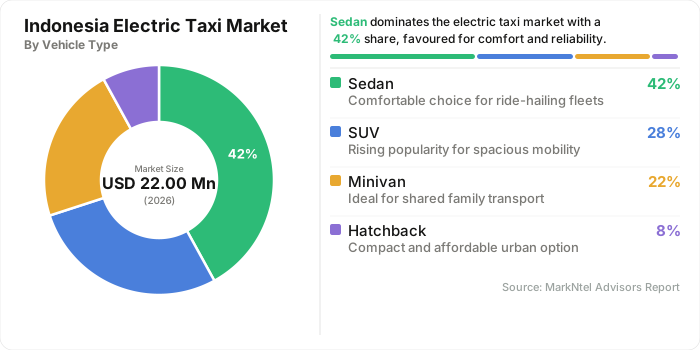
- By vehicle type, the sedan segment is anticipated to account for approximately 42% of the industry in 2026.
- By service model, the ride-hailing segment is projected to capture approximately 68% of the market in 2026.
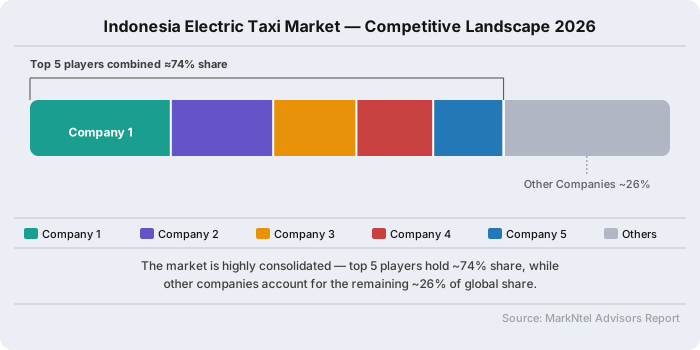
- The market is moderately consolidated, with the top five companies collectively accounting for approximately 74% of the market in 2026,
Indonesia Electric Taxi Market Size and Outlook
The electric taxi market size in Indonesia was valued at USD 16 million in 2025 and is projected to grow from USD 22 million in 2026 to USD 48 million by 2032. Along with this, the market is estimated to grow at a CAGR of around 13.89% during the forecast period, i.e., 2026-32, supported by regional government fiscal policy; even as national tax rules evolve toward broader vehicle taxation. In May 2026, Jakarta's Revenue Agency confirmed the capital will continue fully exempting battery electric vehicles from Motor Vehicle Tax (PKB) and Motor Vehicle Title Transfer Fee (BBNKB), despite Home Affairs Regulation No. 11 of 2026 technically making EVs taxable for the first time nationwide. This decision directly lowers ongoing ownership costs for electric taxi fleet operators in Indonesia's largest ride-hailing and taxi market, preserving the cost advantage that has driven operators toward battery electric fleets over conventional vehicles.
This local-level commitment extends beyond Jakarta. Bali's provincial government separately announced plans to fully exempt electric vehicles from motor vehicle tax, citing rising global fuel costs and alignment with the island's clean energy agenda. The Ministry of Home Affairs itself instructed regional governments nationwide to maintain full fiscal incentives for EVs to avoid slowing adoption momentum, even as the underlying tax framework shifts. For electric taxi operators, this signals that fleet economics will likely remain favorable across multiple provinces rather than being concentrated solely in Jakarta, widening the addressable geography for commercial EV taxi deployment. As more regional governments align with this directive, fleet operators gain greater confidence to expand electric taxi services into secondary markets like Bali, reinforcing sustained, geographically diversified growth for Indonesia's electric taxi industry through 2032.
Indonesia Electric Taxi Market Key Indicators
- PT PLN (Persero) expanded Indonesia's EV charging infrastructure to more than 3,800 Public Electric Vehicle Charging Stations (SPKLU) across over 2,500 locations by 2025.
The rapid expansion of charging infrastructure reduces range anxiety, improves fleet utilization, and enables electric taxi operators to expand services beyond major metropolitan areas. - Under Minister of Finance Regulation (PMK) No. 12 of 2025, qualifying battery electric vehicles with at least 40% Domestic Component Level (TKDN) benefit from a reduced 1% VAT instead of the standard 11%. iscal incentives lower fleet acquisition costs, improving the business case for taxi operators to transition from conventional vehicles to electric taxis.
- Indonesia's Ministry of Communication and Digital (Komdigi) reported that digital connectivity continued expanding in 2025 through nationwide broadband and digital infrastructure development, supporting over 220 million internet connections across the country. Improved digital infrastructure strengthens ride-hailing ecosystems, enabling greater adoption of app-based electric taxi services, digital payments, and connected mobility platforms.
Indonesia Electric Taxi Market Scope
| Category | Segments |
|---|---|
| By Vehicle Type & Thousand Units | Sedan, SUV, Minivan, Hatchback |
| By Propulsion | Battery electric vehicles (BEVs), Hybrid electric vehicles (HEVs), Plug-in hybrid electric vehicles (PHEVs |
| By Charging Type | Fast Charging, Normal Charging, Wireless Charging |
| By Service Model | Ride-Hailing, Pre-Booked Taxis, On-Demand Taxis |
| By Fleet Ownership | Private Fleet, Rental Fleet, Government Fleet |
| By End User | Urban Commuters, Airport & Tourism Transfers, Corporate / Premium Clients |
Indonesia Electric Taxi Market Growth Drivers
Government Incentives and Domestic EV Manufacturing Accelerate Electric Taxi Adoption
Government incentives remain a key growth driver for the Indonesia electric taxi market, as fiscal policies continue reducing the cost of battery electric vehicles (BEVs) for commercial fleet operators. Under Minister of Finance Regulation (PMK) No. 12 of 2025, Indonesia extended the Government-Borne Value Added Tax (PPN DTP) incentive through December 2025. BEVs with at least 40% Domestic Component Level (TKDN) are subject to only 1% VAT, while those with 20%–40% TKDN receive a reduced 6% VAT. Import duty and luxury tax incentives for eligible EVs further lower acquisition costs, encouraging taxi operators and ride-hailing companies to accelerate fleet electrification.
Indonesia is also strengthening its long-term EV ecosystem through domestic manufacturing policies that continue into 2026. Supporting this strategy, VinFast began constructing its EV manufacturing plant in West Java in July 2025, enhancing local vehicle production and supply. Together with continued investments from Hyundai and BYD, these initiatives improve vehicle availability, reduce import dependence, and support the sustained expansion of the Indonesia electric taxi market.
Recent Trends
Subscription-Based Mobility Services Transforming Urban Transportation
Subscription-based services and integrated mobility platforms are becoming a significant trend in the Indonesia electric taxi market, enabling operators to improve customer convenience while supporting wider electric taxi adoption in Indonesia. Rather than relying solely on conventional ride bookings, companies are integrating electric taxi services into digital mobility ecosystems that combine booking, payment, and fleet management within a single application. A notable example is Green SM's collaboration with Gojek in December 2025, which introduced the GoGreen SM service, allowing passengers to book Green SM electric taxis directly through the Gojek app. The partnership expands customer accessibility while strengthening the visibility of electric mobility services across Indonesia.
Innovative subscription services are also improving the economics of electric vehicle operations. In January 2025, Hyundai Motors Indonesia launched a monthly EV charging subscription program covering more than 500 charging points at over 280 locations nationwide, offering flexible charging packages for both individual and commercial EV users. Predictable charging costs help taxi operators optimize operating expenses while improving fleet utilization. Together, integrated ride-hailing platforms and subscription-based charging services are creating a more connected electric mobility ecosystem, encouraging long-term adoption of electric taxis and supporting sustainable urban transportation across Indonesia.
Indonesia Electric Taxi Market Opportunities and Challenges
Regional Charging Infrastructure Gaps Creating Growth Opportunities Through Nationwide EV Charging Network Expansion
The uneven availability of public EV charging infrastructure continues to challenge the Indonesia electric taxi Indonesia, particularly outside Jakarta and other major metropolitan areas, where limited charging access restricts fleet expansion and operational flexibility. Although PT PLN (Persero) reported that Indonesia had deployed more than 3,800 public EV charging units (SPKLU) across over 2,500 locations by 2025, infrastructure remains concentrated in high-demand urban corridors, making it difficult for taxi operators to expand services into secondary cities and tourism destinations. The resulting range concerns and charging downtime increase operating complexity, slowing the pace of electric taxi adoption in Indonesia despite growing demand for sustainable urban mobility.
This infrastructure gap, however, is creating a substantial growth opportunity as both the government and private sector accelerate investments in nationwide charging networks. Reflecting this momentum, VinFast signed a strategic cooperation agreement with PT Aribi Amartapura (Amarta Group) in 2025 to jointly develop EV charging stations across Indonesia, supporting broader commercial EV deployment. As charging infrastructure expands beyond major cities, fleet operators will be able to improve vehicle utilization, optimize route planning, and confidently introduce larger electric taxi fleets into underserved markets. These developments are expected to strengthen the supporting ecosystem, reduce operational constraints, and create sustained long-term growth opportunities for the Indonesia electric taxi market.
Segmentation Insights
Sedan Segment Accounts for Approximately 42% of the Market, Driven by High Urban Mobility Demand and Fleet Electrification
The sedan segment is estimated to account for approximately 42% of the Indonesia electric taxi industry in 2026, making it the leading vehicle type. Sedans continue to be the preferred choice for organized taxi operators because they offer lower operating costs, higher energy efficiency, and greater passenger comfort compared to larger vehicle categories. Their suitability for frequent intra-city travel, combined with lower maintenance requirements and competitive total cost of ownership, has encouraged fleet operators to prioritize sedan deployment. The segment's dominance is further reinforced by the concentration of commercial taxi services in Indonesia's densely populated metropolitan regions, where compact and efficient vehicles are better suited to urban traffic conditions.
Indonesia's expanding urban population continues to strengthen demand for electric sedan taxis. Supporting this trend, Xanh SM officially launched its all-electric taxi services in Jakarta in December 2025, deploying VinFast electric vehicles specifically for commercial passenger transport. The launch demonstrates growing confidence in electric sedan fleets while reinforcing their suitability for high-frequency urban operations, lower operating costs, and Indonesia's broader transition toward sustainable urban mobility. Based on vehicle type, the market is further bifurcated into :
- Sedan
- SUV
- Minivan
- Hatchback
Ride-Hailing Holds Approximately 68% Share of the Industry, Supported by Digital Mobility Platforms and EV Fleet Expansion
The ride-hailing segment is projected to capture approximately 68% of the Indonesia electric taxi market in 2026, making it the dominant service model. Indonesia has experienced rapid adoption of app-based transportation services due to widespread smartphone penetration, digital payment infrastructure, and increasing consumer preference for convenient, on-demand mobility. Major platforms such as Grab and Gojek continue expanding their electric vehicle offerings to reduce operating costs and support national sustainability objectives. Their extensive driver networks, integrated digital ecosystems, and flexible booking services have enabled ride-hailing operators to capture a significant share of the country's organized taxi market.
The continued expansion of Indonesia's urban economy further supports ride-hailing demand. According to Statistics Indonesia (BPS), more than 58% of the country's population resided in urban areas in 2025, creating sustained demand for efficient first-mile and last-mile transportation services. Strengthening this transition, Grab announced a strategic partnership with GAC Group in January 2025 to accelerate the deployment of electric vehicles across Southeast Asia, including Indonesia, while expanding EV accessibility for driver-partners. The initiative enhances fleet electrification, supports lower operating expenses for drivers, and reinforces the long-term growth prospects of electric ride-hailing services within Indonesia's evolving urban transportation ecosystem. Based on the service model, the market is further bifurcated into:
- Ride-Hailing
- Pre-Booked Taxis
- On-Demand Taxis
Indonesia Electric Taxi Market Competitive Landscape
The Indonesia electric taxi market is moderately consolidated, with the top five companies, Blue Bird Group Holding Tbk, Grab Holdings Inc., GoTo Group (Gojek), Xanh SM (Green SM), and PT Express Transindo Utama Tbk, collectively accounting for an estimated 74% of the market share in 2026.
Key Companies in the Indonesia Electric Taxi Market
- Blue Bird Group Holding Tbk
- Grab Holdings Inc.
- GoTo Group (Gojek)
- Xanh SM (Green SM)
- PT Express Transindo Utama Tbk (Express Group)
- Maxim Indonesia
- Taksi Diamond
- White Horse Group
- VinFast Auto Ltd.
- Hyundai Motor Company
Indonesia Electric Taxi Industry News and Recent Developments
December 2025: Green SM Introduces All-Electric Taxi Operations in Indonesia
Xanh SM (Green SM) formally launched its all-electric taxi service in Indonesia using VinFast electric vehicles. The rollout established one of the country’s first large-scale dedicated EV taxi networks, integrating app-based booking, trained drivers, and a standardized electric fleet focused on zero-emission urban transport.
Impact Analysis: The launch accelerated the commercialization of electric taxi services in Indonesia by demonstrating a fully integrated EV taxi operating model. It also increased consumer exposure to electric taxis and created competitive pressure for established taxi and ride-hailing operators to expand their own EV initiatives.
June 2026: Green SM Expands All-Electric Taxi Service to Bandar Lampung
Green SM launched operations in Bandar Lampung, marking its first expansion into Sumatra. The deployment added new electric taxi coverage outside the Jakarta metropolitan area and extended the company’s zero-emission fleet into an important regional transport hub.
Impact Analysis: The expansion demonstrates that electric taxi deployment in Indonesia is moving beyond the capital region into secondary cities. Wider geographic coverage strengthens fleet utilization, supports regional EV adoption, and improves the commercial viability of electric taxi operations across multiple Indonesian urban centers.
Frequently Asked Questions
- Market Segmentation
- Introduction
- Product Definition
- Research Process
- Assumptions
- Executive Summary
- Indonesia Electric Taxi Production (Thousand Units) Trend 2022-2032
- 5. Indonesia Electric Taxi Production (Thousand Units) Trend by Vehicle Type
- Sedan
- SUV
- Minivan
- Hatchback
- 5. Indonesia Electric Taxi Production (Thousand Units) Trend by Vehicle Type
- Company Wise Production Plants and Statistics
- Installed Production Capacity
- Actual Production
- Planned Production Target
- Indonesia Electric Taxi Market Supply Chain Analysis 2022-2032
- Indonesia Electric Taxi Market Import & Export Data Analysis 2022-2032
- Indonesia Electric Taxi Market Policies, Regulations, and Product Standards
- Indonesia Electric Taxi Market Trends & Developments
- Indonesia Electric Taxi Market Dynamics
- Growth Factors
- Challenges
- Indonesia Electric Taxi Market Hotspot & Opportunities
- Indonesia Electric Taxi Market Outlook, 2022-2032
- Market Size & Outlook
- By Revenues (USD Million)
- By Unit Sold (Thousand Units)
- Market Segmentation & Outlook
- By Vehicle Type- Market Size & Forecast 2022-2032, USD Million & Thousand Units &Thousand Units
- Sedan
- SUV
- Minivan
- Hatchback
- By Propulsion- Market Size & Forecast 2022-2032, USD Million & Thousand Units
- Battery electric vehicles (BEVs)
- Hybrid electric vehicles (HEVs)
- Plug-in hybrid electric vehicles (PHEVs)
- By Charging Type - Market Size & Forecast 2022-2032, USD Million & Thousand Units
- Fast Charging
- Normal Charging
- Wireless Charging
- By Service Model- Market Size & Forecast 2022-2032, USD Million & Thousand Units
- Ride-Hailing
- Pre-Booked Taxis
- On-Demand Taxis
- By Fleet Ownership- Market Size & Forecast 2022-2032, USD Million & Thousand Units
- Private Fleet
- Rental Fleet
- Government Fleet
- By End User- Market Size & Forecast 2022-2032, USD Million & Thousand Units
- Urban Commuters
- Airport & Tourism Transfers
- Corporate / Premium Clients
- By Region - Market Size & Forecast 2022-2032, USD Million & Thousand Units
- Java
- Sumatra
- Kalimantan
- Bali
- Rest of Indonesia
- By Company
- Competition Characteristics
- Market Share & Analysis
- By Vehicle Type- Market Size & Forecast 2022-2032, USD Million & Thousand Units &Thousand Units
- Market Size & Outlook
- Indonesia Electric Sedan Market Outlook, 2022-2032
- Market Size & Outlook
- By Revenues (USD Million)
- By Unit Sold (Thousand Units)
- Market Segmentation & Outlook
- By Propulsion- Market Size & Forecast 2022-2032, USD Million & Thousand Units
- By Charging Type - Market Size & Forecast 2022-2032, USD Million & Thousand Units
- By Service Model- Market Size & Forecast 2022-2032, USD Million & Thousand Units
- By Fleet Ownership- Market Size & Forecast 2022-2032, USD Million & Thousand Units
- By End User- Market Size & Forecast 2022-2032, USD Million & Thousand Units
- By Region - Market Size & Forecast 2022-2032, USD Million & Thousand Units
- Market Size & Outlook
- Indonesia Electric SUV Market Outlook, 2022-2032
- Market Size & Outlook
- By Revenues (USD Million)
- By Unit Sold (Thousand Units)
- Market Segmentation & Outlook
- By Propulsion- Market Size & Forecast 2022-2032, USD Million & Thousand Units
- By Charging Type - Market Size & Forecast 2022-2032, USD Million & Thousand Units
- By Service Model- Market Size & Forecast 2022-2032, USD Million & Thousand Units
- By Fleet Ownership- Market Size & Forecast 2022-2032, USD Million & Thousand Units
- By End User- Market Size & Forecast 2022-2032, USD Million & Thousand Units
- By Region - Market Size & Forecast 2022-2032, USD Million & Thousand Units
- Market Size & Outlook
- Indonesia Electric Minivan Market Outlook, 2022-2032
- Market Size & Outlook
- By Revenues (USD Million)
- By Unit Sold (Thousand Units)
- Market Segmentation & Outlook
- By Propulsion- Market Size & Forecast 2022-2032, USD Million & Thousand Units
- By Charging Type - Market Size & Forecast 2022-2032, USD Million & Thousand Units
- By Service Model- Market Size & Forecast 2022-2032, USD Million & Thousand Units
- By Fleet Ownership- Market Size & Forecast 2022-2032, USD Million & Thousand Units
- By End User- Market Size & Forecast 2022-2032, USD Million & Thousand Units
- By Region - Market Size & Forecast 2022-2032, USD Million & Thousand Units
- Market Size & Outlook
- Indonesia Electric Hatchback Market Outlook, 2022-2032
- Market Size & Outlook
- By Revenues (USD Million)
- By Unit Sold (Thousand Units)
- Market Segmentation & Outlook
- By Propulsion- Market Size & Forecast 2022-2032, USD Million & Thousand Units
- By Charging Type - Market Size & Forecast 2022-2032, USD Million & Thousand Units
- By Service Model- Market Size & Forecast 2022-2032, USD Million & Thousand Units
- By Fleet Ownership- Market Size & Forecast 2022-2032, USD Million & Thousand Units
- By End User- Market Size & Forecast 2022-2032, USD Million & Thousand Units
- By Region - Market Size & Forecast 2022-2032, USD Million & Thousand Units
- Market Size & Outlook
- Indonesia Electric Taxi Market Key Strategic Imperatives for Success & Growth
- Competitive Outlook
- Company Profiles
- Blue Bird Group Holding Tbk
- Business Description
- Product Portfolio
- Collaborations & Alliances
- Recent Developments
- Financial Details
- Others
- Grab Holdings Inc.
- Business Description
- Product Portfolio
- Collaborations & Alliances
- Recent Developments
- Financial Details
- Others
- GoTo Group (Gojek)
- Business Description
- Product Portfolio
- Collaborations & Alliances
- Recent Developments
- Financial Details
- Others
- Xanh SM (Green SM)
- Business Description
- Product Portfolio
- Collaborations & Alliances
- Recent Developments
- Financial Details
- Others
- PT Express Transindo Utama Tbk (Express Group)
- Business Description
- Product Portfolio
- Collaborations & Alliances
- Recent Developments
- Financial Details
- Others
- Maxim Indonesia
- Business Description
- Product Portfolio
- Collaborations & Alliances
- Recent Developments
- Financial Details
- Others
- Taksi Diamond
- Business Description
- Product Portfolio
- Collaborations & Alliances
- Recent Developments
- Financial Details
- Others
- White Horse Group
- Business Description
- Product Portfolio
- Collaborations & Alliances
- Recent Developments
- Financial Details
- Others
- VinFast Auto Ltd.
- Business Description
- Product Portfolio
- Collaborations & Alliances
- Recent Developments
- Financial Details
- Others
- Hyundai Motor Company
- Business Description
- Product Portfolio
- Collaborations & Alliances
- Recent Developments
- Financial Details
- Others
- Others
- Blue Bird Group Holding Tbk
- Company Profiles
- Disclaimer
MarkNtel Advisors follows a robust and iterative research methodology designed to ensure maximum accuracy and minimize deviation in market estimates and forecasts. Our approach combines both bottom-up and top-down techniques to effectively segment and quantify various aspects of the market. A consistent feature across all our research reports is data triangulation, which examines the market from three distinct perspectives to validate findings. Key components of our research process include:
1. Scope & Research Design At the outset, MarkNtel Advisors define the research objectives and formulate pertinent questions. This phase involves determining the type of research—qualitative or quantitative—and designing a methodology that outlines data collection methods, target demographics, and analytical tools. They also establish timelines and budgets to ensure the research aligns with client goals.
2. Sample Selection and Data Collection In this stage, the firm identifies the target audience and determines the appropriate sample size to ensure representativeness. They employ various sampling methods, such as random or stratified sampling, based on the research objectives. Data collection is carried out using tools like surveys, interviews, and observations, ensuring the gathered data is reliable and relevant.
3. Data Analysis and Validation Once data is collected, MarkNtel Advisors undertake a rigorous analysis process. This includes cleaning the data to remove inconsistencies, employing statistical software for quantitative analysis, and thematic analysis for qualitative data. Validation steps are taken to ensure the accuracy and reliability of the findings, minimizing biases and errors.

4. Data Forecast and FinalizationThe final phase involves forecasting future market trends based on the analyzed data. MarkNtel Advisors utilize predictive modeling and time series analysis to anticipate market behaviors. The insights are then compiled into comprehensive reports, featuring visual aids like charts and graphs, and include strategic recommendations to inform client decision-making
We offer flexible licensing options to cater to varying organizational needs. Choose the pricing pack that best suits your requirements:
Buy Now Inquire Before Buying
 Request Customization
 Talk to our Consultant