

Indian Spices Market Research Report: Forecast (2026-2032)
By Product Type (Pure Spices (Turmeric, Cumin, Cardamom, Coriander, Ginger, Garlic, Pepper, Red Chilli, Mustard Seeds, Fenugreek, Tamarind, Others (Fennel, Clove, etc.))), Blended ... Spices (Garam Masala, Non-Veg Masala, Kitchen King and Sabzi Masala, Chole and Channa Masala, Sambhar and Rasham Masala, Paneer and Curry Masala, Others (Pav Bhaji Masala, Chat Masala, etc.)), By Form (Whole, Powder, Paste, Others (Crushed, Chopped, etc.)), By Nature (Organic, Conventional), By Application (Curries, Snacks and Convenience Food, Sauces and Dressings, Frozen Food, Others (Soups, Beverages, etc.)), By End User (Food Service Outlets, Industrial Applications, Household), By Distribution Channel (Offline (Direct Sales, Supermarkets/Hypermarkets, Convenience Stores), Online), and others Read more
- Food & Beverages
- Aug 2026
- Pages 145
- Report Format: PDF, Excel, PPT
Indian Spices Market
Projected 5.76% CAGR from 2026 to 2032
Study Period
2026-2032
Market Size (2026)
USD 25.22 Billion
Market Size (2032)
USD 35.29 Billion
Base Year
2025
Projected CAGR
5.76%
Leading Segments
By Product Type: Pure Spices
Indian Spices Market Key Takeaways
- Indian spices market size was valued at USD 23.29 billion in 2025 and is projected to grow from USD 25.22 billion in 2026 to USD 35.29 billion by 2032.
- The industry is projected to reflect sustain growth at a steady CAGR of 5.76% during 2026-2032.
- Asia Pacific holds the largest share of about 31% in 2026.
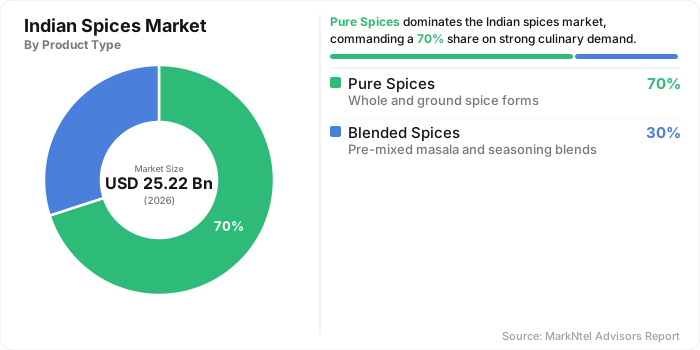
- By product type, pure spices holds a significant share of about 70% in 2026.
- By form, powdered form seized a significant share of about 60% in 2026.
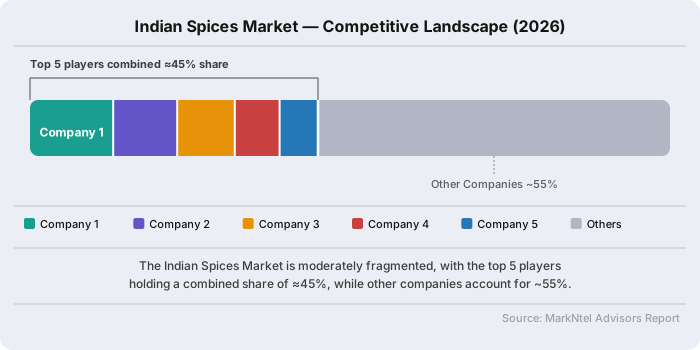
- The industry is moderately fragmented. However, the top five players collectively account for nearly 45% share.
Indian Spices Market Size and Outlook
Indian Spices market size was valued at USD 23.29 billion in 2025 and is projected to grow from USD 25.22 billion in 2026 to USD 35.29 billion by 2032. Along with this, the market is estimated to grow at a CAGR of around 5.76% during the forecast period, i.e., 2026-32.
The global Indian spices market is expanding due to increasing international demand for authentic cuisines, rising preference for natural and clean-label ingredients, and the growing use of spices in processed foods, foodservice, and wellness products. India’s strong spice production base, supported by government initiatives such as the Spices Board of India’s SPICED Scheme (2023–24 to 2025–26), is enhancing processing capabilities, quality standards, and global competitiveness. Future growth opportunities are emerging in value-added spice products, spice extracts, oleoresins, branded packaged spices, and digital traceability solutions. Supported by evolving consumer preferences and continuous industry modernization, the market is expected to achieve sustainable long-term growth.
Indian Spices Market Key Indicators
- India's sustained spice production underpins the stability of the global Indian spices market by ensuring a reliable supply of diverse spice varieties despite seasonal fluctuations. According to the Spices Board India Annual Report FY24–25, production is estimated at 11.99 million metric tonnes in FY2024–25, following 12.48 million metric tonnes in FY2023–24, demonstrating the resilience of India's production base. This consistent output strengthens India's ability to meet growing international demand and reinforces its position as the world's leading supplier of spices.
- India's export leadership reflects the strong global demand for its spice products. According to IBEF, chilli was India's largest exported spice in FY2023–24, valued at USD 1.5 billion, followed by cumin (USD 700.23 million) and spice oils & oleoresins (USD 498.01 million). Chilli alone contributed nearly one-third of total spice export value, highlighting sustained international demand and supporting the long-term growth of the global Indian spices market.
- India exported spices to 200 destinations worldwide as of FY25, with the top 10 — China, USA, UAE, Bangladesh, Thailand, Malaysia, UK, Saudi Arabia, Indonesia and Germany collectively accounting for over 60% of total export earnings, showing heavy reliance on a concentrated buyer base.
- The rapid expansion of Indian restaurants worldwide is strengthening demand for authentic Indian spices across foodservice and hospitality channels. According to the ABN Asia report (2025), there are approximately 80,000 Indian restaurants across 18 countries, reflecting the growing international popularity of Indian cuisine. This expanding restaurant footprint is increasing the consumption of Indian spices such as chilli, cumin, turmeric, coriander, and garam masala, supporting sustained growth in the global Indian spices market.
Indian Spices Market Scope
| Category | Segments |
|---|---|
| By Product Type | Pure Spices (Turmeric, Cumin, Cardamom, Coriander, Ginger, Garlic, Pepper, Red Chilli, Mustard Seeds, Fenugreek, Tamarind, Others (Fennel, Clove, etc.))), Blended Spices (Garam Masala, Non-Veg Masala, Kitchen King and Sabzi Masala, Chole and Channa Masala, Sambhar and Rasham Masala, Paneer and Curry Masala, Others (Pav Bhaji Masala, Chat Masala, etc. |
| By Form | Whole, Powder, Paste, Others (Crushed, Chopped, etc. |
| By Nature | Organic, Conventional |
| By Application | Curries, Snacks and Convenience Food, Sauces and Dressings, Frozen Food, Others (Soups, Beverages, etc. |
| By End User | Food Service Outlets, Industrial Applications, Household |
| By Distribution Channel | Offline (Direct Sales, Supermarkets/Hypermarkets, Convenience Stores), Online |
Indian Spices Market Growth Drivers
Expanding International Use of Indian Spices Strengthens Overseas Demand
The growing adoption of Indian flavors across ethnic cuisine, foodservice, packaged foods, and food manufacturing is strengthening international demand for Indian spices. Products such as chilli, cumin, turmeric, coriander, and cardamom are increasingly used in restaurant preparations, spice blends, sauces, ready-to-eat meals, and household cooking, creating demand across both consumer and industrial applications.
India's established position in international spice trade provides a strong base for this demand. During FY2025–26, the country exported 1.734 million tonnes of spices and spice products valued at USD 4.43 billion. Although export volume declined 4% and dollar value declined 6% from FY2024–25, the country continued to serve a geographically diversified customer base. The United States accounted for 14% of export earnings, followed by China at 12% and the UAE at 9%, while the top 15 destinations collectively contributed more than 85% of India's spice export earnings. This broad distribution across major food-importing markets reduces reliance on individual destinations and supports sustained international market access.
Demand is also supported by the diverse end-use applications of Indian spices. Food manufacturers use spices as flavoring and formulation ingredients, foodservice operators incorporate them into ethnic and fusion cuisines, while retail consumers purchase them for home cooking. The combination of established export relationships, diverse applications, and continued international consumption of Indian flavors is expected to sustain overseas demand and support the long-term growth of the Indian spices market.
Recent Trends
Shift Toward Value-Added Spice Products Raises Industry Value Potential
India's spice industry is gradually shifting from predominantly whole and commodity-oriented products toward processed and value-added offerings, including spice oils and oleoresins, blends, seasonings, extracts, curry powders and pastes, and other specialized ingredients. These products allow processors and exporters to capture greater value through formulation, processing, standardization, branding, and specialized applications.
The changing composition of India's export basket provides evidence of this transition. During FY2025–26, spice oils and oleoresins accounted for 12% of India's total spice export earnings, equal to cumin's 12% share and behind chilli at 27%. Curry powder and paste contributed a further 6%, while several other processed categories also formed part of the export basket. Together, these categories demonstrate that processed and specialized products have become an established component of India's spice trade.
Industry expectations further indicate a faster growth trajectory for value-added products. According to Ramkumar Menon of the World Spice Organisation, branded and processed spices and seasonings could expand at around 7–10% CAGR over the next five to ten years, compared with approximately 2–4% for commodity and whole spices. This indicates a potential structural shift toward higher-value products rather than a simple increase in commodity volumes.
The transition is also being reinforced by industry and policy initiatives. At the International Spice Conference 2026, industry stakeholders emphasized moving from bulk exports toward high-value, branded, and technology-enabled spice products. The Government of India's SPICED scheme similarly identifies enhancement of the share of value-added spices in the export basket as a specific objective, alongside post-harvest improvements, quality and safety compliance, export promotion, and capacity building. The scheme has been extended through September 30, 2026, or until approval of the proposed scheme for the 16th Finance Commission cycle, whichever is earlier.
The increasing focus on processed formulations, extracts, branded products, and specialized spice ingredients is expected to improve value realization from India's spice output and create additional opportunities across food manufacturing, foodservice, nutraceutical, and packaged-food applications. Consequently, value addition is emerging as a key structural trend shaping the future competitiveness of the Indian spices market.
Indian Spices Market Opportunities and Challenges
Quality Inconsistency and Stringent Global Food Safety Standards Accelerate Investments in Traceability and Premium Indian Spices
Quality inconsistency, adulteration, and contamination remain significant challenges for the global Indian spices industry, as they increase export compliance costs and affect buyer confidence in international markets. Major importing regions, including the European Union, the United States, and the Middle East, have tightenedfood safety requirements for pesticide residues, heavy metals, unauthorized colors, and microbiological contaminants, making compliance increasingly critical for Indian exporters.
Reflecting these concerns, the Food Safety and Standards Authority of India (FSSAI) conducted a Pan-India Surveillance on Spices between November 2024 and February 2025, analyzing more than 10,000 whole and ground spice samples. The survey identified quality issues such as excess lead in chilli powder, unauthorized colors in turmeric, elevated moisture in coriander, and misleading labelling in pepper and cardamom, highlighting the need for stronger quality assurance across the export value chain. The findings also led FSSAI to announce a nationwide factory-focused enforcement programme for spice processing units in 2025, reinforcing India's efforts to improve compliance with international food safety standards.
These challenges are accelerating investments in advanced quality assurance, digital traceability, and transparent product verification, creating new growth opportunities for premium Indian spice exporters. For example, in 2026, Cookme introduced Smart Pack technology, enabling consumers and international buyers to scan QR codes on spice packs and access batch-specific laboratory test reports, improving transparency and product authenticity. Similar investments in certification, traceability systems, and quality testing are expected to strengthen buyer confidence, expand access to regulated export markets, and support the global shift toward branded, certified, and value-added Indian spices.
As international food safety expectations continue to rise, exporters investing in traceability, quality certification, and transparent supply chains will be better positioned to compete in global markets. This transition toward higher-quality, compliant spice products is expected to reinforce the long-term growth of the global Indian spices market.
Segmentation Insights
Pure Spices Account for Nearly 70% Share Due to Strong Household Consumption and Extensive Applications
Pure spices account for nearly 70% of India's spices industry revenue due to their essential role in daily cooking, strong cultural significance, and extensive use across household and commercial food preparation. Spices such as turmeric, red chilli, cumin, coriander, pepper, ginger, and garlic are staple ingredients in Indian cuisine and are consumed regularly across diverse regional food traditions.
Additionally, pure spices have strong demand from restaurants, hotels, catering services, and food processing companies for applications in snacks, ready-to-eat meals, sauces, and seasoning products. India’s position as the world’s largest producer and consumer of spices further supports the dominance of pure spices. Moreover, rising awareness regarding authenticity, quality, and health benefits of natural spices is encouraging consumers to prefer packaged and branded pure spice products, strengthening segment growth. However, blended spices are witnessing faster expansion due to convenience-driven consumption trends. Based on product type, the scope has been segmented into:
- Pure Spices
- Blended Spices
Powdered Form Lead with Approximately 60% Market Share Due to Convenience and Packaged Consumption Trends
Powdered form hold the dominant position in the Indian spices market, accounting for an estimated 60% of total market share, driven by widespread household adoption, convenience, and increasing demand for ready-to-use cooking ingredients. Products such as turmeric powder, chilli powder, coriander powder, cumin powder, and blended masalas are essential components of daily cooking across Indian households, restaurants, and food processing industries.
The growing preference for hygienic, packaged, and standardized spice products has further accelerated the shift from loose spices to branded powdered formats. Additionally, urbanization, rising disposable income, and the expansion of organized retail and e-commerce channels have improved accessibility to packaged powdered spices across urban and semi-urban regions. Leading companies are also investing in advanced grinding, sterilization, and packaging technologies to enhance product quality, shelf life, and consumer trust, further strengthening the dominance of powdered spices in India. Based on form, the market is categorized into:
- Whole
- Powder
- Paste
- Others (Crushed, Chopped, etc.)
Indian Spices Market Geographical Outlook
Asia Pacific Leads the Indian Spices Market with Approximately 31% Share
Asia Pacific remains the leading region for the global Indian spices market due to the widespread use of spices in traditional cuisines and their growing application in packaged foods, ready-to-eat meals, and foodservice products. A strong example is India’s food processing sector, which is projected to reach USD 535 billion by FY2025–26, driven by increasing investments in processed food manufacturing and value-added agricultural products, creating higher demand for spice ingredients.
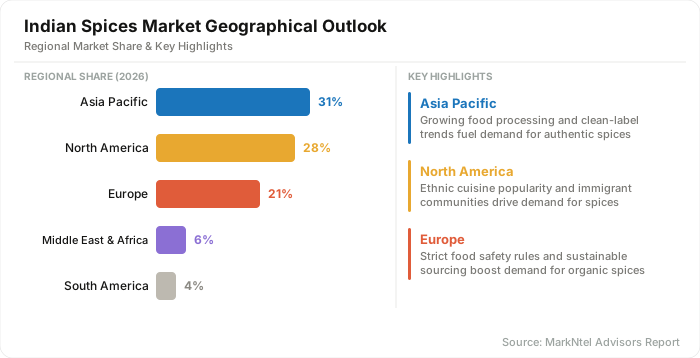
Additionally, Singapore’s food resilience strategy launched in 2025 highlights the country’s expanding global food sourcing network, with food imports diversified across more than 180 countries and regions, supporting demand for premium and specialty food ingredients. Rising investments in food manufacturing, modern retail, and international cuisine adoption across countries such as India, Singapore, Japan, Malaysia, and Indonesia are expected to further strengthen Asia Pacific’s dominance in the global Indian spices market.
Indian Spices Market Competitive Analysis
The global Indian spices market is moderately fragmented, with the top five companies collectively accounting for an estimated 45% of the market by value. Key participants include McCormick & Company, Incorporated, Olam Food Ingredients Pte. Ltd., ITC Limited, Mahashian Di Hatti Private Limited (MDH), and Everest Food Products Private Limited.
Major Companies in Indian Spices Industry
- McCormick & Company, Incorporated
- Olam Food Ingredients Pte. Ltd.
- ITC Limited
- Mahashian Di Hatti Private Limited
- Everest Food Products Private Limited
- Synthite Industries Private Limited
- Kancor Ingredients Limited
- Orkla India Private Limited
- Tata Consumer Products Limited
- Nedspice Group B.V.
- Eastern Condiments Private Limited
- Aachi Masala Foods Private Limited
- Akay Natural Ingredients Private Limited
- VKL Seasoning Private Limited
- Dharampal Satyapal Foods Limited
- Others
Indian Spices Industry News and Recent Developments
May 2026: Shyam Kitchen Spices begins national expansion with new product positioning
Shyam Kitchen Spices, operated by Shyam Dhani Industries, announced a major brand expansion strategy in 2026, moving from a regional player toward a nationwide presence. The company introduced a refreshed product strategy focused on health-oriented spice offerings and expanded distribution across multiple Indian states. The initiative follows its stock market listing in December 2025 and aims to strengthen its position in the branded spice segment.
Impact Analysis: Shyam Kitchen Spices’ expansion strategy is expected to strengthen competition in India’s branded spices market by enabling a regional brand to reach a wider consumer base. The focus on health-oriented offerings and broader distribution can help capture demand from urban and semi-urban households. The move may also accelerate brand consolidation as regional players invest in nationwide growth strategies.
2026: Catch Salt & Spices Launches New Seasoning Variants Under Sprinkler Range
DS Group’s Catch Salt & Spices expanded its Sprinkler portfolio in 2026 with new-age seasonings and regional flavour variants, including pizza pasta seasoning, chilli flakes, oregano, magic masala, mixed herbs, Jeeravan, and Podi Masala. The launch aims to address growing demand for convenient seasoning formats across general trade, modern retail, e-commerce, and quick-commerce channels
Impact Analysis: Catch’s new seasoning launches are expected to support growth in India’s premium seasoning segment by catering to changing cooking habits and demand for convenient flavour solutions. Expansion across general trade, modern retail, e-commerce, and quick-commerce channels can improve accessibility. The launch also strengthens Catch’s position in value-added spices while encouraging innovation in blended seasoning formats.
December 2025: Vasant Launches AI-Powered Digital Innovation for Spice Consumers
Vasant introduced Masala Mausi, an AI-powered digital avatar designed to provide consumers with guidance on spices, flavour combinations, and regional cuisines. The initiative combines traditional spice expertise with digital technology to improve consumer interaction and cooking assistance.
Impact Analysis: Vasant’s AI-powered Masala Mausi initiative is expected to strengthen consumer engagement by integrating digital technology with traditional spice knowledge. The platform can enhance product discovery, provide personalized cooking guidance, and improve brand interaction among digitally connected consumers. This development highlights the growing adoption of technology-driven solutions by spice companies to create differentiated experiences and strengthen customer loyalty in the evolving packaged spices market.
Frequently Asked Questions
- Market Segmentation
- Introduction
- Product Definition
- Research Process
- Assumptions
- Executive Summary
- Indian Spices Market Policies, Regulations, and Product Standards
- Indian Spices Market Production Trend (Tons) 2022-2032
- Indian Spices Market Production Trend By Type of Product
- Pure Spices
- Turmeric
- Cumin
- Cardamom
- Coriander
- Ginger
- Garlic
- Pepper
- Red Chilli
- Mustard Seeds
- Fenugreek
- Tamarind
- Others (Fennel, Clove, etc.)
- Blended Spices
- Garam Masala
- Non-Veg Masala
- Kitchen King and Sabzi Masala
- Chole and Channa Masala
- Sambhar and Rasham Masala
- Paneer and Curry Masala
- Others (Pav Bhaji Masala, Chat Masala, etc.)
- Pure Spices
- Company Wise Production Plants and Statistics
- Installed Production Capacity
- Actual Production
- Planned Production Target
- Indian Spices Market Production Trend By Type of Product
- Indian Spices Market Pricing Analysis 2022-2032
- Indian Spices Market Pricing Trend (USD/Tons) 2022-2032
- Indian Spices Market Pricing Trend (USD/Tons) By Regions 2022-2032
- North America
- South America
- Europe
- Middle East & Africa
- Asia Pacific
- Indian Spices Market Pricing Trend (USD/Tons ) By Product Type 2022-2032
- Pure Spices
- Turmeric
- Cumin
- Cardamom
- Coriander
- Ginger
- Garlic
- Pepper
- Red Chilli
- Mustard Seeds
- Fenugreek
- Tamarind
- Others (Fennel, Clove, etc.)
- Blended Spices
- Garam Masala
- Non-Veg Masala
- Kitchen King and Sabzi Masala
- Chole and Channa Masala
- Sambhar and Rasham Masala
- Paneer and Curry Masala
- Others (Pav Bhaji Masala, Chat Masala, etc.)
- Pure Spices
- Indian Spices Market Trends & Developments
- Indian Spices Market Dynamics
- Growth Factors
- Challenges
- Indian Spices Market Hotspot & Opportunities
- Indian Spices Market Outlook, 2022-2032
- Market Size & Outlook
- By Revenues (USD Million)
- By Quantity Sold (Thousand Tons)
- Market Segmentation & Outlook
- By Product Type- Market Size & Forecast 2022-2032, USD Million & Thousand Tons
- Pure Spices
- Turmeric
- Cumin
- Cardamom
- Coriander
- Ginger
- Garlic
- Pepper
- Red Chilli
- Mustard Seeds
- Fenugreek
- Tamarind
- Others (Fennel, Clove, etc.)
- Pure Spices
- Blended Spices
- Garam Masala
- Non-Veg Masala
- Kitchen King and Sabzi Masala
- Chole and Channa Masala
- Sambhar and Rasham Masala
- Paneer and Curry Masala
- Others (Pav Bhaji Masala, Chat Masala, etc.)
- By Product Type- Market Size & Forecast 2022-2032, USD Million & Thousand Tons
- By Form- Market Size & Forecast 2022-2032, USD Million & Thousand Tons
- Whole
- Powder
- Paste
- Others (Crushed, Chopped, etc.)
- By Nature- Market Size & Forecast 2022-2032, USD Million & Thousand Tons
- Organic
- Conventional
- By Application- Market Size & Forecast 2022-2032, USD Million & Thousand Tons
- Curries
- Snacks and Convenience Food
- Sauces and Dressings
- Frozen Food
- Others (Soups, Beverages, etc.)
- By End User- Market Size & Forecast 2022-2032, USD Million & Thousand Tons
- Food Service Outlets
- Industrial Applications
- Household
- By Distribution Channel- Market Size & Forecast 2022-2032, USD Million & Thousand Tons
- Offline
- Direct Sales
- Supermarkets/Hypermarkets
- Convenience Stores
- Online
- Offline
- By Region- Market Size & Forecast 2022-2032, USD Million & Thousand Tons
- North America
- South America
- Europe
- Middle East & Africa
- Asia Pacific
- By Company
- Competition Characteristics
- Market Share & Analysis
- Market Size & Outlook
- North America Indian Spices Market Outlook, 2022-2032
- Market Size & Analysis
- By Revenues (USD Billion)
- By Quantity Sold (Thousand Tons)
- Market Share & Analysis
- By Product Type- Market Size & Forecast 2022-2032, USD Million & Thousand Tons
- By Form- Market Size & Forecast 2022-2032, USD Million & Thousand Tons
- By Nature- Market Size & Forecast 2022-2032, USD Million & Thousand Tons
- By Application- Market Size & Forecast 2022-2032, USD Million & Thousand Tons
- By End User- Market Size & Forecast 2022-2032, USD Million & Thousand Tons
- By Distribution Channel- Market Size & Forecast 2022-2032, USD Million & Thousand Tons
- By Country
- The US
- Canada
- Mexico
- The US Indian Spices Market Outlook, 2022-2032
- Market Size & Analysis
- By Revenues (USD Billion)
- By Quantity Sold (Thousand Tons)
- Market Share & Analysis
- By Product Type- Market Size & Forecast 2022-2032, USD Million & Thousand Tons
- By Application- Market Size & Forecast 2022-2032, USD Million & Thousand Tons
- By End User- Market Size & Forecast 2022-2032, USD Million & Thousand Tons
- Market Size & Analysis
- Canada Indian Spices Market Outlook, 2022-2032
- Market Size & Analysis
- By Revenues (USD Billion)
- By Quantity Sold (Thousand Tons)
- Market Share & Analysis
- By Product Type- Market Size & Forecast 2022-2032, USD Million & Thousand Tons
- By Application- Market Size & Forecast 2022-2032, USD Million & Thousand Tons
- By End User- Market Size & Forecast 2022-2032, USD Million & Thousand Tons
- Market Size & Analysis
- Mexico Indian Spices Market Outlook, 2022-2032
- Market Size & Analysis
- By Revenues (USD Billion)
- By Quantity Sold (Thousand Tons)
- Market Share & Analysis
- By Product Type- Market Size & Forecast 2022-2032, USD Million & Thousand Tons
- By Application- Market Size & Forecast 2022-2032, USD Million & Thousand Tons
- By End User- Market Size & Forecast 2022-2032, USD Million & Thousand Tons
- Market Size & Analysis
- Market Size & Analysis
- South America Indian Spices Market Outlook, 2022-2032
- Market Size & Analysis
- By Revenues (USD Billion)
- By Quantity Sold (Thousand Tons)
- Market Share & Analysis
- By Product Type- Market Size & Forecast 2022-2032, USD Million & Thousand Tons
- By Form- Market Size & Forecast 2022-2032, USD Million & Thousand Tons
- By Nature- Market Size & Forecast 2022-2032, USD Million & Thousand Tons
- By Application- Market Size & Forecast 2022-2032, USD Million & Thousand Tons
- By End User- Market Size & Forecast 2022-2032, USD Million & Thousand Tons
- By Distribution Channel- Market Size & Forecast 2022-2032, USD Million & Thousand Tons
- By Country
- Brazil
- Argentina
- Rest of South America
- Brazil Indian Spices Market Outlook, 2022-2032
- Market Size & Analysis
- By Revenues (USD Billion)
- By Quantity Sold (Thousand Tons)
- Market Share & Analysis
- By Product Type- Market Size & Forecast 2022-2032, USD Million & Thousand Tons
- By Application- Market Size & Forecast 2022-2032, USD Million & Thousand Tons
- By End User- Market Size & Forecast 2022-2032, USD Million & Thousand Tons
- Market Size & Analysis
- Argentina Indian Spices Market Outlook, 2022-2032
- Market Size & Analysis
- By Revenues (USD Billion)
- By Quantity Sold (Thousand Tons)
- Market Share & Analysis
- By Product Type- Market Size & Forecast 2022-2032, USD Million & Thousand Tons
- By Application- Market Size & Forecast 2022-2032, USD Million & Thousand Tons
- By End User- Market Size & Forecast 2022-2032, USD Million & Thousand Tons
- Market Size & Analysis
- Market Size & Analysis
- Europe Indian Spices Market Outlook, 2022-2032
- Market Size & Analysis
- By Revenues (USD Billion)
- By Quantity Sold (Thousand Tons)
- Market Share & Analysis
- By Product Type- Market Size & Forecast 2022-2032, USD Million & Thousand Tons
- By Form- Market Size & Forecast 2022-2032, USD Million & Thousand Tons
- By Nature- Market Size & Forecast 2022-2032, USD Million & Thousand Tons
- By Application- Market Size & Forecast 2022-2032, USD Million & Thousand Tons
- By End User- Market Size & Forecast 2022-2032, USD Million & Thousand Tons
- By Distribution Channel- Market Size & Forecast 2022-2032, USD Million & Thousand Tons
- By Country
- Germany
- The UK
- France
- Italy
- Spain
- Rest of Europe
- Germany Indian Spices Market Outlook, 2022-2032
- Market Size & Analysis
- By Revenues (USD Billion)
- By Quantity Sold (Thousand Tons)
- Market Share & Analysis
- By Product Type- Market Size & Forecast 2022-2032, USD Million & Thousand Tons
- By Application- Market Size & Forecast 2022-2032, USD Million & Thousand Tons
- By End User- Market Size & Forecast 2022-2032, USD Million & Thousand Tons
- Market Size & Analysis
- The UK Indian Spices Market Outlook, 2022-2032
- Market Size & Analysis
- By Revenues (USD Billion)
- By Quantity Sold (Thousand Tons)
- Market Share & Analysis
- By Product Type- Market Size & Forecast 2022-2032, USD Million & Thousand Tons
- By Application- Market Size & Forecast 2022-2032, USD Million & Thousand Tons
- By End User- Market Size & Forecast 2022-2032, USD Million & Thousand Tons
- Market Size & Analysis
- France Indian Spices Market Outlook, 2022-2032
- Market Size & Analysis
- By Revenues (USD Billion)
- By Quantity Sold (Thousand Tons)
- Market Share & Analysis
- By Product Type- Market Size & Forecast 2022-2032, USD Million & Thousand Tons
- By Application- Market Size & Forecast 2022-2032, USD Million & Thousand Tons
- By End User- Market Size & Forecast 2022-2032, USD Million & Thousand Tons
- Market Size & Analysis
- Italy Indian Spices Market Outlook, 2022-2032
- Market Size & Analysis
- By Revenues (USD Billion)
- By Quantity Sold (Thousand Tons)
- Market Share & Analysis
- By Product Type- Market Size & Forecast 2022-2032, USD Million & Thousand Tons
- By Application- Market Size & Forecast 2022-2032, USD Million & Thousand Tons
- By End User- Market Size & Forecast 2022-2032, USD Million & Thousand Tons
- Market Size & Analysis
- Spain Indian Spices Market Outlook, 2022-2032
- Market Size & Analysis
- By Revenues (USD Billion)
- By Quantity Sold (Thousand Tons)
- Market Share & Analysis
- By Product Type- Market Size & Forecast 2022-2032, USD Million & Thousand Tons
- By Application- Market Size & Forecast 2022-2032, USD Million & Thousand Tons
- By End User- Market Size & Forecast 2022-2032, USD Million & Thousand Tons
- Market Size & Analysis
- Market Size & Analysis
- The Middle East & Africa Indian Spices Market Outlook, 2022-2032
- Market Size & Analysis
- By Revenues (USD Billion)
- By Quantity Sold (Thousand Tons)
- Market Share & Analysis
- By Product Type- Market Size & Forecast 2022-2032, USD Million & Thousand Tons
- By Form- Market Size & Forecast 2022-2032, USD Million & Thousand Tons
- By Nature- Market Size & Forecast 2022-2032, USD Million & Thousand Tons
- By Application- Market Size & Forecast 2022-2032, USD Million & Thousand Tons
- By End User- Market Size & Forecast 2022-2032, USD Million & Thousand Tons
- By Distribution Channel- Market Size & Forecast 2022-2032, USD Million & Thousand Tons
- By Country
- The UAE
- Saudi Arabia
- South Africa
- Rest of the Middle East & Africa
- The UAE Indian Spices Market Outlook, 2022-2032
- Market Size & Analysis
- By Revenues (USD Billion)
- By Quantity Sold (Thousand Tons)
- Market Share & Analysis
- By Product Type- Market Size & Forecast 2022-2032, USD Million & Thousand Tons
- By Application- Market Size & Forecast 2022-2032, USD Million & Thousand Tons
- By End User- Market Size & Forecast 2022-2032, USD Million & Thousand Tons
- Market Size & Analysis
- Saudi Arabia Indian Spices Market Outlook, 2022-2032
- Market Size & Analysis
- By Revenues (USD Billion)
- By Quantity Sold (Thousand Tons)
- Market Share & Analysis
- By Product Type- Market Size & Forecast 2022-2032, USD Million & Thousand Tons
- By Application- Market Size & Forecast 2022-2032, USD Million & Thousand Tons
- By End User- Market Size & Forecast 2022-2032, USD Million & Thousand Tons
- Market Size & Analysis
- South Africa Indian Spices Market Outlook, 2022-2032
- Market Size & Analysis
- By Revenues (USD Billion)
- By Quantity Sold (Thousand Tons)
- Market Share & Analysis
- By Product Type- Market Size & Forecast 2022-2032, USD Million & Thousand Tons
- By Application- Market Size & Forecast 2022-2032, USD Million & Thousand Tons
- By End User- Market Size & Forecast 2022-2032, USD Million & Thousand Tons
- Market Size & Analysis
- Market Size & Analysis
- Asia-Pacific Indian Spices Market Outlook, 2022-2032
- Market Size & Analysis
- By Revenues (USD Billion)
- By Quantity Sold (Thousand Tons)
- Market Share & Analysis
- By Product Type- Market Size & Forecast 2022-2032, USD Million & Thousand Tons
- By Form- Market Size & Forecast 2022-2032, USD Million & Thousand Tons
- By Nature- Market Size & Forecast 2022-2032, USD Million & Thousand Tons
- By Application- Market Size & Forecast 2022-2032, USD Million & Thousand Tons
- By End User- Market Size & Forecast 2022-2032, USD Million & Thousand Tons
- By Distribution Channel- Market Size & Forecast 2022-2032, USD Million & Thousand Tons
- By Country
- China
- Japan
- India
- South Korea
- Australia
- Rest of Asia-Pacific
- China Indian Spices Market Outlook, 2022-2032
- Market Size & Analysis
- By Revenues (USD Billion)
- By Quantity Sold (Thousand Tons)
- Market Share & Analysis
- By Product Type- Market Size & Forecast 2022-2032, USD Million & Thousand Tons
- By Application- Market Size & Forecast 2022-2032, USD Million & Thousand Tons
- By End User- Market Size & Forecast 2022-2032, USD Million & Thousand Tons
- Market Size & Analysis
- Japan Indian Spices Market Outlook, 2022-2032
- Market Size & Analysis
- By Revenues (USD Billion)
- By Quantity Sold (Thousand Tons)
- Market Share & Analysis
- By Product Type- Market Size & Forecast 2022-2032, USD Million & Thousand Tons
- By Application- Market Size & Forecast 2022-2032, USD Million & Thousand Tons
- By End User- Market Size & Forecast 2022-2032, USD Million & Thousand Tons
- Market Size & Analysis
- India Indian Spices Market Outlook, 2022-2032
- Market Size & Analysis
- By Revenues (USD Billion)
- By Quantity Sold (Thousand Tons)
- Market Share & Analysis
- By Product Type- Market Size & Forecast 2022-2032, USD Million & Thousand Tons
- By Application- Market Size & Forecast 2022-2032, USD Million & Thousand Tons
- By End User- Market Size & Forecast 2022-2032, USD Million & Thousand Tons
- Market Size & Analysis
- South Korea Indian Spices Market Outlook, 2022-2032
- Market Size & Analysis
- By Revenues (USD Billion)
- By Quantity Sold (Thousand Tons)
- Market Share & Analysis
- By Product Type- Market Size & Forecast 2022-2032, USD Million & Thousand Tons
- By Application- Market Size & Forecast 2022-2032, USD Million & Thousand Tons
- By End User- Market Size & Forecast 2022-2032, USD Million & Thousand Tons
- Market Size & Analysis
- Australia Indian Spices Market Outlook, 2022-2032
- Market Size & Analysis
- By Revenues (USD Billion)
- By Quantity Sold (Thousand Tons)
- Market Share & Analysis
- By Product Type- Market Size & Forecast 2022-2032, USD Million & Thousand Tons
- By Application- Market Size & Forecast 2022-2032, USD Million & Thousand Tons
- By End User- Market Size & Forecast 2022-2032, USD Million & Thousand Tons
- Market Size & Analysis
- Market Size & Analysis
- Indian Spices Market Key Strategic Imperatives for Success & Growth
- Competitive Outlook
- Company Profiles
- McCormick & Company, Incorporated
- Business Description
- Product Portfolio
- Collaborations & Alliances
- Recent Developments
- Financial Details
- Others
- Olam Food Ingredients Pte. Ltd.
- Business Description
- Product Portfolio
- Collaborations & Alliances
- Recent Developments
- Financial Details
- Others
- ITC Limited
- Business Description
- Product Portfolio
- Collaborations & Alliances
- Recent Developments
- Financial Details
- Others
- Mahashian Di Hatti Private Limited
- Business Description
- Product Portfolio
- Collaborations & Alliances
- Recent Developments
- Financial Details
- Others
- Everest Food Products Private Limited
- Business Description
- Product Portfolio
- Collaborations & Alliances
- Recent Developments
- Financial Details
- Others
- Synthite Industries Private Limited
- Business Description
- Product Portfolio
- Collaborations & Alliances
- Recent Developments
- Financial Details
- Others
- Kancor Ingredients Limited
- Business Description
- Product Portfolio
- Collaborations & Alliances
- Recent Developments
- Financial Details
- Others
- Orkla India Private Limited
- Business Description
- Product Portfolio
- Collaborations & Alliances
- Recent Developments
- Financial Details
- Others
- Tata Consumer Products Limited
- Business Description
- Product Portfolio
- Collaborations & Alliances
- Recent Developments
- Financial Details
- Others
- Nedspice Group B.V
- Business Description
- Product Portfolio
- Collaborations & Alliances
- Recent Developments
- Financial Details
- Others
- Eastern Condiments Private Limited
- Business Description
- Product Portfolio
- Collaborations & Alliances
- Recent Developments
- Financial Details
- Others
- Aachi Masala Foods Private Limited
- Business Description
- Product Portfolio
- Collaborations & Alliances
- Recent Developments
- Financial Details
- Others
- VKL Seasoning Private Limited
- Business Description
- Product Portfolio
- Collaborations & Alliances
- Recent Developments
- Financial Details
- Others
- Akay Natural Ingredients Private Limited
- Business Description
- Product Portfolio
- Collaborations & Alliances
- Recent Developments
- Financial Details
- Others
- Dharampal Satyapal Foods Limited
- Business Description
- Product Portfolio
- Collaborations & Alliances
- Recent Developments
- Financial Details
- Others
- Others
- McCormick & Company, Incorporated
- Company Profiles
- Disclaimer
MarkNtel Advisors follows a robust and iterative research methodology designed to ensure maximum accuracy and minimize deviation in market estimates and forecasts. Our approach combines both bottom-up and top-down techniques to effectively segment and quantify various aspects of the market. A consistent feature across all our research reports is data triangulation, which examines the market from three distinct perspectives to validate findings. Key components of our research process include:
1. Scope & Research Design At the outset, MarkNtel Advisors define the research objectives and formulate pertinent questions. This phase involves determining the type of research—qualitative or quantitative—and designing a methodology that outlines data collection methods, target demographics, and analytical tools. They also establish timelines and budgets to ensure the research aligns with client goals.
2. Sample Selection and Data Collection In this stage, the firm identifies the target audience and determines the appropriate sample size to ensure representativeness. They employ various sampling methods, such as random or stratified sampling, based on the research objectives. Data collection is carried out using tools like surveys, interviews, and observations, ensuring the gathered data is reliable and relevant.
3. Data Analysis and Validation Once data is collected, MarkNtel Advisors undertake a rigorous analysis process. This includes cleaning the data to remove inconsistencies, employing statistical software for quantitative analysis, and thematic analysis for qualitative data. Validation steps are taken to ensure the accuracy and reliability of the findings, minimizing biases and errors.

4. Data Forecast and FinalizationThe final phase involves forecasting future market trends based on the analyzed data. MarkNtel Advisors utilize predictive modeling and time series analysis to anticipate market behaviors. The insights are then compiled into comprehensive reports, featuring visual aids like charts and graphs, and include strategic recommendations to inform client decision-making
We offer flexible licensing options to cater to varying organizational needs. Choose the pricing pack that best suits your requirements:
Buy Now Inquire Before Buying
 Request Customization
 Talk to our Consultant







