India Rice Market Research Report: Size, Share, Trends & Forecast (2026-2032)
By Type (Basmati Rice, Non-Basmati Rice/Regular Rice, Organic Rice, Fortified Rice, Aromatic Rice, Others), By Grain Size (Long Grain, Medium Grain, Short Grain), By Application (F ... ood, Feed, Others), By End-User (Household, Food Service (Hotels, Restaurants, Catering), Food Processing Industry, Exporters, Retailers), and others Read more
- Food & Beverages
- Apr 2026
- Pages 160
- Report Format: PDF, Excel, PPT
India Rice Market
Projected 3.23% CAGR from 2026 to 2032
Study Period
2026-2032
Market Size (2026)
USD 47.36 Billion
Market Size (2032)
USD 57.3 Billion
Base Year
2025
Projected CAGR
3.23%
Leading Segments
By Type: Non-Basmati Rice/Regular Rice(leading)
India Rice Market Report Key Takeaways:
- The Indian Rice market size was valued at USD 45.33 billion in 2025 and is projected to grow from USD 47.36 billion in 2026 to USD 57.3 billion by 2032, exhibiting a CAGR of 3.23% during the forecast period.
- West Bengal is the leading region with a significant share of 15% in 2026.
- By Product type, the regular rice segment represented a significant share of about 67% in the Indian rice market in 2026.
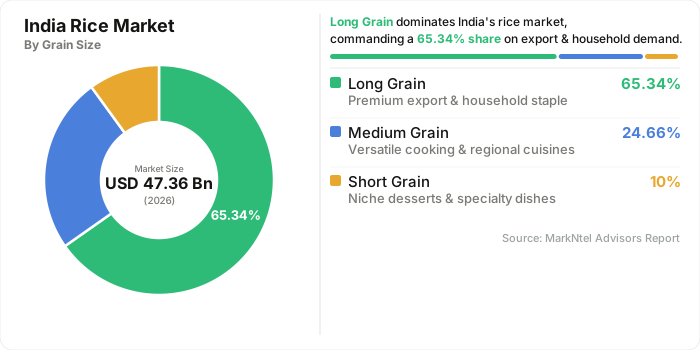
- By grain size type, the long grain size segment seized a significant share of about 65.34% in the Indian rice market in 2026.
Market Insights & Analysis: India Rice Market (2026-32):
The Indian Rice market size was valued at USD 45.33 billion in 2025 and is projected to grow from USD 47.36 billion in 2026 to USD 57.3 billion by 2032, exhibiting a CAGR of 3.23% during the forecast period. i.e., 2026-32.
India’s Rice market demonstrates a strong growth trajectory supported by consistent production expansion and stable domestic consumption patterns. According to the Government of India’s 2025 agricultural estimates, total Rice production exceeded 50.18 million metric tons, reflecting sustained yield improvements and irrigation access. Rising population levels and urban consumption diversification have maintained steady demand across both staple and premium Rice categories. Additionally, improvements in rural procurement systems have strengthened market linkages between farmers and distribution networks, enhancing overall supply chain efficiency.
Demand dynamics are significantly influenced by end-user segments, particularly residential consumption, which accounts for the majority of total Rice utilization. The Public Distribution System (PDS) continues to play a central role in ensuring food access to over 800 million beneficiaries under the National Food Security framework. Institutional demand from food service providers, including railways and government-supported meal programs, has further contributed to volume stability. Meanwhile, the food processing sector is increasingly incorporating rice into packaged and ready-to-eat products, supporting value-added consumption growth.
Government policy interventions remain a key pillar shaping the market outlook through productivity, sustainability, and export competitiveness. The 2025–26 Union Budget emphasized agricultural infrastructure funding exceeding USD 8 billion, targeting storage modernization and logistics efficiency. Initiatives such as the Digital Agriculture Mission are enhancing farm-level data integration, enabling precision farming practices and better crop monitoring. Additionally, regulatory measures on export controls and minimum support pricing continue to stabilize farmer incomes while balancing domestic availability and international trade commitments.
Industry participants are actively investing in modernization, product innovation, and sustainability to align with evolving market conditions. Leading rice processors have expanded milling capacities and adopted energy-efficient technologies to reduce operational costs and environmental impact. Export-oriented firms are focusing on traceability systems and quality certifications to meet global standards, particularly in premium segments. Looking ahead, the market is expected to benefit from climate-resilient seed development, improved water management practices, and increasing integration of technology across the agricultural value chain, supporting long-term growth prospects.
India Rice Market Scope:
| Category | Segments |
|---|---|
| By Type | (Basmati Rice, Non-Basmati Rice/Regular Rice, Organic Rice, Fortified Rice, Aromatic Rice, Others), |
| By Grain Size | (Long Grain, Medium Grain, Short Grain), |
| By Application | (Food, Feed, Others), |
| By End-User | (Household, Food Service (Hotels, Restaurants, Catering), Food Processing Industry, Exporters, Retailers), |
India Rice Market Driver:
Rising Domestic and Export Demand Supported by Changing Consumption Patterns
The most influential driver of the Indian market is the structural rise in both domestic consumption and export demand, supported by evolving dietary patterns and global supply realignments. In recent years, India has strengthened its position as the world’s largest Rice exporter, with exports exceeding 20.1 million metric tons in 2024, according to the Food and Agriculture Organization. Policy adjustments in 2025, including calibrated export restrictions on specific categories while allowing premium and basmati shipments, have sustained international demand. Simultaneously, urbanization and changing food habits have reinforced rice consumption across quick-service restaurants and packaged food segments.
This driver is measurably expanding demand across both international markets and domestic consumption clusters. Key importing regions in Africa and Southeast Asia continue to rely on Indian rice due to its price competitiveness and consistent supply, as highlighted by the World Trade Organization trade data trends. Domestically, increased c onsumption of ready-to-eat and convenience foods using rice as a base ingredient has grown, particularly in urban centers. The rise of organized retail and food delivery platforms has further amplified rice-based product demand, extending consumption beyond traditional household use.
Importantly, this driver contributes directly to increased market volume rather than temporary pricing effects. Export demand ensures large-scale physical movement of surplus production, while domestic consumption diversification adds incremental volume layers. The alignment of global supply gaps with domestic consumption evolution ensures sustained volume growth, making this a structurally reinforcing driver of the India Rice market.
India Rice Market Trend:
Digitalization and Supply Chain Formalization
A key market trend reshaping the Indian market is the rapid digitalization and formalization of procurement and supply chains. This trend has accelerated due to government-led initiatives such as electronic procurement (e-procurement) platforms and the expansion of the electronic National Agriculture Market (e-NAM). As of 2025, over 1656 mandis have been integrated into e-NAM, according to the Small Farmers Agribusiness Consortium, enabling transparent price discovery and interstate trade. Additionally, digital payment systems and direct benefit transfers have strengthened traceability and reduced intermediaries in Rice transactions.
This transformation is structurally altering value chain operations by improving efficiency, reducing leakages, and enhancing farmer market access. Digital procurement systems adopted by states such as Punjab and Odisha have streamlined paddy procurement, minimized delays, and improved payment timelines. Furthermore, the integration of warehouse-based trading and quality testing mechanisms is enabling standardized grading, which supports both domestic distribution and export competitiveness. These changes are fostering a shift from fragmented, informal trade toward organized and data-driven supply chains across key rice-producing regions.
The trend is expected to persist due to continued policy support and increasing stakeholder adoption, reinforcing long-term market evolution. In 2025–2026, the Government of India expanded digital agriculture missions and funding for agri-tech infrastructure, further incentivizing adoption. The Ministry of Agriculture and Farmers Welfare has emphasized end-to-end digital integration, including farm-to-market traceability systems. As digital infrastructure deepens and institutional participation increases, this trend will continue to enhance efficiency, transparency, and scalability, fundamentally reshaping the operational dynamics of the Indian Rice market.
India Rice Market Opportunity:
Emergence of Branded and Value-Added Rice Segments Creating Entry Opportunities
A compelling market opportunity in the Indian rice market lies in the rapid expansion of branded and value-added rice segments, driven by shifting consumer preferences and retail modernization. This opportunity has emerged due to rising urbanization and increased demand for packaged, quality-assured staples. According to the Ministry of Statistics and Programme Implementation, household expenditure on processed and packaged food has steadily increased in recent years. Additionally, the growth of organized retail and e-commerce platforms in 2025–2026 has improved market access for branded food products, creating favorable conditions for differentiated Rice offerings.
This opportunity translates into tangible demand through increased consumer willingness to pay for quality, traceability, and convenience. Branded rice products, including basmati, organic, and fortified variants, are gaining traction in urban markets due to rising food safety awareness. Government-backed initiatives such as mandatory labelling and food safety compliance by the Food Safety and Standards Authority of India have further strengthened consumer trust in packaged rice. As a result, demand is shifting from unorganized bulk purchases toward standardized, branded alternatives, directly expanding market volume in organized channels.
This segment is particularly advantageous for new entrants as it offers lower barriers compared to traditional procurement-driven bulk trade dominated by large incumbents. Smaller players can differentiate through niche positioning, digital-first distribution, and regional branding strategies without requiring extensive procurement infrastructure. The expansion of online grocery platforms and direct-to-consumer models reduces dependency on traditional intermediaries, enabling scalable growth. These structural shifts create a level playing field, allowing emerging companies to capture value through innovation, branding, and supply chain agility.
India Rice Market Challenges:
Regulatory Complexities & Compliance Burden
A critical challenge in the Indian market is the structural complexity of regulatory compliance, which affects production, processing, and distribution. Multiple overlapping regulations govern rice, including the Food Safety and Standards Authority of India (FSSAI) packaging and labeling rules, fortification mandates, and state-level procurement norms. Recent updates in 2025–2026 require compliance with fortified rice distribution under welfare schemes, quality grading, and digital traceability through platforms like e-NAM. These overlapping requirements create administrative burdens for producers and millers, particularly for smaller or new entrants lacking regulatory expertise.
The challenge measurably impacts market players through higher operational costs and delays in market access. The regulator plans quality checks and enforcement of norms on fortified rice, indicating increased surveillance and compliance costs for producers and millers. Delays in approvals or inconsistent enforcement across states can disrupt supply chains and affect timely participation in public procurement programs. For example, New fortified rice kernel testing rules in Punjab have delayed milling by requiring extensive quality tests, slowing output, and adding cost/time burdens.
This regulatory complexity materially restricts market expansion by deterring new entrants and limiting the adoption of value-added products. While large incumbents can absorb compliance costs, smaller operators face disproportionate barriers to entry, slowing innovation and diversification. Persistent administrative hurdles reduce the incentive for investment in processing and packaging infrastructure.
India Rice Market (2026-32) Segmentation Analysis:
The India Rice Market study of MarkNtel Advisors evaluates & highlights the major trends and influencing factors in each segment. It includes predictions for the period 2026–32 at the country level. Based on the analysis, the market has been further classified as;
Based on Type:
- Basmati Rice
- Non-Basmati Rice/Regular Rice(leading)
- Organic Rice
- Fortified Rice
- Aromatic Rice
- Others
Non‑Basmati/Regular Rice dominates the Indian market with a market share of 67% due to its status as the primary staple for the majority of consumers. It accounts for the largest production share because it is the main variety procured under the Public Distribution System (PDS) and the National Food Security Act, ensuring consistent institutional demand. Continued government procurement guarantees volume offtake, stabilizing farmer incomes and supply.
Policy support, such as Minimum Support Price (MSP), directly incentivizes non‑Basmati Rice cultivation, making it structurally more attractive and risk‑mitigated for farmers compared with niche or premium varieties. The Government of India publicly reports that large quantities of rice are procured at MSP under its Price Support Programme, which structurally underpins demand for non‑Basmati/regular Rice (benefiting farmers annually). This procurement reached over 52 million tonnes, paid at MSP prices across Rice grades.
End‑user demand characteristics further cement its dominance: price sensitivity among lower‑ and middle‑income households drives preference for regular rice due to affordability and cultural consumption patterns. The combination of secure policy demand, broad consumer base, and capital allocation ensures durable leadership of the Non‑Basmati/Regular Rice segment.
Based on Grain Size:
- Long Grain
- Medium Grain
- Short Grain
Long Grain Rice leads the grain size segmentation in India with a market share of 65.34% due to its widespread cultivation, strong domestic consumption preference, and export competitiveness. States such as Punjab, Haryana, and Andhra Pradesh focus heavily on long grain varieties, which perform well in both regular and premium classes. For example, Sona Masoori and IR-64 varieties are popular long-grain non-basmati rice varieties consumed widely across southern and northern India due to their aroma, taste, and cooking consistency.
Policy influences reinforce this dominance through targeted support for long grain rice exports; India’s trade policies in 2025–26 prioritized export facilitation for rice categories, including long grain non‑basmati, which broadens international market access. For example, Punjab’s focus on Pusa Basmati 1121 for long grain cultivation ensures high productivity and market stability. This ensures both domestic consumption and export supply chains remain consistently strong, supporting leadership.
End‑user demand characteristics amplify its structural advantage: urbanization and changing lifestyles have sustained demand for long-grain rice in quick‑service restaurants, packaged foods, and modern retail channels. Export markets further reinforce demand, with significant shipments to the Middle East and Africa, enhancing foreign exchange inflows. Industry examples include major millers expanding capacities for long grain basmati and non‑basmati variants to serve diversified segments. The alignment of policy support, investment orientation, and broad consumer adoption underpins the continued leadership of the Long Grain Rice segment in India.
India Rice Market (2026-32) Regional Analysis:
West Bengal is the largest rice-producing state in India, contributing approximately 14% of national output, supported by fertile alluvial plains and a favorable monsoon climate. With over 5.8 million hectares under rice cultivation, both irrigated and rain-fed lands are extensively utilized. This scale ensures high production volumes, enabling the state to maintain leadership in supply for both domestic consumption and exports. The dominance is reinforced by a dense network of procurement centers and milling facilities across key districts.
Government policies further strengthen West Bengal’s market position through initiatives promoting stress-tolerant, hybrid, and bio-fortified Rice varieties, along with crop insurance schemes and quality grading support. The state has integrated digital procurement mechanisms under the Public Distribution System, ensuring reliable offtake for farmers. These regulatory and policy measures reduce risk, enhance productivity, and support consistent supply to domestic and export markets. Investment in irrigation infrastructure and modern rice-processing facilities has also facilitated operational efficiency.
End-user demand is concentrated due to rice being the primary staple in West Bengal households, creating sustained consumption patterns. West Bengal’s strong rice production contributes to the supply ecosystem for major Indian rice exporters and processors such as KRBL and LT Foods , which source paddy from several producing regions across India for branded and export markets. Cultural dietary preference, coupled with policy-backed procurement and high-quality infrastructure, ensures steady market adoption and dominance. These structural, regulatory, and economic factors collectively sustain West Bengal’s leadership in India’s Rice market.
India Rice Market Competitive Landscape
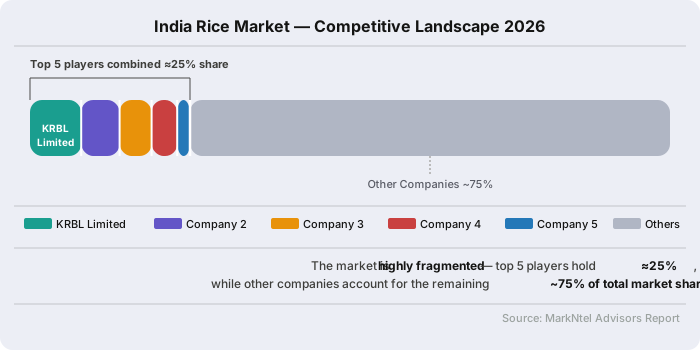
The market is highly fragmented, with the top five players accounting for approximately 25% of the total market share. Leading companies include KRBL Limited, LT Foods Limited, Adani Wilmar Limited, Kohinoor Foods Limited, and Patanjali Foods Limited.
Key Players in India Rice Market
- KRBL Limited
- LT Foods Limited
- Tilda Hain India Pvt. Ltd.
- Adani Wilmar Limited
- Kohinoor Foods Limited
- Shree Krishna Rice Mills
- Patanjali Foods Limited
- Sunstar Overseas Limited
- Sarveshwar Foods Limited
- Bhagat Agro Industries Limited
- Sukhbir Agro Energy Limited
- Others
Gain a Competitive Edge with Our India Rice Market Report:
- The India Rice Market Report by MarkNtel Advisors provides a detailed & thorough analysis of market size & share, growth rate, competitive landscape, and key players. This comprehensive analysis helps businesses gain a holistic understanding of the market dynamics & make informed decisions.
- This report also highlights current market trends & future projections, allowing businesses to identify emerging opportunities & potential challenges. By understanding market forecasts, companies can align their strategies & stay ahead of the competition.
- The India Rice Market Report aids in assessing & mitigating risks associated with entering or operating in the market. By understanding market dynamics, regulatory frameworks, and potential challenges, businesses can develop strategies to minimize risks & optimize their operations.
*Reports Delivery Format - Market research studies from MarkNtel Advisors are offered in PDF, Excel and PowerPoint formats. Within 24 hours of the payment being successfully received, the report will be sent to your email address.
Frequently Asked Questions
- Market Segmentation
- Introduction
- Product Definition
- Research Process
- Assumptions
- Executive Summary
- India Rice Market Regulations, Policies & Standards
- India Rice Market Trends & Developments
- India Rice Market Pricing Analysis
- India Rice Market Strategic Insights
- India Rice Market Import/Export Analysis
- India Rice Market Dynamics
- Growth Drivers
- Challenges
- India Rice Market Hotspots & Opportunities
- India Rice Market Value Chain Analysis
- India Rice Market Outlook, 2022- 2032F
- Market Size & Analysis
- Market Revenues (USD Million)
- By Quantity sold (Million tons)
- Market Share & Analysis
- By Type-Market Size & Forecast 2022-2032, USD Million and Million Tons
- Basmati Rice
- Non-Basmati Rice/Regular Rice
- Organic Rice
- Fortified Rice
- Aromatic Rice
- Others
- By Grain Size-Market Size & Forecast 2022-2032, USD Million and Million Tons
- Long Grain
- Medium Grain
- Short Grain
- By Application-Market Size & Forecast 2022-2032, USD Million and Million Tons
- Food
- Feed
- Others
- By End-User-Market Size & Forecast 2022-2032, USD Million and Million Tons
- Household
- Food Service (Hotels, Restaurants, Catering)
- Food Processing Industry
- Exporters
- Retailers
- By Region-Market Size & Forecast 2022-2032, USD Million and Million Tons
- North
- National Capital Region (Delhi NCR)
- Uttar Pradesh
- Punjab
- Rajasthan
- South
- Karnataka
- Tamil Nadu
- Kerala
- East
- West Bengal
- Odisha
- West
- Maharashtra
- Gujarat
- Madhya Pradesh
- North
- By Type-Market Size & Forecast 2022-2032, USD Million and Million Tons
- By Competitors
- Competition Characteristics
- Market Share & Analysis
- Market Size & Analysis
- India Long Grain Rice Market Outlook, 2022- 2032F
- Market Size & Analysis
- Market Revenues (USD Million)
- By Quantity Sold (Million Tons)
- Market Share & Analysis
- By Type-Market Size & Forecast 2022-2032, USD Million and Million Tons
- By Application- Market Size & Forecast 2022-2032, USD Million and Million Tons
- By End-User- Market Size & Forecast 2022-2032, USD Million and Million Tons
- Market Size & Analysis
- India Medium Grain Rice Market Outlook, 2022- 2032F
- Market Size & Analysis
- Market Revenues (USD Million)
- By Quantity Sold (Million Tons)
- Market Share & Analysis
- By Type-Market Size & Forecast 2022-2032, USD Million and Million Tons
- By Application- Market Size & Forecast 2022-2032, USD Million and Million Tons
- By End-User- Market Size & Forecast 2022-2032, USD Million and Million Tons
- Market Size & Analysis
- India Small Grain Rice Market Outlook, 2022- 2032F
- Market Size & Analysis
- Market Revenues (USD Million)
- By Quantity Sold (Million Tons)
- Market Share & Analysis
- By Type-Market Size & Forecast 2022-2032, USD Million and Million Tons
- By Application- Market Size & Forecast 2022-2032, USD Million and Million Tons
- By End-User- Market Size & Forecast 2022-2032, USD Million and Million Tons
- Market Size & Analysis
- India Rice Market Key Strategic Imperatives for Growth & Success
- Competitive Outlook
- Company Profiles
- KRBL Limited
- Business Description
- Product Portfolio
- Strategic Alliances or Partnerships
- Recent Developments
- Financial Details
- Others
- LT Foods Limited
- Business Description
- Product Portfolio
- Strategic Alliances or Partnerships
- Recent Developments
- Financial Details
- Others
- Tilda Hain India Pvt. Ltd.
- Business Description
- Product Portfolio
- Strategic Alliances or Partnerships
- Recent Developments
- Financial Details
- Others
- Adani Wilmar Limited
- Business Description
- Product Portfolio
- Strategic Alliances or Partnerships
- Recent Developments
- Financial Details
- Others
- Kohinoor Foods Limited
- Business Description
- Product Portfolio
- Strategic Alliances or Partnerships
- Recent Developments
- Financial Details
- Others
- Shree Krishna Rice Mills
- Business Description
- Product Portfolio
- Strategic Alliances or Partnerships
- Recent Developments
- Financial Details
- Others
- Patanjali Foods Limited
- Business Description
- Product Portfolio
- Strategic Alliances or Partnerships
- Recent Developments
- Financial Details
- Others
- Sunstar Overseas Limited
- Business Description
- Product Portfolio
- Strategic Alliances or Partnerships
- Recent Developments
- Financial Details
- Others
- Sarveshwar Foods Limited
- Business Description
- Product Portfolio
- Strategic Alliances or Partnerships
- Recent Developments
- Financial Details
- Others
- Bhagat Agro Industries Limited
- Business Description
- Product Portfolio
- Strategic Alliances or Partnerships
- Recent Developments
- Financial Details
- Others
- Others
- KRBL Limited
- Company Profiles
- Disclaimer
MarkNtel Advisors follows a robust and iterative research methodology designed to ensure maximum accuracy and minimize deviation in market estimates and forecasts. Our approach combines both bottom-up and top-down techniques to effectively segment and quantify various aspects of the market. A consistent feature across all our research reports is data triangulation, which examines the market from three distinct perspectives to validate findings. Key components of our research process include:
1. Scope & Research Design At the outset, MarkNtel Advisors define the research objectives and formulate pertinent questions. This phase involves determining the type of research—qualitative or quantitative—and designing a methodology that outlines data collection methods, target demographics, and analytical tools. They also establish timelines and budgets to ensure the research aligns with client goals.
2. Sample Selection and Data Collection In this stage, the firm identifies the target audience and determines the appropriate sample size to ensure representativeness. They employ various sampling methods, such as random or stratified sampling, based on the research objectives. Data collection is carried out using tools like surveys, interviews, and observations, ensuring the gathered data is reliable and relevant.
3. Data Analysis and Validation Once data is collected, MarkNtel Advisors undertake a rigorous analysis process. This includes cleaning the data to remove inconsistencies, employing statistical software for quantitative analysis, and thematic analysis for qualitative data. Validation steps are taken to ensure the accuracy and reliability of the findings, minimizing biases and errors.

4. Data Forecast and FinalizationThe final phase involves forecasting future market trends based on the analyzed data. MarkNtel Advisors utilize predictive modeling and time series analysis to anticipate market behaviors. The insights are then compiled into comprehensive reports, featuring visual aids like charts and graphs, and include strategic recommendations to inform client decision-making
We offer flexible licensing options to cater to varying organizational needs. Choose the pricing pack that best suits your requirements:
Buy Now Inquire Before Buying
 Request Customization
 Talk to our Consultant