

India Luxury Car Market Research Report: Forecast (2026-2032)
India Luxury Car Market - By Car Type (Luxury Sedans, Luxury SUVs, Luxury Coupes & Convertibles, Ultra-Luxury & Performance Cars), By Propulsion Type (Internal Combustion Engine (I ... CE), Hybrid, Electric), By Price Range (Mid-Range Luxury, High End Luxury, Ultra Luxury), By Sales Channel (Direct, Distributors, Online), By Ownership Model (Direct Purchase, Leasing, Subscription-Based Ownership, Corporate / Fleet Luxury Vehicles), By Cities (Delhi NCR, Mumbai, Bengaluru, Chandigarh, Ludhiana, Chennai, Surat, Rest of India), and others Read more
- Automotive
- Jul 2026
- Pages 140
- Report Format: PDF, Excel, PPT
India Luxury Car Market
Projected 10.71% CAGR from 2026 to 2032
Study Period
2026-2032
Market Size (2026)
USD 4.99 Billion
Market Size (2032)
USD 9.19 Billion
Base Year
2025
Projected CAGR
10.71%
Leading Segments
By Type Car: Luxury Sedans
India Luxury Car Market Key Takeaways
- The India luxury car market was valued at approximately USD 4.2 billion in 2025 and is projected to reach USD 9.19 billion by 2032, growing at a CAGR of 10.71% during 2026-32.
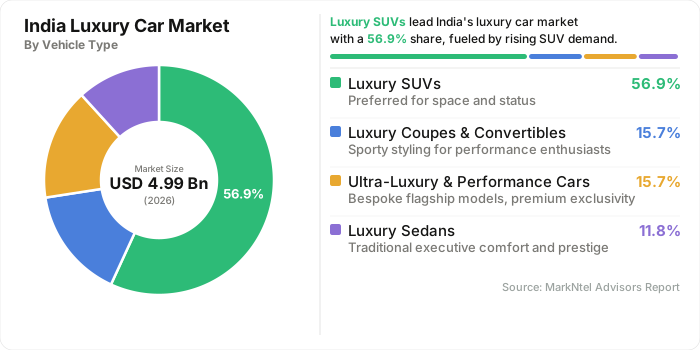
- By car type, luxury SUVs are expected to account for nearly 58% of the market share in 2026.
- By propulsion, internal combustion engine vehicles are anticipated to hold approximately 72% of the market share in 2026.
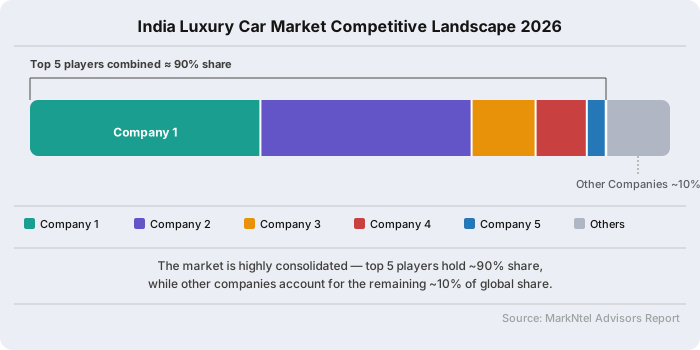
- The market is highly consolidated, with the top five manufacturers collectively holding an estimated 90% market share in 2026.
India Luxury Car Market Size and Outlook
The India luxury car market size was valued at USD 4.2 billion in 2025 and is projected to grow from USD 4.99 billion in 2026 to USD 9.19 billion by 2032. Along with this, the market is estimated to grow at a CAGR of around 10.71% during the forecast period, i.e., 2026-32.
Growth in the demand for luxury cars is being driven primarily by an expanding base of high-income earners, rather than consumer sentiment alone. According to Central Board of Direct Taxes filings for FY 2025-26, USD 4.04 thousand individuals declared annual income above approximately USD 0.104 million, with 12,681 of them reporting income above approximately USD 1.04 million. This high-income taxpayer segment is growing faster than India's overall base of tax filers, and it forms the core customer group the market is expected to rely on through 2032, supporting demand for both entry-level luxury sedans and flagship, top-tier vehicles.
This growth is also creating a ripple effect in related industries. The demand for luxury car tire projected to witness steady growth, growing at a CAGR of 5.2%. As sales of flagship luxury SUVs rise, demand for high-load, high-speed-rated tires is expected to grow alongside them, both for new vehicles and replacements. Together, these trends indicate that the market's growth is no longer limited to vehicle sales, but is being reinforced by a wider ecosystem of wealth creation and premium mobility.
India Luxury Car Market Key Indicators
- India's passenger vehicle sales reached 44.9 lakh units during January–December 2025, the highest ever recorded by the industry. A growing passenger vehicle market reflects improving consumer sentiment and increasing automotive demand, enabling luxury car manufacturers to benefit from a larger pool of potential premium vehicle buyers and stronger long-term market expansion.
- NITI Aayog's 2025 Automotive Industry Report targets increasing India's share in the global automotive value chain from 3% to 8% by 2030. Greater integration into global automotive supply chains supports premium vehicle manufacturing, technology transfer, and localization for luxury brands.
- The Government of India has allocated USD 1.27 billion under the PM E-DRIVE Scheme, including USD 233 million exclusively for public EV charging infrastructure. The scheme targets deployment of 22,100 fast chargers for electric cars across cities and highways. Expansion of high-speed charging infrastructure reduces range anxiety and supports wider adoption of premium electric luxury vehicles, encouraging manufacturers to introduce additional BEV models in India.
India Luxury Car Market Scope
| Category | Segments |
|---|---|
| By Car Type | Luxury Sedans, Luxury SUVs, Luxury Coupes & Convertibles, Ultra-Luxury & Performance Cars |
| By Propulsion Type | Internal Combustion Engine (ICE), Hybrid, Battery |
| By Price Range | Entry-Level Luxury, Premium Luxury, Ultra Luxury |
| By Sales Channel | Authorized Dealerships, Company-Owned Showrooms (Direct Retail), Online/Digital Sales |
| By Ownership Model | Outright Purchase, Leasing, Subscription, Corporate / Fleet Luxury Vehicles |
| By City | Delhi NCR, Mumbai, Bengaluru, Chandigarh, Ludhiana, Chennai, Surat, Rest of India |
India Luxury Car Market Growth Drivers
Growing Affluent Consumer Base and Rising Luxury Spending Fueling Demand for Premium Automobiles in India
India's luxury car industry is being propelled by a steadily expanding affluent consumer base, rising disposable incomes, and increasing expenditure on premium products and experiences. Rapid wealth creation among entrepreneurs, business owners, and senior professionals has strengthened purchasing power, encouraging consumers to upgrade from mass-market vehicles to luxury automobiles that offer superior comfort, advanced technologies, enhanced safety, and exclusive ownership experiences. The growing aspiration for premium mobility, supported by favorable economic conditions and increasing urbanization, is further expanding the addressable customer base for luxury vehicle manufacturers. As consumer preferences continue shifting toward high-value automotive products, manufacturers are broadening their premium portfolios and strengthening their presence across key metropolitan and emerging markets.
The market's growth is further reinforced by continued investments from global luxury automakers to enhance their footprint in India. As an example, Jaguar Land Rover India commenced deliveries of the locally manufactured Range Rover Sport in 2025, reflecting the company's commitment to improving product accessibility and meeting rising domestic demand for premium luxury SUVs. Local manufacturing enables shorter delivery timelines, improved supply chain efficiency, and greater price competitiveness compared with fully imported models. Such strategic investments demonstrate manufacturers' long-term confidence in India's luxury automotive sector while supporting sustained market expansion through enhanced product availability and a stronger localized presence.
Recent Trends
Growing Consumer Preference for Top-End Luxury Vehicles Reshaping India's Luxury Car Market Growth
The luxury car industry in India is experiencing a notable shift toward Top-End Luxury (TEL) vehicles as affluent consumers increasingly prioritize exclusivity, bespoke craftsmanship, advanced technologies, and superior ownership experiences over entry-level luxury models. Rising disposable incomes, expanding high-net-worth populations, and changing consumer aspirations are encouraging demand for flagship luxury SUVs and premium vehicles offering enhanced comfort, connected technologies, and personalized features. Consequently, luxury automakers are expanding their high-end portfolios while strengthening customization programs and customer-centric services to address evolving purchasing preferences. This premiumization trend is expected to increase the contribution of top-end luxury vehicles to the overall market during the forecast period.
The trend is supported by recent product introductions across the premium automotive sector for an Instance, Lexus India commenced customer deliveries of the flagship Lexus LX 500d, strengthening its presence in the ultra-premium luxury SUV segment. The launch combines off-road capability with bespoke craftsmanship, premium interiors, and advanced driver assistance technologies, reflecting growing consumer demand for high-value luxury vehicles that offer both exclusivity and versatility. Rather than competing primarily on volume, manufacturers are increasingly focusing on flagship models that enhance brand prestige and profitability. Such developments indicate that premiumization is becoming a defining characteristic of India's luxury car market as buyers increasingly seek differentiated ownership experiences beyond conventional luxury offerings.
India Luxury Car Market Opportunities and Challenges
Autonomous Vehicle Regulations Constrain Full Self-Driving Adoption, Redirecting Growth Toward Advanced Driver-Assistance Systems
India's luxury car market faces a distinct regulatory challenge in autonomous vehicle adoption, as the Ministry of Road Transport and Highways has repeatedly stated it will not permit fully driverless vehicles. This stance stems from concerns over the livelihoods of an estimated 70–80 lakh transport-sector workers and India's heterogeneous, mixed-traffic road conditions, which complicate the reliable functioning of higher-autonomy systems. Consequently, luxury automakers remain restricted to Level 2–3 driver-assistance technologies, limiting the pace at which full autonomy can be commercialized compared with more permissive global markets.
This regulatory restraint, however, is redirecting manufacturer focus toward advanced driver-assistance systems, creating a parallel growth opportunity. Mercedes-Benz and BMW are increasingly integrating AI-enabled driver-assistance and connected features into their premium India portfolios, while global players continue expanding electrified, technology-rich luxury lineups. This shift allows automakers to meet affluent consumers' appetite for cutting-edge, safety-enhanced mobility within existing regulatory boundaries. Complementing this trend, expanding digital retail platforms and virtual configuration tools are further strengthening customer engagement, positioning India as a growing market for next-generation ADAS-equipped premium vehicles.
Segmentation Insights
Luxury SUVs Accounted for Approximately 58% Share of the India Luxury Car Market Owing to Rising Demand for Premium Utility Vehicles
Luxury SUVs accounted for the largest share of the India luxury car industry in 2026, supported by evolving consumer preferences toward spacious, technologically advanced, and versatile premium vehicles. Their higher driving position, superior safety features, all-terrain capability, and suitability for both urban and intercity travel have made them the preferred choice among affluent buyers. Simultaneously, sustained investments in national highways, expressways, and urban transport infrastructure have improved long-distance driving conditions, encouraging demand for premium SUVs. According to the Society of Indian Automobile Manufacturers (SIAM) Annual Report 2024–25, India's passenger vehicle industry recorded its highest-ever domestic sales during FY2024–25, demonstrating continued momentum in premium passenger vehicle demand and creating favorable conditions for luxury SUV sales.
The segment's leadership is further reinforced by manufacturers continuously strengthening their premium SUV portfolios with technologically advanced models tailored to Indian consumers. As a notable example, Mercedes-Benz India unveiled the Mercedes-Maybach EQS SUV and the all-electric G 580 with EQ Technology at the Bharat Mobility Global Expo 2025, showcasing its strategy to expand both conventional and electrified luxury SUV offerings in the country. The launch reflects growing manufacturer confidence in India's premium SUV segment while supporting the transition toward advanced mobility solutions without compromising luxury, performance, or customer experience. Continuous product innovation, expanding dealership networks, and increasing consumer spending on premium mobility are expected to sustain the segment's dominant position throughout the forecast period. Based on the type of Car, the market is bifurcated into:
- Luxury Sedans
- Luxury SUVs
- Luxury Coupes & Convertibles
- Ultra-Luxury & Performance Cars
Internal Combustion Engine (ICE) Vehicles Held Approximately 72% Share of the Market Supported by Established Infrastructure
Internal Combustion Engine (ICE) vehicles leads the India luxury car market in 2026, primarily due to their extensive fuel infrastructure, established service ecosystem, and broader model availability across premium sedan, SUV, and performance vehicle categories. Although electrification is gaining momentum, high-end consumers continue to value ICE vehicles for their long-distance driving capability, proven reliability, faster refueling, and extensive after-sales support. The SIAM Annual Report 2024–25 highlights record passenger vehicle sales during FY2024–25, reflecting resilient demand across India's automotive industry and providing a strong foundation for continued growth in premium ICE-powered vehicles.
Luxury automobile manufacturers continue investing in advanced ICE platforms while gradually introducing electrified alternatives, ensuring broader customer choice during the market's transition phase. Supporting this trend, BMW India introduced the new-generation BMW X3 at the Bharat Mobility Global Expo 2025, expanding its premium SUV portfolio with enhanced powertrain technologies, digital features, and advanced driver assistance systems. The launch demonstrates that manufacturers continue prioritizing premium ICE offerings to address prevailing consumer preferences while complementing their long-term electrification strategies. This balanced product approach, together with India's mature refueling infrastructure and widespread service network, is expected to enable ICE vehicles to retain their dominant market position over the forecast period. based on the propulsion type the market is bifurcated into:
- Internal Combustion Engine (ICE)
- Hybrid
- Battery
India Luxury Car Market Competitive Landscape
The India luxury car market is highly consolidated, with the top five manufacturers, , collectively accounting for an estimated of the market in 2026.
Key Companies in the India Luxury Car Market
- Mercedes-Benz Group AG
- BMW AG
- Jaguar Land Rover Automotive PLC
- AUDI AG
- Toyota Motor Corporation (Lexus Division)
- Volvo Car Corporation
- Porsche AG
- Lamborghini S.p.A.
- Ferrari N.V.
- Rolls-Royce Motor Cars Limited
- Others
India Luxury Car Industry News and Recent Developments
January 2026: BMW Group India Announces 10 New Vehicle Launches and Expands Local Sourcing
BMW Group India announced plans to introduce 10 new BMW and MINI models in India during 2026, including electric vehicles, while increasing localization of components beyond the existing 50% level. The company also reaffirmed its focus on expanding premium mobility through a broader luxury portfolio and strengthened domestic manufacturing capabilities.
Impact Analysis: The expanded product pipeline and higher localization strengthen BMW's competitive position in India's luxury car market by improving product availability, reducing supply-chain risks, and supporting premium EV adoption. Greater domestic sourcing also enhances long-term cost efficiency and reinforces India as an important production base for luxury vehicles.
January 2026: Mercedes-Benz India Unveils Plan to Launch 12 Luxury Vehicles
Mercedes-Benz India announced that it will introduce 12 new luxury vehicles during 2026 while expanding its locally manufactured portfolio. The company stated that 2025 was its highest-ever revenue year, driven by strong demand for top-end luxury models despite relatively stable sales volumes.
Impact Analysis: The aggressive launch strategy demonstrates sustained confidence in India's premium automobile demand. Expanding locally assembled luxury models is expected to improve product accessibility, shorten delivery timelines, and strengthen Mercedes-Benz's leadership in the premium passenger vehicle segment.
July 2026: BMW Group India Records Highest-Ever First-Half Sales
BMW Group India reported record first-half 2026 deliveries of 9,075 luxury vehicles, representing 17% year-on-year growth, while luxury EV sales increased by 78% compared with the previous year. The company attributed the performance to robust demand for premium electric models and long-wheelbase luxury vehicles.
Impact Analysis: Record sales highlight the accelerating adoption of premium mobility solutions in India. Strong EV growth indicates shifting customer preferences toward electrified luxury vehicles and encourages manufacturers to expand premium electric product offerings and charging ecosystem investments.
July 2026: Mercedes-Benz India Announces Launch of AMG E 53 Plug-in Hybrid
Mercedes-Benz India confirmed the launch of the Mercedes-AMG E 53 Plug-in Hybrid (PHEV) for the Indian market, expanding its electrified high-performance portfolio. The new model combines performance-oriented engineering with plug-in hybrid technology, supporting the company's strategy to broaden premium electrified mobility offerings.
Impact Analysis: The launch strengthens the premium hybrid vehicle segment by offering high-performance electrified alternatives to conventional luxury sedans. It also reflects increasing consumer acceptance of advanced propulsion technologies within India's high-end passenger vehicle market.
Frequently Asked Questions
- Market Segmentation
- Introduction
- Product Definition
- Research Process
- Assumptions
- Executive Summary
- India Luxury Car Production (Thousand Units) Trend 2022-2032
- India Luxury Car Production (Thousand Units) Trend by Type of car
- Luxury Sedans
- Luxury SUVs
- Luxury Coupes & Convertible
- Ultra-Luxury & Performance
- Company Wise Production Plants and Statistics
- Installed Production Capacity
- Actual Production
- Planned Production Target
- India Luxury Car Production (Thousand Units) Trend by Type of car
- India Luxury Car Supply Chain Analysis 2022- 2032
- India Luxury Car Market Product & Innovation Landscape
- Luxury Vehicle Feature Benchmarking
- Comfort & Interior Configurations
- Performance and Powertrain Comparison
- Safety Feature Standards
- Design Trends
- Exterior & Aesthetic Language
- Customization & Bespoke Options
- Electronics & Connectivity
- Infotainment Systems & Digital Cockpits
- Connected Car Platforms & OTA Updates
- ADAS & Autonomous Readiness
- Human-Machine Interface (HMI) & UX Trends
- Sensor Technologies (Radar, Cameras, LiDAR)
- Voice Assistants & Smartphone Integration
- Luxury Vehicle Feature Benchmarking
- India Luxury Car Market Pricing, Financing & Ownership Models
- Luxury Pricing Strategies
- Leasing, Financing & Subscription Trends
- Residual Value & Resale Dynamics
- India Total Registered Luxury Car Fleet 2022-2026
- India Luxury Car Market Policies, Regulations, and Product Standards
- Impact of India- European Union (EU) Free Trade Agreement on India Luxury Car Market
- India Luxury Car Import and Export Data Analysis 2022-2032
- India Luxury Car Market Policies, Regulations, and Product Standards
- India Luxury Car Market Trends & Developments
- India Luxury Car Market Dynamics
- Growth Factors
- Challenges
- India Luxury Car Market Hotspot & Opportunities
- India Luxury Car Market Outlook, 2022-2032
- Market Size & Outlook
- By Revenues (USD Million)
- By Unit Sold (Thousand Units)
- Market Segmentation & Outlook
- By Car Type- Market Size & Forecast 2022-2032, USD Million
- Luxury Sedans
- Luxury SUVs
- Luxury Coupes & Convertibles
- Ultra-Luxury & Performance Cars
- By Propulsion Type- Market Size & Forecast 2022-2032, USD Million
- Internal Combustion Engine (ICE)
- Hybrid
- Battery
- By Price Range- Market Size & Forecast 2022-2032, USD Million
- Entry-Level Luxury
- Premium Luxury
- Ultra Luxury
- By Sales Channel- Market Size & Forecast 2022-2032, USD Million
- Authorized Dealerships
- Company-Owned Showrooms (Direct Retail)
- Online/Digital Sales
- By Ownership Model- Market Size & Forecast 2022-2032, USD Million
- Outright Purchase
- Leasing
- Subscription
- Corporate / Fleet Luxury Vehicles
- By City- Market Size & Forecast 2022-2032, USD Million
- Delhi NCR
- Mumbai
- Bengaluru
- Chandigarh
- Ludhiana
- Chennai
- Surat
- Rest of India
- By Company
- Competition Characteristics
- Market Share & Analysis
- By Car Type- Market Size & Forecast 2022-2032, USD Million
- Market Size & Outlook
- India Luxury Sedans Market Outlook, 2022-2032
- Market Size & Outlook
- By Revenues (USD Million)
- By Unit Sold (Thousand Units)
- Market Segmentation & Outlook
- By Propulsion Type- Market Size & Forecast 2022-2032, USD Million
- By Price Range- Market Size & Forecast 2022-2032, USD Million
- By Sales Channel- Market Size & Forecast 2022-2032, USD Million
- By Ownership Model- Market Size & Forecast 2022-2032, USD Million
- By City- Market Size & Forecast 2022-2032, USD Million
- Market Size & Outlook
- India Luxury SUVs Market Outlook, 2022-2032
- Market Size & Outlook
- By Revenues (USD Million)
- By Unit Sold (Thousand Units)
- Market Segmentation & Outlook
- By Propulsion Type- Market Size & Forecast 2022-2032, USD Million
- By Price Range- Market Size & Forecast 2022-2032, USD Million
- By Sales Channel- Market Size & Forecast 2022-2032, USD Million
- By Ownership Model- Market Size & Forecast 2022-2032, USD Million
- By City- Market Size & Forecast 2022-2032, USD Million
- Market Size & Outlook
- India Luxury Coupes & Convertibles Market Outlook, 2022-2032
- Market Size & Outlook
- By Revenues (USD Million)
- By Unit Sold (Thousand Units)
- Market Segmentation & Outlook
- By Propulsion Type- Market Size & Forecast 2022-2032, USD Million
- By Price Range- Market Size & Forecast 2022-2032, USD Million
- By Sales Channel- Market Size & Forecast 2022-2032, USD Million
- By Ownership Model- Market Size & Forecast 2022-2032, USD Million
- By City- Market Size & Forecast 2022-2032, USD Million
- Market Size & Outlook
- India Ultra-Luxury & Performance Cars Market Outlook, 2022-2032
- Market Size & Outlook
- By Revenues (USD Million)
- By Unit Sold (Thousand Units)
- Market Segmentation & Outlook
- By Propulsion Type- Market Size & Forecast 2022-2032, USD Million
- By Price Range- Market Size & Forecast 2022-2032, USD Million
- By Sales Channel- Market Size & Forecast 2022-2032, USD Million
- By Ownership Model- Market Size & Forecast 2022-2032, USD Million
- By City- Market Size & Forecast 2022-2032, USD Million
- Market Size & Outlook
- India Luxury Car Market Key Strategic Imperatives for Success & Growth
- Competitive Outlook
- Company Profiles
- Mercedes-Benz Group AG
- Business Description
- Product Portfolio
- Collaborations & Alliances
- Recent Developments
- Financial Details
- Others
- BMW AG
- Business Description
- Product Portfolio
- Collaborations & Alliances
- Recent Developments
- Financial Details
- Others
- AUDI AG
- Business Description
- Product Portfolio
- Collaborations & Alliances
- Recent Developments
- Financial Details
- Others
- Jaguar Land Rover Automotive PLC
- Business Description
- Product Portfolio
- Collaborations & Alliances
- Recent Developments
- Financial Details
- Others
- Volvo Car Corporation
- Business Description
- Product Portfolio
- Collaborations & Alliances
- Recent Developments
- Financial Details
- Others
- Toyota Motor Corporation (Lexus Division)
- Business Description
- Product Portfolio
- Collaborations & Alliances
- Recent Developments
- Financial Details
- Others
- Porsche AG
- Business Description
- Product Portfolio
- Collaborations & Alliances
- Recent Developments
- Financial Details
- Others
- Lamborghini S.p.A.
- Business Description
- Product Portfolio
- Collaborations & Alliances
- Recent Developments
- Financial Details
- Others
- Ferrari N.V.
- Business Description
- Product Portfolio
- Collaborations & Alliances
- Recent Developments
- Financial Details
- Others
- Rolls-Royce Motor Cars Limited
- Business Description
- Product Portfolio
- Collaborations & Alliances
- Recent Developments
- Financial Details
- Others
- Others
- Mercedes-Benz Group AG
- Company Profiles
- Disclaimer
MarkNtel Advisors follows a robust and iterative research methodology designed to ensure maximum accuracy and minimize deviation in market estimates and forecasts. Our approach combines both bottom-up and top-down techniques to effectively segment and quantify various aspects of the market. A consistent feature across all our research reports is data triangulation, which examines the market from three distinct perspectives to validate findings. Key components of our research process include:
1. Scope & Research Design At the outset, MarkNtel Advisors define the research objectives and formulate pertinent questions. This phase involves determining the type of research—qualitative or quantitative—and designing a methodology that outlines data collection methods, target demographics, and analytical tools. They also establish timelines and budgets to ensure the research aligns with client goals.
2. Sample Selection and Data Collection In this stage, the firm identifies the target audience and determines the appropriate sample size to ensure representativeness. They employ various sampling methods, such as random or stratified sampling, based on the research objectives. Data collection is carried out using tools like surveys, interviews, and observations, ensuring the gathered data is reliable and relevant.
3. Data Analysis and Validation Once data is collected, MarkNtel Advisors undertake a rigorous analysis process. This includes cleaning the data to remove inconsistencies, employing statistical software for quantitative analysis, and thematic analysis for qualitative data. Validation steps are taken to ensure the accuracy and reliability of the findings, minimizing biases and errors.

4. Data Forecast and FinalizationThe final phase involves forecasting future market trends based on the analyzed data. MarkNtel Advisors utilize predictive modeling and time series analysis to anticipate market behaviors. The insights are then compiled into comprehensive reports, featuring visual aids like charts and graphs, and include strategic recommendations to inform client decision-making
We offer flexible licensing options to cater to varying organizational needs. Choose the pricing pack that best suits your requirements:
Buy Now Inquire Before Buying
 Request Customization
 Talk to our Consultant







