

India Diagnostic Labs Market Research Report: Forecast (2026-2032)
By Test Type (Pathology, Radiology & Imaging), By Pathology Test Type (Clinical Chemistry, Hematology, Immunology & Serology, Microbiology, Histopathology & Cytopathology, Molecula ... r Diagnostics, Genetic Testing), By Radiology Type (X-Ray, Ultrasound, CT Scan, MRI, Mammography, PET-CT, Nuclear Imaging, Others), By Service Delivery Mode (Walk-in Testing, Home Sample Collection, Mobile Diagnostic Units), By Disease Type (Infectious Diseases, Oncology, Diabetes & Endocrinology, Cardiology, Neurology, Nephrology, Gastroenterology, Gynecology & Obstetrics, Respiratory Disorders), By End-User (Hospitals, Physician Clinics, Independent Diagnostic Centers, Corporate & Preventive Health Programs, Government & Public Healthcare Institutions), and others Read more
- Healthcare
- Aug 2026
- Pages 140
- Report Format: PDF, Excel, PPT
India Diagnostic Labs Market
Projected 10.42% CAGR from 2026 to 2032
Study Period
2026-2032
Market Size (2026)
USD 20.48 Billion
Market Size (2032)
USD 37.13 Billion
Base Year
2025
Projected CAGR
10.42%
Leading Segments
By Test Type: Pathology
India Diagnostic Labs Market Key Takeaways
- The India diagnostic labs market reached USD 18.55 billion in 2025 and is projected to reach USD 37.13 billion by 2032, up from USD 20.48 billion in 2026.
- The industry is projected to expand at a CAGR of 10.42% during the forecast period.
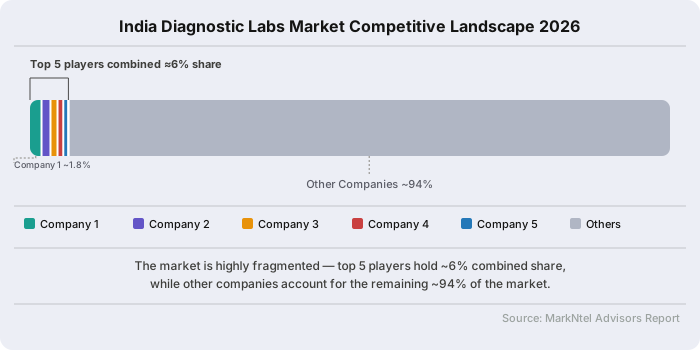
- The market remains highly fragmented, with the top five organized diagnostic players collectively accounting for approximately 6% of the overall market.
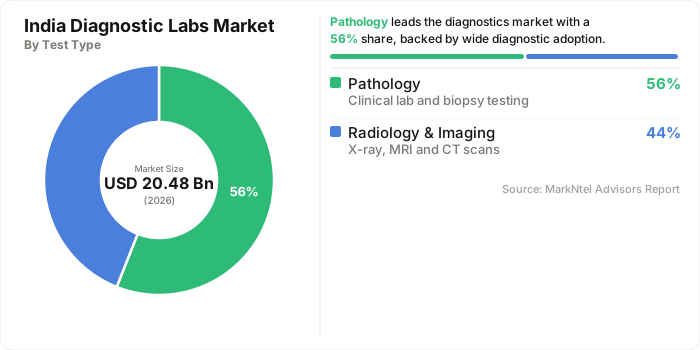
- Pathology is the leading test-type segment, accounting for approximately 56% of the diagnostics industry.
- Hospitals represent the largest end-user segment, capturing approximately 37% of the market.
India Diagnostic Labs Market Size and Outlook
The diagnostic labs market in India was valued at USD 18.55 billion in 2025 and is projected to reach USD 20.48 billion in 2026, expanding to USD 37.13 billion by 2032 at a 10.42% CAGR during 2026–2032. Market expansion is supported by India's large and increasingly health-conscious population, rising demand for preventive screening, growing prevalence of chronic and infectious diseases, and expansion of public healthcare diagnostics. Government initiatives such as Ayushman Bharat, the National Programme for Prevention and Control of NCDs, and Ayushman Arogya Mandirs are improving diagnostic accessibility beyond metropolitan centers. Simultaneously, expanding diagnostic chains, home sample collection, digital health infrastructure, molecular testing, genomic diagnostics, and investments in laboratory automation are increasing testing capacity and broadening India's diagnostic services portfolio.
India Diagnostic Labs Market Key Indicators
- Government sources report that NCDs account for approximately 63% of deaths in India, with cardiovascular diseases contributing 27%, chronic respiratory diseases 11%, cancers 9%, and diabetes 3%. The high NCD burden sustains demand for blood chemistry, diabetes, cardiac, oncology, kidney, liver, and preventive diagnostic testing, supporting recurring laboratory volumes.
- The ICMR-INDIAB study covered 113,106 individuals across 30 states/UTs and reported an overall diabetes prevalence of 6%, highlighting substantial nationwide diagnostic requirements. Rising diabetes prevalence increases recurring demand for glucose, HbA1c, lipid, kidney-function, and related monitoring tests, directly expanding pathology-testing volumes.
- India's National NCD Portal records 97 crore enrolled beneficiaries and 8.64 crore patients under treatment for hypertension and diabetes, with the system adopted across 31 States/UTs. Government-led screening and long-term disease management increase diagnostic-test frequency, creating sustained demand for routine pathology, preventive screening, and disease-monitoring services.
- The Integrated Disease Surveillance Programme has sanctioned 441 District Public Health Laboratories across 36 States/UTs, with 397 laboratories functional as of March 2026.
Expansion of district-level laboratory capacity improves access to microbiology, serology, and molecular testing, particularly outside major cities, increasing diagnostic utilization across underserved regions. - The Ayushman Bharat Digital Mission's Health Facility Registry covers diagnostic laboratories and imaging centres, while ABDM enables patients to access and share digital laboratory reports through ABHA. Digital integration improves report accessibility, interoperability, patient engagement, and laboratory connectivity, supporting organized diagnostic chains and accelerating adoption of digital laboratory-management systems.
India Diagnostic Labs Market Scope
| Category | Segments |
|---|---|
| By Test Type | Pathology, Radiology & Imaging |
| By Pathology Test Type | Clinical Chemistry, Hematology, Immunology & Serology, Microbiology, Histopathology & Cytopathology, Molecular Diagnostics, Genetic Testing |
| By Radiology Type | X-Ray, Ultrasound, CT Scan, MRI, Mammography, PET-CT, Nuclear Imaging, Others |
| By Service Delivery Mode | Walk-in Testing, Home Sample Collection, Mobile Diagnostic Units |
| By Disease Type | Infectious Diseases, Oncology, Diabetes & Endocrinology, Cardiology, Neurology, Nephrology, Gastroenterology, Gynecology & Obstetrics, Respiratory Disorders |
| By End-User | Hospitals, Physician Clinics, Independent Diagnostic Centers, Corporate & Preventive Health Programs, Government & Public Healthcare Institutions |
India Diagnostic Labs Market Growth Drivers
Rising Chronic-Disease Burden and Preventive Diagnostic Testing
The rising burden of chronic diseases and the resulting need for preventive and continuous diagnostic testing is one of the strongest demand-side drivers of India's diagnostic labs industry. The Government of India estimates that non-communicable diseases account for 63% of all deaths in India, with cardiovascular diseases, cancer, chronic respiratory diseases, and diabetes representing major contributors. The government's National Programme for Prevention and Control of NCDs therefore emphasizes population-based screening, early diagnosis, treatment, and follow-up for people aged 30 years and above.
The addressable testing population is substantial. The ICMR-INDIAB study covered 113,106 individuals across 30 states/UTs and recorded a diabetes prevalence of 9.6%, demonstrating the large population requiring diagnostic screening and recurring disease monitoring. In parallel, the Ministry of Health's NCD programme has established a nationwide digital screening and management framework, creating a stronger institutional requirement for diagnostic testing.
Commercial demand is also evident. In FY2026, Tata 1mg's diagnostics business surpassed approximately USD 70 million in annualized revenue and grew more than 40% year over year, while its network reached 19 NABL-accredited laboratories serving 70 cities.
Recent Trends
Rapid Adoption of Advanced Molecular Diagnostics and Genomic Testing
Advanced molecular diagnostics and genomic testing are gaining momentum in India as the healthcare system moves toward earlier, more precise, and personalized diagnosis. This shift is being supported by government-led genomic initiatives that are expanding the availability of population-level genomic data and strengthening clinical applications. In 2026, the Government of India reported that the GenomeIndia Project had sequenced more than 10,000 whole genomes, creating a valuable reference resource for developing population-specific diagnostics and precision-medicine applications. The government has also reported that 20,000 tuberculosis genomes have been sequenced under the Dare2eraD programme, demonstrating the growing role of genomic technologies in disease surveillance and drug-resistance identification.
These developments are encouraging diagnostic laboratories to expand their molecular capabilities. For instance, Agilus Diagnostics installed Illumina's NovaSeq X platform at its Mumbai reference laboratory in January 2026, while Metropolis has expanded genomic testing through its dedicated genomics centre. The adoption is particularly relevant to oncology, rare diseases, inherited disorders, infectious diseases, reproductive health, and pharmacogenomics, where conventional testing may provide limited information. As laboratories add sequencing and molecular-testing capabilities, they can develop higher-value test portfolios, improve diagnostic precision, and participate more actively in personalized healthcare, making advanced molecular diagnostics an increasingly important growth area for India's diagnostic-laboratory industry.
India Diagnostic Labs Market Opportunities and Challenges
Regulatory Compliance Requirements Leading to Greater Demand for Validated Diagnostic Services
India’s diagnostic laboratories are facing a more structured regulatory environment as CDSCO strengthens oversight of in-vitro diagnostic (IVD) products and performance evaluation. During January–June 2026, CDSCO issued at least five IVD-specific regulatory updates, including risk-classification provisions, updated performance-evaluation laboratory lists, an IVD FAQ addendum and draft import guidance. CDSCO also maintains separate regulatory checklists covering Class C/D manufacturing, imports, clinical-performance evaluation, new IVDs, testing-laboratory registration and risk classification, increasing compliance complexity for diagnostic stakeholders.
However, the tighter framework is creating an opportunity for laboratories that can provide validated, standardized and quality-assured testing services. In September 2025, ICMR and CDSCO released standardized IVD performance-evaluation protocols covering 15 diagnostic protocols, including molecular assays for influenza, SARS-CoV-2, RSV, malaria and dengue. These protocols establish more consistent evaluation requirements and can increase demand for competent testing and validation facilities. Consequently, organized laboratories with stronger quality systems can differentiate through validated testing, institutional contracts and specialized diagnostic services, while smaller laboratories may face greater compliance and infrastructure requirements.
Segmentation Insights
Pathology Captures 56% Share as Broad Laboratory Testing Sustains Segment Leadership
Pathology represents a major component of India’s diagnostics industry, alongside radiology, based on FY2024 industry estimates disclosed in a SEBI-hosted prospectus. Its leadership is supported by the recurring use of laboratory investigations for routine screening, disease confirmation, treatment monitoring, and preventive healthcare. The Government of India’s Free Diagnostics Service Initiative demonstrates the breadth of this demand, with the recommended diagnostic basket expanding from 14 tests at Sub-Health Centres to 63 at Primary Health Centres, 97 at Community Health Centres, 111 at Sub-District Hospitals, and 134 at District Hospitals.
This progressively wider testing framework embeds laboratory diagnostics across multiple levels of healthcare delivery. Further supporting the segment, 24,364 public healthcare facilities across all 36 States and Union Territories had received NQAS certification by February 2025, strengthening quality-assurance infrastructure. The introduction of dedicated NQAS standards for Integrated Public Health Laboratories also emphasizes accuracy, precision, and standardized testing, reinforcing pathology's structural importance within India's diagnostic services industry. Based on the test type, the market is further segmented into:
- Pathology
- Radiology & Imaging
Hospitals Capture 37% Share as Expanding Hospital Coverage Sustains Institutional Diagnostic Demand
Hospitals represent the leading end-user segment, supported by the growing scale of institutional healthcare delivery and the integration of diagnostics into secondary and tertiary treatment. As of 28 February 2026, 36,229 hospitals were empanelled under AB-PMJAY, comprising 19,483 public and 16,746 private hospitals. The scheme had also authorized 11.69 crore hospital admissions, generating substantial requirements for laboratory and imaging investigations before, during, and after treatment. This extensive hospital network strengthens the institutional base through which diagnostic services are prescribed and delivered.
The breadth of reimbursed clinical care further supports hospital-based diagnostic utilization. AB-PMJAY's latest Health Benefit Package covers 1,961 procedures across 27 medical specialties, including cardiology, oncology, orthopedics, general medicine, surgery, and neurology. In addition, the government reported more than 68 lakh cancer treatments under PM-JAY, with 75.81% accessed by rural beneficiaries, demonstrating the scale of specialized hospital care requiring diagnostic support. The combination of extensive hospital empanelment, high admission volumes, and multispecialty treatment strengthens hospitals' position as a major diagnostic services end-user. Based on the end–user type, the market is further bifurcated into:
- Hospitals
- Physician Clinics
- Independent Diagnostic Centers
- Corporate & Preventive Health Programs
- Government & Public Healthcare Institutions
India Diagnostic Labs Market Competitive Analysis
The India diagnostic labs industry remains highly fragmented, with the top five organized players, Dr. Lal PathLabs, Agilus Diagnostics, Metropolis Healthcare, Thyrocare Technologies, and Vijaya Diagnostic Centre, collectively estimated to account for around 6% of the overall market. Local laboratories and hospital-based diagnostic facilities retain substantial shares, limiting concentration despite the expansion of national chains.
Key Companies in the India Diagnostic Labs Market
- Lal PathLabs
- Metropolis Healthcare
- Agilus Diagnostics
- Thyrocare Technologies
- Apollo Diagnostics
- Vijaya Diagnostic Centre
- Redcliffe Labs
- Pathkind Labs
- Aarthi Scans & Labs
- Max Lab
- Others
India Diagnostic Labs Industry News and Recent Developments
February 2026: CoSara Receives CDSCO Approval to Manufacture CoSara PCR Pro Point-of-Care Instrument
CoSara Diagnostics, the joint venture between Co-Diagnostics and Ambalal Sarabhai Enterprises, received a CDSCO Form MD-5 license in February 2026 to manufacture and distribute the CoSara PCR Pro™ real-time PCR point-of-care instrument at its Ranoli, Gujarat facility. The approval represents the final instrument authorization required before commercialization in India. The system is designed to support rapid molecular testing closer to the point of care.
Impact Analysis: The product strengthens India's domestic molecular-diagnostics infrastructure by expanding access to PCR-based testing outside centralized laboratories. Its commercialization can support faster infectious-disease testing, decentralized diagnostics, and broader adoption of molecular testing across hospitals, clinics, and diagnostic facilities.
June 2026: Apollo Hospitals and Roche Diagnostics Partner on AI-Driven Clinical Decision Support
Apollo Hospitals partnered with Roche Diagnostics India in 2026 to integrate artificial intelligence into clinical decision-making through Roche's Navify Algorithm Suite. The cloud-based platform connects electronic medical records, laboratory information systems, and hospital information systems to generate patient-specific insights and support earlier detection of complex diseases. The partnership also provides a setting for real-world AI validation within Apollo's research ecosystem.
Impact Analysis: The initiative accelerates digital transformation within diagnostic workflows by connecting laboratory data with clinical decision-support systems. Greater adoption of AI and LIS integration can improve interpretation, workflow efficiency, turnaround times, and the clinical value of diagnostic testing.
Frequently Asked Questions
- Market Segmentation
- Introduction
- Product Definition
- Research Process
- Assumptions
- Executive Summary
- India Diagnostic Labs Market Policies, Regulations, and Product Standards
- India Diagnostic Labs Market Trends & Developments
- India Diagnostic Labs Market Dynamics
- Growth Factors
- Challenges
- India Diagnostic Labs Market Hotspot & Opportunities
- India Diagnostic Labs Market Outlook, 2022-2032
- Market Size & Outlook
- By Revenues (USD Million)
- Market Segmentation & Analysis
- By Test Type- Market Size & Forecast 2022-2032, USD Million
- Pathology
- Radiology & Imaging
- By Pathology Test Type- Market Size & Forecast 2022-2032, USD Million
- Clinical Chemistry
- Hematology
- Immunology & Serology
- Microbiology
- Histopathology & Cytopathology
- Molecular Diagnostics
- Genetic Testing
- By Radiology Type- Market Size & Forecast 2022-2032, USD Million
- X-Ray
- Ultrasound
- CT Scan
- MRI
- Mammography
- PET-CT
- Nuclear Imaging
- Others
- By Service Delivery Mode- Market Size & Forecast 2022-2032, USD Million
- Walk-in Testing
- Home Sample Collection
- Mobile Diagnostic Units
- By Disease Type- Market Size & Forecast 2022-2032, USD Million
- Infectious Diseases
- Oncology
- Diabetes & Endocrinology
- Cardiology
- Neurology
- Nephrology
- Gastroenterology
- Gynecology & Obstetrics
- Respiratory Disorders
- Orthopedics
- Others
- By End-User- Market Size & Forecast 2022-2032, USD Million
- Hospitals
- Physician Clinics
- Independent Diagnostic Centers
- Corporate & Preventive Health Programs
- Government & Public Healthcare Institutions
- By Region- Market Size & Forecast 2022-2032, USD Million
- North
- National Capital Region (Delhi NCR)
- Uttar Pradesh
- Punjab
- Rajasthan
- South
- Karnataka
- Tamil Nadu
- Telangana
- Kerala
- East
- West Bengal
- Odisha
- West
- Maharashtra
- Gujarat
- Madhya Pradesh
- North
- By Company
- Competition Characteristics
- Market Share & Analysis
- By Test Type- Market Size & Forecast 2022-2032, USD Million
- Market Size & Outlook
- India Pathology Diagnostic Labs Market Outlook, 2022-2032
- Market Size & Outlook
- By Revenues (USD Million)
- Market Segmentation & Analysis
- By Pathology Test Type- Market Size & Forecast 2022-2032, USD Million
- By Radiology Type- Market Size & Forecast 2022-2032, USD Million
- By Service Delivery Mode- Market Size & Forecast 2022-2032, USD Million
- By Disease Type- Market Size & Forecast 2022-2032, USD Million
- By End-User- Market Size & Forecast 2022-2032, USD Million
- By Region- Market Size & Forecast 2022-2032, USD Million
- Market Size & Outlook
- India Radiology & Imaging Diagnostic Labs Market Outlook, 2022-2032
- Market Size & Outlook
- By Revenues (USD Million)
- Market Segmentation & Analysis
- By Pathology Test Type- Market Size & Forecast 2022-2032, USD Million
- By Radiology Type- Market Size & Forecast 2022-2032, USD Million
- By Service Delivery Mode- Market Size & Forecast 2022-2032, USD Million
- By Disease Type- Market Size & Forecast 2022-2032, USD Million
- By End-User- Market Size & Forecast 2022-2032, USD Million
- By Region- Market Size & Forecast 2022-2032, USD Million
- Market Size & Outlook
- India Diagnostic Labs Market Key Strategic Imperatives for Success & Growth
- Competitive Outlook
- Company Profiles
- Dr. Lal PathLabs
- Business Description
- Product Portfolio
- Collaborations & Alliances
- Recent Developments
- Financial Details
- Others
- Metropolis Healthcare
- Business Description
- Product Portfolio
- Collaborations & Alliances
- Recent Developments
- Financial Details
- Others
- Agilus Diagnostics
- Business Description
- Product Portfolio
- Collaborations & Alliances
- Recent Developments
- Financial Details
- Others
- Thyrocare Technologies
- Business Description
- Product Portfolio
- Collaborations & Alliances
- Recent Developments
- Financial Details
- Others
- Apollo Diagnostics
- Business Description
- Product Portfolio
- Collaborations & Alliances
- Recent Developments
- Financial Details
- Others
- Vijaya Diagnostic Centre
- Business Description
- Product Portfolio
- Collaborations & Alliances
- Recent Developments
- Financial Details
- Others
- Redcliffe Labs
- Business Description
- Product Portfolio
- Collaborations & Alliances
- Recent Developments
- Financial Details
- Others
- Pathkind Labs
- Business Description
- Product Portfolio
- Collaborations & Alliances
- Recent Developments
- Financial Details
- Others
- Aarthi Scans & Labs
- Business Description
- Product Portfolio
- Collaborations & Alliances
- Recent Developments
- Financial Details
- Others
- Max Lab
- Business Description
- Product Portfolio
- Collaborations & Alliances
- Recent Developments
- Financial Details
- Others
- Others
- Dr. Lal PathLabs
- Company Profiles
- Disclaimer
MarkNtel Advisors follows a robust and iterative research methodology designed to ensure maximum accuracy and minimize deviation in market estimates and forecasts. Our approach combines both bottom-up and top-down techniques to effectively segment and quantify various aspects of the market. A consistent feature across all our research reports is data triangulation, which examines the market from three distinct perspectives to validate findings. Key components of our research process include:
1. Scope & Research Design At the outset, MarkNtel Advisors define the research objectives and formulate pertinent questions. This phase involves determining the type of research—qualitative or quantitative—and designing a methodology that outlines data collection methods, target demographics, and analytical tools. They also establish timelines and budgets to ensure the research aligns with client goals.
2. Sample Selection and Data Collection In this stage, the firm identifies the target audience and determines the appropriate sample size to ensure representativeness. They employ various sampling methods, such as random or stratified sampling, based on the research objectives. Data collection is carried out using tools like surveys, interviews, and observations, ensuring the gathered data is reliable and relevant.
3. Data Analysis and Validation Once data is collected, MarkNtel Advisors undertake a rigorous analysis process. This includes cleaning the data to remove inconsistencies, employing statistical software for quantitative analysis, and thematic analysis for qualitative data. Validation steps are taken to ensure the accuracy and reliability of the findings, minimizing biases and errors.

4. Data Forecast and FinalizationThe final phase involves forecasting future market trends based on the analyzed data. MarkNtel Advisors utilize predictive modeling and time series analysis to anticipate market behaviors. The insights are then compiled into comprehensive reports, featuring visual aids like charts and graphs, and include strategic recommendations to inform client decision-making
We offer flexible licensing options to cater to varying organizational needs. Choose the pricing pack that best suits your requirements:
Buy Now Inquire Before Buying
 Request Customization
 Talk to our Consultant







