

Ghana Mobile Money Market Research Report: Trends & Forecast (2026-2032)
By Transaction Type (Peer-to-Peer (P2P) Transfers, Bill Payments, Merchant Payments, International Remittances, Airtime / Mobile Recharge, Government Payments (G2P & P2G), Others), ... By Service Type (Money Transfer, Payments, Savings & Deposits, Credit & Micro-loans, Insurance Services, Others), By Business Model (Mobile-Led Model, Bank-Led Model), By Payment Mode (USSD-based Transactions, Mobile Application-based Payments, SMS-based Transactions, QR Code Payments (GhQR), NFC-based Payments), By End User (Individuals / Consumers, Small & Medium Enterprises (SMEs), Large Enterprises, Government & Public Sector), and others Read more
- ICT & Electronics
- Jul 2026
- Pages 140
- Report Format: PDF, Excel, PPT
Ghana Mobile Money Market
Projected 19.16% CAGR from 2026 to 2032
Study Period
2026-2032
Market Size (2026)
USD 269 Billion
Market Size (2032)
USD 770 Billion
Base Year
2025
Projected CAGR
19.16%
Leading Segments
By Payment Mode: USSD-based Transactions
Ghana Mobile Money Market Key Takeaways
- Ghana mobile money market size was valued at USD 227 billion in 2025 and is projected to grow from USD 269 billion in 2026 to USD 770 billion by 2032.
- The industry is projected to reflect sustain growth at a steady CAGR of 19.16% during 2026-2032.
- By payment mode, USSD-based transactions hold a significant share of about 58% in 2026.
- By business model, telecom-led model seized a significant share of about 92% in 2026.
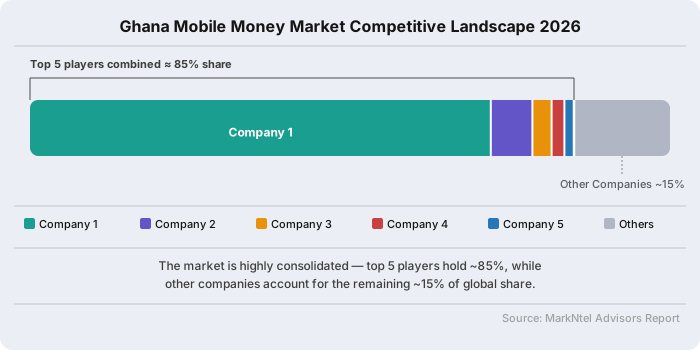
- The industry is highly consolidated. However, the top five players collectively account for nearly 85% share.
Ghana Mobile Money Market Size and Outlook
Ghana mobile money market size was valued at USD 227 billion in 2025 and is projected to grow from USD 269 billion in 2026 to USD 770 billion by 2032. Along with this, the market is estimated to grow at a CAGR of around 19.16% during the forecast period, i.e., 2026-32.
The market is transitioning from a basic money-transfer service into a broader digital financial ecosystem, supported by high transaction volumes, extensive agent coverage, interoperability, and a growing fintech sector. The country’s mobile money infrastructure continues to play a central role in payments, remittances, merchant transactions, bill payments, and financial inclusion, particularly among consumers who remain underserved by traditional banking institutions.
According to Bank of Ghana data, registered mobile money accounts reached 71 million, while active accounts stood at 23 million in August 2024. During the same month, the ecosystem processed 724 million transactions valued at USD 23.60 billion, demonstrating the scale at which mobile money has become embedded in Ghana’s everyday financial activities. Furthermore, the extensive agent network continues to improve accessibility by enabling customers to deposit, withdraw, and transfer funds across urban and rural areas.
By August 2024, Ghana had 863,000 registered mobile money agents, including 523,000 active agents, supporting the availability of cash-in and cash-out services nationwide. This infrastructure remains particularly important in regions where access to conventional bank branches is limited. Interoperability is also strengthening the market’s growth potential by enabling transactions between different mobile money platforms and financial institutions. In 2023, mobile money interoperability transaction value reached USD 2.83 billion, representing 24% year-on-year growth, with wallet-to-wallet transfers accounting for the largest share.
Additionally, the number of licensed fintech companies reflects the maturity and competitiveness of Ghana’s digital payments ecosystem. According to the Bank of Ghana FinTech Sector Report 2024, Ghana had 57 approved fintech entities as of December 2024. Of these, 68% were Enhanced Payment Service Providers (EPSPs), 9% DEMIs, 9% Medium PSPs, 11% PFTSPs, and 4% Standard PSPs. This expanding regulatory framework is expected to encourage innovation, competition, and wider availability of digital financial services across Ghana’s mobile money ecosystem.
Ghana Mobile Money Market Key Indicators
- Transaction value reflects the economic significance of Ghana's mobile money ecosystem. According to the Bank of Ghana, the annual value of mobile money transactions reached approximately USD 64 billion during 2024, representing a 15% increase over the previous quarter in the FinTech report. Monthly transaction values also increased from USD 13.3 billion in December 2023 to about USD 22.4 billion by December 2024. This growth demonstrates increasing consumer reliance on mobile money for retail purchases, business transactions, utility payments, salary transfers, and financial services.
- Transaction volume measures how frequently consumers and businesses use mobile money services. The Bank of Ghana reported that mobile money transaction volume reached approximately 2.1 billion transactions during 2024, reflecting continued expansion in digital payment usage across households, merchants, and SMEs. Rising transaction volumes indicate greater consumer acceptance of mobile wallets for everyday payments rather than occasional transfers. Increasing transaction frequency also improves operational efficiency for payment service providers and encourages investment in digital infrastructure, fraud prevention technologies, and innovative financial products to support Ghana's rapidly expanding cashless economy.
- Agent networks remain essential for expanding financial access, particularly in rural and underserved communities. According to the Bank of Ghana's FinTech Sector Report 2024, Ghana had approximately 883,000 registered mobile money agents and 404,000 active agents during 2024. Agents facilitate cash-in, cash-out, account registration, and customer support services, making mobile money accessible even where bank branches are limited. Continued expansion of agent networks strengthens financial inclusion, increases transaction accessibility, and supports the adoption of digital financial services among individuals and small businesses throughout Ghana.
Ghana Mobile Money Market Scope
| Category | Segments |
|---|---|
| By Transaction Type | Peer-to-Peer (P2P) Transfers, Bill Payments, Merchant Payments, International Remittances, Airtime / Mobile Recharge, Government Payments (G2P & P2G), Others |
| By Service Type | Money Transfer, Payments, Savings & Deposits, Credit & Micro-loans, Insurance Services, Others |
| By Business Model | Mobile-Led Model, Bank-Led Model |
| By Payment Mode | USSD-based Transactions, Mobile Application-based Payments, SMS-based Transactions, QR Code Payments (GhQR), NFC-based Payments |
| By End User | Individuals / Consumers, Small & Medium Enterprises (SMEs), Large Enterprises, Government & Public Sector |
Ghana Mobile Money Market Growth Drivers
Expanding Financial Inclusion Accelerating Mobile Money Adoption in Ghana
Rising financial inclusion is a major driver of Ghana’s mobile money market, as digital financial services continue to bridge the gap between formal banking and underserved populations. According to the Bank of Ghana, registered mobile money accounts increased from 65.6 million in December 2023 to 73.0 million by the end of 2024, while active accounts consistently exceeded 22 million, demonstrating sustained consumer reliance on mobile wallets for transfers, bill payments, savings, and merchant transactions.
In addition, the monthly value of mobile money transactions rose from approximately USD 13.3 billion in December 2023 to approximately USD 22.4 billion by December 2024, highlighting the growing preference for digital financial services over cash. Mobile Money Interoperability (MMI) transactions also increased from USD 154 million to USD 207 million during the same period, improving seamless transfers across banks and mobile wallets.
Looking ahead, the Bank of Ghana’s FinTech and Innovation Office continues to expand licensing of payment service providers, electronic money issuers, and digital financial solutions while advancing the country's cash-lite agenda, encouraging greater investment in fintech, interoperable payments, and financial inclusion initiatives that will accelerate mobile money adoption.
The continued expansion of financial inclusion and digital financial services will significantly increase mobile wallet adoption across consumers, merchants, and SMEs. As regulatory support and fintech investments strengthen Ghana’s digital payment ecosystem, demand for mobile money services is expected to accelerate, driving sustained market growth in the coming years.
Recent Trends
Rapid Expansion of Cross-Border Mobile Money Remittances
The rapid expansion of cross-border mobile money remittances is emerging as a significant trend in Ghana's mobile money market, driven by growing demand for faster, lower-cost, and digitally enabled international money transfers. As remittance inflows remain an important contributor to Ghana's economy, mobile money platforms are increasingly integrating international payment capabilities that allow recipients to receive funds directly into their mobile wallets without visiting bank branches or cash pickup locations. This trend is improving financial inclusion, particularly for unbanked populations, while supporting the country's transition toward a digital payments ecosystem.
A notable example is Zeepay Ghana Limited, which secured an USD 18 million senior secured debt facility in April 2025. The funding is intended to strengthen the company's remittance liquidity, enabling it to process a higher volume of instant cross-border transfers into mobile money wallets across its operations in more than 20 African markets. The investment also enhances Zeepay's working capital, improves settlement efficiency with international money transfer operators, and supports the expansion of its digital remittance infrastructure. By increasing liquidity and transaction capacity, the company aims to deliver faster and more reliable cross-border payment services to millions of users.
The continued expansion of cross-border mobile money services is expected to increase transaction volumes, strengthen international payment connectivity, and encourage further investment in Ghana's digital financial ecosystem. As remittance providers continue enhancing mobile wallet integration and payment infrastructure, cross-border digital transfers are likely to become a major driver of long-term growth in Ghana's mobile money market.
Ghana Mobile Money Market Opportunities and Challenges
Mobile Money Fraud and Cyber Risks Fueling Next-Generation Payment Security Innovations
The rapid expansion of mobile money services in Ghana has been accompanied by a rise in digital fraud, posing a significant challenge to Ghana mobile money market growth. Fraudsters increasingly exploit phishing schemes, SIM swap attacks, fake customer care calls, and social engineering tactics to gain unauthorized access to users' mobile wallets. According to the Bank of Ghana's 2024 Fraud Report, the financial sector recorded 16,733 fraud cases in 2024, up from 15,865 cases in 2023, while the value at risk rose to approximately USD 6.6 million. Mobile money and digital payment channels remain key targets as transaction volumes continue to grow. Such incidents reduce consumer confidence, discourage first-time users, and compel mobile money providers to invest heavily in cybersecurity, fraud monitoring, customer support, and regulatory compliance.
The rise in cyber fraud is driving significant investment in intelligent fraud prevention technologies, creating new growth opportunities for Ghana's mobile money market. Mobile money operators are increasingly integrating artificial intelligence (AI), real-time transaction monitoring, biometric authentication, and automated fraud analytics to detect suspicious behaviour before fraudulent transactions are completed. For instance, following increased fraud attempts, MobileMoney LTD (MTN MoMo) launched the nationwide "Shine Your Eye" campaign in 2025 and introduced enhanced security features including biometric login, self-initiated transaction reversals, easier PIN reset functionality, and a dedicated fraud support team to strengthen customer protection.
In addition, the company announced plans to modernize its cash-out process by introducing QR-code and unique Agent ID verification, eliminating the need for customers to publicly disclose their phone numbers at agent outlets a common method exploited by fraudsters. These investments not only improve customer trust and transaction security but also encourage wider adoption of digital financial services, positioning cybersecurity innovation as a long-term growth catalyst for Ghana's mobile money market.
Segmentation Insights
USSD-based Transactions Lead with Approximately 58% Revenue Share
USSD-based transactions accounted for approximately 58% of the Ghana mobile money market revenue in 2026, making them the leading payment mode due to their widespread accessibility and compatibility with both feature phones and smartphones. Unlike app-based payments, USSD does not require internet connectivity, enabling users in rural and underserved areas to access mobile money services using basic mobile devices. The platform is extensively used for peer-to-peer transfers, merchant payments, bill payments, airtime purchases, and cash-in/cash-out transactions through Ghana's extensive mobile money agent network.
Its simplicity, affordability, and interoperability across major operators such as MobileMoney LTD (MTN MoMo), Telecel Cash, and AT Money have further strengthened its adoption. According to the Bank of Ghana, registered mobile money accounts reached 73.0 million, while active accounts stood at 23.5 million in 2024, reflecting the continued expansion of digital financial services. Although smartphone-based wallets and GhQR payments are witnessing rapid growth, USSD remains the dominant transaction channel, supported by its nationwide availability, reliability, and critical role in advancing financial inclusion throughout Ghana. Based on payment mode, the scope has been segmented into
- USSD-based Transactions
- Mobile Application-based Payments
- SMS-based Transactions
- QR Code Payments (GhQR)
- NFC-based Payments
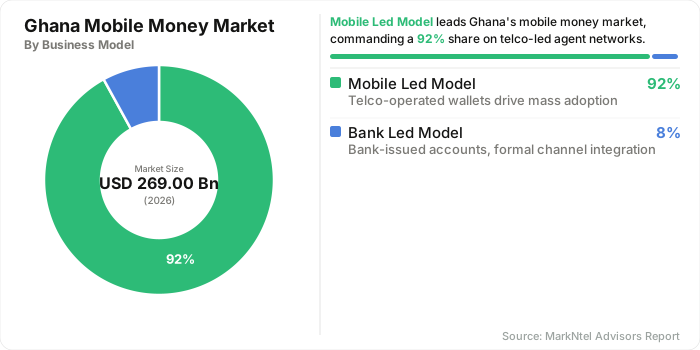
Mobile-Led Platforms Hold an Estimated 92% Share Through Seamless Financial Service Innovation
The Mobile-Led Model holds the dominant position in the Ghana mobile money market, accounting for an estimated 92% of the market in 2026. The model is led by telecom operators that provide mobile wallet services through extensive agent networks, USSD technology, and smartphone applications, making digital financial services easily accessible across both urban and rural areas. Its success is driven by the convenience of instant money transfers, merchant payments, utility bill payments, airtime purchases, and cross-border remittances, all of which can be completed without requiring a traditional bank account.
Telecom operators have also strengthened their offerings by introducing interoperable payment solutions, QR-based transactions, digital savings, microcredit, and enhanced security features such as biometric authentication and AI-enabled fraud monitoring. Furthermore, continuous investment in agent expansion, digital infrastructure, and value-added financial services has increased consumer confidence and encouraged wider adoption. These advantages have enabled the mobile-led model to maintain its leadership and remain the primary driver of innovation and growth in Ghana's mobile money market. By bank model, the market is categorized into
- Mobile Led Model
- Bank Led Model
Ghana mobile money Market Competitive Analysis
The Ghana mobile money market is highly consolidated, with the top five companies collectively accounting for approximately 85% of the market by transaction value in 2026. Key participants include MobileMoney LTD, Telecel Cash Limited, AT Money Ghana Limited, Zeepay Ghana Limited, and Hubtel Limited.
Major Companies in Ghana Mobile Money Industry
- MobileMoney LTD
- Telecel Cash Limited
- AT Money Ghana Limited
- Zeepay Ghana Limited
- Hubtel Limited
- ExpressPay Ghana Limited
- Flutterwave Ghana Limited
- PaySwitch Company Limited
- Nsano Limited
- Fido Micro Credit Limited
- Others
Ghana mobile money Industry News and Recent Developments
-
Mobile Money Fintech LTD Announces Expansion into Credit, Savings and Investment Services
Following its separation from MTN Ghana, MobileMoney Fintech LTD announced plans to expand beyond payments by introducing enhanced digital credit, savings, investment, and other financial services. The company stated that its independent fintech structure will accelerate innovation and strengthen financial inclusion for millions of Ghanaian customers
Impact Analysis: The expansion positions MobileMoney Fintech LTD beyond a payment platform into a comprehensive digital financial services provider. By offering digital credit, savings, and investment products, the company is expected to increase customer engagement, diversify revenue streams, and improve financial inclusion, particularly among underserved populations. The initiative is also likely to intensify competition in Ghana's fintech ecosystem, encouraging other mobile money providers to expand value-added financial services and accelerate innovation.
-
Hubtel Showcased on CNN for Advancing Ghana's Digital Payments Ecosystem
In September 2025, Hubtel Limited was featured on CNN's Marketplace Africa, highlighting its role in transforming Ghana's fintech and digital payments sector. The feature recognized Hubtel's contribution to merchant payments, digital commerce, and financial inclusion through mobile payment technologies.
Impact Analysis: The international recognition enhances Hubtel's credibility among merchants, investors, and technology partners, strengthening confidence in Ghana's fintech sector. Increased visibility is expected to support merchant acquisition, foster strategic collaborations, and encourage greater adoption of digital payment solutions by businesses. The recognition also reinforces Ghana's position as an emerging fintech hub, potentially attracting additional investment into payment infrastructure and mobile money innovation.
Frequently Asked Questions
- Market Segmentation
- Introduction
- Product Definition
- Research Process
- Assumptions
- Executive Summary
- Ghana Mobile Money Market Policies, Regulations, and Product Standards
- Ghana Mobile Money Market Trends & Developments
- Ghana Mobile Money Market Dynamics
- Growth Factors
- Challenges
- Ghana Mobile Money Market Hotspot & Opportunities
- Ghana Mobile Money Market Outlook, 2022-2032
- Market Size & Outlook
- By Revenues (USD Million)
- Market Segmentation & Outlook
- By Transaction Type- Market Size & Forecast 2022-2032, USD Million
- Peer-to-Peer (P2P) Transfers
- Bill Payments
- Merchant Payments
- International Remittances
- Airtime / Mobile Recharge
- Government Payments (G2P & P2G)
- Others
- By Service Type- Market Size & Forecast 2022-2032, USD Million
- Money Transfer
- Payments
- Savings & Deposits
- Credit & Micro-loans
- Insurance Services
- Others
- By Business Model- Market Size & Forecast 2022-2032, USD Million
- Mobile-Led Model
- Bank-Led Model
- By Payment Mode- Market Size & Forecast 2022-2032, USD Million
- USSD-based Transactions
- Mobile Application-based Payments
- SMS-based Transactions
- QR Code Payments (GhQR)
- NFC-based Payments
- By End User- Market Size & Forecast 2022-2032, USD Million
- Individuals / Consumers
- Small & Medium Enterprises (SMEs)
- Large Enterprises
- Government & Public Sector
- By Region- Market Size & Forecast 2022-2032, USD Million
- North
- South
- East
- West
- Central
- By Company
- Competition Characteristics
- Market Share & Analysis
- By Transaction Type- Market Size & Forecast 2022-2032, USD Million
- Market Size & Outlook
- Ghana Mobile Money Transfer Market Outlook, 2022-2032
- Market Size & Outlook
- By Revenues (USD Million)
- Market Segmentation & Outlook
- By Transaction Type- Market Size & Forecast 2022-2032, USD Million
- By Business Model- Market Size & Forecast 2022-2032, USD Million
- By Payment Mode- Market Size & Forecast 2022-2032, USD Million
- By End User- Market Size & Forecast 2022-2032, USD Million
- By Region- Market Size & Forecast 2022-2032, USD Million
- Market Size & Outlook
- Ghana Mobile Payments Market Outlook, 2022-2032
- Market Size & Outlook
- By Revenues (USD Million)
- Market Segmentation & Outlook
- By Transaction Type- Market Size & Forecast 2022-2032, USD Million
- By Business Model- Market Size & Forecast 2022-2032, USD Million
- By Payment Mode- Market Size & Forecast 2022-2032, USD Million
- By End User- Market Size & Forecast 2022-2032, USD Million
- By Region- Market Size & Forecast 2022-2032, USD Million
- Market Size & Outlook
- Ghana Mobile Savings & Deposits Market Outlook, 2022-2032
- Market Size & Outlook
- By Revenues (USD Million)
- Market Segmentation & Outlook
- By Transaction Type- Market Size & Forecast 2022-2032, USD Million
- By Business Model- Market Size & Forecast 2022-2032, USD Million
- By Payment Mode- Market Size & Forecast 2022-2032, USD Million
- By End User- Market Size & Forecast 2022-2032, USD Million
- By Region- Market Size & Forecast 2022-2032, USD Million
- Market Size & Outlook
- Ghana Mobile Credit & Micro-loans Market Outlook, 2022-2032
- Market Size & Outlook
- By Revenues (USD Million)
- Market Segmentation & Outlook
- By Transaction Type- Market Size & Forecast 2022-2032, USD Million
- By Business Model- Market Size & Forecast 2022-2032, USD Million
- By Payment Mode- Market Size & Forecast 2022-2032, USD Million
- By End User- Market Size & Forecast 2022-2032, USD Million
- By Region- Market Size & Forecast 2022-2032, USD Million
- Market Size & Outlook
- Ghana Mobile Insurance Services Market Outlook, 2022-2032
- Market Size & Outlook
- By Revenues (USD Million)
- Market Segmentation & Outlook
- By Transaction Type- Market Size & Forecast 2022-2032, USD Million
- By Business Model- Market Size & Forecast 2022-2032, USD Million
- By Payment Mode- Market Size & Forecast 2022-2032, USD Million
- By End User- Market Size & Forecast 2022-2032, USD Million
- By Region- Market Size & Forecast 2022-2032, USD Million
- Market Size & Outlook
- Ghana Mobile Money Market Key Strategic Imperatives for Success & Growth
- Competitive Outlook
- Company Profiles
- MobileMoney LTD
- Business Description
- Product Portfolio
- Collaborations & Alliances
- Recent Developments
- Financial Details
- Others
- Telecel Cash Limited
- Business Description
- Product Portfolio
- Collaborations & Alliances
- Recent Developments
- Financial Details
- Others
- AT Money Ghana Limited
- Business Description
- Product Portfolio
- Collaborations & Alliances
- Recent Developments
- Financial Details
- Others
- Zeepay Ghana Limited
- Business Description
- Product Portfolio
- Collaborations & Alliances
- Recent Developments
- Financial Details
- Others
- Hubtel Limited
- Business Description
- Product Portfolio
- Collaborations & Alliances
- Recent Developments
- Financial Details
- Others
- ExpressPay Ghana Limited
- Business Description
- Product Portfolio
- Collaborations & Alliances
- Recent Developments
- Financial Details
- Others
- Flutterwave Ghana Limited
- Business Description
- Product Portfolio
- Collaborations & Alliances
- Recent Developments
- Financial Details
- Others
- PaySwitch Company Limited
- Business Description
- Product Portfolio
- Collaborations & Alliances
- Recent Developments
- Financial Details
- Others
- Nsano Limited
- Business Description
- Product Portfolio
- Collaborations & Alliances
- Recent Developments
- Financial Details
- Others
- Fido Micro Credit Limited
- Business Description
- Product Portfolio
- Collaborations & Alliances
- Recent Developments
- Financial Details
- Others
- MobileMoney LTD
- Company Profiles
- Disclaimer
MarkNtel Advisors follows a robust and iterative research methodology designed to ensure maximum accuracy and minimize deviation in market estimates and forecasts. Our approach combines both bottom-up and top-down techniques to effectively segment and quantify various aspects of the market. A consistent feature across all our research reports is data triangulation, which examines the market from three distinct perspectives to validate findings. Key components of our research process include:
1. Scope & Research Design At the outset, MarkNtel Advisors define the research objectives and formulate pertinent questions. This phase involves determining the type of research—qualitative or quantitative—and designing a methodology that outlines data collection methods, target demographics, and analytical tools. They also establish timelines and budgets to ensure the research aligns with client goals.
2. Sample Selection and Data Collection In this stage, the firm identifies the target audience and determines the appropriate sample size to ensure representativeness. They employ various sampling methods, such as random or stratified sampling, based on the research objectives. Data collection is carried out using tools like surveys, interviews, and observations, ensuring the gathered data is reliable and relevant.
3. Data Analysis and Validation Once data is collected, MarkNtel Advisors undertake a rigorous analysis process. This includes cleaning the data to remove inconsistencies, employing statistical software for quantitative analysis, and thematic analysis for qualitative data. Validation steps are taken to ensure the accuracy and reliability of the findings, minimizing biases and errors.

4. Data Forecast and FinalizationThe final phase involves forecasting future market trends based on the analyzed data. MarkNtel Advisors utilize predictive modeling and time series analysis to anticipate market behaviors. The insights are then compiled into comprehensive reports, featuring visual aids like charts and graphs, and include strategic recommendations to inform client decision-making
We offer flexible licensing options to cater to varying organizational needs. Choose the pricing pack that best suits your requirements:
Buy Now Inquire Before Buying
 Request Customization
 Talk to our Consultant







