

GCC Geographical Atrophy Market Research Report: Trends, Forecast & Opportunities (2026-2032)
By Diagnosis Method (Fundus Autofluorescence (FAF), Optical Coherence Tomography Angiography (OCT-A), Multifocal Electroretinography (mfERG)), By Age Group (Below 60 Years, Above 6 ... 0 Years, Above 70 Years), By Therapeutic Agents (Late stage (Phase III), Phase II, Phase I, Pre-clinical & Discovery Candidates), By Therapy Type (Complement Inhibitors, Gene Therapy & Regenerative Approaches, Small Molecules & Others), By Drug Class (Anti-VEGF Agents, Complement Pathway Inhibitors, Cell and Gene Therapies, Other Therapeutics), By Route of Administration (Intravitreal, Oral, Others), By End User (Hospitals, Ophthalmic Clinics / Specialty Eye Care Centers, Homecare & Others), and others Read more
- Healthcare
- Mar 2026
- Pages 290
- Report Format: PDF, Excel, PPT
GCC Geographical Atrophy Market
Projected 23.63% CAGR from 2026 to 2032
Study Period
2026-2032
Market Size (2026)
USD 1.41 Billion
Market Size (2032)
USD 5.01 Billion
Base Year
2025
Projected CAGR
23.63%
Leading Segments
By Diagnosis Method: Optical Coherence Tomography Angiography (OCT-A)
GCC Geographical Atrophy Market Report Key Takeaways:
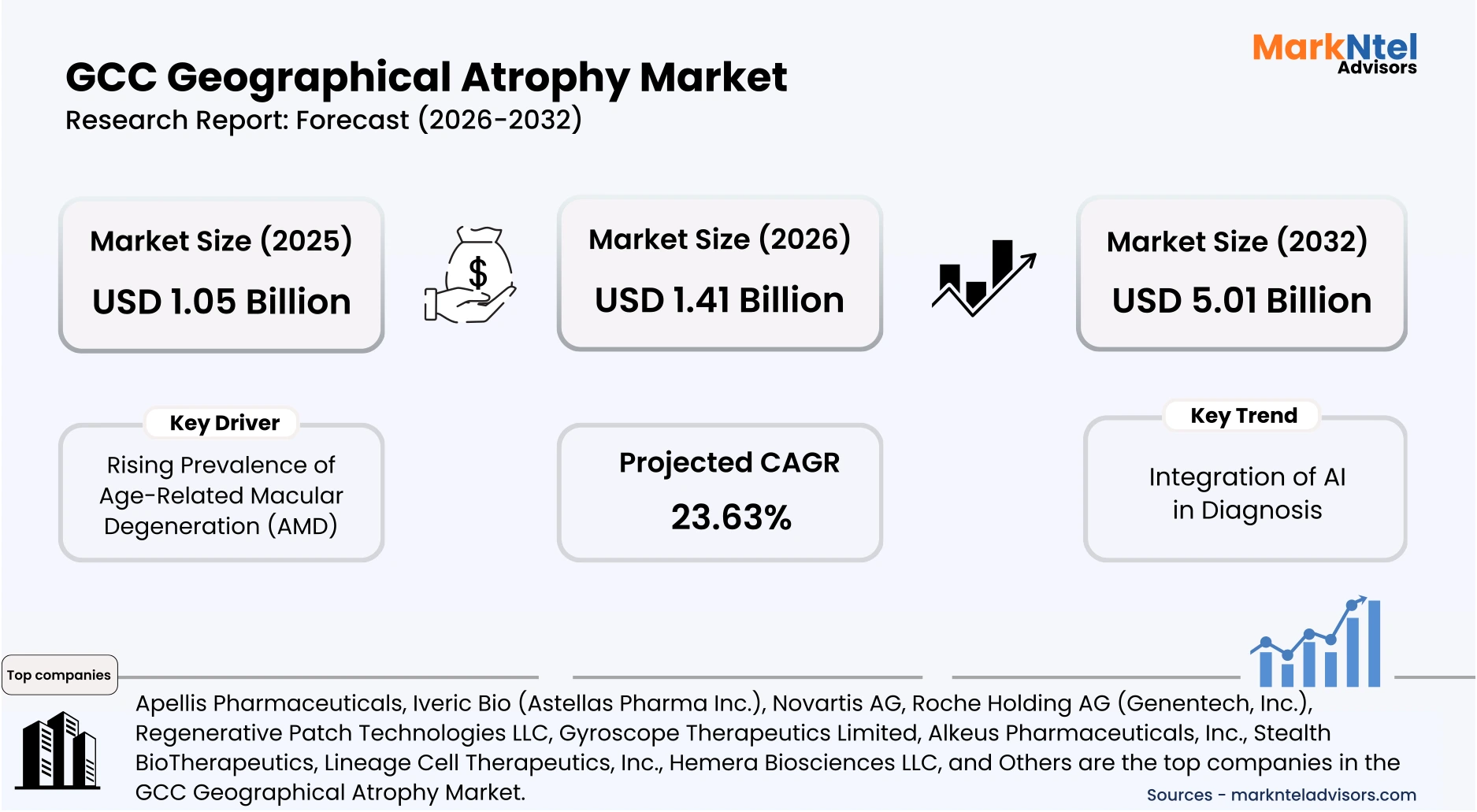
- The GCC Geographical Atrophy market size was valued at around USD 1.05 billion in 2025 and is projected to grow from USD 1.41 billion in 2026 to USD 5.01 billion by 2032, exhibiting a CAGR of 23.63% during the forecast period.
- Saudi Arabia holds the largest market share of about 39% in the GCC Geographical Atrophy Market in 2026.
- By diagnosis method, the optical coherence tomography angiography segment represented a significant share of about 40% in the GCC Geographical Atrophy Market in 2026.
- By route of administration, the intravitreal segment seized a significant share of about 67% in the GCC Geographical Atrophy Market in 2026.
- Leading geographical atrophy companies in the UAE Market are Apellis Pharmaceuticals, Iveric Bio (Astellas Pharma Inc.), Novartis AG, Roche Holding AG (Genentech, Inc.), Regenerative Patch Technologies LLC, Gyroscope Therapeutics Limited, Alkeus Pharmaceuticals, Inc., Stealth BioTherapeutics, Lineage Cell Therapeutics, Inc., Hemera Biosciences LLC, and Others.
Market Insights & Analysis: GCC Geographical Atrophy Market (2026-32):
The GCC Geographical Atrophy Market size was valued at around USD 1.05 billion in 2025 and is projected to grow from USD 1.41 billion in 2026 to USD 5.01 billion by 2032. Along with this, the market is estimated to grow at a CAGR of around 23.63% during the forecast period, i.e., 2026-32.
The GCC Geographic Atrophy (GA) Market is poised for substantial growth, driven primarily by the rising prevalence of age-related macular degeneration (AMD) among aging populations. AMD, a leading cause of vision loss and the precursor to GA, is increasingly diagnosed across the Gulf Cooperation Council countries due to longer life expectancies and changing demographics. Historical burden estimates highlight that countries such as Kuwait and Monaco report higher macular degeneration prevalence within the Eastern Mediterranean region, reflecting persistent patterns of age-related vision loss. As the population ages, the number of individuals at risk for GA rises, creating strong demand for early diagnosis and advanced therapeutic interventions .
A key trend shaping the market is the integration of artificial intelligence (AI) in ophthalmic diagnostics. AI-powered imaging systems enhance early detection and monitoring of GA and related retinal diseases by improving accuracy, speed, and consistency in interpreting complex retinal images. For instance, Medcare Hospital Al Safa in the UAE implemented the Airdoc AI retinal image interpretation system, capable of detecting over 35 retina-related conditions with reported accuracy exceeding 95% through high-resolution fundus analysis. This implementation has improved early screening efficiency and patient outcomes, demonstrating the transformative role of AI in retinal care .
Looking ahead, future investments in healthcare infrastructure and digital health capabilities are expected to accelerate market growth. Saudi Arabia and the UAE are projected to lead most of the nearly 92% of healthcare deals in the Gulf from 2021–2025. Strategic national initiatives, such as Saudi Vision 2030 and the UAE 2023–2026 Health Strategy, are designed to strengthen diagnostic, therapeutic, and innovation ecosystems, supporting the adoption of advanced GA treatments and promoting research in ophthalmic care . These initiatives include expanding specialized retinal clinics, integrating advanced imaging and AI technologies, and enhancing access to innovative therapies.
Overall, the GCC GA market is entering a period of dynamic growth, underpinned by demographic shifts, technological innovation, and strategic government investments. The combination of rising AMD prevalence, AI-driven diagnostic improvements, and strengthened healthcare infrastructure positions the region to meet growing patient demand, optimize treatment outcomes, and expand the adoption of advanced GA therapies in the coming years.
GCC Geographical Atrophy Market Recent Developments:
- 2025: Astellas Pharma showcased expanded real‑world and long‑term safety data for IZERVAY™ (avacincaptad pegol) at the American Academy of Ophthalmology Annual Meeting, supporting broader clinical understanding that could support future regulatory and payer interest worldwide, including GCC regions .
GCC Geographical Atrophy Market Scope:
| Category | Segments |
|---|---|
| By Diagnosis Method | (Fundus Autofluorescence (FAF), Optical Coherence Tomography Angiography (OCT-A), Multifocal Electroretinography (mfERG)), |
| By Age Group | (Below 60 Years, Above 60 Years, Above 70 Years), |
| By Therapeutic Agents | (Late stage (Phase III), Phase II, Phase I, Pre-clinical & Discovery Candidates), |
| By Therapy Type | (Complement Inhibitors, Gene Therapy & Regenerative Approaches, Small Molecules & Others), |
| By Drug Class | (Anti-VEGF Agents, Complement Pathway Inhibitors, Cell and Gene Therapies, Other Therapeutics), |
| By Route of Administration | (Intravitreal, Oral, Others), |
| By End User | (Hospitals, Ophthalmic Clinics / Specialty Eye Care Centers, Homecare & Others), |
GCC Geographical Atrophy Market Driver:
Rising Prevalence of Age-Related Macular Degeneration (AMD)
The increasing prevalence of age‑related macular degeneration (AMD), the primary precursor to geographic atrophy (GA), is a significant driver of the GCC market. Data from the Eastern Mediterranean Region (EMR), which includes the UAE, Saudi Arabia, Qatar, Kuwait, Oman, and Bahrain, indicate a substantial burden of AMD among older adults. For example, Oman recorded an age‑standardized AMD prevalence of approximately 239.7 cases per 100,000 . Saudi Arabia reported 229.5 cases per 100,000 in 2021, highlighting significant retinal disease prevalence within the aging population .
Clinical observations from Saudi ophthalmic centers further indicate that 4% of patients presenting to eye clinics are diagnosed with AMD, with prevalence rising sharply among individuals aged 65 and above. These statistics underscore the growing patient pool at risk for GA, which is further amplified by increasing life expectancy across GCC nations.
Looking beyond 2025, GCC governments are implementing strategic initiatives, including expanded geriatric eye health programs, nationwide retinal screening campaigns, and integration of advanced diagnostic tools such as optical coherence tomography (OCT) into routine clinical practice. These measures are expected to improve early detection, optimize treatment pathways, and enhance patient outcomes.
Overall, the escalating prevalence of AMD among aging GCC populations, supported by regional epidemiological and clinical evidence, is a key driver of market growth, fueling demand for advanced diagnostics and therapeutic interventions for geographic atrophy.
GCC Geographical Atrophy Market Trend:
Integration of AI in Diagnosis
The integration of artificial intelligence (AI) into diagnostic pathways is a prominent trend shaping the geographic atrophy market by enhancing early detection and interpretation of retinal imaging. AI‑driven algorithms, especially those applied to optical coherence tomography (OCT) and OCT angiography (OCTA), significantly improve diagnostic accuracy, sensitivity, and specificity in identifying retinal abnormalities linked to age‑related macular degeneration and related conditions. Studies show AI systems can achieve high diagnostic performance, with improved classification and earlier detection compared with traditional methods in retinal disease screening.
In the GCC region, collaborative initiatives are accelerating AI adoption in ophthalmology. In 2025, Australian and UAE firms signed a strategic partnership to introduce AI‑enabled ophthalmic solutions in the UAE, offering AI support for glaucoma, diabetic retinopathy, and neovascular AMD screening, demonstrating local uptake of AI technologies . Additionally, Magrabi Health in Saudi Arabia launched advanced AI tools aimed at enhancing early detection of diabetic retinopathy and strengthening retinal screening programs nationwide, indicating broader regional commitment to AI‑enhanced ophthalmic care.
By enabling automated analysis of complex retinal images, reducing clinician workload, and improving early disease detection, AI integration is expanding diagnostic capabilities and is expected to become standard practice in retinal disease workflows, thereby supporting earlier treatment decisions and improved patient outcomes in geographic atrophy management.
GCC Geographical Atrophy Market Opportunity:
Emerging Gene and Cell Therapies
The advent of gene and cell therapies offers a significant opportunity for the GCC Geographic Atrophy (GA) market by addressing unmet clinical needs and providing potential long‑lasting treatments beyond conventional intravitreal injections. These therapies are designed not only to slow disease progression but also to restore retinal structure and function, representing a transformative shift in GA management.
Emerging clinical evidence highlights the potential of novel approaches for retinal degenerative diseases such as age‑related macular degeneration (AMD), of which GA is an advanced form. For example, OpRegen® (RG6501), an allogeneic retinal pigment epithelial (RPE) cell therapy developed by Lineage Cell Therapeutics and Roche/Genentech, demonstrated anatomical and functional retinal improvements lasting up to three years following a single subretinal administration in early human trials, illustrating its potential to regenerate retinal tissue rather than only slowing degeneration .
Gene therapy is also gaining prominence as a strategy to combat retinal degeneration. By introducing therapeutic genes into the eye, these interventions act as an “ocular bio‑factory”, producing proteins that may halt disease progression at the genetic level. While most retinal gene therapies remain in development, their long‑lasting effects could substantially reduce treatment burden compared with frequent intravitreal injections.
Beyond retinal therapies, the UAE became the second country globally to approve the gene therapy Itvisma (onasemnogene abeparvovec) for spinal muscular atrophy (SMA) in patients aged two and older, reflecting strong regulatory support for advanced genetic treatments and signaling a favorable environment for adopting retinal gene and cell therapies .
Overall, the growing pipeline of gene and cell therapies, combined with progressive regulatory support in the GCC, presents a major opportunity to expand therapeutic options for GA patients, enhance patient outcomes, and drive long‑term market growth.
GCC Geographical Atrophy Market Challenge:
High Treatment Costs Hindering Smooth Market Progression
High treatment costs represent a major challenge for the Geographic Atrophy (GA) market, limiting patient access and placing a financial burden on healthcare systems. Even in well‑established markets, costs for GA therapies and related retinal treatments remain substantial. For example, complementary inhibitor therapies such as Syfovre® (pegcetacoplan) and Izervay™ (avacincaptad pegol), approved for GA secondary to AMD, can cost roughly USD 28,470 and USD 27,300 per eye per year, respectively, based on U.S. average acquisition costs, before rebates or insurance considerations .
Comprehensive economic modeling further highlights the financial intensity of GA treatment: lifetime treatment costs with frequent intravitreal therapy have been estimated at around USD 350,000 in certain regimens, with cost per quality‑adjusted life‑year (QALY) well over conventional thresholds used by health agencies. These figures demonstrate how chronic interventions, even when effective, impose long‑term financial demands on payers and patients.
Beyond intravitreal drugs, cell and gene therapies, which represent future directions for managing advanced retinal diseases, carry even higher price tags. Average costs per approved gene therapy range between about USD 1 million and USD 2 million per dose, with some exceeding that, according to analyses of cell and gene therapy pricing that consider manufacturing and regulatory complexities. Such high one‑time treatment costs, while potentially curative, pose significant barriers for healthcare systems in the GCC, where reimbursement frameworks and public funding vary .
Overall, the elevated cost of GA therapies, from frequent intravitreal regimens to cutting‑edge gene/cell interventions, creates access and reimbursement challenges, potentially slowing adoption rates and straining both public and private healthcare budgets.
GCC Geographical Atrophy Market (2026-32) Segmentation Analysis:
The GCC Geographical Atrophy Market study of MarkNtel Advisors evaluates & highlights the major trends and influencing factors in each segment. It includes predictions for the period 2026–32 at the regional level. Based on the analysis, the market has been further classified as;
Based on Diagnosis Method:
-
- Fundus Autofluorescence (FAF)
- Optical Coherence Tomography Angiography (OCT-A)
- Multifocal Electroretinography (mfERG)
Optical Coherence Tomography Angiography (OCT-A) dominates the GCC Geographic Atrophy market, accounting for 40% share, due to its non-invasive imaging capability and high-resolution vascular mapping. Unlike conventional imaging techniques, OCT-A provides precise visualization of retinal microvasculature and choriocapillaris changes without the need for dye injection, making it safer and more patient-friendly. Hospitals and ophthalmic centers across the UAE, Saudi Arabia, and Qatar increasingly adopt OCT-A for early detection and monitoring of disease progression, facilitating timely intervention. Its integration with AI-enabled software for automated lesion assessment further enhances diagnostic accuracy, reducing dependence on subjective interpretation.
Additionally, OCT-A allows continuous monitoring of retinal health, guiding treatment strategies such as complement inhibitors or gene therapies. The combination of technological sophistication, growing physician preference, and rising awareness among patients about retinal health underpins OCT-A’s leading position in the GCC market.
Based on Route of Administration:
-
- Intravitreal
- Oral
- Others
Intravitreal administration is the most prominent route in the GCC Geographic Atrophy market, holding a 67% share, due to its direct and effective delivery of therapeutic agents to the retina. Intravitreal injections allow higher drug concentrations at the target site while minimizing systemic exposure, enhancing efficacy for treatments like complement inhibitors, anti-VEGF agents, and emerging gene therapies. The increasing prevalence of GA among the aging population in Saudi Arabia, UAE, and Kuwait has led ophthalmologists to prefer intravitreal therapy for better disease control.
Moreover, specialized ophthalmic clinics are equipped with advanced injection protocols and patient monitoring facilities, ensuring safety and compliance. Regulatory approvals and strong clinical trial evidence supporting intravitreal therapies further reinforce its dominance. Continuous patient education programs in the region regarding injection safety and outcomes have also increased acceptance, establishing intravitreal administration as the preferred and leading method for treating GA in the GCC.
GCC Geographical Atrophy Market (2026-32): Regional Projection
The GCC Geographical Atrophy market is dominated by Saudi Arabia, accounting for 39% of the regional market value. The country’s leadership is attributed to its well-established healthcare infrastructure, rising geriatric population, and government-led initiatives for advanced eye care and retinal disease management. Major urban centers such as Riyadh, Jeddah, and Dammam host advanced ophthalmic hospitals and specialized retinal clinics equipped with optical coherence tomography (OCT), fundus imaging, and AI-based diagnostic systems. Hospitals and clinics like King Khaled Eye Specialist Hospital (Riyadh), Magrabi Eye Hospitals, and specialized centers under the Ministry of Health have invested heavily in cutting-edge retinal diagnostics and therapies, increasing patient access to geographic atrophy treatment.
Additionally, Saudi Arabia’s Vision 2030 healthcare reforms focus on enhancing geriatric care, early detection programs, and the adoption of advanced therapies, which further fuel market growth. The combination of infrastructure, investment, and supportive policy positions Saudi Arabia as the leading regional market for geographic atrophy.
Gain a Competitive Edge with Our GCC Geographical Atrophy Market Report:
- GCC Geographical Atrophy Market Report by MarkNtel Advisors provides a detailed & thorough analysis of market size & share, growth rate, competitive landscape, and key players. This comprehensive analysis helps businesses gain a holistic understanding of the market dynamics & make informed decisions.
- This report also highlights current market trends & future projections, allowing businesses to identify emerging opportunities & potential challenges. By understanding market forecasts, companies can align their strategies & stay ahead of the competition.
- GCC Geographical Atrophy Market Report aids in assessing & mitigating risks associated with entering or operating in the market. By understanding market dynamics, regulatory frameworks, and potential challenges, businesses can develop strategies to minimize risks & optimize their operations.
*Reports Delivery Format - Market research studies from MarkNtel Advisors are offered in PDF, Excel and PowerPoint formats. Within 24 hours of the payment being successfully received, the report will be sent to your email address.
Frequently Asked Questions
- Market Segmentation
- Introduction
- Product Definition
- Research Process
- Assumptions
- Executive Summary
- GCC Geographical Atrophy Market Policies, Regulations, and Product Standards
- GCC Geographical Atrophy Market Trends & Developments
- GCC Geographical Atrophy Market Dynamics
- Growth Factors
- Challenges
- GCC Geographical Atrophy Market Hotspot & Opportunities
- GCC Geographical Atrophy Market Outlook, 2022-2032F
- Market Size & Outlook
- By Revenues (USD Million)
- Market Share & Analysis
- By Diagnosis Method- Market Size & Forecast 2022-2032, USD Million
- Fundus Autofluorescence (FAF)
- Optical Coherence Tomography Angiography (OCT-A)
- Multifocal Electroretinography (mfERG)
- By Age Group- Market Size & Forecast 2022-2032, USD Million
- Below 60 Years
- Above 60 Years
- Above 70 Years
- By Therapeutic Agents- Market Size & Forecast 2022-2032, USD Million
- Late stage (Phase III)
- Phase II
- Phase I
- Pre-clinical & Discovery Candidates
- By Therapy Type- Market Size & Forecast 2022-2032, USD Million
- Complement Inhibitors
- Gene Therapy & Regenerative Approaches
- Small Molecules & Others
- By Drug Class- Market Size & Forecast 2022-2032, USD Million
- Anti-VEGF Agents
- Complement Pathway Inhibitors
- Cell and Gene Therapies
- Other Therapeutics
- By Route of Administration- Market Size & Forecast 2022-2032, USD Million
- Intravitreal
- Oral
- Others
- By End User- Market Size & Forecast 2022-2032, USD Million
- Hospitals
- Ophthalmic Clinics / Specialty Eye Care Centers
- Homecare & Others
- By Country
- The UAE
- Saudi Arabia
- Qatar
- Kuwait
- Oman
- Bahrain
- Rest of GCC
- By Company
- Competition Characteristics
- Market Share & Analysis
- By Diagnosis Method- Market Size & Forecast 2022-2032, USD Million
- Market Size & Outlook
- The UAE Geographical Atrophy Market Outlook, 2022-2032F
- Market Size & Outlook
- By Revenues (USD Million)
- Market Share & Analysis
- By Diagnosis Method- Market Size & Forecast 2022-2032, USD Million
- By Age Group- Market Size & Forecast 2022-2032, USD Million
- By Therapeutic Agents- Market Size & Forecast 2022-2032, USD Million
- By Therapy Type- Market Size & Forecast 2022-2032, USD Million
- By Drug Class- Market Size & Forecast 2022-2032, USD Million
- By Route of Administration- Market Size & Forecast 2022-2032, USD Million
- By End User- Market Size & Forecast 2022-2032, USD Million
- Market Size & Outlook
- Saudi Arabia Geographical Atrophy Market Outlook, 2022-2032F
- Market Size & Outlook
- By Revenues (USD Million)
- Market Share & Analysis
- By Diagnosis Method- Market Size & Forecast 2022-2032, USD Million
- By Age Group- Market Size & Forecast 2022-2032, USD Million
- By Therapeutic Agents- Market Size & Forecast 2022-2032, USD Million
- By Therapy Type- Market Size & Forecast 2022-2032, USD Million
- By Drug Class- Market Size & Forecast 2022-2032, USD Million
- By Route of Administration- Market Size & Forecast 2022-2032, USD Million
- By End User- Market Size & Forecast 2022-2032, USD Million
- Market Size & Outlook
- Qatar Geographical Atrophy Market Outlook, 2022-2032F
- Market Size & Outlook
- By Revenues (USD Million)
- Market Share & Analysis
- By Diagnosis Method- Market Size & Forecast 2022-2032, USD Million
- By Age Group- Market Size & Forecast 2022-2032, USD Million
- By Therapeutic Agents- Market Size & Forecast 2022-2032, USD Million
- By Therapy Type- Market Size & Forecast 2022-2032, USD Million
- By Drug Class- Market Size & Forecast 2022-2032, USD Million
- By Route of Administration- Market Size & Forecast 2022-2032, USD Million
- By End User- Market Size & Forecast 2022-2032, USD Million
- Market Size & Outlook
- Kuwait Geographical Atrophy Market Outlook, 2022-2032F
- Market Size & Outlook
- By Revenues (USD Million)
- Market Share & Analysis
- By Diagnosis Method- Market Size & Forecast 2022-2032, USD Million
- By Age Group- Market Size & Forecast 2022-2032, USD Million
- By Therapeutic Agents- Market Size & Forecast 2022-2032, USD Million
- By Therapy Type- Market Size & Forecast 2022-2032, USD Million
- By Drug Class- Market Size & Forecast 2022-2032, USD Million
- By Route of Administration- Market Size & Forecast 2022-2032, USD Million
- By End User- Market Size & Forecast 2022-2032, USD Million
- Market Size & Outlook
- Oman Geographical Atrophy Market Outlook, 2022-2032F
- Market Size & Outlook
- By Revenues (USD Million)
- Market Share & Analysis
- By Diagnosis Method- Market Size & Forecast 2022-2032, USD Million
- By Age Group- Market Size & Forecast 2022-2032, USD Million
- By Therapeutic Agents- Market Size & Forecast 2022-2032, USD Million
- By Therapy Type- Market Size & Forecast 2022-2032, USD Million
- By Drug Class- Market Size & Forecast 2022-2032, USD Million
- By Route of Administration- Market Size & Forecast 2022-2032, USD Million
- By End User- Market Size & Forecast 2022-2032, USD Million
- Market Size & Outlook
- Bahrain Geographical Atrophy Market Outlook, 2022-2032F
- Market Size & Outlook
- By Revenues (USD Million)
- Market Share & Analysis
- By Diagnosis Method- Market Size & Forecast 2022-2032, USD Million
- By Age Group- Market Size & Forecast 2022-2032, USD Million
- By Therapeutic Agents- Market Size & Forecast 2022-2032, USD Million
- By Therapy Type- Market Size & Forecast 2022-2032, USD Million
- By Drug Class- Market Size & Forecast 2022-2032, USD Million
- By Route of Administration- Market Size & Forecast 2022-2032, USD Million
- By End User- Market Size & Forecast 2022-2032, USD Million
- Market Size & Outlook
- GCC Geographical Atrophy Market Key Strategic Imperatives for Success & Growth
- Competitive Outlook
- Company Profiles
- Apellis Pharmaceuticals
- Business Description
- Product Portfolio
- Collaborations & Alliances
- Recent Developments
- Financial Details
- Others
- Iveric Bio (Astellas Pharma Inc.)
- Business Description
- Product Portfolio
- Collaborations & Alliances
- Recent Developments
- Financial Details
- Others
- Novartis AG
- Business Description
- Product Portfolio
- Collaborations & Alliances
- Recent Developments
- Financial Details
- Others
- Roche Holding AG (Genentech, Inc.)
- Business Description
- Product Portfolio
- Collaborations & Alliances
- Recent Developments
- Financial Details
- Others
- Regenerative Patch Technologies LLC
- Business Description
- Product Portfolio
- Collaborations & Alliances
- Recent Developments
- Financial Details
- Others
- Gyroscope Therapeutics Limited
- Business Description
- Product Portfolio
- Collaborations & Alliances
- Recent Developments
- Financial Details
- Others
- Alkeus Pharmaceuticals, Inc.
- Business Description
- Product Portfolio
- Collaborations & Alliances
- Recent Developments
- Financial Details
- Others
- Stealth BioTherapeutics
- Business Description
- Product Portfolio
- Collaborations & Alliances
- Recent Developments
- Financial Details
- Others
- Lineage Cell Therapeutics, Inc.
- Business Description
- Product Portfolio
- Collaborations & Alliances
- Recent Developments
- Financial Details
- Others
- Hemera Biosciences LLC
- Business Description
- Product Portfolio
- Collaborations & Alliances
- Recent Developments
- Financial Details
- Others
- Other
- Business Description
- Product Portfolio
- Collaborations & Alliances
- Recent Developments
- Financial Details
- Others
- Apellis Pharmaceuticals
- Company Profiles
- Disclaimer
MarkNtel Advisors follows a robust and iterative research methodology designed to ensure maximum accuracy and minimize deviation in market estimates and forecasts. Our approach combines both bottom-up and top-down techniques to effectively segment and quantify various aspects of the market. A consistent feature across all our research reports is data triangulation, which examines the market from three distinct perspectives to validate findings. Key components of our research process include:
1. Scope & Research Design At the outset, MarkNtel Advisors define the research objectives and formulate pertinent questions. This phase involves determining the type of research—qualitative or quantitative—and designing a methodology that outlines data collection methods, target demographics, and analytical tools. They also establish timelines and budgets to ensure the research aligns with client goals.
2. Sample Selection and Data Collection In this stage, the firm identifies the target audience and determines the appropriate sample size to ensure representativeness. They employ various sampling methods, such as random or stratified sampling, based on the research objectives. Data collection is carried out using tools like surveys, interviews, and observations, ensuring the gathered data is reliable and relevant.
3. Data Analysis and Validation Once data is collected, MarkNtel Advisors undertake a rigorous analysis process. This includes cleaning the data to remove inconsistencies, employing statistical software for quantitative analysis, and thematic analysis for qualitative data. Validation steps are taken to ensure the accuracy and reliability of the findings, minimizing biases and errors.

4. Data Forecast and FinalizationThe final phase involves forecasting future market trends based on the analyzed data. MarkNtel Advisors utilize predictive modeling and time series analysis to anticipate market behaviors. The insights are then compiled into comprehensive reports, featuring visual aids like charts and graphs, and include strategic recommendations to inform client decision-making
We offer flexible licensing options to cater to varying organizational needs. Choose the pricing pack that best suits your requirements:
Buy Now Inquire Before Buying
 Request Customization
 Talk to our Consultant







