

GCC Fire Safety Equipment Market Research Report: Forecast (2026-2032)
By Equipment Type (Fire Extinguishers, Fire Suppression Systems, Fire Sprinkler Systems, Fire Detection and Alarm Systems), By End User (Residential, Commercial, Industrial, Hospit ... ality, Retail, Oil and Gas), and others Read more
- Buildings, Construction, Metals & Mining
- May 2026
- Pages 156
- Report Format: PDF, Excel, PPT
GCC Fire Safety Equipment Market
Projected 10.65% CAGR from 2026 to 2032
Study Period
2026-2032
Market Size (2026)
USD 1.64 Billion
Market Size (2032)
USD 3.02 Billion
Base Year
2025
Projected CAGR
10.65%
Leading Segments
By End User: Commercial
GCC Fire Safety Equipment Market Key Takeaways
- GCC fire safety equipment market size was valued at USD 1.57 billion in 2025 and is projected to grow from USD 1.64 billion in 2026 to USD 3.02 billion by 2032, exhibiting a CAGR of 10.65% during 2026-2032.
- Saudi Arabia holds the largest share of about 43%.
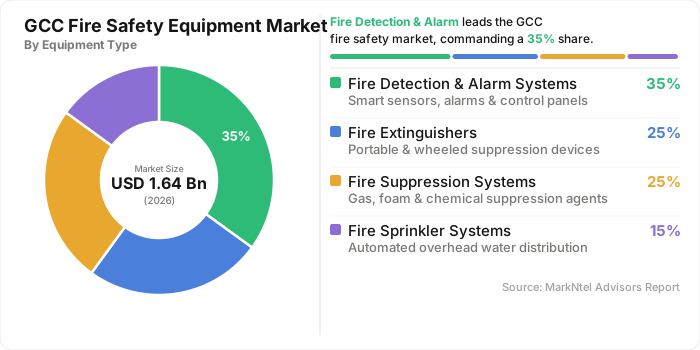
- By equipment type, Fire Detection and Alarm Systems hold a significant share of about 35%, while Fire Suppression Systems are expected to register a CAGR of around 12% in the GCC.
- By end user, the commercial segment accounted for a significant share of about 38% in 2026, while industrial end users in Saudi Arabia and the UAE are projected to grow at a CAGR of 13.18% and 12.87%, respectively.
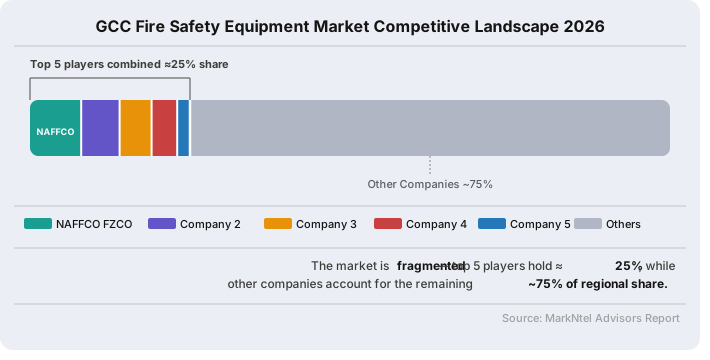
- The industry is moderately fragmented. However, the top five players collectively account for nearly 25% share.
GCC Fire Safety Equipment Market Size and Outlook
The GCC fire safety equipment market is estimated to grow at a CAGR of around 10.65% during the forecast period, i.e., 2026-32, owing to increasing safety compliance requirements across oil & gas, petrochemical, residential, and commercial sectors. Moreover, a major structural growth driver is the strong presence of high-risk industries such as oil, gas, and chemicals, where fire hazards are elevated due to the handling and processing of flammable materials. Countries like Saudi Arabia and the UAE continue to strengthen civil defense regulations, mandating certified fire detection, suppression, and emergency evacuation systems across industrial and urban developments, ensuring continuous demand for advanced fire safety equipment.
Infrastructure expansion remains the most significant long-term catalyst. According to official construction sector updates aligned with Saudi Vision 2030, the Kingdom has a project pipeline of approximately USD 2.1 trillion in planned construction investments over the next eight years, positioning it among the world’s largest construction markets, reflecting rapid execution across mega infrastructure developments, including smart cities, residential clusters, industrial zones, and tourism hubs.
This massive construction pipeline is directly increasing demand for integrated fire safety systems across high-rise buildings, transportation networks, and critical infrastructure. Mega projects such as NEOM, Qiddiya, and The Red Sea Project are embedding advanced fire detection and suppression technologies within smart city frameworks, accelerating adoption of IoT-enabled and centrally monitored safety systems.
Additionally, increasing automation in commercial buildings, smart homes, and industrial facilities is boosting adoption of wireless fire sensors, cloud-based monitoring systems, and AI-enabled safety platforms. Companies such as NAFFCO continue to expand advanced fire alarm and integrated protection systems showcased at major regional platforms like Intersec, reflecting the industry’s transition toward connected fire safety ecosystems.
Overall, the GCC fire safety systems market is projected to grow from USD 1.64 billion in 2026 to USD 3.02 billion by 2032, supported by a massive construction pipeline, strict regulatory enforcement, and rapid adoption of smart infrastructure technologies. These factors are expected to significantly accelerate demand for fire safety systems across the GCC and strengthen the market penetration of advanced, connected, and intelligent fire protection solutions over the coming years.
GCC Fire Safety Equipment Industry Key Indicators
- Saudi Arabia hospitality expansion is a key demand driver for fire safety systems. Tourist trips reached 115.9 million in 2024, with a target of 150 million by 2030. A pipeline of 92,000 hotel rooms across 342 projects requires mandatory Saudi Civil Defence certification, making fire detection, alarms, and suppression systems essential for all new hospitality developments.
- Dubai Civil Defence 1 Billion Readiness Project, launched with 34 countries and 18 firefighting organizations, aims to strengthen global fire prevention and training capacity. In the GCC, it reinforces stricter enforcement and inspection regimes, accelerating compliance-driven upgrades, replacement of outdated systems, and increased procurement of advanced fire safety equipment across existing buildings.
- Global refining capacity reached 103.80 mb/d in 2024, with significant additions in the Middle East region. Each new refinery or gas processing unit in the GCC requires advanced fire suppression systems, flame detection, and emergency shutdown integration due to high-risk operations and strict compliance with civil defence and international safety standards.
GCC Fire Safety Equipment Market Scope
| Category | Segments |
|---|---|
| By Equipment Type | Fire Extinguishers, Fire Suppression Systems, Fire Sprinkler Systems, Fire Detection and Alarm Systems |
| By End User | Residential, Commercial, Industrial, Hospitality, Retail, Oil and Gas |
GCC Fire Safety Equipment Market Growth Drivers
Strict Fire Safety Regulations and Infrastructure Expansion
Strict fire safety regulations, combined with large-scale infrastructure development, are a key driver of the GCC fire safety equipment market. In Saudi Arabia, fire protection requirements are mandated under the Saudi Building Code (SBC 801–808), which sets compulsory standards for fire alarms, sprinkler systems, emergency lighting, and evacuation planning across residential, commercial, and industrial facilities. Compliance is enforced through Civil Defense approvals and occupancy certification, making fire safety systems an essential requirement for project completion rather than an optional feature. This regulatory framework significantly increases the adoption of certified fire protection equipment across new and existing buildings.
At the same time, rapid infrastructure expansion under Saudi Vision 2030 is further strengthening demand. Mega developments such as NEOM, Qiddiya, The Red Sea Project, and large-scale urban expansion programs are accelerating construction of smart cities, airports, hotels, and industrial hubs. These projects require advanced and integrated fire protection systems that comply with both national and international safety standards, driving consistent procurement of modern detection and suppression technologies. Increasing focus on urban safety, asset protection, and regulatory compliance is further reinforcing adoption across multiple sectors.
In the coming years, continued investments in smart infrastructure, tourism megaprojects, and industrial diversification initiatives are expected to sustain strong demand for advanced fire safety systems across the GCC region. Rising emphasis on fire safety compliance, smart infrastructure development, and the adoption of intelligent fire protection technologies will continue to influence procurement decisions across commercial, residential, industrial, and public infrastructure projects.
Overall, the combination of strict regulatory enforcement and large-scale construction activity is expected to significantly accelerate market growth, further strengthening the transition toward a highly regulated, safety-driven, and technologically advanced built environment across the region.
Recent Trends
Adoption of Advanced Integrated Fire Safety Systems
The GCC fire safety equipment market is witnessing a strong shift toward advanced, integrated fire detection and alarm systems, driven by large-scale infrastructure development and stricter regulatory compliance requirements. Governments across the region, particularly under Saudi Vision 2030, are emphasizing smart infrastructure development where fire safety is embedded within connected building management systems. This is accelerating demand for scalable, technology-driven solutions capable of ensuring real-time monitoring, rapid alerting, and centralized control across complex assets such as giga projects, commercial hubs, and industrial facilities.
For example, Intersec Saudi Arabia 2025, where leading manufacturers including Advanced Co. showcased next-generation fire alarm panels and detection systems designed for flexible deployment across different building environments. These solutions reflect the market’s transition from conventional standalone systems to integrated platforms that support higher reliability, improved response times, and enhanced compliance with Civil Defense regulations. The event also highlighted strong industry alignment toward smart infrastructure readiness and safety innovation, reinforcing the role of fire protection as a core component of urban development strategies.
Looking ahead beyond 2025, increasing investment in smart cities, digital building ecosystems, and AI-enabled monitoring systems is expected to further accelerate adoption of advanced fire safety technologies. Rising focus on fire safety integration, smart fire detection systems, and compliance-driven fire protection solutions will continue to shape procurement decisions across the GCC.
Furthermore, the combination of regulatory enforcement, infrastructure expansion, and technology-led product innovation is transforming the fire safety market into a highly integrated and future-ready ecosystem, significantly strengthening long-term market growth across the region.
GCC Fire Safety Equipment Industry Opportunities and Challenges
Rising Compliance Costs Driving Sustainable Packaging Innovation
A key challenge in the GCC fire safety equipment market is the shortage of trained professionals capable of handling installation, commissioning, and maintenance of advanced fire protection systems. Despite rapid infrastructure expansion across Saudi Arabia under Vision 2030, the availability of certified fire safety technicians remains limited. This creates operational inefficiencies, delays in project delivery, and uneven system performance across commercial, industrial, and high-rise developments. The impact is more visible in large-scale projects such as NEOM and other smart city developments, where compliance requirements and system complexity are significantly higher.
At the same time, this limitation is driving a clear opportunity for structured capability building across the region. There is rising focus on fire safety workforce development, technical certification programs, and skill enhancement initiatives supported by both public and private stakeholders. Companies are increasingly collaborating with training institutes and regulatory bodies to develop standardized learning pathways for fire protection engineers and technicians. As highlighted in initiatives aligned with Saudi Vision 2030, industry players are also investing in knowledge transfer programs and localized training models to strengthen in-country expertise and reduce dependency on external labor.
In addition, the growing adoption of digital fire safety systems and simulation-based training tools is further improving skill development efficiency. Over time, this is expected to enhance installation quality, improve compliance adherence, and support a more reliable and service-oriented fire safety ecosystem across the GCC region.
Segmentation Insights
Fire Detection and Alarm Systems as the Leading Segment
The fire detection & alarm systems account for the largest market share approximately 35% due to their mandatory role in life safety compliance and early hazard identification. Civil defence authorities across Saudi Arabia, UAE, and other GCC countries require all residential, commercial, and industrial buildings to install certified fire detection and alarm systems before occupancy approval. This strict regulatory enforcement ensures continuous and non-discretionary demand across all infrastructure categories. Rapid urbanization, expansion of high-rise buildings, and smart city development are further strengthening adoption, as modern infrastructure increasingly integrates smoke detectors, heat and heat sensors, manual call points, and centralized alarm panels into building management systems for real-time monitoring and faster emergency response.
In contrast, Fire Suppression Systems are emerging as the fastest-growing segment, expected to register a CAGR of around 12% during the forecast period. Growth is driven by rising investments in high-risk sectors such as oil & gas, petrochemicals, airports, data centers, and large commercial facilities. These systems are critical for controlling and extinguishing fires at the source, especially in environments with high flammable material exposure and high asset value. Increasing adoption of advanced solutions like clean agent systems, water mist technologies, and automated sprinkler networks is further accelerating market expansion. While detection systems dominate in volume due to regulatory mandates, suppression systems are gaining strong momentum due to industrial expansion and enhanced safety requirements across the GCC region. Based on equipment type, the scope has been segmented into
- Fire Extinguishers
- Fire Suppression Systems
- Fire Sprinkler Systems
- Fire Detection and Alarm Systems
Commercial Segment Leads the End-Use Vertical with Potential Shares
The commercial segment accounts for approximately 38% share, making it the largest revenue contributor among end-use industries. This is primarily driven by the rapid expansion of urban infrastructure such as office complexes, shopping malls, hotels, hospitals, and mixed-use developments. These facilities are characterized by high occupancy density, which significantly increases fire risk exposure and necessitates comprehensive fire protection systems. Strict civil defence regulations across Saudi Arabia, the UAE, and other GCC countries require commercial buildings to install certified fire detection, alarm, suppression, and emergency evacuation systems before receiving operational approval, ensuring sustained demand. The growth of tourism, retail expansion, and large-scale hospitality projects under national development programs such as Saudi Vision 2030 and UAE urban expansion strategies is further strengthening this segment. Increasing adoption of smart building technologies and integrated facility management systems is also driving the deployment of centralized fire safety networks across commercial infrastructure.
In parallel, industrial end users in Saudi Arabia and the UAE are witnessing strong growth, expected to expand at a CAGR of 13.18% and 12.87%, respectively. This growth is driven by heavy investments in oil & gas, petrochemicals, manufacturing, and logistics infrastructure, where fire hazards are significantly higher due to flammable materials and high-energy operations. Industrial facilities require advanced fire suppression systems, gas detection units, and automated emergency shutdown solutions to ensure operational safety and asset protection. Increasing industrial diversification and capacity expansion projects across the GCC are further accelerating demand for high-performance fire safety solutions in this segment. The key end users mapped in the study involve
- Residential
- Commercial
- Industrial
- Hospitality
- Retail
- Oil and Gas
GCC Fire Safety Equipment Market Geographical Outlook
The GCC Fire Safety Equipment Market is dominated by Saudi Arabia, accounting for approximately 43% share of the regional market. This dominance is driven by rapid infrastructure expansion, strict regulatory enforcement, and strong industrial risk exposure across the Kingdom. Large-scale urban development under national transformation initiatives is accelerating the deployment of fire detection, alarm, and suppression systems across multiple end-use sectors, ensuring consistent demand for certified safety solutions.
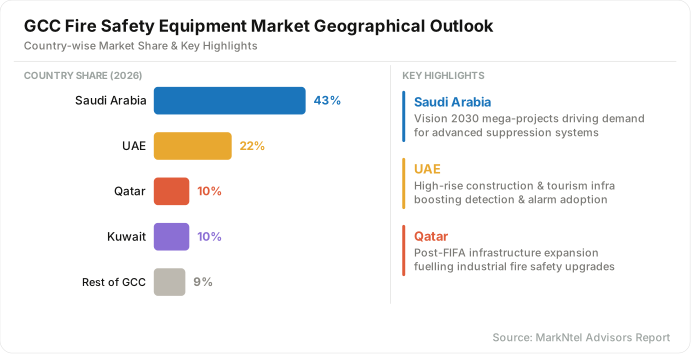
Saudi Arabia’s leadership is further strengthened by its extensive oil & gas and petrochemical ecosystem, which requires continuous upgrading of fire protection infrastructure due to high flammable-risk operations. Industrial clusters and energy facilities across the country generate sustained demand for advanced safety systems to minimize fire-related risks and ensure operational continuity. In parallel, increasing investments in commercial infrastructure, transportation networks, and hospitality developments are further expanding the adoption of integrated fire safety solutions.
Additionally, the presence of strict civil defence regulations and mandatory building safety approvals ensures continuous installation and replacement of fire protection systems across the lifecycle of assets. Regular inspections and compliance audits also contribute to recurring demand for system upgrades and modernization.
Moreover, Saudi Arabia remains the core growth hub of the GCC fire safety equipment market, supported by its large industrial base, expanding infrastructure pipeline, and stringent safety enforcement framework, making it the most influential region driving overall market development.
GCC Fire Safety Equipment Industry Competitive Analysis
The GCC Fire Safety Equipment Market is moderately fragmented, with a mix of global and regional players operating across fire detection, suppression, sprinkler systems, and extinguishing equipment segments. The top five companies, including NAFFCO FZCO, Honeywell International Inc., Johnson Controls (Tyco), Fike Corporation, and Minimax-Viking GmbH, collectively account for approximately 25% of the total market share, reflecting a competitive landscape driven by project-based demand, regulatory approvals, and strong participation in infrastructure, oil & gas, and commercial construction projects across the GCC region.
Major Companies in the Fire Safety Equipment Market
- Amerex Corporation
- Emirates Fire Fighting Equipment Factory LLC (FireX)
- Fike Corporation
- Honeywell International Inc.
- Minimax-Viking GmbH
- NAFFCO FZCO
- Saudi Factory for Fire Equipment Co.
- Bristol Fire Engineering
- Johnson Controls (Tyco)
- Al Aman Fire
- Others
GCC Fire Safety Equipment Industry News and Recent Developments
January 2026: NAFFCO showcases advanced fire safety innovations and AI-driven solutions at Intersec Dubai
NAFFCO participated in Intersec Dubai 2025, presenting advanced fire safety technologies including AI-powered fire detection systems, modular protection solutions, and sustainable emergency response equipment. The company highlighted innovations such as smart fire alarms, integrated suppression systems, and eco-friendly firefighting vehicles. The showcase emphasized digital transformation in fire safety and strengthened its position as a leading GCC fire protection solutions provider.
Impact Analysis: NAFFCO’s showcase reflects the GCC fire safety market’s shift toward intelligent, connected, and sustainability-driven protection systems. The emphasis on AI-enabled detection and integrated fire solutions supports faster emergency response and improved building safety compliance. It also encourages regional adoption of smart fire safety infrastructure across commercial and industrial sectors. This innovation push strengthens competitive pressure among OEMs and accelerates the transition toward digital fire protection ecosystems across the GCC region.
Frequently Asked Questions
- Market Segmentation
- Introduction
- Product Definition
- Research Process
- Assumptions
- Executive Summary
- GCC Fire Safety Equipment Market Policies, Regulations, and Product Standards
- GCC Fire Safety Equipment Market Trends & Developments
- GCC Fire Safety Equipment Market Dynamics
- Growth Factors
- Challenges
- GCC Fire Safety Equipment Market Hotspot & Opportunities
- GCC Fire Safety Equipment Market Outlook, 2022-2032F
- Market Size & Outlook
- By Revenues (USD Million)
- Market Share & Analysis
- By Equipment Type- Market Size & Forecast 2022-2032, USD Million
- Fire Extinguishers
- Fire Suppression Systems
- Fire Sprinkler Systems
- Fire Detection and Alarm Systems
- By End User- Market Size & Forecast 2022-2032, USD Million
- Residential
- Commercial
- Industrial
- Hospitality
- Retail
- Oil and Gas
- By Country
- The UAE
- Saudi Arabia
- Qatar
- Kuwait
- Oman
- Bahrain
- By Company
- Company Revenue Shares
- Competitor Characteristics
- By Equipment Type- Market Size & Forecast 2022-2032, USD Million
- Market Size & Outlook
- The UAE Fire Safety Equipment Market Outlook, 2022-2032F
- Market Size & Outlook
- By Revenues (USD Million)
- Market Share & Analysis
- By Equipment Type- Market Size & Forecast 2022-2032, USD Million
- By End User- Market Size & Forecast 2022-2032, USD Million
- Market Size & Outlook
- Saudi Arabia Fire Safety Equipment Market Outlook, 2022-2032F
- Market Size & Outlook
- By Revenues (USD Million)
- Market Share & Analysis
- By Equipment Type- Market Size & Forecast 2022-2032, USD Million
- By End User- Market Size & Forecast 2022-2032, USD Million
- Market Size & Outlook
- Qatar Fire Safety Equipment Market Outlook, 2022-2032F
- Market Size & Outlook
- By Revenues (USD Million)
- Market Share & Analysis
- By Equipment Type- Market Size & Forecast 2022-2032, USD Million
- By End User- Market Size & Forecast 2022-2032, USD Million
- Market Size & Outlook
- Kuwait Fire Safety Equipment Market Outlook, 2022-2032F
- Market Size & Outlook
- By Revenues (USD Million)
- Market Share & Analysis
- By Equipment Type- Market Size & Forecast 2022-2032, USD Million
- By End User- Market Size & Forecast 2022-2032, USD Million
- Market Size & Outlook
- Oman Fire Safety Equipment Market Outlook, 2022-2032F
- Market Size & Outlook
- By Revenues (USD Million)
- Market Share & Analysis
- By Equipment Type- Market Size & Forecast 2022-2032, USD Million
- By End User- Market Size & Forecast 2022-2032, USD Million
- Market Size & Outlook
- Bahrain Fire Safety Equipment Market Outlook, 2022-2032F
- Market Size & Outlook
- By Revenues (USD Million)
- Market Share & Analysis
- By Equipment Type- Market Size & Forecast 2022-2032, USD Million
- By End User- Market Size & Forecast 2022-2032, USD Million
- Market Size & Outlook
- Competition Characteristics Fire Safety Equipment Market Outlook, 2022-2032F
- Market Size & Outlook
- By Revenues (USD Million)
- Market Share & Analysis
- By Equipment Type- Market Size & Forecast 2022-2032, USD Million
- By End User- Market Size & Forecast 2022-2032, USD Million
- Market Size & Outlook
- GCC Fire Safety Equipment Market Key Strategic Imperatives for Success & Growth
- Competitive Outlook
- Company Profiles
- Amerex Corporation
- Business Description
- Product Portfolio
- Collaborations & Alliances
- Recent Developments
- Financial Details
- Others
- Emirates Fire Fighting Equipment Factory LLC (FireX)
- Business Description
- Product Portfolio
- Collaborations & Alliances
- Recent Developments
- Financial Details
- Others
- Fike Corporation
- Business Description
- Product Portfolio
- Collaborations & Alliances
- Recent Developments
- Financial Details
- Others
- Honeywell International Inc.
- Business Description
- Product Portfolio
- Collaborations & Alliances
- Recent Developments
- Financial Details
- Others
- Minimax-Viking GmbH
- Business Description
- Product Portfolio
- Collaborations & Alliances
- Recent Developments
- Financial Details
- Others
- NAFFCO FZCO
- Business Description
- Product Portfolio
- Collaborations & Alliances
- Recent Developments
- Financial Details
- Others
- Saudi Factory for Fire Equipment Co.
- Business Description
- Product Portfolio
- Collaborations & Alliances
- Recent Developments
- Financial Details
- Others
- Bristol Fire Engineering
- Business Description
- Product Portfolio
- Collaborations & Alliances
- Recent Developments
- Financial Details
- Others
- Johnson Controls (Tyco)
- Business Description
- Product Portfolio
- Collaborations & Alliances
- Recent Developments
- Financial Details
- Others
- Al Aman Fire
- Business Description
- Product Portfolio
- Collaborations & Alliances
- Recent Developments
- Financial Details
- Others
- Others
- Amerex Corporation
- Company Profiles
- Disclaimer
MarkNtel Advisors follows a robust and iterative research methodology designed to ensure maximum accuracy and minimize deviation in market estimates and forecasts. Our approach combines both bottom-up and top-down techniques to effectively segment and quantify various aspects of the market. A consistent feature across all our research reports is data triangulation, which examines the market from three distinct perspectives to validate findings. Key components of our research process include:
1. Scope & Research Design At the outset, MarkNtel Advisors define the research objectives and formulate pertinent questions. This phase involves determining the type of research—qualitative or quantitative—and designing a methodology that outlines data collection methods, target demographics, and analytical tools. They also establish timelines and budgets to ensure the research aligns with client goals.
2. Sample Selection and Data Collection In this stage, the firm identifies the target audience and determines the appropriate sample size to ensure representativeness. They employ various sampling methods, such as random or stratified sampling, based on the research objectives. Data collection is carried out using tools like surveys, interviews, and observations, ensuring the gathered data is reliable and relevant.
3. Data Analysis and Validation Once data is collected, MarkNtel Advisors undertake a rigorous analysis process. This includes cleaning the data to remove inconsistencies, employing statistical software for quantitative analysis, and thematic analysis for qualitative data. Validation steps are taken to ensure the accuracy and reliability of the findings, minimizing biases and errors.

4. Data Forecast and FinalizationThe final phase involves forecasting future market trends based on the analyzed data. MarkNtel Advisors utilize predictive modeling and time series analysis to anticipate market behaviors. The insights are then compiled into comprehensive reports, featuring visual aids like charts and graphs, and include strategic recommendations to inform client decision-making
We offer flexible licensing options to cater to varying organizational needs. Choose the pricing pack that best suits your requirements:
Buy Now Inquire Before Buying
 Request Customization
 Talk to our Consultant







