

GCC Digital Out-of-Home (DOOH) Advertising Market Research Report: Forecast (2026-2032)
By Type (Digital Billboards & LED Screens, Street Furniture, Transit & Transportation (Roadways, Airways, Railways, Marine), Mall Advertising Displays, Others), By Application (Ind ... oor, Outdoor), By End User (Retail, Real Estate, Financial Services, Government, Automotive, Media & Entertainment, Restaurants, Others), By Location (Highways & Bridges, Roadsides, Gas Stations, Malls, Stadiums, Public Transport Stations, Other), and others Read more
- ICT & Electronics
- Jun 2026
- Pages 240
- Report Format: PDF, Excel, PPT
GCC Digital Out-of-Home (DOOH) Advertising Market
Projected 7.64% CAGR from 2026 to 2032
Study Period
2026-2032
Market Size (2026)
USD 612 Million
Market Size (2032)
USD 952 Million
Base Year
2025
Projected CAGR
7.64%
Leading Segments
By Type: Digital Billboards & LED
GCC Digital Out-of-Home Advertising Market Key Takeaways
- The GCC Digital Out-of-Home Advertising Market size was valued at USD 572 million in 2025 and is projected to grow from USD 612 million in 2026 to USD 952 million by 2032.
- The industry is projected to reflect sustained growth at a steady CAGR of 7.64% during 2026-2032.
- Saudi Arabia holds the largest share of about 43% in 2026.
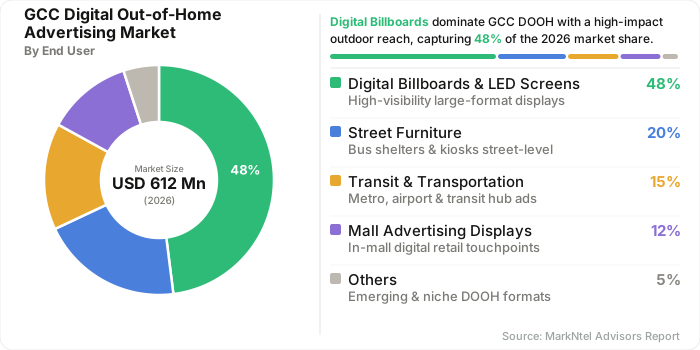
- By type, Digital billboards & LED screens hold a significant share of about 48% in 2026.
- By end user, retail seized a significant share of about 33% in 2026.
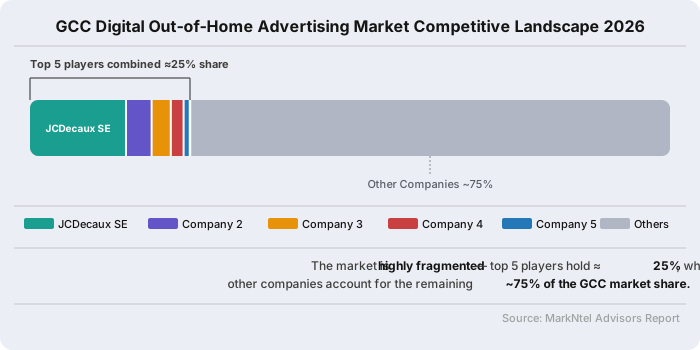
- The industry is highly fragmented. However, the top five players collectively account for nearly 25% share.
GCC Digital Out-of-Home Advertising Market Size and Outlook
The GCC digital out-of-home advertising market size was valued at USD 572 million in 2025 and is projected to grow from USD 612 million in 2026 to USD 952 million by 2032. Along with this, the market is estimated to grow at a CAGR of around 7.64% during the forecast period, i.e., 2026-32, driven by digital infrastructure investments, smart city initiatives, and the growing adoption of data-driven advertising technologies. Governments across the region are expanding transportation networks and commercial developments that create high-footfall environments for digital advertising. For example, Dubai awarded a USD 5.6 billion contract for the 30-kilometer Dubai Metro Blue Line with 14 stations, a project expected to generate additional premium advertising locations across transit corridors and urban hubs.
The market is also benefiting from the rapid expansion of intelligent and programmatic digital advertising networks across the GCC. In January 2026, Hypermedia launched a real-time programmatic DOOH ecosystem in the UAE, beginning deployment across its network of 4,000 digital screens, which collectively generate more than 100 million impressions every day. The rollout includes smart, sensor-enabled displays capable of real-time audience targeting and dynamic content optimization, allowing advertisers to automate campaigns and improve performance based on live data. This development reflects the region’s accelerating shift toward data-driven and measurable outdoor advertising, strengthening the effectiveness of DOOH as brands increasingly seek flexible, targeted, and technology-enabled marketing solutions.
Strong tourism, retail expansion, and rising consumer mobility further reinforce demand for DOOH advertising across Saudi Arabia, the UAE, Qatar, and other GCC countries. Airports, shopping malls, business districts, and roadside digital billboards are increasingly being integrated with analytics, audience measurement, and dynamic content capabilities, allowing brands to deliver more targeted and measurable campaigns. At the same time, investments in energy-efficient LED technologies and smart display systems are helping operators improve sustainability while reducing long-term operating costs.
Looking ahead, the GCC DOOH industry is expected to maintain robust momentum as governments continue investing in urban infrastructure and digital transformation. The convergence of smart cities, connected transportation networks, and programmatic advertising platforms is positioning DOOH as a strategic, technology-enabled communication channel that offers advertisers greater flexibility, wider audience reach, and enhanced campaign effectiveness across the region
GCC Digital Out-of-Home Advertising Market Key Indicators
- Digital advertising spending is a significant accelerating the GCC DOOH industry because it reflects advertisers' willingness to invest in data-driven and measurable advertising formats. As brands allocate larger budgets to digital channels, a portion of this spending shifts toward digital billboards, airport screens, and transit media that offer dynamic content and audience targeting. According to WARC, advertising expenditure in the Middle East was projected to increase by 8.1% in 2024, indicating a favorable environment for digital advertising adoption, including DOOH.
- Tourism is a major indicator because visitors spend considerable time in airports, shopping malls, entertainment venues, and transit hubs where DOOH advertising is highly visible. According to GCC-Stat, international tourist arrivals across GCC countries reached approximately 72.2 million in 2024, while tourism revenues exceeded USD 120 billion. Rising visitor traffic increases audience exposure and enhances the attractiveness of premium advertising locations, encouraging brands to invest more heavily in digital outdoor campaigns.
- Smart city development directly increases the number of digitally connected public spaces, transit hubs, and commercial districts where digital advertising screens can be deployed. A notable example is Saudi Arabia's NEOM project, which spans 26,500 sq. km. and is backed by more than USD 500 billion from the Saudi government, the Public Investment Fund (PIF), and international investors. The project is being developed around advanced mobility, digital infrastructure, smart services, and connected urban environments. Such investments create new high-footfall locations and digital assets that expand advertising inventory and improve audience reach for DOOH operators.
GCC Digital Out-of-Home Advertising Market Scope
| Category | Segments |
|---|---|
| By Type | Digital Billboards & LED Screens, Street Furniture, Transit & Transportation (Roadways, Airways, Railways, Marine), Mall Advertising Displays, Others |
| By Application | Indoor, Outdoor |
| By End User | Retail, Real Estate, Financial Services, Government, Automotive, Media & Entertainment, Restaurants, Others |
| By Location | Highways & Bridges, Roadsides, Gas Stations, Malls, Stadiums, Public Transport Stations, Other |
GCC Digital Out-of-Home Advertising Market Growth Drivers
Expansion of Urban Infrastructure Drives GCC DOOH Advertising Growth
Urban infrastructure expansion are significant drivers of the GCC digital out-of-home advertising industry because they increase pedestrian traffic, public transit usage, and the number of digitally connected public spaces where advertisers can engage consumers. As governments invest in modern transportation systems and smart urban infrastructure, demand for digital advertising screens across transit hubs, commercial districts, and public venues rises.
In the UAE, Dubai's public transport and shared mobility network served 747.1 million riders in 2024, representing a 6% increase over 2023, while Dubai Metro alone carried 275.4 million passengers. These high-traffic environments provide premium locations for DOOH advertising and strengthen advertiser reach.
Government investment in urban mobility infrastructure is expected to further expand advertising opportunities. In December 2024, Dubai's Roads and Transport Authority awarded a USD 5.6 billion contract for the Dubai Metro Blue Line, a 30-kilometer network with 14 stations scheduled to support future urban growth and connectivity. The project is part of Dubai's long-term development strategy and will create additional high-footfall transit environments suitable for digital advertising deployment.
Continued investment in smart transportation and urban infrastructure is increasing audience movement across GCC cities and creating new premium advertising locations. As transit networks and connected urban spaces expand beyond 2025, DOOH operators will gain greater inventory and audience reach, supporting sustained market growth.
Recent Trends
Growing Adoption of Programmatic Digital Out-of-Home Advertising
The GCC Digital Out-of-Home (DOOH) advertising industry is witnessing a strong shift toward programmatic DOOH (pDOOH), where advertising inventory is bought and optimized automatically using data-driven platforms rather than traditional manual bookings. This trend is gaining momentum as advertisers seek greater flexibility, real-time targeting, and measurable campaign performance. A notable milestone occurred in 2025, when JCDecaux launched JCDecaux Play+, a regional pDOOH solution across the UAE, Saudi Arabia, Bahrain, Qatar, and Oman, enabling advertisers to execute unified, data-driven campaigns across multiple GCC markets through a single platform.
Another significant development is the rollout of programmatic capabilities across 378 premium digital screens at Dubai International Airport, one of the world's busiest international aviation hubs. The initiative allows brands to purchase advertising inventory dynamically and optimize campaigns based on audience and contextual data, reflecting the region's growing adoption of automated media buying.
Therefore, the rapid adoption of pDOOH is transforming GCC outdoor advertising from a location-based medium into a data-driven advertising channel. As digital screen networks expand and automation technologies mature, pDOOH will improve campaign efficiency, attract larger advertising budgets, and significantly accelerate DOOH market growth across the GCC.
GCC Digital Out-of-Home Advertising Market Opportunities and Challenges
High Energy Consumption and Sustainability Requirements Drive the Need for Energy-Efficient DOOH Solutions
High energy consumption and increasing sustainability requirements have become a key challenge for the GCC digital out-of-home advertising industry as operators expand networks of large-format LED billboards and digital screens across urban areas. Continuous 24/7 operation and high-brightness displays increase electricity demand and operating costs while exposing operators to stricter environmental expectations.
According to the International Energy Agency (IEA), lighting in buildings and outdoor applications accounted for around 2,200 terawatt-hours (TWh), or approximately 8% of global electricity demand in 2024, underscoring the significant energy footprint of lighting infrastructure. Moreover, the IEA notes that electricity consumption for lighting has continued to rise despite efficiency improvements because increasing usage offsets energy savings.
At the same time, this challenge is creating a major growth opportunity for the DOOH industry. Operators are increasingly investing in high-efficiency LED technologies, intelligent brightness controls, and energy management systems to reduce power consumption and operating expenses. The IEA reports that modern LEDs average close to 100 lumens per watt, while some premium products exceed 200 lumens per watt, representing a substantial improvement over traditional lighting technologies.
As governments and advertisers place greater emphasis on sustainability and lower carbon emissions, adoption of energy-efficient digital signage and smart lighting solutions is expected to accelerate, reducing lifecycle costs while enabling environmentally responsible expansion of DOOH networks across the GCC.
Segmentation Insights
Digital Billboards & LED Screens Emerge as the Dominant Type Segment
Digital Billboards & LED Screens account for approximately 48% of the GCC Digital Out-of-Home (DOOH) advertising industry revenue, making them the leading segment due to their superior visibility, dynamic content capabilities, and widespread deployment across major urban centers in the Gulf region. Governments and private operators in countries such as Saudi Arabia and the UAE have invested heavily in smart city initiatives, digital infrastructure, and intelligent transportation networks, accelerating the installation of high-resolution LED displays along highways, commercial districts, and entertainment venues.
Unlike static billboards, digital screens enable advertisers to rotate multiple campaigns, schedule content based on time or audience, and update messages remotely in real time, improving campaign efficiency and return on investment. The increasing use of data-driven and programmatic advertising further enhances the appeal of digital billboards by allowing targeted messaging and flexible pricing models. In addition, rising tourism, large-scale international events, and expanding retail and mixed-use developments across the GCC continue to generate strong demand for premium digital advertising inventory, reinforcing the segment’s market leadership. Based on type, the scope has been segmented into
- Digital Billboards & LED Screens
- Street Furniture
- Transit & Transportation
- Roadways
- Airways
- Railways
- Marine
- Mall Advertising Displays
- Others
Retail Remains the Largest End-User Segment in the GCC Digital Out-of-Home Advertising Market
Retail accounts for approximately 33% of the GCC Digital Out-of-Home (DOOH) advertising industry, making it the largest revenue contributor among all end-user segments. This dominance is primarily driven by the region’s thriving shopping culture, high consumer spending, and the widespread presence of premium malls, retail districts, and mixed-use developments across major GCC cities. Retailers increasingly leverage digital billboards, LED displays, and in-mall advertising screens to promote product launches, seasonal campaigns, discounts, and brand experiences while reaching large volumes of consumers in high-footfall locations.
The growing adoption of omnichannel marketing strategies has further encouraged retailers to integrate DOOH with mobile, social media, and e-commerce campaigns, enabling targeted and measurable advertising. In addition, luxury brands, fashion retailers, supermarkets, electronics companies, and lifestyle stores continue to invest heavily in digital advertising to strengthen customer engagement and influence purchase decisions. Ongoing expansion of organized retail and tourism-driven shopping destinations across the GCC further reinforces the sector’s leading position. Based on end user, the scope has been classified into
- Retail
- Real Estate
- Financial Services
- Government
- Automotive
- Media & Entertainment
- Restaurants
- Others
GCC Digital Out-of-Home Advertising Market Geographical Outlook
Saudi Arabia accounts for approximately 43% of GCC Digital Out-of-Home (DOOH) advertising demand, making it the leading regional market. This dominance is driven by the Kingdom’s large population, rapid urbanization, and substantial investments under Vision 2030, which are accelerating the development of smart cities, transportation infrastructure, and entertainment destinations. Major projects such as NEOM, the Red Sea Project, and Diriyah Gate are creating new high-traffic locations for premium digital advertising. In addition, the expansion of shopping malls, commercial districts, airports, and metro networks has increased the availability of digital screens and audience reach.
Tourism is another major catalyst, with Saudi Arabia surpassing its Vision 2030 target of 100 million annual visitors ahead of schedule and recording 116 million tourists in 2024, significantly increasing audience exposure for advertisers. Continued digital transformation initiatives, growing investments by retail and consumer brands, and the adoption of programmatic advertising technologies are reinforcing the country’s leadership in the GCC DOOH market.
GCC Digital Out-of-Home Advertising Market Competitive Analysis
The GCC Digital Out-of-Home (DOOH) advertising industry is highly fragmented and characterized by intense competition among both international and regional advertising network operators. The top five players Arabian Contracting Services Company, JCDecaux ATA Saudi for Public Advertising LLC, HyperMedia FZ LLC, BackLite Media FZ LLC, and Hills Advertising L.L.C. collectively account for approximately 25% of the market
Key Players in GCC Digital Out-of-Home Advertising Market
- JCDecaux SE
- Clear Channel Outdoor Holdings, Inc.
- Ströer SE & Co. KGaA
- Lamar Advertising Company
- oOh!media Limited
- BackLite Media LLC
- Elevision Media FZ LLC
- Hypermedia FZ LLC
- Arabian Outdoor Advertising Company LLC
- Hills Advertising LLC
- Blue Rhine Industries LLC
- Media 247 Outdoor Advertising LLC
- Others
GCC Digital Out-of-Home Advertising Industry News and Recent Developments
February 2025: 378 Digital Screens at Dubai International Airport Enabled for Programmatic Buying
JCDecaux activated programmatic advertising capabilities on 378 premium digital screens across Dubai International Airport’s departures and arrivals areas. The rollout allows advertisers to optimize campaigns in real time using audience data and dynamic media buying, strengthening the airport’s role as a premium DOOH destination.
Impact Analysis: The activation of programmatic capabilities across 378 digital screens at Dubai International Airport significantly enhanced the efficiency and flexibility of airport advertising in the GCC. Advertisers can now leverage real-time audience insights and automated campaign optimization, improving targeting accuracy and return on investment. The initiative also strengthens Dubai’s position as a leading global DOOH hub and is expected to encourage wider adoption of programmatic advertising technologies across airports and other high-traffic venues in the region.
2025: Daktronics Introduces Advanced Energy-Efficient LED Display Technology
Daktronics unveiled next-generation LED display solutions featuring improved energy efficiency and enhanced visual performance for outdoor digital advertising. The technology is designed for large-format digital billboards and smart city installations, making it well suited for ongoing DOOH infrastructure investments across GCC markets where sustainability and high-quality digital signage are increasingly prioritized.
Impact Analysis: The launch of energy-efficient LED display technology is expected to accelerate the modernization of GCC digital out-of-home infrastructure by lowering operating costs and reducing power consumption for media owners. It also supports regional sustainability initiatives and smart city programs while enabling advertisers to deploy brighter, higher-resolution displays with improved reliability. As a result, the innovation is likely to encourage greater investment in premium digital billboards and expand DOOH adoption across the region.
VIOOH Expands Middle East Programmatic Advertising Footprint
During 2025, VIOOH accelerated its Middle East expansion by increasing access to premium programmatic DOOH inventory through regional partnerships and technology integrations. The company’s initiatives allow advertisers to execute real-time, data-driven campaigns across high-traffic digital screens, supporting the rapid evolution of automated outdoor advertising throughout GCC countries and improving campaign efficiency for international and regional brands.
Impact Analysis: VIOOH’s expansion strengthens the GCC DOOH ecosystem by increasing the availability of programmatic advertising and enabling automated, data-driven campaign execution. The initiative allows advertisers to optimize targeting, scheduling, and budget allocation in real time, improving return on investment and campaign effectiveness. It also promotes wider adoption of digital advertising technologies, attracting multinational brands and accelerating the transition from traditional outdoor media to intelligent, audience-focused DOOH platforms.
Frequently Asked Questions
- Market Segmentation
- Introduction
- Product Definition
- Research Process
- Assumptions
- Executive Summary
- GCC Digital Out-of-Home Advertising Market Policies, Regulations, and Product Standards
- GCC Digital Out-of-Home Advertising Market Trends & Developments
- GCC Digital Out-of-Home Advertising Market Dynamics
- Growth Factors
- Challenges
- GCC Digital Out-of-Home Advertising Market Hotspot & Opportunities
- GCC Digital Out-of-Home Advertising Market Outlook, 2022-2032F
- Market Size & Outlook
- By Revenues (USD Million)
- Market Segmentation & Outlook
- By Type- Market Size & Forecast 2022-2032, USD Million
- Digital Billboards & LED Screens
- Street Furniture
- Transit & Transportation
- Roadways
- Airways
- Railways
- Marine
- Mall Advertising Displays
- Others
- By Application- Market Size & Forecast 2022-2032, USD Million
- Indoor
- Outdoor
- By End User- Market Size & Forecast 2022-2032, USD Million
- Retail
- Real Estate
- Financial Services
- Government
- Automotive
- Media & Entertainment
- Restaurants
- Others
- By Location- Market Size & Forecast 2022-2032, USD Million
- Highways & Bridges
- Roadsides
- Gas Stations
- Malls
- Stadiums
- Public Transport Stations
- Other
- By Country
- Saudi Arabia
- UAE
- Qatar
- Kuwait
- Oman
- Bahrain
- By Company
- Competition Characteristics
- Market Segmentation & Outlook
- By Type- Market Size & Forecast 2022-2032, USD Million
- Market Size & Outlook
- Saudi Arabia Digital Out-of-Home Advertising Market Outlook, 2022-2032F
- Market Size & Outlook
- By Revenues (USD Million)
- Market Segmentation & Outlook
- By Type- Market Size & Forecast 2022-2032, USD Million
- By Application- Market Size & Forecast 2022-2032, USD Million
- By End User- Market Size & Forecast 2022-2032, USD Million
- By Location- Market Size & Forecast 2022-2032, USD Million
- Market Size & Outlook
- UAE Digital Out-of-Home Advertising Market Outlook, 2022-2032F
- Market Size & Outlook
- By Revenues (USD Million)
- Market Segmentation & Outlook
- By Type- Market Size & Forecast 2022-2032, USD Million
- By Application- Market Size & Forecast 2022-2032, USD Million
- By End User- Market Size & Forecast 2022-2032, USD Million
- By Location- Market Size & Forecast 2022-2032, USD Million
- Market Size & Outlook
- Qatar Digital Out-of-Home Advertising Market Outlook, 2022-2032F
- Market Size & Outlook
- By Revenues (USD Million)
- Market Segmentation & Outlook
- By Type- Market Size & Forecast 2022-2032, USD Million
- By Application- Market Size & Forecast 2022-2032, USD Million
- By End User- Market Size & Forecast 2022-2032, USD Million
- By Location- Market Size & Forecast 2022-2032, USD Million
- Market Size & Outlook
- Kuwait Digital Out-of-Home Advertising Market Outlook, 2022-2032F
- Market Size & Outlook
- By Revenues (USD Million)
- Market Segmentation & Outlook
- By Type- Market Size & Forecast 2022-2032, USD Million
- By Application- Market Size & Forecast 2022-2032, USD Million
- By End User- Market Size & Forecast 2022-2032, USD Million
- By Location- Market Size & Forecast 2022-2032, USD Million
- Market Size & Outlook
- Oman Digital Out-of-Home Advertising Market Outlook, 2022-2032F
- Market Size & Outlook
- By Revenues (USD Million)
- Market Segmentation & Outlook
- By Type- Market Size & Forecast 2022-2032, USD Million
- By Application- Market Size & Forecast 2022-2032, USD Million
- By End User- Market Size & Forecast 2022-2032, USD Million
- By Location- Market Size & Forecast 2022-2032, USD Million
- Market Size & Outlook
- Bahrain Digital Out-of-Home Advertising Market Outlook, 2022-2032F
- Market Size & Outlook
- By Revenues (USD Million)
- Market Segmentation & Outlook
- By Type- Market Size & Forecast 2022-2032, USD Million
- By Application- Market Size & Forecast 2022-2032, USD Million
- By End User- Market Size & Forecast 2022-2032, USD Million
- By Location- Market Size & Forecast 2022-2032, USD Million
- Market Size & Outlook
- GCC Digital Out-of-Home Advertising Market Key Strategic Imperatives for Success & Growth
- Competitive Outlook
- Company Profiles
- JCDecaux SE
- Business Description
- Product Portfolio
- Collaborations & Alliances
- Recent Developments
- Financial Details
- Others
- Clear Channel Outdoor Holdings, Inc.
- Business Description
- Product Portfolio
- Collaborations & Alliances
- Recent Developments
- Financial Details
- Others
- Ströer SE & Co. KGaA
- Business Description
- Product Portfolio
- Collaborations & Alliances
- Recent Developments
- Financial Details
- Others
- Lamar Advertising Company
- Business Description
- Product Portfolio
- Collaborations & Alliances
- Recent Developments
- Financial Details
- Others
- oOh!media Limited
- Business Description
- Product Portfolio
- Collaborations & Alliances
- Recent Developments
- Financial Details
- Others
- BackLite Media LLC
- Business Description
- Product Portfolio
- Collaborations & Alliances
- Recent Developments
- Financial Details
- Others
- Elevision Media FZ LLC
- Business Description
- Product Portfolio
- Collaborations & Alliances
- Recent Developments
- Financial Details
- Others
- Hypermedia FZ LLC
- Business Description
- Product Portfolio
- Collaborations & Alliances
- Recent Developments
- Financial Details
- Others
- Arabian Outdoor Advertising Company LLC
- Business Description
- Product Portfolio
- Collaborations & Alliances
- Recent Developments
- Financial Details
- Others
- Hills Advertising LLC
- Business Description
- Product Portfolio
- Collaborations & Alliances
- Recent Developments
- Financial Details
- Others
- Blue Rhine Industries LLC
- Business Description
- Product Portfolio
- Collaborations & Alliances
- Recent Developments
- Financial Details
- Others
- Media 247 Outdoor Advertising LLC
- Business Description
- Product Portfolio
- Collaborations & Alliances
- Recent Developments
- Financial Details
- Others
- JCDecaux SE
- Company Profiles
- Disclaimer
MarkNtel Advisors follows a robust and iterative research methodology designed to ensure maximum accuracy and minimize deviation in market estimates and forecasts. Our approach combines both bottom-up and top-down techniques to effectively segment and quantify various aspects of the market. A consistent feature across all our research reports is data triangulation, which examines the market from three distinct perspectives to validate findings. Key components of our research process include:
1. Scope & Research Design At the outset, MarkNtel Advisors define the research objectives and formulate pertinent questions. This phase involves determining the type of research—qualitative or quantitative—and designing a methodology that outlines data collection methods, target demographics, and analytical tools. They also establish timelines and budgets to ensure the research aligns with client goals.
2. Sample Selection and Data Collection In this stage, the firm identifies the target audience and determines the appropriate sample size to ensure representativeness. They employ various sampling methods, such as random or stratified sampling, based on the research objectives. Data collection is carried out using tools like surveys, interviews, and observations, ensuring the gathered data is reliable and relevant.
3. Data Analysis and Validation Once data is collected, MarkNtel Advisors undertake a rigorous analysis process. This includes cleaning the data to remove inconsistencies, employing statistical software for quantitative analysis, and thematic analysis for qualitative data. Validation steps are taken to ensure the accuracy and reliability of the findings, minimizing biases and errors.

4. Data Forecast and FinalizationThe final phase involves forecasting future market trends based on the analyzed data. MarkNtel Advisors utilize predictive modeling and time series analysis to anticipate market behaviors. The insights are then compiled into comprehensive reports, featuring visual aids like charts and graphs, and include strategic recommendations to inform client decision-making
We offer flexible licensing options to cater to varying organizational needs. Choose the pricing pack that best suits your requirements:
Buy Now Inquire Before Buying
 Request Customization
 Talk to our Consultant







