

E-Learning Market Research Report: Forecast (2026-2032)
By Technology (Online E- Learning, Learning Management System (LMS), Virtual Classrooms, Mobile E- Learning Platform, Rapid E-Learning, Other Solutions), By Deployment (Cloud, On-P ... remise), By Learning Mode (Self-Paced Learning, Instructor-Led Learning, Blended Learning), By End-User (Academic Institutions & Individuals (K-12, Higher Education, Vocational Training), Corporate (Small & Medium-sized Enterprises (SMEs), Large Enterprises), Government & Public Sector, Others), and others Read more
- ICT & Electronics
- Aug 2026
- Pages 340
- Report Format: PDF, Excel, PPT
E-Learning Market
Projected 7.78% CAGR from 2026 to 2032
Study Period
2026-2032
Market Size (2026)
USD 317 Billion
Market Size (2032)
USD 498 Billion
Largest Region
North America
Projected CAGR
7.78%
Leading Segments
By Deployment: Cloud
E-Learning Market Key Takeaways
- The global e-learning market size was valued at USD 292 billion in 2025 and is projected to grow from USD 317 billion in 2026 to USD 498 billion by 2032.
- The market is projected to register a CAGR of 7.78% during 2026–2032.
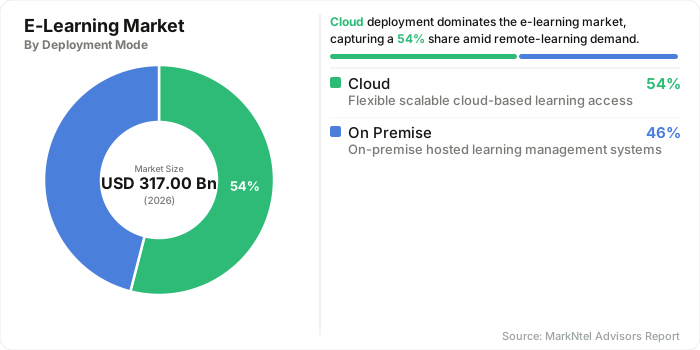
- By deployment, cloud-based delivery held 54% of the market share in 2026
- Online e-learning holds approximately 44% share of the market in 2026
- By geography, North America held a leading share of about 38% of the market size in 2026.
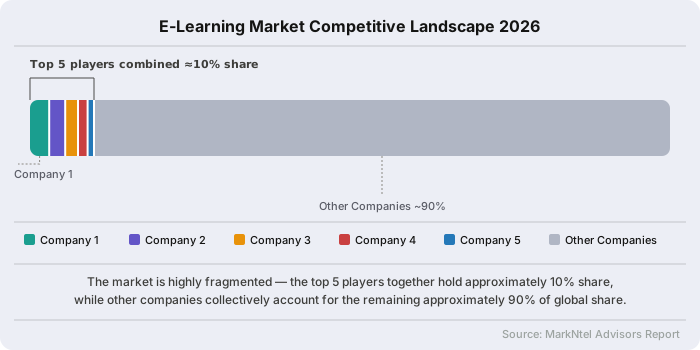
- The industry is fragmented, with the top five players collectively accounting for approximately 10% of the market share in 2026.
E-Learning Market Size and Outlook
The E-learning industry was valued at USD 292 billion in 2025 and is currently valued at USD 317 billion in 2026. The industry is projected to grow to USD 498 billion by 2032, showcasing a CAGR of around 7.78% during the forecast period, i.e., 2026–32.
The market is experiencing sustained expansion as education increasingly shifts from conventional classroom instruction toward flexible, technology-enabled learning ecosystems. Educational institutions, enterprises, and governments are adopting digital learning platforms to deliver scalable, personalized, and continuous education across diverse learner groups. This transition is strengthening learner accessibility, improving content delivery, and creating sustained demand for digital education solutions across developed and emerging economies.
The market is further accelerating as artificial intelligence reshapes how learning is delivered, managed, and personalized across academic and professional environments. Governments are embedding AI literacy within national education systems, while institutions are integrating AI-enabled learning into everyday teaching and skills development. China's AI plus education action plan establishes a nationwide AI education framework through 2030, while the United States has prioritized artificial intelligence education through executive action and expanded federal support for AI-based instructional tools.
Similar nationwide AI curriculum initiatives in the United Arab Emirates and Saudi Arabia are broadening the long-term adoption of digital learning platforms and strengthening future market demand. India continues to strengthen its digital education ecosystem through DIKSHA, which recorded more than 57 billion learning sessions by June 2026, alongside PM eVidya and SWAYAM under the national education policy framework. These initiatives are creating stronger digital ecosystems that encourage greater participation, improve platform utilization, and support long-term market expansion.
Collectively, these policy initiatives are institutionalizing AI-enabled digital learning across national education systems, accelerating large-scale migration toward technology-driven learning ecosystems and creating sustained demand for advanced e-learning platforms.
E-Learning Market Key Indicators
- According to the UNESCO, more than 1.6 billion learners across over 190 countries experienced education disruptions during the COVID-19 period, accelerating the long-term adoption of digital learning platforms. This structural shift established online education as a mainstream learning model, driving sustained demand for e-learning solutions across K-12, higher education, and professional training.
- Global internet users exceeded 5.6 billion in 2025, representing nearly 68% of the world's population. Higher internet penetration improves accessibility to cloud-based learning platforms, virtual classrooms, and digital educational content, thereby expanding the addressable market for e-learning providers and supporting market growth.
- According to the International Telecommunication Union, global mobile broadband subscriptions surpassed 7.8 billion in 2025. Widespread smartphone and mobile internet adoption enables learners to access educational content anytime and anywhere, increasing enrollment in mobile-based learning programs and strengthening demand for e-learning platforms.
- Global spending on digital transformation is projected to exceed USD 4 trillion by 2027, reflecting rapid enterprise technology adoption. As organizations digitize operations, they increasingly invest in online employee training, compliance programs, leadership development, and technical upskilling through e-learning platforms, thereby accelerating market expansion.
- According to the World Economic Forum, approximately 39% of workers' core skills are expected to change by 2030, creating substantial demand for continuous reskilling and upskilling. This growing skills gap encourages enterprises and individuals to adopt online certification courses and professional learning platforms, supporting sustained growth of the e-learning market.
- Global higher education enrollment exceeds 250 million students, while tertiary enrollment continues to rise across emerging economies. Increasing student populations are encouraging universities and educational institutions to adopt Learning Management Systems (LMS), hybrid learning models, and digital course delivery, thereby driving demand for e-learning technologies.
E-Learning Market Scope
| Category | Segments |
|---|---|
| By Technology | Online E- Learning, Learning Management System (LMS), Virtual Classrooms, Mobile E- Learning Platform, Rapid E-Learning, Other Solutions |
| By Deployment | Cloud, On-Premise |
| By Learning Mode | Self-Paced Learning, Instructor-Led Learning, Blended Learning |
| By End-User | Academic Institutions & Individuals (K-12, Higher Education, Vocational Training), Corporate (Small & Medium-sized Enterprises (SMEs), Large Enterprises), Government & Public Sector, Others |
E-Learning Market Growth Drivers
Corporate AI Workforce Upskilling Initiatives Accelerating Enterprise Investment in E-Learning Platforms
The accelerating need for AI-ready workforces is driving sustained investment in enterprise-focused digital learning platforms, as governments and organizations prioritize continuous workforce reskilling to address rapidly evolving technological requirements. In April 2025, the United States issued the Executive Order on Advancing Artificial Intelligence Education for American Youth, followed by Department of Education guidance allowing Workforce Innovation and Opportunity Act funding to support AI-focused workforce training. These initiatives are encouraging employers, educational institutions, and training providers to expand digital learning programs that equip learners with practical AI competencies.
The rapid adoption of AI across industries is also transforming corporate learning strategies from conventional compliance training toward continuous AI capability development. Organizations are increasingly investing in intelligent learning ecosystems that deliver personalized training, skill assessment, and measurable workforce outcomes aligned with evolving business needs. Reflecting this shift, Docebo introduced AgentHub and Skills Intelligence in April 2026, enabling enterprises to automate learning workflows, identify workforce skill gaps, and deliver adaptive learning experiences that improve employee readiness for AI-driven workplaces.
The expansion of AI workforce development initiatives is extending beyond North America as governments introduce standardized digital skills frameworks to strengthen long-term labor market competitiveness. The European Union's digital education action plan supports this transition through initiatives such as the European digital skills certificate, promoting consistent recognition of digital competencies across member states. Consequently, enterprise learning platforms capable of delivering AI focused, competency based training are becoming strategic investments for organizations seeking productivity gains and workforce competitiveness, reinforcing sustained demand across the global e-learning market.
Recent Trends
AI Tutoring Shifts Toward Curriculum Embedded and Responsible Learning Ecosystems
The global e-learning industry is increasingly moving towards intelligent, curriculum embedded learning ecosystems powered by artificial intelligence. Rather than functioning as standalone conversational tools, AI powered learning assistants are being integrated into classroom instruction, assessments, teacher workflows, and personalized learning pathways. This transition reflects a broader industry focus on improving measurable learning outcomes, increasing teacher productivity, and delivering contextual academic support throughout the learning journey.
The evolution of AI tutoring is also being shaped by real world classroom adoption patterns. In April 2026, Khan Academy announced a redesigned version of Khanmigo after observing that only around 15% of eligible students actively used the platform. The redesign places greater emphasis on proactive guidance, curriculum alignment, and classroom integration, demonstrating that sustained engagement depends on embedding AI naturally within everyday teaching rather than offering it as an optional digital assistant.
Governments are simultaneously strengthening this transition by incorporating AI literacy into national education systems. The UAE and Saudi Arabia have embedded artificial intelligence into K12 curricula to build future digital capabilities. These initiatives are creating standardized implementation pathways for AI enabled learning platforms while encouraging long term institutional adoption across public education systems.
Alongside curriculum expansion, policymakers are introducing governance frameworks that support responsible AI deployment in education. In March 2026, the European Commission published four digital education guideline frameworks covering ethical AI use, digital content quality, disinformation, and informatics teaching. These frameworks provide schools and technology providers with clearer implementation standards, reinforcing trust in AI enabled education while accelerating the development of secure, transparent, and pedagogically aligned digital learning environments.
E-Learning Market Challenges and Opportunities
Infrastructure Quality Gaps Constrain Digital Learning Delivery While Public Private Collaboration Expands Scalable E Learning Ecosystems
Despite significant progress in expanding digital education worldwide, disparities in network quality, internal connectivity, and device readiness continue to limit effective e-learning implementation. In Brazil, government indicators show that although most public schools have achieved basic internet access, more than 39,000 schools still lack the connectivity quality required for educational deployment, while thousands remain without internal Wi-Fi networks. Similar infrastructure constraints are evident across emerging economies, where digital education systems continue to evolve unevenly despite ongoing public investment.
As education increasingly shifts toward AI enabled instruction, virtual classrooms, and cloud-based learning platforms, infrastructure limitations are becoming a barrier to platform performance rather than simple access. Nigeria's National EdTech Strategy reflects the need to strengthen institutional readiness through improved digital governance and foundational infrastructure. However, inconsistent broadband quality, limited device availability, and fragmented school level infrastructure continue to increase deployment costs, reduce platform utilization, and widen learning disparities between well connected and underserved communities.
The growing emphasis on modernizing education infrastructure presents a significant opportunity for technology providers to deliver integrated e learning ecosystems through public private collaboration. Rather than focusing solely on broadband expansion, governments are increasingly investing in comprehensive solutions that combine high quality connectivity, campus wide wireless networks, cloud infrastructure, digital devices, teacher training, and digital learning platforms. This holistic approach enables more sustainable deployment of digital education while strengthening long term institutional readiness.
Initiatives such as the Technology Enabled Open Schools for All program in Brazil, implemented through collaboration among UNESCO, Huawei, and the Ministry of Education, demonstrate how coordinated investments can expand access to digital learning while strengthening foundational infrastructure. The United Kingdom has also committed approximately USD 60 million to upgrade wireless and fibre connectivity across schools, reflecting the broader global priority of building digitally resilient education systems.
These initiatives create long term opportunities for e learning providers to deliver bundled solutions encompassing learning management systems, AI enabled educational tools, cloud services, digital content, connectivity services, and ongoing technical support, accelerating adoption across both emerging and developed education ecosystems.
Segmentation Insights
Online E Learning Maintaining Technology Leadership Through Broad Accessibility and Digital Learning Ecosystems
Online e learning holds approximately 44% share of the market in 2026, driven by its ability to provide flexible, location independent, and continuous access to educational content across schools, universities, and enterprises. Its compatibility with virtual instruction, self-paced learning, and instructor led digital classrooms has expanded participation among learners seeking affordable and convenient education. Widespread internet availability and increasing institutional acceptance continue to reinforce its position as the leading technology segment.
The continued expansion of national digital education ecosystems is further strengthening online learning adoption worldwide. India's DIKSHA platform demonstrates the scale at which online learning can be delivered through centralized digital infrastructure. Similarly, Saudi Arabia's Madrasati platform continues to support millions of students through nationwide digital classroom delivery, illustrating how government backed online learning ecosystems are accelerating long term adoption. Based on technology, the market is further bifurcated into:
- Online E Learning
- Learning Management System (LMS)
- Virtual Classrooms
- Mobile E Learning Platform
- Rapid E Learning
- Other Solutions
Cloud-Based Deployment Leading the E Learning Market Through Scalable and AI Enabled Digital Infrastructure
Cloud-based deployment accounts for approximately 54% of the global e-learning market in 2026, supported by its ability to deliver scalable, flexible, and centrally managed learning environments across academic institutions and enterprises. Organizations increasingly prefer cloud platforms because they enable rapid deployment, seamless content updates, remote accessibility, and lower infrastructure costs while supporting geographically dispersed learners. The growing integration of artificial intelligence, analytics, and collaborative learning tools within cloud environments continues to strengthen adoption across education and corporate training ecosystems.
The dominance of cloud deployment is further reinforced by its ability to support large scale national learning platforms and enterprise learning transformation. Platforms such as India's PM eVidya demonstrate how cloud infrastructure enables unified access to digital classrooms, online courses, and educational resources across diverse learner populations. Similarly, Docebo's introduction of AgentHub and Skills Intelligence in 2026 reflects the industry's transition toward cloud native learning ecosystems capable of delivering adaptive training, workforce analytics, and intelligent automation. Based on deployment, the market is further bifurcated into:
- Cloud
- On-Premise
E-Learning Market Geographical Outlook
North America held approximately 38% of the global e-learning market in 2026, supported by its advanced digital education ecosystem, widespread enterprise adoption, and sustained public investment in artificial intelligence-enabled learning. The United States has strengthened regional leadership through the Executive Order on Advancing Artificial Intelligence Education for American Youth, followed by Department of Education guidance permitting Workforce Innovation and Opportunity Act and federal grant funding for AI instructional tools, accelerating adoption across educational institutions and workforce training programs.
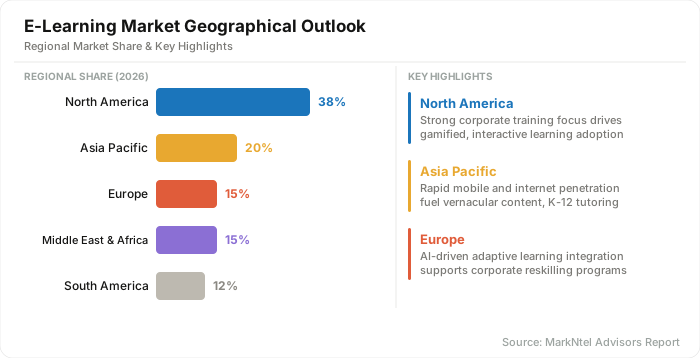
The region continues to reinforce its leadership through long-term policy support that promotes AI literacy and digital workforce development. The United States further prioritized artificial intelligence integration through its finalized AI grant priority rule in 2026, encouraging institutions to embed AI competencies into learning programs. Complementing this momentum, Canada launched its AI for All Strategy in 2026, expanding investments in AI and digital skills training for students, educators, and workers, thereby strengthening North America's position as the leading regional market for e-learning solutions.
E-Learning Market Competitive Analysis
The global E-Learning industry is fragmented, with competition distributed among learning management system providers, online course platforms, enterprise learning solution providers, higher education technology companies, and digital content developers. Major participants include Coursera, Inc., Alphabet Inc., LinkedIn Corporation, Docebo S.p.A., and Pearson plc. The top five players collectively account for approximately 10% of the global E-Learning market.
Key Companies in the E-Learning Market
- Coursera, Inc. (Coursera & Udemy)
- Alphabet Inc. (Google Classroom)
- LinkedIn Corporation (LinkedIn Learning)
- 2U, Inc. (edX)
- Skillsoft Corp.
- Pluralsight, LLC
- Anthology, Inc. (Blackboard)
- Instructure, Inc. (Canvas)
- Cornerstone OnDemand, Inc.
- Moodle Pty Ltd
- Docebo S.p.A.
- Pearson plc
- SAP Litmos
- D2L Corporation
- Duolingo, Inc.
E-Learning Industry News and Recent Developments
2025: Coursera and Udemy Announce Merger to Create a Scaled Global E-Learning Platform
In December 2025, Coursera and Udemy announced a definitive all stock merger agreement, with the transaction expected to close during the second half of 2026. The combined company is projected to generate more than USD 1.5 billion in pro forma annual revenue while serving approximately 273 million registered learners and over 15,000 enterprise customers worldwide. The merger carries an implied equity value of around USD 2.5 billion and is expected to deliver approximately USD 115 million in annual run rate cost synergies within 24 months, strengthening the combined organization's scale across consumer, enterprise, and academic digital learning markets.
Impact Analysis: The proposed merger is expected to accelerate consolidation within the global e learning market by creating one of the largest digital learning ecosystems serving individuals, enterprises, and educational institutions. The enlarged platform is likely to strengthen competitive positioning through broader course offerings, enhanced enterprise capabilities, and greater investment capacity in artificial intelligence driven learning technologies, encouraging competitors to expand strategic partnerships and platform innovation.
2025: Skillsoft Introduces AI Native Percipio Platform and Reviews Global Knowledge Business
In December 2025, Skillsoft announced a strategic review of its Global Knowledge segment while launching the next generation Percipio Platform as an AI native skills intelligence solution. The platform is designed to deliver personalized learning experiences, intelligent skills mapping, and workforce capability development through artificial intelligence driven recommendations. Alongside the launch, Skillsoft secured its first enterprise customers for the new platform, reflecting growing demand for AI enabled corporate learning solutions across enterprise training environments.
Impact Analysis: The introduction of an AI native enterprise learning platform reinforces the ongoing transition toward intelligent, skills based workforce development across the global e learning market. The launch is expected to encourage greater adoption of AI powered learning management systems, intensify competition among enterprise learning providers, and accelerate investments in adaptive learning, skills intelligence, and workforce analytics capabilities.
Frequently Asked Questions
- Market Segmentation
- Introduction
- Product Definition
- Research Process
- Assumptions
- Executive Summary
- E-Learning Market Start-up Ecosystem
- Number of Start-ups Launched/Registered, 2022-2032
- Investment Trend by Investors, 2022-2032
- Investment (USD Million), By Round of Funding, 2022-2032
- Others
- E-Learning Market Policies, Regulations, and Product Standards
- E-Learning Market Trends & Developments
- E-Learning Market Dynamics
- Growth Factors
- Challenges
- E-Learning Market Hotspot & Opportunities
- E-Learning Market Outlook, 2022-2032
- Market Size & Outlook
- By Revenues (USD Million)
- Market Segmentation & Outlook
- By Technology- Market Size & Forecast 2022-2032, USD Million
- Online E- Learning
- Learning Management System (LMS)
- Virtual Classrooms
- Mobile E- Learning Platform
- Rapid E-Learning
- Other Solutions
- By Deployment- Market Size & Forecast 2022-2032, USD Million
- Cloud
- On-Premise
- By Learning Mode- Market Size & Forecast 2022-2032, USD Million
- Self-Paced Learning
- Instructor-Led Learning
- Blended Learning
- By End-User- Market Size & Forecast 2022-2032, USD Million
- Academic Institutions & Individuals
- K-12
- Higher Education
- Vocational Training
- Corporate
- Small & Medium-sized Enterprises (SMEs)
- Large Enterprises
- Government & Public Sector
- Others
- Academic Institutions & Individuals
- By Region
- North America
- South America
- Europe
- Middle East & Africa
- Asia-Pacific
- By Company
- Competition Characteristics
- Market Share & Analysis
- By Technology- Market Size & Forecast 2022-2032, USD Million
- Market Size & Outlook
- North America E-Learning Market Outlook, 2022-2032
- Market Size & Outlook
- By Revenues (USD Million)
- Market Segmentation & Outlook
- By Technology- Market Size & Forecast 2022-2032, USD Million
- By Deployment- Market Size & Forecast 2022-2032, USD Million
- By Learning Mode- Market Size & Forecast 2022-2032, USD Million
- By End-User- Market Size & Forecast 2022-2032, USD Million
- By Country
- The US
- Canada
- Mexico
- The US E-Learning Market Outlook, 2022-2032
- Market Size & Outlook
- By Revenues (USD Million)
- Market Segmentation & Outlook
- By Technology- Market Size & Forecast 2022-2032, USD Million
- By Deployment- Market Size & Forecast 2022-2032, USD Million
- By Learning Mode- Market Size & Forecast 2022-2032, USD Million
- By End-User- Market Size & Forecast 2022-2032, USD Million
- Market Size & Outlook
- Canada E-Learning Market Outlook, 2022-2032
- Market Size & Outlook
- By Revenues (USD Million)
- Market Segmentation & Outlook
- By Technology- Market Size & Forecast 2022-2032, USD Million
- By Deployment- Market Size & Forecast 2022-2032, USD Million
- By Learning Mode- Market Size & Forecast 2022-2032, USD Million
- By End-User- Market Size & Forecast 2022-2032, USD Million
- Market Size & Outlook
- Mexico E-Learning Market Outlook, 2022-2032
- Market Size & Outlook
- By Revenues (USD Million)
- Market Segmentation & Outlook
- By Technology- Market Size & Forecast 2022-2032, USD Million
- By Deployment- Market Size & Forecast 2022-2032, USD Million
- By Learning Mode- Market Size & Forecast 2022-2032, USD Million
- By End-User- Market Size & Forecast 2022-2032, USD Million
- Market Size & Outlook
- Market Size & Outlook
- South America E-Learning Market Outlook, 2022-2032
- Market Size & Outlook
- By Revenues (USD Million)
- Market Segmentation & Outlook
- By Technology- Market Size & Forecast 2022-2032, USD Million
- By Deployment- Market Size & Forecast 2022-2032, USD Million
- By Learning Mode- Market Size & Forecast 2022-2032, USD Million
- By End-User- Market Size & Forecast 2022-2032, USD Million
- By Country
- Brazil
- Argentina
- Chile
- Colombia
- Peru
- Ecuador
- Rest of South America
- Brazil E-Learning Market Outlook, 2022-2032
- Market Size & Outlook
- By Revenues (USD Million)
- Market Segmentation & Outlook
- By Technology- Market Size & Forecast 2022-2032, USD Million
- By Deployment- Market Size & Forecast 2022-2032, USD Million
- By Learning Mode- Market Size & Forecast 2022-2032, USD Million
- By End-User- Market Size & Forecast 2022-2032, USD Million
- Market Size & Outlook
- Argentina E-Learning Market Outlook, 2022-2032
- Market Size & Outlook
- By Revenues (USD Million)
- Market Segmentation & Outlook
- By Technology- Market Size & Forecast 2022-2032, USD Million
- By Deployment- Market Size & Forecast 2022-2032, USD Million
- By Learning Mode- Market Size & Forecast 2022-2032, USD Million
- By End-User- Market Size & Forecast 2022-2032, USD Million
- Market Size & Outlook
- Chile E-Learning Market Outlook, 2022-2032
- Market Size & Outlook
- By Revenues (USD Million)
- Market Segmentation & Outlook
- By Technology- Market Size & Forecast 2022-2032, USD Million
- By Deployment- Market Size & Forecast 2022-2032, USD Million
- By Learning Mode- Market Size & Forecast 2022-2032, USD Million
- By End-User- Market Size & Forecast 2022-2032, USD Million
- Market Size & Outlook
- Colombia E-Learning Market Outlook, 2022-2032
- Market Size & Outlook
- By Revenues (USD Million)
- Market Segmentation & Outlook
- By Technology- Market Size & Forecast 2022-2032, USD Million
- By Deployment- Market Size & Forecast 2022-2032, USD Million
- By Learning Mode- Market Size & Forecast 2022-2032, USD Million
- By End-User- Market Size & Forecast 2022-2032, USD Million
- Market Size & Outlook
- Peru E-Learning Market Outlook, 2022-2032
- Market Size & Outlook
- By Revenues (USD Million)
- Market Segmentation & Outlook
- By Technology- Market Size & Forecast 2022-2032, USD Million
- By Deployment- Market Size & Forecast 2022-2032, USD Million
- By Learning Mode- Market Size & Forecast 2022-2032, USD Million
- By End-User- Market Size & Forecast 2022-2032, USD Million
- Market Size & Outlook
- Ecuador E-Learning Market Outlook, 2022-2032
- Market Size & Outlook
- By Revenues (USD Million)
- Market Segmentation & Outlook
- By Technology- Market Size & Forecast 2022-2032, USD Million
- By Deployment- Market Size & Forecast 2022-2032, USD Million
- By Learning Mode- Market Size & Forecast 2022-2032, USD Million
- By End-User- Market Size & Forecast 2022-2032, USD Million
- Market Size & Outlook
- Market Size & Outlook
- Europe E-Learning Market Outlook, 2022-2032
- Market Size & Outlook
- By Revenues (USD Million)
- Market Segmentation & Outlook
- By Technology- Market Size & Forecast 2022-2032, USD Million
- By Deployment- Market Size & Forecast 2022-2032, USD Million
- By Learning Mode- Market Size & Forecast 2022-2032, USD Million
- By End-User- Market Size & Forecast 2022-2032, USD Million
- By Country
- The UK
- Germany
- France
- Italy
- Spain
- Benelux
- Nordic
- Rest of Europe
- The UK E-Learning Market Outlook, 2022-2032
- Market Size & Outlook
- By Revenues (USD Million)
- Market Segmentation & Outlook
- By Technology- Market Size & Forecast 2022-2032, USD Million
- By Deployment- Market Size & Forecast 2022-2032, USD Million
- By Learning Mode- Market Size & Forecast 2022-2032, USD Million
- By End-User- Market Size & Forecast 2022-2032, USD Million
- Market Size & Outlook
- Germany E-Learning Market Outlook, 2022-2032
- Market Size & Outlook
- By Revenues (USD Million)
- Market Segmentation & Outlook
- By Technology- Market Size & Forecast 2022-2032, USD Million
- By Deployment- Market Size & Forecast 2022-2032, USD Million
- By Learning Mode- Market Size & Forecast 2022-2032, USD Million
- By End-User- Market Size & Forecast 2022-2032, USD Million
- Market Size & Outlook
- France E-Learning Market Outlook, 2022-2032
- Market Size & Outlook
- By Revenues (USD Million)
- Market Segmentation & Outlook
- By Technology- Market Size & Forecast 2022-2032, USD Million
- By Deployment- Market Size & Forecast 2022-2032, USD Million
- By Learning Mode- Market Size & Forecast 2022-2032, USD Million
- By End-User- Market Size & Forecast 2022-2032, USD Million
- Market Size & Outlook
- Italy E-Learning Market Outlook, 2022-2032
- Market Size & Outlook
- By Revenues (USD Million)
- Market Segmentation & Outlook
- By Technology- Market Size & Forecast 2022-2032, USD Million
- By Deployment- Market Size & Forecast 2022-2032, USD Million
- By Learning Mode- Market Size & Forecast 2022-2032, USD Million
- By End-User- Market Size & Forecast 2022-2032, USD Million
- Market Size & Outlook
- Spain E-Learning Market Outlook, 2022-2032
- Market Size & Outlook
- By Revenues (USD Million)
- Market Segmentation & Outlook
- By Technology- Market Size & Forecast 2022-2032, USD Million
- By Deployment- Market Size & Forecast 2022-2032, USD Million
- By Learning Mode- Market Size & Forecast 2022-2032, USD Million
- By End-User- Market Size & Forecast 2022-2032, USD Million
- Market Size & Outlook
- Benelux E-Learning Market Outlook, 2022-2032
- Market Size & Outlook
- By Revenues (USD Million)
- Market Segmentation & Outlook
- By Technology- Market Size & Forecast 2022-2032, USD Million
- By Deployment- Market Size & Forecast 2022-2032, USD Million
- By Learning Mode- Market Size & Forecast 2022-2032, USD Million
- By End-User- Market Size & Forecast 2022-2032, USD Million
- Market Size & Outlook
- Nordic E-Learning Market Outlook, 2022-2032
- Market Size & Outlook
- By Revenues (USD Million)
- Market Segmentation & Outlook
- By Technology- Market Size & Forecast 2022-2032, USD Million
- By Deployment- Market Size & Forecast 2022-2032, USD Million
- By Learning Mode- Market Size & Forecast 2022-2032, USD Million
- By End-User- Market Size & Forecast 2022-2032, USD Million
- Market Size & Outlook
- Market Size & Outlook
- Middle East & Africa E-Learning Market Outlook, 2022-2032
- Market Size & Outlook
- By Revenues (USD Million)
- Market Segmentation & Outlook
- By Technology- Market Size & Forecast 2022-2032, USD Million
- By Deployment- Market Size & Forecast 2022-2032, USD Million
- By Learning Mode- Market Size & Forecast 2022-2032, USD Million
- By End-User- Market Size & Forecast 2022-2032, USD Million
- By Country
- Saudi Arabia
- The UAE
- South Africa
- Egypt
- Qatar
- Rest of Middle East & Africa
- Saudi Arabia E-Learning Market Outlook, 2022-2032
- Market Size & Outlook
- By Revenues (USD Million)
- Market Segmentation & Outlook
- By Technology- Market Size & Forecast 2022-2032, USD Million
- By Deployment- Market Size & Forecast 2022-2032, USD Million
- By Learning Mode- Market Size & Forecast 2022-2032, USD Million
- By End-User- Market Size & Forecast 2022-2032, USD Million
- Market Size & Outlook
- The UAE E-Learning Market Outlook, 2022-2032
- Market Size & Outlook
- By Revenues (USD Million)
- Market Segmentation & Outlook
- By Technology- Market Size & Forecast 2022-2032, USD Million
- By Deployment- Market Size & Forecast 2022-2032, USD Million
- By Learning Mode- Market Size & Forecast 2022-2032, USD Million
- By End-User- Market Size & Forecast 2022-2032, USD Million
- Market Size & Outlook
- South Africa E-Learning Market Outlook, 2022-2032
- Market Size & Outlook
- By Revenues (USD Million)
- Market Segmentation & Outlook
- By Technology- Market Size & Forecast 2022-2032, USD Million
- By Deployment- Market Size & Forecast 2022-2032, USD Million
- By Learning Mode- Market Size & Forecast 2022-2032, USD Million
- By End-User- Market Size & Forecast 2022-2032, USD Million
- Market Size & Outlook
- Egypt E-Learning Market Outlook, 2022-2032
- Market Size & Outlook
- By Revenues (USD Million)
- Market Segmentation & Outlook
- By Technology- Market Size & Forecast 2022-2032, USD Million
- By Deployment- Market Size & Forecast 2022-2032, USD Million
- By Learning Mode- Market Size & Forecast 2022-2032, USD Million
- By End-User- Market Size & Forecast 2022-2032, USD Million
- Market Size & Outlook
- Qatar E-Learning Market Outlook, 2022-2032
- Market Size & Outlook
- By Revenues (USD Million)
- Market Segmentation & Outlook
- By Technology- Market Size & Forecast 2022-2032, USD Million
- By Deployment- Market Size & Forecast 2022-2032, USD Million
- By Learning Mode- Market Size & Forecast 2022-2032, USD Million
- By End-User- Market Size & Forecast 2022-2032, USD Million
- Market Size & Outlook
- Market Size & Outlook
- Asia-Pacific E-Learning Market Outlook, 2022-2032
- Market Size & Outlook
- By Revenues (USD Million)
- Market Segmentation & Outlook
- By Technology- Market Size & Forecast 2022-2032, USD Million
- By Deployment- Market Size & Forecast 2022-2032, USD Million
- By Learning Mode- Market Size & Forecast 2022-2032, USD Million
- By End-User- Market Size & Forecast 2022-2032, USD Million
- By Country
- China
- Japan
- India
- South Korea
- Australia
- Indonesia
- Thailand
- Singapore
- Vietnam
- Rest of Asia-Pacific
- China E-Learning Market Outlook, 2022-2032
- Market Size & Outlook
- By Revenues (USD Million)
- Market Segmentation & Outlook
- By Technology- Market Size & Forecast 2022-2032, USD Million
- By Deployment- Market Size & Forecast 2022-2032, USD Million
- By Learning Mode- Market Size & Forecast 2022-2032, USD Million
- By End-User- Market Size & Forecast 2022-2032, USD Million
- Market Size & Outlook
- Japan E-Learning Market Outlook, 2022-2032
- Market Size & Outlook
- By Revenues (USD Million)
- Market Segmentation & Outlook
- By Technology- Market Size & Forecast 2022-2032, USD Million
- By Deployment- Market Size & Forecast 2022-2032, USD Million
- By Learning Mode- Market Size & Forecast 2022-2032, USD Million
- By End-User- Market Size & Forecast 2022-2032, USD Million
- Market Size & Outlook
- India E-Learning Market Outlook, 2022-2032
- Market Size & Outlook
- By Revenues (USD Million)
- Market Segmentation & Outlook
- By Technology- Market Size & Forecast 2022-2032, USD Million
- By Deployment- Market Size & Forecast 2022-2032, USD Million
- By Learning Mode- Market Size & Forecast 2022-2032, USD Million
- By End-User- Market Size & Forecast 2022-2032, USD Million
- Market Size & Outlook
- South Korea E-Learning Market Outlook, 2022-2032
- Market Size & Outlook
- By Revenues (USD Million)
- Market Segmentation & Outlook
- By Technology- Market Size & Forecast 2022-2032, USD Million
- By Deployment- Market Size & Forecast 2022-2032, USD Million
- By Learning Mode- Market Size & Forecast 2022-2032, USD Million
- By End-User- Market Size & Forecast 2022-2032, USD Million
- Market Size & Outlook
- Australia E-Learning Market Outlook, 2022-2032
- Market Size & Outlook
- By Revenues (USD Million)
- Market Segmentation & Outlook
- By Technology- Market Size & Forecast 2022-2032, USD Million
- By Deployment- Market Size & Forecast 2022-2032, USD Million
- By Learning Mode- Market Size & Forecast 2022-2032, USD Million
- By End-User- Market Size & Forecast 2022-2032, USD Million
- Market Size & Outlook
- Indonesia E-Learning Market Outlook, 2022-2032
- Market Size & Outlook
- By Revenues (USD Million)
- Market Segmentation & Outlook
- By Technology- Market Size & Forecast 2022-2032, USD Million
- By Deployment- Market Size & Forecast 2022-2032, USD Million
- By Learning Mode- Market Size & Forecast 2022-2032, USD Million
- By End-User- Market Size & Forecast 2022-2032, USD Million
- Market Size & Outlook
- Thailand E-Learning Market Outlook, 2022-2032
- Market Size & Outlook
- By Revenues (USD Million)
- Market Segmentation & Outlook
- By Technology- Market Size & Forecast 2022-2032, USD Million
- By Deployment- Market Size & Forecast 2022-2032, USD Million
- By Learning Mode- Market Size & Forecast 2022-2032, USD Million
- By End-User- Market Size & Forecast 2022-2032, USD Million
- Market Size & Outlook
- Singapore E-Learning Market Outlook, 2022-2032
- Market Size & Outlook
- By Revenues (USD Million)
- Market Segmentation & Outlook
- By Technology- Market Size & Forecast 2022-2032, USD Million
- By Deployment- Market Size & Forecast 2022-2032, USD Million
- By Learning Mode- Market Size & Forecast 2022-2032, USD Million
- By End-User- Market Size & Forecast 2022-2032, USD Million
- Market Size & Outlook
- Vietnam E-Learning Market Outlook, 2022-2032
- Market Size & Outlook
- By Revenues (USD Million)
- Market Segmentation & Outlook
- By Technology- Market Size & Forecast 2022-2032, USD Million
- By Deployment- Market Size & Forecast 2022-2032, USD Million
- By Learning Mode- Market Size & Forecast 2022-2032, USD Million
- By End-User- Market Size & Forecast 2022-2032, USD Million
- Market Size & Outlook
- Market Size & Outlook
- E-Learning Market Key Strategic Imperatives for Success & Growth
- Competitive Outlook
- Company Profiles
- Coursera, Inc. (Coursera & Udemy)
- Business Description
- Product Portfolio
- Collaborations & Alliances
- Recent Developments
- Financial Details
- Others
- Alphabet Inc. (Google Classroom)
- Business Description
- Product Portfolio
- Collaborations & Alliances
- Recent Developments
- Financial Details
- Others
- LinkedIn Corporation (LinkedIn Learning)
- Business Description
- Product Portfolio
- Collaborations & Alliances
- Recent Developments
- Financial Details
- Others
- 2U, Inc. (edX)
- Business Description
- Product Portfolio
- Collaborations & Alliances
- Recent Developments
- Financial Details
- Others
- Skillsoft Corp.
- Business Description
- Product Portfolio
- Collaborations & Alliances
- Recent Developments
- Financial Details
- Others
- Pluralsight, LLC
- Business Description
- Product Portfolio
- Collaborations & Alliances
- Recent Developments
- Financial Details
- Others
- Anthology, Inc . (Blackboard)
- Business Description
- Product Portfolio
- Collaborations & Alliances
- Recent Developments
- Financial Details
- Others
- Instructure, Inc. (Canvas)
- Business Description
- Product Portfolio
- Collaborations & Alliances
- Recent Developments
- Financial Details
- Others
- Cornerstone OnDemand, Inc.
- Business Description
- Product Portfolio
- Collaborations & Alliances
- Recent Developments
- Financial Details
- Others
- Moodle Pty Ltd
- Business Description
- Product Portfolio
- Collaborations & Alliances
- Recent Developments
- Financial Details
- Others
- Docebo S.p.A.
- Business Description
- Product Portfolio
- Collaborations & Alliances
- Recent Developments
- Financial Details
- Others
- Pearson plc
- Business Description
- Product Portfolio
- Collaborations & Alliances
- Recent Developments
- Financial Details
- Others
- SAP Litmos
- Business Description
- Product Portfolio
- Collaborations & Alliances
- Recent Developments
- Financial Details
- Others
- D2L Corporation
- Business Description
- Product Portfolio
- Collaborations & Alliances
- Recent Developments
- Financial Details
- Others
- Duolingo, Inc.
- Business Description
- Product Portfolio
- Collaborations & Alliances
- Recent Developments
- Financial Details
- Others
- Coursera, Inc. (Coursera & Udemy)
- Company Profiles
- Disclaimer
MarkNtel Advisors follows a robust and iterative research methodology designed to ensure maximum accuracy and minimize deviation in market estimates and forecasts. Our approach combines both bottom-up and top-down techniques to effectively segment and quantify various aspects of the market. A consistent feature across all our research reports is data triangulation, which examines the market from three distinct perspectives to validate findings. Key components of our research process include:
1. Scope & Research Design At the outset, MarkNtel Advisors define the research objectives and formulate pertinent questions. This phase involves determining the type of research—qualitative or quantitative—and designing a methodology that outlines data collection methods, target demographics, and analytical tools. They also establish timelines and budgets to ensure the research aligns with client goals.
2. Sample Selection and Data Collection In this stage, the firm identifies the target audience and determines the appropriate sample size to ensure representativeness. They employ various sampling methods, such as random or stratified sampling, based on the research objectives. Data collection is carried out using tools like surveys, interviews, and observations, ensuring the gathered data is reliable and relevant.
3. Data Analysis and Validation Once data is collected, MarkNtel Advisors undertake a rigorous analysis process. This includes cleaning the data to remove inconsistencies, employing statistical software for quantitative analysis, and thematic analysis for qualitative data. Validation steps are taken to ensure the accuracy and reliability of the findings, minimizing biases and errors.

4. Data Forecast and FinalizationThe final phase involves forecasting future market trends based on the analyzed data. MarkNtel Advisors utilize predictive modeling and time series analysis to anticipate market behaviors. The insights are then compiled into comprehensive reports, featuring visual aids like charts and graphs, and include strategic recommendations to inform client decision-making
We offer flexible licensing options to cater to varying organizational needs. Choose the pricing pack that best suits your requirements:
Buy Now Inquire Before Buying
 Request Customization
 Talk to our Consultant







