Global Dark Fiber Market Research Report: Trends, Forecast & Opportunities (2026-2032)
By Fiber Type (Single Mode Fiber, Multimode Fiber), By Network Type (Metro Network, Long-Haul Network), By Material Type (Glass Fiber, Plastic Optical Fiber (POF)), By Technology ( ... Dense Wavelength Division Multiplexing (DWDM), Mobile Backhaul / Fronthaul, Software-Defined Networking (SDN) Enabled Fiber), By Deployment Mode (Underground Fiber, Aerial Fiber, Subsea Fiber, Hybrid Deployment), By Application (Backhaul Connectivity (5G-driven), Data Center Interconnect (DCI), Enterprise & Private Networks, Long-haul Transport, Network Redundancy & Resiliency), By End-User (IT & Telecom, BFSI, Government & Defense, Healthcare, Energy & Utilities, Media & Entertainment, Transportation & Logistics, Education & Research, Others), and others Read more
- ICT & Electronics
- Apr 2026
- Pages 405
- Report Format: PDF, Excel, PPT
Global Dark Fiber Market
Projected 15.98% CAGR from 2026 to 2032
Study Period
2026-2032
Market Size (2026)
USD 4.82 Billion
Market Size (2032)
USD 11.73 Billion
Largest Region
North America
Projected CAGR
15.98%
Leading Segments
By Fiber Type: Multimode Fiber
Global Dark Fiber Market Key Takeaways
- The Global Dark Fiber market size was valued at USD 4.16 billion in 2025 and is projected to grow from USD 4.82 billion in 2026 to USD 11.73 billion by 2032, exhibiting a CAGR of 15.98% during the forecast period.
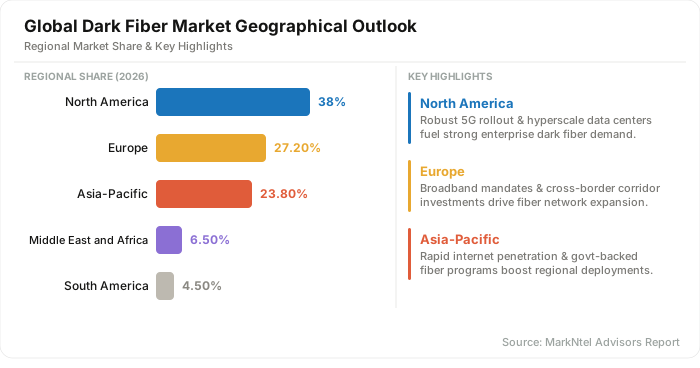
- North America holds the largest market share of about 38% in the Global Dark Fiber Market in 2026.
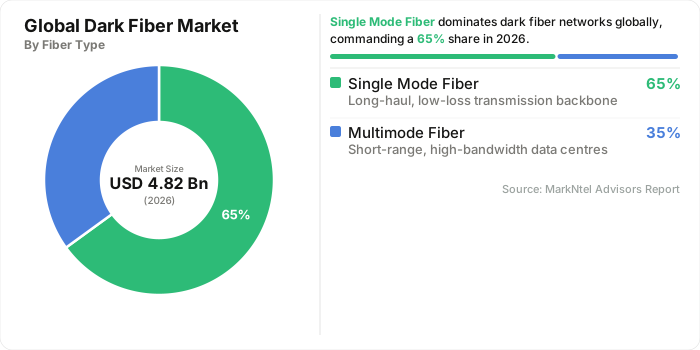
- By Fiber Type, the multimode fiber segment represented a significant share of about 65% in the Global Dark Fiber Market in 2026.
- By end user, the IT & telecom segment seized a significant share of about 50% in the Global Dark Fiber Market in 2026.
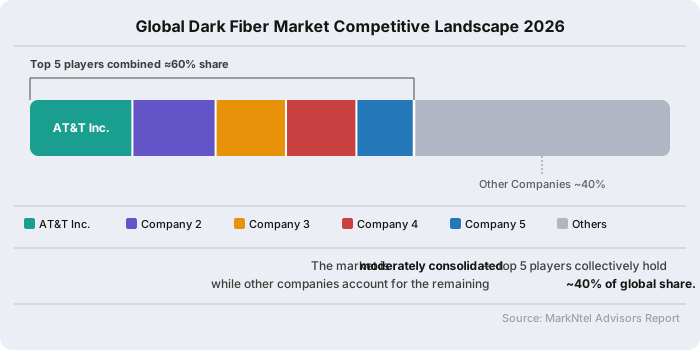
- The industry is moderately consolidated. However, the top five players collectively account for nearly 60% share.
Global Dark Fiber Market Size and Outlook
The Global Dark Fiber market size was valued at USD 4.16 billion in 2025 and is projected to grow from USD 4.82 billion in 2026 to USD 11.73 billion by 2032. Along with this, the market is estimated to grow at a CAGR of around 15.98% during the forecast period, i.e., 2026-32.
The global dark fiber market is poised for strong long-term growth, driven by accelerating digital transformation, rising data consumption, and the structural shift toward high-capacity, low-latency connectivity infrastructure.
Dark fiber, which offers dedicated, scalable bandwidth for enterprises and telecom operators, is increasingly becoming a critical backbone for next-generation communication ecosystems.
A key growth driver is the rapid densification of 5G networks worldwide. Unlike legacy 4G architectures, 5G requires a significantly higher degree of fiberization to support dense small-cell deployments and ensure ultra-low latency.
Governments and telecom operators are making substantial investments to strengthen fiber backhaul and fronthaul networks. For instance, the National Telecommunications and Information Administration allocated approximately USD 980 million under the Enabling Middle Mile Broadband Infrastructure Program in 2023, facilitating the deployment of over 12,500 miles of middle-mile fiber across 40 U.S. states and Puerto Rico . This initiative complements the broader USD 42.45 billion Broadband Equity, Access, and Deployment (BEAD) Program, significantly expanding fiber reach and stimulating demand for dark fiber leasing across underserved and high-growth regions.
From a regional policy perspective, Europe is also reinforcing its fiber ecosystem through regulatory support. The Gigabit Infrastructure Act, enforced from May 2024 and fully applicable by November 2025, mandates streamlined permitting processes, shared access to passive infrastructure, and co-deployment opportunities . These measures are expected to accelerate fiber rollout and support the European Union’s ambition of achieving universal gigabit connectivity and full 5G coverage by 2030, thereby strengthening long-term demand for dark fiber infrastructure.
A major market trend shaping the outlook is the exponential growth in data center capacity and energy consumption. According to the International Energy Agency, global data center electricity consumption reached 415 TWh in 2024 and is projected to surge to 945 TWh by 2030, reflecting the rapid expansion of hyperscale and AI-driven workloads.
Correspondingly, annual global data center investment reached approximately USD 61 billion in 2025, underscoring sustained infrastructure buildout. Long-term projections indicate that global data center capacity expansion could require investments of up to USD 6.7 trillion by 2030, with USD 5.2 trillion directed toward AI-related infrastructure. This surge is significantly increasing the need for high-capacity fiber connectivity to enable seamless data transmission across distributed computing environments.
Additionally, country-level investments further reinforce market momentum. For example, Portugal’s telecom operators plan to invest around USD 4.9 billion over five years in 5G and fiber infrastructure, strengthening its role as a key connectivity hub.
Overall, the global dark fiber market outlook remains highly positive, supported by 5G expansion, regulatory tailwinds, and the unprecedented rise in data center and AI infrastructure, all of which are driving sustained demand for scalable and dedicated fiber networks.
Global Dark Fiber Market Key Indicators
- Global data center investments exceeded USD 270 billion in 2025 (FDI), accounting for over one-fifth of greenfield projects, reflecting strong global competition to build AI-ready infrastructure and driving long-term demand for dark fiber networks .
- In India, Uttar Pradesh’s 2025–26 plan targets the development of 4–5 data center clusters (5 GW capacity) by 2030, supported by investments of approximately USD 3.6 billion, indicating rapid digital infrastructure expansion and strong demand for dark fiber connectivity.
- The United States is expected to account for over 40% of global data center investments, with total global spending projected to reach nearly USD 7 trillion by 2030, reflecting massive hyperscale expansion and strong demand for dark fiber connectivity.
- India is witnessing large-scale AI infrastructure investment, including a USD 15 billion commitment for a hyperscale AI hub and data center ecosystem, highlighting accelerating demand for fiber networks supporting AI and cloud workloads.
- Japan is attracting major investments, including a USD 10 billion AI and data infrastructure expansion plan, aimed at strengthening digital capabilities and increasing demand for high-speed fiber and dark fiber interconnectivity.
Global Dark Fiber Market Scope:
| Category | Segments |
|---|---|
| By Fiber Type | (Single Mode Fiber, Multimode Fiber), |
| By Network Type | (Metro Network, Long-Haul Network), |
| By Material Type | (Glass Fiber, Plastic Optical Fiber (POF)), |
| By Technology | (Dense Wavelength Division Multiplexing (DWDM), Mobile Backhaul / Fronthaul, Software-Defined Networking (SDN) Enabled Fiber), |
| By Deployment Mode | (Underground Fiber, Aerial Fiber, Subsea Fiber, Hybrid Deployment), |
| By Application | (Backhaul Connectivity (5G-driven), Data Center Interconnect (DCI), Enterprise & Private Networks, Long-haul Transport, Network Redundancy & Resiliency), |
| By End-User | (IT & Telecom, BFSI, Government & Defense, Healthcare, Energy & Utilities, Media & Entertainment, Transportation & Logistics, Education & Research, Others), |
Global Dark Fiber Market Growth Drivers
Rapid Densification of 5G Networks
5G network densification represents a critical structural driver for the growth of the dark fiber market, as next-generation mobile networks require significantly higher fiberization compared to previous technologies. Unlike 4G macrocell architectures, 5G deployment relies on a dense network of small cells interconnected through high-capacity fiber for both fronthaul and backhaul, enabling ultra-low latency and high throughput performance.
According to the International Telecommunication Union, 5G networks covered approximately 51% of the global population in 2024, with coverage reaching 84% in high-income countries, indicating substantial ongoing infrastructure expansion requirements.
In parallel, global mobile data consumption continues to rise rapidly, driven by video streaming, cloud-based applications, and emerging AI-enabled services. The International Telecommunication Union estimates that mobile data traffic reached approximately 1.3 zettabytes (ZB) in 2024, growing at an average annual rate of nearly 20%, underscoring the need for continuous capacity upgrades across telecom networks.
From a technical standpoint, 5G system architecture defined by the 3rd Generation Partnership Project emphasizes dense cell deployment supported by robust fiber-based transport networks, reinforcing the importance of scalable and dedicated optical infrastructure.
Overall, accelerating 5G densification and surging mobile data traffic are driving sustained demand for high-capacity fiber networks, positioning dark fiber as a critical infrastructure layer enabling scalable, low-latency connectivity across next-generation telecom ecosystems.
Recent Trends
AI-Driven Network Infrastructure Expansion
The rapid expansion of artificial intelligence (AI) workloads is reshaping global digital infrastructure, driving significant demand for high-capacity, low-latency fiber networks. As AI applications, including machine learning, generative AI, and real-time analytics, scale rapidly, hyperscale cloud providers are intensifying investments in both data center capacity and supporting network infrastructure.
In 2024, global data center infrastructure spending reached approximately USD 290 billion, with hyperscale operators accounting for nearly USD 200 billion in capital expenditure . This reflects the increasing dominance of AI-driven computing requirements and the need for robust, high-performance connectivity between distributed data environments.
Recent developments further underscore this trend. In 2024, Equinix announced a USD 15 billion joint venture to expand hyperscale data center capacity in the United States, adding over 1.5 gigawatts (GW) of new capacity to support rising AI demand. Such large-scale expansions necessitate extensive fiber deployment to enable seamless interconnection between facilities and ensure efficient, high-speed data transfer.
Overall, the surge in AI-led investments is structurally increasing the requirement for scalable and high-capacity connectivity, positioning dark fiber as a critical enabler. This trend is expected to significantly accelerate market growth as global AI infrastructure continues to expand.
Global Dark Fiber Market Opportunities and Challenges
Regulatory Complexity and High Deployment Costs Accelerating Shift Towards Infrastructure Sharing Models
High capital expenditure and complex right-of-way (ROW) permitting processes remain critical challenges in dark fiber deployment, increasing project timelines and limiting participation to large-scale operators.
Regulatory fragmentation across jurisdictions often results in lengthy and inconsistent approval procedures, raising deployment risks and delaying network expansion. The European Union has explicitly acknowledged that permitting processes for high-speed network infrastructure are complex and time-consuming, contributing to elevated rollout costs and inefficiencies .
In response to these structural barriers, governments are actively transforming challenges into opportunities through regulatory reforms and funding support. The Gigabit Infrastructure Act was introduced to address high civil engineering costs and administrative delays by mandating access to existing passive infrastructure such as ducts, poles, and conduits. The regulation also enforces permit decision timelines of up to four months and promotes coordination of civil works, significantly reducing duplication and deployment costs.
Similarly, in the United States, the National Telecommunications and Information Administration is accelerating fiber expansion through funding programs aimed at reducing infrastructure gaps and enabling shared network development.
Overall, while high CAPEX and regulatory hurdles constrain deployment, increasing policy support and infrastructure-sharing models are unlocking scalable, cost-efficient growth opportunities for dark fiber providers.
Segmentation Insights
Multimode Fiber is the Most Preferred Fiber Type
The multimode fiber alone contributes approximately 65% share of the overall volume in the dark fiber market, primarily due to its strong suitability for short-distance, high-bandwidth applications within controlled environments such as data centers, enterprise campuses, and metropolitan networks. Its larger core diameter enables easier light transmission and alignment, reducing installation complexity and lowering overall deployment costs compared to single-mode fiber in short-range use cases.
The growing expansion of data centers and enterprise IT infrastructure is a key factor driving the dominance of multimode fiber. As organizations increasingly rely on high-speed data processing, cloud computing, and AI-driven workloads, the need for efficient intra-data center connectivity has surged. Multimode fiber supports high data transfer rates over shorter distances, making it ideal for interconnecting servers, storage systems, and networking equipment within facilities.
Additionally, the cost advantage of multimode fiber in terms of transceivers and installation makes it a preferred choice for enterprises aiming to optimize capital expenditure while maintaining high performance. The rising deployment of smart buildings, campus networks, and localized 5G infrastructure further strengthens its demand.
Overall, the combination of cost efficiency, ease of deployment, and strong alignment with high-density, short-range connectivity requirements continues to drive the dominance of multimode fiber in the global dark fiber market. Based on fiber type, the market is segmented into:
- Single Mode Fiber
- Multimode Fiber
The IT & Telecom Sector is the Primary End-User
The IT & telecom segment accounts for approximately 50% share, making it the largest revenue contributor among end-use industries. This is driven by the exponential growth in data traffic, cloud computing, and digital communication services worldwide.
Telecom operators and internet service providers are the primary adopters of dark fiber, as it enables them to scale network capacity, ensure ultra-low latency, and maintain full control over bandwidth in an increasingly data-intensive environment.
The rapid rollout of 5G networks is a major factor strengthening this dominance, as dense fiber backhaul is essential to support high-speed connectivity and network reliability. Additionally, the expansion of hyperscale data centers and cloud infrastructure has significantly increased demand for high-capacity fiber networks to manage massive volumes of data exchange between facilities. IT companies and cloud providers are investing heavily in private fiber networks to enhance performance, security, and operational efficiency.
Moreover, the surge in video streaming, remote work, artificial intelligence workloads, and IoT ecosystems continues to place immense pressure on telecom networks, further accelerating dark fiber adoption. Compared to other end-users, IT & Telecom players have the financial capability and technical expertise to deploy and manage large-scale fiber infrastructure. Overall, the critical need for scalable, high-speed, and reliable connectivity positions the IT & Telecom segment as the leading contributor to dark fiber market growth globally. Based on end-user, the market is bifurcated into:
- IT & Telecom
- BFSI
- Government & Defense
- Healthcare
- Energy & Utilities
- Media & Entertainment
- Transportation & Logistics
- Education & Research
- Others
Global Dark Fiber Market Geographical Outlook
The North America region accounts for approximately 38% of global dark fiber demand, driven by its advanced digital ecosystem and strong concentration of data centres and telecom infrastructure. The United States is the primary contributor, hosting approximately 5,427 data centers, reflecting continuous expansion fueled by cloud computing and artificial intelligence (AI) demand . This large-scale infrastructure base creates significant requirements for high-capacity, low-latency fiber networks to support seamless data transmission and interconnection.
A key instance highlighting this dominance is Northern Virginia, recognized as the world’s largest data center hub, with multi-gigawatt capacity and a dense cluster of hyperscale facilities. This concentration of data centers necessitates extensive fiber connectivity, directly driving demand for dark fiber networks across metro and long-haul routes.
Government initiatives further reinforce regional leadership. The National Telecommunications and Information Administration allocated USD 980 million under the Enabling Middle Mile Broadband Infrastructure Program to expand fiber infrastructure, improving connectivity across underserved regions, and increasing available fiber assets.
Additionally, the International Energy Agency projects U.S. data center electricity consumption to reach approximately 426 TWh by 2030, highlighting the rapid growth of data processing capacity and associated network demand. Overall, strong data center expansion, supportive government funding, and rising AI-driven workloads firmly position North America as the leading region in the dark fiber market.
Global Dark Fiber Market Competitive Analysis
The global dark fiber market is moderately consolidated, with numerous regional and international operators participating across metro and long-haul networks. The top five players, including AT&T Inc., Verizon Communications Inc., Lumen Technologies, Inc., Zayo Group, LLC, and Crown Castle Inc., collectively account for approximately 60% of the total market share.
Major Companies in the Dark Fiber Industry
- AT&T Inc.
- Lumen Technologies, Inc. (formerly CenturyLink)
- Zayo Group, LLC
- Colt Technology Services Group Limited
- EXA Infrastructure
- euNetworks Group Limited
- Windstream Holdings II, LLC
- Verizon Communications Inc.
- GTT Communications, Inc.
- Crown Castle Inc.
- CityFibre Holdings Limited
- Eurofiber Nederland B.V.
- Neos Networks Limited
- Nippon Telegraph and Telephone Corporation
- FiberLight, LLC
Global Dark Fiber Industry News and Recent Developments
March 2025: Zayo Group Signs Agreement to Acquire Crown Castle Fiber Business
Zayo Group entered into an agreement to acquire the fiber business of Crown Castle in March 2025. The transaction is aimed at expanding Zayo’s metro fiber footprint and strengthening its infrastructure portfolio across key urban markets to support growing demand from hyperscale, enterprise, and data-driven applications.
Impact Analysis: The acquisition enhances Zayo’s metro fiber density and improves its ability to serve hyperscale cloud providers, AI infrastructure operators, and enterprise clients requiring high-capacity, low-latency connectivity. It also accelerates market consolidation, increasing entry barriers for smaller regional players while intensifying competition with major telecom operators such as AT&T Inc. and Verizon Communications Inc. in enterprise and wholesale fiber segments.
June 2025: Lumen Deploys Dark Fiber Backhaul for JUNO Cable System
Lumen Technologies deployed dark fiber backhaul infrastructure in June 2025 to support the JUNO subsea cable system. This deployment connects international cable landing stations with inland data centers and cloud exchange points, enabling high-capacity and low-latency data transmission across global and domestic networks.
Impact Analysis: Lumen’s involvement in the JUNO system positions dark fiber as a critical component within subsea cable ecosystems, expanding its role beyond domestic metro and long-haul networks into international connectivity infrastructure. This strengthens Lumen’s competitive positioning against integrated subsea-terrestrial operators and supports growing demand from hyperscale cloud providers seeking seamless end-to-end connectivity.
May 2025: AT&T Acquires Lumen’s Consumer Fiber Business for Expansion
AT&T Inc. acquired the consumer fiber business of Lumen Technologies in May 2025 as part of its strategy to expand fiber broadband coverage and strengthen its presence in high-growth connectivity markets.
Impact Analysis: This acquisition reflects accelerating consolidation in the fiber infrastructure space, driven by rising demand for high-capacity, low-latency networks supporting AI, cloud, and 5G applications. The deal strengthens AT&T’s position in fiber broadband and increases competitive pressure on independent dark fiber providers by expanding vertically integrated network ownership. Additionally, Lumen’s strategic shift toward enterprise and low-latency services highlights the growing importance of dark fiber in supporting hyperscale and AI workloads, reinforcing long-term market growth.
*Reports Delivery Format - Market research studies from MarkNtel Advisors are offered in PDF, Excel and PowerPoint formats. Within 24 hours of the payment being successfully received, the report will be sent to your email address.
Frequently Asked Questions
- Market Segmentation
- Introduction
- Product Definition
- Research Process
- Assumptions
- Executive Summary
- Global Dark Fiber Market Policies, Regulations, and Product Standards
- Global Dark Fiber Market Trends & Developments
- Global Dark Fiber Market Dynamics
- Growth Factors
- Challenges
- Global Dark Fiber Market Hotspot & Opportunities
- Global Dark Fiber Market Outlook, 2022-2032F
- Market Size & Outlook
- By Revenues (USD Million)
- Market Share & Analysis
- By Fiber Type- Market Size & Forecast 2022-2032, USD Million
- Single Mode Fiber
- Multimode Fiber
- Step-index Multimode
- Graded-index Multimode
- By Network Type- Market Size & Forecast 2022-2032, USD Million
- Metro Network
- Long-Haul Network
- By Material Type- Market Size & Forecast 2022-2032, USD Million
- Glass Fiber
- Plastic Optical Fiber (POF)
- By Technology- Market Size & Forecast 2022-2032, USD Million
- Dense Wavelength Division Multiplexing (DWDM)
- Mobile Backhaul / Fronthaul
- Software-Defined Networking (SDN) Enabled Fiber
- By Deployment Mode - Market Size & Forecast 2022-2032, USD Million
- Underground Fiber
- Aerial Fiber
- Subsea Fiber
- Hybrid Deployment
- By Application- Market Size & Forecast 2022-2032, USD Million
- Backhaul Connectivity (5G-driven)
- Data Center Interconnect (DCI)
- Enterprise & Private Networks
- Long-haul Transport
- Network Redundancy & Resiliency
- By End-User - Market Size & Forecast 2022-2032, USD Million
- IT & Telecom
- BFSI
- Government & Defense
- Healthcare
- Energy & Utilities
- Media & Entertainment
- Transportation & Logistics
- Education & Research
- Others
- By Region
- North America
- South America
- Europe
- The Middle East & Africa
- Asia-Pacific
- By Company
- Competition Characteristics
- Market Share & Analysis
- By Fiber Type- Market Size & Forecast 2022-2032, USD Million
- Market Size & Outlook
- North America Dark Fiber Market Outlook, 2022-2032F
- Market Size & Outlook
- By Revenues (USD Million)
- Market Share & Analysis
- By Fiber Type- Market Size & Forecast 2022-2032, USD Million
- By Network Type- Market Size & Forecast 2022-2032, USD Million
- By Material Type- Market Size & Forecast 2022-2032, USD Million
- By Technology- Market Size & Forecast 2022-2032, USD Million
- By Deployment Mode - Market Size & Forecast 2022-2032, USD Million
- By Application- Market Size & Forecast 2022-2032, USD Million
- By End-User - Market Size & Forecast 2022-2032, USD Million
- By Country
- The US
- Canada
- Mexico
- Rest of North America
- The US Dark Fiber Market Outlook, 2022-2032F
- Market Size & Outlook
- By Revenues (USD Million)
- Market Share & Analysis
- By Fiber Type- Market Size & Forecast 2022-2032, USD Million
- By Network Type- Market Size & Forecast 2022-2032, USD Million
- By Material Type- Market Size & Forecast 2022-2032, USD Million
- By Technology- Market Size & Forecast 2022-2032, USD Million
- By Deployment Mode - Market Size & Forecast 2022-2032, USD Million
- By Application- Market Size & Forecast 2022-2032, USD Million
- By End-User - Market Size & Forecast 2022-2032, USD Million
- Market Size & Outlook
- Canada Dark Fiber Market Outlook, 2022-2032F
- Market Size & Outlook
- By Revenues (USD Million)
- Market Share & Analysis
- By Fiber Type- Market Size & Forecast 2022-2032, USD Million
- By Network Type- Market Size & Forecast 2022-2032, USD Million
- By Material Type- Market Size & Forecast 2022-2032, USD Million
- By Technology- Market Size & Forecast 2022-2032, USD Million
- By Deployment Mode - Market Size & Forecast 2022-2032, USD Million
- By Application- Market Size & Forecast 2022-2032, USD Million
- By End-User - Market Size & Forecast 2022-2032, USD Million
- Market Size & Outlook
- Mexico Dark Fiber Market Outlook, 2022-2032F
- Market Size & Outlook
- By Revenues (USD Million)
- Market Share & Analysis
- By Fiber Type- Market Size & Forecast 2022-2032, USD Million
- By Network Type- Market Size & Forecast 2022-2032, USD Million
- By Material Type- Market Size & Forecast 2022-2032, USD Million
- By Technology- Market Size & Forecast 2022-2032, USD Million
- By Deployment Mode - Market Size & Forecast 2022-2032, USD Million
- By Application- Market Size & Forecast 2022-2032, USD Million
- By End-User - Market Size & Forecast 2022-2032, USD Million
- Market Size & Outlook
- Market Size & Outlook
- South America Dark Fiber Market Outlook, 2022-2032F
- Market Size & Outlook
- By Revenues (USD Million)
- Market Share & Analysis
- By Fiber Type- Market Size & Forecast 2022-2032, USD Million
- By Network Type- Market Size & Forecast 2022-2032, USD Million
- By Material Type- Market Size & Forecast 2022-2032, USD Million
- By Technology- Market Size & Forecast 2022-2032, USD Million
- By Deployment Mode - Market Size & Forecast 2022-2032, USD Million
- By Application- Market Size & Forecast 2022-2032, USD Million
- By End-User - Market Size & Forecast 2022-2032, USD Million
- By Country
- Brazil
- Argentina
- Rest of South America
- Brazil Dark Fiber Market Outlook, 2022-2032F
- Market Size & Outlook
- By Revenues (USD Million)
- Market Share & Analysis
- By Fiber Type- Market Size & Forecast 2022-2032, USD Million
- By Network Type- Market Size & Forecast 2022-2032, USD Million
- By Material Type- Market Size & Forecast 2022-2032, USD Million
- By Technology- Market Size & Forecast 2022-2032, USD Million
- By Deployment Mode - Market Size & Forecast 2022-2032, USD Million
- By Application- Market Size & Forecast 2022-2032, USD Million
- By End-User - Market Size & Forecast 2022-2032, USD Million
- Market Size & Outlook
- Argentina Dark Fiber Market Outlook, 2022-2032F
- Market Size & Outlook
- By Revenues (USD Million)
- Market Share & Analysis
- By Fiber Type- Market Size & Forecast 2022-2032, USD Million
- By Network Type- Market Size & Forecast 2022-2032, USD Million
- By Material Type- Market Size & Forecast 2022-2032, USD Million
- By Technology- Market Size & Forecast 2022-2032, USD Million
- By Deployment Mode - Market Size & Forecast 2022-2032, USD Million
- By Application- Market Size & Forecast 2022-2032, USD Million
- By End-User - Market Size & Forecast 2022-2032, USD Million
- Market Size & Outlook
- Market Size & Outlook
- Europe Dark Fiber Market Outlook, 2022-2032F
- Market Size & Outlook
- By Revenues (USD Million)
- Market Share & Analysis
- By Fiber Type- Market Size & Forecast 2022-2032, USD Million
- By Network Type- Market Size & Forecast 2022-2032, USD Million
- By Material Type- Market Size & Forecast 2022-2032, USD Million
- By Technology- Market Size & Forecast 2022-2032, USD Million
- By Deployment Mode - Market Size & Forecast 2022-2032, USD Million
- By Application- Market Size & Forecast 2022-2032, USD Million
- By End-User - Market Size & Forecast 2022-2032, USD Million
- By Country
- The UK
- Germany
- France
- Italy
- Spain
- Rest of Europe
- The UK Dark Fiber Market Outlook, 2022-2032F
- Market Size & Outlook
- By Revenues (USD Million)
- Market Share & Analysis
- By Fiber Type- Market Size & Forecast 2022-2032, USD Million
- By Network Type- Market Size & Forecast 2022-2032, USD Million
- By Material Type- Market Size & Forecast 2022-2032, USD Million
- By Technology- Market Size & Forecast 2022-2032, USD Million
- By Deployment Mode - Market Size & Forecast 2022-2032, USD Million
- By Application- Market Size & Forecast 2022-2032, USD Million
- By End-User - Market Size & Forecast 2022-2032, USD Million
- Market Size & Outlook
- Germany Dark Fiber Market Outlook, 2022-2032F
- Market Size & Outlook
- By Revenues (USD Million)
- Market Share & Analysis
- By Fiber Type- Market Size & Forecast 2022-2032, USD Million
- By Network Type- Market Size & Forecast 2022-2032, USD Million
- By Material Type- Market Size & Forecast 2022-2032, USD Million
- By Technology- Market Size & Forecast 2022-2032, USD Million
- By Deployment Mode - Market Size & Forecast 2022-2032, USD Million
- By Application- Market Size & Forecast 2022-2032, USD Million
- By End-User - Market Size & Forecast 2022-2032, USD Million
- Market Size & Outlook
- France Dark Fiber Market Outlook, 2022-2032F
- Market Size & Outlook
- By Revenues (USD Million)
- Market Share & Analysis
- By Fiber Type- Market Size & Forecast 2022-2032, USD Million
- By Network Type- Market Size & Forecast 2022-2032, USD Million
- By Material Type- Market Size & Forecast 2022-2032, USD Million
- By Technology- Market Size & Forecast 2022-2032, USD Million
- By Deployment Mode - Market Size & Forecast 2022-2032, USD Million
- By Application- Market Size & Forecast 2022-2032, USD Million
- By End-User - Market Size & Forecast 2022-2032, USD Million
- Market Size & Outlook
- Italy Dark Fiber Market Outlook, 2022-2032F
- Market Size & Outlook
- By Revenues (USD Million)
- Market Share & Analysis
- By Fiber Type- Market Size & Forecast 2022-2032, USD Million
- By Network Type- Market Size & Forecast 2022-2032, USD Million
- By Material Type- Market Size & Forecast 2022-2032, USD Million
- By Technology- Market Size & Forecast 2022-2032, USD Million
- By Deployment Mode - Market Size & Forecast 2022-2032, USD Million
- By Application- Market Size & Forecast 2022-2032, USD Million
- By End-User - Market Size & Forecast 2022-2032, USD Million
- Market Size & Outlook
- Spain Dark Fiber Market Outlook, 2022-2032F
- Market Size & Outlook
- By Revenues (USD Million)
- Market Share & Analysis
- By Fiber Type- Market Size & Forecast 2022-2032, USD Million
- By Network Type- Market Size & Forecast 2022-2032, USD Million
- By Material Type- Market Size & Forecast 2022-2032, USD Million
- By Technology- Market Size & Forecast 2022-2032, USD Million
- By Deployment Mode - Market Size & Forecast 2022-2032, USD Million
- By Application- Market Size & Forecast 2022-2032, USD Million
- By End-User - Market Size & Forecast 2022-2032, USD Million
- Market Size & Outlook
- Market Size & Outlook
- The Middle East & Africa Dark Fiber Market Outlook, 2022-2032F
- Market Size & Outlook
- By Revenues (USD Million)
- Market Share & Analysis
- By Fiber Type- Market Size & Forecast 2022-2032, USD Million
- By Network Type- Market Size & Forecast 2022-2032, USD Million
- By Material Type- Market Size & Forecast 2022-2032, USD Million
- By Technology- Market Size & Forecast 2022-2032, USD Million
- By Deployment Mode - Market Size & Forecast 2022-2032, USD Million
- By Application- Market Size & Forecast 2022-2032, USD Million
- By End-User - Market Size & Forecast 2022-2032, USD Million
- By Country
- Saudi Arabia
- The UAE
- South Africa
- Egypt
- Rest of Middle East & Africa
- Saudi Arabia Dark Fiber Market Outlook, 2022-2032F
- Market Size & Outlook
- By Revenues (USD Million)
- Market Share & Analysis
- By Fiber Type- Market Size & Forecast 2022-2032, USD Million
- By Network Type- Market Size & Forecast 2022-2032, USD Million
- By Material Type- Market Size & Forecast 2022-2032, USD Million
- By Technology- Market Size & Forecast 2022-2032, USD Million
- By Deployment Mode - Market Size & Forecast 2022-2032, USD Million
- By Application- Market Size & Forecast 2022-2032, USD Million
- By End-User - Market Size & Forecast 2022-2032, USD Million
- Market Size & Outlook
- The UAE Dark Fiber Market Outlook, 2022-2032F
- Market Size & Outlook
- By Revenues (USD Million)
- Market Share & Analysis
- By Fiber Type- Market Size & Forecast 2022-2032, USD Million
- By Network Type- Market Size & Forecast 2022-2032, USD Million
- By Material Type- Market Size & Forecast 2022-2032, USD Million
- By Technology- Market Size & Forecast 2022-2032, USD Million
- By Deployment Mode - Market Size & Forecast 2022-2032, USD Million
- By Application- Market Size & Forecast 2022-2032, USD Million
- By End-User - Market Size & Forecast 2022-2032, USD Million
- Market Size & Outlook
- South Africa Dark Fiber Market Outlook, 2022-2032F
- Market Size & Outlook
- By Revenues (USD Million)
- Market Share & Analysis
- By Fiber Type- Market Size & Forecast 2022-2032, USD Million
- By Network Type- Market Size & Forecast 2022-2032, USD Million
- By Material Type- Market Size & Forecast 2022-2032, USD Million
- By Technology- Market Size & Forecast 2022-2032, USD Million
- By Deployment Mode - Market Size & Forecast 2022-2032, USD Million
- By Application- Market Size & Forecast 2022-2032, USD Million
- By End-User - Market Size & Forecast 2022-2032, USD Million
- Market Size & Outlook
- Egypt Dark Fiber Market Outlook, 2022-2032F
- Market Size & Outlook
- By Revenues (USD Million)
- Market Share & Analysis
- By Fiber Type- Market Size & Forecast 2022-2032, USD Million
- By Network Type- Market Size & Forecast 2022-2032, USD Million
- By Material Type- Market Size & Forecast 2022-2032, USD Million
- By Technology- Market Size & Forecast 2022-2032, USD Million
- By Deployment Mode - Market Size & Forecast 2022-2032, USD Million
- By Application- Market Size & Forecast 2022-2032, USD Million
- By End-User - Market Size & Forecast 2022-2032, USD Million
- Market Size & Outlook
- Market Size & Outlook
- Asia-Pacific Dark Fiber Market Outlook, 2022-2032F
- Market Size & Outlook
- By Revenues (USD Million)
- Market Share & Analysis
- By Fiber Type- Market Size & Forecast 2022-2032, USD Million
- By Network Type- Market Size & Forecast 2022-2032, USD Million
- By Material Type- Market Size & Forecast 2022-2032, USD Million
- By Technology- Market Size & Forecast 2022-2032, USD Million
- By Deployment Mode - Market Size & Forecast 2022-2032, USD Million
- By Application- Market Size & Forecast 2022-2032, USD Million
- By End-User - Market Size & Forecast 2022-2032, USD Million
- By Country
- China
- Japan
- India
- South Korea
- Australia
- Rest of Asia-Pacific
- China Dark Fiber Market Outlook, 2022-2032F
- Market Size & Outlook
- By Revenues (USD Million)
- Market Share & Analysis
- By Fiber Type- Market Size & Forecast 2022-2032, USD Million
- By Network Type- Market Size & Forecast 2022-2032, USD Million
- By Material Type- Market Size & Forecast 2022-2032, USD Million
- By Technology- Market Size & Forecast 2022-2032, USD Million
- By Deployment Mode - Market Size & Forecast 2022-2032, USD Million
- By Application- Market Size & Forecast 2022-2032, USD Million
- By End-User - Market Size & Forecast 2022-2032, USD Million
- Market Size & Outlook
- Japan Dark Fiber Market Outlook, 2022-2032F
- Market Size & Outlook
- By Revenues (USD Million)
- Market Share & Analysis
- By Fiber Type- Market Size & Forecast 2022-2032, USD Million
- By Network Type- Market Size & Forecast 2022-2032, USD Million
- By Material Type- Market Size & Forecast 2022-2032, USD Million
- By Technology- Market Size & Forecast 2022-2032, USD Million
- By Deployment Mode - Market Size & Forecast 2022-2032, USD Million
- By Application- Market Size & Forecast 2022-2032, USD Million
- By End-User - Market Size & Forecast 2022-2032, USD Million
- Market Size & Outlook
- India Dark Fiber Market Outlook, 2022-2032F
- Market Size & Outlook
- By Revenues (USD Million)
- Market Share & Analysis
- By Fiber Type- Market Size & Forecast 2022-2032, USD Million
- By Network Type- Market Size & Forecast 2022-2032, USD Million
- By Material Type- Market Size & Forecast 2022-2032, USD Million
- By Technology- Market Size & Forecast 2022-2032, USD Million
- By Deployment Mode - Market Size & Forecast 2022-2032, USD Million
- By Application- Market Size & Forecast 2022-2032, USD Million
- By End-User - Market Size & Forecast 2022-2032, USD Million
- Market Size & Outlook
- South Korea Dark Fiber Market Outlook, 2022-2032F
- Market Size & Outlook
- By Revenues (USD Million)
- Market Share & Analysis
- By Fiber Type- Market Size & Forecast 2022-2032, USD Million
- By Network Type- Market Size & Forecast 2022-2032, USD Million
- By Material Type- Market Size & Forecast 2022-2032, USD Million
- By Technology- Market Size & Forecast 2022-2032, USD Million
- By Deployment Mode - Market Size & Forecast 2022-2032, USD Million
- By Application- Market Size & Forecast 2022-2032, USD Million
- By End-User - Market Size & Forecast 2022-2032, USD Million
- Market Size & Outlook
- Australia Dark Fiber Market Outlook, 2022-2032F
- Market Size & Outlook
- By Revenues (USD Million)
- Market Share & Analysis
- By Fiber Type- Market Size & Forecast 2022-2032, USD Million
- By Network Type- Market Size & Forecast 2022-2032, USD Million
- By Material Type- Market Size & Forecast 2022-2032, USD Million
- By Technology- Market Size & Forecast 2022-2032, USD Million
- By Deployment Mode - Market Size & Forecast 2022-2032, USD Million
- By Application- Market Size & Forecast 2022-2032, USD Million
- By End-User - Market Size & Forecast 2022-2032, USD Million
- Market Size & Outlook
- Market Size & Outlook
- Global Dark Fiber Market Key Strategic Imperatives for Success & Growth
- Competitive Outlook
- Company Profiles
- AT&T Inc.
- Business Description
- Product Portfolio
- Collaborations & Alliances
- Recent Developments
- Financial Details
- Others
- Lumen Technologies, Inc. (formerly CenturyLink)
- Business Description
- Product Portfolio
- Collaborations & Alliances
- Recent Developments
- Financial Details
- Others
- Zayo Group, LLC
- Business Description
- Product Portfolio
- Collaborations & Alliances
- Recent Developments
- Financial Details
- Others
- Colt Technology Services Group Limited
- Business Description
- Product Portfolio
- Collaborations & Alliances
- Recent Developments
- Financial Details
- Others
- EXA Infrastructure
- Business Description
- Product Portfolio
- Collaborations & Alliances
- Recent Developments
- Financial Details
- Others
- euNetworks Group Limited
- Business Description
- Product Portfolio
- Collaborations & Alliances
- Recent Developments
- Financial Details
- Others
- Windstream Holdings II, LLC
- Business Description
- Product Portfolio
- Collaborations & Alliances
- Recent Developments
- Financial Details
- Others
- Verizon Communications Inc.
- Business Description
- Product Portfolio
- Collaborations & Alliances
- Recent Developments
- Financial Details
- Others
- GTT Communications, Inc.
- Business Description
- Product Portfolio
- Collaborations & Alliances
- Recent Developments
- Financial Details
- Others
- Crown Castle Inc.
- Business Description
- Product Portfolio
- Collaborations & Alliances
- Recent Developments
- Financial Details
- Others
- CityFibre Holdings Limited
- Business Description
- Product Portfolio
- Collaborations & Alliances
- Recent Developments
- Financial Details
- Others
- Eurofiber Nederland B.V.
- Business Description
- Product Portfolio
- Collaborations & Alliances
- Recent Developments
- Financial Details
- Others
- Neos Networks Limited
- Business Description
- Product Portfolio
- Collaborations & Alliances
- Recent Developments
- Financial Details
- Others
- Nippon Telegraph and Telephone Corporation
- Business Description
- Product Portfolio
- Collaborations & Alliances
- Recent Developments
- Financial Details
- Others
- FiberLight, LLC
- Business Description
- Product Portfolio
- Collaborations & Alliances
- Recent Developments
- Financial Details
- Others
- Others
- Business Description
- Product Portfolio
- Collaborations & Alliances
- Recent Developments
- Financial Details
- Others
- AT&T Inc.
- Company Profiles
- Disclaimer
MarkNtel Advisors follows a robust and iterative research methodology designed to ensure maximum accuracy and minimize deviation in market estimates and forecasts. Our approach combines both bottom-up and top-down techniques to effectively segment and quantify various aspects of the market. A consistent feature across all our research reports is data triangulation, which examines the market from three distinct perspectives to validate findings. Key components of our research process include:
1. Scope & Research Design At the outset, MarkNtel Advisors define the research objectives and formulate pertinent questions. This phase involves determining the type of research—qualitative or quantitative—and designing a methodology that outlines data collection methods, target demographics, and analytical tools. They also establish timelines and budgets to ensure the research aligns with client goals.
2. Sample Selection and Data Collection In this stage, the firm identifies the target audience and determines the appropriate sample size to ensure representativeness. They employ various sampling methods, such as random or stratified sampling, based on the research objectives. Data collection is carried out using tools like surveys, interviews, and observations, ensuring the gathered data is reliable and relevant.
3. Data Analysis and Validation Once data is collected, MarkNtel Advisors undertake a rigorous analysis process. This includes cleaning the data to remove inconsistencies, employing statistical software for quantitative analysis, and thematic analysis for qualitative data. Validation steps are taken to ensure the accuracy and reliability of the findings, minimizing biases and errors.

4. Data Forecast and FinalizationThe final phase involves forecasting future market trends based on the analyzed data. MarkNtel Advisors utilize predictive modeling and time series analysis to anticipate market behaviors. The insights are then compiled into comprehensive reports, featuring visual aids like charts and graphs, and include strategic recommendations to inform client decision-making
We offer flexible licensing options to cater to varying organizational needs. Choose the pricing pack that best suits your requirements:
Buy Now Inquire Before Buying
 Request Customization
 Talk to our Consultant