

China Injectable Drug Delivery Devices Market Research Report: Forecast (2026–2032)
By Product (Conventional Syringes, Safety Syringes, Prefilled Syringes, Auto Injectors, Pen Injectors, Needle-Free Injectors, Wearable Injectors, Others), By Therapeutic Applicatio ... n (Diabetes, Autoimmune Diseases, Obesity, Oncology, Hormonal Disorders, Infectious Diseases, Rare Diseases, Others), By Formulation Packaging (Ampoules, Vials, Cartridges, Prefilled Syringes, Dual-Chamber Systems), By Usage Pattern (Curative Care, Immunization, Other Usage Patterns), By Route of Administration (Dermal-Based Administration, Circulatory/Musculoskeletal System-Based Administration, Organ-Based Administration, Central Nervous System (CNS)-Based Administration), By End User (Hospitals & Clinics, Home Care Settings, Long-Term Care Settings, Nursing Homes, Other End Users), and others Read more
- Healthcare
- Jun 2026
- Pages 119
- Report Format: PDF, Excel, PPT
China Injectable Drug Delivery Devices Market
Projected 3.81% CAGR from 2026 to 2032
Study Period
2026-2032
Market Size (2026)
USD 6.67 Billion
Market Size (2032)
USD 8.35 Billion
Base Year
2025
Projected CAGR
3.81%
Leading Segments
By Product Type: Conventional Syringes
China Injectable Drug Delivery Devices Market Report Takeaways
- The China Injectable Drug Delivery Devices Market was valued at USD 4.87 billion in 2025, reached USD 6.67 billion in 2026, and is projected to attain USD 8.35 billion by 2032.
- The industry is projected to witness steady CAGR of 3.81% during the forecast period i.e., 2026-32.
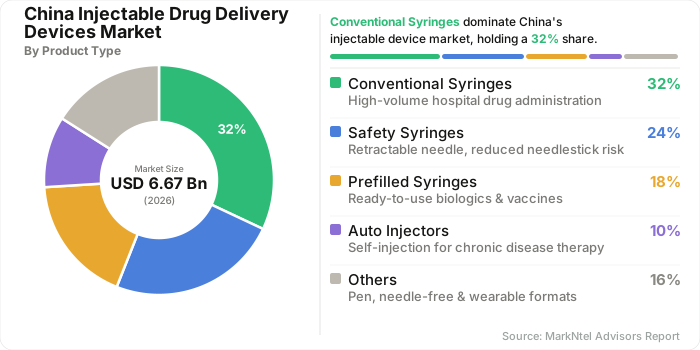
- By product, Conventional Syringes emerged as the leading segment, accounting for approximately 32% market share in 2026.
- By therapeutic application, Diabetes dominated the market with an estimated 72% share in 2026.
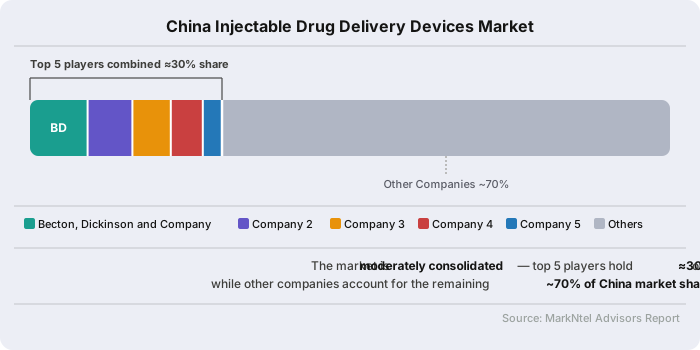
- The market is moderately consolidated, with leading companies collectively accounting for approximately 30% of total market revenue.
China Injectable Drug Delivery Devices Market Size and Outlook
The China Injectable Drug Delivery Devices Market was valued at USD 4.87 billion in 2025, to USD 6.67 billion, and is projected to reach USD 8.35 billion by 2033, expanding at a CAGR of 3.81%. This growth is anchored in the country's exceptionally high chronic disease burden.
According to the International Diabetes Federation's (IDF) 11th Edition Diabetes Atlas (2025), approximately 13.8% of Chinese adults aged 20–79 years are living with diabetes, with diabetes-related healthcare expenditure exceeding USD 168 billion annually. The growing diabetic population is driving substantial demand for injectable therapies, including insulin and GLP-1 receptor agonists, which rely on advanced drug delivery devices such as prefilled syringes, autoinjectors, pen injectors, and other parenteral administration systems.
As the prevalence of diabetes continues to rise, the need for convenient, accurate, and patient-friendly drug delivery solutions is expected to increase, supporting sustained growth in the market for injectable drug delivery devices across China. Furthermore, according to the Chinese Medical Journal, an estimated 3.25 million new cancer cases were recorded in China in 2024, the highest in the world, creating an expanding patient base requiring injectable oncology biologics and chemotherapy delivery devices across hospital and ambulatory settings.
The National Healthcare Security Administration's (NHSA) December 2024 update to the National Reimbursement Drug List (NRDL), effective January 1, 2025, added 91 new drugs of which 38 were classified as globally novel innovative drugs with oncology and chronic disease therapies accounting for the majority of additions. An estimated patient cost saving of over USD 6.95 billion was projected for 2025 as a result, substantially reducing financial barriers to injectable therapy access and accelerating device utilization across institutional end-users including hospitals, specialty treatment centers, and community health clinics.
Additionally, the State Council's Full-Chain Support for Biopharmaceutical Innovation policy, issued in July 2024, established a national framework spanning drug approval, insurance reimbursement, and commercialization directly stimulating domestic production of injectable biologics and, in turn, demand for compatible drug-device combination products.
Furthermore, the NMPA's NMPA-No86-2025 directive established a 30-working-day clinical trial approval channel for innovative drugs, further shortening the pipeline-to-market timeline for new injectable biologics, a regulatory catalyst expected to sustain device demand through the forecast period. Collectively, structural disease prevalence, expanding reimbursement coverage, a pro-innovation regulatory environment, and an aging institutional patient base position the sector for compounding growth well beyond current projections.
China Injectable Drug Delivery Devices Market Key Indicators
- According to the National Bureau of Statistics of China, by end-2025 China had 1.107 million medical and health institutions including 38,000 hospitals with 7.99 million inpatient beds generating an immense and continuous institutional demand for sterile injectable drug delivery devices across surgical, oncology, and critical care wards.
- China's National Health Commission reported that total national health expenditure reached approximately USD 1.26 trillion in 2024, equivalent to 6.7% of GDP, with per capita health expenditure reaching USD 952.84 a financing base that directly supports expanded procurement of prefilled syringes, autoinjectors, and pen injectors across public and private hospital systems.
- The World Health Organization confirmed that China launched a national HPV vaccination programme on November 10, 2025, targeting all girls born on or after November 10, 2011 who have reached age 13 a program requiring two-dose bivalent HPV injectable administration at scale across the national immunization infrastructure, generating immediate and recurring demand for vaccine delivery systems and disposable injectable devices.
China Injectable Drug Delivery Devices Market Scope
| Category | Segments |
|---|---|
| By Product | Conventional Syringes, Safety Syringes, Prefilled Syringes, Auto Injectors, Pen Injectors, Needle-Free Injectors, Wearable Injectors, Others |
| By Therapeutic Application | Diabetes, Autoimmune Diseases, Obesity, Oncology, Hormonal Disorders, Infectious Diseases, Rare Diseases, Others |
| By Formulation Packaging | Ampoules, Vials, Cartridges, Prefilled Syringes, Dual-Chamber Systems |
| By Usage Pattern | Curative Care, Immunization, Other Usage Patterns |
| By Route of Administration | Dermal-Based Administration, Circulatory/Musculoskeletal System-Based Administration, Organ-Based Administration, Central Nervous System (CNS)-Based Administration |
| By End User | Hospitals & Clinics, Home Care Settings, Long-Term Care Settings, Nursing Homes, Other End Users |
China Injectable Drug Delivery Devices Industry Growth Drivers
Surging Biologics and Biosimilars Pipeline Driving Demand for Specialized Injectable Drug Delivery Devices in China
China's growing biologics and biosimilars pipeline is the primary structural force creating demand for injectable drug delivery devices. Biologics including monoclonal antibodies, biosimilar therapies, and antibody-drug conjugates (ADCs) cannot be administered orally due to enzymatic degradation and require prefilled syringes, autoinjectors, or pen injectors for delivery, creating a direct volume relationship between approvals and device consumption.
According to a study published in PMC (2025) using NMPA data, China approved 161 new drugs between 2019 and 2023 the highest count globally, surpassing the United States (243), the European Union (191), and Japan (187). The majority of which are biologic or injectable therapeutics requiring compatible delivery systems.
Furthermore, China's innovative drug license-out transactions reached USD 51.9 billion in 2024, a 27.4% year-on-year increase, capturing nearly one-third of the global total, with monoclonal antibody licensing alone rising 43% to USD 11.3 billion, each licensed molecule entering late-stage development requiring a validated injectable delivery device meeting international standard.
This expanding injectable biologics delivery pipeline positions device manufacturers supplying high-viscosity-compatible drug-device combination products as direct beneficiaries of China's biopharma growth trajectory.
Recent Trends
Accelerating Shift Toward Smart Injectable Devices and Home-Based Drug Administration in China
Across China's injectable drug delivery landscape, a sustained directional shift is underway away from clinic-administered intravenous infusion and toward patient-centric drug delivery solutions that enable self-administration of injectable devices for complex biologic therapies outside hospital settings.
This pattern is being driven by China's chronic disease patient population, which faces long-term biologic therapy requirements for conditions including autoimmune disease, oncology, and neurodegenerative disorders.
The trend is measurably advancing at the regulatory level in China. In January 2026, the National Medical Products Administration accepted the Biologics License Application for the subcutaneous autoinjector formulation of lecanemab (LEQEMBI®), a monoclonal antibody therapy for Alzheimer's disease a submission explicitly designed to enable once-weekly home -based drug administration as an alternative to biweekly intravenous hospital dosing.
Concurrently, in July 2025, Becton, Dickinson and Company initiated the first pharma-sponsored combination product clinical trial using the BD Libertas™ wearable injector for subcutaneous delivery of complex biologics a large-volume wearable injector supporting viscosities up to 50 centipoises in 2–10 mL configurations signaling global device infrastructure aligning with this care-site shift.
As China's NMPA approval pipeline for subcutaneous biologic formats expands, connected drug delivery platforms embedded with digital adherence monitoring are expected to become the standard delivery architecture for home-based chronic therapy across the country.
China Injectable Drug Delivery Devices Industry Opportunities and Challenges
Stringent China Medical Device Regulations on Class III Specialty Injectable Devices Creating Opportunity for Compliant Domestic Manufacturers
China's escalating regulatory compliance framework for injectable healthcare devices presents a structural challenge to market participants, particularly smaller domestic manufacturers of safety syringes, disposable injectors, and subcutaneous drug delivery platforms.
The NMPA's revised Regulation on Supervision and Administration of Medical Devices State Council Order No. 739, effective June 1, 2021 and further amended on January 7, 2025 raised penalties for producing or operating unapproved Class II and Class III devices to 15–30 times the sales value of goods, up from 10–20 times under the prior framework, significantly increasing the financial consequence of non-compliance and the cost of maintaining registration across product lines.
These high device development costs and extended approval timelines constrain the ability of smaller players to commercialize needle-free injectors and advanced injectable delivery innovations at pace with market demand. The same regulatory rigor, however, creates a measurable commercial opening for established manufacturers with validated Class III compliance infrastructure. The Shanghai Municipal Government's 2025 action plan targeting over 500 new Class III domestic medical device approvals by 2027, anchored by the city's USD 8.2 billion medical device manufacturing output in 2024, directly signals government-backed acceleration for domestic injectable device manufacturing players with the scale and regulatory standing to capture priority approval pathways.
As compliance thresholds continue rising, manufacturers investing in robust quality management systems and Class III registration portfolios are positioned to widen their competitive distance from under-resourced entrants in the years ahead.
Segmentation Insights
Extensive Hospital Utilization Keeps Conventional Syringes at the Forefront of China's Injectable Drug Delivery Devices
Conventional syringes account for approximately 32% of the China injectable drug delivery devices market by product, maintaining their leading position through an unmatched combination of cost efficiency, manufacturing scalability, and universal compatibility across therapeutic settings. At USD 0.08–0.20 per unit for standard hospital-grade disposable formats as observed in provincial procurement tender awards, conventional syringes remain the only device category accessible at the price points required for China's volume-based procurement framework.
Companies like Shandong Weigao Group, China's largest domestic medical consumables manufacturer, reported total revenue of USD 1.93 billion in 2024, with pharma packaging revenue reaching USD 337.0 million, a 12.6% year-on-year increase driven by growing hospital procurement of syringes and pen injectors across over 20 pharmaceutical client partnerships.
Wearable injectors represent the fastest-growing sub-segment, as China's expanding biologic pipeline increasingly requires large-volume subcutaneous delivery platforms for home-use chronic disease management. The NHSA's 11th round national volume-based procurement, announced in July 2025 and covering 55 drugs across 14 therapeutic areas, reinforces sustained high-volume conventional syringe consumption at institutional level while simultaneously accelerating demand for advanced delivery formats as reimbursement broadens access to complex injectables requiring specialized devices.
As clinical pathways mature and home-care settings grow, the product mix will progressively shift toward advanced formats without displacing the institutional volume base that conventional syringes continue to anchor. By product type, the market is further segmented into the following sub-categories:
- Conventional Syringes
- Safety Syringes
- Prefilled Syringes
- Auto Injectors
- Pen Injectors
- Needle-Free Injectors
- Wearable Injectors
- Others
Diabetes Leads as the Dominant Therapeutic Application
Diabetes accounts for approximately 72% of the injectable drug delivery devices market in China by therapeutic application, the highest concentration of any single condition, driven by the combination of massive patient volume, mandatory injection frequency, and near-universal device dependence for insulin and GLP-1 receptor agonist administration. Approximately 36% of China's type 2 diabetes population, the world's largest, exceeding 140 million adults, requires insulin therapy, generating a continuous and non-discretionary demand for pen injectors, conventional syringes, and autoinjectors that no oral alternative can currently displace at scale.
Reflecting this trajectory, the NMPA accepted for review in September 2025 the supplementary application for mazdutide 9 mg, Innovent Biologics' dual GCG/GLP-1 receptor agonist delivered via subcutaneous injection for adults with moderate-to-severe obesity and type 2 diabetes, a second indication that would further expand the injectable device requirements for this therapy class in China.
In September 2024, the NMPA approved Akeso Biopharma's Inclisiran injection (AK102) using Weigao Pureasy's integrated prefilled syringe plus autoinjector pen combination, a commercial instance of how oncology and cardiovascular biologics are actively adopting multi-component injectable delivery systems. As GLP-1 therapies continue gaining new indications and biosimilar access widens, the device demand base anchored in diabetes will deepen further across both institutional and home-care settings. By therapeutic applications the market is further segmented into the following sub-categories:
- Diabetes
- Autoimmune Diseases
- Obesity
- Oncology
- Hormonal Disorders
- Infectious Diseases
- Rare Diseases
- Others
China Injectable Drug Delivery Devices Industry Competitive Landscape
The China Injectable Drug Delivery Devices Market is moderately consolidated, with leading players including Becton, Dickinson and Company, Baxter International Inc., Terumo Corporation, B. Braun SE, and West Pharmaceutical Services, Inc. collectively accounting for 30% share of the market, driven by their broad product offerings and strong healthcare distribution networks.
Major Companies in the China Injectable Drug Delivery Devices Industry
- Becton, Dickinson and Company
- Baxter International Inc.
- B. Braun SE
- Terumo Corporation
- Cardinal Health, Inc.
- Ypsomed Holding AG
- West Pharmaceutical Services, Inc.
- Gerresheimer AG
- Stevanato Group S.p.A.
- SCHOTT Pharma AG & Co. KGaA
- SHL Medical
- Owen Mumford
- Nemera
- Haselmeier
China Injectable Drug Delivery Devices Industry News and Recent Developments
2025: Ypsomed Opens First Dedicated China Autoinjector Manufacturing Site in Changzhou to Serve Growing Injectable Drug Delivery Market
Ypsomed inaugurated its first dedicated production facility in China on June 26, 2025, located in Changzhou's high-tech industrial park near Shanghai. The facility spans more than 15,000 square metres and was completed in just 14 months. Ypsomed invested nearly CHF 150 million in the site and has secured an additional 30,000 square metres of land for future expansion.
Impact analysis: The opening of Ypsomed's Changzhou facility marks a structural shift in injectable drug delivery device supply capacity within China, reducing dependence on Swiss and German imports and enabling faster, more responsive delivery of autoinjectors and pen injectors to Chinese pharmaceutical customers. With 30,000 square metres of land secured for expansion, the site establishes a long-term local manufacturing base that strengthens Ypsomed's competitive positioning in the Chinese market against both domestic device manufacturers and other global players seeking to localise production.
2026: AbbVie and RemeGen Execute USD 5.6 Billion Injectable Biologic Licensing Agreement, Reinforcing China's Position as a Global Injectable Drug Pipeline Source
AbbVie and China-based RemeGen (688331.SH; 9995.HK) announced an exclusive licensing agreement in January 2026 for RC148, a novel PD-1/VEGF-targeted bispecific antibody currently in Phase II clinical development for multiple advanced solid tumors, including non-small cell lung cancer and colorectal cancer. AbbVie received exclusive rights to develop, manufacture, and commercialize RC148 outside Greater China, paying RemeGen an upfront fee of USD 650 million with up to USD 4.95 billion in additional milestone payments and tiered double-digit royalties. RemeGen retains all commercialization rights within Greater China. RC148's two existing flagship biologic products telitacicept and disitamab vedotin, have together received regulatory approval for six indications in China.
Impact analysis: This deal exemplifies the accelerating flow of high-value injectable biologic assets from China to global markets, validating the depth of China's biologic pipeline and reinforcing domestic demand for specialized injectable drug delivery devices, particularly autoinjectors and prefilled syringe platforms compatible with bispecific antibody formulations. RemeGen's retention of Greater China commercialization rights for RC148 means the biologic will require a full domestic device supply chain for subcutaneous or intravenous administration, directly generating demand for injectable delivery infrastructure within the Chinese market as the drug advances toward commercial launch.
2026: Eli Lilly Pledges USD 3 Billion Over Ten Years to Expand China Injectable and Oral GLP-1 Manufacturing, Including USD 200 Million CDMO Partnership with Pharmaron
Eli Lilly announced in March, 2026 a USD 3 billion, ten-year investment commitment to expand manufacturing operations in China, bringing its total China investment to approximately USD 6 billion. The expansion includes scaling incretin injectable production capacity at Lilly's existing Suzhou facility, operational since 1996, alongside the addition of oral solid dosage form production capacity in Beijing for orforglipron, its investigational oral GLP-1 receptor agonist submitted to the NMPA at the end of 2025.
Impact analysis: The expansion of Lilly's Suzhou incretin injectable manufacturing site directly increases demand for prefillable syringe containers, autoinjector assemblies, and aseptic fill-finish capacity required to produce commercial volumes of injectable GLP-1 therapies for China's patient population. The USD 200 million Pharmaron CDMO collaboration establishes a template for pharma-CDMO partnerships in China's injectable supply chain, raising both the volume and sophistication of injectable drug product manufacturing domestically and accelerating device procurement cycles across the injectable drug delivery devices market.
Frequently Asked Questions
- Market Segmentation
- Introduction
- Product Definition
- Research Process
- Assumptions
- Executive Summary
- China Injectable Drug Delivery Devices Market Policies, Regulations, and Product Standards
- China Injectable Drug Delivery Devices Market Trends & Developments
- China Injectable Drug Delivery Devices Market Dynamics
- Growth Factors
- Challenges
- China Injectable Drug Delivery Devices Market Hotspot & Opportunities
- China Injectable Drug Delivery Devices Market Outlook, 2022-2032F
- Market Size & Outlook
- By Revenues (USD Million)
- Market Share & Outlook
- By Product- Market Size & Forecast 2022-2032, USD Million
- Conventional Syringes
- Safety Syringes
- Prefilled Syringes
- Auto Injectors
- Pen Injectors
- Needle-Free Injectors
- Wearable Injectors
- Others
- By Therapeutic Application- Market Size & Forecast 2022-2032, USD Million
- Diabetes
- Autoimmune Diseases
- Obesity
- Oncology
- Hormonal Disorders
- Infectious Diseases
- Rare Diseases
- Others
- By Formulation Packaging- Market Size & Forecast 2022-2032, USD Million
- Ampoules
- Vials
- Cartridges
- Prefilled Syringes
- Dual-Chamber Systems
- By Usage Pattern- Market Size & Forecast 2022-2032, USD Million
- Curative Care
- Immunization
- Other Usage Patterns
- By Route of Administration- Market Size & Forecast 2022-2032, USD Million
- Dermal-Based Administration
- Circulatory/Musculoskeletal System-Based Administration
- Organ-Based Administration
- Central Nervous System (CNS)-Based Administration
- By End User- Market Size & Forecast 2022-2032, USD Million
- Hospitals & Clinics
- Home Care Settings
- Long-Term Care Settings
- Nursing Homes
- Other End Users
- By Region- Market Size & Forecast 2022-2032, USD Million
- North
- South
- East
- West
- Central
- By Company
- Competition Characteristics
- Market Share & Analysis
- By Product- Market Size & Forecast 2022-2032, USD Million
- Market Size & Outlook
- China Conventional Syringes Market Outlook, 2022-2032
- Market Size & Outlook
- By Revenues (USD Million)
- Market Share & Outlook
- By Therapeutic Application- Market Size & Forecast 2022-2032, USD Million
- By Formulation Packaging- Market Size & Forecast 2022-2032, USD Million
- By Usage Pattern- Market Size & Forecast 2022-2032, USD Million
- By Route of Administration- Market Size & Forecast 2022-2032, USD Million
- By End User- Market Size & Forecast 2022-2032, USD Million
- By Region- Market Size & Forecast 2022-2032, USD Million
- Market Size & Outlook
- China Safety Syringes Market Outlook, 2022-2032
- Market Size & Outlook
- By Revenues (USD Million)
- Market Share & Outlook
- By Therapeutic Application- Market Size & Forecast 2022-2032, USD Million
- By Formulation Packaging- Market Size & Forecast 2022-2032, USD Million
- By Usage Pattern- Market Size & Forecast 2022-2032, USD Million
- By Route of Administration- Market Size & Forecast 2022-2032, USD Million
- By End User- Market Size & Forecast 2022-2032, USD Million
- By Region- Market Size & Forecast 2022-2032, USD Million
- Market Size & Outlook
- China Prefilled Syringes Market Outlook, 2022-2032
- Market Size & Outlook
- By Revenues (USD Million)
- Market Share & Outlook
- By Therapeutic Application- Market Size & Forecast 2022-2032, USD Million
- By Formulation Packaging- Market Size & Forecast 2022-2032, USD Million
- By Usage Pattern- Market Size & Forecast 2022-2032, USD Million
- By Route of Administration- Market Size & Forecast 2022-2032, USD Million
- By End User- Market Size & Forecast 2022-2032, USD Million
- By Region- Market Size & Forecast 2022-2032, USD Million
- Market Size & Outlook
- China Auto Injectors Market Outlook, 2022-2032
- Market Size & Outlook
- By Revenues (USD Million)
- Market Share & Outlook
- By Therapeutic Application- Market Size & Forecast 2022-2032, USD Million
- By Formulation Packaging- Market Size & Forecast 2022-2032, USD Million
- By Usage Pattern- Market Size & Forecast 2022-2032, USD Million
- By Route of Administration- Market Size & Forecast 2022-2032, USD Million
- By End User- Market Size & Forecast 2022-2032, USD Million
- By Region- Market Size & Forecast 2022-2032, USD Million
- Market Size & Outlook
- China Pen Injectors Market Outlook, 2022-2032
- Market Size & Outlook
- By Revenues (USD Million)
- Market Share & Outlook
- By Therapeutic Application- Market Size & Forecast 2022-2032, USD Million
- By Formulation Packaging- Market Size & Forecast 2022-2032, USD Million
- By Usage Pattern- Market Size & Forecast 2022-2032, USD Million
- By Route of Administration- Market Size & Forecast 2022-2032, USD Million
- By End User- Market Size & Forecast 2022-2032, USD Million
- By Region- Market Size & Forecast 2022-2032, USD Million
- Market Size & Outlook
- China Needle-Free Injectors Market Outlook, 2022-2032
- Market Size & Outlook
- By Revenues (USD Million)
- Market Share & Outlook
- By Therapeutic Application- Market Size & Forecast 2022-2032, USD Million
- By Formulation Packaging- Market Size & Forecast 2022-2032, USD Million
- By Usage Pattern- Market Size & Forecast 2022-2032, USD Million
- By Route of Administration- Market Size & Forecast 2022-2032, USD Million
- By End User- Market Size & Forecast 2022-2032, USD Million
- By Region- Market Size & Forecast 2022-2032, USD Million
- Market Size & Outlook
- China Wearable Injectors Market Outlook, 2022-2032
- Market Size & Outlook
- By Revenues (USD Million)
- Market Share & Outlook
- By Therapeutic Application- Market Size & Forecast 2022-2032, USD Million
- By Formulation Packaging- Market Size & Forecast 2022-2032, USD Million
- By Usage Pattern- Market Size & Forecast 2022-2032, USD Million
- By Route of Administration- Market Size & Forecast 2022-2032, USD Million
- By End User- Market Size & Forecast 2022-2032, USD Million
- By Region- Market Size & Forecast 2022-2032, USD Million
- Market Size & Outlook
- China Others Market Outlook, 2022-2032
- Market Size & Outlook
- By Revenues (USD Million)
- Market Share & Outlook
- By Therapeutic Application- Market Size & Forecast 2022-2032, USD Million
- By Formulation Packaging- Market Size & Forecast 2022-2032, USD Million
- By Usage Pattern- Market Size & Forecast 2022-2032, USD Million
- By Route of Administration- Market Size & Forecast 2022-2032, USD Million
- By End User- Market Size & Forecast 2022-2032, USD Million
- By Region- Market Size & Forecast 2022-2032, USD Million
- Market Size & Outlook
- China Injectable Drug Delivery Devices Market Key Strategic Imperatives for Success & Growth
- Competitive Outlook
- Company Profiles
- Becton, Dickinson and Company (BD)
- Business Description
- Product Portfolio
- Collaborations & Alliances
- Recent Developments
- Financial Details
- Others
- Baxter International Inc.
- Business Description
- Product Portfolio
- Collaborations & Alliances
- Recent Developments
- Financial Details
- Others
- B. Braun SE
- Business Description
- Product Portfolio
- Collaborations & Alliances
- Recent Developments
- Financial Details
- Others
- Terumo Corporation
- Business Description
- Product Portfolio
- Collaborations & Alliances
- Recent Developments
- Financial Details
- Others
- Cardinal Health, Inc.
- Business Description
- Product Portfolio
- Collaborations & Alliances
- Recent Developments
- Financial Details
- Others
- Ypsomed Holding AG
- Business Description
- Product Portfolio
- Collaborations & Alliances
- Recent Developments
- Financial Details
- Others
- West Pharmaceutical Services, Inc.
- Business Description
- Product Portfolio
- Collaborations & Alliances
- Recent Developments
- Financial Details
- Others
- Gerresheimer AG
- Business Description
- Product Portfolio
- Collaborations & Alliances
- Recent Developments
- Financial Details
- Others
- Stevanato Group S.p.A.
- Business Description
- Product Portfolio
- Collaborations & Alliances
- Recent Developments
- Financial Details
- Others
- SCHOTT Pharma AG & Co. KGaA
- Business Description
- Product Portfolio
- Collaborations & Alliances
- Recent Developments
- Financial Details
- Others
- SHL Medical
- Business Description
- Product Portfolio
- Collaborations & Alliances
- Recent Developments
- Financial Details
- Others
- Owen Mumford
- Business Description
- Product Portfolio
- Collaborations & Alliances
- Recent Developments
- Financial Details
- Others
- Nemera
- Business Description
- Product Portfolio
- Collaborations & Alliances
- Recent Developments
- Financial Details
- Others
- Haselmeier
- Business Description
- Product Portfolio
- Collaborations & Alliances
- Recent Developments
- Financial Details
- Others
- Becton, Dickinson and Company (BD)
- Company Profiles
- Disclaimer
MarkNtel Advisors follows a robust and iterative research methodology designed to ensure maximum accuracy and minimize deviation in market estimates and forecasts. Our approach combines both bottom-up and top-down techniques to effectively segment and quantify various aspects of the market. A consistent feature across all our research reports is data triangulation, which examines the market from three distinct perspectives to validate findings. Key components of our research process include:
1. Scope & Research Design At the outset, MarkNtel Advisors define the research objectives and formulate pertinent questions. This phase involves determining the type of research—qualitative or quantitative—and designing a methodology that outlines data collection methods, target demographics, and analytical tools. They also establish timelines and budgets to ensure the research aligns with client goals.
2. Sample Selection and Data Collection In this stage, the firm identifies the target audience and determines the appropriate sample size to ensure representativeness. They employ various sampling methods, such as random or stratified sampling, based on the research objectives. Data collection is carried out using tools like surveys, interviews, and observations, ensuring the gathered data is reliable and relevant.
3. Data Analysis and Validation Once data is collected, MarkNtel Advisors undertake a rigorous analysis process. This includes cleaning the data to remove inconsistencies, employing statistical software for quantitative analysis, and thematic analysis for qualitative data. Validation steps are taken to ensure the accuracy and reliability of the findings, minimizing biases and errors.

4. Data Forecast and FinalizationThe final phase involves forecasting future market trends based on the analyzed data. MarkNtel Advisors utilize predictive modeling and time series analysis to anticipate market behaviors. The insights are then compiled into comprehensive reports, featuring visual aids like charts and graphs, and include strategic recommendations to inform client decision-making
We offer flexible licensing options to cater to varying organizational needs. Choose the pricing pack that best suits your requirements:
Buy Now Inquire Before Buying
 Request Customization
 Talk to our Consultant







