

China Automotive Market Research Report: Forecast (2026-2032)
By Vehicle Type (Passenger Vehicles, Commercial Vehicles, Two-Wheelers, Three-Wheelers, Off-Highway Vehicles), By Propulsion Type (Internal Combustion Engine (ICE) Vehicles, Hybrid ... Electric Vehicles (HEVs), Battery Electric Vehicles (BEVs), Plug-in Hybrid Electric Vehicles (PHEVs), Fuel Cell Electric Vehicles (FCEVs)), By Fuel Type (Gasoline, Diesel, CNG/LNG), By Sales Channel (OEM Dealers / Authorized Dealerships, Independent Dealers, Online Platforms, Direct-to-Consumer (DTC)), By Application (Personal Use, Commercial Use, Public Transport, Industrial Use), By Ownership Model (Individual Ownership, Fleet Ownership, Subscription-Based Mobility, Shared Mobility) Read more
- Automotive
- Jun 2026
- Pages 140
- Report Format: PDF, Excel, PPT
China Automotive Market
Projected 7.40% CAGR from 2026 to 2032
Study Period
2026-2032
Market Size (2026)
USD 1192 Billion
Market Size (2032)
USD 1829 Billion
Base Year
2025
Projected CAGR
7.40%
Leading Segments
By Vehicle Type: Passenger Vehicles
China Automotive Market Key Takeaways
- The China Automotive market, valued at nearly USD 965 billion in 2025, is anticipated to expand steadily, reaching USD 1829 billion by 2032 from USD 1192 billion in 2026.
- The industry is projected to witness steady growth at a CAGR of 7.40% over 2026–2032.
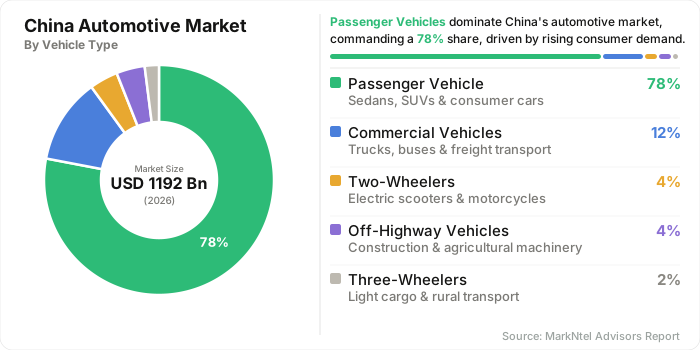
- By Vehicle Type, Passenger Vehicles dominated the market with approximately 78% share in 2026.
- By Propulsion Type, Internal Combustion Engine (ICE) Vehicles held approximately 58% of the market share in 2026.
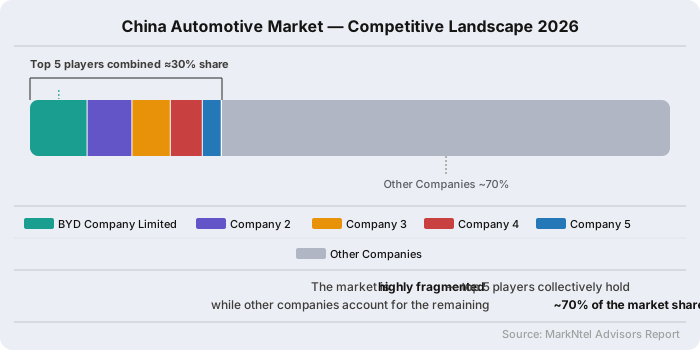
- China's automotive sector is characterized by a highly fragmented market structure, where the top five manufacturers hold roughly 30% of the market share.
China Automotive Market Size and Outlook
At a CAGR of approximately 7.40% over 2026–2032, the China Automotive market is expected to rise from USD 1192 billion in 2026 to USD 1829 billion by 2032, following a valuation of USD 965 billion in 2025.
China has strengthened its position as the world’s largest automotive market through sustained industrial development, increasing consumer purchasing power, and expanding urban mobility requirements over the past decade. According to the China Association of Automobile Manufacturers, vehicle sales reached 34.4 million units in 2025, reflecting continued strength across passenger and commercial vehicle segments. Backed by a well-established manufacturing base and integrated supply chains, the automotive sector remains a key contributor to industrial production and economic activity.
This momentum has been reinforced by government measures aimed at advancing cleaner and more efficient transportation. The State Council’s New Energy Vehicle Industry Development Plan (2021–2035) supports vehicle electrification through investments in charging infrastructure, battery-swapping networks, and intelligent vehicle technologies. In parallel, vehicle trade-in and replacement programs introduced during 2025 encouraged consumers to upgrade older vehicles, supporting market demand while advancing broader goals related to industrial modernization and emissions reduction.
These developments have strengthened demand across residential, commercial, and institutional users. Residential consumers continue to account for the largest share of vehicle purchases, while commercial fleet operators increasingly adopt advanced vehicles to improve efficiency and reduce operating costs. Public transportation agencies are also expanding the deployment of low-emission vehicles. As a result, growing new energy vehicle adoption in China continues to reshape purchasing patterns and support the transition toward more sustainable mobility solutions.
In response to evolving market requirements, automotive manufacturers are expanding their focus on advanced battery development, smart mobility solutions, connected vehicle ecosystems, and domestic production capabilities. Alongside ongoing investments in charging infrastructure and vehicle software, these efforts are enhancing accessibility and consumer confidence. Supported by technological innovation, favorable policies, and strong domestic demand, China’s automotive sector is expected to maintain steady growth and reinforce its leadership in global automotive production and next-generation mobility.
China Automotive Market Key Indicators
- According to the National Bureau of Statistics of China (NBS), the urbanization rate of permanent residents reached 67.89% by the end of 2025. Continued urban expansion increases mobility requirements, vehicle ownership demand, and transportation infrastructure development, creating favorable conditions for sustained growth in passenger and commercial vehicle sales across the country.
- China accounted for approximately 60% of global electric vehicle sales in 2025, maintaining its leadership in electric mobility, according to the International Energy Agency (IEA). This strong position continues to encourage investments in vehicle manufacturing, battery technologies, charging infrastructure, and smart transportation systems.
- China’s vehicle trade-in subsidy program surpassed 10 million cumulative applications by May 2025, highlighting strong consumer participation in vehicle replacement initiatives. The program has encouraged the adoption of newer and more efficient vehicles, supporting domestic consumption and sustaining vehicle sales momentum.
- China's expressway network exceeded 191,000 kilometers by the end of 2024, making it the world's largest expressway system. Continued expansion of road infrastructure enhances regional connectivity, supports freight transportation and vehicle utilization, and creates favorable conditions for sustained demand across passenger and commercial vehicle segments
China Automotive Market Scope
| Category | Segments |
|---|---|
| By Vehicle Type | Passenger Vehicles, Commercial Vehicles, Two-Wheelers, Three-Wheelers, Off-Highway Vehicles |
| By Propulsion Type | Internal Combustion Engine (ICE) Vehicles, Hybrid Electric Vehicles (HEVs), Battery Electric Vehicles (BEVs), Plug-in Hybrid Electric Vehicles (PHEVs), Fuel Cell Electric Vehicles (FCEVs |
| By Fuel Type | Gasoline, Diesel, CNG/LNG |
| By Sales Channel | OEM Dealers / Authorized Dealerships, Independent Dealers, Online Platforms, Direct-to-Consumer (DTC |
| By Application | Personal Use, Commercial Use, Public Transport, Industrial Use |
| By Ownership Model | Individual Ownership, Fleet Ownership, Subscription-Based Mobility, Shared Mobility |
China Automotive Market Growth Drivers
Rising Urbanization and Household Income Expanding China's Vehicle-Owning Population
China's ongoing urbanization is steadily expanding the pool of potential vehicle buyers by increasing access to employment opportunities, transportation infrastructure, and economic development. By the end of 2025, approximately 953.8 million people were living in urban areas, while the government has set a long-term objective of raising the urbanization rate to 75% by 2035. As cities continue to expand and living standards improve, mobility needs are becoming more pronounced, creating favorable conditions for long-term vehicle demand.
This demographic transition is being complemented by rising household incomes and stronger consumer purchasing power. A growing middle-income population is making vehicle ownership more attainable, particularly among first-time buyers and younger households. At the same time, changing lifestyles, longer commuting distances, and increasing expectations for personal mobility are strengthening passenger car demand in China, particularly across developing urban centers and lower-tier cities where vehicle penetration continues to expand.
The impact of these trends is evident in the country's growing vehicle fleet. The Ministry of Public Security reported that 366 million automobiles were in operation by the end of 2025, highlighting the scale of China's vehicle-owning population. As urban development progresses and access to financing, road infrastructure, and affordable vehicle models continues to improve, the combination of urbanization, income growth, and evolving mobility preferences is expected to provide a stable foundation for sustained vehicle demand in the years ahead.
Recent Trends
Growing Integration of Intelligent Vehicle Technologies
China's automotive sector is undergoing a significant shift as intelligent driving, connectivity, and software-driven functionalities become central to next-generation vehicle development. Advances in artificial intelligence, vehicle connectivity, and driver-assistance systems, combined with growing consumer demand for safer and more digital driving experiences, are accelerating the adoption of intelligent features across new vehicle models. Consequently, connected vehicle technologies in China are becoming increasingly important, with software capabilities emerging as key differentiators in the market.
This transition is being reinforced by government efforts to advance intelligent mobility. In 2025, authorities expanded vehicle-road-cloud integration pilot programs and opened more than 35,000 kilometers of testing and demonstration roads for intelligent connected vehicles. Together with evolving autonomous driving regulations, these initiatives are creating a supportive environment for the deployment of connected and automated vehicle technologies across the country.
The growing focus on intelligent mobility is also influencing competitive strategies among automakers. Companies are investing in software-defined vehicles, intelligent cockpits, and advanced driver-assistance systems tailored to local driving conditions. In 2025, Volkswagen AG introduced an AI-powered ADAS platform developed specifically for China, reflecting the increasing emphasis on localized innovation. Supported by continued collaboration between automotive and technology companies, smart mobility technologies in China are expected to remain an important driver of future industry transformation.
China Automotive Market Opportunities and Challenges
Intensifying Domestic Price Competition Creating Opportunities for Premium Vehicle Differentiation and Industry Consolidation
Intensifying competition has become a key challenge for China's automotive industry as manufacturers increasingly rely on price reductions to defend market share. In May 2025, BYD reduced prices on more than 20 vehicle models, prompting similar actions from rival automakers. In response, the China Association of Automobile Manufacturers (CAAM) warned that disorderly competition could further weaken profitability and affect the industry's long-term sustainability, highlighting the growing limitations of price-driven growth strategies.
At the same time, these pressures are creating opportunities for premium vehicle differentiation and industry consolidation. As competing solely on price becomes less viable, manufacturers are increasingly investing in intelligent driving technologies in China, advanced connectivity features, and enhanced user experiences to strengthen brand value. Profitability challenges are also encouraging restructuring efforts across the sector. In 2025, Geely accelerated brand integration and streamlined research and development activities to improve efficiency and competitiveness. These developments reflect broader automotive industry trends in China, where innovation, scale, and product differentiation are becoming increasingly important for long-term success.
Segmentation Insights
Broad Urban Demand and Wide Model Availability Sustain the Dominance of Passenger Vehicles
Passenger vehicles account for approximately 78% of the market value, underscoring their dominant position within China's automotive industry. Their dominance is supported by rising private vehicle ownership, an extensive range of domestically produced models, and sustained demand for SUVs, crossovers, and family sedans across both major cities and lower-tier markets. The segment continues to benefit from improving household incomes, evolving consumer preferences, and the growing availability of affordable electrified vehicles, which are attracting both first-time buyers and replacement purchases. Reflecting this strong demand environment, passenger vehicle sales reached 30.103 million units in 2025, increasing by 9.2% compared with the previous year, according to CAAM.
The segment is further strengthened by the growing competitiveness of domestic automakers, which accounted for nearly 70% of passenger vehicle sales in 2025. Their expanding product portfolios, combined with continuous innovation in new energy vehicles and intelligent driving features, are helping sustain market momentum. In addition, ongoing urbanization, increasing ride-hailing and fleet demand, and a robust pipeline of new vehicle launches are expected to support long-term growth, ensuring passenger vehicles remain the largest contributor to both volume and revenue generation in China's automotive market. Based on vehicle type, the market has been segmented into:
- Passenger Vehicle
- Commercial Vehicles
- Two-Wheelers
- Three-Wheelers
- Off-Highway Vehicles
Residential Segment Dominates the Application Landscape, Driven by Urban Housing Expansion and Aging Community Modernization Programs
Internal Combustion Engine Vehicles account for approximately 58% of the propulsion segment and remain the largest category within the China Automotive Market. The segment continues to maintain its leadership due to extensive refueling infrastructure, broad model availability, established servicing networks, and strong demand across commercial vehicle applications. ICE-powered vehicles also retain a significant presence in lower-tier cities and rural regions, where charging infrastructure remains less developed than in major urban centers.
Although electric vehicle adoption continues to expand rapidly, conventional vehicles remain widely used because of their familiarity, affordability across several vehicle categories, and proven operational reliability. The gradual pace of fleet replacement, combined with ongoing improvements in fuel efficiency and emissions performance, continues to support demand for ICE-powered models. As a result, despite the accelerating transition toward electrified mobility, ICE vehicles are expected to retain the largest share of the propulsion segment in the near term. Based on propulsion type, the market is categorized into:
- Internal Combustion Engine (ICE) Vehicles
- Hybrid Electric Vehicles (HEVs)
- Battery Electric Vehicles (BEVs)
- Plug-in Hybrid Electric Vehicles (PHEVs)
- Fuel Cell Electric Vehicles (FCEVs)
China Automotive Market Competitive Analysis
The China automotive market is highly fragmented, with numerous domestic manufacturers, international automakers, and joint-venture companies competing across multiple vehicle segments. The top five players, BYD Company Limited, SAIC Motor Corporation Limited, Geely Automobile Holdings Limited, Chongqing Changan Automobile Co., Ltd., and China FAW Group Co., Ltd., collectively account for approximately 30% of the market, reflecting a highly competitive landscape driven by continuous product innovation, electrification, and intelligent vehicle technologies.
Key Players in China Automotive Market
- BYD Company Limited
- SAIC Motor Corporation Limited
- Geely Automobile Holdings Limited
- Great Wall Motor Company Limited
- Chongqing Changan Automobile Co., Ltd.
- Dongfeng Motor Corporation
- China FAW Group Co., Ltd.
- Guangzhou Automobile Group Co., Ltd.
- BAIC Motor Corporation Limited
- Anhui Jianghuai Automobile Group Holdings Limited
- Tesla, Inc.
- Volkswagen AG
- Others
China Automotive Industry News and Recent Developments
February 2025: Tesla Commenced Mass Production of the Upgraded Model Y at Shanghai Gigafactory
Tesla, Inc. began mass production of the upgraded Model Y at its Shanghai Gigafactory in February 2025, strengthening its localized manufacturing capabilities in China. The refreshed model incorporates design enhancements and updated features aimed at improving competitiveness within the country's rapidly growing electric vehicle segment.
Impact Analysis: The development highlights the strategic importance of localized production and product adaptation in China's electric vehicle industry. By expanding domestic manufacturing and introducing updated vehicle offerings, Tesla is strengthening its position in an increasingly competitive market while supporting broader adoption of advanced electric mobility solutions.
April 2025: BMW Announced Integration of DeepSeek AI into Future Vehicles in China
Bayerische Motoren Werke AG (BMW) announced plans to integrate artificial intelligence technology developed by Chinese startup DeepSeek into new vehicle models launched in China from 2025 onward. The collaboration is designed to enhance intelligent cockpit functions, digital user experiences, and in-vehicle AI capabilities tailored to local consumer preferences.
Impact Analysis: The partnership reflects the growing convergence of automotive manufacturing and artificial intelligence technologies in China. The initiative is expected to accelerate the development of intelligent vehicles, strengthen software-driven differentiation, and encourage greater collaboration between automakers and domestic technology companies, supporting the evolution of connected and smart mobility ecosystems.
Frequently Asked Questions
- Market Segmentation
- Introduction
- Product Definition
- Research Process
- Assumptions
- Executive Summary
- China Automotive Market Policies, Regulations, and Product Standards
- China Automotive Market Trends & Developments
- China Automotive Production Trend 2022-2032
- China Automotive Production Trend, By Vehicle Type
- Passenger Vehicles
- Commercial Vehicles
- Two-Wheelers
- Three-Wheelers
- Off-Highway Vehicles
- Company Wise Production Plants and Statistics
- Installed Production Capacity
- Actual Production
- Planned Production Target
- China Automotive Production Trend, By Vehicle Type
- China Automotive Pricing Analysis 2022-2032
- China Automotive Pricing Trend, By Vehicle 2022-2032
- Passenger Vehicles
- Commercial Vehicles
- Two-Wheelers
- Three-Wheelers
- Off-Highway Vehicles
- China Automotive Pricing Trend, By Vehicle 2022-2032
- China Automotive Market Supply Chain Analysis
- China Automotive Market Import Export Landscape
- China Automotive Market Dynamics
- Growth Factors
- Challenges
- China Automotive Market Hotspot & Opportunities
- China Automotive Market Outlook, 2022-2032F
- Market Size & Outlook
- By Revenues (USD Million)
- Market Share & Outlook
- By Vehicle Type- Market Size & Forecast 2022-2032, USD Million
- Passenger Vehicles
- Sedan
- Hatchback
- SUV
- MPV/MUV
- Luxury Vehicles
- Commercial Vehicles
- Light Commercial Vehicles (LCVs)
- Medium Commercial Vehicles (MCVs)
- Heavy Commercial Vehicles (HCVs)
- Buses & Coaches
- Two-Wheelers
- Three-Wheelers
- Off-Highway Vehicles
- Passenger Vehicles
- By Propulsion Type- Market Size & Forecast 2022-2032, USD Million
- Internal Combustion Engine (ICE) Vehicles
- Hybrid Electric Vehicles (HEVs)
- Battery Electric Vehicles (BEVs)
- Plug-in Hybrid Electric Vehicles (PHEVs)
- Fuel Cell Electric Vehicles (FCEVs)
- By Fuel Type- Market Size & Forecast 2022-2032, USD Million
- Gasoline
- Diesel
- CNG/LNG
- By Sales Channel- Market Size & Forecast 2022-2032, USD Million
- OEM Dealers / Authorized Dealerships
- Independent Dealers
- Online Platforms
- Direct-to-Consumer (DTC)
- By Application- Market Size & Forecast 2022-2032, USD Million
- Personal Use
- Commercial Use
- Public Transport
- Industrial Use
- By Ownership Model- Market Size & Forecast 2022-2032, USD Million
- Individual Ownership
- Fleet Ownership
- Subscription-Based Mobility
- Shared Mobility
- By Company
- Competition Characteristics
- Market Share & Analysis
- By Vehicle Type- Market Size & Forecast 2022-2032, USD Million
- Market Size & Outlook
- China Passenger Vehicles Market Outlook, 2022-2032
- Market Size & Outlook
- By Revenues (USD Million)
- Market Share & Outlook
- By Propulsion Type- Market Size & Forecast 2022-2032, USD Million
- By Fuel Type- Market Size & Forecast 2022-2032, USD Million
- By Sales Channel- Market Size & Forecast 2022-2032, USD Million
- By Application- Market Size & Forecast 2022-2032, USD Million
- By Ownership Model- Market Size & Forecast 2022-2032, USD Million
- Market Size & Outlook
- China Commercial Vehicles Market Outlook, 2022-2032
- Market Size & Outlook
- By Revenues (USD Million)
- Market Share & Outlook
- By Propulsion Type- Market Size & Forecast 2022-2032, USD Million
- By Fuel Type- Market Size & Forecast 2022-2032, USD Million
- By Sales Channel- Market Size & Forecast 2022-2032, USD Million
- By Application- Market Size & Forecast 2022-2032, USD Million
- By Ownership Model- Market Size & Forecast 2022-2032, USD Million
- Market Size & Outlook
- China Two-Wheelers Market Outlook, 2022-2032
- Market Size & Outlook
- By Revenues (USD Million)
- Market Share & Outlook
- By Propulsion Type- Market Size & Forecast 2022-2032, USD Million
- By Fuel Type- Market Size & Forecast 2022-2032, USD Million
- By Sales Channel- Market Size & Forecast 2022-2032, USD Million
- By Application- Market Size & Forecast 2022-2032, USD Million
- By Ownership Model- Market Size & Forecast 2022-2032, USD Million
- Market Size & Outlook
- China Three-Wheelers Market Outlook, 2022-2032
- Market Size & Outlook
- By Revenues (USD Million)
- Market Share & Outlook
- By Propulsion Type- Market Size & Forecast 2022-2032, USD Million
- By Fuel Type- Market Size & Forecast 2022-2032, USD Million
- By Sales Channel- Market Size & Forecast 2022-2032, USD Million
- By Application- Market Size & Forecast 2022-2032, USD Million
- By Ownership Model- Market Size & Forecast 2022-2032, USD Million
- Market Size & Outlook
- China Off-Highway Vehicles Market Outlook, 2022-2032
- Market Size & Outlook
- By Revenues (USD Million)
- Market Share & Outlook
- By Propulsion Type- Market Size & Forecast 2022-2032, USD Million
- By Fuel Type- Market Size & Forecast 2022-2032, USD Million
- By Sales Channel- Market Size & Forecast 2022-2032, USD Million
- By Application- Market Size & Forecast 2022-2032, USD Million
- By Ownership Model- Market Size & Forecast 2022-2032, USD Million
- Market Size & Outlook
- China Automotive Market Key Strategic Imperatives for Success & Growth
- Competitive Outlook
- Company Profiles
- BYD Company Limited
- Business Description
- Product Portfolio
- Collaborations & Alliances
- Recent Developments
- Financial Details
- Others
- SAIC Motor Corporation Limited
- Business Description
- Product Portfolio
- Collaborations & Alliances
- Recent Developments
- Financial Details
- Others
- Geely Automobile Holdings Limited
- Business Description
- Product Portfolio
- Collaborations & Alliances
- Recent Developments
- Financial Details
- Others
- Great Wall Motor Company Limited
- Business Description
- Product Portfolio
- Collaborations & Alliances
- Recent Developments
- Financial Details
- Others
- Chongqing Changan Automobile Co., Ltd.
- Business Description
- Product Portfolio
- Collaborations & Alliances
- Recent Developments
- Financial Details
- Others
- Dongfeng Motor Corporation
- Business Description
- Product Portfolio
- Collaborations & Alliances
- Recent Developments
- Financial Details
- Others
- China FAW Group Co., Ltd.
- Business Description
- Product Portfolio
- Collaborations & Alliances
- Recent Developments
- Financial Details
- Others
- Guangzhou Automobile Group Co., Ltd.
- Business Description
- Product Portfolio
- Collaborations & Alliances
- Recent Developments
- Financial Details
- Others
- BAIC Motor Corporation Limited
- Business Description
- Product Portfolio
- Collaborations & Alliances
- Recent Developments
- Financial Details
- Others
- Anhui Jianghuai Automobile Group Holdings Limited
- Business Description
- Product Portfolio
- Collaborations & Alliances
- Recent Developments
- Financial Details
- Others
- Tesla, Inc.
- Business Description
- Product Portfolio
- Collaborations & Alliances
- Recent Developments
- Financial Details
- Others
- Volkswagen AG
- Business Description
- Product Portfolio
- Collaborations & Alliances
- Recent Developments
- Financial Details
- Others
- BYD Company Limited
- Company Profiles
- Disclaimer
MarkNtel Advisors follows a robust and iterative research methodology designed to ensure maximum accuracy and minimize deviation in market estimates and forecasts. Our approach combines both bottom-up and top-down techniques to effectively segment and quantify various aspects of the market. A consistent feature across all our research reports is data triangulation, which examines the market from three distinct perspectives to validate findings. Key components of our research process include:
1. Scope & Research Design At the outset, MarkNtel Advisors define the research objectives and formulate pertinent questions. This phase involves determining the type of research—qualitative or quantitative—and designing a methodology that outlines data collection methods, target demographics, and analytical tools. They also establish timelines and budgets to ensure the research aligns with client goals.
2. Sample Selection and Data Collection In this stage, the firm identifies the target audience and determines the appropriate sample size to ensure representativeness. They employ various sampling methods, such as random or stratified sampling, based on the research objectives. Data collection is carried out using tools like surveys, interviews, and observations, ensuring the gathered data is reliable and relevant.
3. Data Analysis and Validation Once data is collected, MarkNtel Advisors undertake a rigorous analysis process. This includes cleaning the data to remove inconsistencies, employing statistical software for quantitative analysis, and thematic analysis for qualitative data. Validation steps are taken to ensure the accuracy and reliability of the findings, minimizing biases and errors.

4. Data Forecast and FinalizationThe final phase involves forecasting future market trends based on the analyzed data. MarkNtel Advisors utilize predictive modeling and time series analysis to anticipate market behaviors. The insights are then compiled into comprehensive reports, featuring visual aids like charts and graphs, and include strategic recommendations to inform client decision-making
We offer flexible licensing options to cater to varying organizational needs. Choose the pricing pack that best suits your requirements:
Buy Now Inquire Before Buying
 Request Customization
 Talk to our Consultant







